Part 2 of 8 in Traffic Signs, Signals & Directions
Prohibition signs
Prohibition signs are round with a red border: the symbol shows what is not allowed. How to read them, where a ban ends and what access only means.


Written by Chris Prosman Reviewed by Dirk van Zuijlen
Updated Reviewed on 8 min read
Every CBR sign · start for free
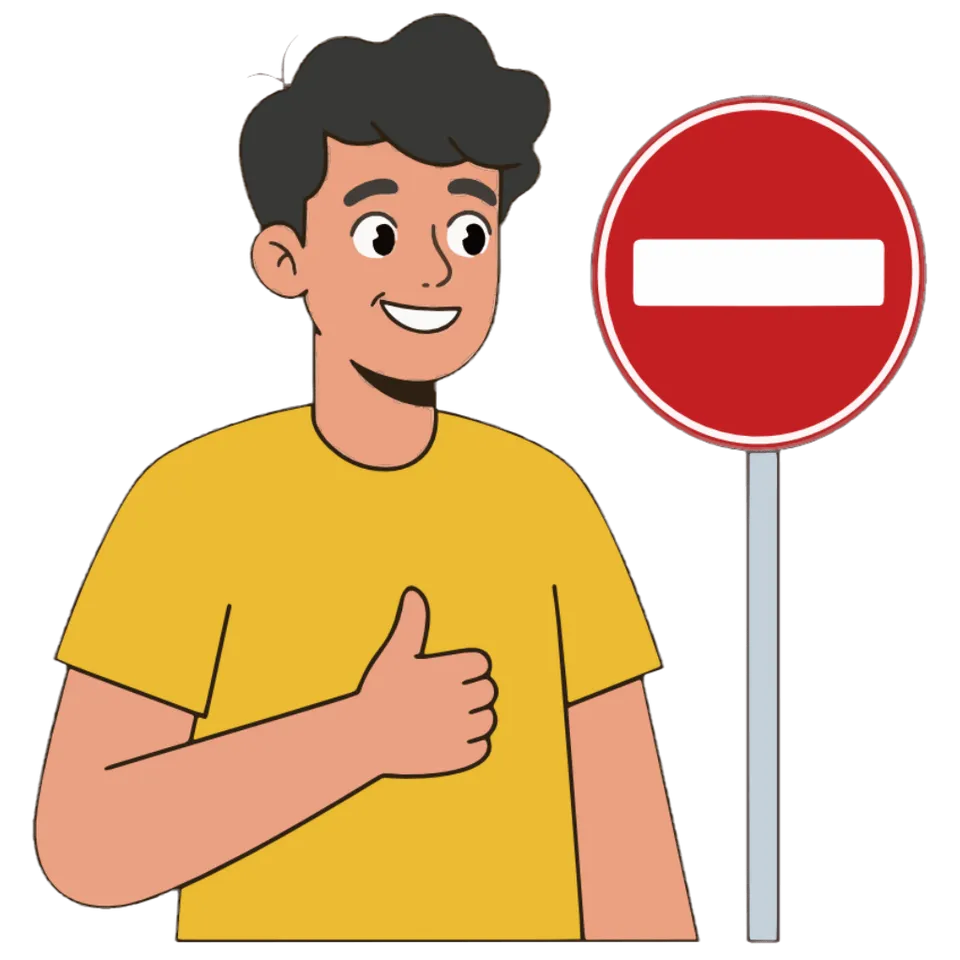
A prohibition sign is round with a red border. The symbol on the sign shows what is not allowed: entering, parking, overtaking or turning round. The prohibition starts at the sign and ends at an end sign, at the end of a zone or where a sub-sign says so. Always look at the sub-sign as well: it can make an exception, for example for destination traffic.
What is a prohibition sign?
A round sign with a red border is a prohibition sign. The symbol on the sign shows what is not allowed. A prohibition starts at the sign. Where it ends depends on the sign:
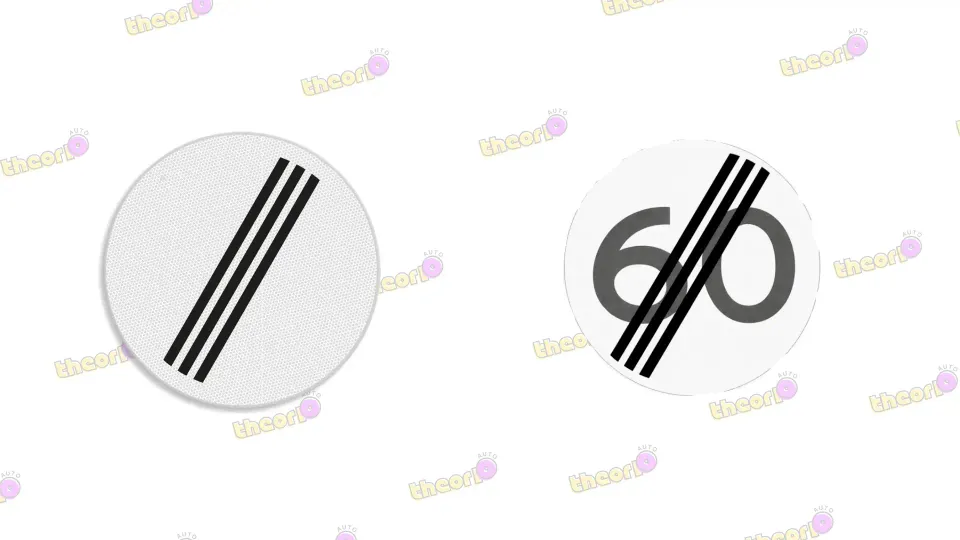
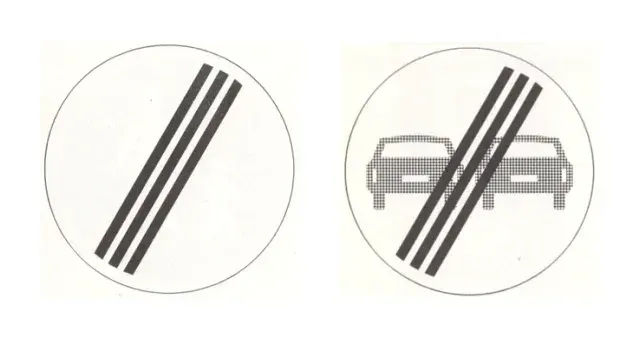 An end sign lifts the prohibition earlier. That is the same sign with black lines through it, such as F2 (end of no overtaking). Or it is the white sign with three black lines (F8): that ends all prohibitions shown by signs. See below.
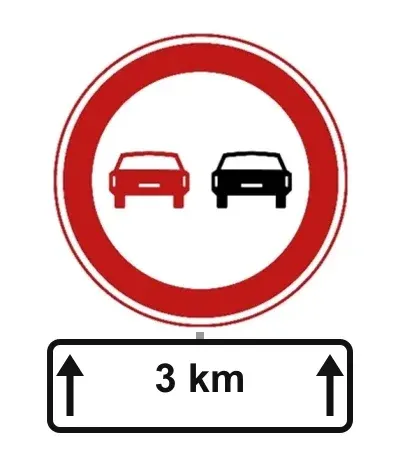 A sub-sign can say over what length the prohibition applies. A distance with arrows pointing up, such as "3 km", means: the prohibition applies from the sign for 3 kilometres.
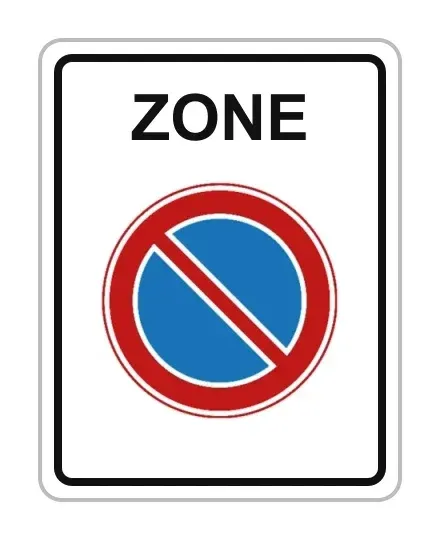 If the word "zone" is above the sign, the prohibition lasts longer: in the whole area, including side streets, until the "einde zone" sign.
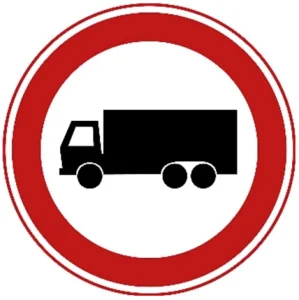 A closure (a C sign, such as "closed to lorries") closes the road you enter at the sign. There is no end sign for it.
What does a round white sign with a red border mean?
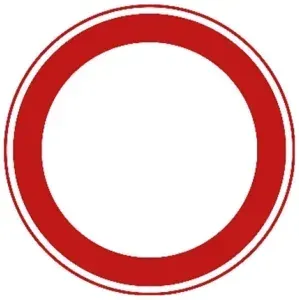
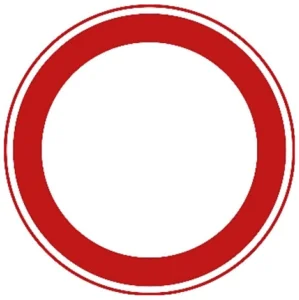 A round white sign with only a red border is sign C1: closed in both directions. You may not enter with any vehicle, not even a bicycle. Horse riders and people leading an animal may not enter either. Pedestrians may.
Difference between a prohibition sign and a mandatory sign
A round sign can have two functions: an obligation or a prohibition. The difference is in the colour:
- Blue = mandatory. For example following a specific direction or using a cycle path. A blue sign with a red diagonal line indicates the end of that obligation.
- Red = prohibited. Round signs with a red border indicate a prohibition: no entry, no parking, no overtaking. Red means something is not allowed, just like a red traffic light.
Blue = mandatory · Red = prohibited. Three signs about cyclists show the difference:
| Prohibition | Obligation | End of obligation |
|---|---|---|
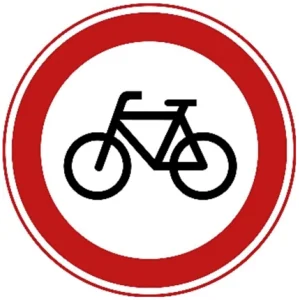 | 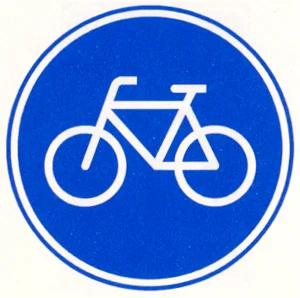 | 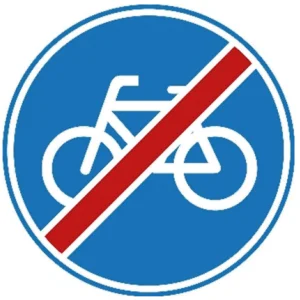 |
| C14: cyclists may not enter here. | G11: cyclists must use this path. | G12: the red line lifts the obligation. |
More about the blue signs under mandatory signs.
Different prohibition signs you may come across
Most prohibition signs fall into three groups.
Closures
Which signs mean you may not enter? Those are the closures (C signs). The symbol shows for whom the road is closed.
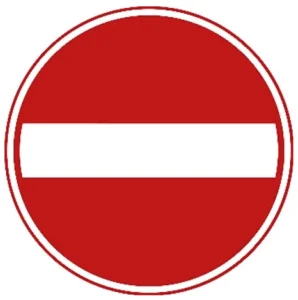 Sign C2: a round red sign with a white bar. You may not enter the road from this side. It is a one-way street going the other way. See one-way street sign.
- Sign C7: closed to lorries.
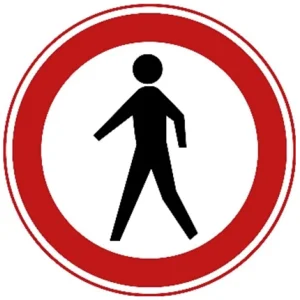 Sign C16: pedestrians may not go here.
No parking and no stopping
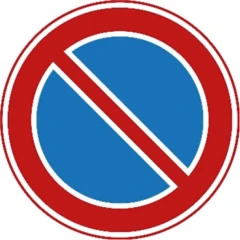 Sign E1 (no parking): parking is not allowed. Stopping briefly to let someone get in or out is allowed. So is loading and unloading. That is stopping, not parking.
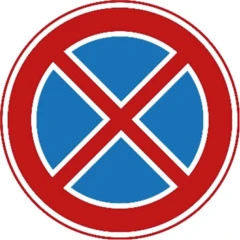 Sign E2 (no stopping): you may not stop here either. So no dropping off passengers and no loading or unloading.
Which side of the road they apply to and what "zone" above them means is explained on the page about parking signs.
Other prohibitions
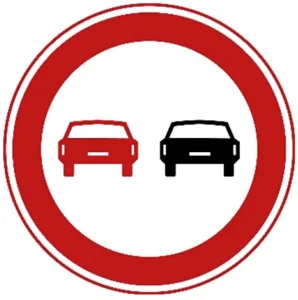 Sign F1 (no overtaking): motor vehicles may not overtake each other. Who you may still overtake is on the page about overtaking signs.
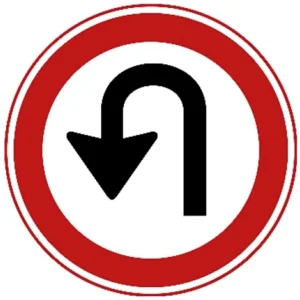 Sign F7 (no U-turns): you may not turn round on this road.
End of prohibition rules: the sign with three lines
The end of earlier prohibition signs is shown by a white sign with three black diagonal lines (sign F8).
Remember it like this: three lines means the end of the prohibitions of earlier prohibition signs.
Note what this sign does not mean. It does not mean that no rules apply anymore. The normal road rules still apply. Only the prohibitions of earlier prohibition signs end.
A traffic sign with a line through it: what does it mean? Black lines through a sign always mean: end. If they run through a speed, only that speed limit ends. A red diagonal line through a blue sign is the end of an obligation. See mandatory signs.
Sub-signs with prohibition signs
A sub-sign often hangs below a prohibition sign. It can limit the prohibition (it then applies only to the vehicles on the sub-sign, or only at certain times) or make an exception with the word "uitgezonderd" (except). Everything about reading sub-signs is under sub-signs.
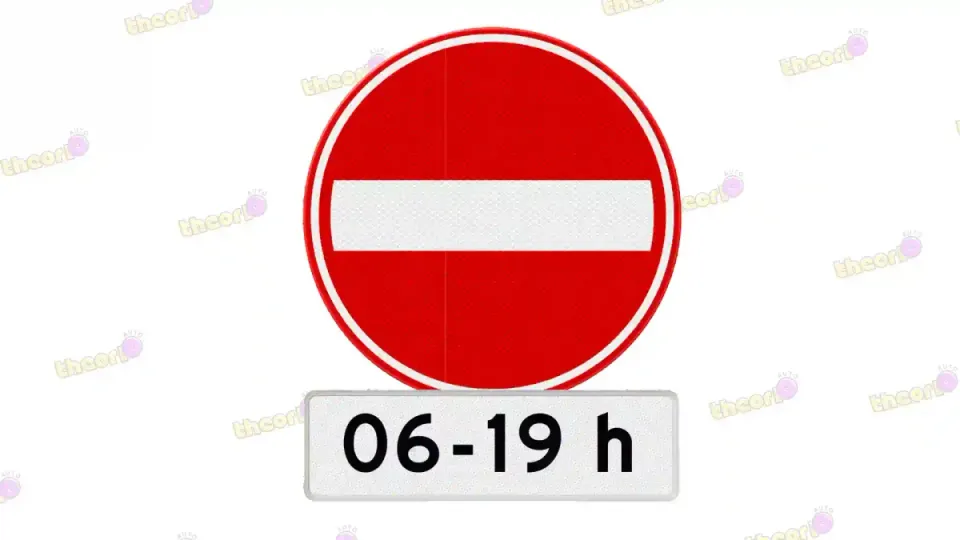
Except destination traffic
Below a closure you sometimes see "uitgezonderd bestemmingsverkeer" (except destination traffic). You may then still enter the road, but only if you are destination traffic. According to the law that means: your destination is on that road or right next to it, and you can reach it only via this road or another road subject to the same closure. Scheduled buses also count as destination traffic.
- Destination traffic: you live on that road, you are going to someone who lives there, or you need to be at a business on that road and there is no other route.
- Not destination traffic: you only drive through, for example to avoid a traffic jam or a traffic light.
- Not destination traffic: your address is in another street, or you can reach it via another unrestricted road.
Important prohibition signs for the CBR
Apart from the signs above, these prohibition signs often come back in exam questions. Look closely at the symbol: a small difference changes who the prohibition applies to.
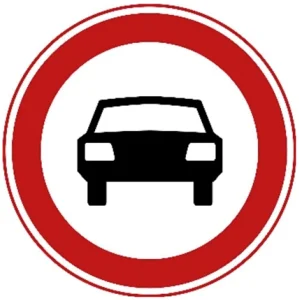 Sign C6: closed to motor vehicles on more than two wheels. Cars may not enter, motorcycles and mopeds may.
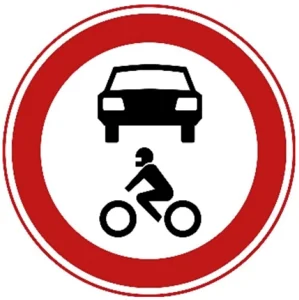 Sign C12: closed to all motor vehicles, motorcycles included.
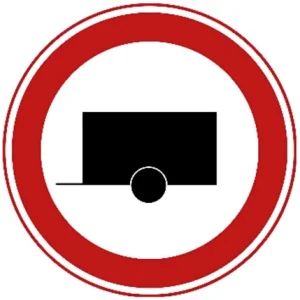 Sign C10: closed to motor vehicles with a trailer.
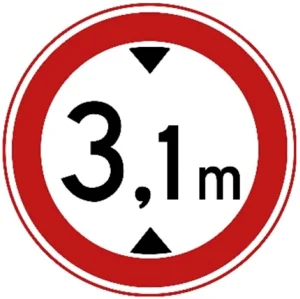 Sign C19: closed to vehicles that, load included, are higher than shown on the sign. C17 and C18 do the same for length and width.
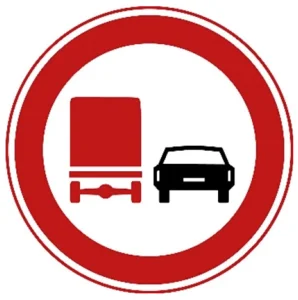 Sign F3: lorries may not overtake motor vehicles. F3 does not impose an overtaking ban on a passenger car. You may overtake only if the other rules and the situation allow it.
All prohibition signs and their meaning
Here are the other prohibition signs in one list. The symbol and the number show who the sign applies to. For length, width and height the load counts too. C20 is about the weight per axle, C21 about the total weight. The end of no-overtaking signs (F2 and F4) are on the page about overtaking signs.
| Sign | Meaning |
|---|---|
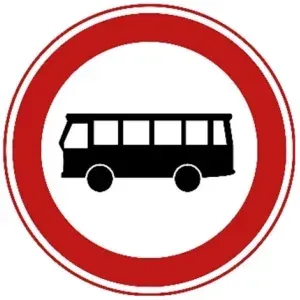 | C7A: No buses Closed to buses |
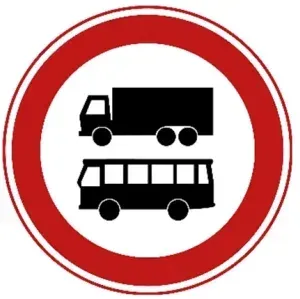 | C7B: No buses or lorries Closed to buses and lorries |
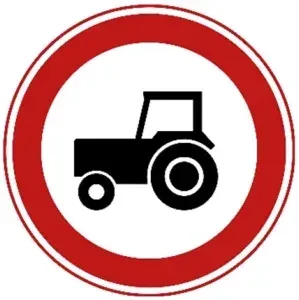 | C8: No tractors Closed to agricultural/forestry tractors, speed-restricted vehicles and mobile machinery |
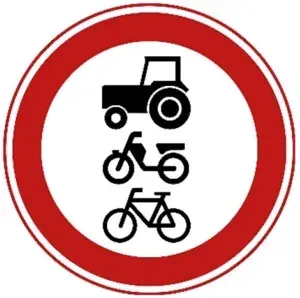 | C9: No slow traffic Closed to riders, cattle, carts, (moped) bicycles and slow-moving vehicles |
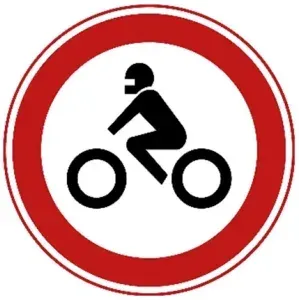 | C11: No motorcycles Closed to motorcycles |
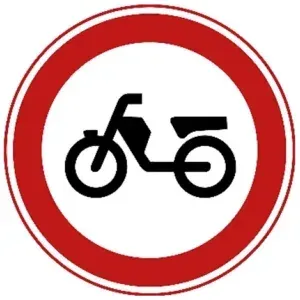 | C13: No mopeds Closed to mopeds and disability vehicles with the engine running |
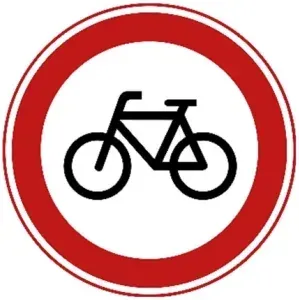 | C14: No bicycles Closed to bicycles and disability vehicles without a motor |
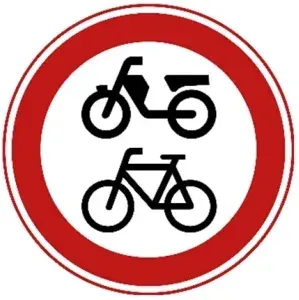 | C15: No bicycles or mopeds Closed to bicycles, mopeds and disability vehicles |
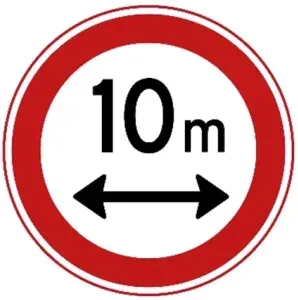 | C17: Maximum length Closed to vehicles and combinations longer than 10 metres (the value on this example sign) |
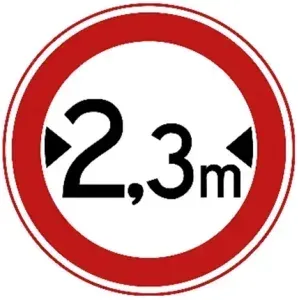 | C18: Maximum width Closed to vehicles wider than 2.3 metres (the value on this example sign) |
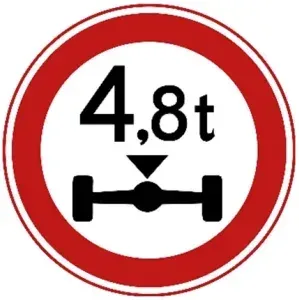 | C20: Maximum axle load Closed to vehicles with an axle load above 4.8 tonnes (the value on this example sign) |
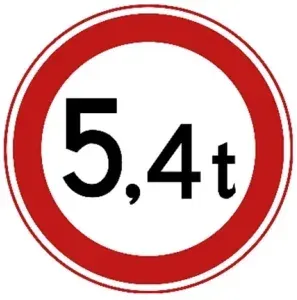 | C21: Maximum total mass Closed to vehicles above the indicated total mass or combined axle load |
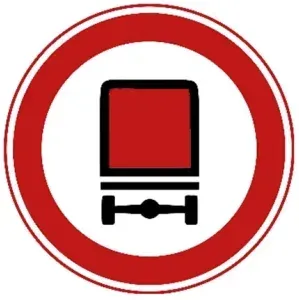 | C22: No dangerous goods Closed to vehicles carrying certain dangerous goods |
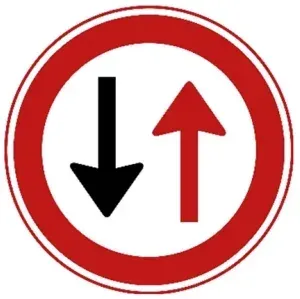 | F5: Give way to oncoming traffic Do not proceed when traffic is approaching from the opposite direction |
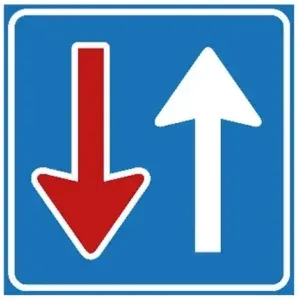 | F6: Priority over oncoming traffic Oncoming traffic must give way to traffic from this direction |
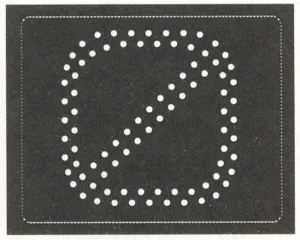 | F9: End of electronically signed restrictions End of all prohibitions shown on an electronic signalling sign |
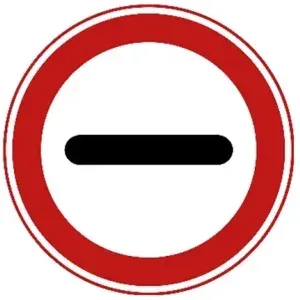 | F10: Stop for customs or police Stop; the sign may show by whom or why you must stop |
CBR traps with prohibition signs
Many mistakes happen because two signs look alike. These pairs are often mixed up:
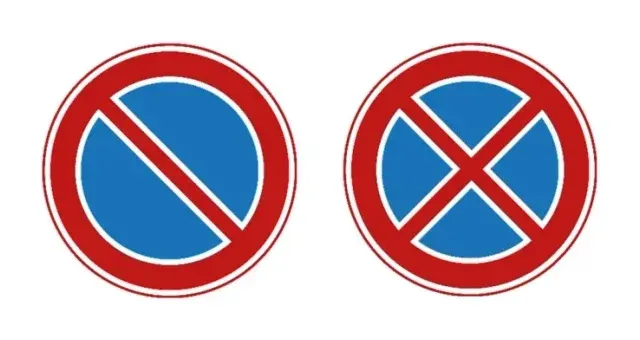
❌ Wrong: mixing up no parking (E1, one line) and no stopping (E2, a cross). ✅ Right: at E1 you may stop briefly to let someone get in or out, or to load and unload. At E2 you may not.
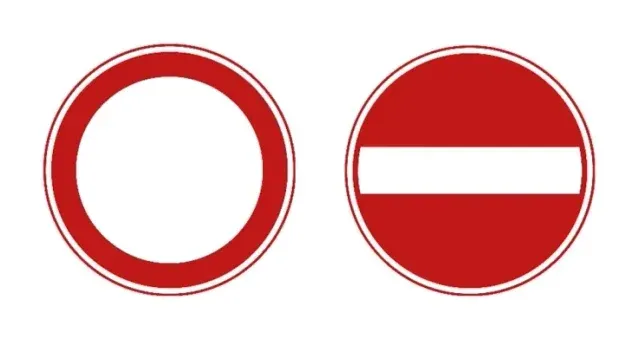
❌ Wrong: reading C1 (white with a red border) as "closed from this side only". ✅ Right: C1 is closed in both directions. C2 (red with a white bar) only closes the road from your side.
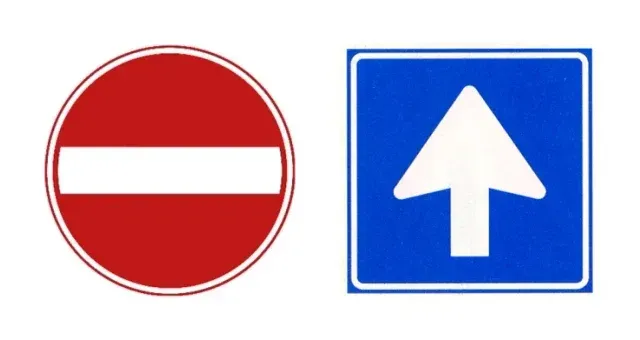
❌ Wrong: confusing C1 or C2 with the blue square sign C3. ✅ Right: C1 and C2 are prohibition signs: do not enter. C3 is a one-way street: you may enter in the direction of the arrow.
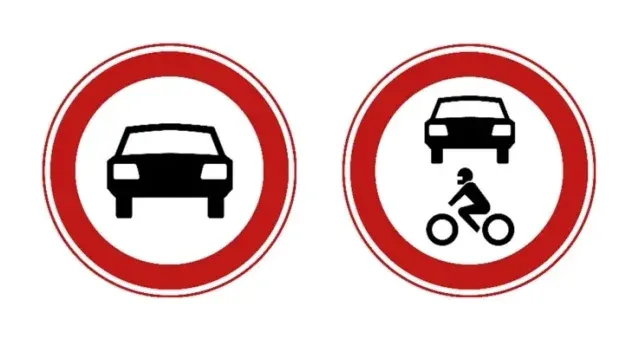
❌ Wrong: thinking motorcycles may not enter at C6. ✅ Right: C6 only applies to motor vehicles on more than two wheels. At C12 motorcycles may not enter either.
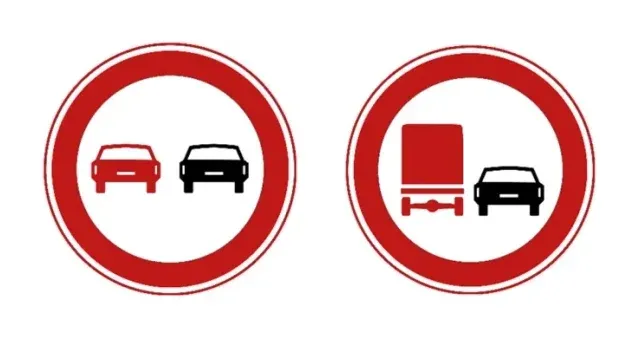
❌ Wrong: thinking you may not overtake in your car at F3. ✅ Right: F3 only applies to lorries. F1 applies to all motor vehicles. A tractor is a motor vehicle too: at F1 you must not overtake it unless a sub-sign makes an exception.
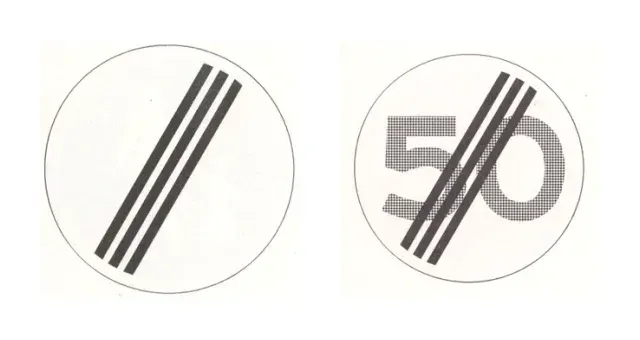
❌ Wrong: thinking that no rules apply at all after the sign with three lines (F8). ✅ Right: only the prohibitions of earlier prohibition signs end. The normal rules still apply. Lines through a speed (A2) only end that speed limit.
Practise like the exam
Example questions like in the CBR exam
Real questions from the Theorio app. You can expect similar questions in your CBR exam.
Question 1 of 6
Who does this closed declaration apply to?
Tap the answer you think is right.
Who is not allowed to enter here?
Tap the answer you think is right.
What does this sign indicate?
Tap the answer you think is right.
A closed declaration is a traffic sign that indicates that a road or area is not accessible to certain types of traffic.
Who does this closed declaration apply to?
Tap the answer you think is right.
This sign indicates a closed declaration for vehicles heavier than 10 tons.
Are you allowed to drive on this road?
Tap the answer you think is right.
At which sign can you expect pedestrians?
Tap the answer you think is right.
Answers and explanations for the example questions
Question 1: Who does this closed declaration apply to?
Correct answer: Motor vehicles with more than 2 wheels
This traffic sign is unique because it specifically looks at the number of wheels of a vehicle. It is prohibited to enter this road with motor vehicles that have more than two wheels. This sign is often placed at narrow roads where motorcycles can still pass.
Question 2: Who is not allowed to enter here?
Correct answer: All motor vehicles with a trailer
This means that motor vehicles with a trailer are not allowed to drive here. Do you have a trailer, caravan, or camper behind your vehicle? Then you may not proceed. Motor vehicles without a trailer are allowed to pass here. This applies to cars, motorcycles, trucks, etc. because they can all carry a trailer, caravan, or camper.
Question 3: What does this sign indicate?
Correct answer: A closed declaration for vehicles wider than 2.3 meters
This sign indicates a closed declaration for vehicles wider than 2.3 meters⛔. You can see that it concerns the width of vehicles by the arrows on the left and right side ⬅️➡️ of the sign. Height signs ⬆️⬇️ have arrows above and below and indicate the maximum vehicle height, for example at tunnels 🛣️. Length signs 📏 have a horizontal arrow ↔️ in the middle and indicate the maximum vehicle length.
Question 4: Who does this closed declaration apply to?
Correct answer: Pedestrians
This sign means: 'Prohibited for pedestrians'. You are not allowed to walk here.
Question 5: Are you allowed to drive on this road?
Correct answer: Yes
A passenger car (maximum 3.5 tons = 3500 kilograms) weighs less than 10 tons (10,000 kilograms). So you are allowed to drive on this road. 🛣️
Question 6: At which sign can you expect pedestrians?
Correct answer: Sign B
Sign A is a prohibition for pedestrians. This means that pedestrians are not allowed to walk here. Sign B is a warning sign for pedestrians. This indicates that you can expect pedestrians here. test
FAQ
Frequently asked questions
Short answers to questions that often come up on this subject.
What is destination traffic (bestemmingsverkeer)?
Destination traffic consists of drivers travelling to a specific property on or immediately near the restricted road that can only be reached through it. Access through another road with the same restriction can also qualify; an ordinary unrestricted alternative is different. Scheduled buses also fall within the statutory definition. Merely driving through to avoid congestion or a detour is not destination traffic.
How long does a prohibition sign apply?
It depends on the sign. An access restriction determines whether you may use a road; speed and parking signs have their own application rules. Read supplementary distances, lengths, times and exceptions too. An appropriate end sign can terminate a restriction. A zone rule covers the indicated area until the end-of-zone sign. There is no single end rule applying identically to every prohibition sign.
What is the difference between sign C1 and sign C2?
C1 (white with a red border) closes the road to vehicles in both directions. C2 (red with a white bar) means you may not enter from this side, because it is a one-way street.
Ready to practise?
Test your knowledge of Traffic Signs, Signals & Directions with 90 practice questions in the app.
Every CBR sign · start for free
Your first quiz is free, no account needed. After that from €34.99 for 90 days of access.