Part 5 of 8 in Traffic Signs, Signals & Directions
One-way street sign
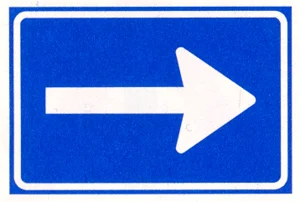
One-way street sign: square and blue with a white arrow. How to recognise it, which signs go with it and what you may do on a one-way street.


Written by Chris Prosman Reviewed by Dirk van Zuijlen
Updated Reviewed on 4 min read
Every CBR sign · start for free
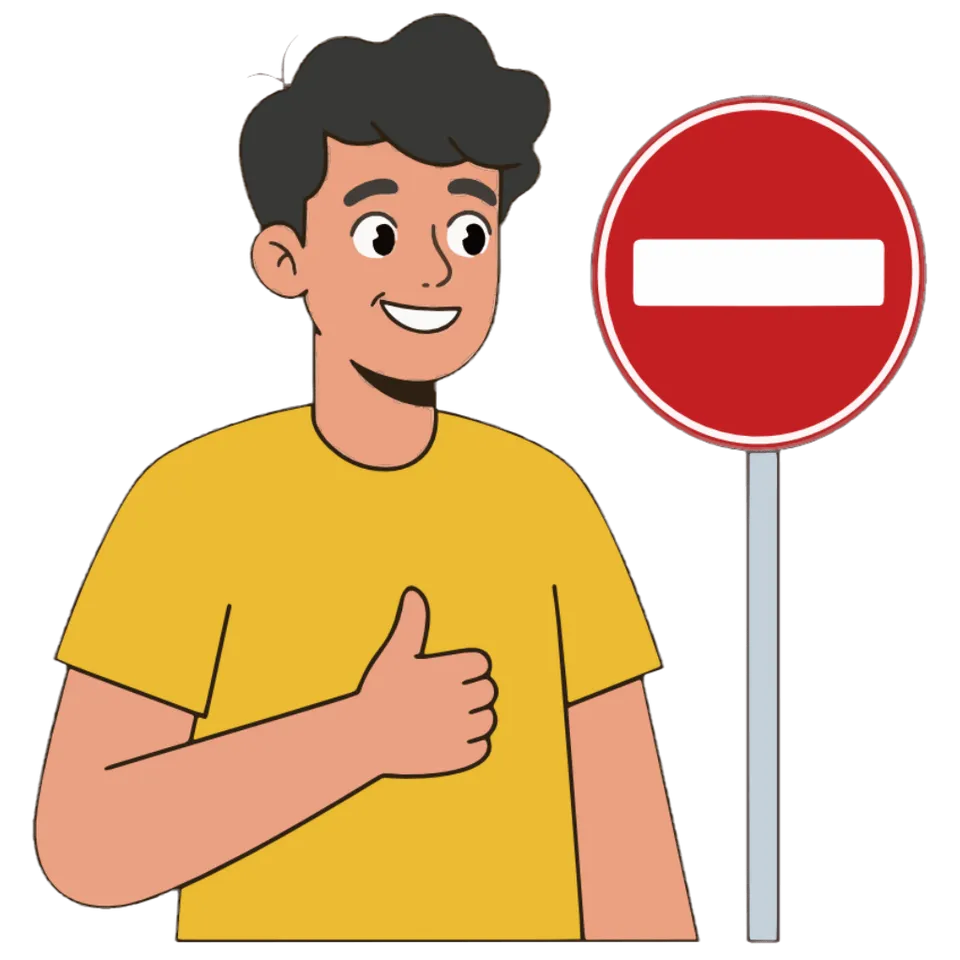
You recognise a one-way street by a square blue sign with a white arrow. All traffic goes the same way, so you do not expect oncoming traffic, unless a sub-sign makes an exception for cyclists, for example. At the other end of the road there is a round red sign with a white bar: you may not enter from there. A round blue sign with an arrow is something else: that is a mandatory direction.
Difference between a one-way street and a mandatory direction
A one-way street is shown on a square blue sign, a mandatory direction on a round blue sign. That small difference decides whether you can expect oncoming traffic.
| Sign | 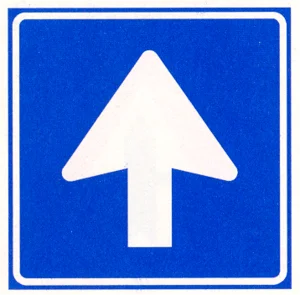 One-way street (C3) | 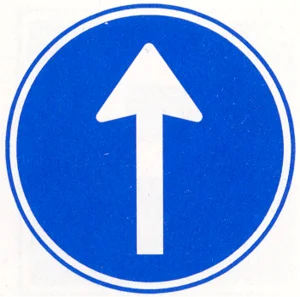 Mandatory direction (D4) |
|---|---|---|
| Shape | Square, blue with a white arrow | Round, blue with a white arrow |
| Meaning | All traffic on this road goes in the direction of the arrow | You must follow the direction of the arrow |
| Oncoming traffic | No, unless a sub-sign makes an exception | Yes, there can be |
| Turning off | Allowed, following the road in that direction | Only the way the arrow points |
More about the round blue arrow signs under mandatory signs.
Game
Where may you go?
The crossing street is a one-way street (blue sign with a white arrow). Where may you go?
Tap every arrow you may take. There can be more than one.
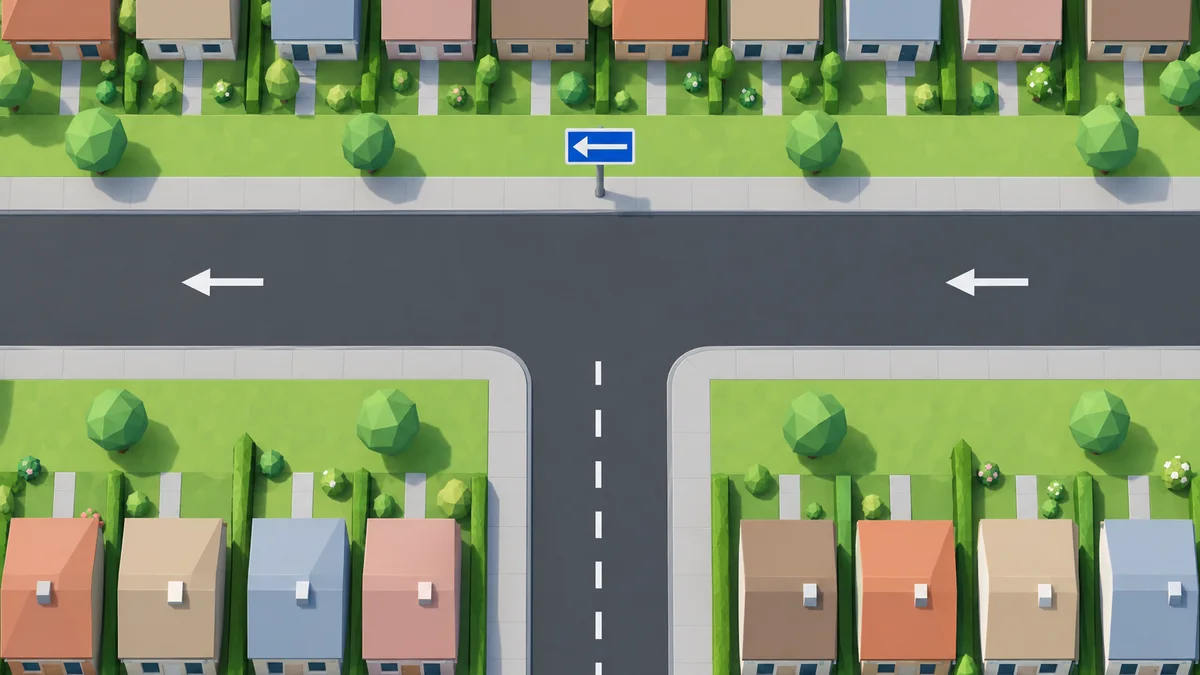
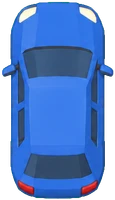
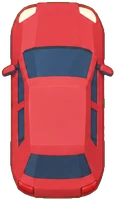
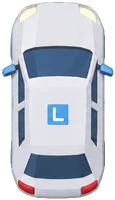
Situations by Theorio, based on the Dutch traffic rules (RVV 1990).
The signs of a one-way street
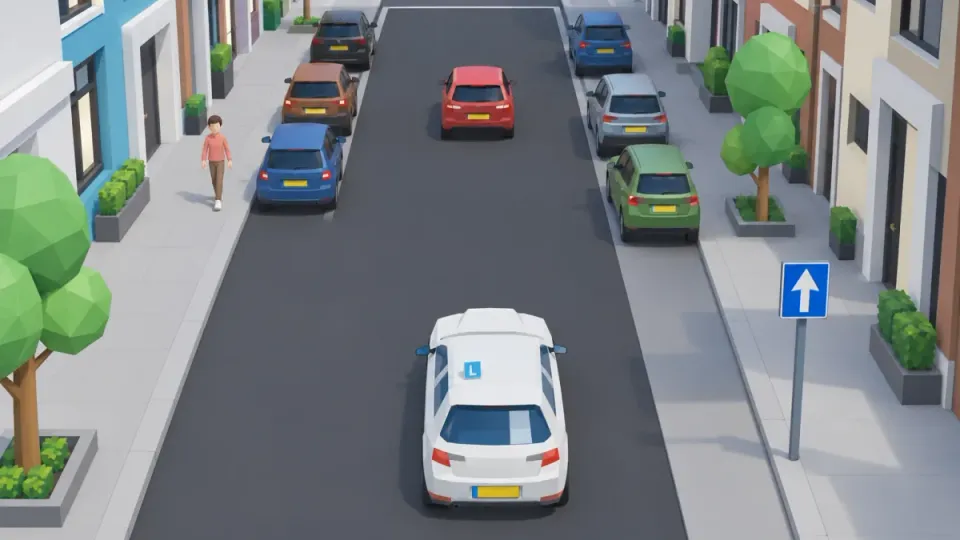
Which sign indicates a one-way street? Sign C3: a square blue sign with a white arrow pointing up. Four signs belong to a one-way street:
- Sign C3 (one-way street): stands where you may enter the road. You drive in the direction of the arrow.
 Sign C4 (arrow to the side): only the road you turn into is one-way, in the direction of the arrow. On your own road, traffic can still come towards you.
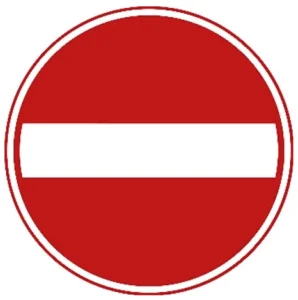 Sign C2 (no entry): a round red sign with a white bar. It stands at the end of the one-way street. You may not enter from that side.
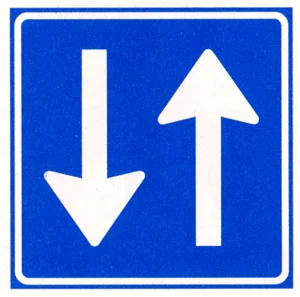 Sign C5 (entry allowed): you may enter the road. Traffic can come from both directions.
Who do they apply to? To all vehicles, so also bicycles and mopeds. And to horse riders and people leading an animal. They do not apply to pedestrians. Pedestrians may use a one-way street in both directions.
Sub-signs with one-way street signs
Below the one-way sign or the no-entry sign there is sometimes a sub-sign with "uitgezonderd" (except) and a bicycle, or a bicycle and a moped. Those road users may then also use the road against the direction. So on such a one-way street you can meet oncoming traffic after all: cyclists or moped riders coming towards you.
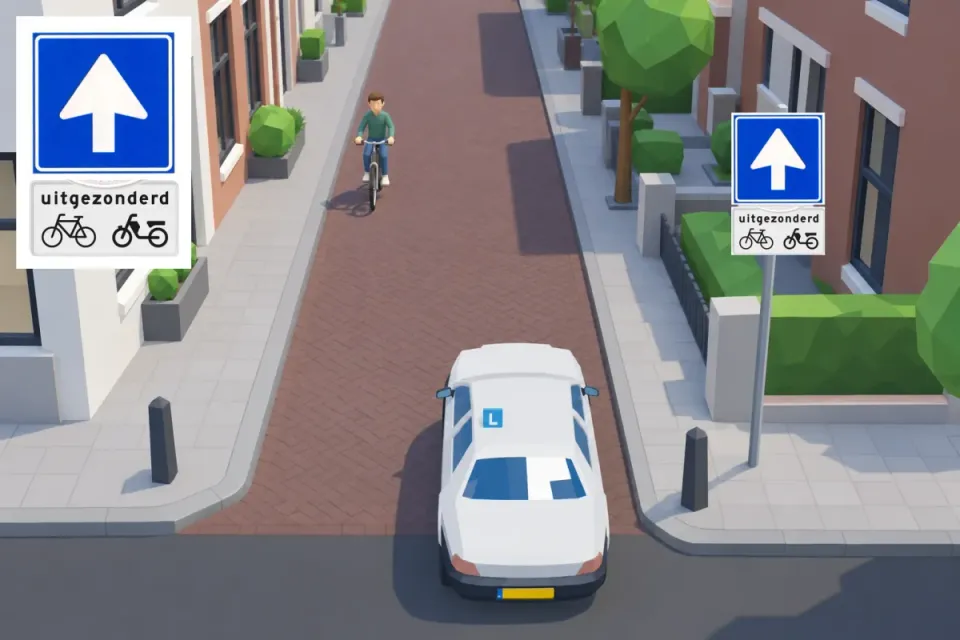
How to read sub-signs in general is explained under sub-signs.
Driving on a one-way street
- Keep right. Even without oncoming traffic you keep to the right as much as possible.
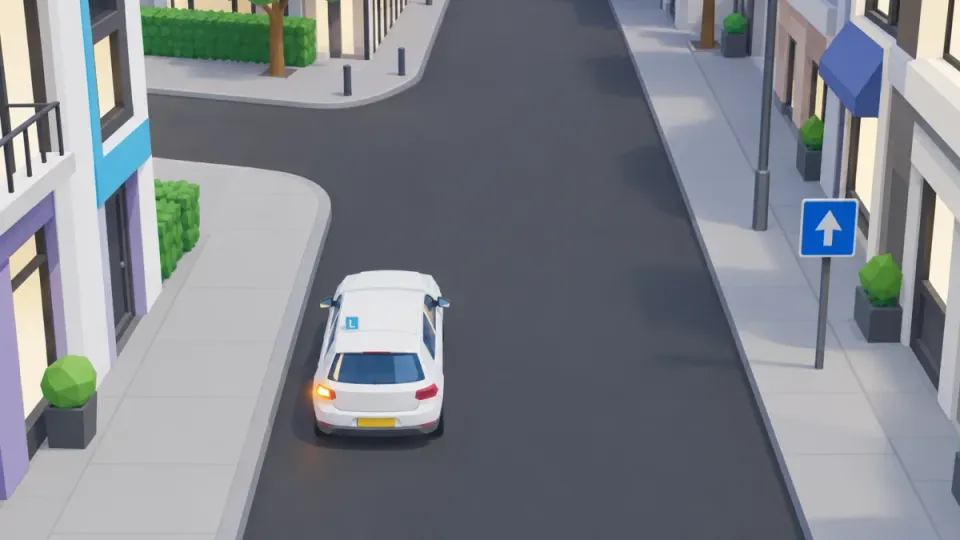
- Turning left. Nobody comes towards you. So you move all the way to the left to turn left. More on the page about getting in lane.
- Turning right. Keep as far right as possible.
- Parking. If there is no parking ban, you may park on the left and on the right. See parking rules.
Can you make a U-turn or reverse on a one-way street?
A U-turn is not allowed. After turning round you would drive against the direction of traffic.
Reversing is a special manoeuvre. You let all other traffic go first, including cyclists and pedestrians (article 54 RVV 1990). Reversing into a one-way street past sign C2 is not allowed: you may not enter the road from that side at all.
CBR traps
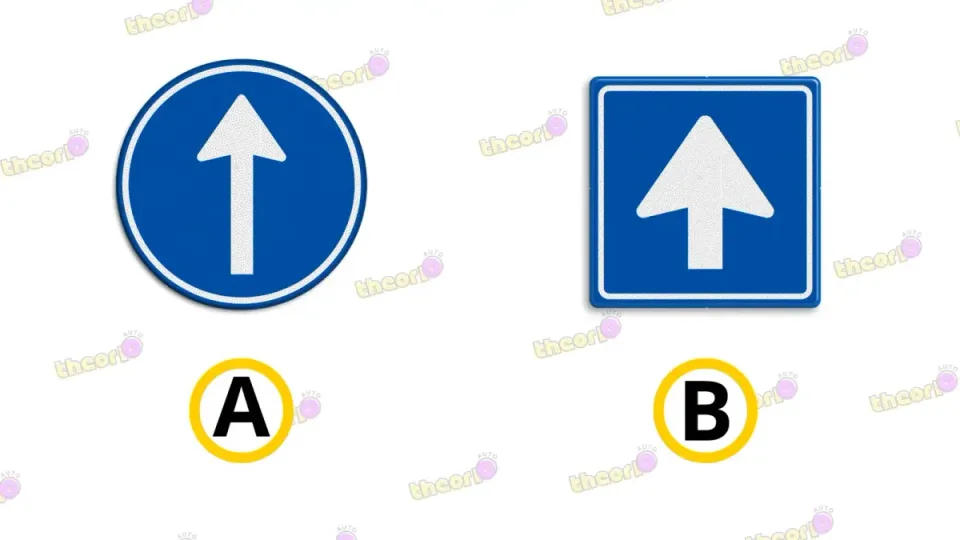
❌ Wrong: thinking every blue sign with an arrow means a one-way street. ✅ Right: only the square blue sign is a one-way street. The round one is a mandatory direction. There can be oncoming traffic there.
❌ Wrong: never expecting oncoming traffic on a one-way street. ✅ Right: is there a sub-sign "uitgezonderd" with a bicycle or moped? Then they can come towards you.
❌ Wrong: thinking at sign C4 that the road you are on is one-way. ✅ Right: C4 is about the road you turn into. On your own road there can still be oncoming traffic.
❌ Wrong: thinking pedestrians must also keep to the direction of travel. ✅ Right: the signs apply to vehicles, horse riders and people leading an animal. Not to pedestrians.
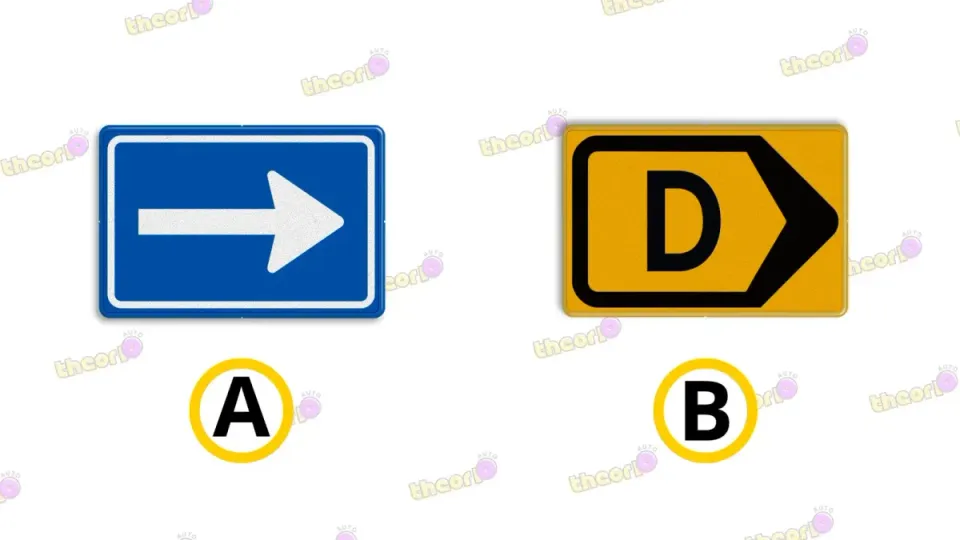
❌ Wrong: reading a yellow diversion sign as a one-way street. ✅ Right: a yellow sign only shows a route. Only one white arrow on a square blue sign (C3 or C4) is a one-way street.
Practise like the exam
Example questions like in the CBR exam
Real questions from the Theorio app. You can expect similar questions in your CBR exam.
Question 1 of 6
Sign A also indicates a one-way street, which means that all traffic is moving in the same direction, in this case straight ahead. You cannot turn around, because that would go against the flow of traffic. Sign B indicates a mandatory driving direction, in this case straight ahead. This means that you may only follow the indicated direction and cannot choose for yourself.
At which sign are you also allowed to turn left or right?
Tap the answer you think is right.
Which sign can you expect traffic from the left?
Tap the answer you think is right.
Sign A also indicates a one-way street, which means that all traffic is moving in the same direction. No one is allowed to drive against the flow of traffic, so you cannot expect traffic from the opposite direction. In this case, all traffic is going to the right. You are not allowed to turn left, as that would mean driving against the flow of traffic. Sign B indicates a mandatory driving direction, in this case to the right. This means you may only follow the indicated direction and cannot choose for yourself. You must go right here.
At which sign can you expect oncoming traffic from the right?
Tap the answer you think is right.
A one-way street is a road where all traffic goes in the same direction. You are not allowed to turn around here.
Can you turn left here?
Tap the answer you think is right.
A one-way street is a road where all traffic goes in the same direction. You may turn left/right, but you cannot turn around.
Can you expect oncoming traffic here?
Tap the answer you think is right.
You want to turn left. Are you positioning yourself correctly here?
Tap the answer you think is right.
Answers and explanations for the example questions
Question 1: At which sign are you also allowed to turn left or right?
Correct answer: Sign A
Sign A indicates a one-way street. The flow of traffic goes straight ahead, but you are allowed to turn left or right, as long as you do not turn around, because that would go against the flow of traffic. Sign B indicates a mandatory driving direction; you must go straight ahead here and have no other choice.
Question 2: Which sign can you expect traffic from the left?
Correct answer: Both signs
Sign A is a one-way street, traffic can go from left to right. Sign B is a mandatory direction where traffic can come from all directions. Both signs can have traffic from the left. ⬅️
Question 3: At which sign can you expect oncoming traffic from the right?
Correct answer: Sign B
At a one-way street (sign A), no traffic can come from the right, because that would go against the flow of traffic. At a mandatory driving direction (sign B) you must follow the indicated direction, but there can be oncoming traffic, because the sign only prescribes your driving direction and says nothing about traffic from the other direction.
Question 4: Can you turn left here?
Correct answer: Yes
In a one-way street, all traffic goes straight ahead, but you are allowed to turn left to leave the road. So you can turn left here. ⬅️
Question 5: Can you expect oncoming traffic here?
Correct answer: Yes
Due to the sub-sign 'except (moped) cyclists', you can expect oncoming traffic. So it is not completely one-way traffic for all vehicles. 🚲
Question 6: You want to turn left. Are you positioning yourself correctly here?
Correct answer: No
Explanation: This is a one-way street. That means all traffic goes in one direction. Do you want to turn left on a one-way street? Then you must drive all the way to the left on the road. So all the way to the left at the intersection. The white car is currently driving on the right side of the intersection. That is wrong.
FAQ
Frequently asked questions
Short answers to questions that often come up on this subject.
What does rectangular blue sign C4 with a sideways white arrow mean?
Rectangular blue C4 with a sideways white arrow identifies the permitted direction on the indicated one-way road. At a T-junction you follow that direction. The sign alone does not establish that every junction is a T-junction or that continuing straight is physically impossible: also examine the layout and other signs.
May you cycle against the direction on a one-way street?
Only if there is a sub-sign "uitgezonderd" (except) with a bicycle below the one-way sign or the no-entry sign. Without that sub-sign the one-way street also applies to cyclists.
Do one-way street signs also apply to pedestrians?
No. Pedestrians may use a one-way street in both directions. The signs are meant for people driving or riding a vehicle and for horse riders.
Ready to practise?
Test your knowledge of Traffic Signs, Signals & Directions with 90 practice questions in the app.
Every CBR sign · start for free
Your first quiz is free, no account needed. After that from €34.99 for 90 days of access.