Part 7 of 8 in Traffic Signs, Signals & Directions
Traffic controller signals
Traffic controller signals: all eight gestures explained, who they apply to and when you stop. Their instruction overrides traffic lights and signs.


Written by Chris Prosman Reviewed by Dirk van Zuijlen
Updated Reviewed on 4 min read
Every CBR sign · start for free
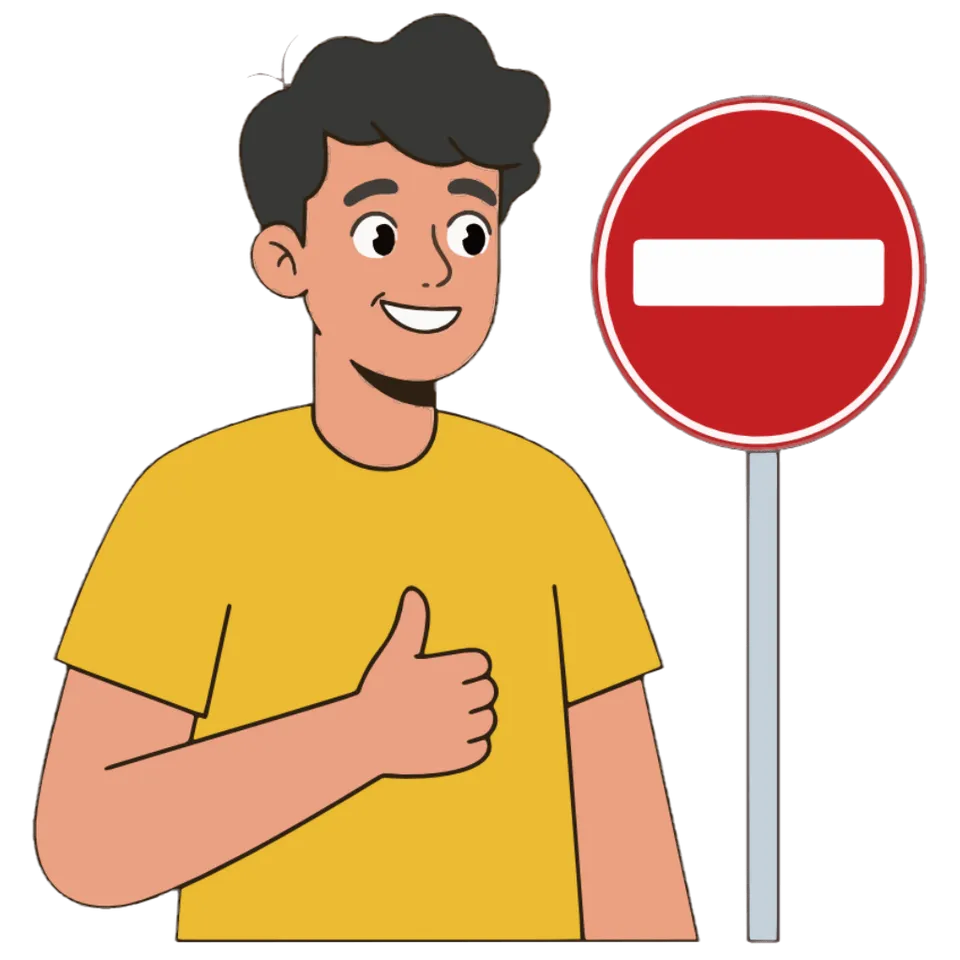
The signals of a traffic controller or police officer override everything: traffic lights, traffic signs and the normal priority rules. Read the arm signal together with your approach direction. Seeing the controller’s chest or back alone does not identify the signal.
The role of the traffic controller
Follow an authorised and recognisable traffic controller or police officer even when the light is green or normal priority rules would let you go first. You must follow a police officer and a traffic controller alike, also when they tell you something in words.
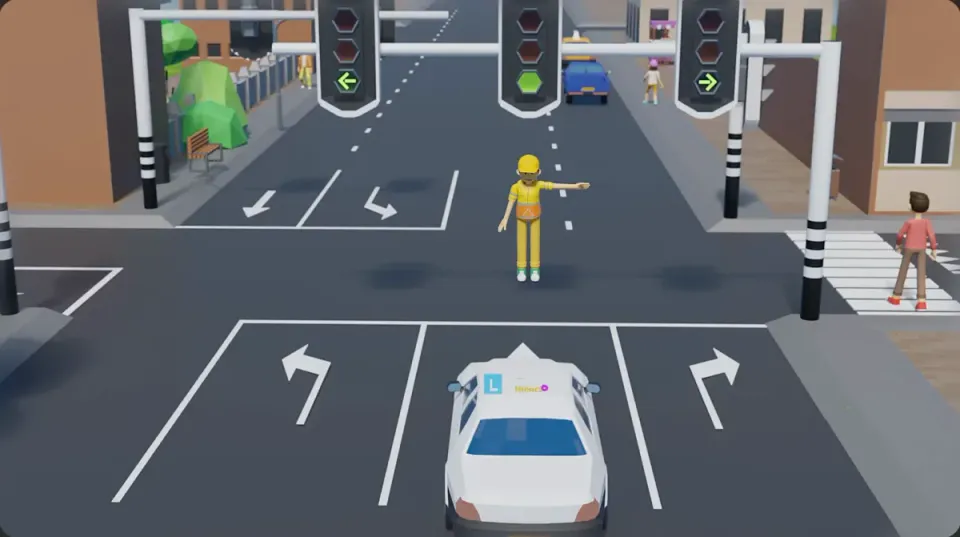
- An authorised person’s instruction.
- Working traffic lights, which override priority signs and give-way markings.
- Signs and other road signals controlling the situation.
- General traffic rules.
How this order works in general is explained under priority rules: who goes first?
Who may direct traffic?
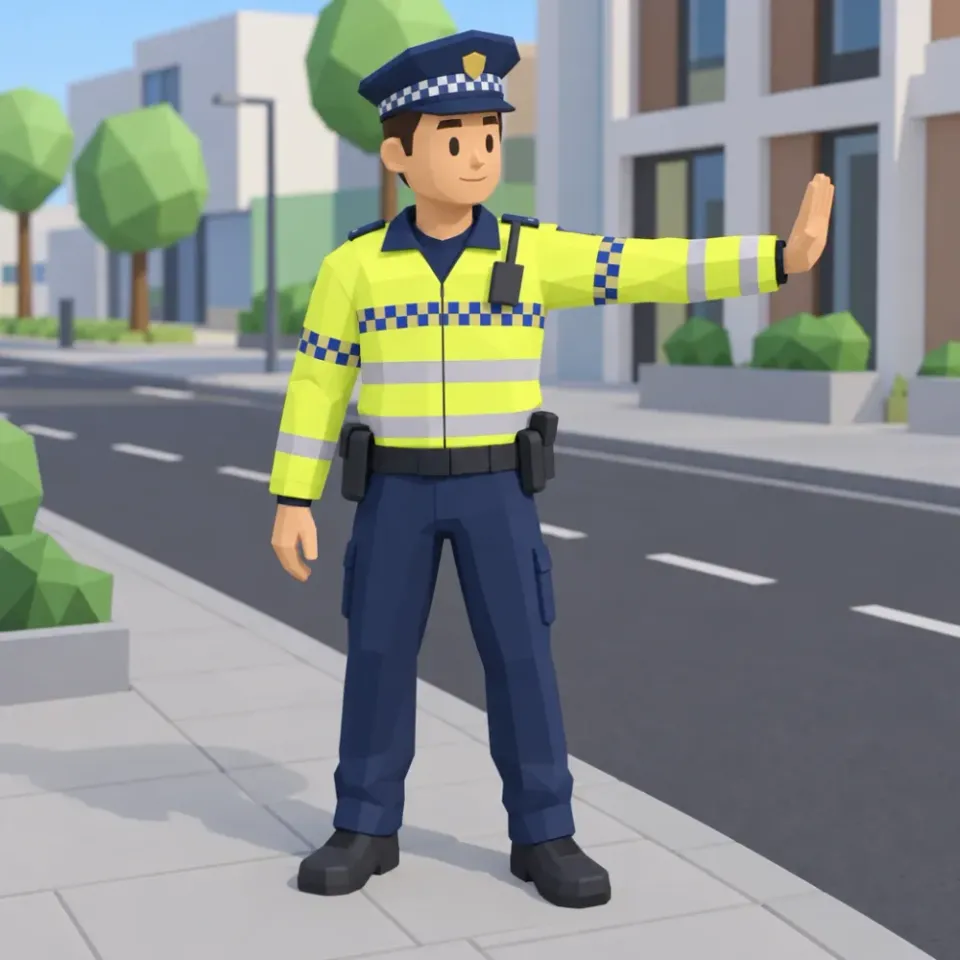 | Police officers and other authorised officials, and the Royal Military Police (Koninklijke Marechaussee). |
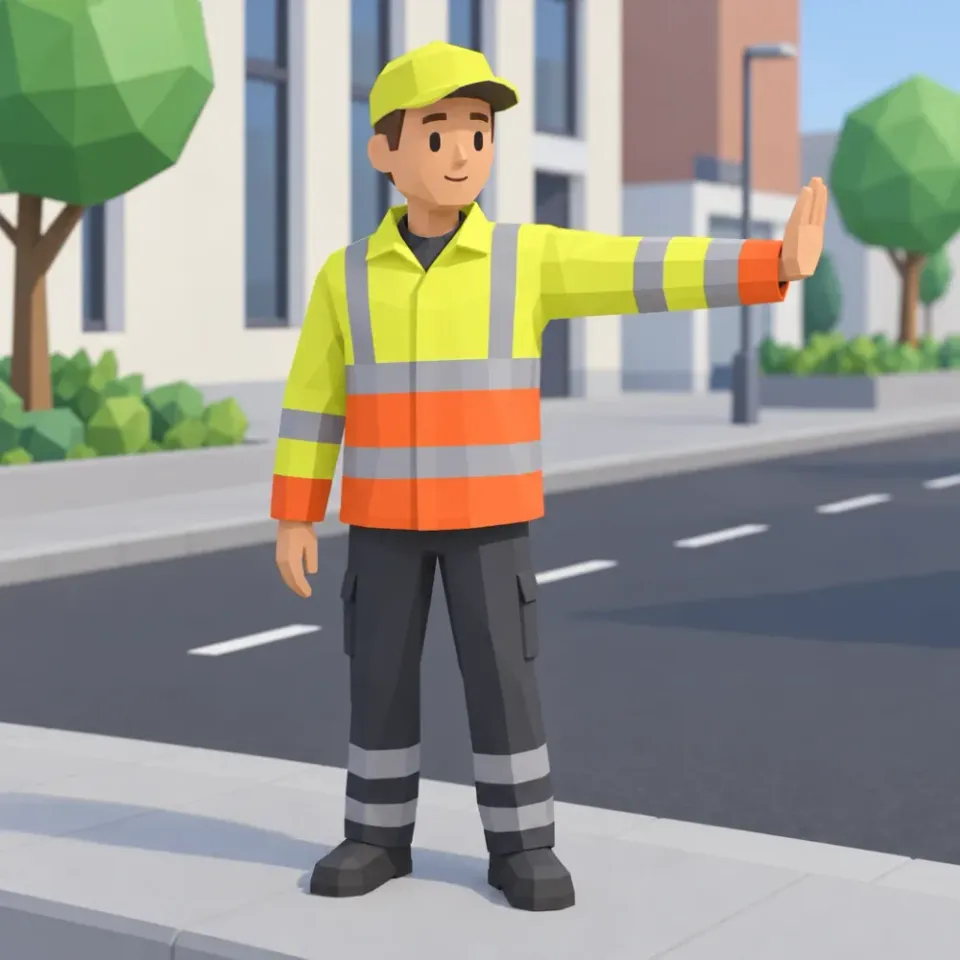 | Traffic controllers appointed for the job, such as professional traffic controllers and event traffic controllers. They wear prescribed clothing: a yellow jacket or vest with an orange lower part and reflective stripes. |
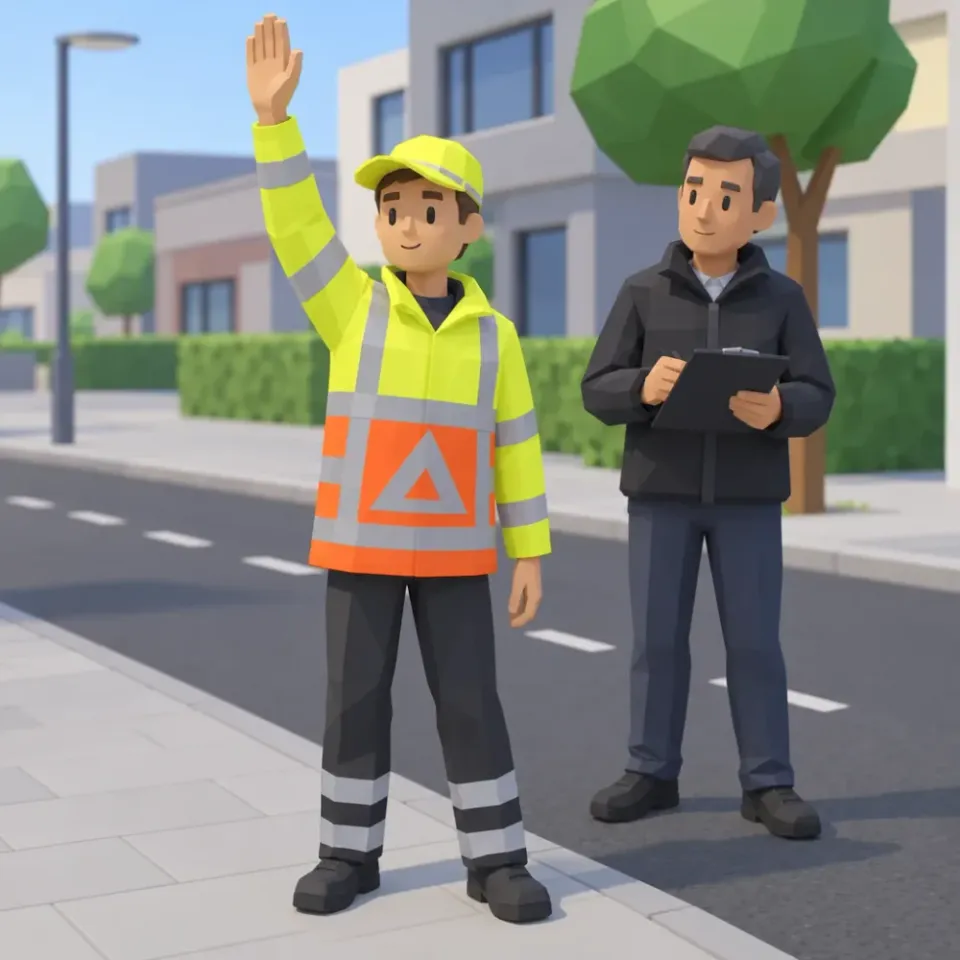 | Trainee traffic controllers during their practical lesson or practical exam, in the same clothing. |
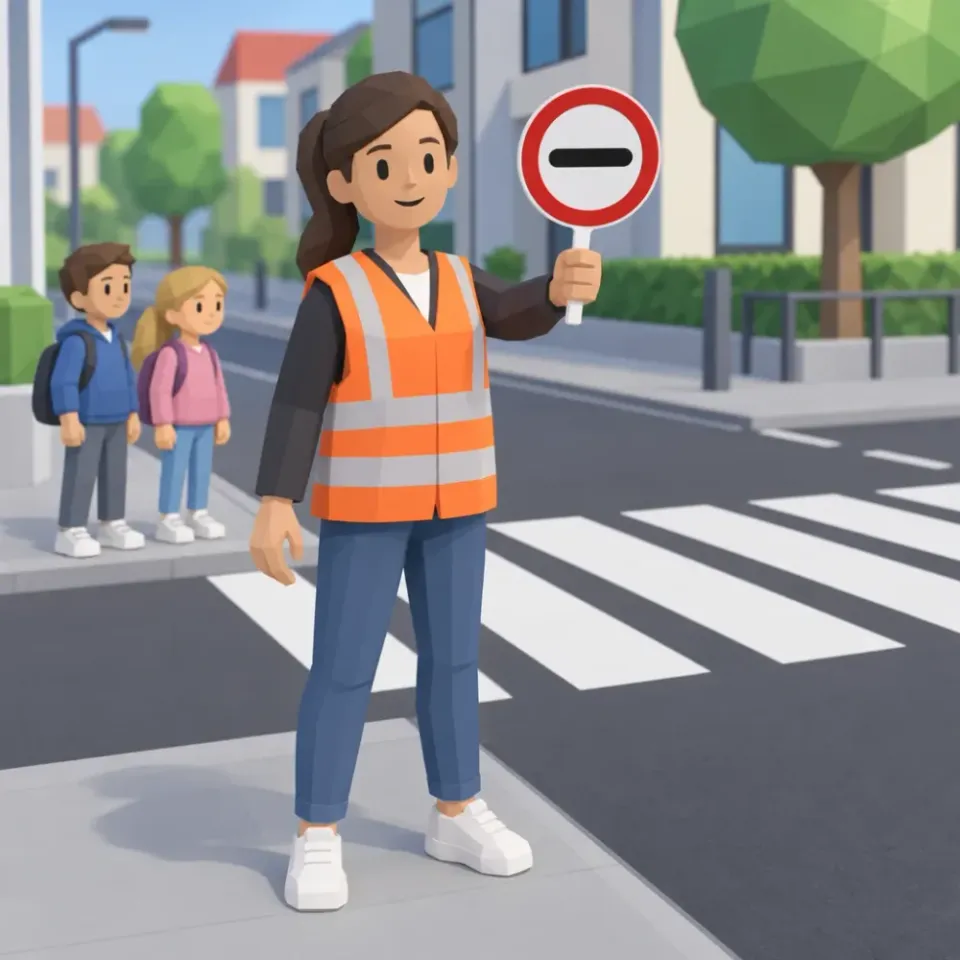 | Crossing guards (klaar-overs) at schools, in an orange vest. They only give the stop signal with sign F10. |
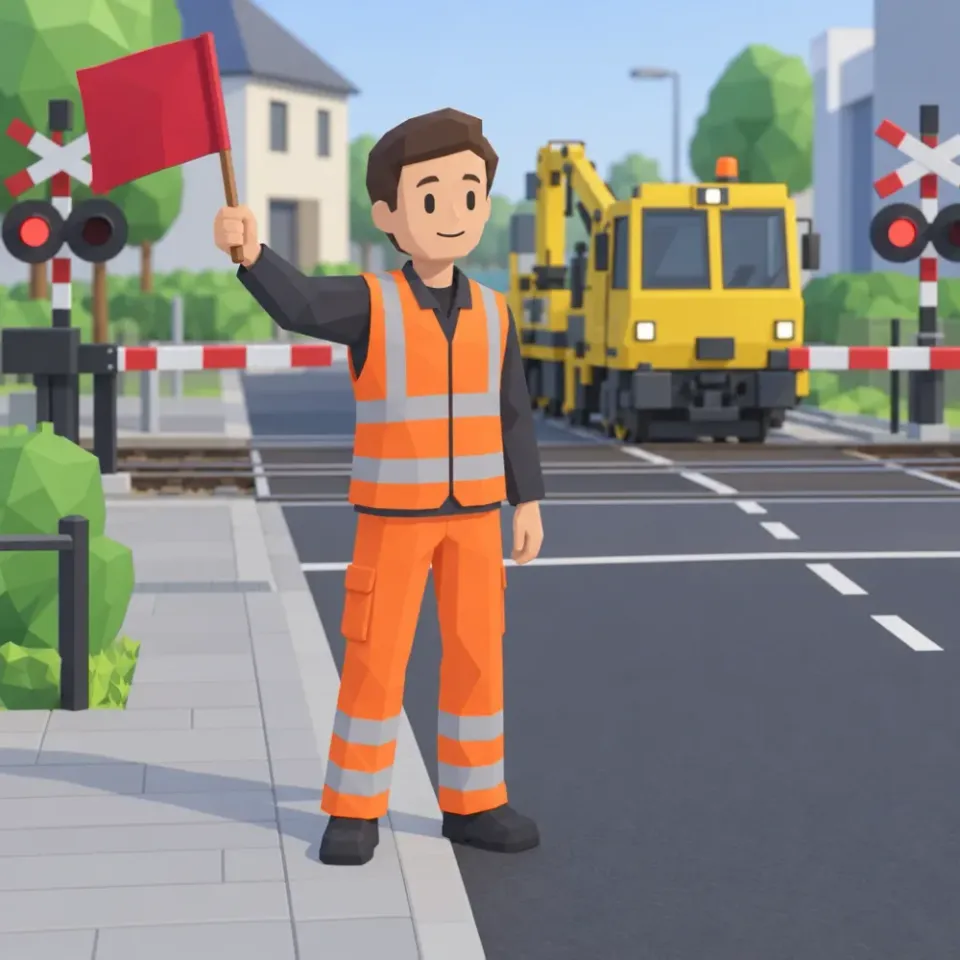 | Escorts of a rail vehicle: if they show sign F10, a red flag or a red lamp, you stop. |
Where do you meet a traffic controller?
Often at roadworks, events and accidents, and when a traffic light is broken. Crossing guards stand at schools. A large transport sometimes has escorts who stop traffic for a moment as well.
The signals of the traffic controller
The official gestures are set out in Annex 2 of the RVV 1990. Almost all of them mean stop. There is no separate signal to drive on. If your direction gets no stop signal, you may go.
Read the arm as a barrier
From your vehicle, identify the controller’s position and signal. You always pass him on the right. Think of a horizontal arm as a barrier for the specified approach direction: if it lies across your half of the road, you stop. Do not copy the other vehicles: their directions may be free.
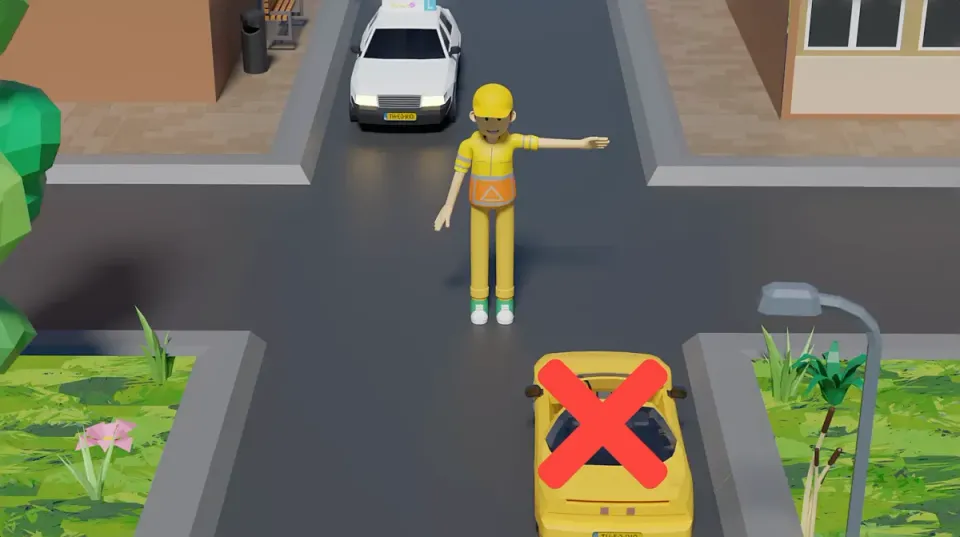
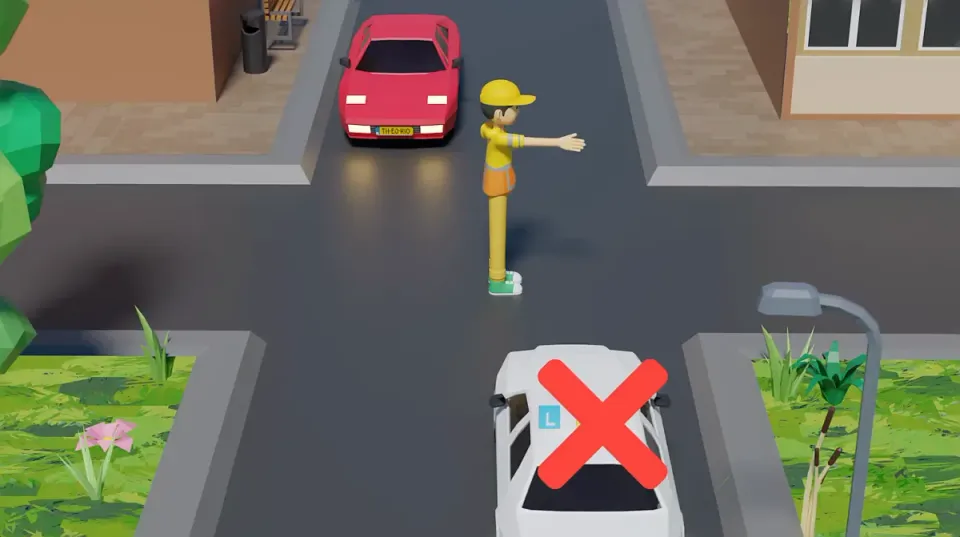
So whether you see his chest or his back tells you nothing on its own. If he faces you and holds his left arm out to the side, that arm lies across your side of the road. If he holds his right arm out, it lies across the other side: that stop signal is for the traffic behind him.
All signals at a glance
| Picture | Signal | Meaning |
|---|---|---|
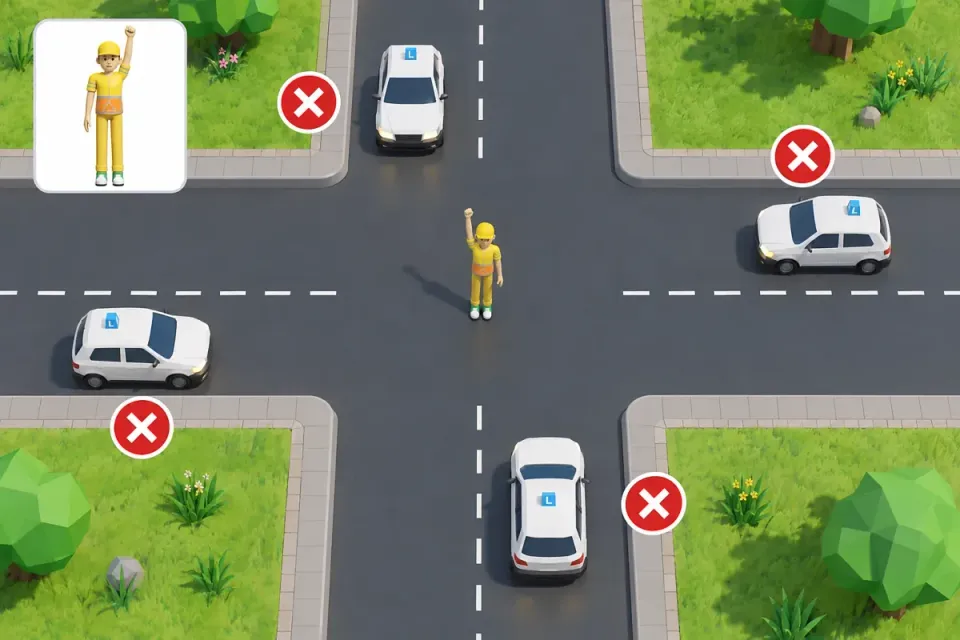 | 1. General stop signal: arm raised | All approaching traffic stops. |
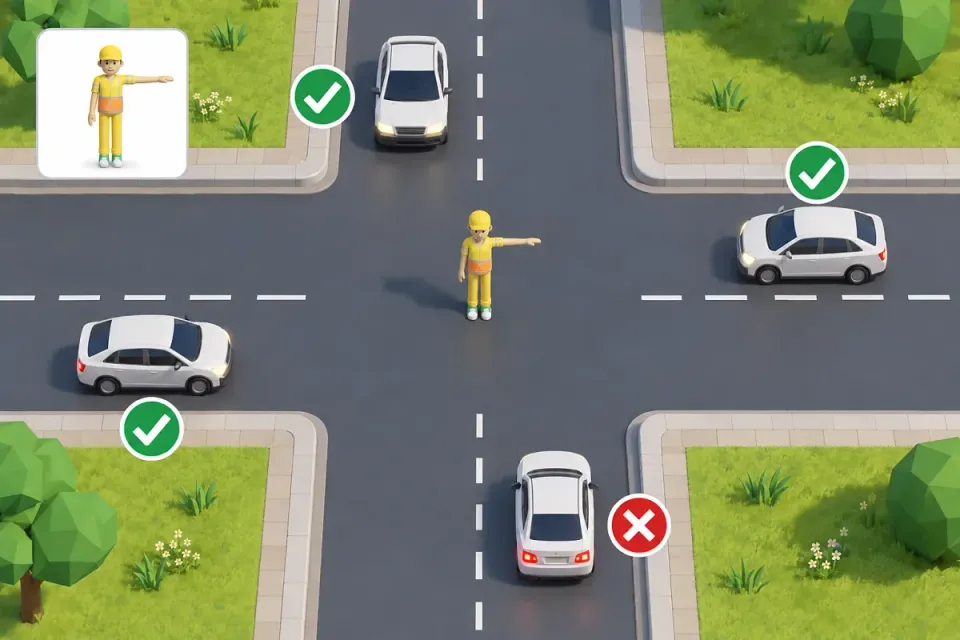 | 2. One arm sideways, he faces you | Stop for traffic approaching the controller from the front. |
| 3. One arm sideways, you see his back | Stop for traffic approaching the controller from behind. |
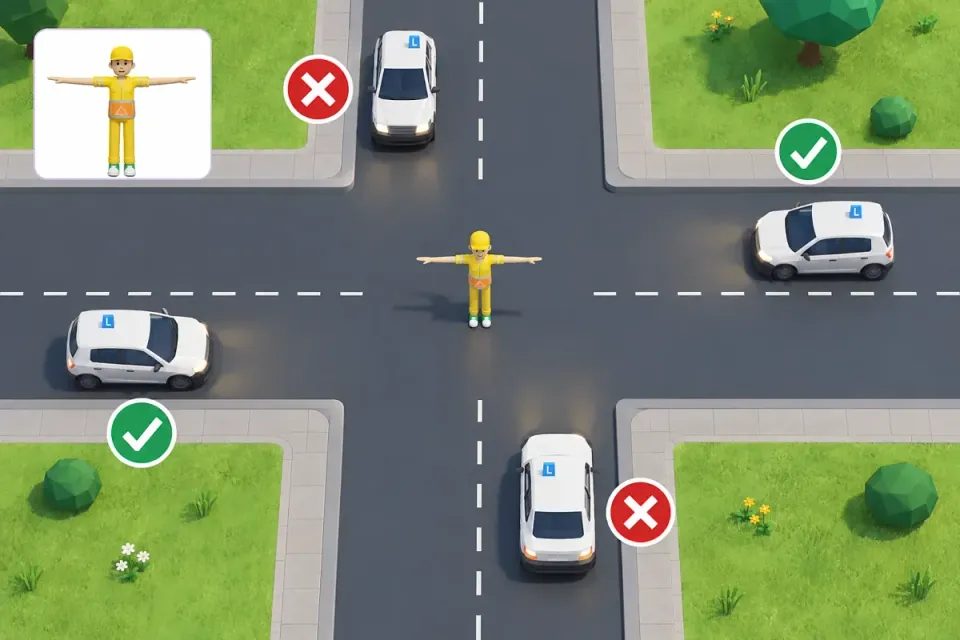 | 4. Both arms sideways | Traffic from the front and rear stops. |
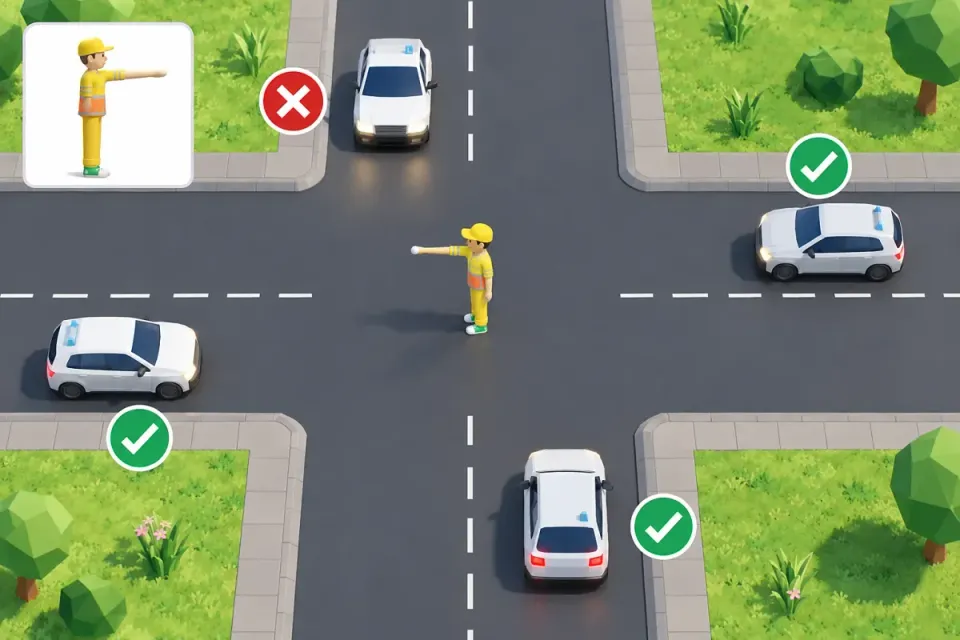 | 5. Right arm extended forwards | Traffic approaching from the controller’s right stops. |
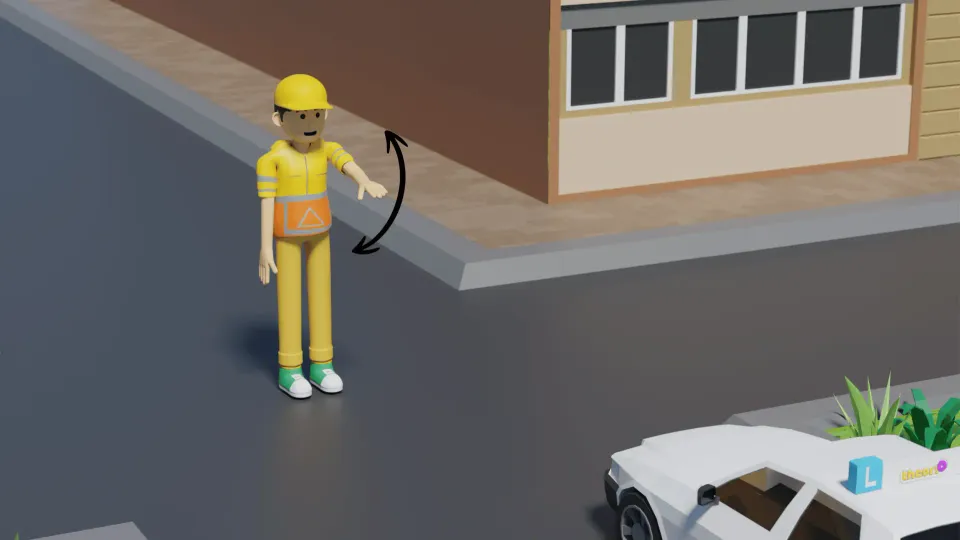 | 6. Arm moving up and down | Reduce speed. |
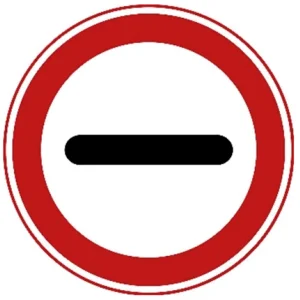 | 7. Crossing guard with sign F10 | Stop. |
Raised arm: stop and clear the junction
Do not continue just because you were previously allowed to move. Stop before entering; if already on the junction, clear it safely. A raised arm does not give you permission to set off early. Wait for a clear instruction.
Memory aids
| Barrier: an arm across your side means the barrier is down. No arm across your side means it is up. |
| T-pose: if he stands like a T with both arms out, the traffic in front of and behind him stops. |
| Arm straight up: think of a red light for every direction. |
| Arm up and down: the hand pushes your speed down, as it were. |
CBR pitfalls with traffic controllers
❌ Wrong: driving on at green while the controller signals stop. ✅ Right: the controller's signal comes before the light.
❌ Wrong: mixing up left and right when he faces you. ✅ Right: if he faces you, his right is your left.
❌ Wrong: taking a pointing hand as a stop signal. ✅ Right: only the fixed gestures in the table are signals.
❌ Wrong: ignoring a school crossing patrol with a stop sign. ✅ Right: you obey his sign F10 too.
Practise like the exam
Example questions like in the CBR exam
Real questions from the Theorio app. You can expect similar questions in your CBR exam.
Question 1 of 6
During road works or large events, you may encounter a traffic controller.
You see a traffic controller at the intersection, are you required to listen to their instructions?
Tap the answer you think is right.
What does the traffic controller indicate?
Tap the answer you think is right.
Which vehicle may continue driving?
Tap the answer you think is right.
Which vehicle is allowed to continue driving?
Tap the answer you think is right.
Are you allowed to continue driving?
Tap the answer you think is right.
What can you expect here?
Tap the answer you think is right.
Answers and explanations for the example questions
Question 1: You see a traffic controller at the intersection, are you required to listen to their instructions?
Correct answer: Yes
Yes, the instructions of the traffic controller always take precedence over traffic lights, signs, and markings 👮♂️. Always follow the instructions of the traffic controller✔️.
Question 2: What does the traffic controller indicate?
Correct answer: Reduce speed
The traffic controller moves his hand up and down ✋ to indicate that you should drive slower. Reduce your speed🐢.
Question 3: Which vehicle may continue driving?
Correct answer: No vehicles
The traffic controller gives a general stop signal 🛑, which means no vehicle may continue driving. Everyone must stop👮.
Question 4: Which vehicle is allowed to continue driving?
Correct answer: Vehicle B
Vehicle A is stopped by the traffic controllers arm ✋, while vehicle B is allowed to continue driving. Vehicle B has permission to proceed➡️.
Question 5: Are you allowed to continue driving?
Correct answer: No
No, the traffic controller has closed the lane to his right 🚫, so the learner car must stop; the yellow car is allowed to continue.
Question 6: What can you expect here?
Correct answer: Police check
This sign appears at border controls or police checks. They are often held by a traffic officer.
FAQ
Frequently asked questions
Short answers to questions that often come up on this subject.
What has priority: a green traffic light or a stop signal from a traffic controller?
The stop signal from the traffic controller has priority. Instructions from authorized persons go above traffic lights.
What does an arm moving up and down mean?
This means you must reduce your speed. It is not a stop signal.
Do you also have to stop if a traffic controller turns their back to you with stretched arms?
Yes. With both arms stretched horizontally sideways, traffic approaching the controller from the front and the back must stop. The approach direction and exact gesture determine to whom the signal applies.
What does VOLGEN on a police car mean?
VOLGEN means follow: you drive behind it and stop where the police or Rijkswaterstaat stop or where they show you.
What does a traffic controller's raised arm mean?
That all traffic from all directions stops. If you are already on the junction, you clear it.
Do you have to stop for a crossing guard at a school?
Yes. If a crossing guard (klaar-over) holds up the round stop sign F10, you stop. This is in article 82 of the RVV 1990 and it applies to all drivers and riders, so cyclists and moped riders too.
Does a traffic controller have a signal for driving on?
No, the law has no separate signal for driving on. The fixed gestures say who must stop or slow down. Whoever gets no stop signal has a free direction. A controller may also wave you on or tell you in words.
Ready to practise?
Test your knowledge of Traffic Signs, Signals & Directions with 90 practice questions in the app.
Every CBR sign · start for free
Your first quiz is free, no account needed. After that from €34.99 for 90 days of access.