Part 4 of 8 in Traffic Signs, Signals & Directions
Sub-signs
Sub-signs say where, when or for whom the sign above applies. Exceptions, symbols, distance or length: how to read them for the CBR exam.


Written by Chris Prosman Reviewed by Dirk van Zuijlen
Updated Reviewed on 5 min read
Every CBR sign · start for free
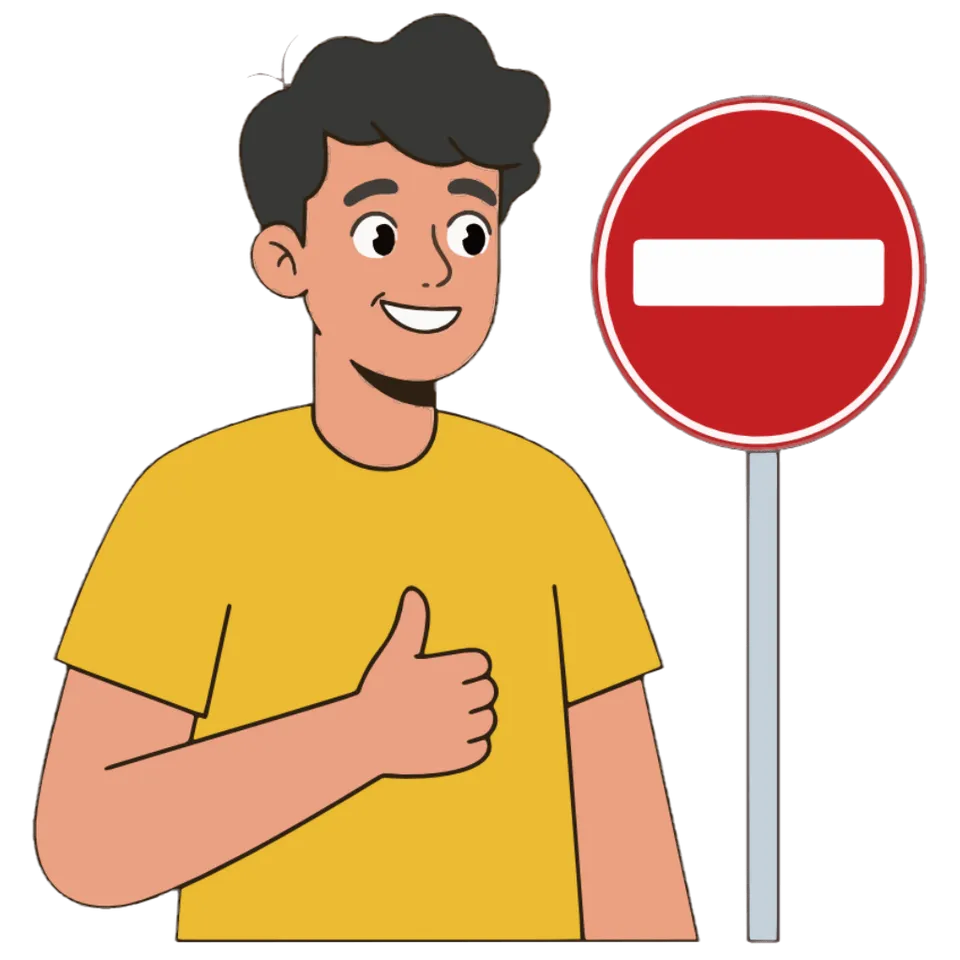
A sub-sign is a rectangular sign below a traffic sign. It says where, when or for whom the sign above applies, or it makes an exception. You find sub-signs with almost every kind of sign: prohibition signs, mandatory signs, warning signs, priority signs and speed signs. Always read the combination from top to bottom.
What is a sub-sign?
A sub-sign is a small rectangular sign below a traffic sign. It belongs to the sign above it and changes or explains the rule of that sign. This is in article 67 of the RVV 1990. A sub-sign can:
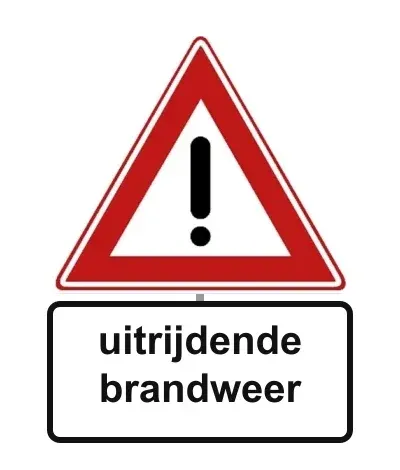
Explain. It says what the sign means. Under the warning sign "danger" (J37) the sub-sign says which danger.
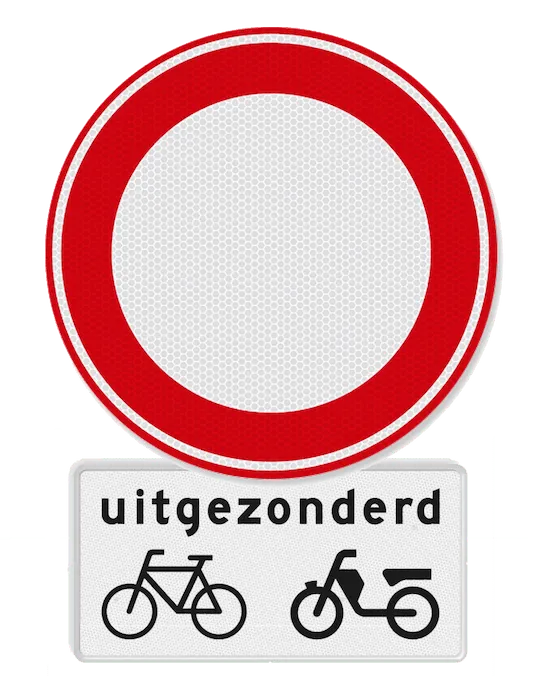
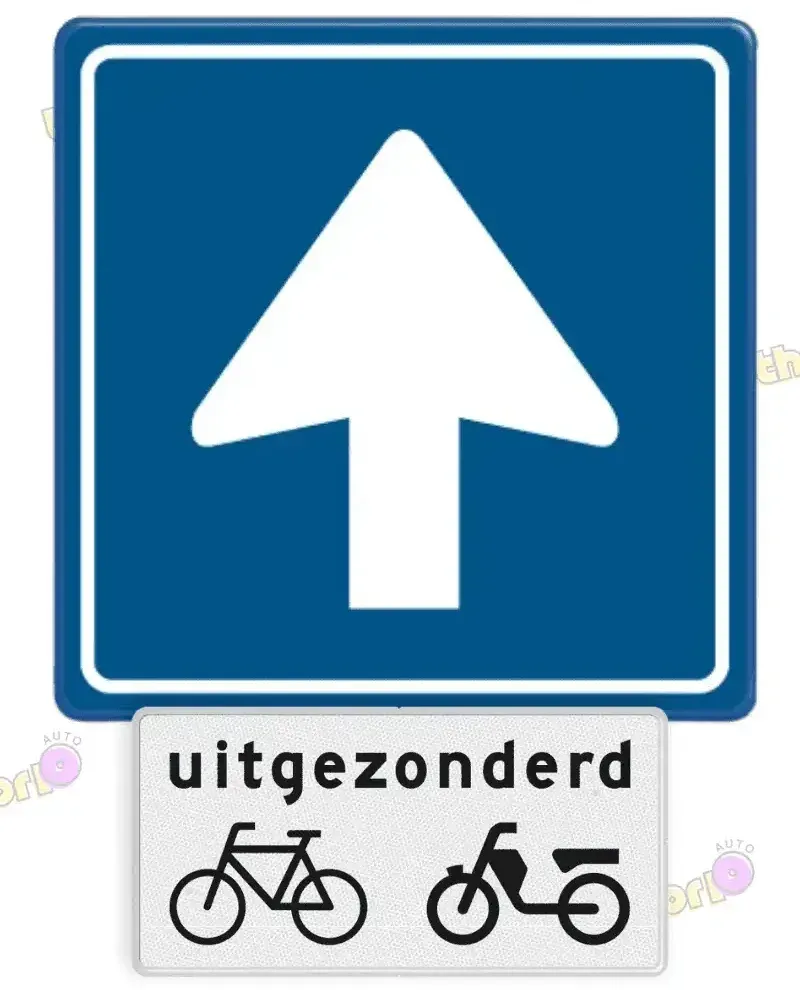
Make an exception. Does it say "uitgezonderd" (except) with symbols? Then the sign does not apply to those road users.
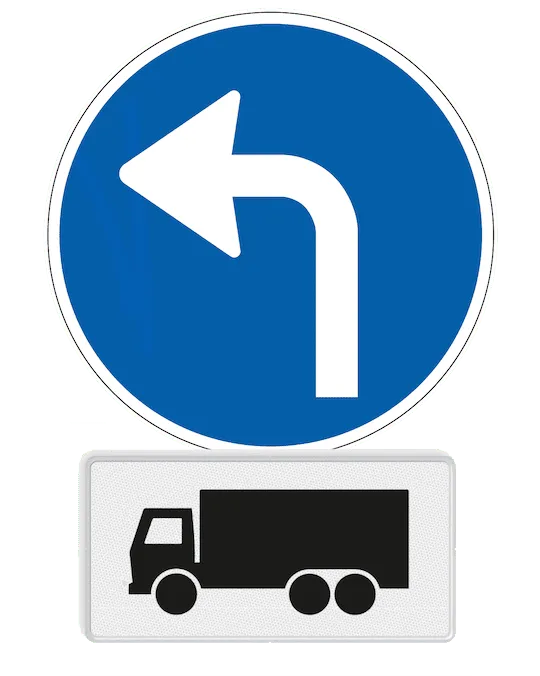
Limit it to certain vehicles. Are there only symbols, without "uitgezonderd"? Then the sign applies only to those road users.
Limit it to certain times. Are there days or hours on it? Then the sign only applies at those times.
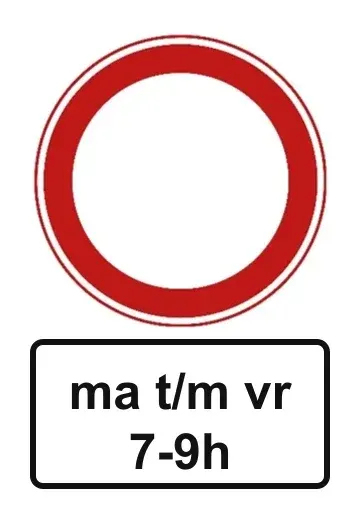
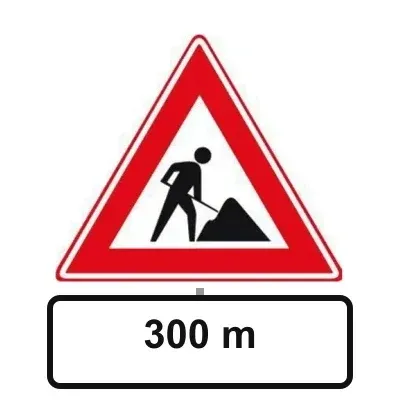
Give a distance or length. A number in metres or kilometres says how far it still is, or over what length the sign applies.
Rules for reading sub-signs
From top to bottom. The top sign gives the rule, the sub-sign adds to it. If there are several sub-signs, they all count.
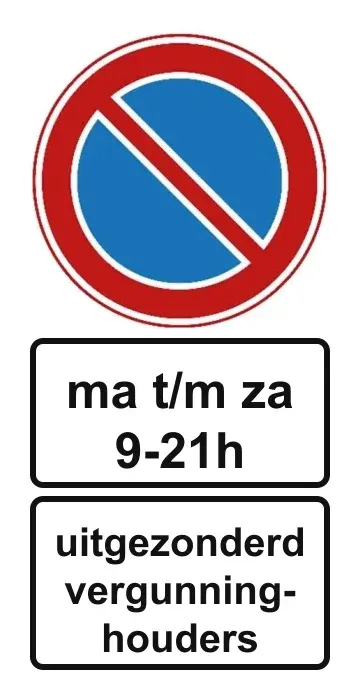
This is how you read this example. You have no parking permit:
- Tuesday at 14:00: you may not park here.
- Tuesday at 22:00: the ban does not apply. You may park here.
- Sunday: the ban does not apply all day.
Do you have a permit for this place? Then the ban never applies to you.
Look closely at the symbols. Only a symbol means "only for this group". "Uitgezonderd" with a symbol means "for everyone except this group".
| Only a symbol | "Uitgezonderd" with a symbol |
|---|---|
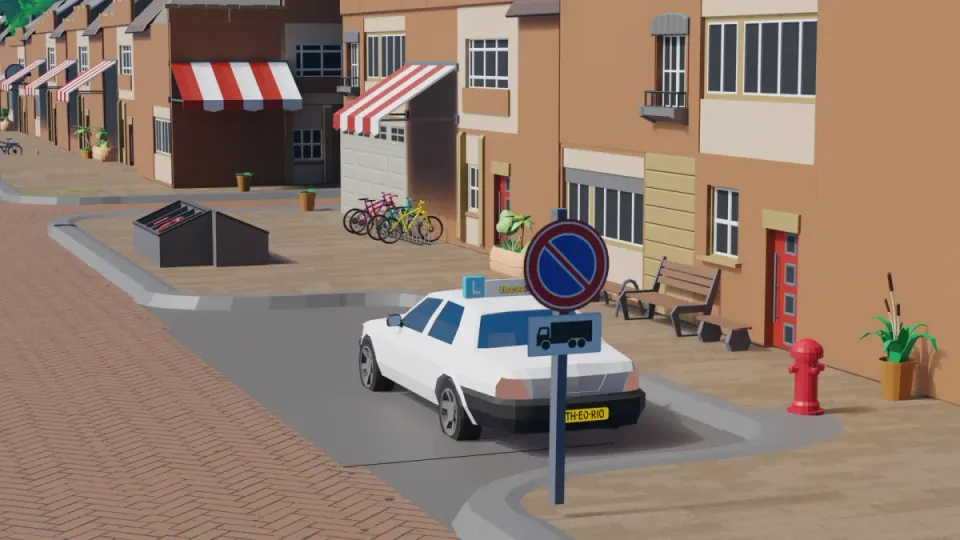 | 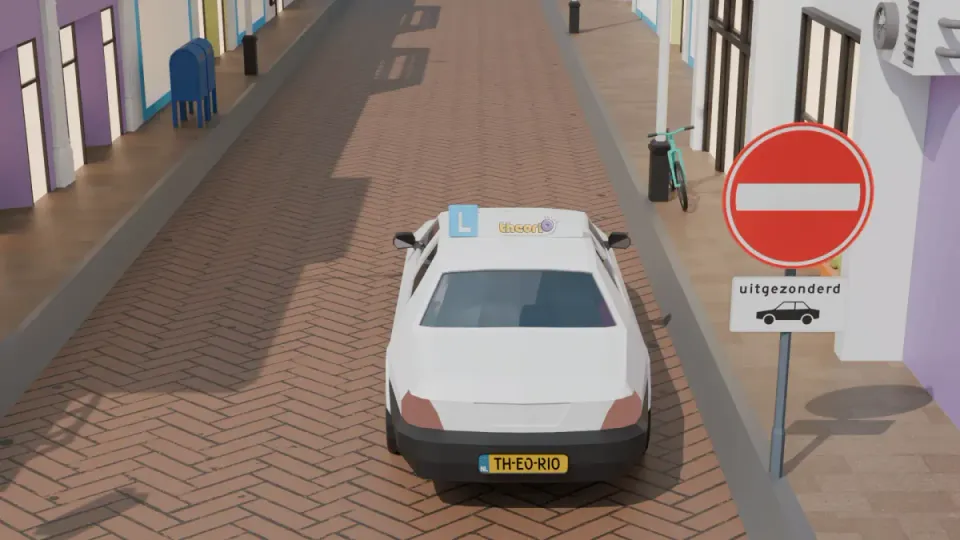 |
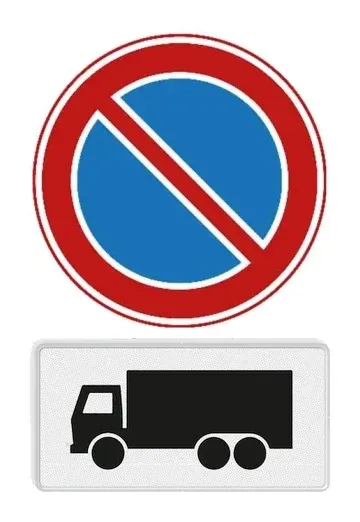
| The parking ban applies only to lorries. In a car you may park here. | Entry is forbidden for everyone except cars. So the learner car may enter. |
Times on the sub-sign say when the sign applies. Outside those times the sign does not apply.
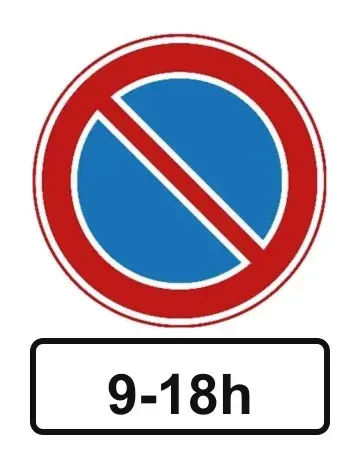
At 12:00 you may not park here. At 19:00 you may: the ban does not apply then. If there are no days on the sub-sign, the times apply every day.
Sub-sign with arrows: what does it mean?
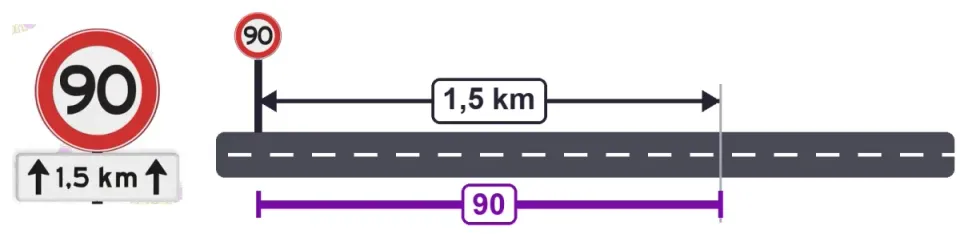
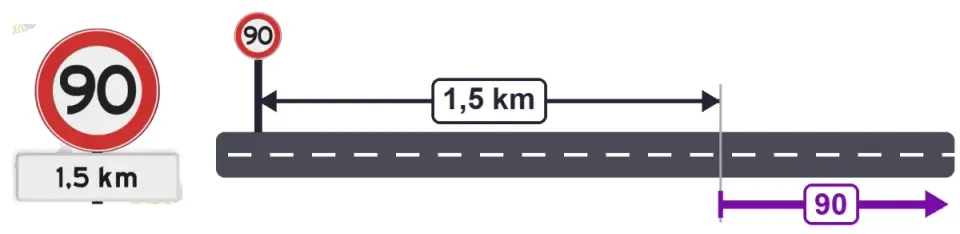
A white sub-sign with a number and arrows is a length. The sign applies from the sign, over that distance. Is there a number without arrows? Then it is a distance: the sign above only applies after that distance.
Sub-signs you often meet in the CBR exam
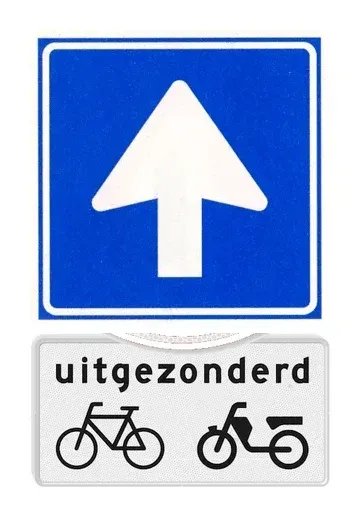
"Uitgezonderd" with a bicycle and a moped under a one-way sign or no-entry sign: cyclists and moped riders may ride against the direction. What that means for you is on the page about the one-way street sign.
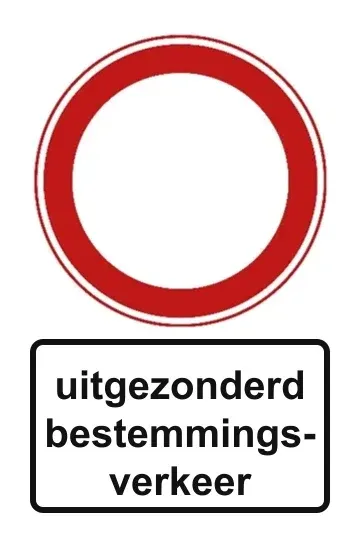
"Uitgezonderd bestemmingsverkeer" (except destination traffic) under a closure: only people who need to be on that road may enter. Who counts as destination traffic is on the page about prohibition signs.
A no-parking sign with a sub-sign, for example with times or a lorry: the ban then only applies at those times, or only to lorries. More on the page about parking signs.
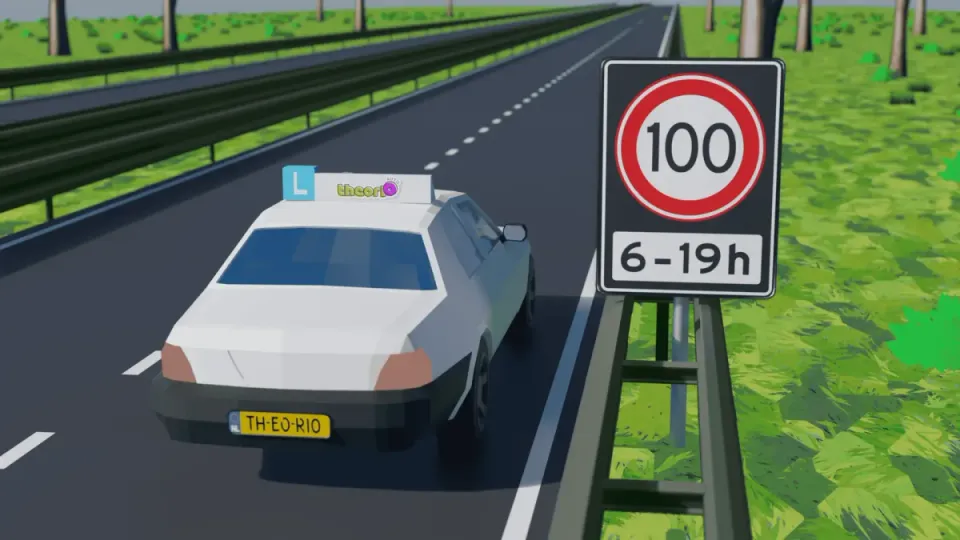
A time, such as "6-19h": common on motorways, where 100 km/h often only applies between 6 and 19 h. See speed on the motorway.
A lorry under a sign: the sign only applies to lorries, like the mandatory direction above.
The course of the priority road: under a priority sign a sub-sign shows which way the priority road goes. See priority junctions.
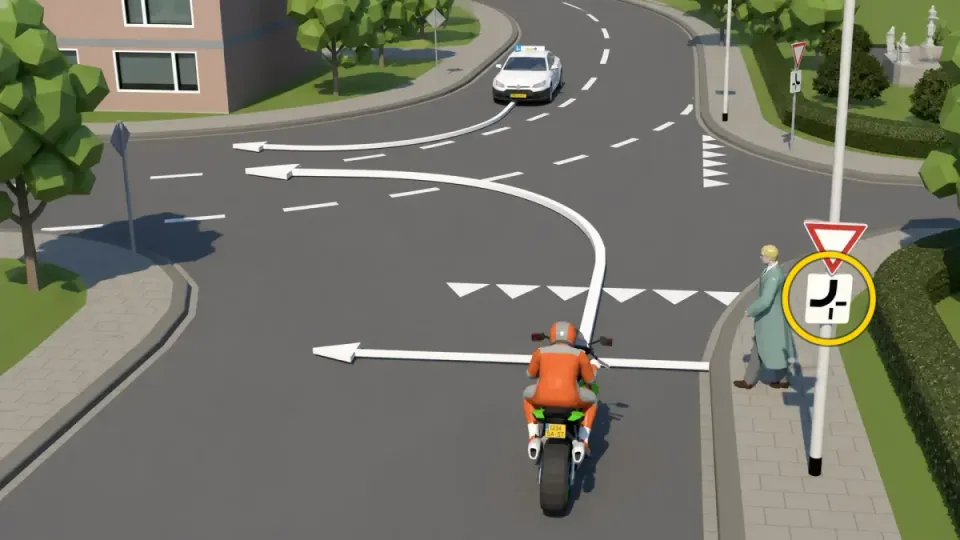
CBR traps with sub-signs
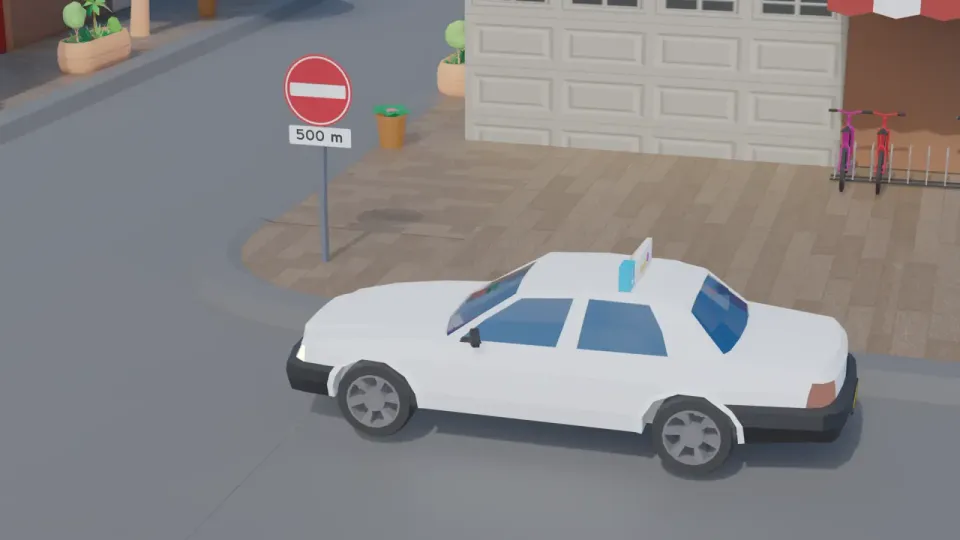
❌ Wrong: thinking you may not enter the road at all at a no-entry sign with "500 m" below it. ✅ Right: without arrows the ban only starts after that distance. Up to that point you may enter the road, for example to reach a side street or a driveway.
❌ Wrong: reading a sub-sign with only a symbol as an exception. ✅ Right: without the word "uitgezonderd" the sign applies only to that group.
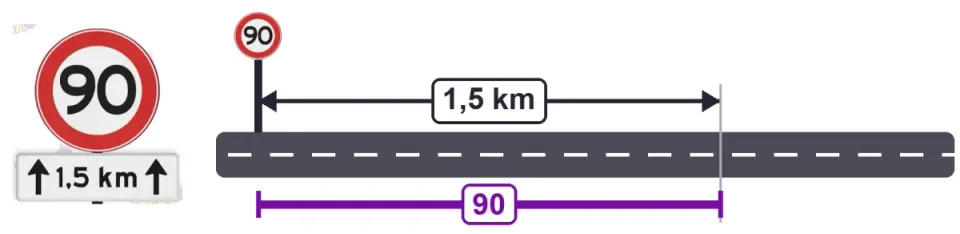
❌ Wrong: not noticing the arrows next to the number. ✅ Right: with arrows the sign applies now, over that length. Without arrows only after that distance.
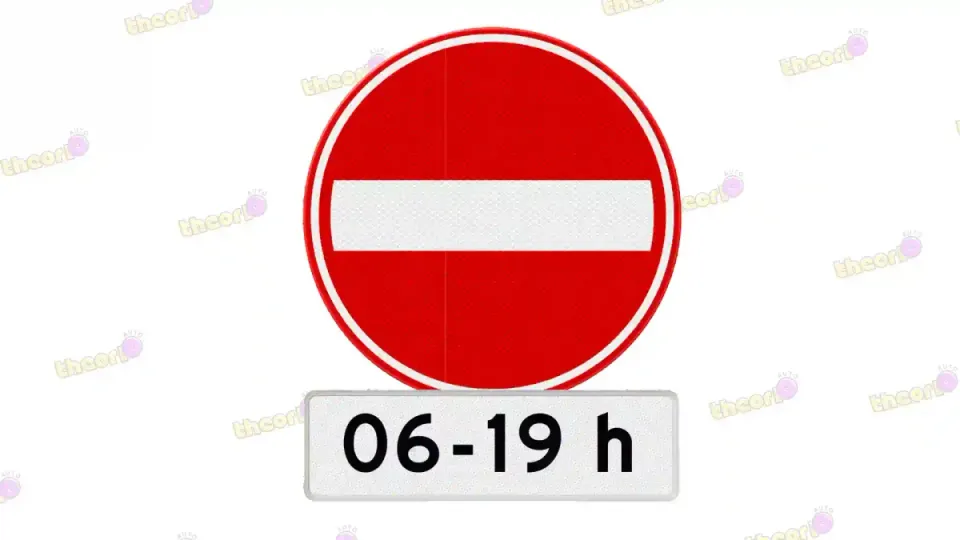
❌ Wrong: following a sign with a time on its sub-sign all day. ✅ Right: outside the time on the sub-sign the sign does not apply.
❌ Wrong: only looking at the top sign. ✅ Right: always read down to the last sub-sign. That is often where the exception in the question is.
Practise like the exam
Example questions like in the CBR exam
Real questions from the Theorio app. You can expect similar questions in your CBR exam.
Question 1 of 5
Is it 9:00, are you allowed to drive on this road?
Tap the answer you think is right.
This sign warns of slip hazard, for example due to rain, leaves, or oil. Subsigns like the white square sign below can be placed under any traffic sign and provide specific exceptions or additional information, such as "in wet conditions" or "Except for cyclists"
At which sign is there a slip hazard under all circumstances, from the sign?
Tap the answer you think is right.
This sign indicates a mandatory driving direction to the left.
Are you allowed to drive straight ahead here?
Tap the answer you think is right.
Are you allowed to turn right here?
Tap the answer you think is right.
Is parking allowed here?
Tap the answer you think is right.
Answers and explanations for the example questions
Question 1: Is it 9:00, are you allowed to drive on this road?
Correct answer: No
Between 6:00 and 19:00 it is forbidden to enter this road from this side. This means that at, for example, 9:00 you cannot enter the road from this side.
Question 2: At which sign is there a slip hazard under all circumstances, from the sign?
Correct answer: Sign B
At sign A, we see the subsign "In wet conditions." This indicates that there is only a slip hazard if the road is wet, such as after rainfall. At sign B, we see a subsign with two arrows and "500 meters." The arrows indicate that from this point a slip hazard can occur over a distance of 500 meters. Without the arrows, this would mean that the slip hazard only starts after 500 meters.
Question 3: Are you allowed to drive straight ahead here?
Correct answer: Yes
The mandatory driving direction applies only to trucks. Only trucks must turn left here. You are allowed to drive straight ahead. ↩️
Question 4: Are you allowed to turn right here?
Correct answer: Yes
The answer is: Yes. Here is the explanation: Look at the white sign. It says 500 meters. That means: the road is still open. You may drive a little further. Only after 500 meters is it prohibited to continue.
Question 5: Is parking allowed here?
Correct answer: Yes
There is a no parking sign, but according to the sub-sign, this applies only to trucks 🅿️. With a regular car, you may park here normally.
FAQ
Frequently asked questions
Short answers to questions that often come up on this subject.
What do arrows on a sub-sign with a distance mean?
With arrows the sign applies from the sign over that length: 90 with 1.5 km and arrows means 90 over 1.5 kilometres. Without arrows it is a distance: the 90 only starts 1.5 km after the sign.
What does "uitgezonderd" (except) on a sub-sign mean?
That the sign above does not apply to the road users shown on the sub-sign. At a no-entry sign with "uitgezonderd" and a bicycle, cyclists may enter the road.
What does a sub-sign with only a symbol mean?
Then the sign only applies to that group. If there is only a lorry below a mandatory direction, only lorries must go that way.
Ready to practise?
Test your knowledge of Traffic Signs, Signals & Directions with 90 practice questions in the app.
Every CBR sign · start for free
Your first quiz is free, no account needed. After that from €34.99 for 90 days of access.