Priority rules for the CBR exam: the three basic rules, the step plan from sign to rule, when you can ignore the signs and who comes most from the right.
Priority rules decide who may go first at a junction. Is there no traffic controller, no working traffic lights, no priority signs and no give-way markings? Then three basic rules decide priority: drivers from the right go first, straight on along the same road goes before turning, and the short turn goes before the long turn.
The 3 CBR main rules for priority
Are there no signs, shark teeth, traffic lights or a traffic controller? Then three basic rules decide who goes first. Each rule belongs to its own situation.
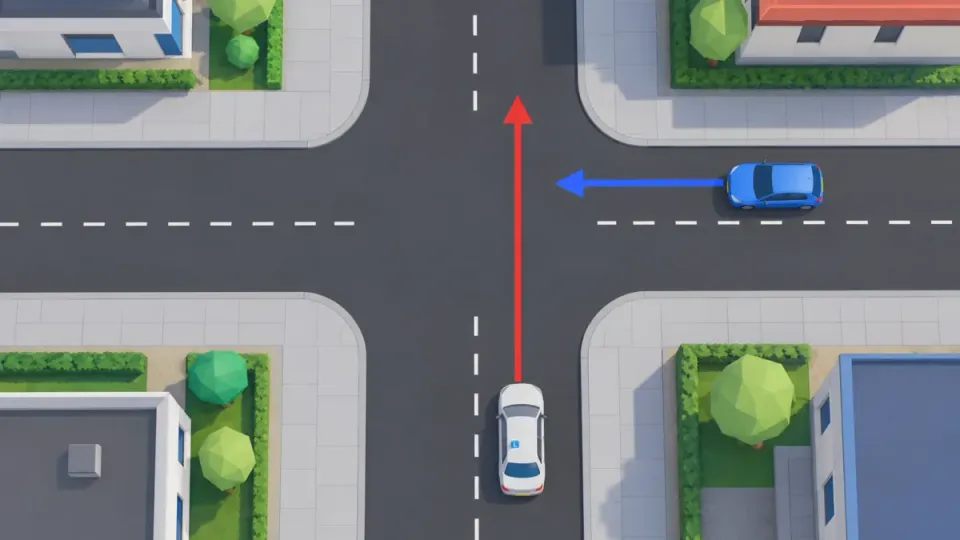
1. Drivers from the right: give priority to all drivers approaching from the right. Note: this only applies at an equal junction, so a junction without shark teeth and without stop signs or other priority signs.
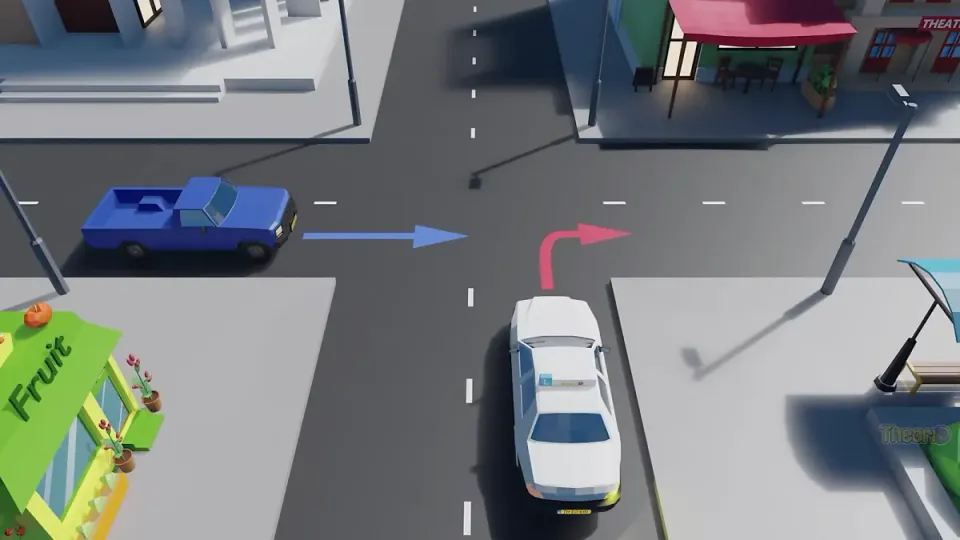
2. Straight ahead on the same road: traffic going straight on has priority over turning traffic. Note: this only applies if you are on the same road.
3. A short turn goes before a long turn: if two oncoming drivers both turn, the one turning right goes before the one turning left. Note: this too only applies if they are on the same road.
Rule 1: the right goes first, only at an equal junction
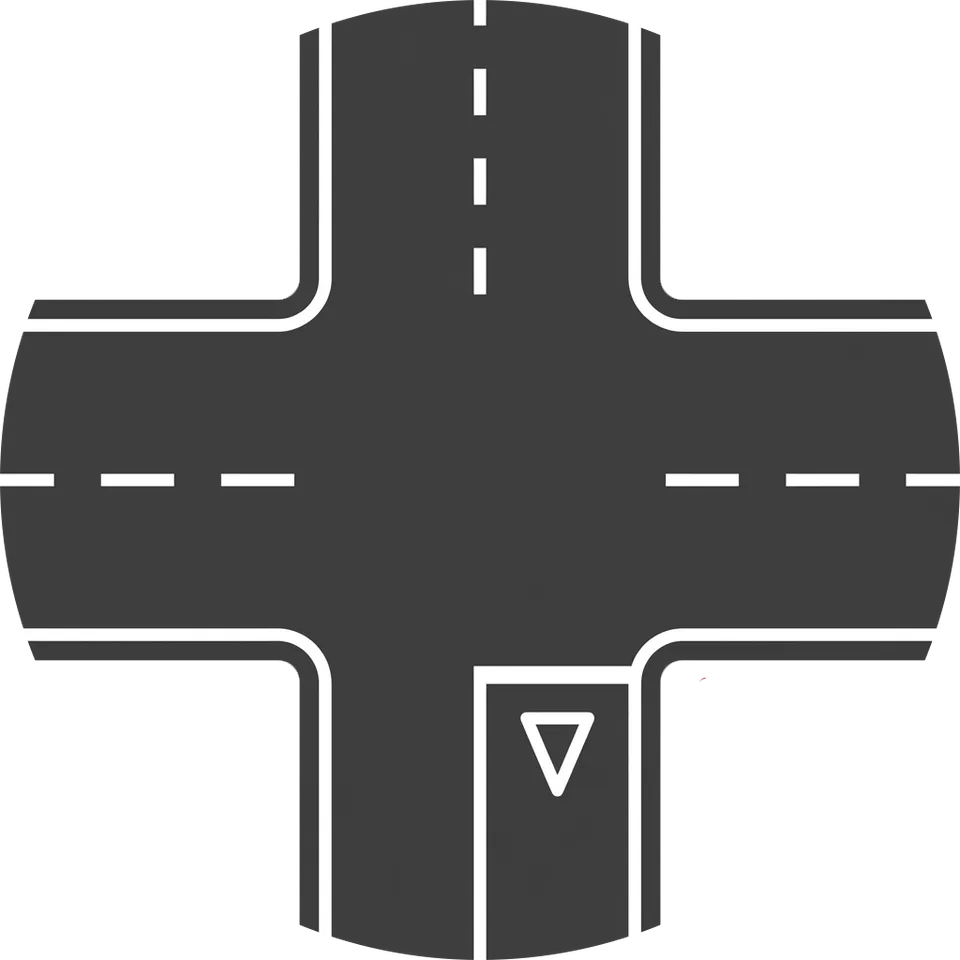
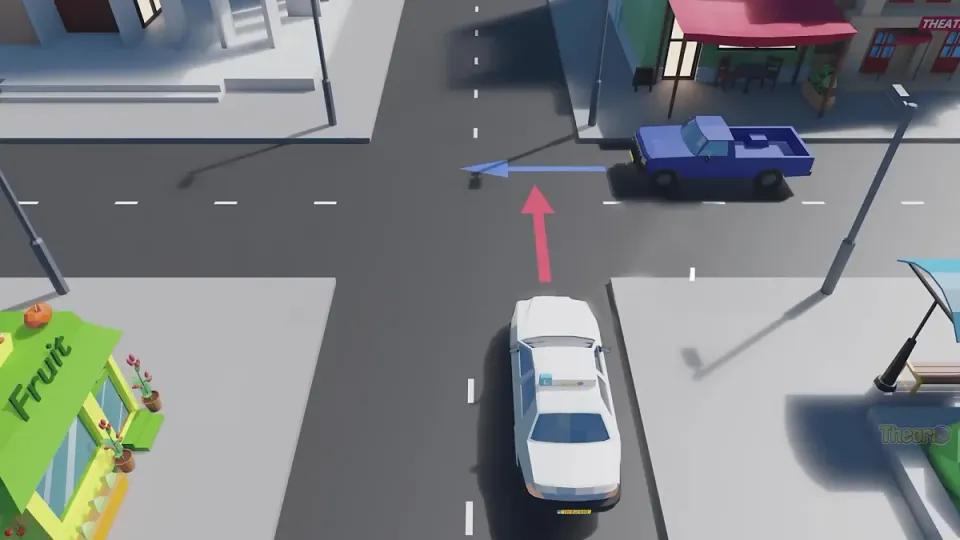
Equal junction: no shark teeth, no stop sign and no priority sign. The blue car approaches from the learner car’s right and goes first.
You recognise an equal junction by what is not there: no shark teeth, no stop sign, no priority sign and no working traffic lights. Only then does "the right goes first" apply. Are there shark teeth or a stop sign? Then the driver who has them waits, even when coming from the right.
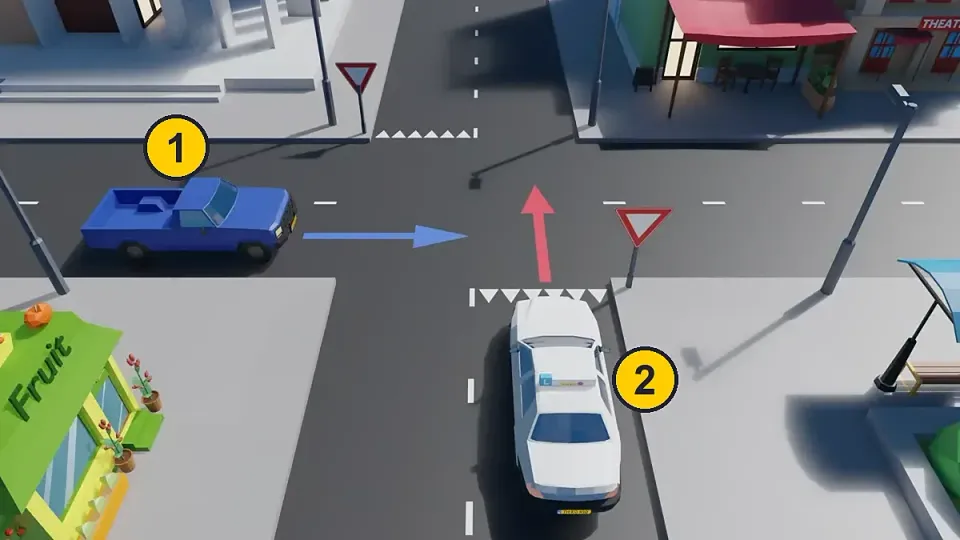
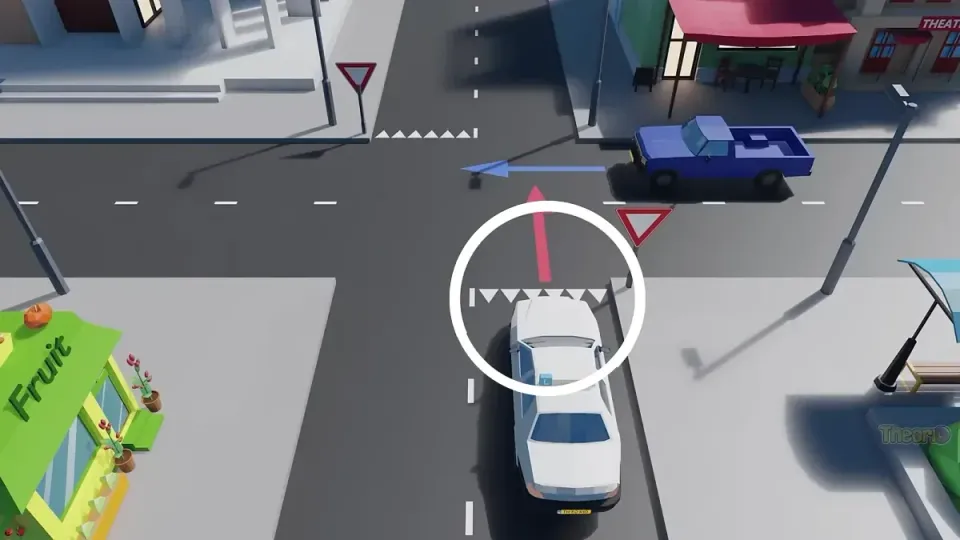
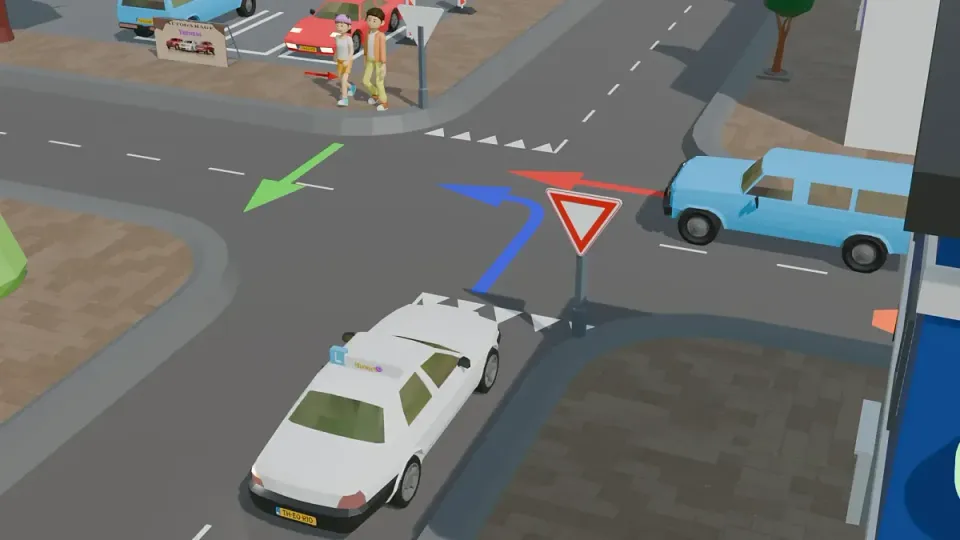
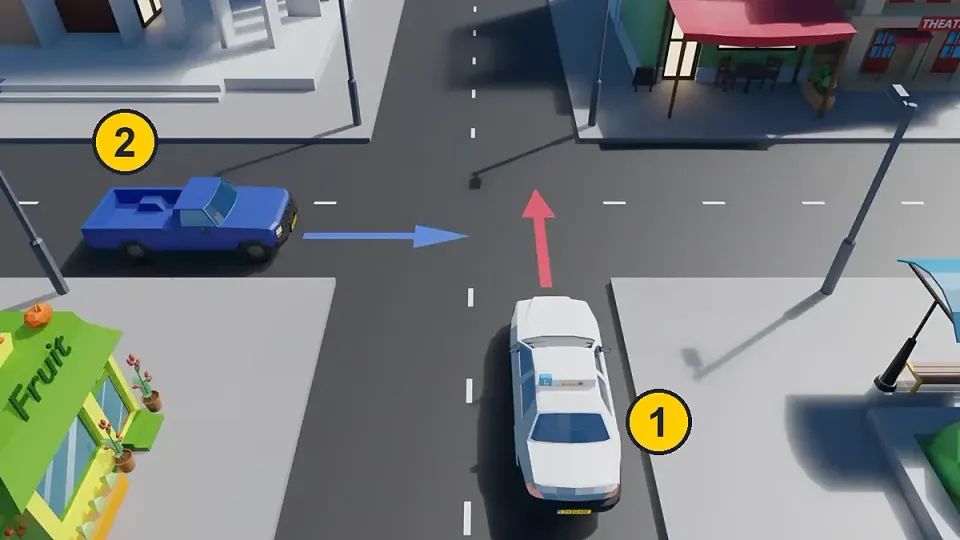
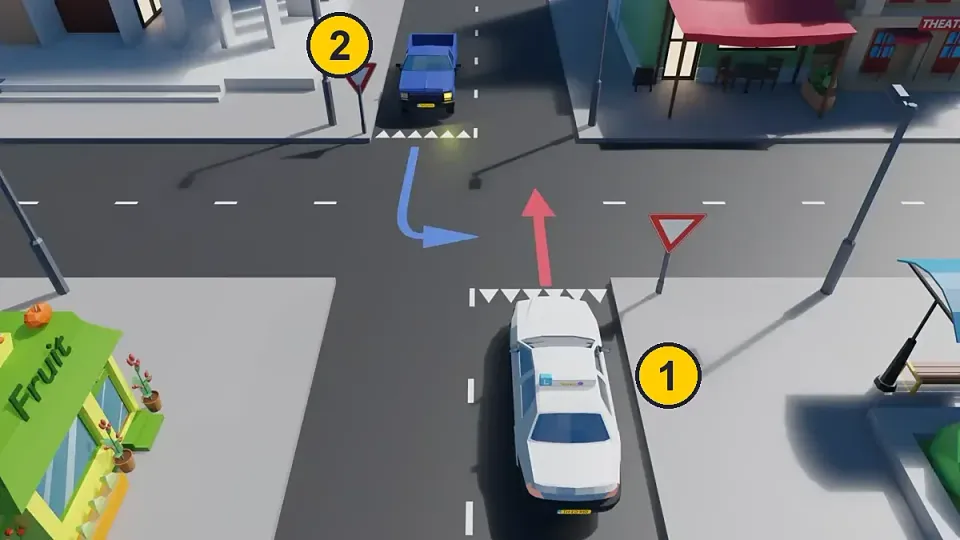
The learner car comes from the blue pick-up’s right, but it has shark teeth and sign B6. So the pick-up goes first (1) and the learner car waits (2).
Rule 2: straight on goes before turning, on the same road
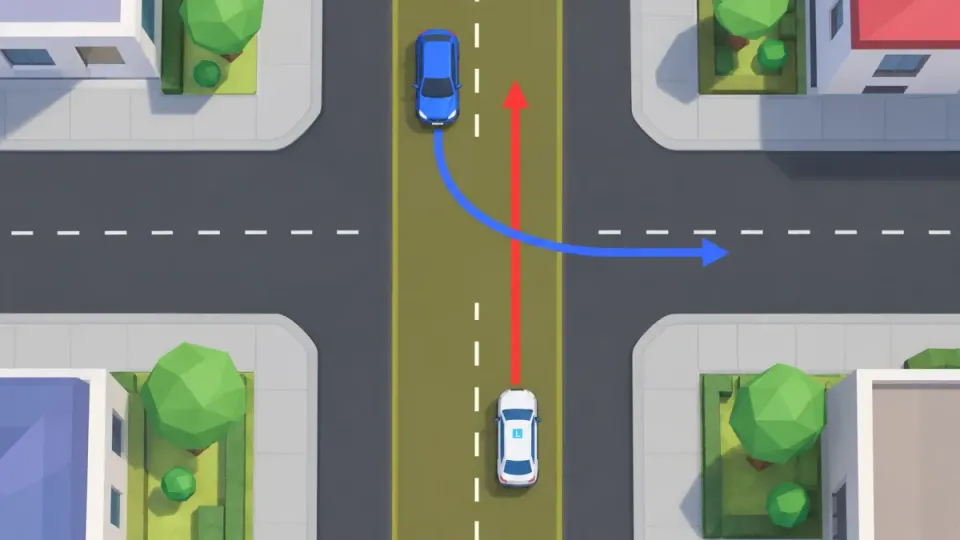
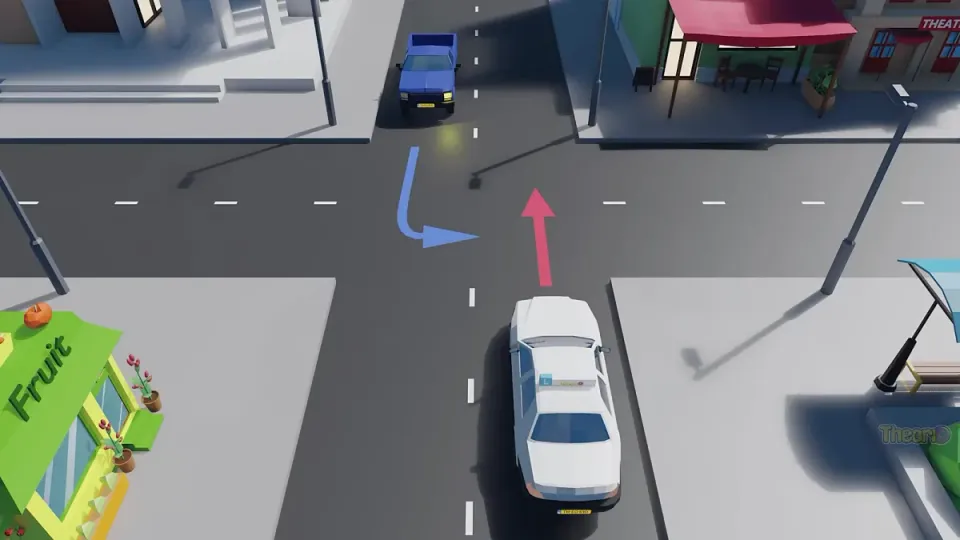
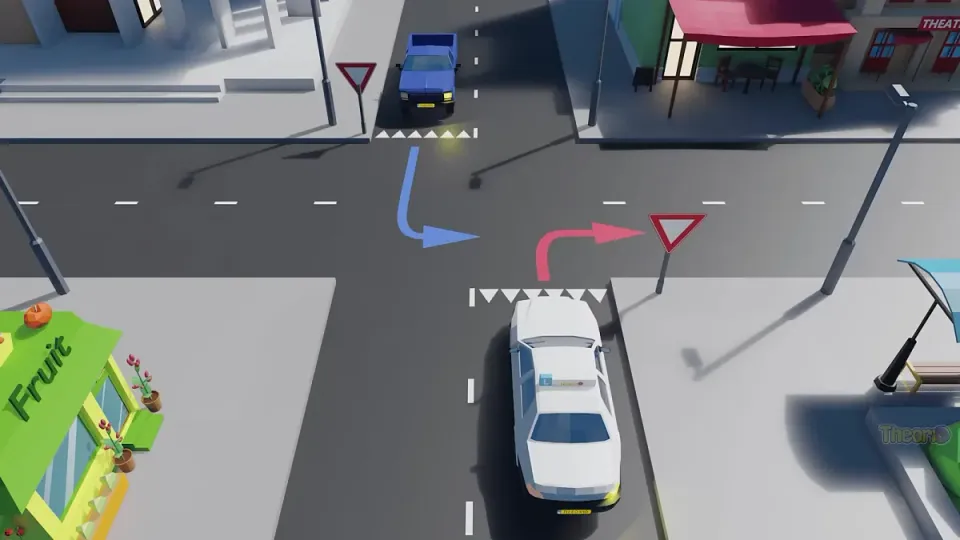
The same road (yellow): the learner car and the blue car face each other on the same road. The learner car goes straight on and goes first. The blue car turns left and waits.
NOTE! This rule only applies if you are on the same road: behind each other, next to each other or facing each other. Does the other driver come out of a side street? Then they are on a different road and this rule does not apply. Then you look at the signs or at rule 1.
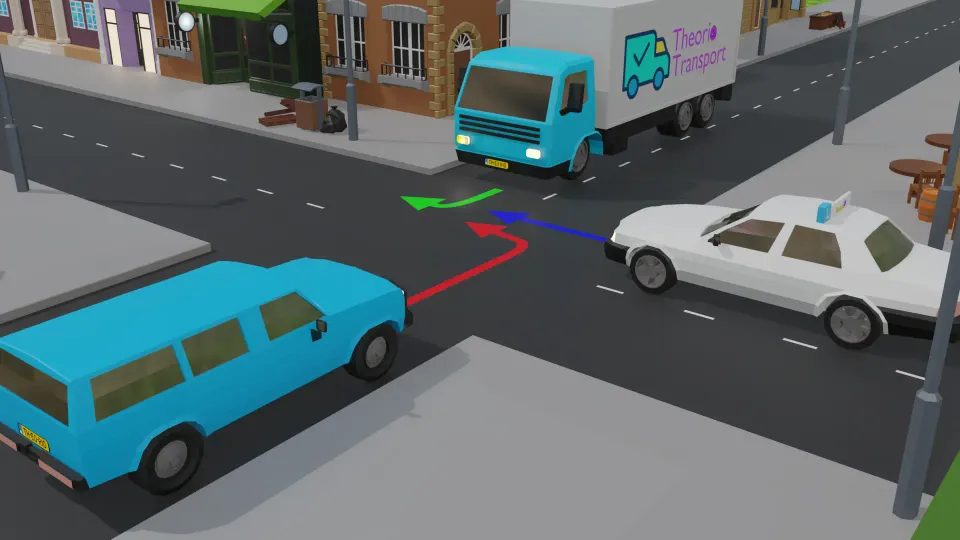
Rule 3: a short turn goes before a long turn, on the same road
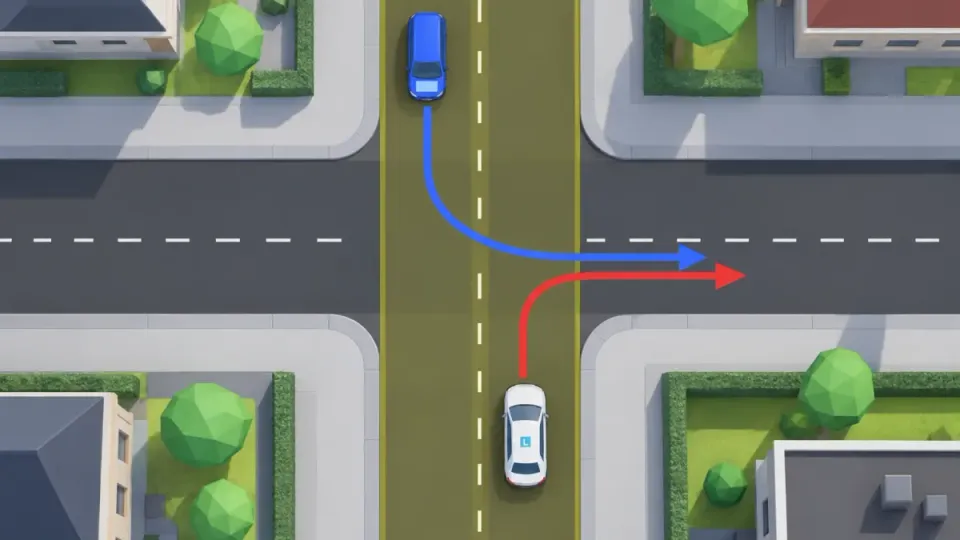
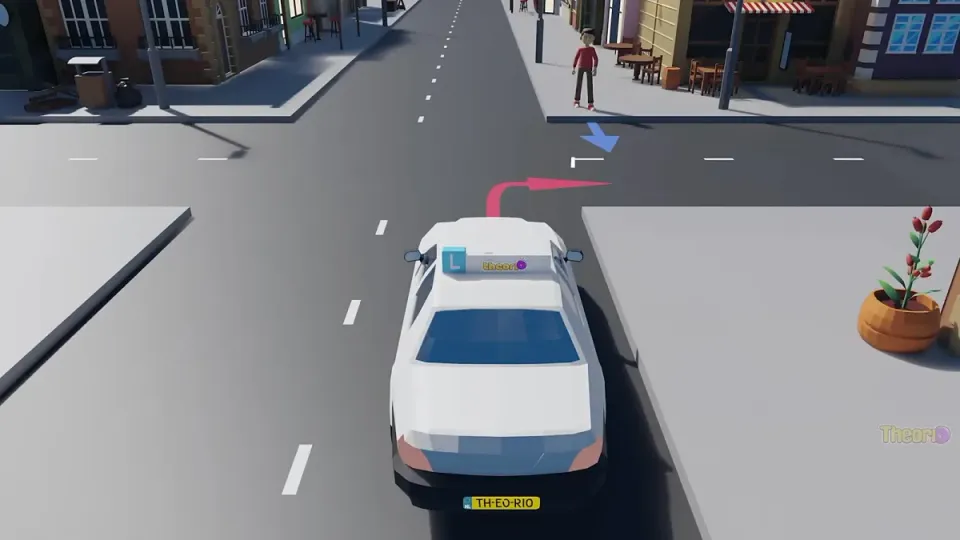
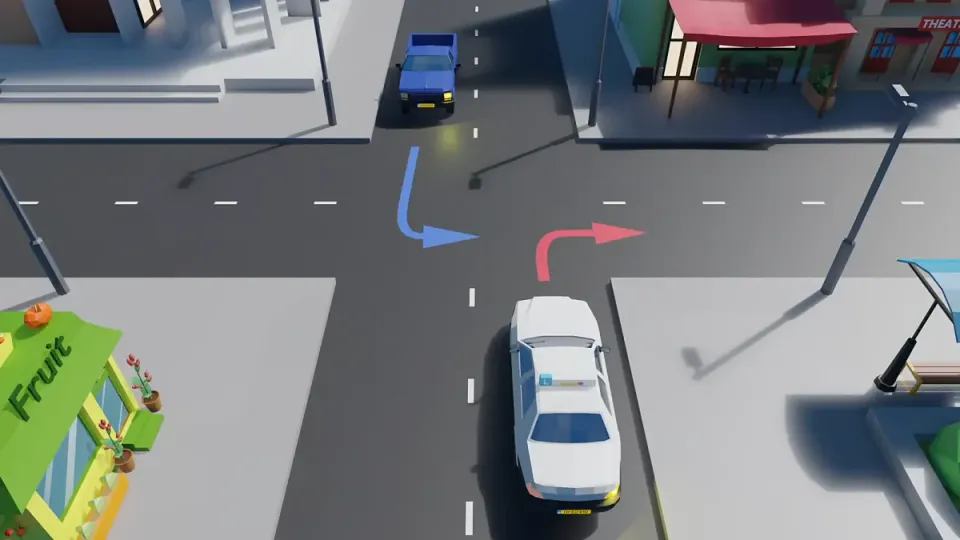
The same road (yellow): the two oncoming drivers are on the same road and turn into the same side street. The learner car makes the short right turn and goes first. The blue car makes the long left turn and waits.
NOTE! This rule too only applies if the two oncoming drivers are on the same road.
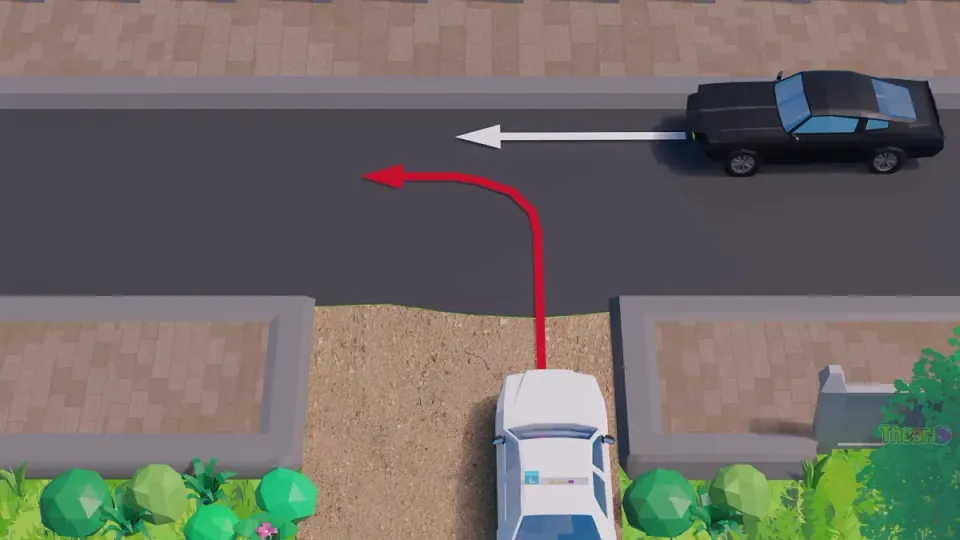
Always judge "right" from the driver's own position, not from the picture. There are a few exceptions: a tram also goes first from the left at a junction without signs, and anyone leaving a driveway exit or an unpaved road lets the other traffic go first. Everything about the junction without signs is under equal junction.
Applying the priority rules correctly: the step plan
Start with what controls priority. Only then compare the road users with each other. The step plan helps you look carefully. It is not a rule that gives one fixed order at every junction.
Traffic controller and traffic lights: an instruction from a traffic controller comes before everything, even a green light. If the traffic lights work, they overrule the priority signs and shark teeth.
Shark teeth or a stop sign: wait for crossing drivers. Do you have shark teeth or a stop sign? Then you let the drivers on the crossing road go first, from the left and from the right. At a stop sign you first stop completely. Leaving a driveway exit, you let all other traffic go first. From an unpaved road, you let the drivers on the paved road go first.
Equal junction: the right goes first. An equal junction has no shark teeth, no stop signs and no other priority signs. Only then do drivers from the right go first. A tram is an important exception: it also goes first from the left.
The same road: straight on goes before turning. Are two drivers on the same road (behind each other, next to each other or facing each other)? Then straight on goes before turning. If both turn, the right turn (short turn) goes before the left turn (long turn).
Then the pedestrians. Look at pedestrians last. Is a pedestrian going straight on along the same road while you turn? Then they go first. Also watch for zebra crossings, driveway exits and people who have difficulty walking.
This is what the step plan looks like in real traffic situations:
Situation
Who goes first, and why?
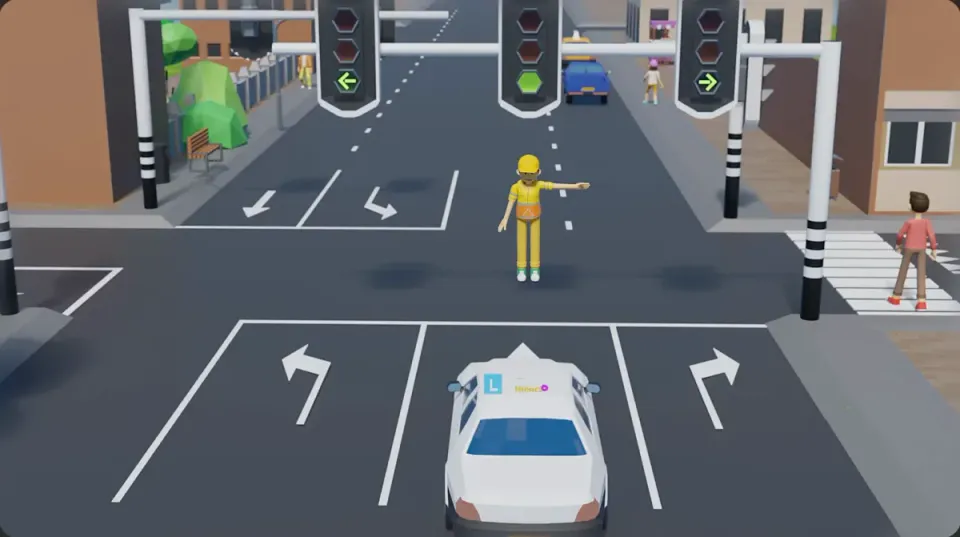
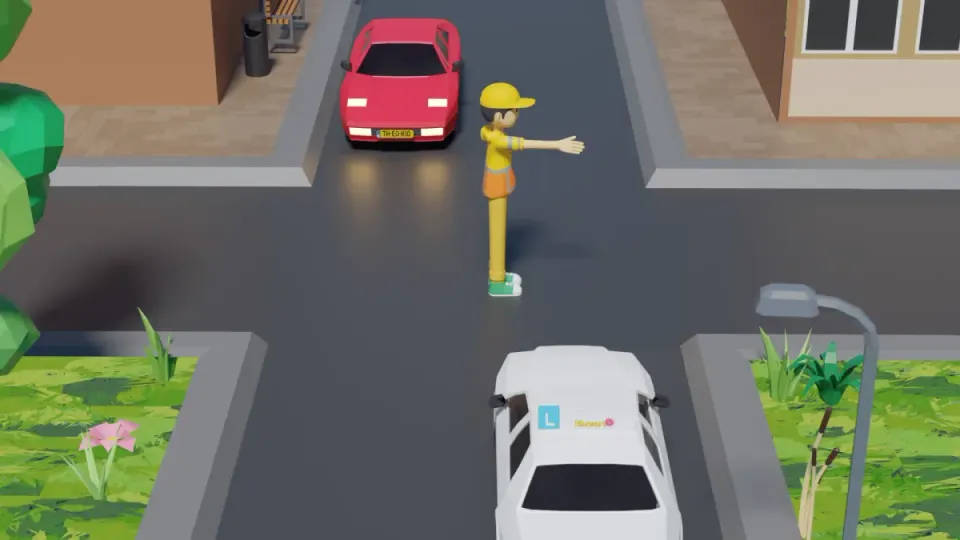
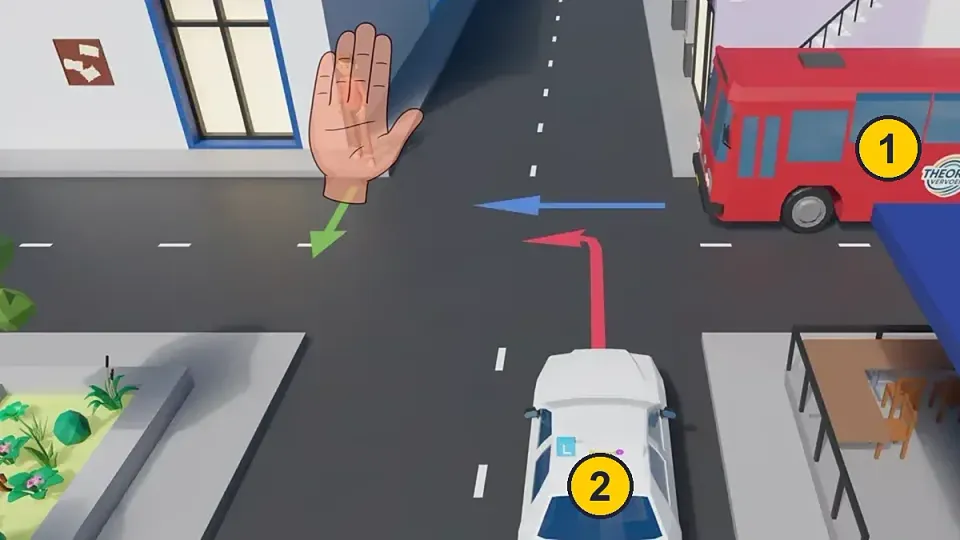
Step 1: the traffic controller. The traffic controller holds his outstretched arm across the learner car’s side of the road. That means: stop. An instruction from a traffic controller comes before everything: traffic lights, signs, shark teeth and the basic rules. The learner car stops.
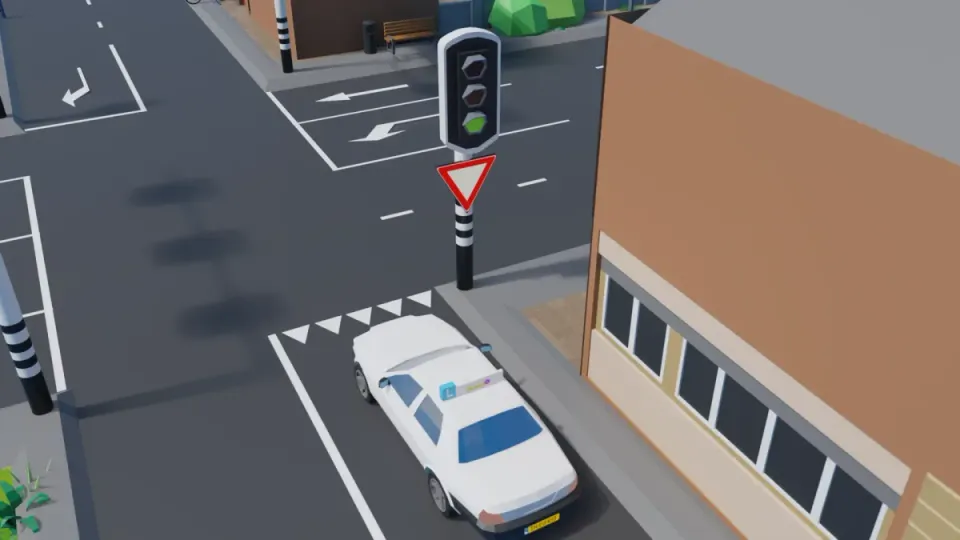
Step 1: working traffic lights. There are shark teeth and sign B6 in front of the learner car, but the traffic light is green. Working traffic lights overrule signs and shark teeth. On green, the learner car may drive on. Is the light off or flashing yellow? Then the shark teeth and the sign count again.
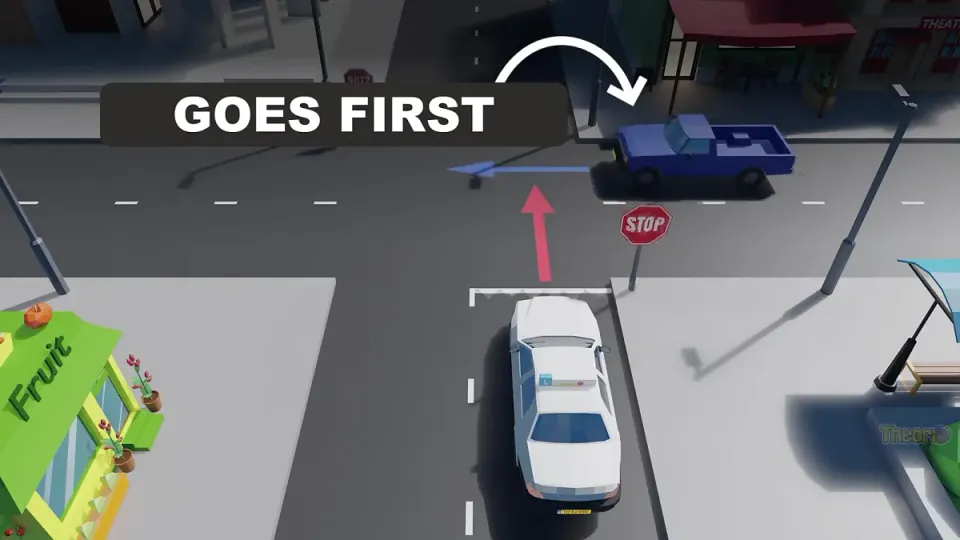
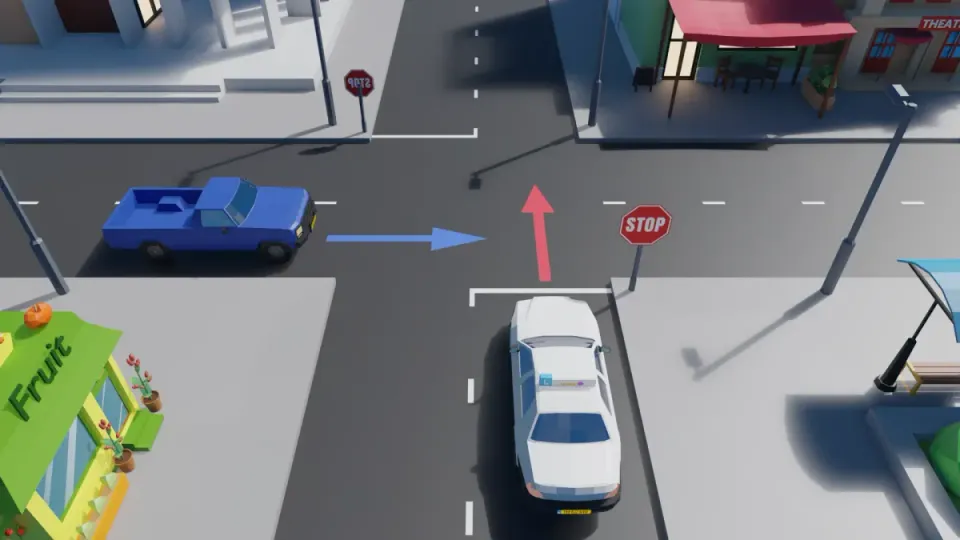
Step 2: the stop sign. The learner car has a stop sign and a stop line. The blue pick-up comes from the left. Without the sign the learner car could go first, because it comes from the pick-up’s right. But the stop sign overrules the rule that the right goes first. The learner car stops completely and lets the pick-up go first. Order: blue pick-up, learner car.
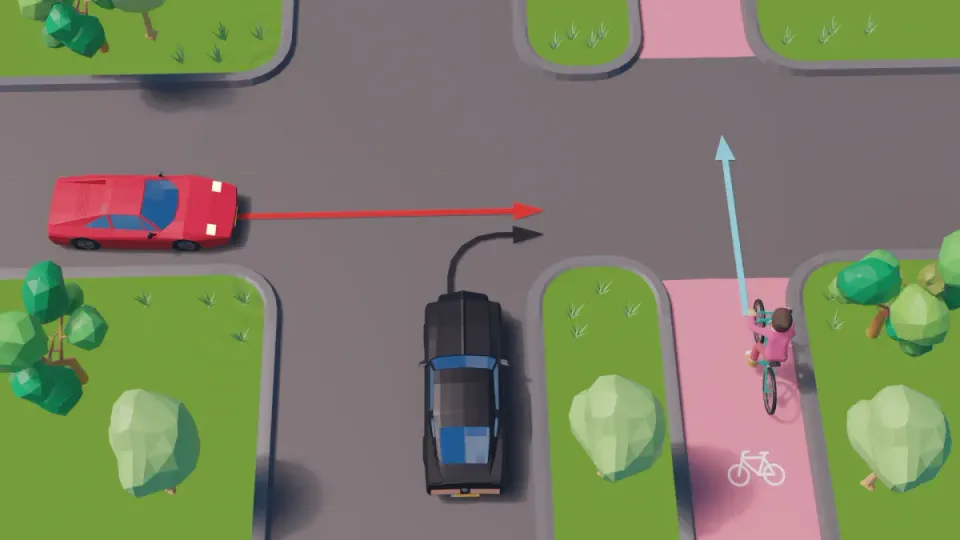
Steps 3 and 4: equal junction. There are no shark teeth and no signs, so the right goes first. The black car comes from the red car’s right. The cyclist rides straight on along the cycle path next to the black car. That is the same road, so the cyclist goes before the turning black car. Order: cyclist, black car, red car.
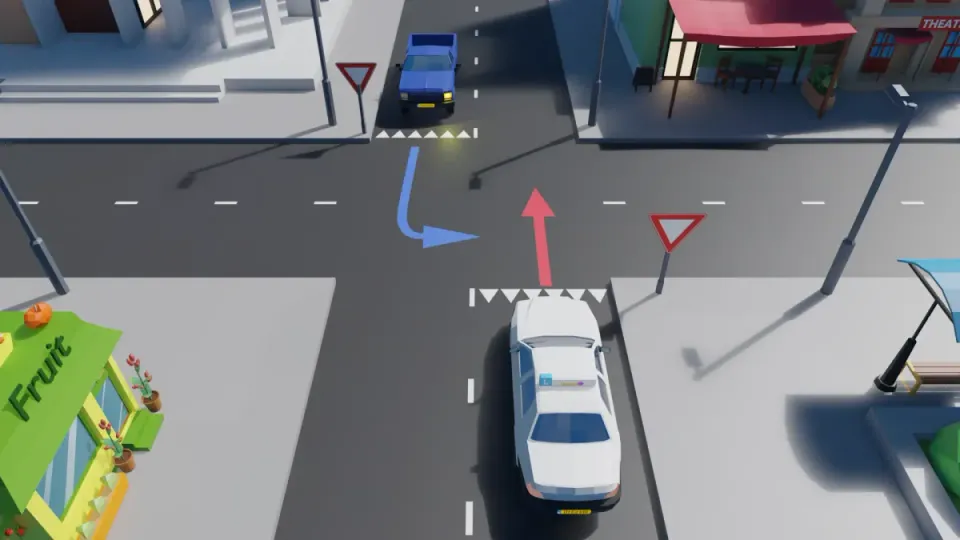
Step 4: the same road. The learner car and the blue car both have shark teeth. Nobody is on the crossing road, so the shark teeth do not count between them. They face each other on the same road. The learner car goes straight on, the blue car turns. Straight on goes before turning. Order: learner car, blue car.
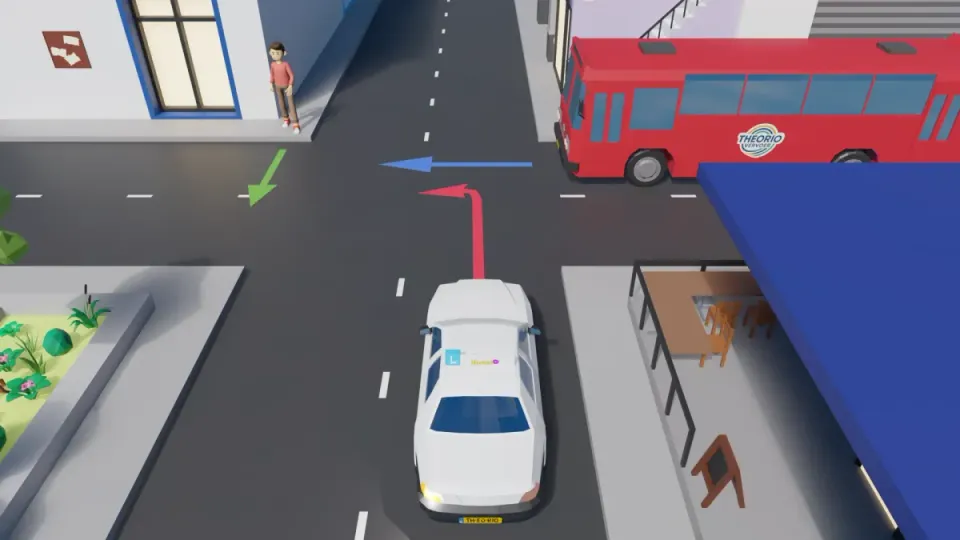
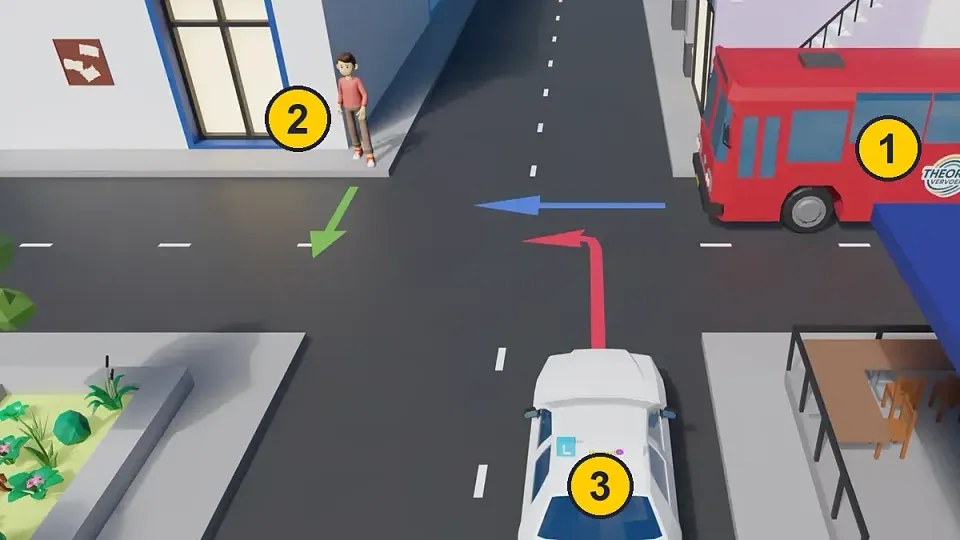
Step 5: add the pedestrian. First think the pedestrian away. It is an equal junction and the bus comes from the learner car’s right, so the bus goes first. For the bus the pedestrian comes from the side (see their side, go for a ride): the bus drives on. Then the learner car: it turns left into the street the pedestrian is crossing. That pedestrian goes straight on along the same road (face and back, hold back). Order: bus, pedestrian, learner car.
A warning sign is not a priority sign
In step 2 you only look at signs that regulate priority. A triangular warning sign does not do that. Signs warn you, but who goes first follows from the priority rules.
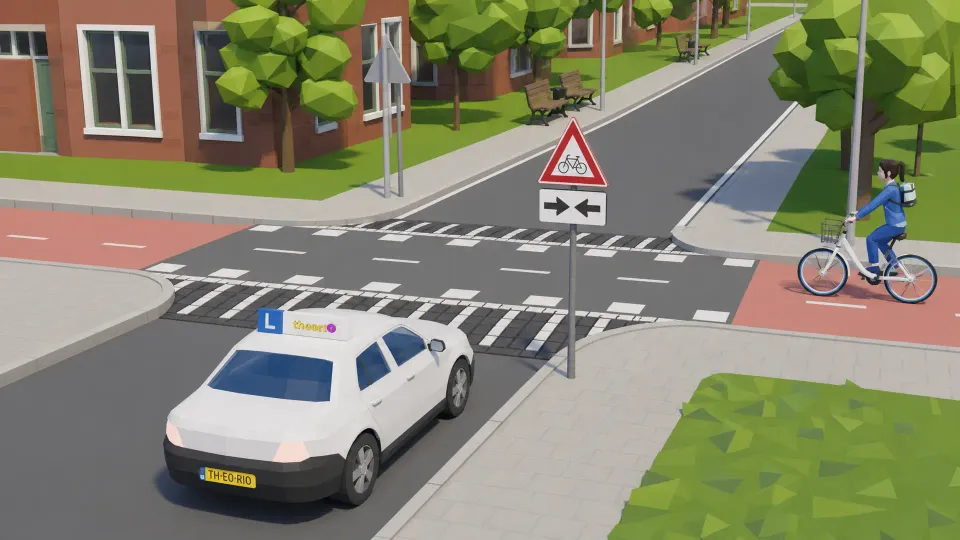
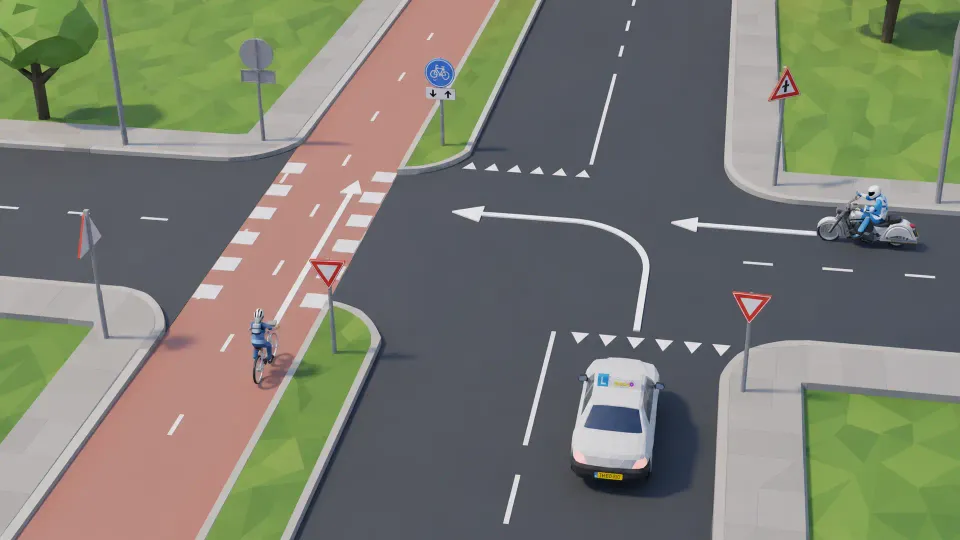
A sign warning for cyclists and moped riders only means: watch out, cyclists cross here. The supplementary sign with two arrows says they can come from the left and from the right. Lines on the road that look like piano keys warn you about a speed bump. They say nothing about priority either.
If there is only such a warning sign, you go on to step 3 and apply the priority rules. If the cyclist comes from the right, the cyclist goes first and you wait. If the cyclist comes from the left, you may go first.
No priority sign: the warning sign and the speed bump markings regulate nothing. On to step 3: the cyclist comes from the right and goes first.
Example: sign J8 at a dangerous junction
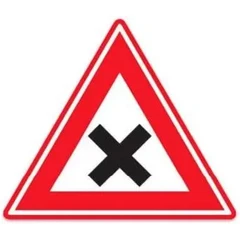
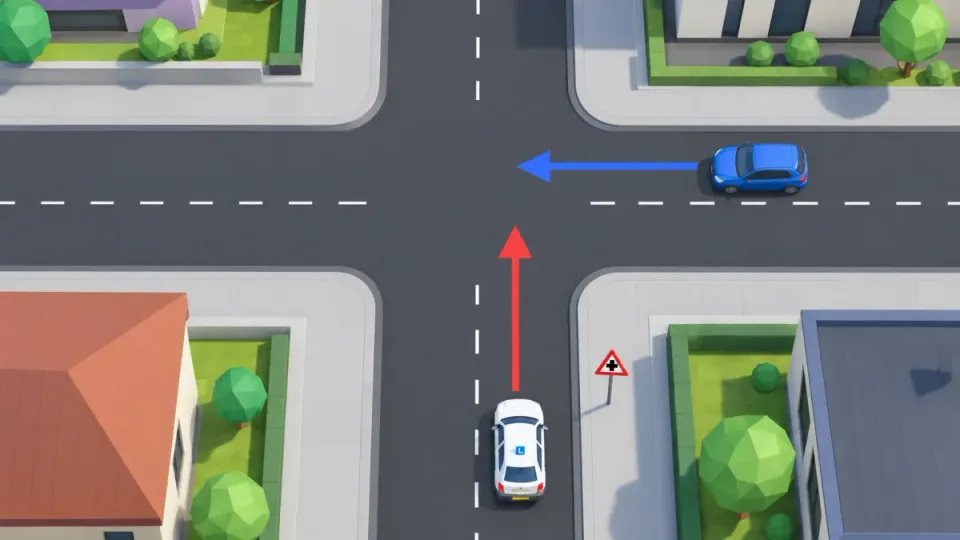
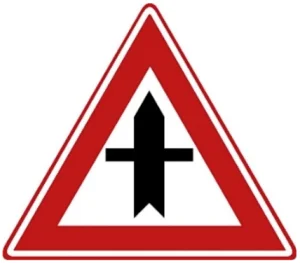
Sign J8 is a red triangle with a black cross. It warns you about a dangerous junction. It does not say who goes first. Are there no shark teeth and no priority signs? Then it is an equal junction and the right goes first.
Sign J8 only warns. There are no shark teeth, so the right goes first: the blue car comes from the right and goes first. The learner car waits.
The difference between drivers and pedestrians
The priority rules, the priority signs and the give-way markings regulate priority between drivers. A pedestrian is a road user, but not a driver. A pedestrian coming from the right therefore does not get priority because of that.
A pedestrian may still go first for another reason, for example at a zebra crossing. All situations are under priority rules for pedestrians. The table shows who is a driver and who is not.
Picture
Road user
Driver?
Which rule applies?
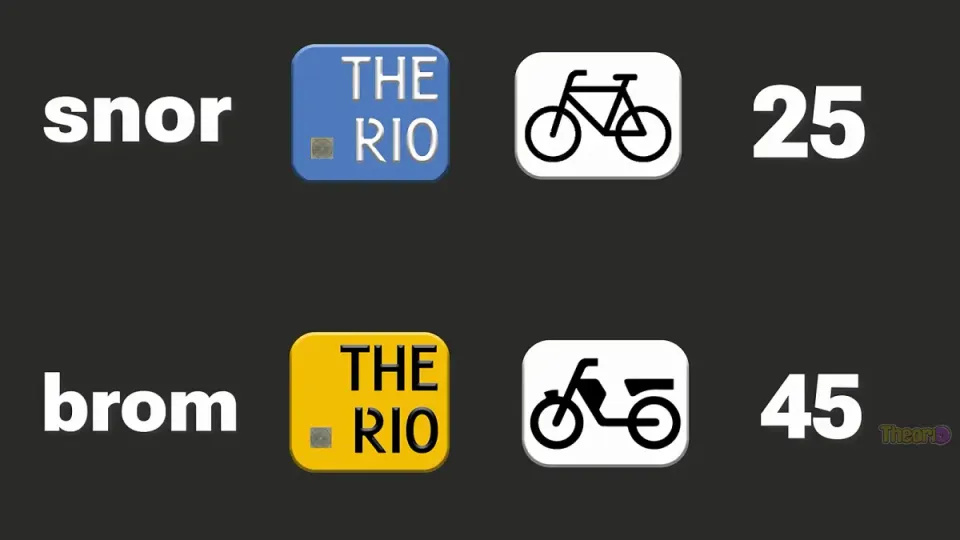
Cyclists and ordinary e-bikes
Yes: drivers
From the right at an equal junction, they go first.
Light moped and moped riders
Yes: drivers
Give way to them from the right just as to a car.
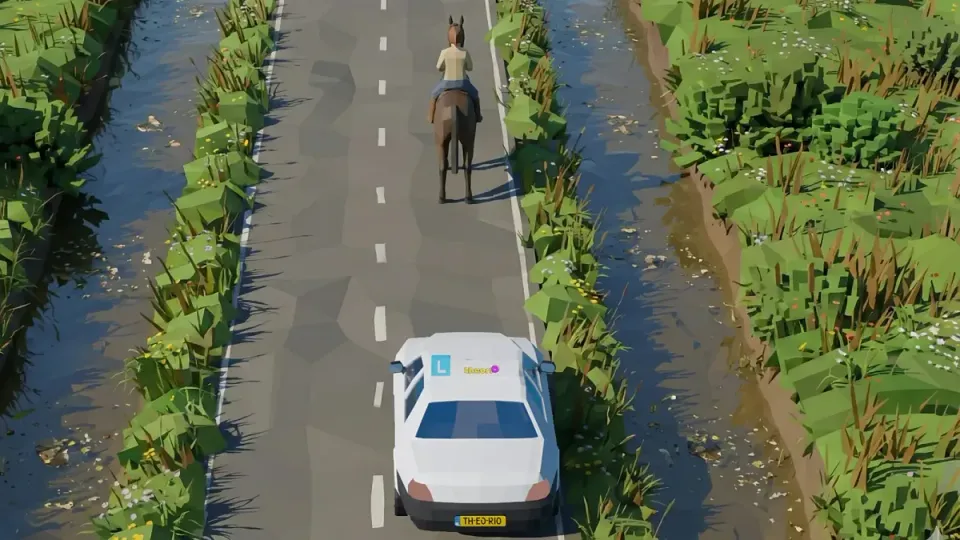
Horse riders and people leading riding animals, draught animals or livestock
Yes: drivers
A horse rider from the right counts. Someone walking only a dog is a pedestrian.
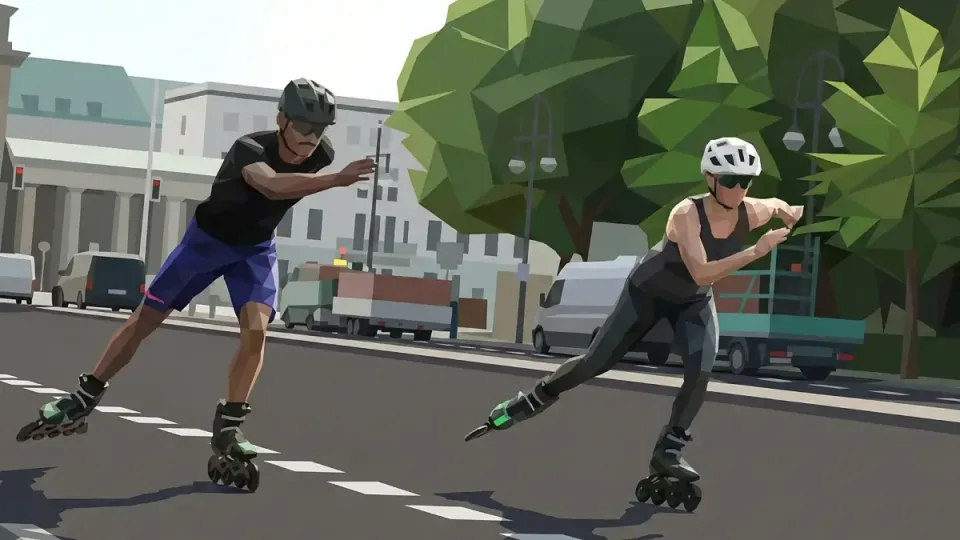
Pedestrians, people on inline skates and people walking a bicycle
No: pedestrians
Approaching from the right alone gives no priority. Check pedestrian rules.
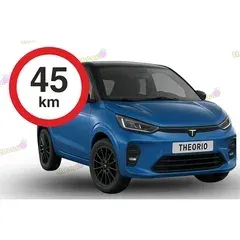
Microcar driver
Yes: a driver
From the right, the driver goes first. Vehicle classification does not change this rule.
Tram
Yes: a driver with special rules
At an equal junction, a tram also goes first from the left.
Combining drivers and pedestrians
In real traffic, there are rarely only cars. Do you see drivers and a pedestrian? Then solve it in three steps, just like in the booklet in the app.
Ignore the pedestrian. Which driver goes first? Use the rules for drivers. Note: that driver does not necessarily drive first yet.
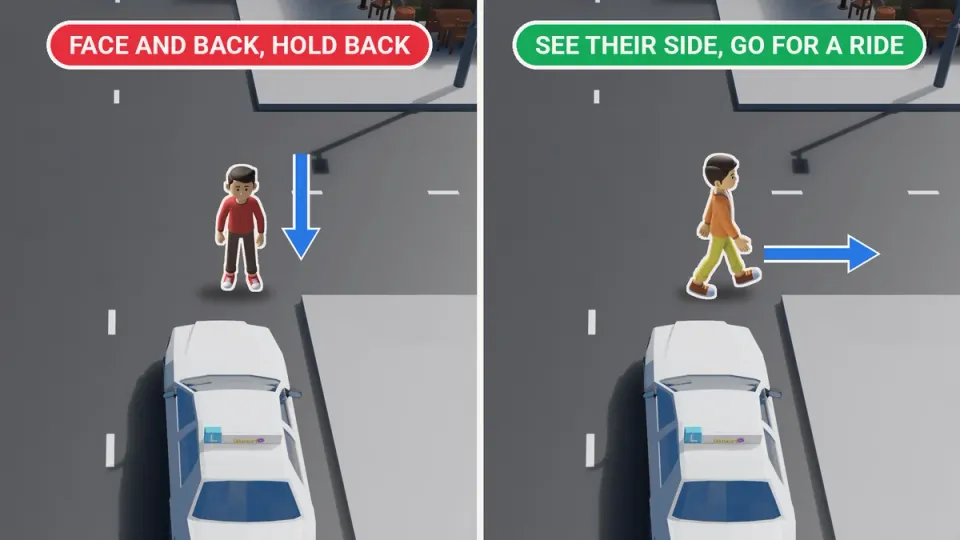
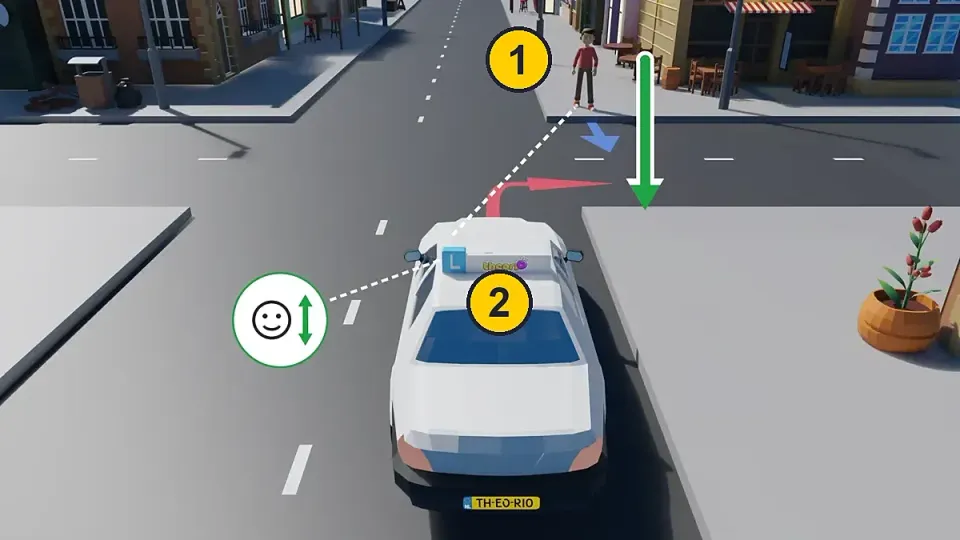
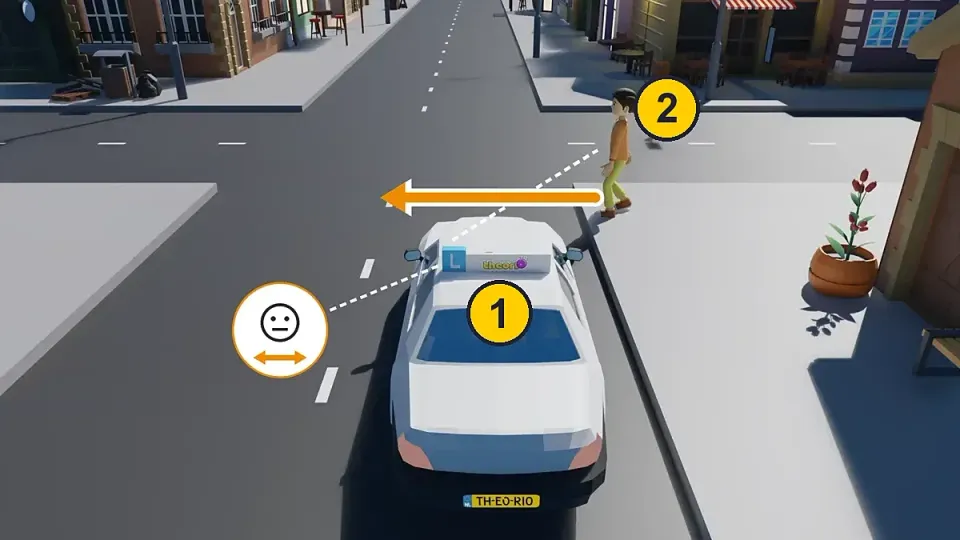
Look at the pedestrian from that driver’s position. Does the driver see their face or back? Then the pedestrian goes straight on along the same road: face and back, hold back, the pedestrian goes first. Does the driver see their side? Then the pedestrian comes from the side: see their side, go for a ride, the driver goes first.
Now you know who goes first. Has that driver gone? Then the next driver does the same check. So the pedestrian is not always first.
Step 1, ignore the pedestrian: the bus comes from the learner car’s right. Without the pedestrian, the bus goes first.Steps 2 and 3: the bus sees the pedestrian’s side and drives on. The learner car turns and sees their face: first the pedestrian, then the learner car. Order: bus, pedestrian, learner car.
The memory aid: face and back, hold back; see their side, go for a ride
Left: the pedestrian walks straight on along the same road. You see their face or back: hold back, the pedestrian goes first. Right: the pedestrian comes from the side. You see their side: go for a ride.
Always look from the driver’s position. If the driver sees the pedestrian’s side, the pedestrian comes from the side: go for a ride. If the driver sees their face or back, the pedestrian walks straight on along the same road and the turning driver waits: hold back. It is a memory aid to read the drawn walking routes. The real rule stays: straight on along the same road goes before turning. Also watch for zebra crossings, driveway exits and people who have difficulty moving.
Face or back: the learner car (2) turns and the pedestrian (1) goes straight on along the same road. The pedestrian goes first.Side: the pedestrian (2) comes from the side. The learner car (1) goes first.
Example: lorry, learner car and pedestrian
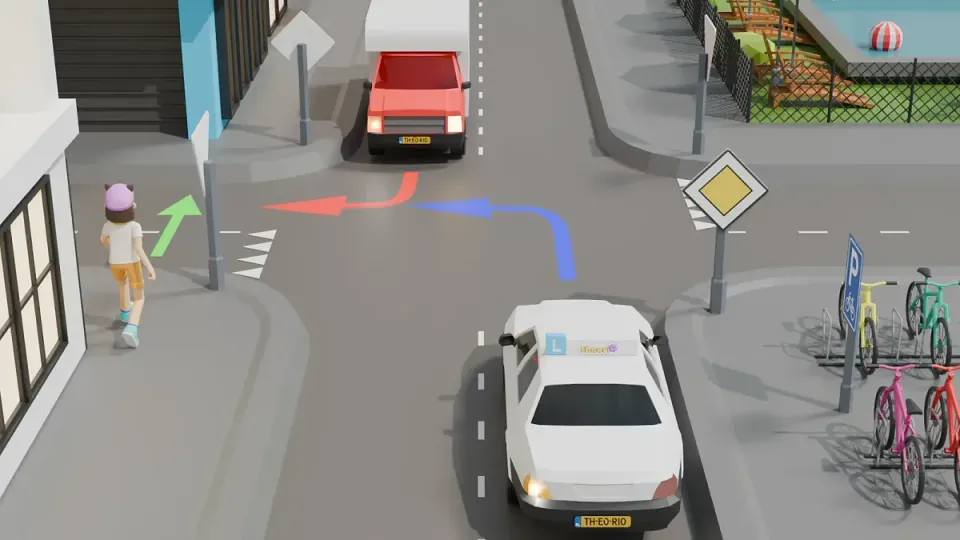
The pedestrian continues along the same road. Both vehicles turn: pedestrian, lorry, learner car.
A lorry and a learner car approach each other on the same road. The lorry makes the short turn, the learner car the long turn. A pedestrian continues along the same road and crosses the turning routes.
Correct order: pedestrian → lorry → learner car.
Why: first the drivers. The short turn goes before the long turn, so the lorry goes before the learner car. Then add the pedestrian: the lorry turns while the pedestrian continues along the same road. The pedestrian goes first.
Choose the correct order:
Pedestrian → lorry → learner car
Lorry → learner car → pedestrian
Learner car → pedestrian → lorry
Example: tram, pedestrian and learner car
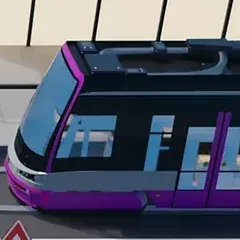
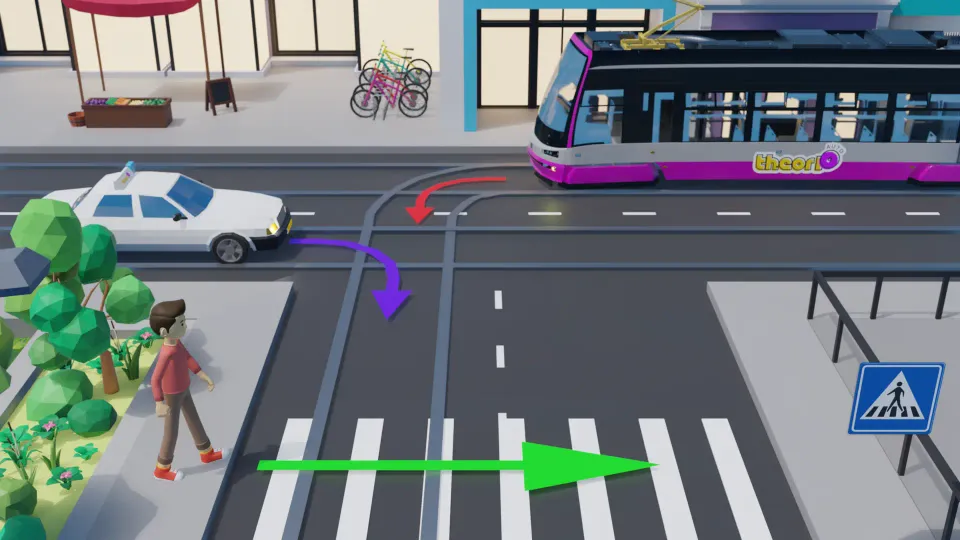
At the zebra crossing the crossing pedestrian goes before the tram. The tram then goes before the learner car.
There are no signs indicating anything else, so the tram has priority. But there is a zebra crossing where a pedestrian wants to cross.
Correct order: pedestrian → tram → learner car.
Why: a tram must also stop for a zebra crossing. Then the tram goes, and only last the learner car that wants to turn.
Choose the correct order:
Pedestrian → tram → learner car
Tram → learner car → pedestrian
Learner car → pedestrian → tram
Example: van, pedestrians and learner car
First the blue van on the crossing road. The turning learner car then waits for the pedestrians on the same road.
The learner car has give-way markings and wants to turn. A blue van is on the crossing road. Pedestrians are crossing the road the learner car wants to turn into.
Correct order: van → pedestrians → learner car.
Why: drivers first: the learner car has give-way markings, so the van goes before the learner car. Must the van let the pedestrians go first? They are not continuing along the same road as the van, and this picture has no zebra crossing. The van goes first. Then the learner car: it turns and the pedestrians go straight on along the same road. The learner car turns and waits for them.
Choose the correct order:
Van → pedestrians → learner car
Pedestrians → learner car → van
Learner car → van → pedestrians
Straight on goes before turning: cycle paths too
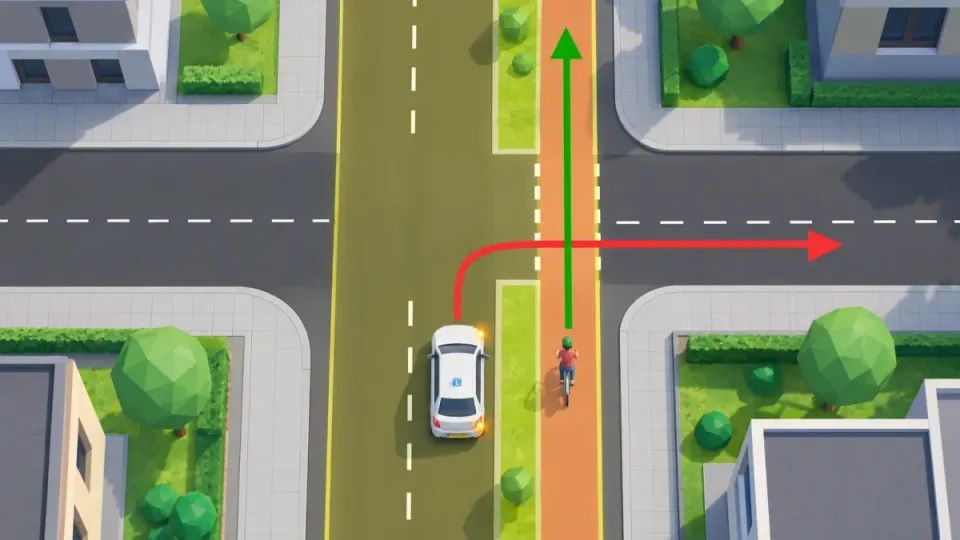
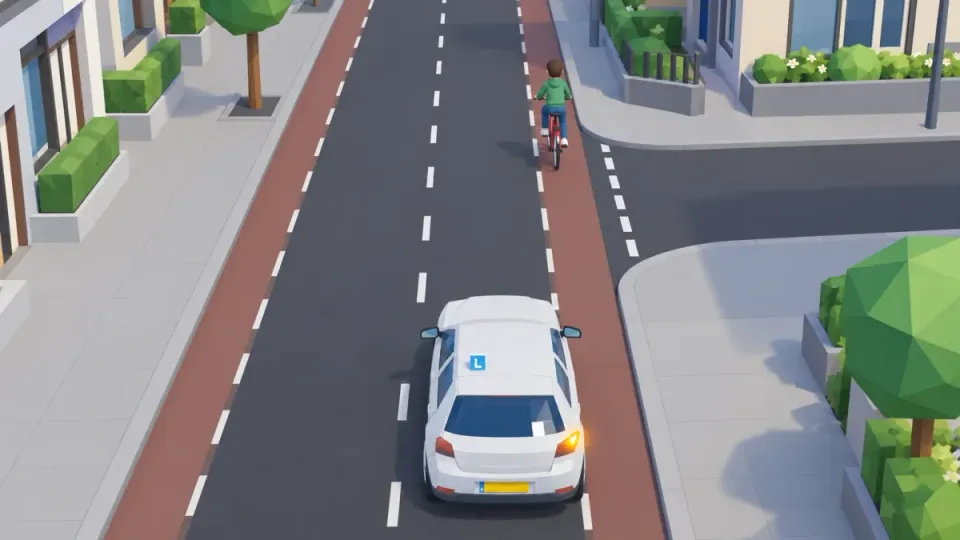
NOTE! Straight on goes before turning only applies on the same road. So in step 4, everything depends on what "the same road" is. A cycle path that runs next to the carriageway is part of the same road, even if there is a verge in between. A cyclist riding just behind or next to you is on the same road too.
The same road (yellow): the carriageway, the verge and the cycle path are one road. The learner car turns right and the cyclist goes straight on. The cyclist goes first.
Are you turning? Then check whether a cyclist next to you or just behind you is going straight on. They are going straight on along the same road and go first.
Does a cyclist come out of a side street, or along a cycle path that crosses your road? Then they are on a different road. Then "straight on goes first" does not apply, and you look at signs, shark teeth or the right goes first.
A verge in between changes nothing: the cycle path is part of the same road, so going straight goes before turning.
Priority rules comparison table
Which rule applies when? This table lists the situations one below the other, from the highest in rank down to the general rules.
Situation
Who goes first?
More
A traffic controller gives a signal
Do what the controller indicates, whatever the light says
You turn, the other driver goes straight on along the same road
Straight-ahead traffic, including the cyclist next to you
Rule 2 on this page
Two oncoming drivers both turn
Right turn (short turn) before left turn (long turn)
Rule 3 on this page
Road narrowing with F5 or F6
F5: the oncoming driver. F6: you.
Road narrowing on this page
When you can ignore the signs
Signs and give-way markings regulate priority towards the crossing road. In the three situations below the question is whether they still count. Sometimes you think them away and look at the traffic light or the basic rules, sometimes they count again.
Both have shark teeth and the crossing road is empty. Between these two oncoming drivers you think the shark teeth away: the learner car goes straight on and goes first (1). The blue car turns and waits (2).
Oncoming driver on the same road
First check the signs for every direction. If you see a stop sign, you do not yet know which sign the oncoming driver has.
Do you and the oncoming driver both have give-way markings and do you both want to enter the same side road? Then you both first let the drivers on the crossing road go. Between the two of you, the give-way markings then say nothing more: you think them away. Whoever goes straight on goes first, and if you both turn, the right turn goes before the left turn. If one of you has a stop sign, a complete stop is still required, even if the other driver also has to wait.
Both oncoming drivers have give-way markings. Crossing traffic goes first, then right turn before left turn.
Bending priority road
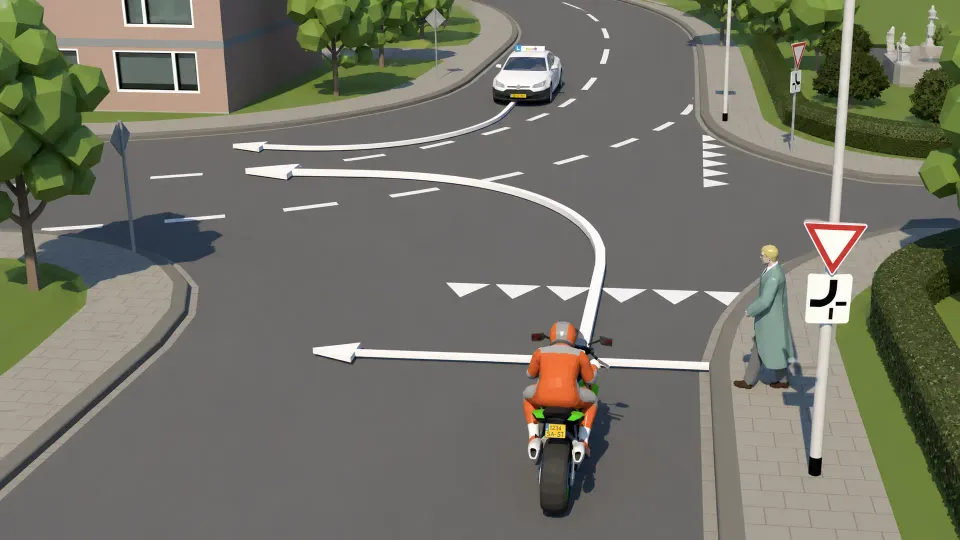
A supplementary sign under a priority sign can show that the priority road bends at the junction. The thick line is the priority road, the thin lines are the side roads. The drivers on the priority road go first.
The sub-sign shows how the priority road runs: the thick line bends. The motorcyclist at the give-way markings waits.
Are there two drivers left who both have to give way, each from a different side road? Then you think the signs away between them and right-hand priority applies. If they are on the same road, you use the rules for turning. How to read the supplementary sign is explained under priority junction.
Traffic lights that are not working
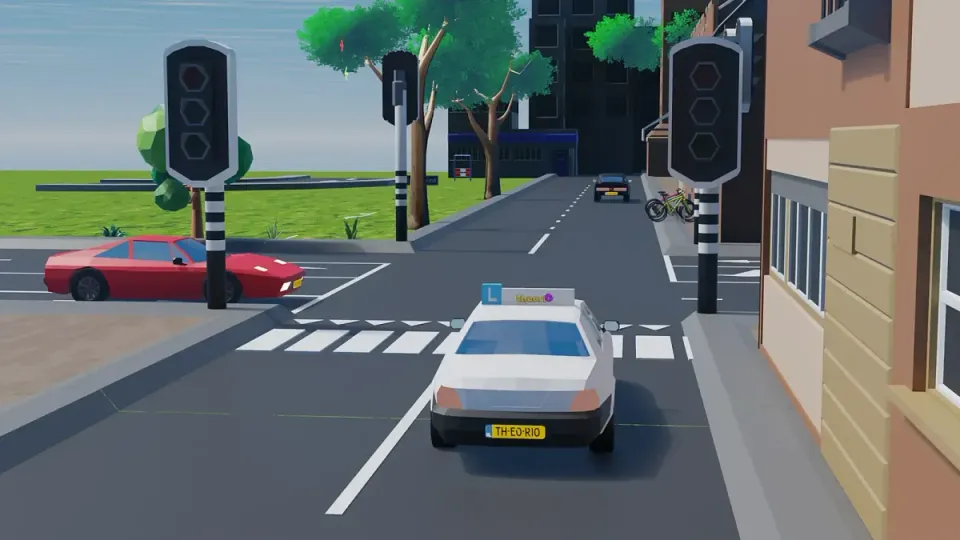
The lights are off. The learner car still has give-way markings and lets the red car go first.
As long as the traffic lights work, you think away the priority signs and give-way markings at the junction: the light decides who may go. Other instructions and prohibitions still apply. An instruction from a traffic controller comes before the light.
Are the lights off, flashing yellow or orange or defective? Then they do not count, and the signs and give-way markings apply again. If there are none of those either, it is still an equal junction and traffic from the right goes first. What each light means is explained under traffic lights.
Find the driver who comes most from the right
In the exam you often see three or more drivers at an equal junction at the same time. The driver from the right sometimes has someone on their own right side too. This is how you find the order:
Find the driver who has nobody on their right. That driver starts.
Work back from there. Whoever had that driver on their right is next.
Are two of them on the same road? Then use straight on before turning and the short turn before the long turn.
Does everybody have someone on their right? Then right-hand priority gives no first driver. Make eye contact, clearly give room and do not claim priority. More under equal junction.
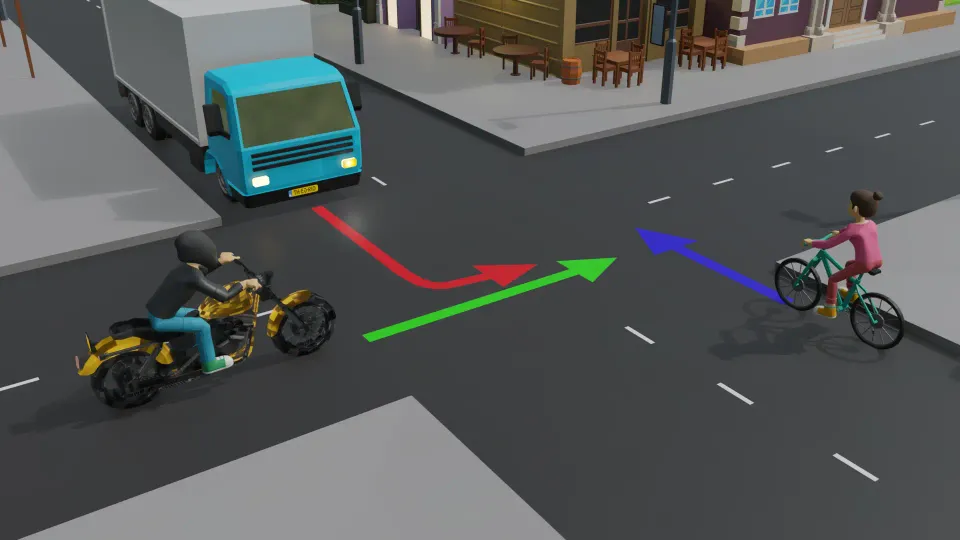
Example: a motorcycle comes from the right relative to a lorry, and a cyclist comes from the right relative to that motorcycle. Nobody comes from the right of the cyclist anymore. Then the cyclist may go first, then the motorcycle, and the lorry last.
Order: first the cyclist (nobody from the right), then the motorcycle, then the lorry.
Priority rules at junctions that are not equal
If priority at the junction is regulated, you follow that first. You then only use the basic rules between drivers who have the same signs.
At a road narrowing, traffic signs determine who may drive first.
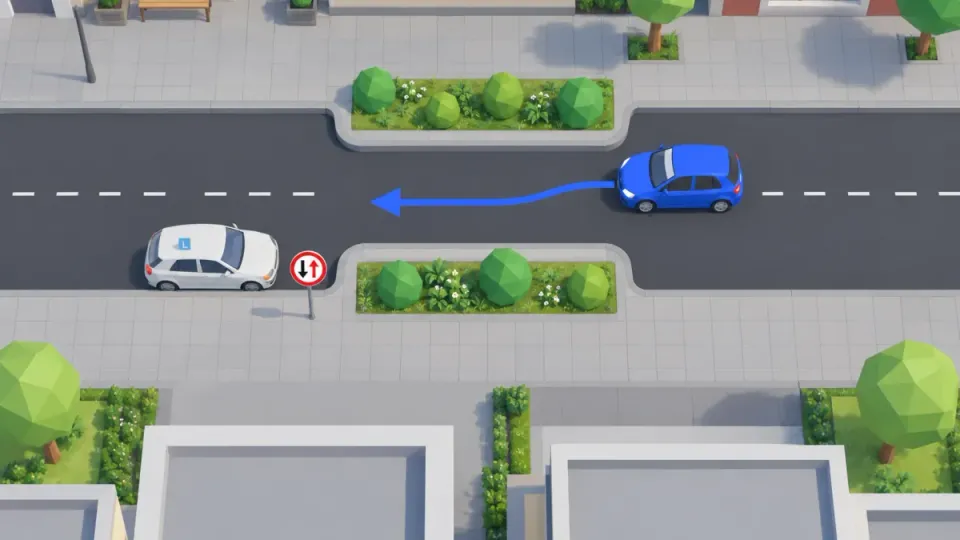
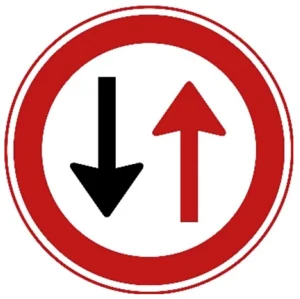
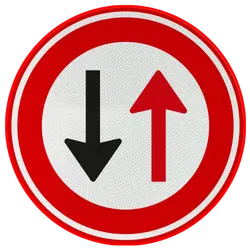
Sign F5 (round red border with a red and a black arrow): you must let oncoming traffic go first.
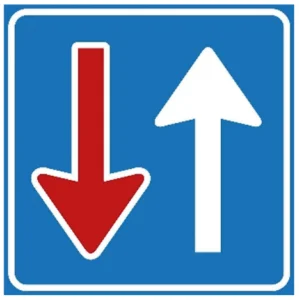
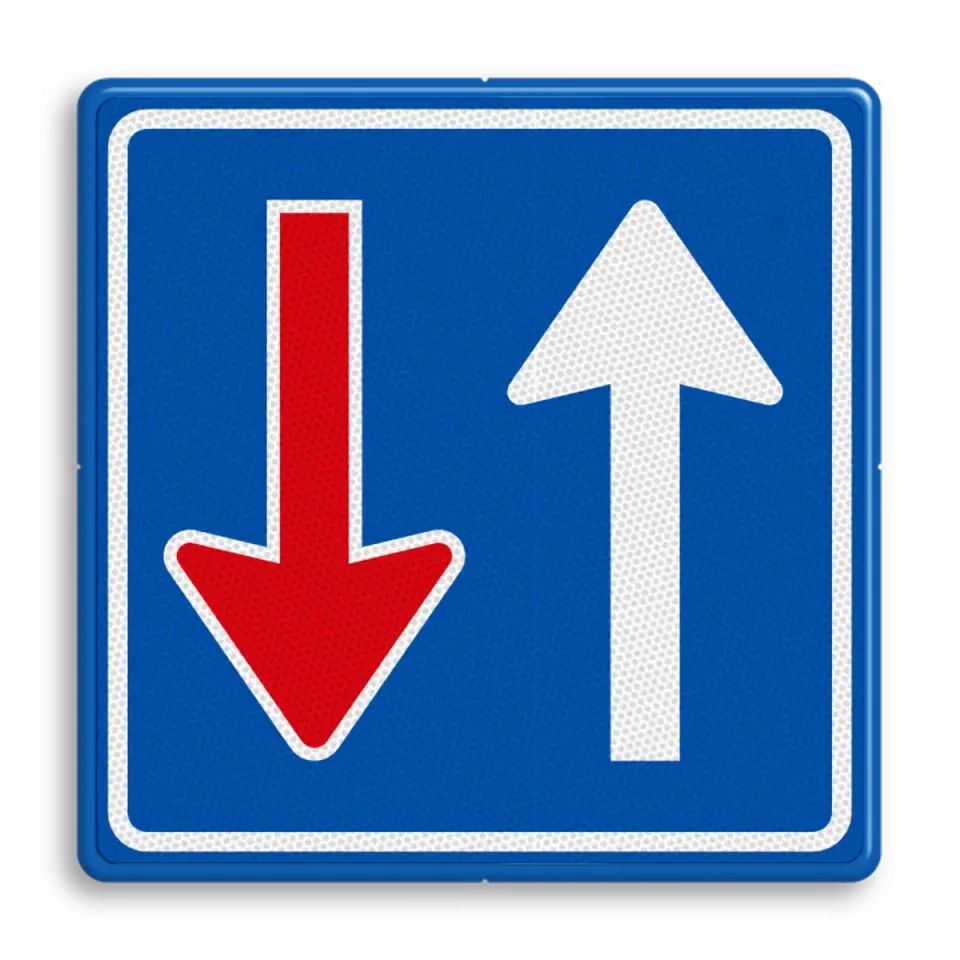
Sign F6 (blue square with a white and a red arrow): oncoming traffic must let you go first.
Red must wait
Which arrow is yours? The right-hand arrow, pointing up. Then you read both signs using the same trick: red must wait.
Round sign with red border (F5): your arrow is red: you give way to oncoming traffic.
Square blue sign (F6): your arrow is white and the oncoming arrow is red: you have priority.
Sign F5 is on the learner car’s side: its arrow is red. The learner car waits before the narrowing. The blue oncoming car drives through first.
Note: F5 and F6 are addressed to drivers too. A pedestrian walking towards you does not have to wait for you because of sign F6.
And something practical: if an oncoming driver is already halfway through the narrowing, wait until the road is clear, even if you formally have priority.
Road narrowing without signs
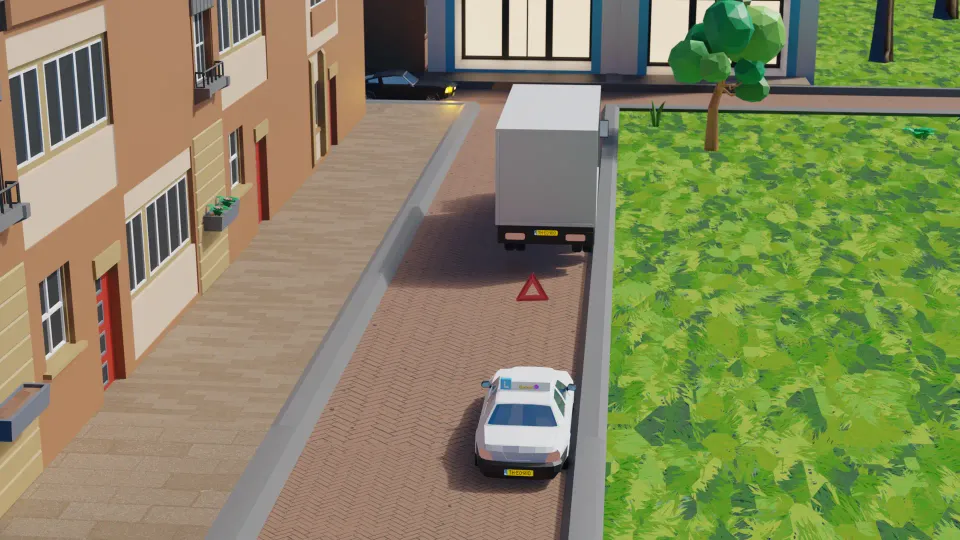
Not every road narrowing is deliberately created. Sometimes it arises because of a parked lorry or a car with a breakdown. Then there are no signs, and one simple rule applies:
If the obstacle is on your half of the road, you wait. If it is on the other side, give the oncoming driver room to wait or return safely. If they are already in the narrowing, avoid a dangerous confrontation.
The obstacle is on this half of the road, so this driver waits for the oncoming traffic.
CBR pitfalls for priority rules
❌ Wrong: driving on at green while the traffic controller signals stop. ✅ Right: the controller comes before the light, the light before the signs.
❌ Wrong: thinking a red triangle with a picture means you must give way. ✅ Right: such a sign only warns. It does not change who goes first.
❌ Wrong: using "straight on goes first" for two cars from different streets. ✅ Right: that rule only applies on the same road. Otherwise the right goes first.
❌ Wrong: with three drivers, letting the first one from the right go. ✅ Right: start with the one who has nobody on their own right.
Practise like the exam
Example questions like in the CBR exam
Real questions from the Theorio app. You can expect similar questions in your CBR exam.
Question 1 of 6
What is the correct order of priority at this intersection?
What is the correct order of priority at this intersection?
What is the correct order of priority at this intersection?
What is the correct order of priority at this intersection?
What is the correct order of priority at this intersection?
What is the correct order of priority at this intersection?
Answers and explanations for the example questions
Question
1: What is the correct order of priority at this intersection?
Correct answer: Order on the image: 1 → 2 → 3
Explained step by step based on the three rules for drivers:
✅ Equal priority intersection? No, there are yield signs present. Proceed to the next rule.
✅ Yield signs/stop signs? Yes, the cyclist and the driving school car have yield signs. They must yield to crossing traffic without yield signs. The blue car has no yield signs and may go first.
⤵️ On the same road/same direction? Now only the cyclist and the driving school car remain. Both have yield signs and are therefore in an equal position. Then the rule applies: going straight has priority over turning, and a short turn has priority over a long turn.
The cyclist turns right (short turn), the driving school car turns left (long turn).The correct order is therefore: blue car, cyclist, driving school car. 🚙➡️🚴♀️➡️🚗"
Question
2: What is the correct order of priority at this intersection?
Correct answer: Order on the image: 1 → 2 → 3
We use the three rules for drivers:
✅ Equivalent intersection?
Yes, there are no yield signs or signs. So the basic rule applies: traffic on the right has priority. The white car has no traffic from the right and may go first.
✅ Yield signs/stop signs?
Not applicable, as there are no signs or markings that regulate priority.
⤵️ On the same road/same direction? No
After the white car, the blue and green cars must resolve it among themselves. The blue car comes from the right relative to the green car, and thus has priority.
The correct order is: white car, blue car, green car.
Question
3: What is the correct order of priority at this intersection?
Correct answer: Order on the image: 1 → 2 → 3
The correct order is: first the *cyclist*, then the *driving school car*, and finally the *blue car*. 🚲➡️🚗➡️🚙. This is because the cyclist is going *straight on the same road* and therefore has priority over turning traffic. Additionally, the rule is: *short turns take precedence over long turns* when traffic crosses each other on the same road. The driving school car turns left (long turn), while the blue car turns right (short turn), but must wait because it is coming from the right on a road with a *give way sign*. The cyclist therefore has priority first.
Question
4: What is the correct order of priority at this intersection?
Correct answer: Order on the image: 1 → 2 → 3
The cyclist is the only one going straight on the same road as the other drivers, so going straight on the same road takes priority first.
After that, a short turn takes priority over a long turn, so the learner car may go before the blue car. The order is therefore.
cyclist, learner car, blue car
Question
5: What is the correct order of priority at this intersection?
Correct answer: Order on the image: 1 → 2 → 3
Follow the step-by-step plan:
- Which of the drivers has priority?
This is an equal intersection, so the one on the right has priority. The cyclist comes from the right and goes first. The driving school car must wait.
- What does that driver see of the pedestrian?
The cyclist sees the pedestrian walking from left to right and shakes 'no'. That means: no priority. The cyclist therefore goes first.
- What happens next?
The cyclist has departed. The driving school car sees the pedestrian and nods 'yes'. That means: give priority. The pedestrian may now cross first, then the driving school car follows. 🚶♂️🚗
Question
6: What is the correct order of priority at this intersection?
Correct answer: Order on the image: 1 → 2 → 3
Follow the step-by-step plan:
- Which of the drivers has priority?
Both drivers are on the same road and coming from the same direction. In that case, the rule is: going straight has priority over turning traffic. The blue car is going straight and may go first.
- What does that driver see of the pedestrian?
The blue car sees the pedestrian walking from left to right and shakes 'no'. That means: no priority. Yield lines do not apply to pedestrians, so the blue car may continue driving.
- What happens next?
The blue car has departed. The driving school car also sees the pedestrian walking from left to right and shakes 'no' again. Here too, the rule applies: no priority. The driving school car may drive in front of the pedestrian.
FAQ
Frequently asked questions
Short answers to questions that often come up on this subject.
Does a cyclist from the right have priority?
Yes, a cyclist is a driver. At an equivalent intersection, you give priority to a cyclist from the right.
Does a pedestrian from the right have priority?
Not under the right-hand rule, which applies between drivers. You may still need to let a pedestrian from the right go first for another reason: when you turn across their straight-ahead route on the same road, at a pedestrian crossing, or under the protection for people with a white cane with red bands and people with difficulty walking.
What does going straight ahead on the same road go before mean?
As an ordinary driver turning, let traffic on the same road approaching you or travelling beside or behind you go first. This includes a pedestrian continuing straight along that road. “The same road” is essential; the rule does not generally give priority to someone on a different road. Turning trams have a statutory exception.
Do traffic signs still count if the traffic lights are off?
Yes. When lights are off or flashing yellow, the ordinary priority arrangement determines who goes first. Follow applicable signs and give-way markings. Without them, assess ordinary rules including driveways, unpaved versus paved roads and trams. Flashing yellow warns of danger: approach with extra care.
Which arrow is yours at a road narrowing?
The upward arrow on the right represents your direction. At F5 it is red: as a driver, let oncoming traffic pass first. At F6 it is white: oncoming drivers must let traffic from your direction go first. F6 does not require an oncoming pedestrian to wait for you. Enter the narrowing only when safe.
What is the order of the priority rules?
The traffic controller comes first. Then working traffic lights, and then the priority signs and give-way markings. If none of these three decides priority, you look at the basic rules: right before left, straight on before turning and the short turn before the long one.
What do you do if you and the oncoming driver both have give-way markings?
You both first let the traffic on the crossing road go. After that, you sort it out between you with the ordinary rules. If one of you goes straight on, that driver goes first. If you both turn, whoever turns right has priority over whoever turns left.
Ready to practise?
Test your knowledge of Priority rules & Junctions with 35 practice questions in the app.


 Sign
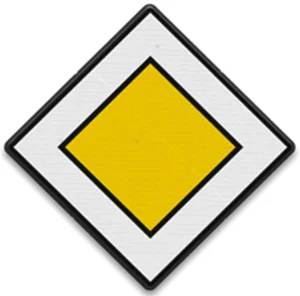 Sign
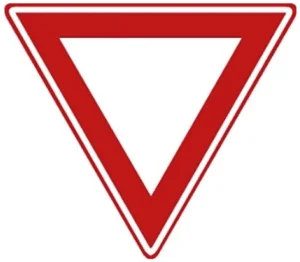 Give-way markings or sign B6
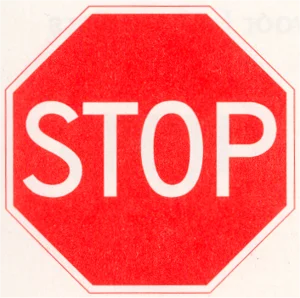 Stop sign
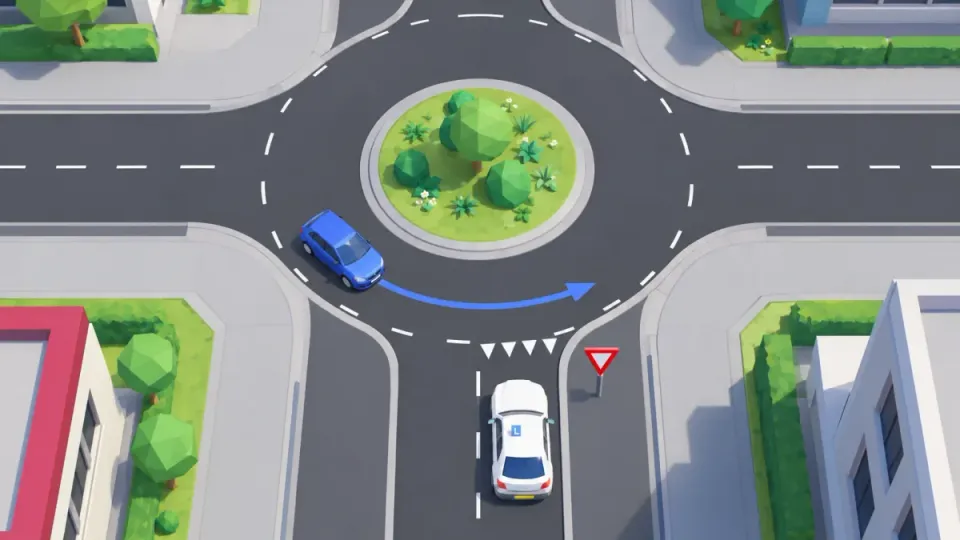
 Road narrowing with F5 or F6
 Sign
 Sign