Part 4 of 9 in Priority rules & Junctions
Driveway exits
Leaving a driveway exit: you give way to all traffic, pedestrians included. How to recognise an exit construction and tell it from an equal junction.


Written by Chris Prosman Reviewed by Dirk van Zuijlen
Updated Reviewed on 5 min read
Free mock exam · no account needed
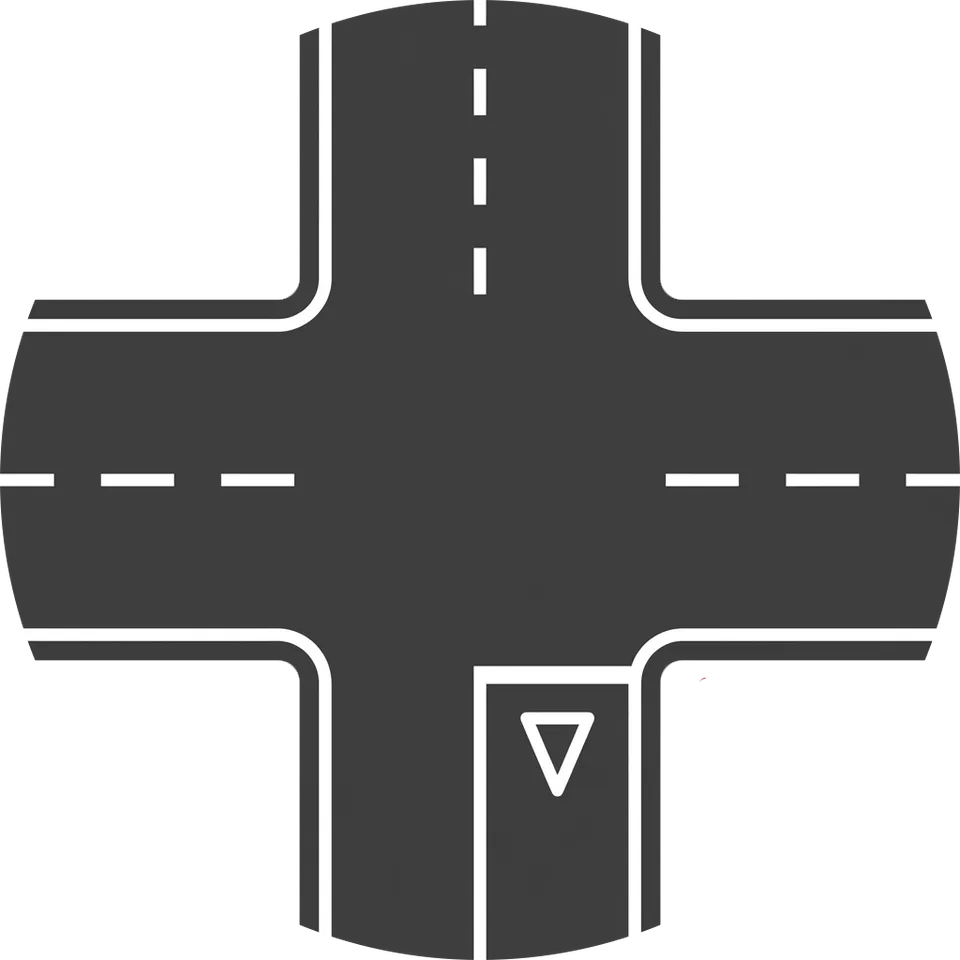
A driveway exit (uitrit) is where you drive onto the road from a property, such as a driveway, garage or car park. When you leave a driveway exit, you let all traffic go first: from the left, from the right and pedestrians too. You can often recognise an exit by a pavement that continues across it: the exit construction (uitritconstructie).
What is a driveway exit (uitrit)?
A driveway exit is where you drive from a property next to the road onto the road. Think of the driveway of a house, a garage, a car park or a petrol station. It is not a normal side road, but the entrance to such a property.
What is the difference between a driveway entrance and a driveway exit? It is often the same place. Driving onto the property, you use an entrance (inrit). Driving off it, you use an exit (uitrit). For priority, what counts is what you are doing at that moment.
When is something a driveway exit? When other road users can clearly see that it is one. So you look at the whole picture: what the connection looks like and where it leads.
Exit construction: how to recognise a driveway exit
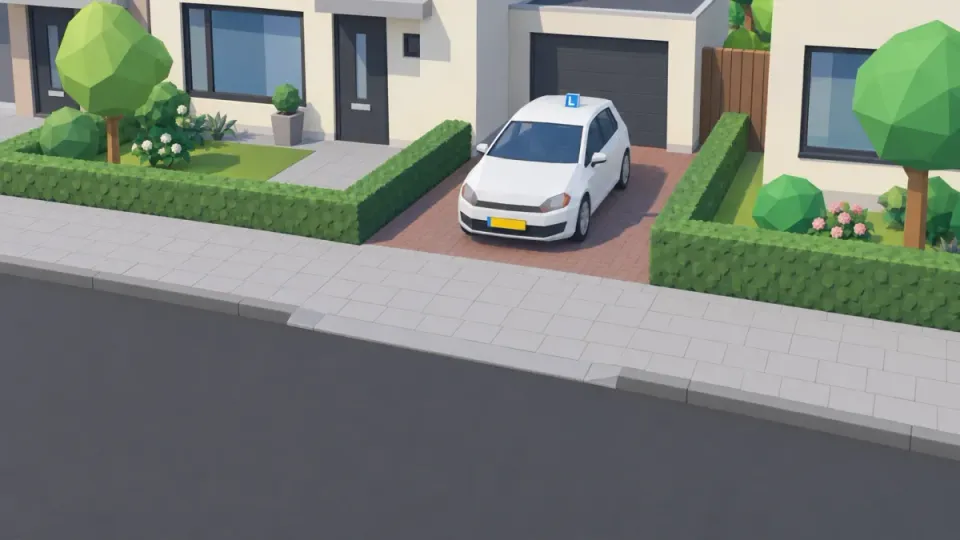
An exit construction (uitritconstructie) is the way a driveway exit is built. The pavement or cycle path simply continues. You drive across it onto the road. If you see that, you know: this is a driveway exit.
How to recognise a driveway exit:
- The pavement or cycle path continues, often in the same paving and colour.
- You drive over a low or sloping kerb onto the road. These sloping kerb stones are called inritbanden.
- Behind the connection there is clearly a property, such as a house, garage or car park.
You do not need to see everything at once. A driveway exit does not always have a low kerb. And a “keep exit clear” sign on a gate does not make a connection a driveway exit.
Is a speed bump a driveway exit?
No, not by itself. A speed bump or a difference in height does not turn a side road into a driveway exit. Is the connection built like a normal side road? Then the normal priority rules apply.
Is a dead-end street a driveway exit?
Not by itself either. A dead-end street is usually just a road. Do you leave it across a continuous pavement, so over an exit construction? Then you treat the connection as a driveway exit.
Driveway exits and priority: who goes first?
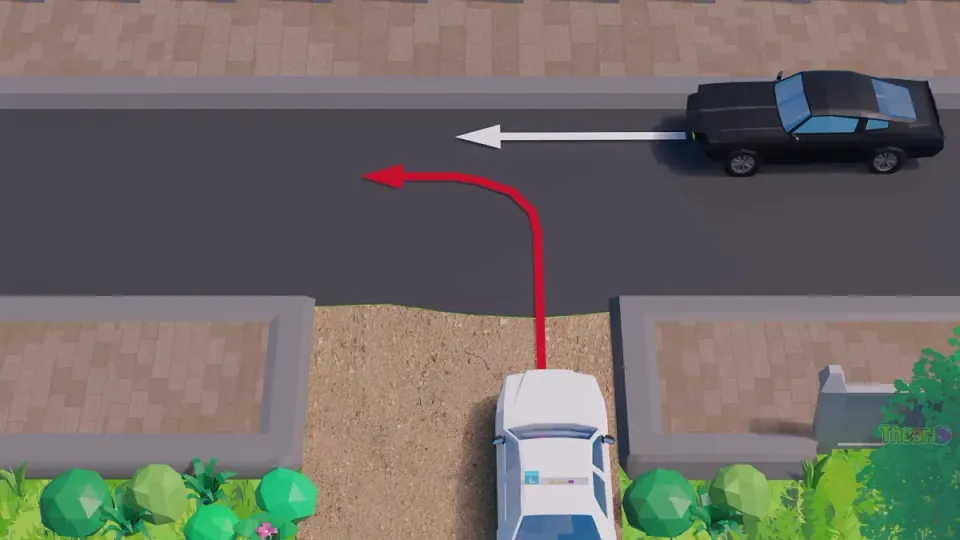
When you leave a driveway exit, you let all other traffic go first. Driving onto the road from an exit is a special manoeuvre (article 54 RVV). So it does not matter whether someone comes from the left or from the right.
You let these go first:
- cars, motorcycles and lorries on the road, from the left and from the right;
- cyclists and moped riders on the cycle path;
- pedestrians on the pavement you cross.
Turning from the road into a driveway? That is also a special manoeuvre. Then you also let the other traffic go first. More about these manoeuvres under special manoeuvres.
Do you have to give way to pedestrians when leaving a driveway?
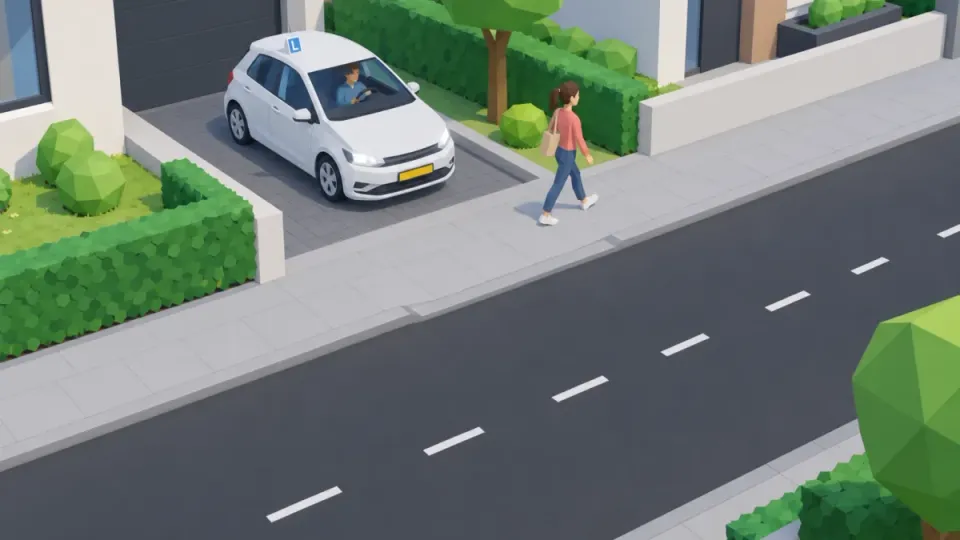
Yes. When you come out of a driveway exit, pedestrians on the pavement go first. Children playing or someone with a walker too. So look carefully left and right before you cross the pavement.
Leaving an erf
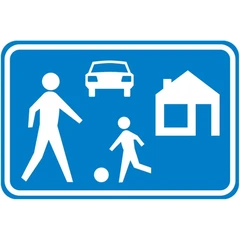 When you leave an erf (home zone), the same applies: you let the other traffic go first. You recognise an erf by sign G5 (erf).
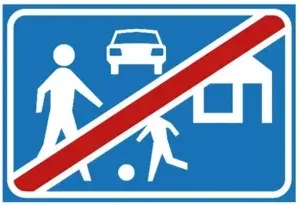 Where the erf ends, there is often sign G6 (end of erf): the same sign with a red stripe through it. When you drive onto the normal road there, you also let all other traffic go first.
Entering and leaving at the same time: who goes first?
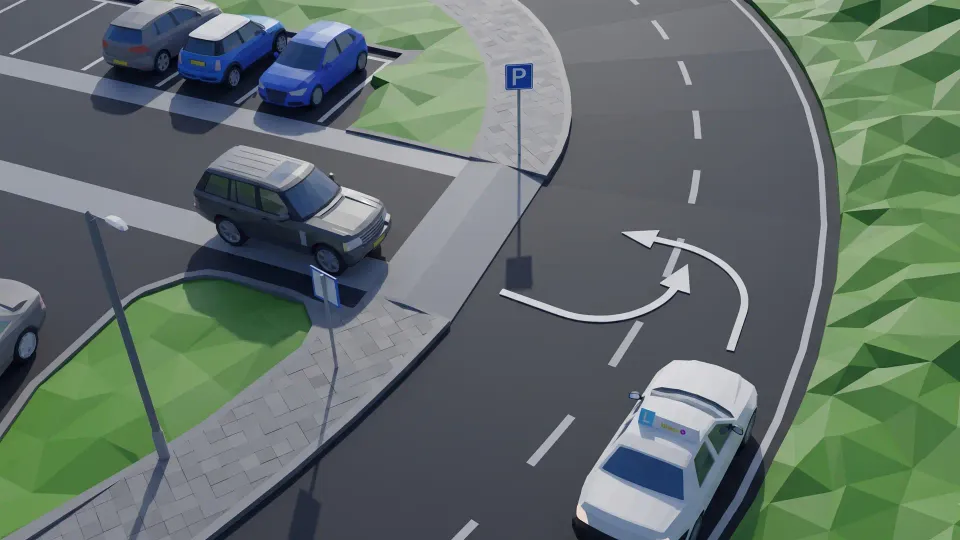
Does one car want to go in and the other out, and is the entrance narrow? Agree on it together and give each other room. It often helps to give the car that wants to come out room first. Whoever comes out of the exit must still always let the traffic on the road go first.
By the way, you may not park in front of a driveway exit. More about that under the parking rules.
The difference between a driveway exit and an equal junction
A driveway exit can look like a side road. Yet different rules apply. At an equal junction, traffic from the right goes first. At a driveway exit, you let everyone go first.
| Picture | Situation | Who goes first? | Why? |
|---|---|---|---|
| Leaving a driveway exit | All other traffic, pedestrians too | It is a special manoeuvre. |
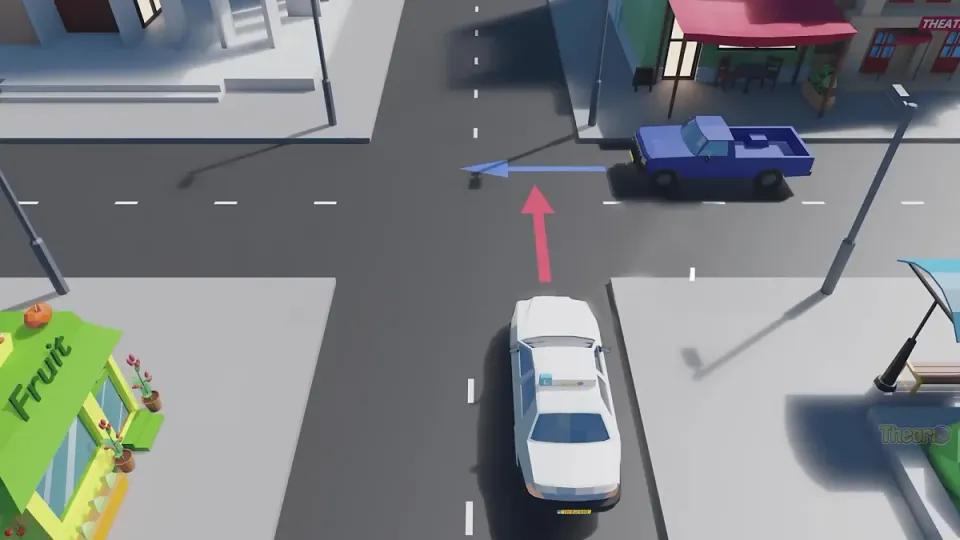 | Equal junction | Drivers from the right. The rules for turning and for trams also apply. | There are no signs or shark’s teeth, and it is not a driveway exit. |
 | From an unpaved road onto a paved road | All drivers on the paved road | Separate rules apply to pedestrians. |
More about these situations under equal junction and unpaved road.
Practise like the exam
Example questions like in the CBR exam
Real questions from the Theorio app. You can expect similar questions in your CBR exam.
Question 1 of 5
Who should you let go here?
Tap the answer you think is right.
A common mistake is that drivers confuse thresholds and exits.
Which situation represents an exit?
Tap the answer you think is right.
De motor komt uit een uitrit
Should you yield to the engine?
Tap the answer you think is right.
The learner car is driving out of the exit. A pedestrian is walking on the pavement. Who goes first?
Tap the answer you think is right.
The learner car wants to leave the exit and join the road. A cyclist is coming along the road. Who goes first?
Tap the answer you think is right.
Answers and explanations for the example questions
Question 1: Who should you let go here?
Correct answer: Everyone
The correct answer is: Everyone. Here is the explanation: You come from the street. You drive over a threshold. Then you come from a driveway. People on the other road have the right of way. The car has the right of way. The bicycle has the right of way. And the runner has the right of way. You must wait for everyone.
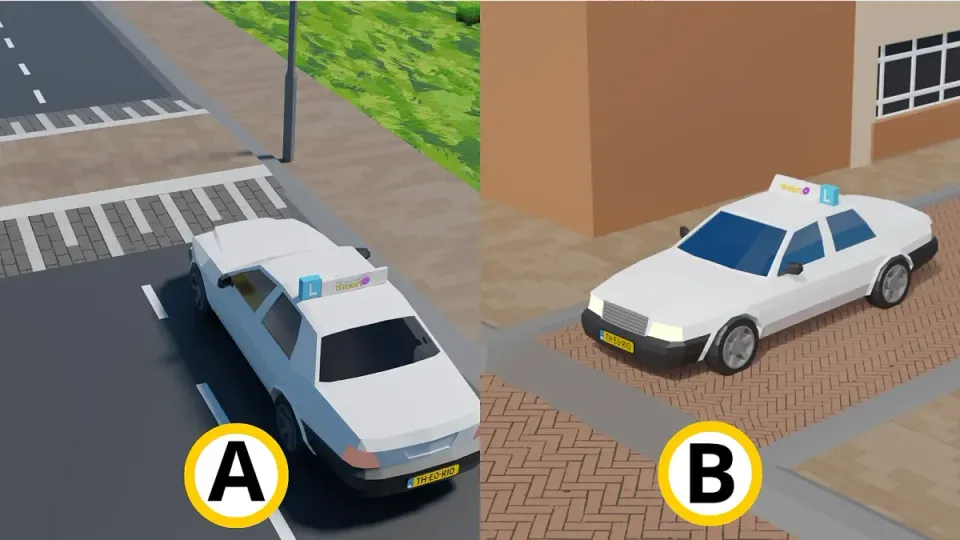
Question 2: Which situation represents an exit?
Correct answer: Situation B
If you leave an exit, you must give way to all other road users. Situation A is a threshold
Question 3: Should you yield to the engine?
Correct answer: No
The answer is: No. Here is the explanation: The engine is coming from a driveway. It is driving over a threshold. Then you must always wait. It must wait for all the traffic. You are driving on the regular road. You may go first.
Question 4: The learner car is driving out of the exit. A pedestrian is walking on the pavement. Who goes first?
Correct answer: The pedestrian
Driving out of an exit is a special manoeuvre (RVV 1990 article 54). You give way to all other traffic, including pedestrians on the pavement.
Question 5: The learner car wants to leave the exit and join the road. A cyclist is coming along the road. Who goes first?
Correct answer: The cyclist
When you drive out of an exit, you give way to all traffic on the road, from the left and from the right. So also to this cyclist.
FAQ
Frequently asked questions
Short answers to questions that often come up on this subject.
Does an exit also apply to pedestrians?
Yes. Entering or leaving a driveway is a special manoeuvre: let all other traffic go first. This includes pedestrians on a pavement you cross.
Do you have to give way when you leave an erf?
Yes. When you leave an erf, you give way to all other traffic, just as when you leave a driveway exit.
Is a speed bump a driveway exit?
Not automatically. A hump or raised junction alone does not make an approach a driveway. Assess the recognisable layout and destination as a whole, such as a continuous pavement with entrance kerbs or clearly apparent access to a property. Without a driveway, assess ordinary priority rules; other signs and paved/unpaved approaches may also matter.
Ready to practise?
Test your knowledge of Priority rules & Junctions with 35 practice questions in the app.
Free mock exam · no account needed
Your first quiz is free, no account needed. After that from €34.99 for 90 days of access.