Part 9 of 9 in Priority rules & Junctions
Woonerf (residential zone): speed, priority and parking
In a woonerf you drive at most 15 km/h, pedestrians may use the whole street and you only park in bays. All the rules and the erf sign G5.


Written by Chris Prosman Reviewed by Dirk van Zuijlen
Updated Reviewed on 2 min read
Free mock exam · no account needed
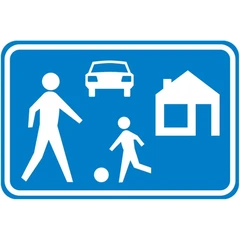
You recognise a woonerf (residential zone) by the blue erf sign (G5). There you drive at most 15 km/h, pedestrians and children playing may use the whole street, and you only park in places marked as parking spaces.
What is a woonerf?
A woonerf is a residential or shopping area where people live, walk and play, and traffic is a guest. In the traffic rules it is simply called an erf; “woonerf” is the everyday word. Often there is no separate pavement, the street is paved with bricks and there are trees, planters or parking bays in the road.
What makes a street an erf is not how it looks but the sign. Only where the erf sign stands do the erf rules below apply.
The woonerf sign: G5 and G6
| Sign | What you see | Meaning |
|---|---|---|
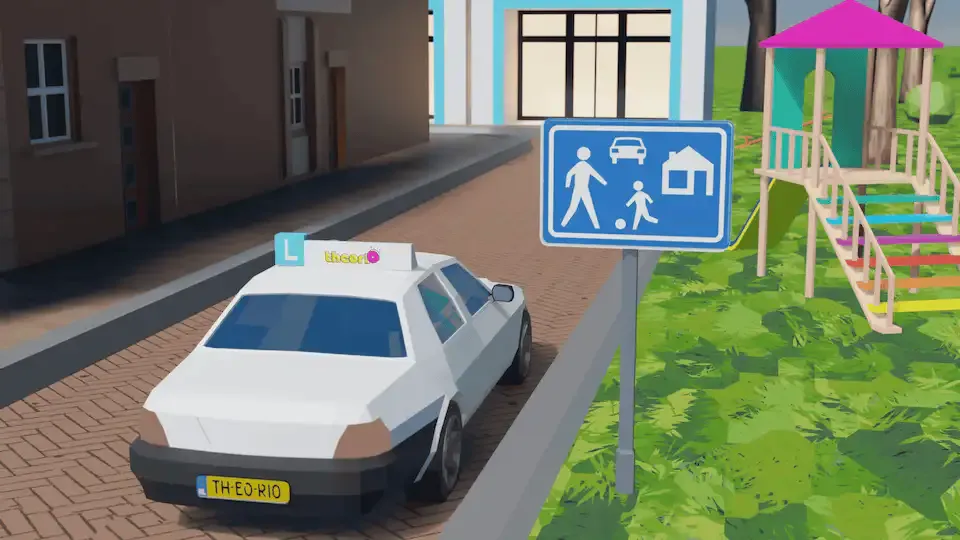
| G5 | Blue sign with a house, a pedestrian, a child with a ball and a car | Start of the erf: the erf rules apply from here |
| G6 | The same sign with a red line through it | End of the erf |
How fast may you drive in a woonerf?
In a woonerf you may drive no faster than 15 km/h (RVV 1990, article 45). That is walking pace: slow enough to stop in time if a child runs into the road. Often you need to go even slower, for example with children playing or parked cars blocking your view.
| Where | Maximum speed |
|---|---|
| Built-up area | 50 km/h |
| 30 km/h zone | 30 km/h |
| Woonerf (erf) | 15 km/h |
A woonerf is not the same as a 30 km/h zone. How to tell the zones apart is explained under speed limits inside and outside built-up areas.
Priority in a woonerf
- Pedestrians may use the whole width of the road (article 44), including where cars drive. Children may play in the street. Leave them room and adjust your speed.
- That is not general priority. When a pedestrian crosses, the normal priority rules for pedestrians apply. See priority rules for pedestrians.
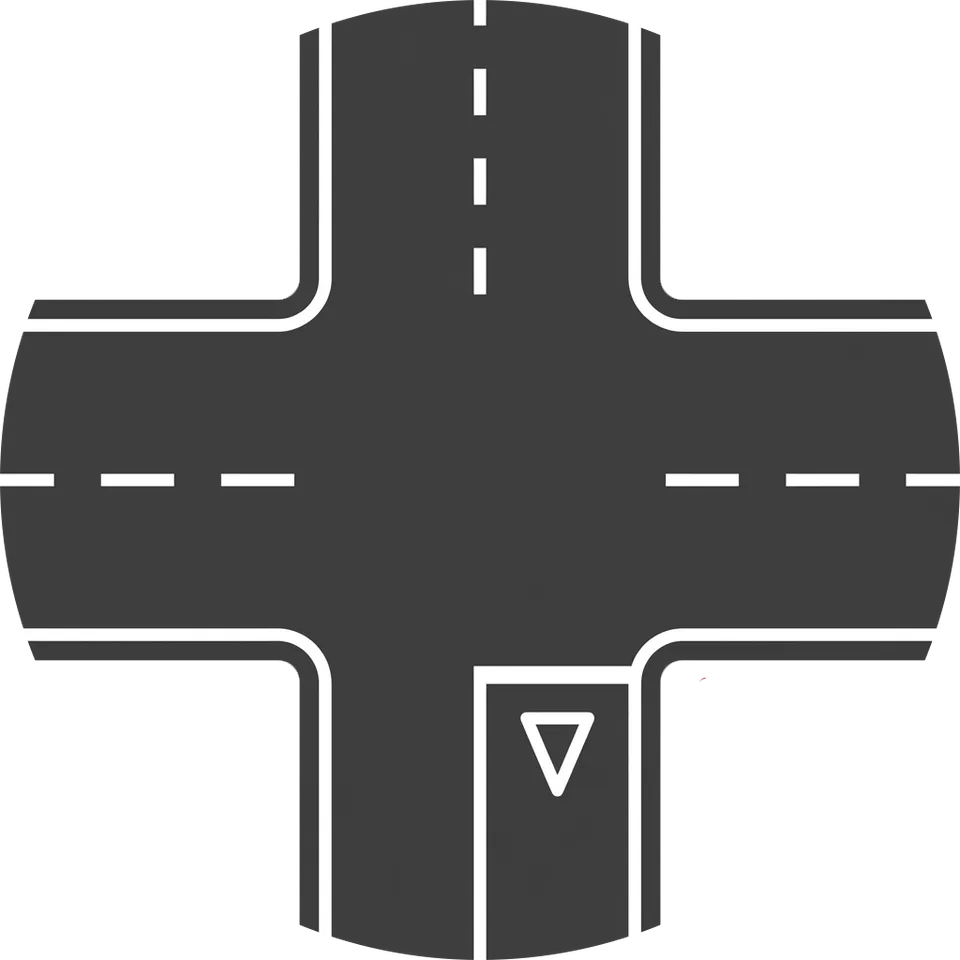
- Between vehicles the normal rules apply. At a junction without signs or markings, traffic from the right goes first: see the equal-priority junction.
- Leaving the woonerf, you let all other traffic go first, just as when you drive out of a driveway exit.
Parking in a woonerf
In a woonerf you may only park a motor vehicle in places marked as parking spaces: in a bay or where there is a P (article 46). Outside those places you may not park, even if there seems to be room.
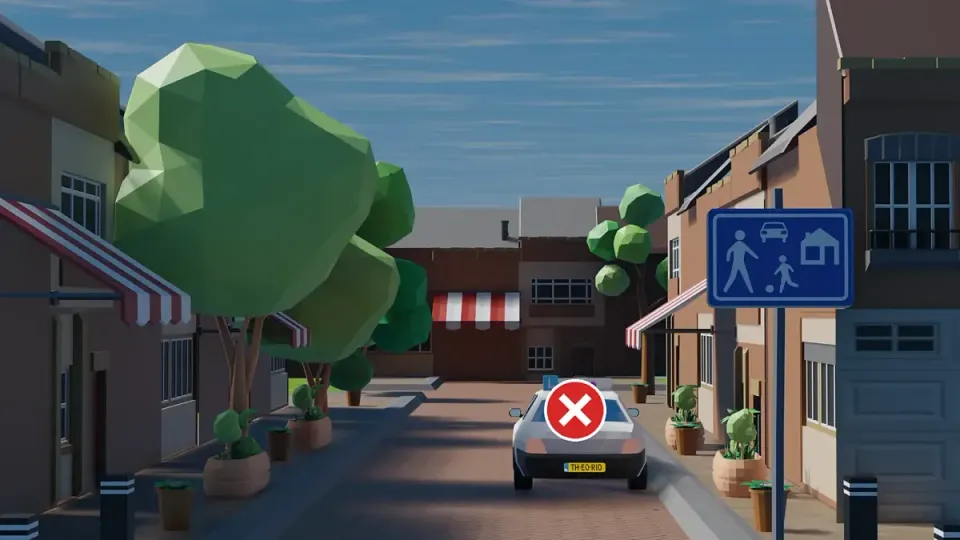
Stopping briefly is allowed outside a bay: letting someone get in or out, or loading and unloading. If the woonerf is also a parking disc zone, the disc rules apply too: see the parking disc. All other parking rules are under parking rules.
Sources: RVV 1990, articles 44, 45 and 46 and annex I (signs G5 and G6), wetten.overheid.nl (Dutch).
FAQ
Frequently asked questions
Short answers to questions that often come up on this subject.
How fast may you drive in a woonerf?
At most 15 km/h, which is walking pace (RVV 1990, article 45). If children are playing or you cannot see much, drive even slower.
Do pedestrians have priority in a woonerf?
Not always. Pedestrians may use the whole width of the road, and children may play in the street. When a pedestrian crosses, the normal priority rules for pedestrians apply.
Where may you park in a woonerf?
Only in places marked as parking spaces: in a bay or at a P. Letting someone get in or out and loading and unloading are also allowed outside a bay.
Who has priority when you leave a woonerf?
All other traffic. When you drive out of a woonerf, you let everyone go first, just as when you leave a driveway exit.
Ready to practise?
Test your knowledge of Priority rules & Junctions with 35 practice questions in the app.
Free mock exam · no account needed
Your first quiz is free, no account needed. After that from €34.99 for 90 days of access.