Part 5 of 9 in Priority rules & Junctions
Unpaved roads: who has priority?
Unpaved road and priority: coming from an unpaved road you give way to all drivers on the paved road. Imagine invisible shark's teeth.


Written by Chris Prosman Reviewed by Dirk van Zuijlen
Updated Reviewed on 3 min read
Free mock exam · no account needed
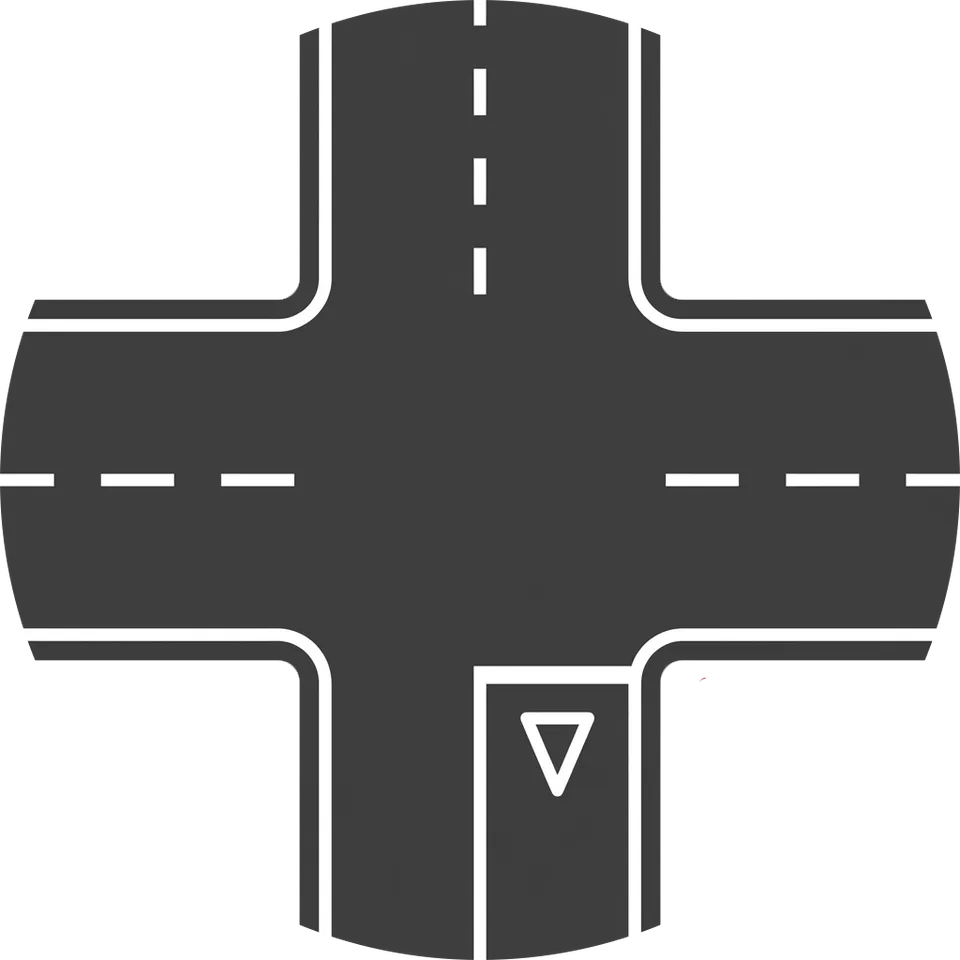
If you come from an unpaved road, such as a sand track, you give way to all drivers on the paved road. From the left and from the right: you give way to the whole junction. Pedestrians are not part of this. The normal pedestrian rules apply to them.
What is an unpaved road?
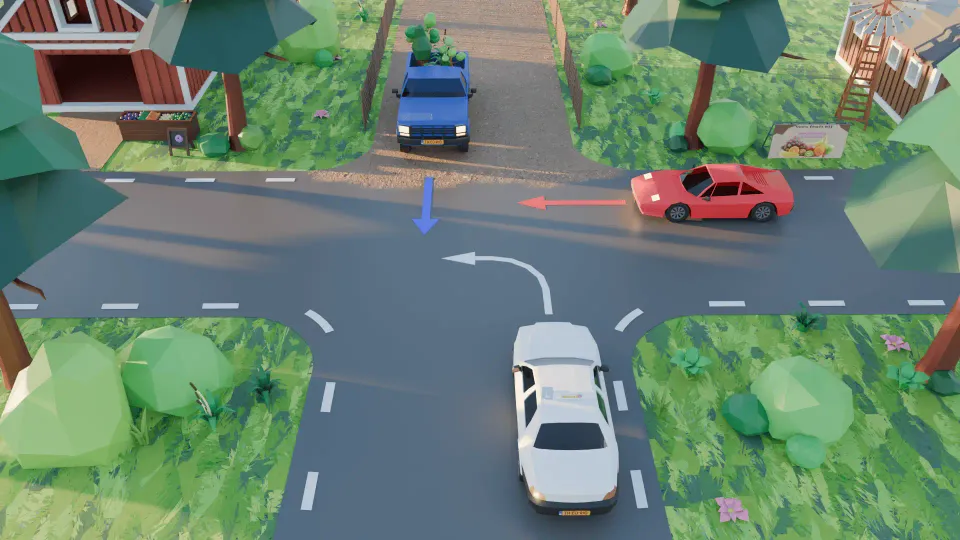
An unpaved road is a road without a hard surface. There is no asphalt, concrete, bricks or tiles, but sand, gravel or earth. Think of a sand track in the woods or a country lane between fields. You usually recognise it straight away by its brown, sandy colour.
A paved road does have a hard surface. So a street with bricks is paved too.
Unpaved road and priority: who goes first?
If you come from an unpaved road, you let all drivers on the paved road go first. It does not matter whether they come from the left or the right. Article 15 RVV says it literally: “drivers on an unpaved road give priority to drivers on a paved road”. So this rule comes before “the right goes first”.
Note: you give priority to drivers, not to pedestrians. This rule does not give a pedestrian priority. Separate rules apply to pedestrians, see below.
All drivers count: cars, motorcycles, lorries, cyclists, moped riders and horse riders.
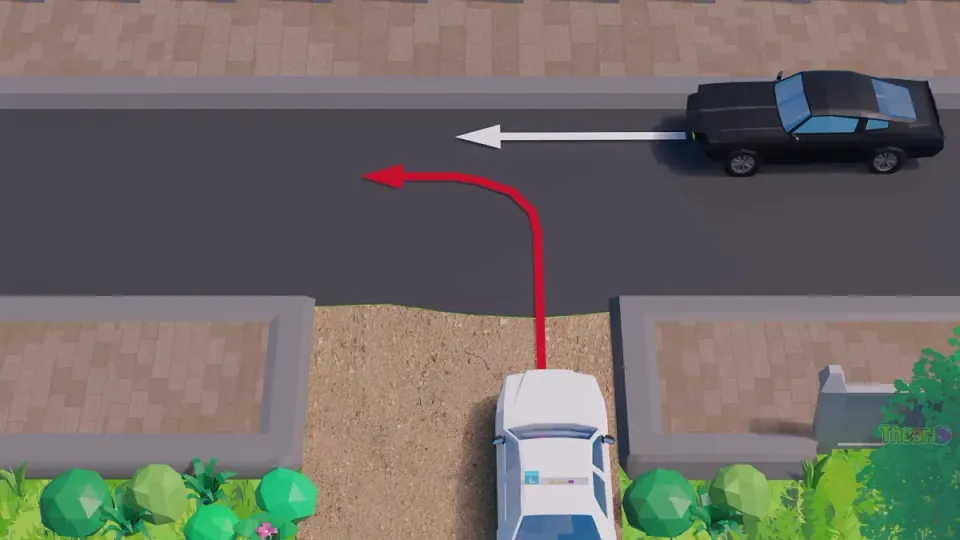
Does traffic from the right go first when you come from an unpaved road?
Yes, and drivers from the left too. If you come from an unpaved road, you wait for all drivers on the paved road, from the left and from the right. This is about drivers, not pedestrians. Are you on the paved road and does someone come out of a sand track? Then they wait for you, even if they come from the right.
Memory aid: treat it like a driveway exit, but without pedestrians
Pretend you are leaving a driveway exit. Then the rule almost works by itself: you let all drivers on the paved road go first, from the left and from the right. One difference: at a driveway exit you also let pedestrians go first. At an unpaved road you do not, because this rule only applies to drivers.
Two drivers from unpaved roads
Do you and another driver both come from an unpaved road, and is the paved road clear? Then the normal rules apply between you. Traffic from the right goes first, and on the same road straight on goes before turning. These rules are under equal junction.
Do you have to give way to pedestrians at an unpaved road?
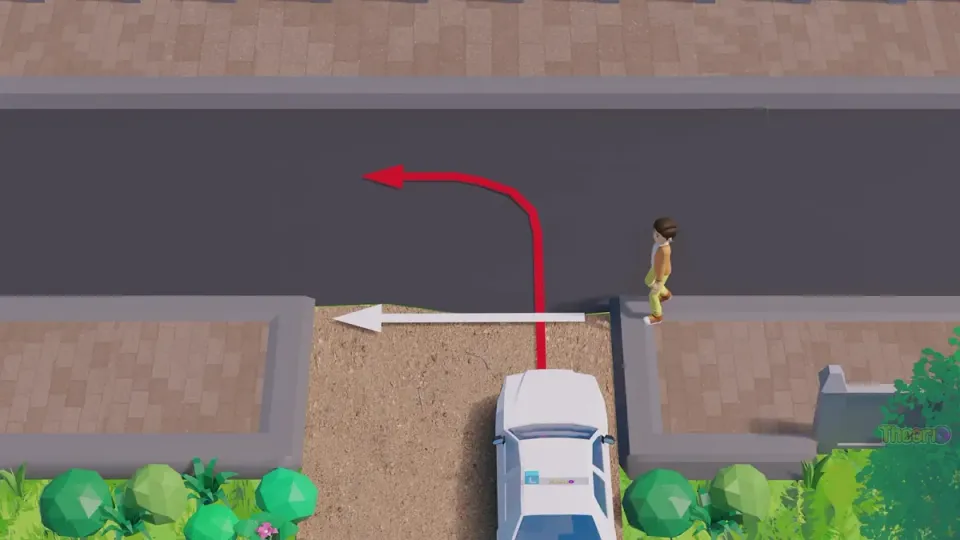
Not because of the unpaved-road rule. That rule only applies between drivers, and a pedestrian is not a driver. The normal pedestrian rules apply: face and back, hold back; see their side, go for a ride. Do you see the pedestrian’s face or back as you turn? Then they go straight on along the same road and go first. Do you see their side? Then they come from the side and you go first. At a zebra crossing you let a pedestrian go first. How to decide is explained under priority rules for pedestrians.
Is an unpaved road a driveway exit?
No, not by itself. A sand track or gravel road is just a road, only without a hard surface. Different rules apply at a driveway exit:
| Picture | Situation | Who do you let go first? |
|---|---|---|
| From sand or gravel onto the paved road | All drivers on the paved road, from the left and from the right. The normal pedestrian rules apply: face and back, hold back; see their side, go for a ride. |
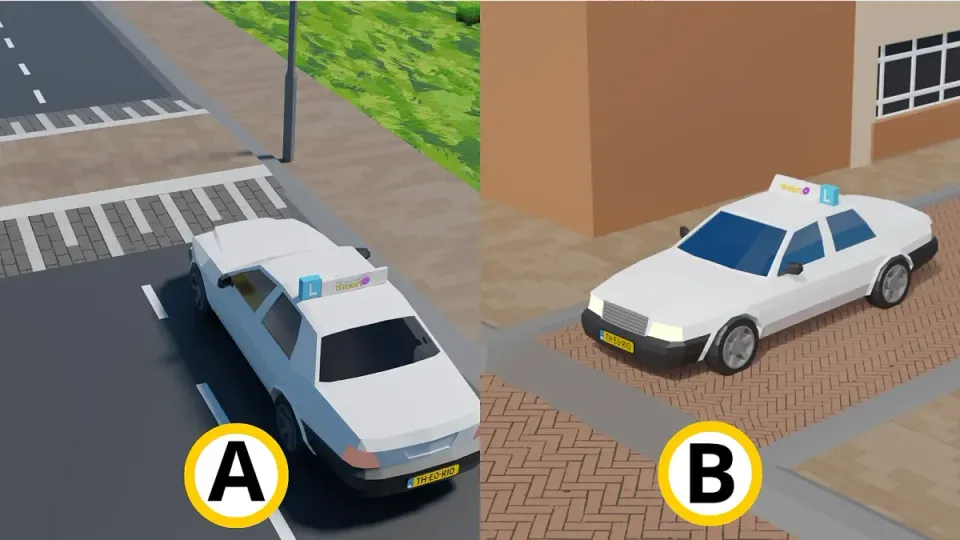 | Leaving a driveway exit, as at B | All other traffic, pedestrians too. |
How to recognise a driveway exit is explained under driveway exits.
Practise like the exam
Example questions like in the CBR exam
Real questions from the Theorio app. You can expect similar questions in your CBR exam.
Question 1 of 4
What is the correct order of priority at this intersection?
What is the correct order of priority at this intersection?
You come from an unpaved road and want to join the paved road. Who do you give way to?
Tap the answer you think is right.
The learner car comes from the sandy track. Does this pedestrian get priority because of the unpaved-road rule?
Tap the answer you think is right.
Answers and explanations for the example questions
Question 1: What is the correct order of priority at this intersection?
Correct answer: Order on the image: 1 → 2 → 3
At an unpaved road (dirt road), you must yield to all drivers on the intersecting road, so not automatically to pedestrians. We solve this intersection again in 2 steps: 1. Which of the drivers goes first? That is the learner car, because the blue car is coming from an unpaved road. 2. What is the rule between the learner car and the pedestrian? The learner car wants to turn and the pedestrian is going straight on the same road. Straight on goes before turning traffic. So the order is: pedestrian, learner car, blue car 🚙.
Question 2: What is the correct order of priority at this intersection?
Correct answer: Order on the image: 1 → 2 → 3
We see an intersection here with an unpaved road (dirt road). The rule is: drivers on the unpaved road must yield to all intersecting drivers, but not automatically to pedestrians. The blue car is coming from the unpaved road and therefore goes last. Between the drivers on the paved road, the rule applies: right goes first. The red car is coming from the right for the learner car and therefore goes first. So the order is: red car, learner car, blue car 🚗.
Question 3: You come from an unpaved road and want to join the paved road. Who do you give way to?
Correct answer: All drivers on the paved road, from the left and from the right
Coming from an unpaved road, you give way to all drivers on the paved road (RVV 1990 article 15). It does not matter whether they come from the left or the right. Pedestrians are not part of this; the normal pedestrian rules apply to them.
Question 4: The learner car comes from the sandy track. Does this pedestrian get priority because of the unpaved-road rule?
Correct answer: No, that rule only applies between drivers
The unpaved-road rule only applies between drivers, and a pedestrian is not a driver. The normal pedestrian rules apply: face and back, hold back; see their side, go for a ride. You see their side: go for a ride. There is no zebra crossing here and it is not an exit.
FAQ
Frequently asked questions
Short answers to questions that often come up on this subject.
Do you have to give priority to pedestrians on the paved road when you are on an unpaved road?
The unpaved-road rule itself requires giving way to drivers on the paved road, not automatically to pedestrians. Other rules may still require letting a pedestrian go first, for example when turning across their route on the same road, at a crossing, or under protection for people with a white cane with red bands or difficulty walking.
Ready to practise?
Test your knowledge of Priority rules & Junctions with 35 practice questions in the app.
Free mock exam · no account needed
Your first quiz is free, no account needed. After that from €34.99 for 90 days of access.