Part 6 of 9 in Priority rules & Junctions
Haaientanden (shark's teeth) in traffic: meaning and priority
Haaientanden (shark's teeth) are give-way markings: white triangles on the road. Give way to drivers on the crossing road, from left and right.


Written by Chris Prosman Reviewed by Dirk van Zuijlen
Updated Reviewed on 3 min read
Free mock exam · no account needed
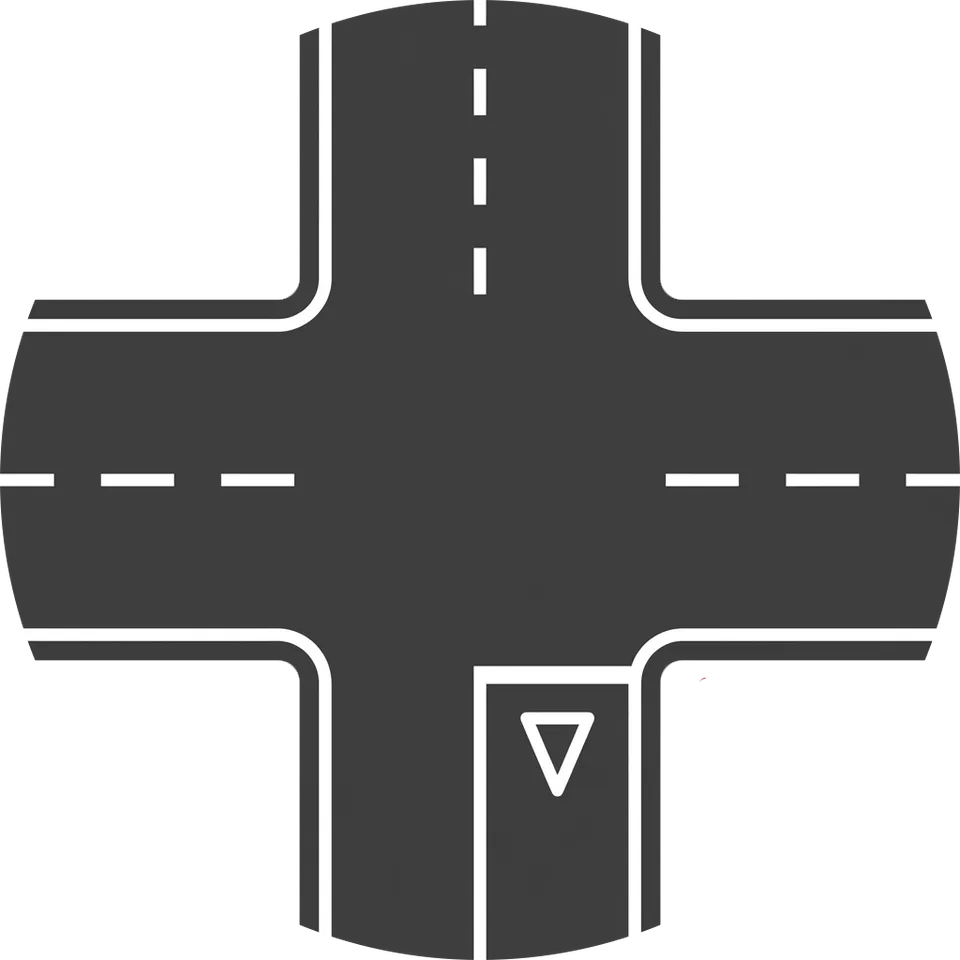
Shark’s teeth (haaientanden) are white triangles on the road, pointing towards you. When you see them, you give way to all drivers on the crossing road: from the left and from the right. You only need to stop when that is necessary.
What do shark’s teeth (haaientanden) mean in traffic?
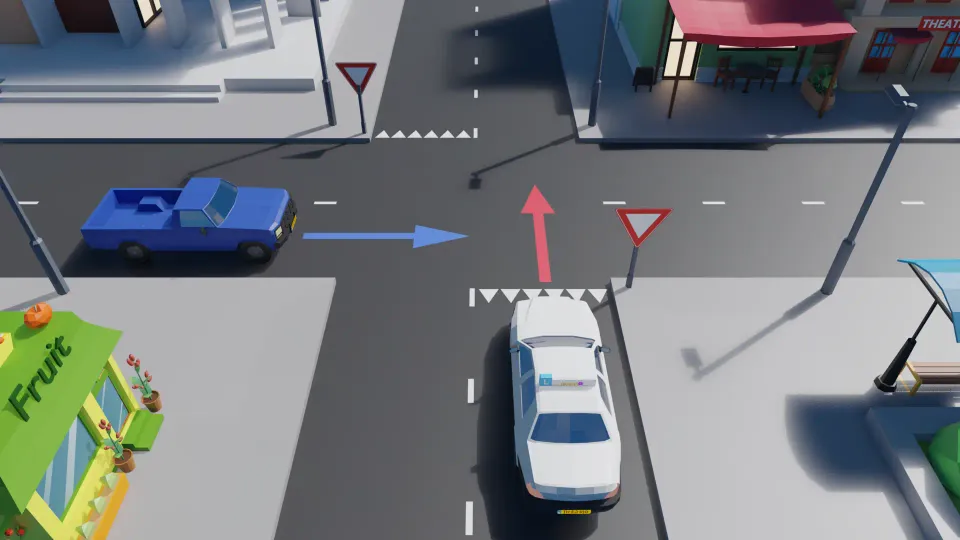
Shark’s teeth on the road are a row of white triangles across your lane. The points face you. They mean: give way to the drivers on the crossing road (article 80 RVV).
Shark’s teeth belong to the driver who drives towards them. So in the exam, first find out who has the shark’s teeth. That driver waits.
Shark’s teeth without a sign
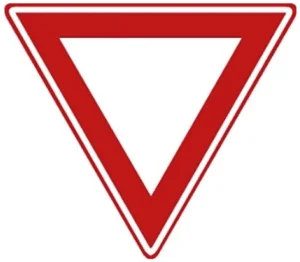 Usually there is also sign B6: a triangle pointing down. But shark’s teeth without a sign mean exactly the same. Then you also give way. Read more about priority signs under priority junction.
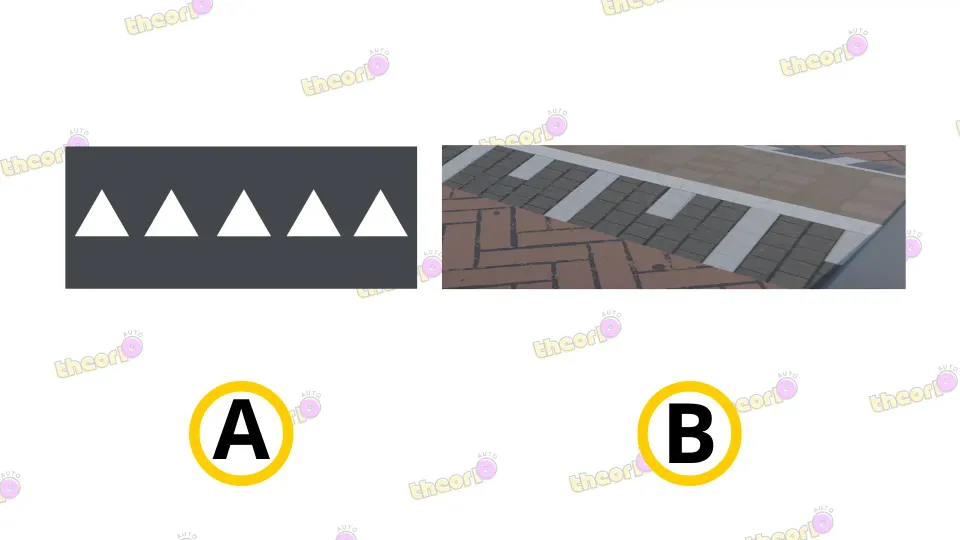
Shark’s teeth or a speed bump?
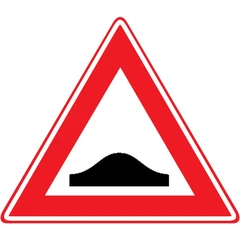 Wide white blocks on the road sometimes look like shark’s teeth. They look more like piano keys. These blocks only warn of a speed bump (sign J38). They have nothing to do with priority. Shark’s teeth are always triangles pointing towards you.
What should you do at shark’s teeth?
At shark’s teeth you do three things:
- Approach the shark’s teeth calmly.
- Look left and right.
- Let all drivers on the crossing road go first: cars, motorcycles, lorries, cyclists and moped riders.
Is someone coming from the left? You let them go first too. That is the big difference with an equal junction, where only traffic from the right goes first.
Do you have to stop at shark’s teeth?
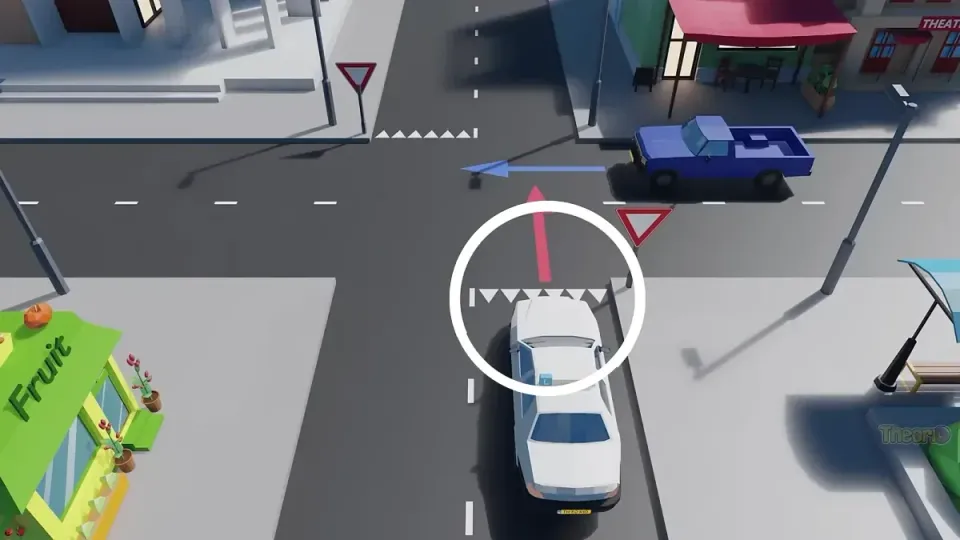
No, not always. You only need to stop when that is necessary to give way or to look properly. Is nobody coming on the crossing road and can you see it well? Then you drive on calmly. A stop sign (B7) is different: there you always stop completely, even when nobody is coming. More under priority junction.
Shark’s teeth on a cycle path
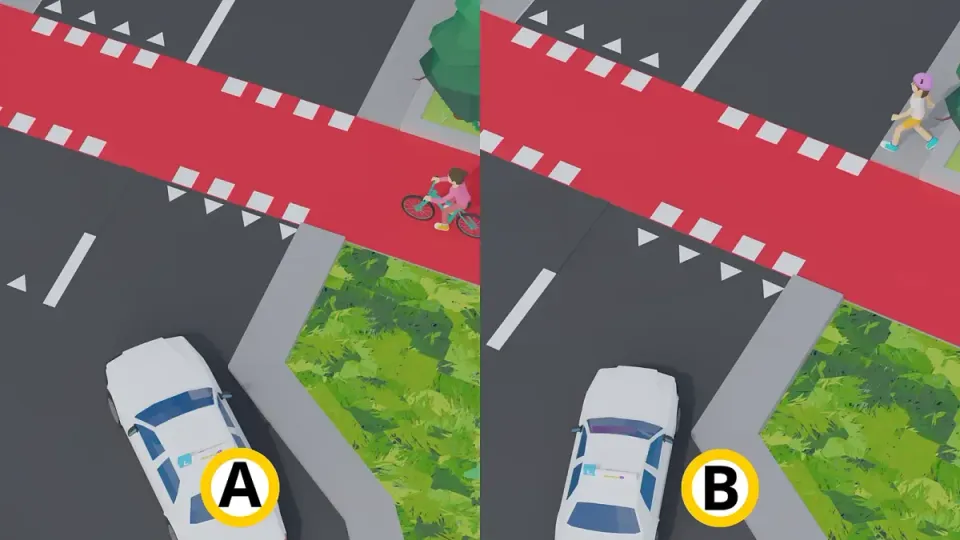
Shark’s teeth can also be on a cycle path. Then the cyclists and moped riders on that path give way to the crossing road. Are the shark’s teeth on your side, just before a cycle path? Then you let the cyclists on that path go first. So look carefully where the triangles are and who they point at.
Do pedestrians have priority at shark’s teeth?
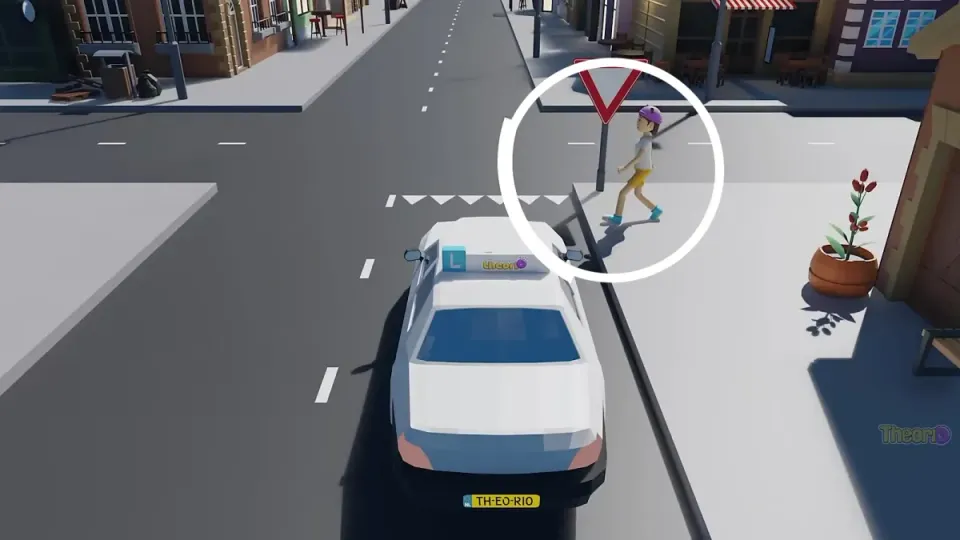
No, not because of the shark’s teeth. Shark’s teeth only regulate priority between drivers. A pedestrian can go first for another reason, though. For example because they are on a zebra crossing. Or because they go straight on along the road you are turning off. How to decide is explained under priority rules for pedestrians.
Practise like the exam
Example questions like in the CBR exam
Real questions from the Theorio app. You can expect similar questions in your CBR exam.
Question 1 of 6
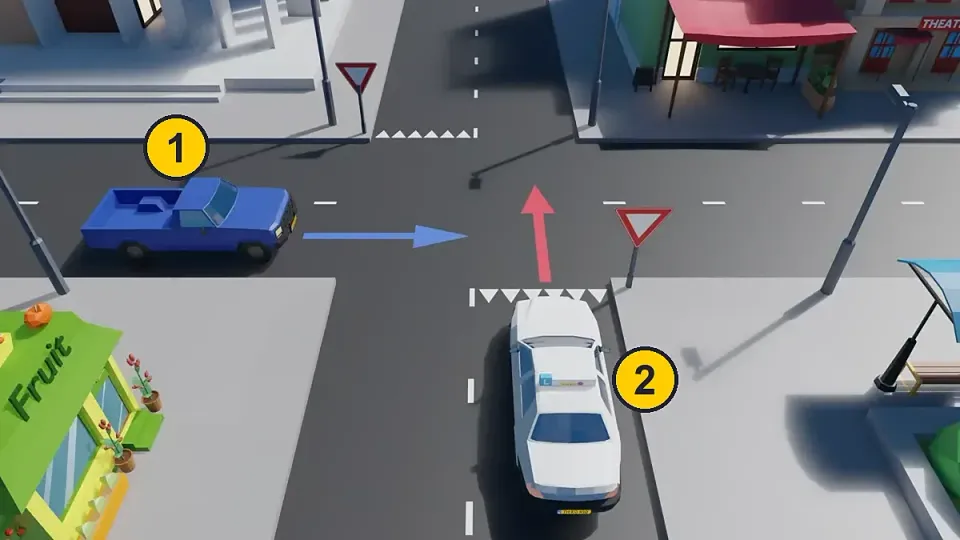
What is the correct order of priority at this intersection?
This is not an equivalent intersection For drivers, there are 3 rules: - Equivalent intersection? -> right goes first - Yield signs/stop signs? -> stop for crossing driver - On the same road/same direction? -> Going straight goes before turning & Short turn before long turn’
What is the order of priority?
For drivers, there are 3 rules: - Equivalent intersection? -> right goes first - Yield signs/stop signs? -> stop for crossing driver - On the same road/same direction? -> Going straight goes before turning & Short turn before long turn
At shark teeth you must give way to crossing drivers.
Which marking indicates shark teeth?
Tap the answer you think is right.
You don't drive all the way to the shark teeth. Are you positioned well?
Tap the answer you think is right.
What is the correct order of priority at this intersection?
What is the correct order of priority at this intersection?
Nod yes Nod no rule
Answers and explanations for the example questions
Question 1: What is the correct order of priority at this intersection?
Correct answer: Order on the image: 1 → 2
The driving school car comes from a road with yield signs and must therefore yield to drivers on the crossing road. The blue car may therefore go first. 🚗➡️ The blue car has priority because the driving school car has yield signs. 🛑
Question 2: What is the order of priority?
Correct answer: Order on the image: 1 → 2
This is not an equivalent intersection, because we clearly see yield signs. 🚗➡️ The blue car has priority because the lesson car has yield signs. 🛑
Question 3: Which marking indicates shark teeth?
Correct answer: C
Image C shows shark teeth, which means you must yield to crossing traffic 🦈. Shark teeth indicate yielding to crossing drivers👉.
Question 4: You don't drive all the way to the shark teeth. Are you positioned well?
Correct answer: Yes
You see a large bus coming around the corner. A bus is long and needs a lot of space. It often comes a bit onto your side of the road when turning. If you drive all the way to the shark teeth, you are in the way. The bus could hit you then. By stopping earlier, you give the bus enough space. That is safe.
Question 5: What is the correct order of priority at this intersection?
Correct answer: Order on the image: 1 → 2 → 3
✅ Equal intersection? No. ✅ Shark teeth / stop signs? Yes. You must stop for crossing traffic, so the blue car goes first. But the green car is not crossing traffic! • ⤵️ Same road / same direction? Yes. Traffic going straight has priority over turning traffic, and a short turn goes before a long turn. So the white learner car goes before the green car. You can also remember it like this: Drivers stuck in the middle of the road are out of luck. They always go last.
Question 6: What is the correct order of priority at this intersection?
Correct answer: Order on the image: 1 → 2
The rules for priority with pedestrians: 1. Yield signs or stop signs apply only to other drivers (not to pedestrians) 2. Nod yes Nod no The woman crosses from right to left. This indicates a shaking head movement from right to left. This means no, the pedestrian does not have priority.
FAQ
Frequently asked questions
Short answers to questions that often come up on this subject.
What do haaientanden (shark's teeth) on the road mean?
Haaientanden are give-way markings: white triangles on the road surface. They mean: give way to all drivers on the crossing road, from both the left and the right. That includes cyclists and moped riders.
Do you have to stop at give-way markings?
Give-way markings do not themselves impose a fixed stop: give way and stop when necessary to observe and wait safely. A clear crossing road does not remove other duties, such as letting a pedestrian go first. If B7 governs the situation, you must come to a complete stop.
Do give-way markings also apply to pedestrians?
No. Give-way markings only set the priority between drivers. Whether you must let a pedestrian go first depends on other rules, such as a pedestrian crossing or going straight on along the same road.
Ready to practise?
Test your knowledge of Priority rules & Junctions with 35 practice questions in the app.
Free mock exam · no account needed
Your first quiz is free, no account needed. After that from €34.99 for 90 days of access.