Part 3 of 9 in Priority rules & Junctions
Priority junction
Priority signs and shark's teeth make a junction a priority junction. How to recognise it, who goes first and what applies when the lights fail.


Written by Chris Prosman Reviewed by Dirk van Zuijlen
Updated Reviewed on 9 min read
Free mock exam · no account needed
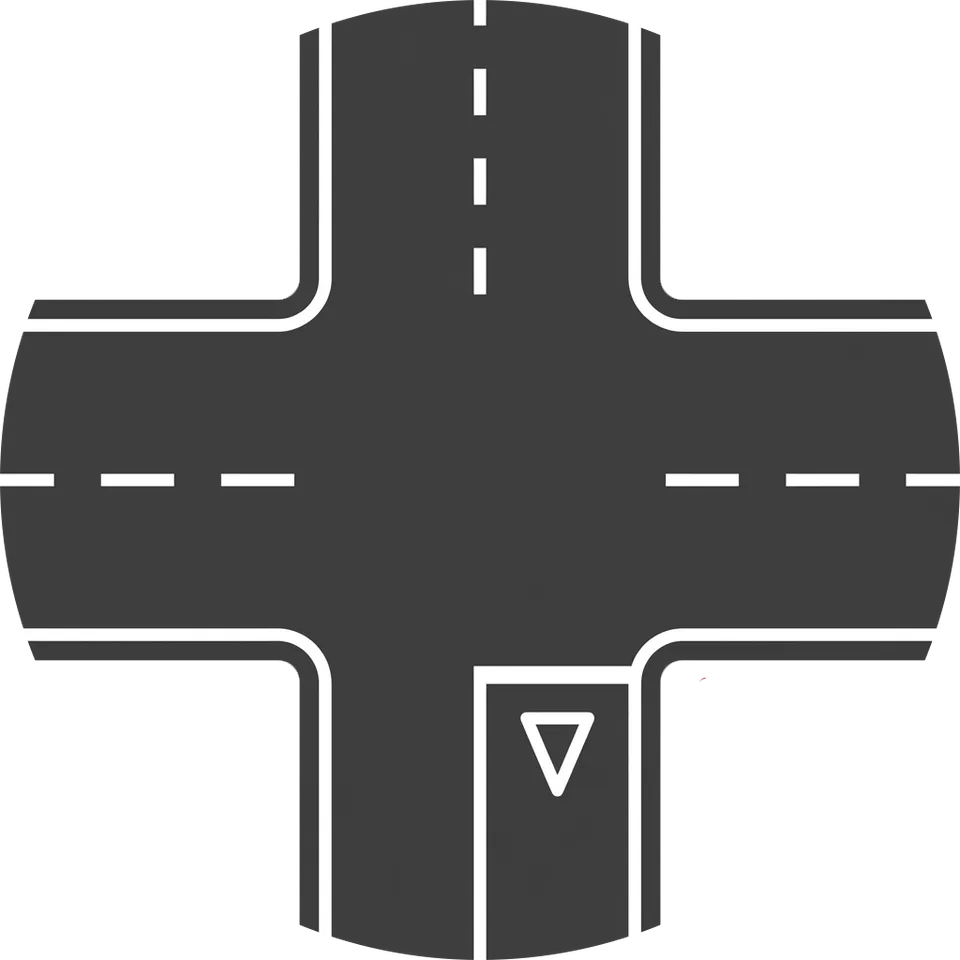
A priority junction is a junction where signs and give-way markings (shark's teeth) decide who goes first. If you get priority, you see sign B3, B4 or B5 (a red triangle with a thick black line). If you must give way, you have shark's teeth, sign B6 (give way) or sign B7 (stop sign).
How to recognise a priority junction
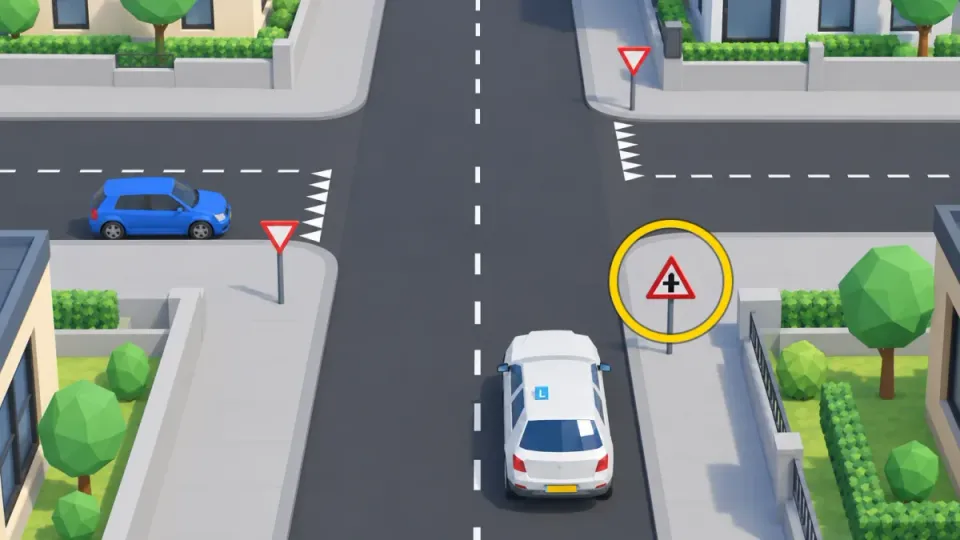
At a priority junction it is shown who goes first, with signs and with give-way markings (shark's teeth) on the road. They come before the rule that traffic from the right goes first. Which sign you see depends on the road you are on.
Signs when you get priority
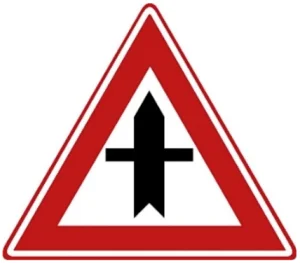 Sign B3 (priority junction): a red triangle with a thick and a thin black line. The thick line is your road: you have priority at the next junction. The thin line shows the small side roads. They have shark's teeth or sign B6 or B7: those drivers must wait and let you go first.
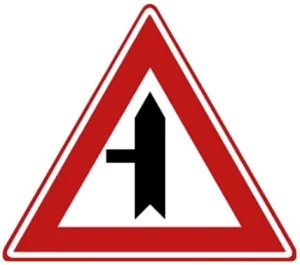 Sign B4 (priority junction, side road on the left): the thin line is only on the left. You have priority over traffic from the side road on your left.
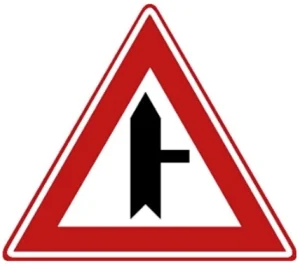 Sign B5 (priority junction, side road on the right): the thin line is only on the right. You have priority over traffic from the side road on your right.
These signs mean that priority is regulated at that junction. Also check the markings on the side roads and whether the traffic really lets you go first. If you are on a priority road with the yellow diamond-shaped sign B1 (priority road), you have priority at every junction: see below.
Signs when you must give way
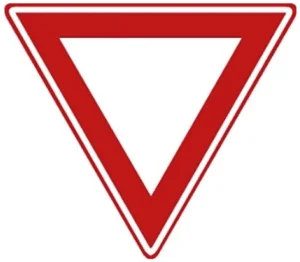 Sign B6 (give way): a white triangle with a red border, pointing down. Let the drivers on the crossing road go first, from the left and from the right.
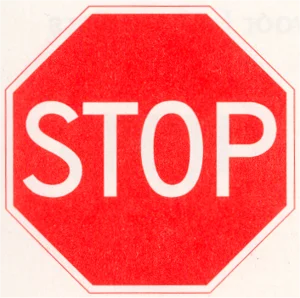 Sign B7 (stop sign): a red octagon with STOP on it. You always come to a complete stop at the stop line, even if you think nobody is coming. Then you give way. Such a sign is usually there because the junction is hard to see.
 Give-way markings (shark's teeth): a row of small white triangles across your lane, pointing at you. They mean the same as sign B6 (give way), even without a sign. More under give-way markings.
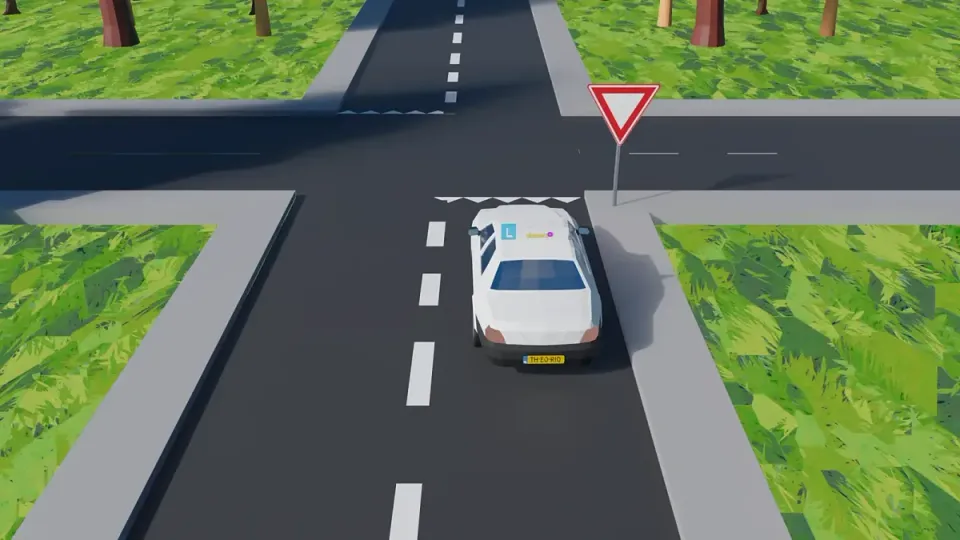
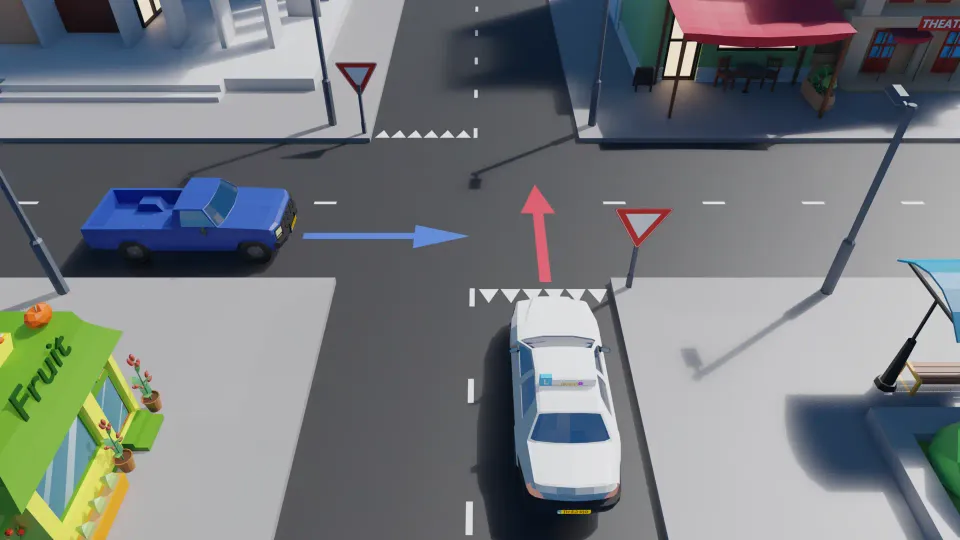
Watch the stop line itself: it only shows where you must stop, and means nothing else. You also see it under traffic lights, where you simply drive on at green. A stop sign always requires a stop; red or yellow lights and an instruction can also require stopping.
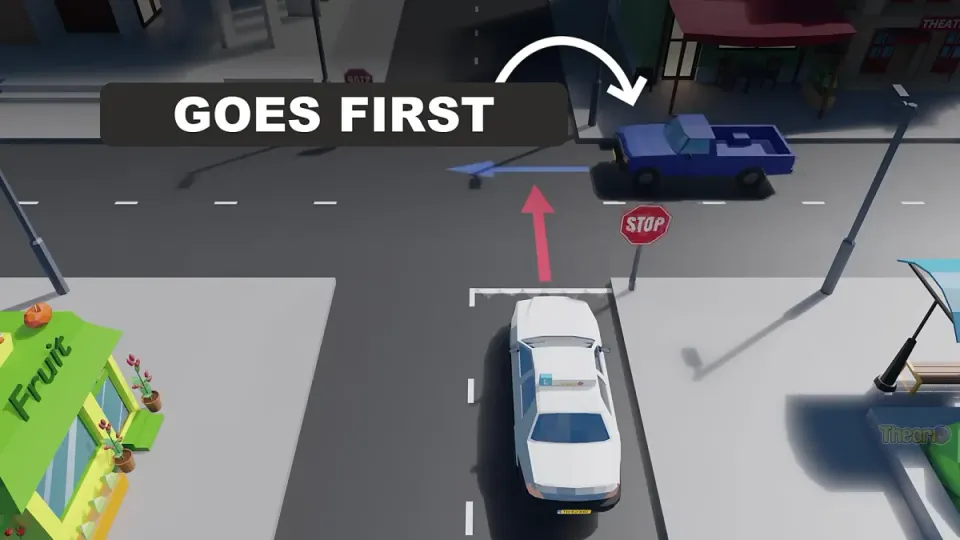
The rules at a priority junction
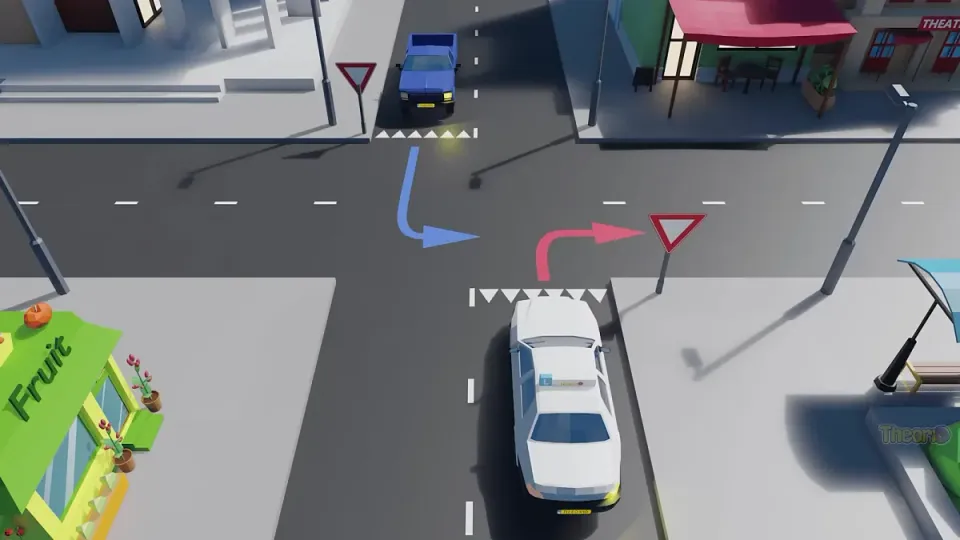
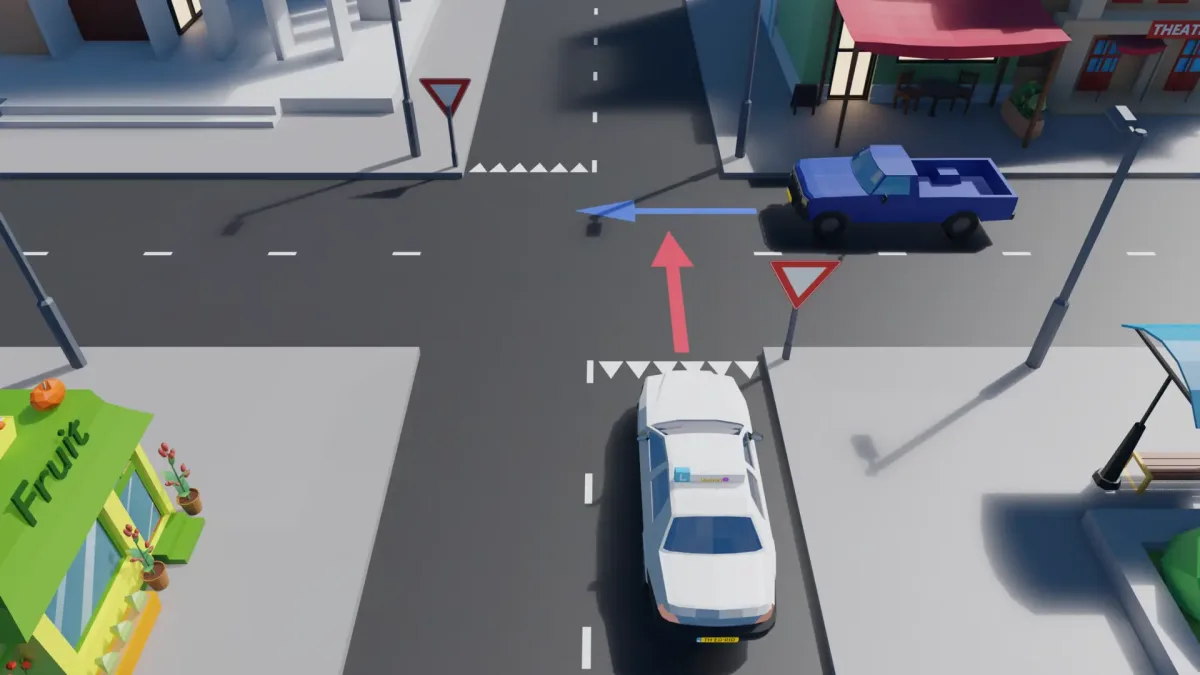
Two situations side by side: on the left the learner car must give way, on the right the learner car gets priority.
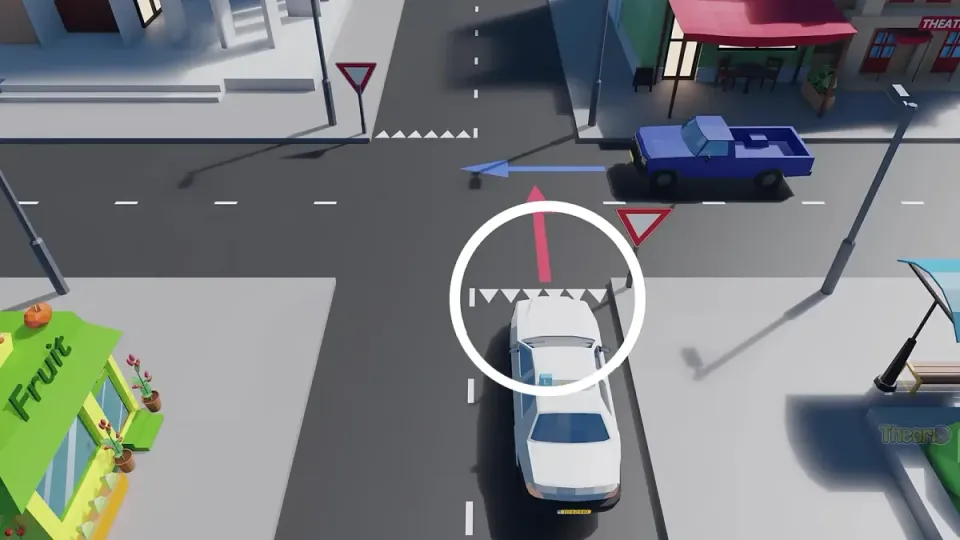 You have shark's teeth and sign B6 (give way): the blue pick-up on the crossing road goes first. | 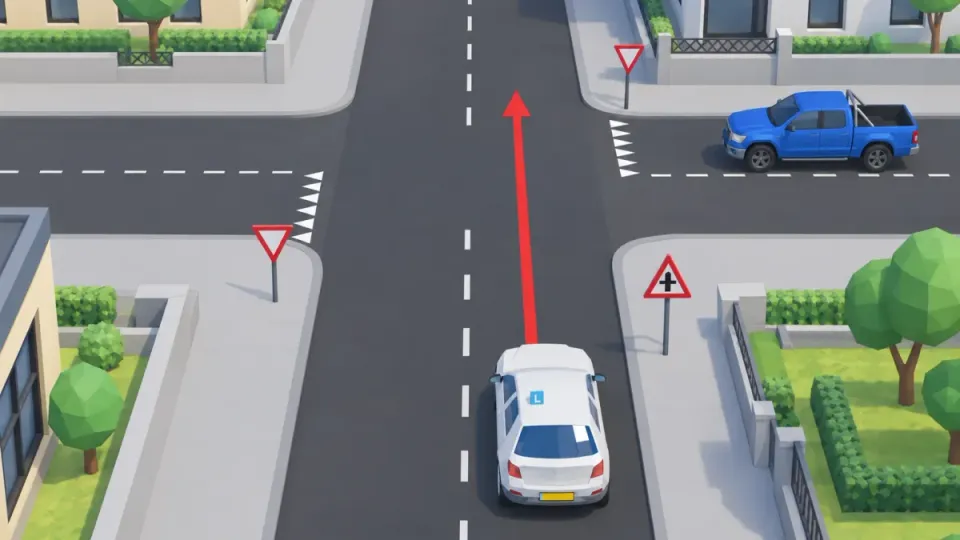 You have sign B3 (priority junction): you go first, even before the blue pick-up coming from the right. It has shark's teeth. |
- Do you have shark's teeth, sign B6 (give way) or sign B7 (stop sign)? Then you let all drivers on the crossing road go first, from the left and from the right: cars, motorcycles, cyclists and moped riders. At B7 you first stop completely.
- Are you on the road with sign B3, B4 or B5 (priority junction)? Then you have priority over traffic from the side road, even if it comes from the right.
- Turning? Your priority over the side road remains, but between drivers on the same road the normal rules apply. If you turn left and the oncoming driver on the priority road goes straight on, they go first. If you both turn, the short turn goes before the long one. How that works when you and the oncoming driver have the same signs is explained under the priority rules.
Priority is given, not taken. Even if the sign says you go first, check that the other driver really lets you go. If they do not slow down, you wait.
A roundabout with give-way markings at the entry is a priority junction too: traffic already on the roundabout goes first. Without give-way markings and priority signs the roundabout is an equal junction and traffic from the right goes first, so whoever wants to enter. More about choosing your lane and indicating under the roundabout.
The most important priority signs in the exam
In the exam you must recognise the priority signs at a glance. Signs B3 to B7 (priority junction, give way and stop) are shown above. The sign that is misunderstood most often is the priority road sign.
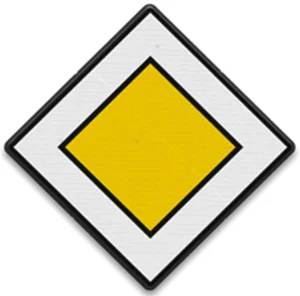 The yellow diamond-shaped sign B1 (priority road) means: you are on a priority road. You then have priority over traffic from the side roads at all junctions on that road, not just the next one. That stays so until the priority road ends, usually at sign B2 (end of priority road). Even with priority, check that others make room.
Formally a priority road is not a priority junction: sign B3, B4 or B5 (priority junction) applies to one junction, sign B1 (priority road) to the whole road. Traffic from the side roads has shark's teeth, sign B6 (give way) or sign B7 (stop sign) here too.
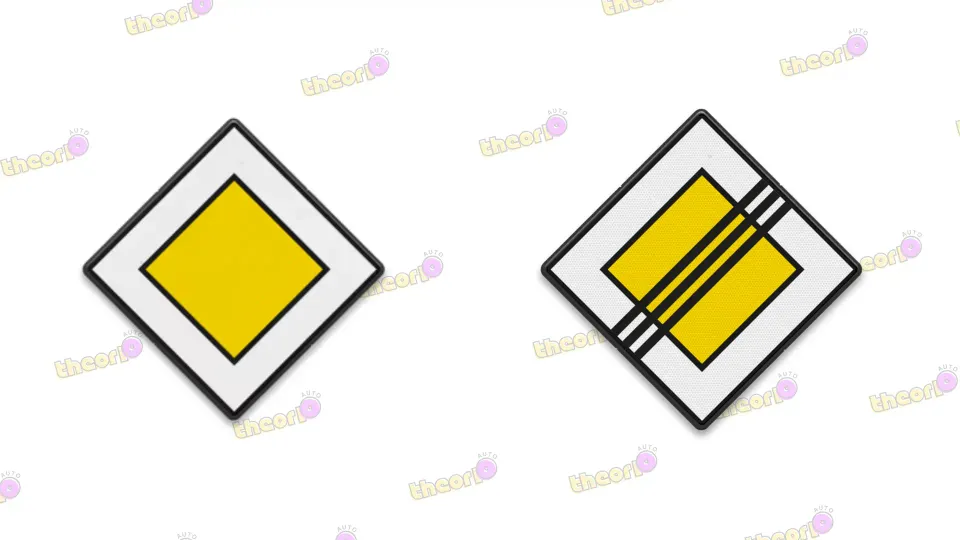
After sign B2 (end of priority road) you no longer have priority over the side roads. Then you look again at the signs and give-way markings at each junction, and if there are none, traffic from the right goes first.
Sub-signs with priority signs
Under a priority sign there can be a white sub-sign with one thick and a few thin lines. That sub-sign shows how the priority road runs at this junction. You mostly see it where the priority road bends.
The thick line shows the priority road; thin lines show joining roads. Following the thick line around a bend retains priority over drivers from subordinate side roads. It does not automatically remove duties towards traffic on the same road or pedestrians. Indicate if changing direction, even while staying on the priority road.
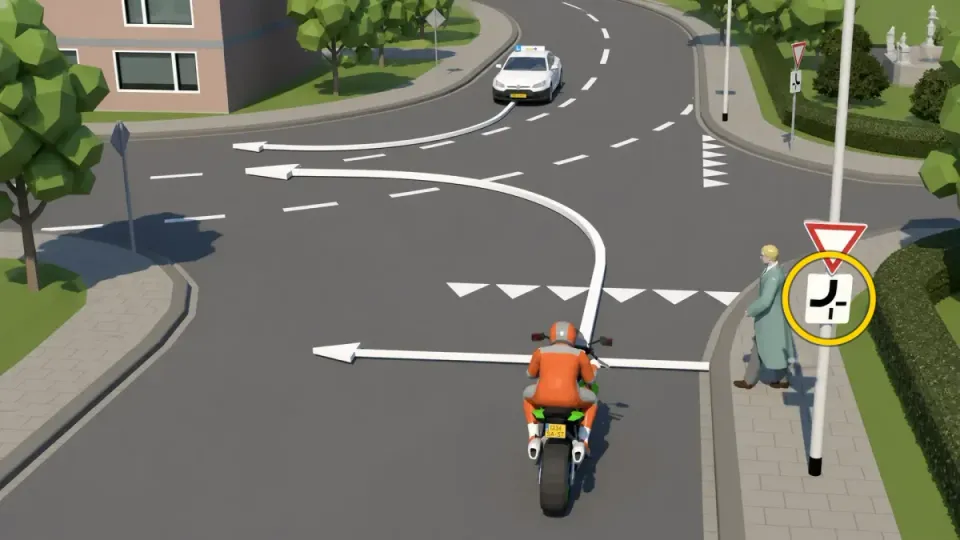
When leaving the priority road, assess separately which road each road user follows. “I follow the thick line” or “I go straight” alone cannot solve every combination. The basic rules explain how signs and turning duties combine.
Memory aids for the four priority signs
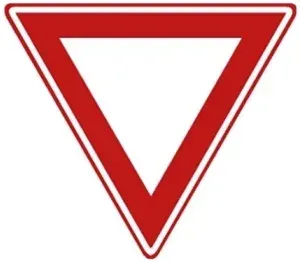 | B6 (give way): the upside-down triangle is one big shark's tooth. The sign and the shark's teeth on the road mean the same: you give way. |
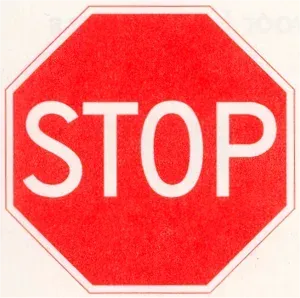 | B7 (stop sign): stop means stop. Even on an empty road you first come to a full standstill. Then you give way. |
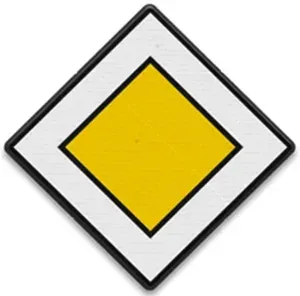 | B1 (priority road): the yellow sign looks like an egg (ei in Dutch). Fiiinally you can drive on, junction after junction: you get priority. |
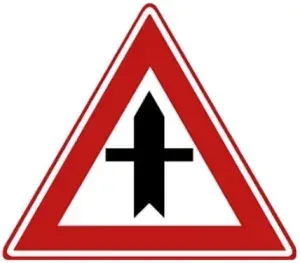 | B3 (priority junction): thick beats thin. The thick line is your road, the thin lines are the side roads: you get priority. |
Cyclists at a priority junction
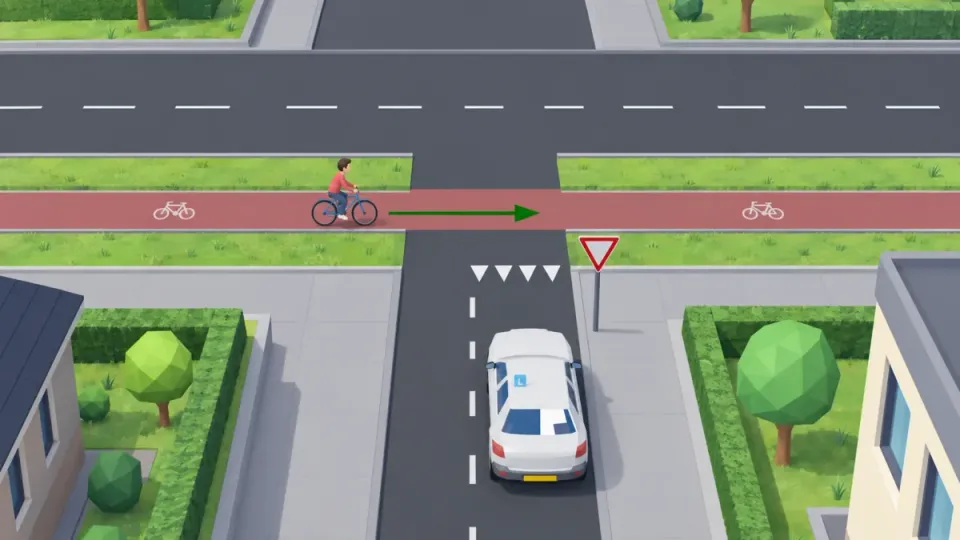
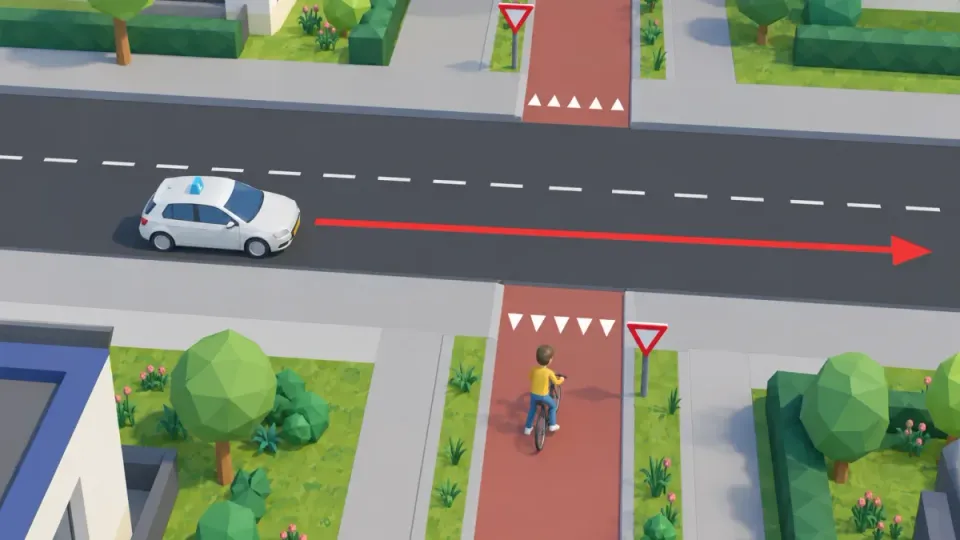
A cycle path that runs along the priority road belongs to that road. Cyclists and moped riders on that cycle path therefore have priority just as much as the cars on the carriageway. If you have give-way markings, you do not only cross the carriageway: you also let the cyclists on the cycle path go first, from both sides.
It can also work the other way round: if there are give-way markings on the cycle path where it crosses your road, the cyclist must let you go first.
Traffic lights out? Priority junction!
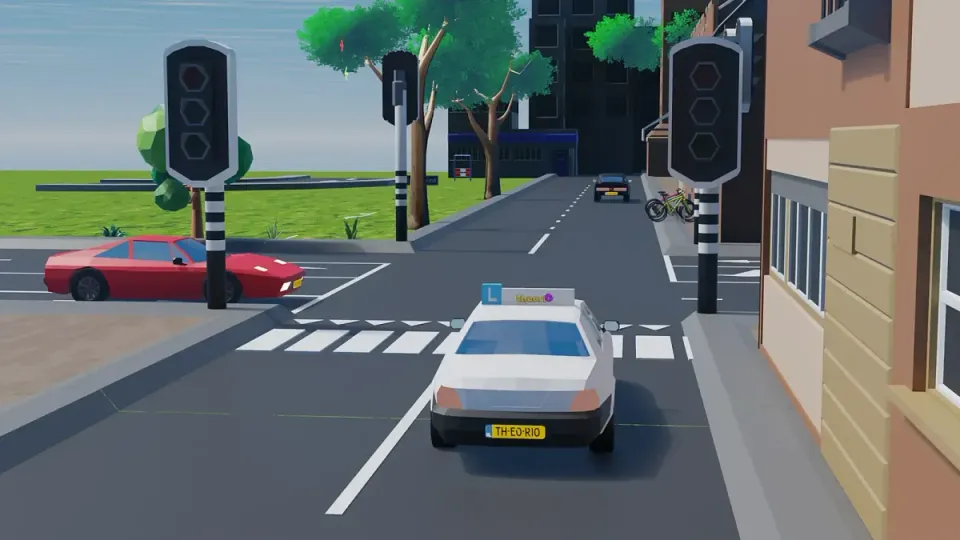
Working traffic lights come before priority signs and give-way markings (RVV 1990 article 64). That is why at many junctions with traffic lights you also see priority signs and give-way markings, which you do not need as long as the lights work.
Are the lights out, or is only the yellow light flashing? Then the signs and give-way markings take over and the junction is a priority junction. Whoever has give-way markings waits. If there are no signs or give-way markings, it is an equal junction.
What the different lights mean is explained under traffic lights.
Anticipating at priority junctions
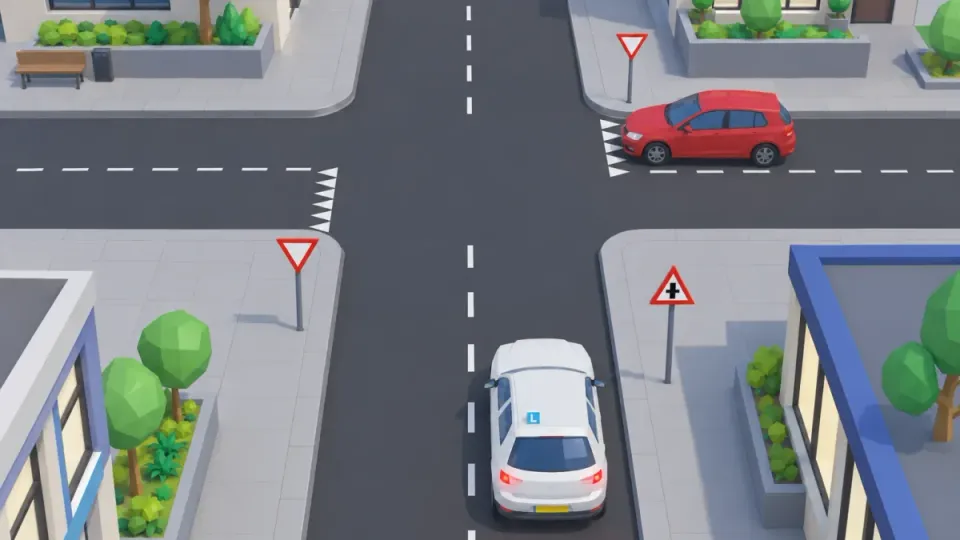
Even when you have priority, you cannot blindly trust what others will do. At every priority junction, watch the drivers in the side roads. Does someone roll up onto the shark's teeth, not look your way or still drive quite fast? Then ease off the accelerator and be ready to brake. Priority is given, not taken.
Sometimes you can see other people's behaviour coming from further away. Do you see a traffic jam ahead with an exit just before it? Then there is a good chance cars will take that exit to avoid the jam. Most drivers change lanes in time. But someone who is distracted does it at the last moment. Take that into account, especially just before a junction or an exit.
Game
Who goes first at a priority junction?
Tap the road users in the order in which they may go. 7 situations, from easy to hard: shark teeth, stop signs, both at shark teeth, and cyclists and trams.
Situations from the Theorio app.
CBR traps at priority junctions
❌ Wrong: with give-way markings, only watching the cars. ✅ Right: the cyclist on the cycle path along the priority road goes first too.
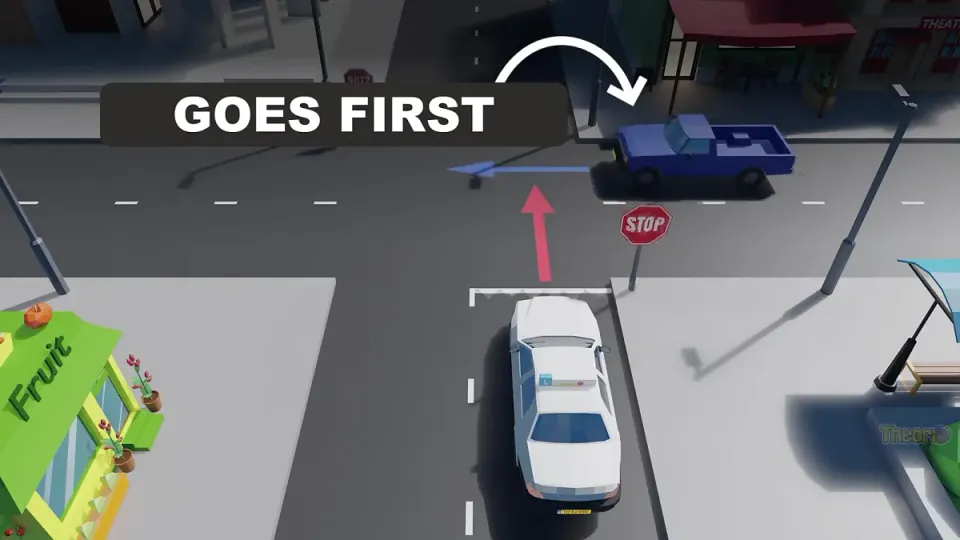
❌ Wrong: rolling on at a stop sign because the road looks empty. ✅ Right: at sign B7 (stop sign) you first stand still at the stop line.
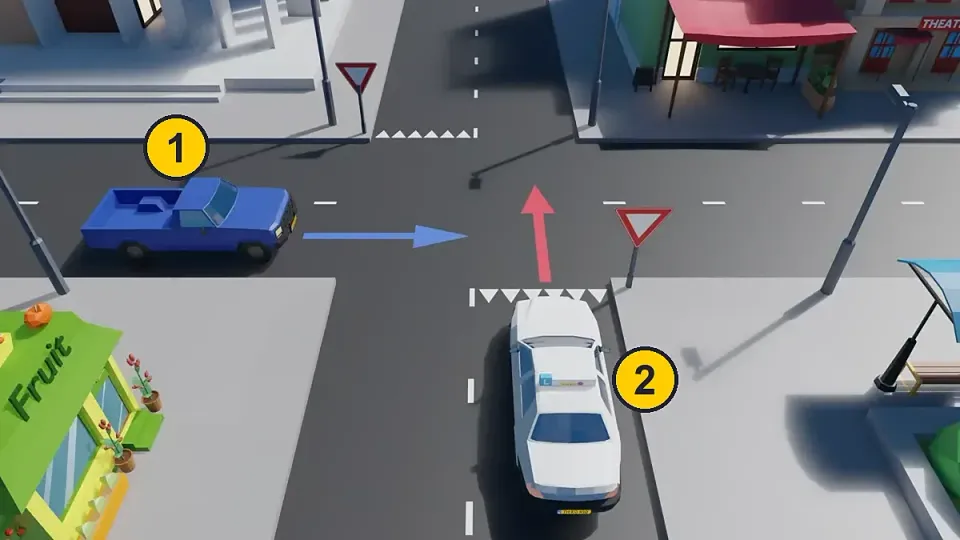
❌ Wrong: with give-way markings, only letting traffic from the right go. ✅ Right: traffic from the left goes first just as well.
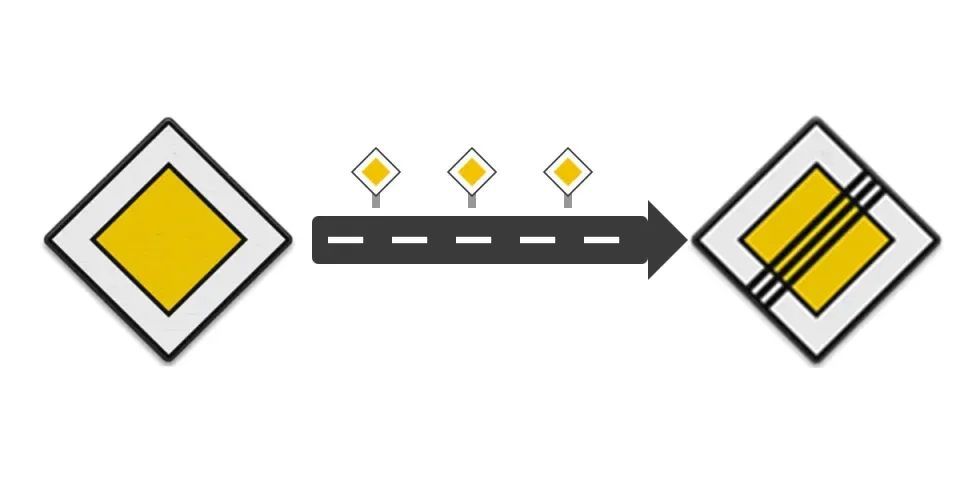
❌ Wrong: thinking sign B1 (priority road) only applies to the next junction. ✅ Right: it applies until the end of the priority road, at sign B2 (end of priority road).
Practise like the exam
Example questions like in the CBR exam
Real questions from the Theorio app. You can expect similar questions in your CBR exam.
Question 1 of 6
What does this sign indicate?
Tap the answer you think is right.
Do you have to give way or receive priority from crossing drivers after this sign?
Tap the answer you think is right.
The car does not give you priority and continues to drive. What should you do now?
Tap the answer you think is right.
What is the correct order of yielding at this intersection?
At some traffic lights, there are stop signs or yield signs. These are intended for when the traffic light is broken.
Do traffic lights take precedence over traffic signs that regulate priority?
Tap the answer you think is right.
What is the order of priority?
This driver is driving on the same road / coming from the same direction For drivers, there are 3 rules: - Equal intersection? -> right goes first - Yield signs/stop signs? -> stop for crossing driver - On the same road/same direction? -> Going straight goes before turning & Short turn goes before long turn’
Answers and explanations for the example questions
Question 1: What does this sign indicate?
Correct answer: A priority intersection
This is a priority intersection, the thick arrow has priority over the smaller arrows. You have priority from crossing traffic. ⚠️
Question 2: Do you have to give way or receive priority from crossing drivers after this sign?
Correct answer: Receive priority
This sign indicates that you are on a priority road. This means that you receive priority on the entire road at every intersection you encounter. Crossing drivers must stop and give you priority.
Question 3: The car does not give you priority and continues to drive. What should you do now?
Correct answer: Stopping and letting the car go first
You must stop and let the car go first. Even if you have priority, you must prevent a collision. Safety comes before your right of way. 🛑
Question 4: What is the correct order of yielding at this intersection?
Correct answer: Order on the image: 1 → 2
At a stop sign you must also yield to crossing drivers. The driving school car is at the stop sign and must therefore wait for the blue car. 🚗🛑
Question 5: Do traffic lights take precedence over traffic signs that regulate priority?
Correct answer: Yes
Yes, if the traffic light is working, it takes precedence over priority signs like yield signs 💡. You may proceed on green light. Traffic lights take precedence over signs and markings✔️.
Question 6: What is the order of priority?
Correct answer: Order on the image: 1 → 2
Since both drivers are at yield signs and *coming from the same direction*, the turning rule applies. The lesson car makes a *short turn*, the blue car makes a *long turn*. 🚗➡️ Therefore, the lesson car goes first and then the white car may turn.
FAQ
Frequently asked questions
Short answers to questions that often come up on this subject.
Do you always have to stop at a stop sign?
When B7 governs the situation, come to a complete stop even with no approaching traffic. Stop before the stop line. If none exists, stop at a suitable place before the junction and give way. Applicable operating traffic lights or authorised instructions may take precedence over the priority sign.
Do priority signs also apply to pedestrians?
No. Those signs and markings decide which driver goes first. Pedestrians have rules of their own, for example at a zebra crossing or when they go straight on along the same road as you.
What do signs B4 and B5 mean?
B4 indicates a priority junction with a side road on the left; B5 indicates one on the right. As a driver you have priority over drivers from that side road unless an applicable signal or authorised instruction sets another arrangement. It does not give general priority over pedestrians: assess their rules separately.
Do cyclists on the cycle path along a priority road also have priority?
Yes, where the cycle path belongs to that priority road and the arrangement covers that crossing. With give-way markings, B6 or B7 for the crossing road, you also let cyclists on it go first. Look both ways. Assess a separate cycle crossing by its own signs and signals; a nearby path does not automatically belong to the same road.
How long does the priority road sign B1 apply?
B1 designates a priority road and B2 marks its end. Follow the indicated route where the priority road bends: not every turn remains on it. B3, B4 and B5 apply to the relevant junction. Applicable traffic lights and authorised controllers’ instructions still apply on a priority road.
Ready to practise?
Test your knowledge of Priority rules & Junctions with 35 practice questions in the app.
Free mock exam · no account needed
Your first quiz is free, no account needed. After that from €34.99 for 90 days of access.