Part 8 of 9 in Priority rules & Junctions
Priority rules for pedestrians
Priority rules for pedestrians: when does a pedestrian go first and when not? Zebra crossings, turning, driveways, erf, white cane and fines.


Written by Chris Prosman Reviewed by Dirk van Zuijlen
Updated Reviewed on 10 min read
Free mock exam · no account needed
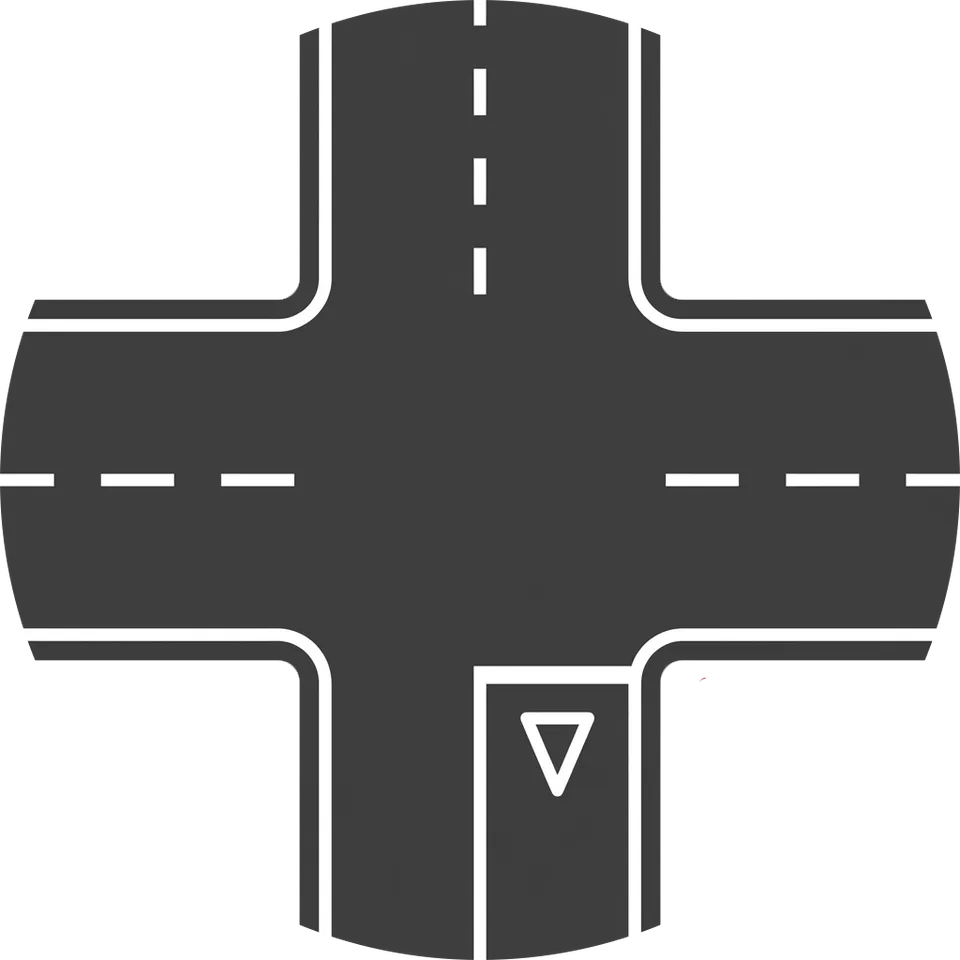
Pedestrians are road users, but not drivers. So they do not get priority because they come from the right. Still, you often let them go first: when you turn and they walk straight on along the same road, at a zebra crossing, when you drive out of a driveway exit and always with someone who is blind or has difficulty walking.
Video explanation
Overview: when pedestrians have priority and when they do not
The priority rules in the law are about drivers among themselves. Pedestrians have their own rules. So solve a situation in two steps: first work out which driver may go first, then check whether that driver still has to let a pedestrian go first.
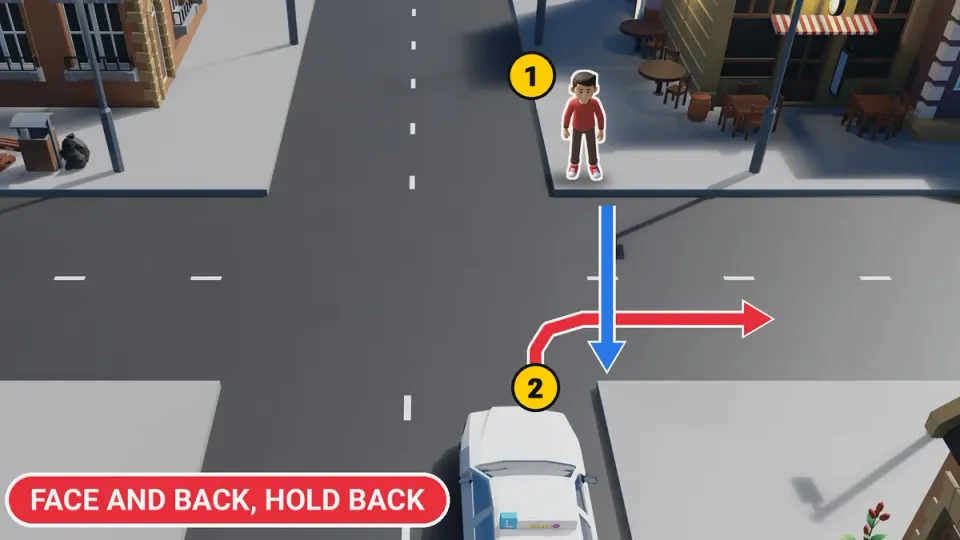
The memory aid for this: face and back, hold back; see their side, go for a ride. If you as a driver see the pedestrian's face or back, they are following the same road as you. If you see their side, they are crossing your road and that movement gives them no priority.
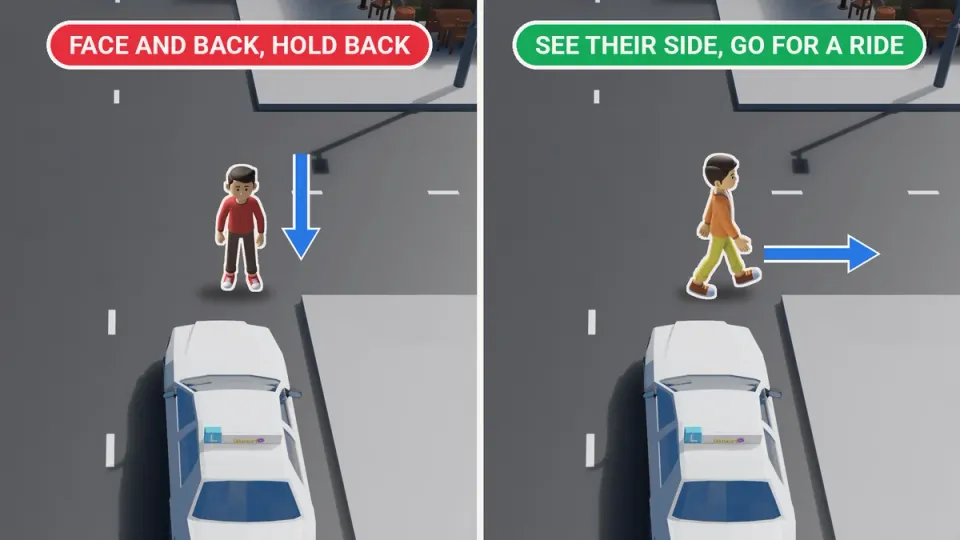
The table shows, for each situation, what you do if the other person is a pedestrian and what you do if they are a driver, such as a cyclist.
| Situation | Pedestrian | Driver (such as a cyclist) |
|---|---|---|
| Equal junction, the other person comes from the right | 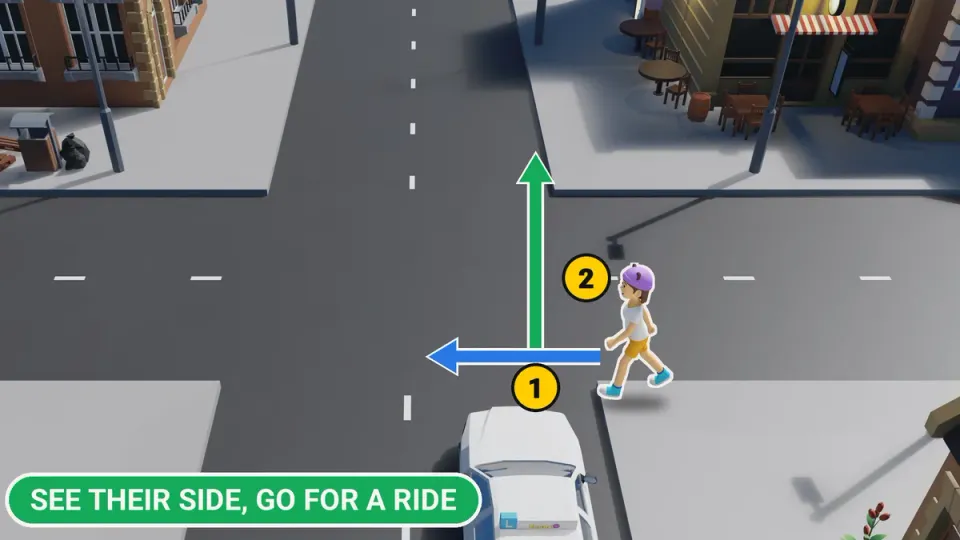 No priority. Coming from the right only counts for drivers. For a pedestrian you look at their route: see their side, go for a ride. | 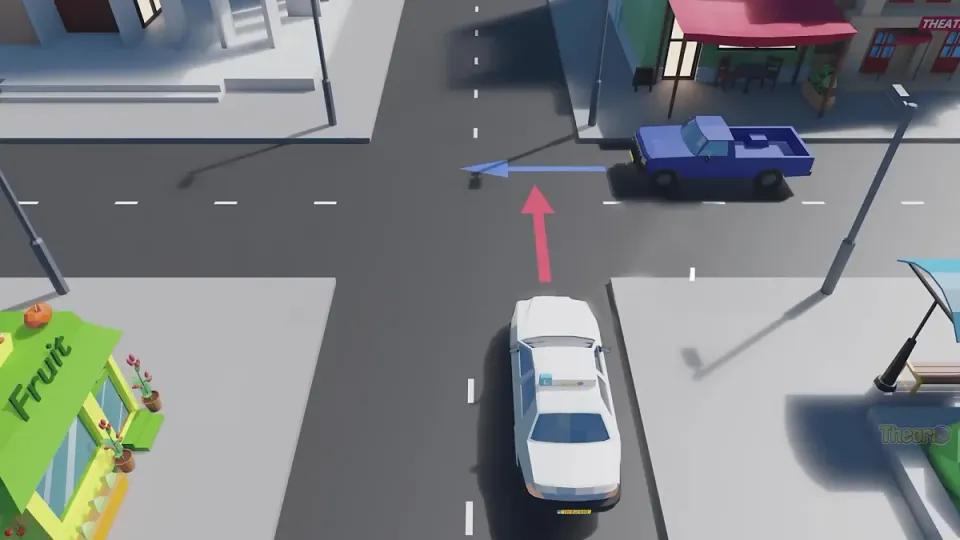 Priority. A driver from the right goes first. |
| You turn, the other person goes straight on along the same road | 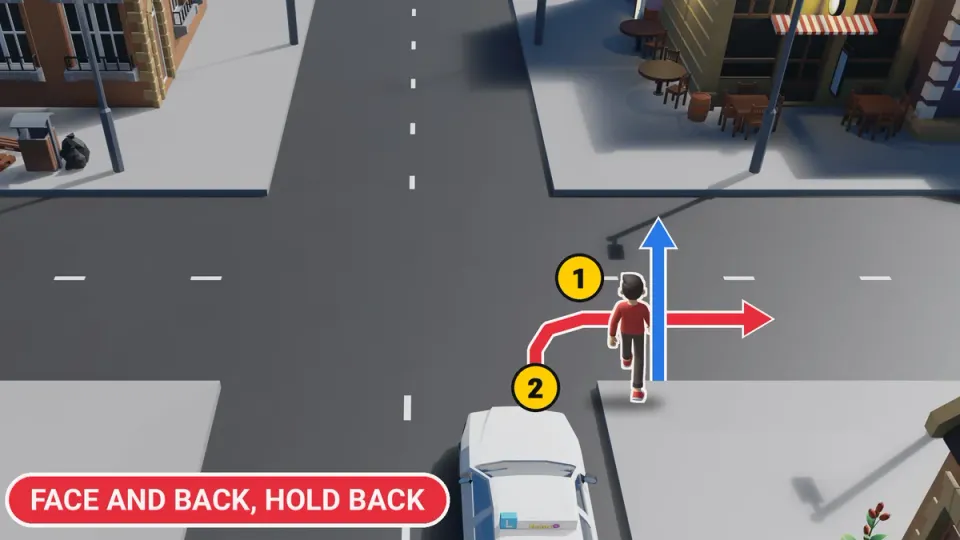 Priority (face and back, hold back). | 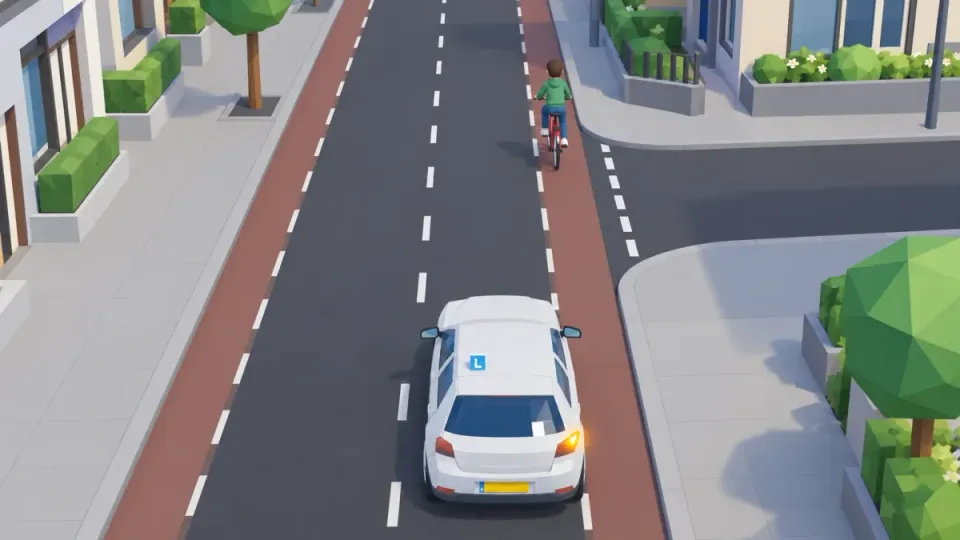 Priority. Straight on goes before turning. |
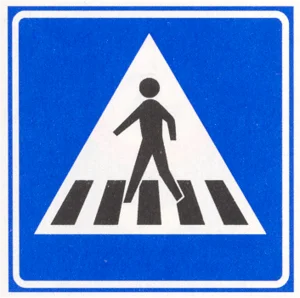 Zebra crossing without traffic lights | 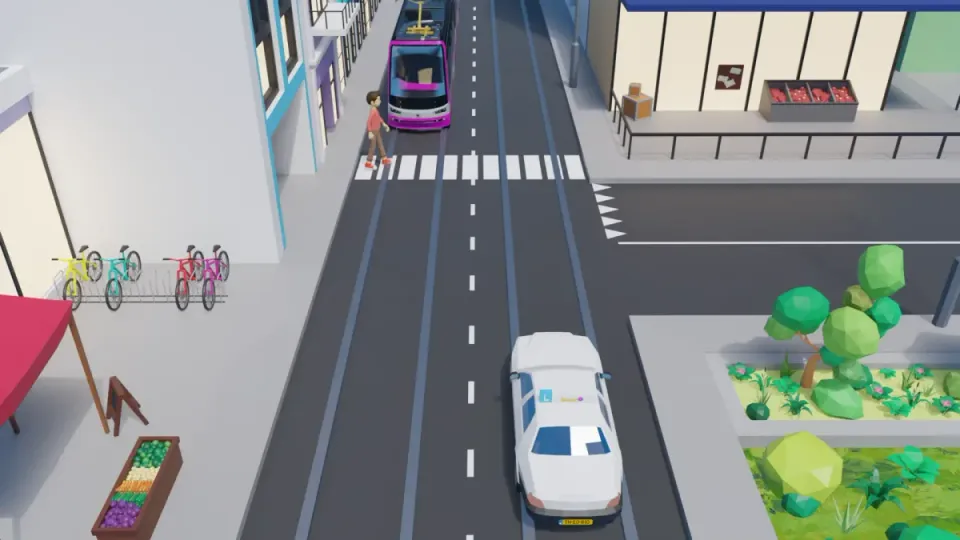 Priority if they are crossing or visibly about to cross. | 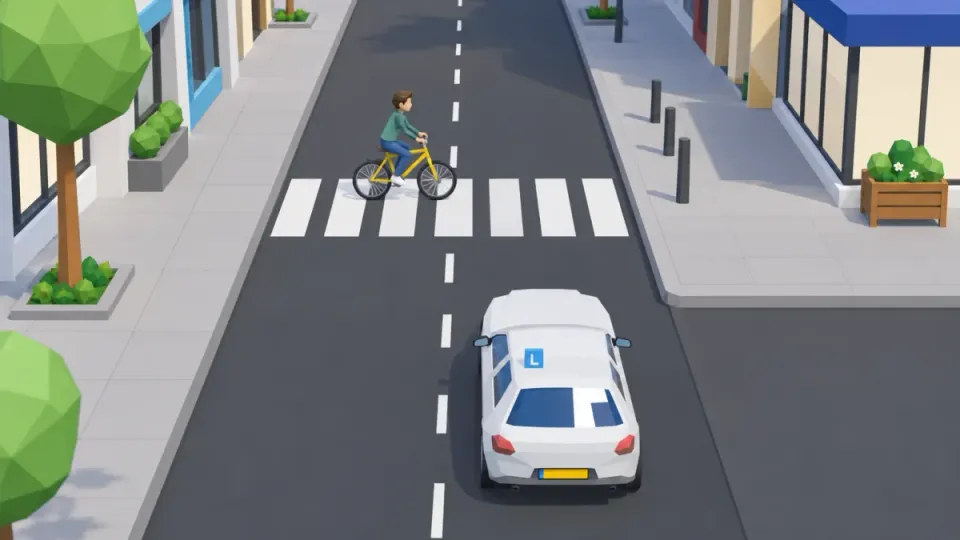 No priority from the zebra crossing. A cyclist on the zebra crossing is still a driver. |
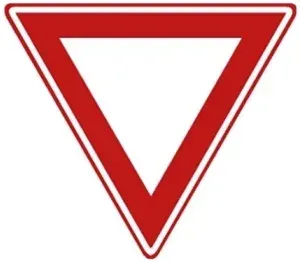 Shark teeth or sign B6 in front of you. Sign B6 is the triangular sign with the point down: give way. | 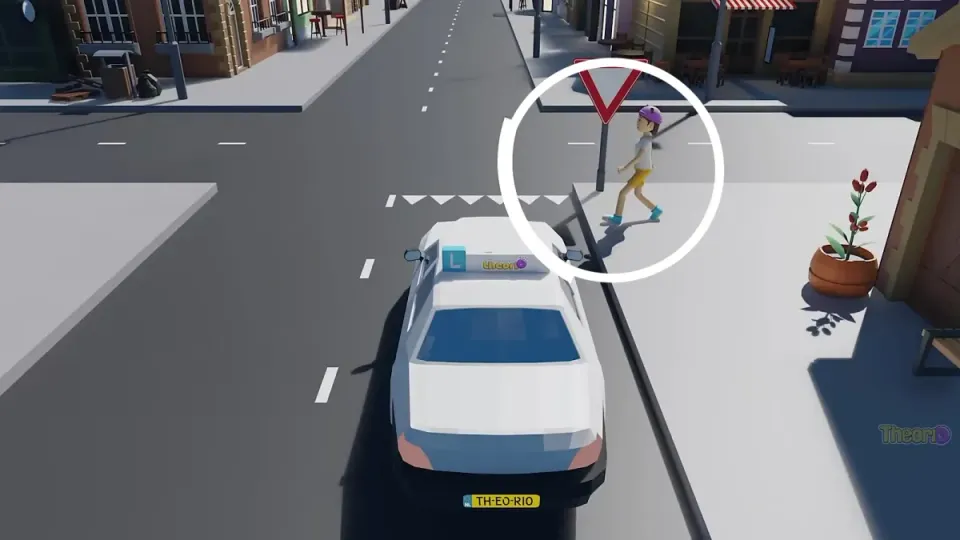 Not because of the give-way markings. Check the pedestrian rules separately. | 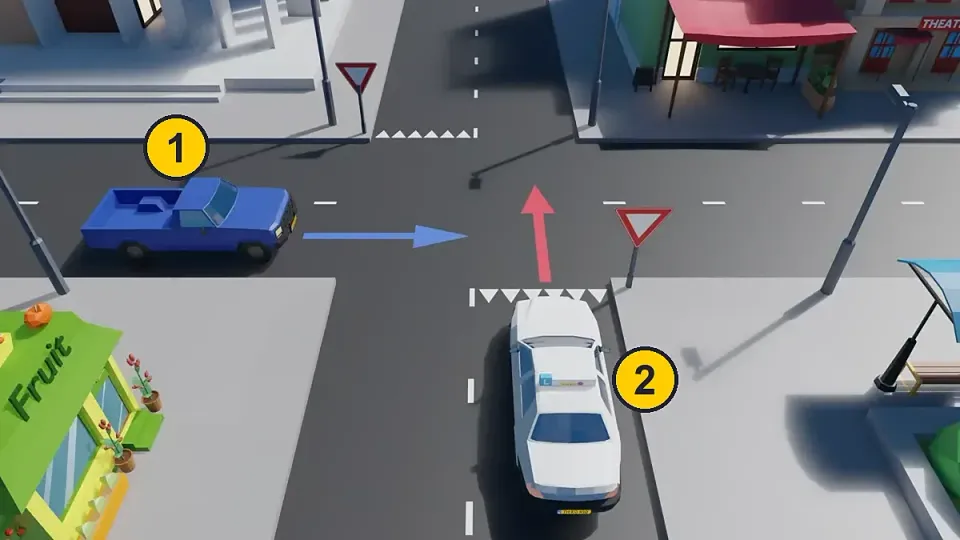 Priority for drivers on the crossing road. |
| Stop sign B7 in front of you | 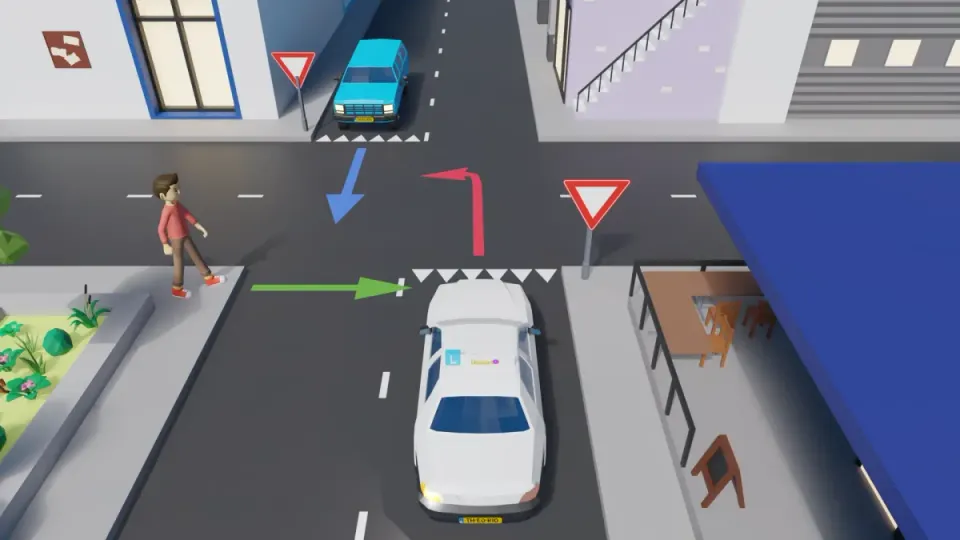 Not because of the stop sign. You do always stop. | 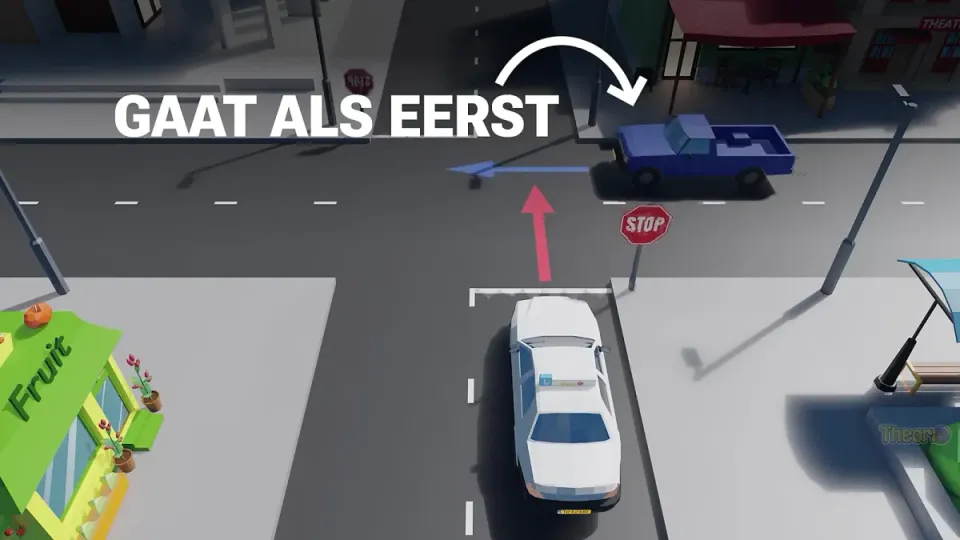 Priority for drivers on the crossing road. |
| You come from an unpaved road | Not because of the unpaved road. That rule is about drivers. | Priority for all drivers on the paved road. |
| You drive out of a driveway exit or into a driveway | 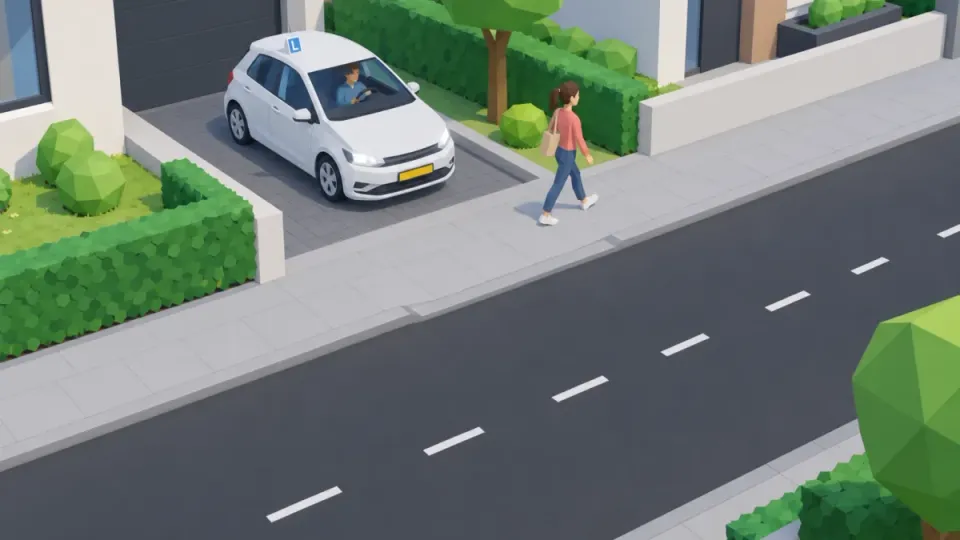 Priority. This is a special manoeuvre. | 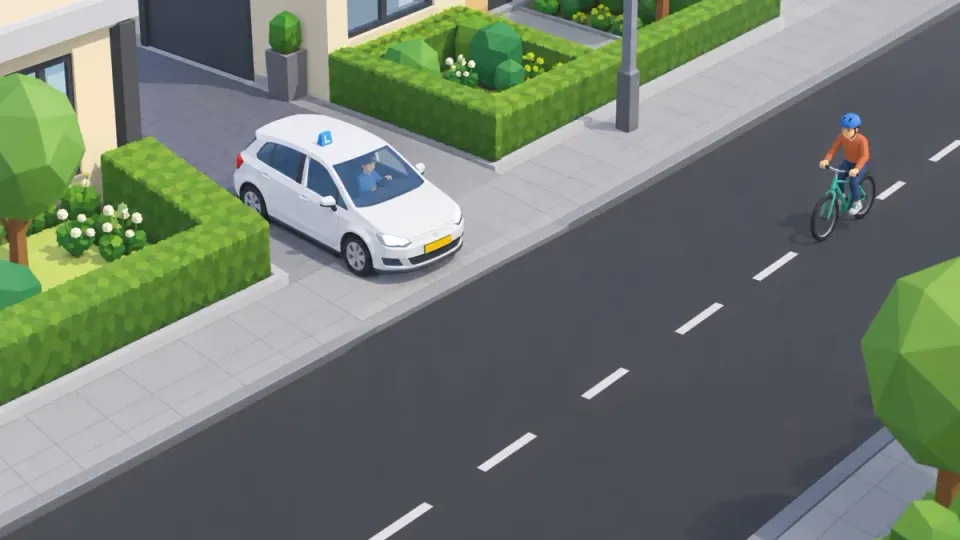 Priority. Everyone goes first. |
| You pull away, reverse or turn around | 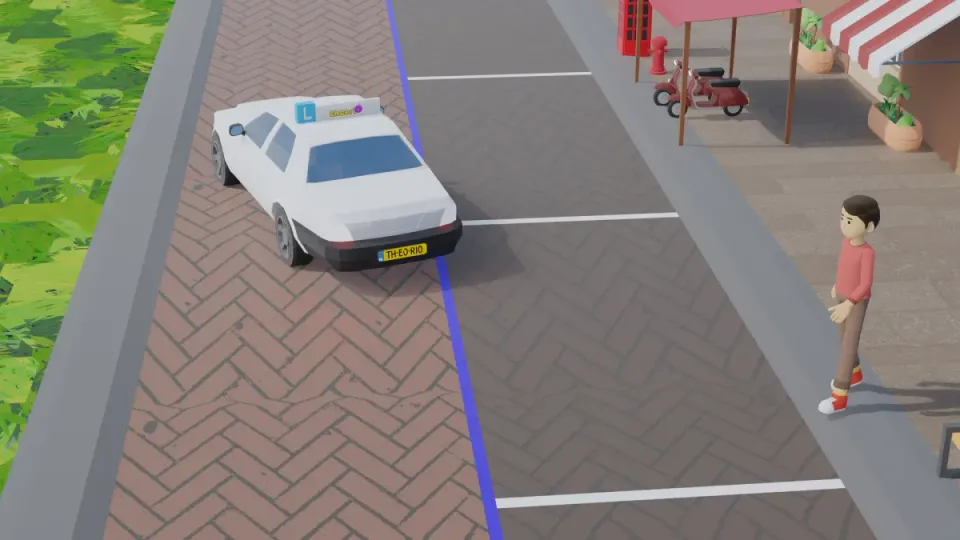 Priority. These are special manoeuvres too. | 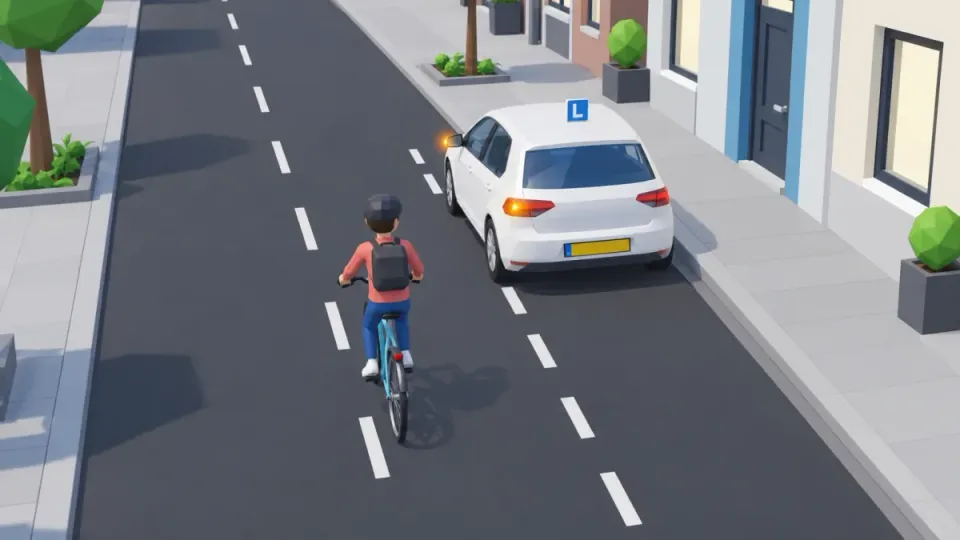 Priority. |
| You leave a roundabout | 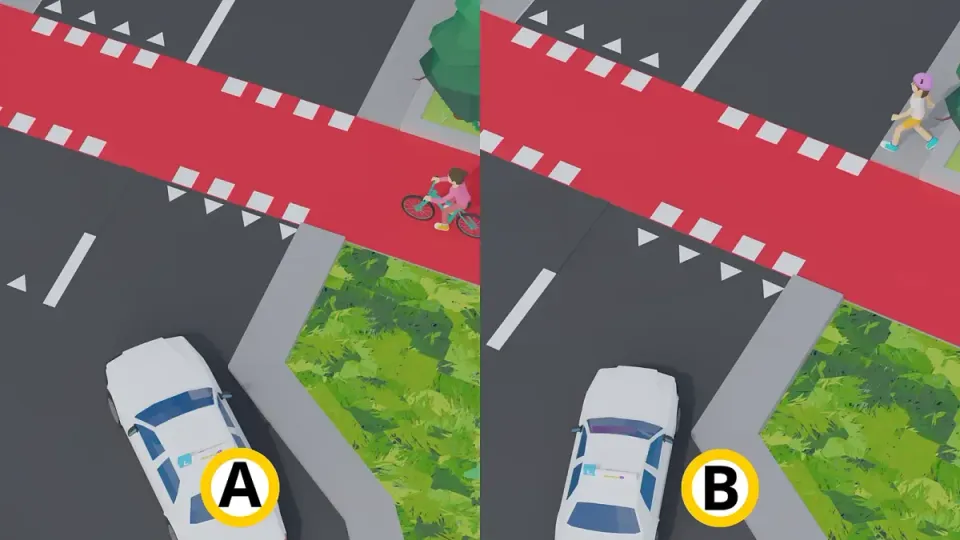 Priority if they keep following the same roundabout. | 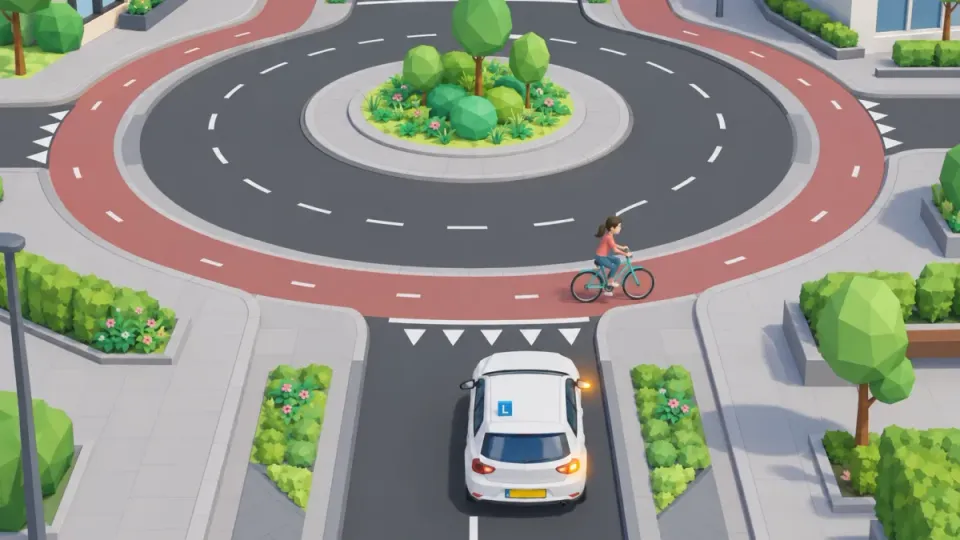 Priority if they keep going straight on, unless they have give-way markings themselves. |
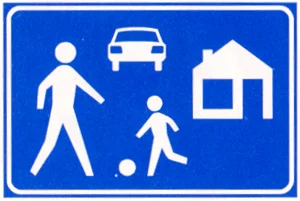 Inside an erf | 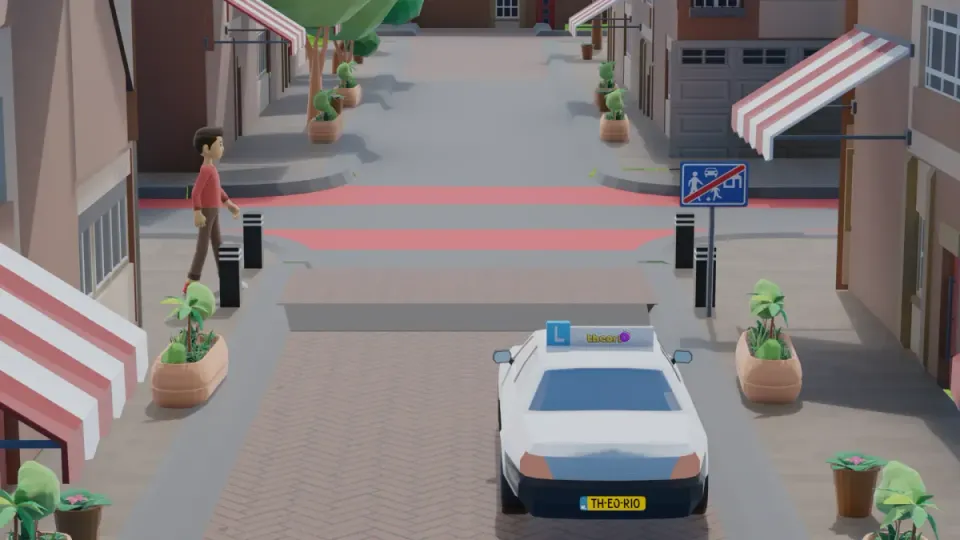 No general priority. They may use the full width of the road and you drive at most 15 km/h. When you leave the erf, you give way to everyone. When a pedestrian crosses, the normal pedestrian rules apply: face and back, hold back; see their side, go for a ride. | 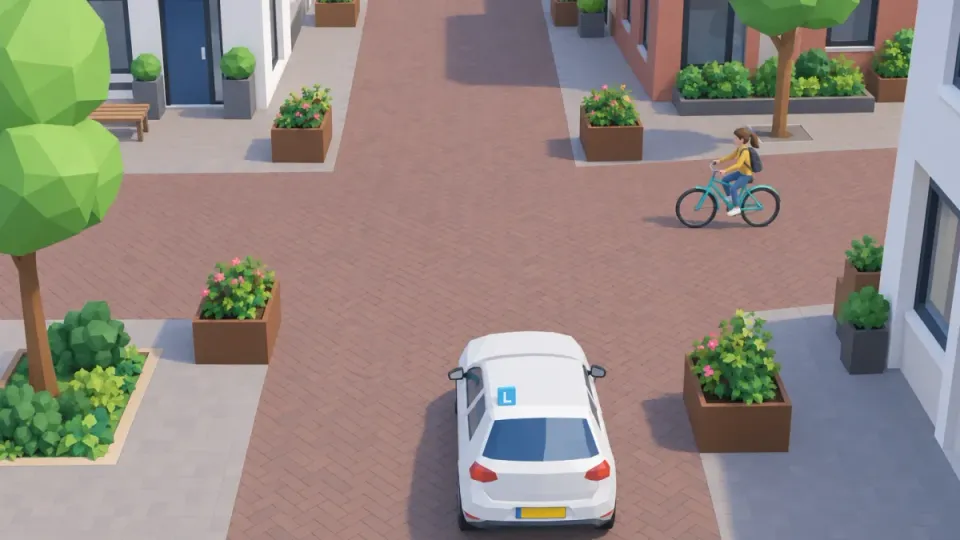 The normal priority rules. |
| A blind person with a white cane or someone who has difficulty moving | 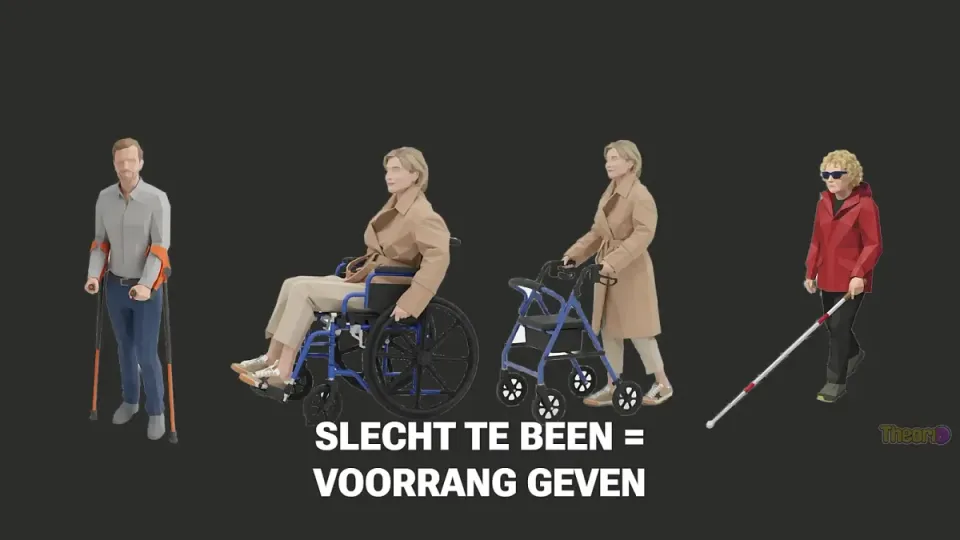 Always priority, also away from a zebra crossing. | 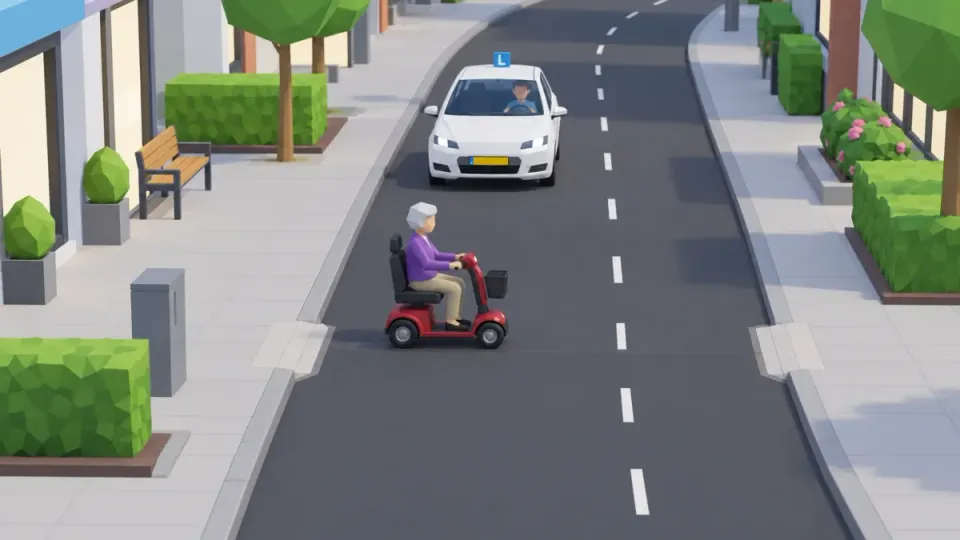 Always priority. Also someone moving on the road with an aid, such as a mobility scooter, goes first. |
Game
Priority or no priority?
Tap the road users in the order in which they may go. 9 situations, from easy to hard: face/back or side, shark teeth, stop sign, driveway exit, crutches and trams.
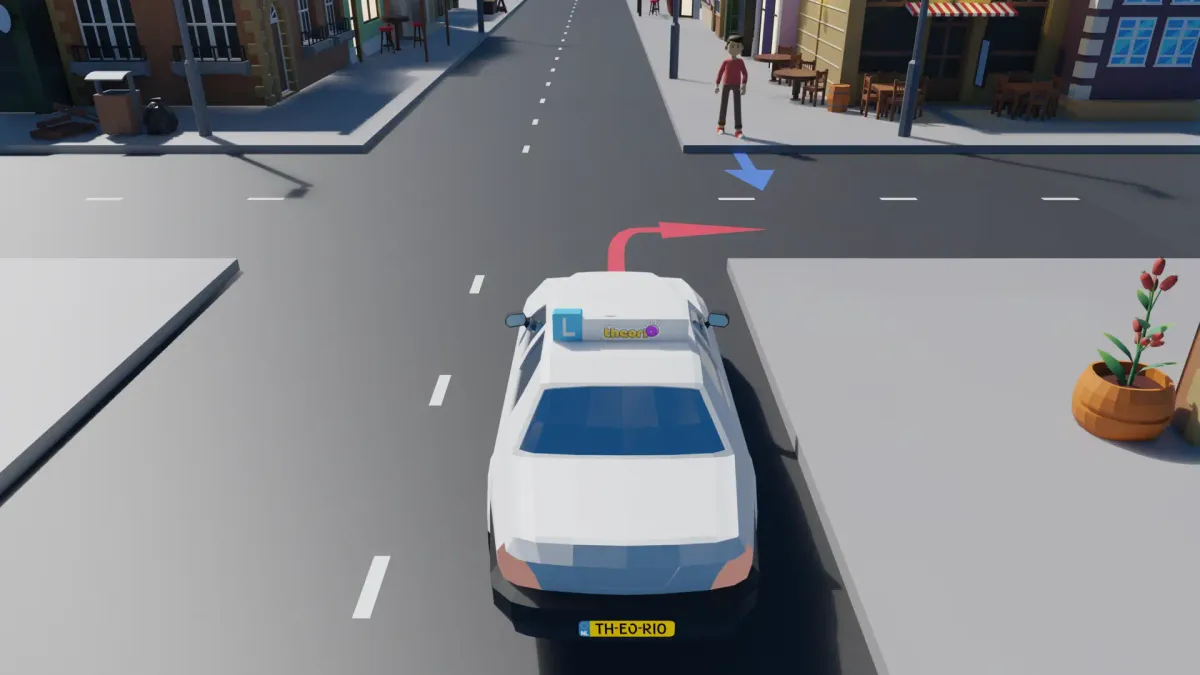
Situations from the Theorio app.
Zebra crossings: also someone clearly about to cross
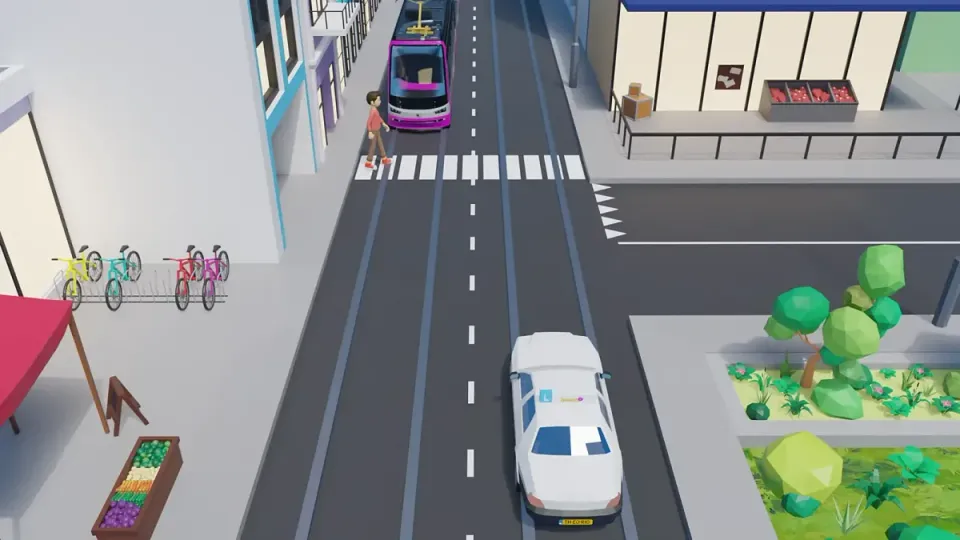
At a zebra crossing, let pedestrians and drivers of mobility vehicles go first if they are crossing or clearly about to do so. Do not wait until someone is already in the middle of the carriageway. Slow down and seek awareness without startling them with your horn. Sign L2 helps identify the crossing; the zebra itself is the white road marking.
If traffic lights control the crossing, follow those signals: a red pedestrian light removes the ordinary zebra-crossing duty. An authorised controller’s instruction takes precedence. A military convoy and a recognisable funeral procession have a specific exception to the zebra rule; do not cut through them. This never permits causing danger or hitting someone.
More about the sign under sign L2. Overtaking just before or on a zebra crossing is not allowed: see overtaking at a zebra crossing.
Turning: check the same road
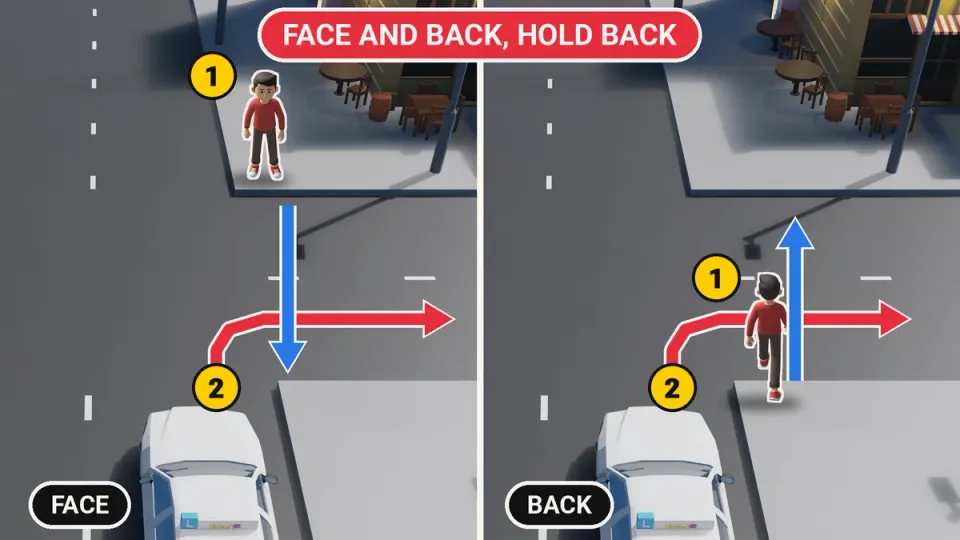
When turning, let traffic continuing straight along the same road go first. This includes a pedestrian on the pavement alongside you and someone walking towards you along the same road. If a pedestrian comes from a different road and crosses your straight-ahead route, right-hand priority does not give them priority. Still check the other protection rules.
The app’s mnemonic “face and back, hold back; see their side, go for a ride” helps you remember the drawn routes. Look from the driver’s position before turning. It is a memory aid, not an instruction to accelerate. Turning the body or head does not alter priority: the road and the routes followed decide.
Special manoeuvres
When you make a special manoeuvre, all other traffic goes first, pedestrians included. The law names these manoeuvres:
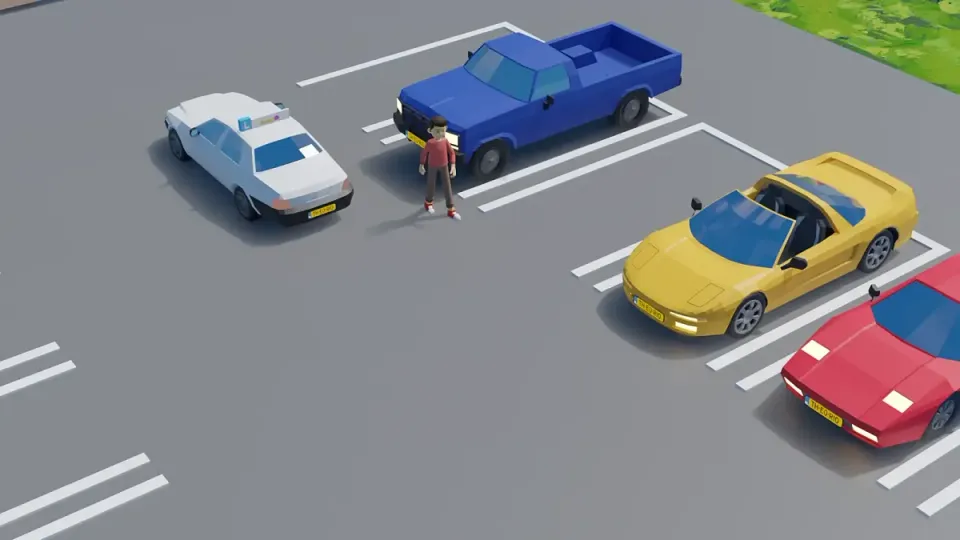
- pulling away, for example from a parking space
- reversing
- driving out of a driveway exit onto the road
- turning off the road into a driveway
- turning around
- merging and leaving the main carriageway
- changing lanes
You recognise a driveway exit by a pavement or cycle path that continues across it, often with a sloping kerb. How to recognise one and how it differs from a junction is explained under driveway exits. All manoeuvres are listed under special manoeuvres.
Roundabouts, residential zones and parking areas
Leaving a roundabout means turning. Let a pedestrian continuing along the same road go first. When entering or at a separate crossing farther away, reassess the local situation; not every crossing near a roundabout automatically gives pedestrians priority. Give-way markings address drivers and do not remove pedestrian rights under the same-road or zebra rules.
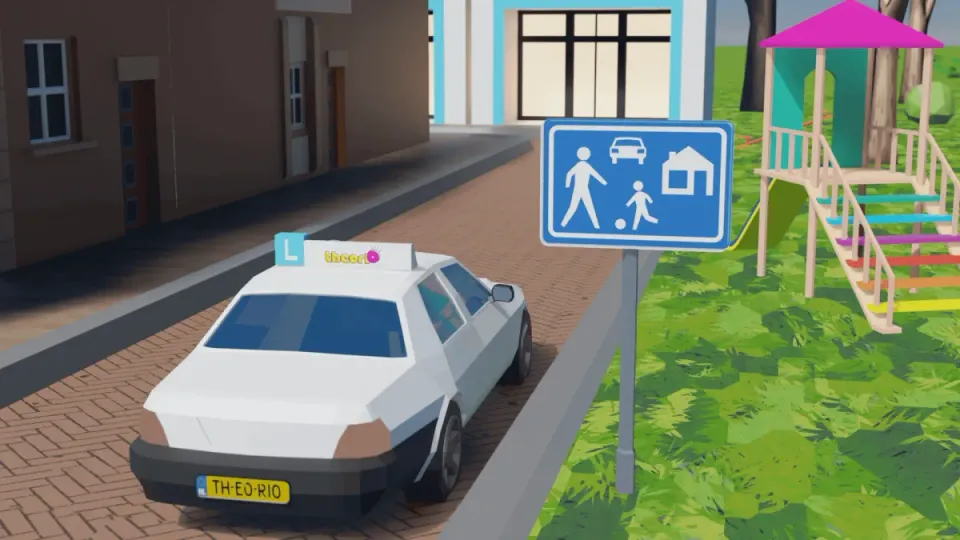 Erf: sign G5 | Pedestrians may use the full width | 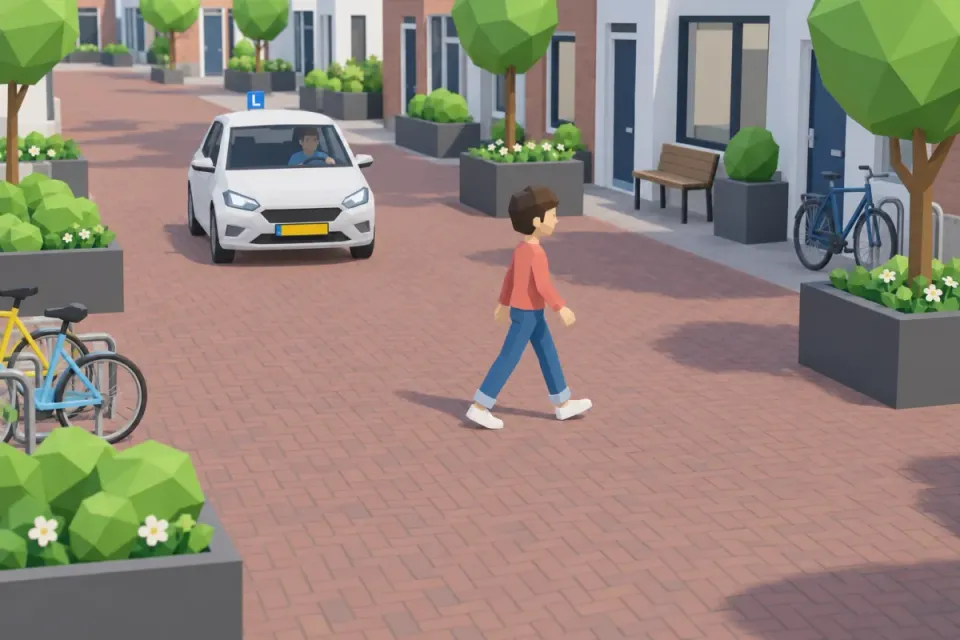 Crossing: normal priority rules |
An erf or parking area has no blanket “pedestrians always go first” rule. In an erf pedestrians may use the full width: leave room and keep to 15 km/h or slower when needed. In parking areas, expect people between parked vehicles and children who are hard to see.
Note: crossing in an erf
When a pedestrian crosses in an erf, the normal priority rules for pedestrians apply: face and back, hold back; see their side, go for a ride.
If you leave an erf across a continuous pavement, you are leaving a driveway exit: everyone goes first, including the pedestrian on that pavement. The sign at the entrance is sign G5.
Who counts as a pedestrian?
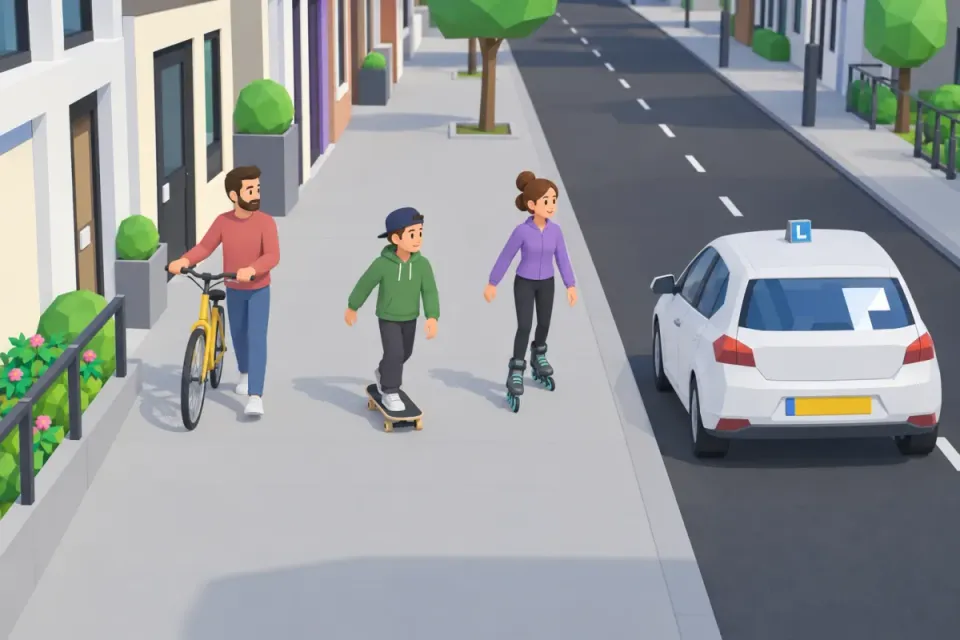
Not only people who simply walk follow the rules for pedestrians. The law also includes people who take something along by hand or move with an aid that is not a vehicle.
| Who | Pedestrian or driver? |
|---|---|
| Someone walking or running | Pedestrian |
| Someone walking a dog | Pedestrian |
| Someone with a pram, walking frame or crutches | Pedestrian |
| Someone walking a bicycle, light moped, moped or motorcycle | Pedestrian |
| Someone on inline skates, a skateboard or a scooter without a motor | Pedestrian |
| Someone in a wheelchair or mobility scooter on the pavement, or crossing from pavement to pavement | Follows the rules for pedestrians |
| Someone cycling, or riding a light moped or moped | Driver |
| A horse rider, or someone leading a horse | Driver |
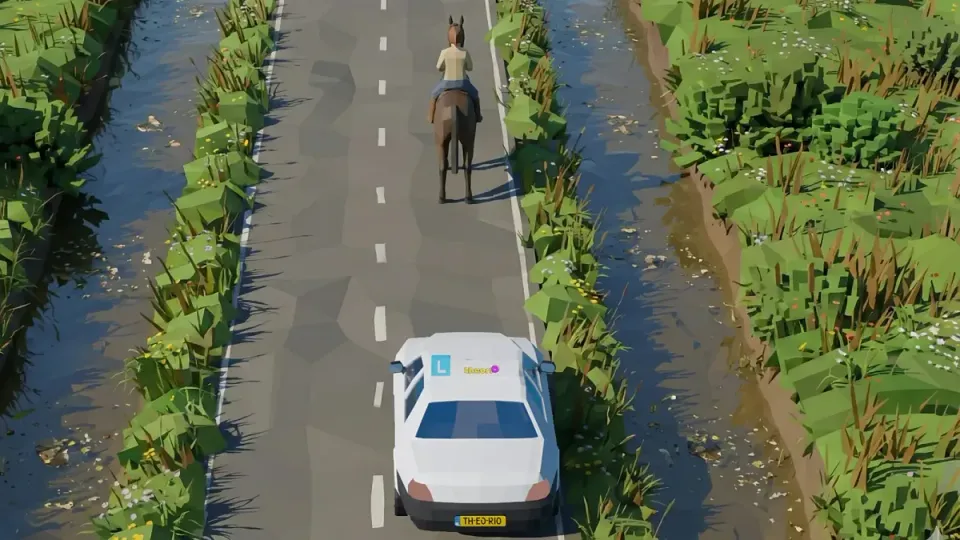 Horse rider: driver | 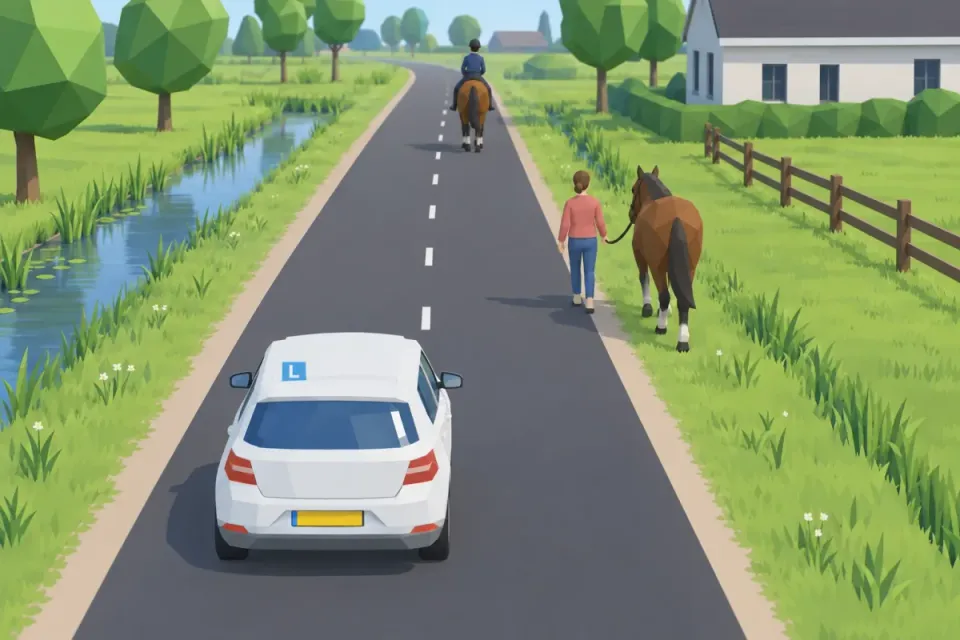 Leading a horse: driver |
The horse is the exception that often comes up in the exam. Anyone leading a riding animal, draught animal or livestock counts as a driver. So at an equal junction the right-hand rule applies to them like to any other driver. A dog does not fall under this.
Situations in which a pedestrian always gets priority
Let blind people with a white cane with one or more red rings and other people who have difficulty moving go first. This includes people using crutches or a walking frame and people with physical disabilities. This protection also applies away from a zebra crossing; it does not depend on approaching from the right.
If someone extends the white cane to show they want to cross, notice the signal early, reduce speed and stop when needed so they can cross safely. Keep your distance, allow time and avoid confusion from sounding the horn or giving unclear hand signals. This protection follows Article 49 RVV.
Who gets this extra protection, and who does not?
- Yes: a blind person with a white cane with red rings, someone on crutches, someone with a walking frame and anyone who visibly has difficulty walking.
- Not automatically: someone with a pram, a parent with children or someone with a dog. The normal rules apply to them. Do drive extra carefully, because children often do something unexpected.
- Guide dog: the law only mentions the white cane. In practice, give a blind person with a guide dog the same room.
Someone takes priority they do not have?
Does a pedestrian step onto the road while you were allowed to go first? Then brake and let them go. You do not claim priority back. The law forbids everyone to cause danger (Article 5 of the Road Traffic Act 1994), including the driver who is in the right.
Fines for not giving way
The fine at a zebra crossing is not the only risk. A pedestrian is vulnerable: a mistake quickly injures them. So know what to do in every situation, also when there is no sign.
| Picture | Offence | Offence code | Fine (car) |
|---|---|---|---|
| Not letting a pedestrian go first on or at a zebra crossing | R 482 | No fixed rate: the Public Prosecution Service decides the penalty. Indication: about € 460 (Univé, 2026, in Dutch) |
| Not letting a blind person with a white cane go first | R 481 a | No fixed rate: the Public Prosecution Service decides the penalty. Indication: about € 460 (Univé, 2026, in Dutch) |
| Not letting someone who has difficulty moving go first | R 481 b | No fixed rate: the Public Prosecution Service decides the penalty. Indication: about € 460 (Univé, 2026, in Dutch) |
 | Not letting traffic on the same road go first when turning | R 347 a, b and c | € 320 (OM, 2026) |
| Driving out of a driveway exit onto the road without letting everyone go first | R 507 | € 320 (OM, 2026) |
| Pulling away, reversing, turning into a driveway or turning around without letting everyone go first | R 505, R 506, R 508, R 509 | € 320 (OM, 2026) |
2026 amounts for a car, excluding € 9 administration costs (OM Boetebase, Feitenboekje January 2026). R 481 and R 482 have no rate in the list. They are offences for the Public Prosecution Service: the public prosecutor decides the penalty, or the case goes to court. If you hit someone, it can become a criminal case.
CBR pitfalls in priority rules for pedestrians
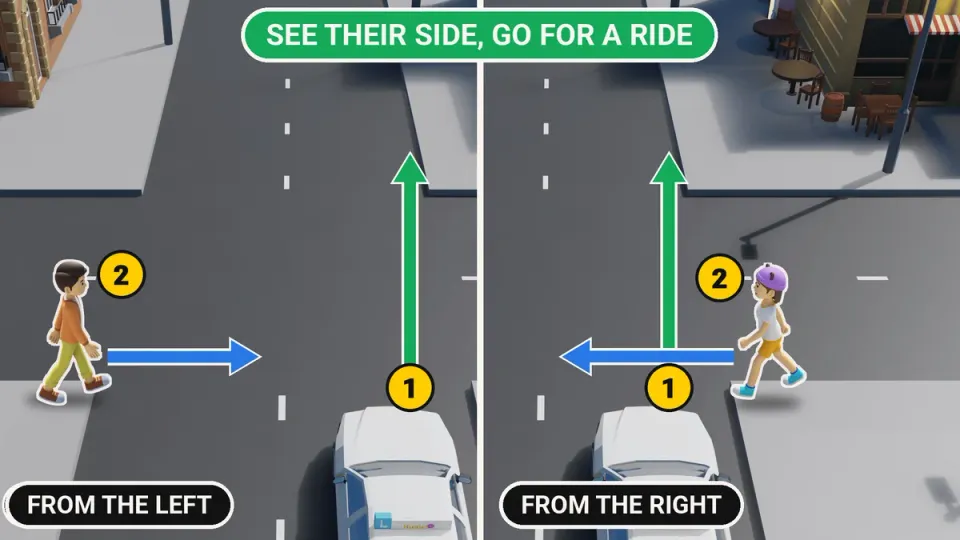
❌ Wrong: letting a pedestrian go first because he comes from the right. ✅ Right: "the right goes first" only applies to drivers.
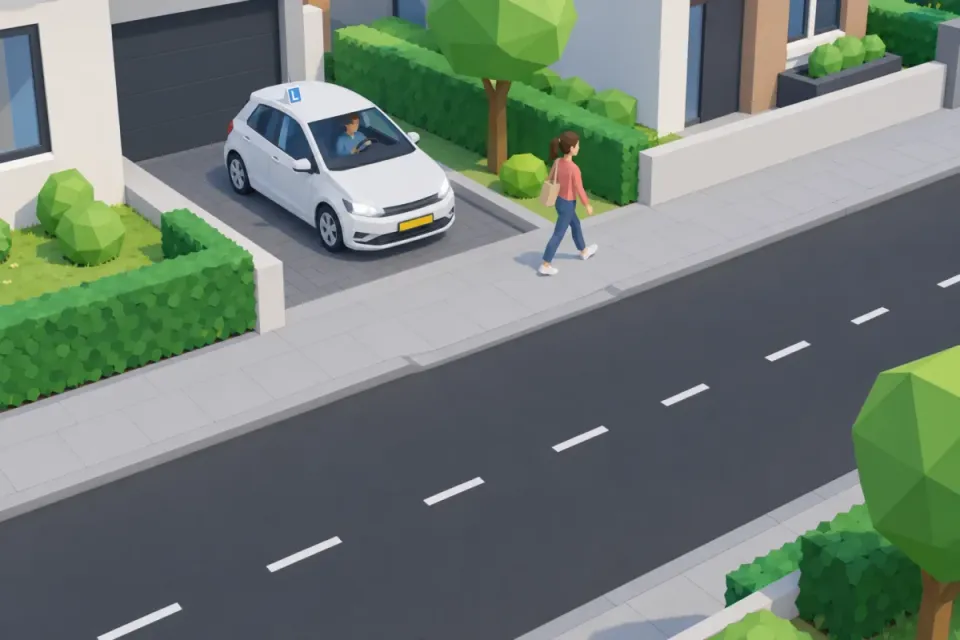
❌ Wrong: at a driveway exit, only waiting for cars and cyclists. ✅ Right: the pedestrian on the pavement goes first too.
❌ Wrong: letting a pedestrian go first because you have a stop sign or shark teeth. ✅ Right: stop signs and shark teeth only apply to drivers. For the pedestrian you look at the pedestrian rules.
Practise like the exam
Example questions like in the CBR exam
Real questions from the Theorio app. You can expect similar questions in your CBR exam.
Question 1 of 4
Should you give way to the pedestrian?
Tap the answer you think is right.
You want to drive away. Do you have to give way to the pedestrian who wants to cross?
Tap the answer you think is right.
You are backing into the parking space. Do you have to give way to the pedestrian?
Tap the answer you think is right.
Who can you expect at a pedestrian crossing?
Tap the answer you think is right.
Answers and explanations for the example questions
Question 1: Should you give way to the pedestrian?
Correct answer: Yes
Yes, you must wait. You are coming from the street. You are driving over a threshold. The pedestrian is walking on the sidewalk. The sidewalk is for the pedestrian. Therefore, the pedestrian may go first.
Question 2: You want to drive away. Do you have to give way to the pedestrian who wants to cross?
Correct answer: Yes
Yes, you must give way to the pedestrian. You are in the process of driving away from a standstill, which is a special maneuver. You must give priority to all road users. 🅿️
Question 3: You are backing into the parking space. Do you have to give way to the pedestrian?
Correct answer: Yes
Yes, you have to give way to the pedestrian. Reversing and parking are special maneuvers. You must give priority to all road users. 🚶
Question 4: Who can you expect at a pedestrian crossing?
Correct answer: Pedestrians and mobility vehicles
At a pedestrian crossing (zebra crossing) you may expect pedestrians and drivers of a mobility vehicle. Cyclists are not allowed to use this. ♿
FAQ
Frequently asked questions
Short answers to questions that often come up on this subject.
Is someone on inline skates a pedestrian?
Yes. Someone on inline skates, a skateboard or an ordinary non-powered kick scooter follows pedestrian rules. So does someone walking a bicycle or moped. A powered e-scooter cannot simply be treated as an ordinary kick scooter; its vehicle category and approval determine the rules.
Is someone walking a horse a pedestrian?
No. Someone walking a horse is a driver, just like a horse rider. If they come from the right at an equal-priority junction, they go first.
Does a pedestrian go first when you are at a stop sign?
Not simply because you are at a stop sign. When B7 governs the situation, stop completely and give way to drivers on the crossing road. Assess the pedestrian separately: same-road turning, a zebra crossing, a driveway or mobility difficulties may require letting them go first. The side of their body visible to you does not determine this.
Does a pedestrian with a pram have priority?
Not because of the pram. Someone with a pram follows the same rules as any other pedestrian: at a zebra crossing, at a driveway exit and when you turn while they walk straight on, they go first. Elsewhere they do not. The extra protection of Article 49 RVV is for blind people with a white cane and for people who have difficulty moving.
How high is the fine for not giving way to a pedestrian at a zebra crossing?
There is no fixed amount. Offence code R 482 is an offence for the Public Prosecution Service: the public prosecutor decides the penalty, or the case goes to court. That differs from, for example, turning without letting traffic on the same road go first: with a car in 2026 you pay a fixed € 320 plus € 9 administration costs for that.
Ready to practise?
Test your knowledge of Priority rules & Junctions with 35 practice questions in the app.
Free mock exam · no account needed
Your first quiz is free, no account needed. After that from €34.99 for 90 days of access.