Part 6 of 6 in Overtaking & Position on the Road
Roundabouts
Roundabouts: who goes first when entering and leaving, when to indicate, how to choose your lane and may you overtake on the right? All the rules.


Written by Chris Prosman Reviewed by Dirk van Zuijlen
Updated Reviewed on 8 min read
Free mock exam · no account needed
On a roundabout you drive in one direction around a central island. Here you read who goes first when entering and leaving, when you indicate and how to choose your lane when there are more lanes. Overtaking on the right, cyclists and the turbo roundabout are covered too.
Rules at roundabouts
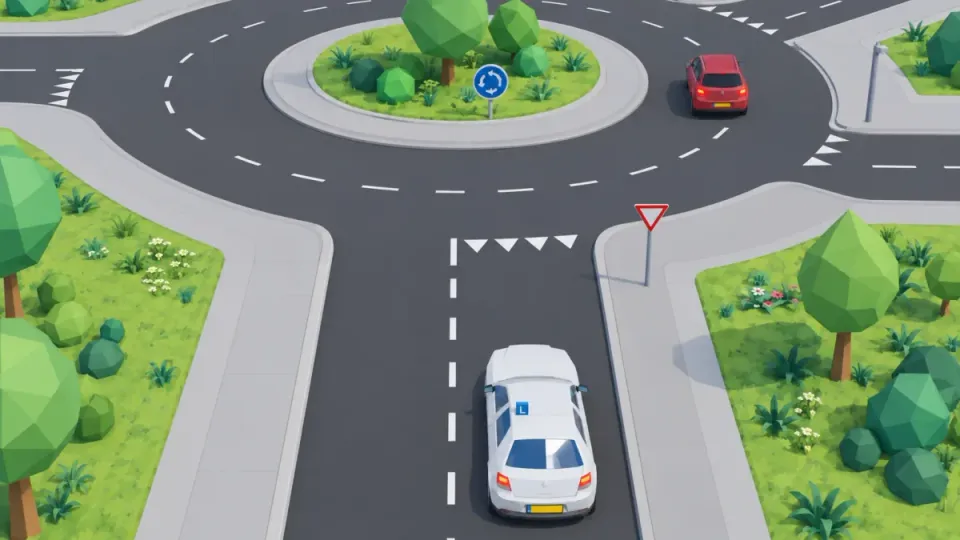
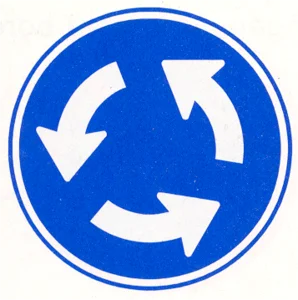
The blue D1 roundabout sign tells you how to travel, not who goes first. If your entry has give-way markings or B6, let drivers on the roundabout go first. Without priority signs or markings, ordinary rules apply: an entering driver from the right may go first. Always read the signs and road markings.
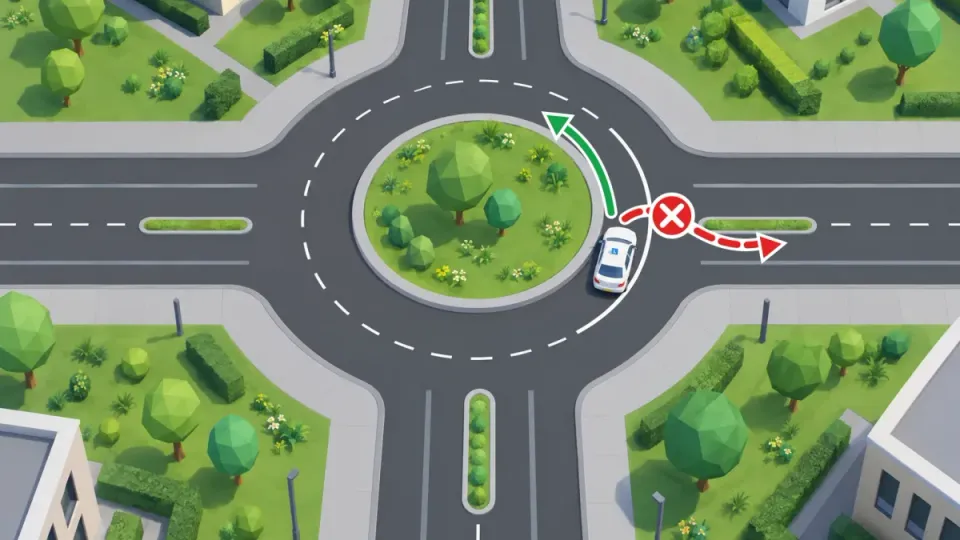
On the roundabout you drive round in the direction of the arrows on sign D1: anticlockwise. The table shows what applies at each moment.
| Moment | What applies? |
|---|---|
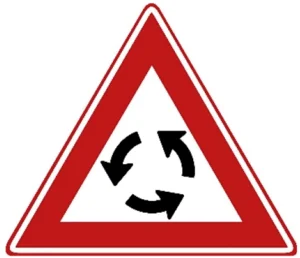 You approach | Sign J9 warns that a roundabout is coming. Slow down and choose your lane. |
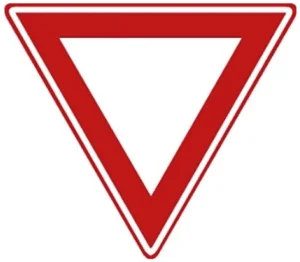 You enter the roundabout | Give-way markings or B6 at your entry: whoever is already on the roundabout goes first. |
 You drive on the roundabout | No need to keep right. Overtaking on the right is allowed. |
 You leave the roundabout inside a built-up area | You are turning. Cyclists on the cycle path around the roundabout usually have priority. |
 You leave the roundabout outside a built-up area | You are turning. Cyclists usually have give-way markings: you go first. Still watch out. |
Whether cyclists have priority is decided by the give-way markings and signs at the crossing. Inside or outside a built-up area only tells you what you usually see. More about this further down.
Overtaking on the right and not keeping right
Just before and on a roundabout, two rules differ from what you are used to (RVV 1990, articles 47 and 48):
- You do not have to keep right. On a roundabout with more lanes you may therefore stay in the left lane.
- You may overtake on the right. The roundabout is one of the five cases where this is allowed. All five are under the overtaking rules.
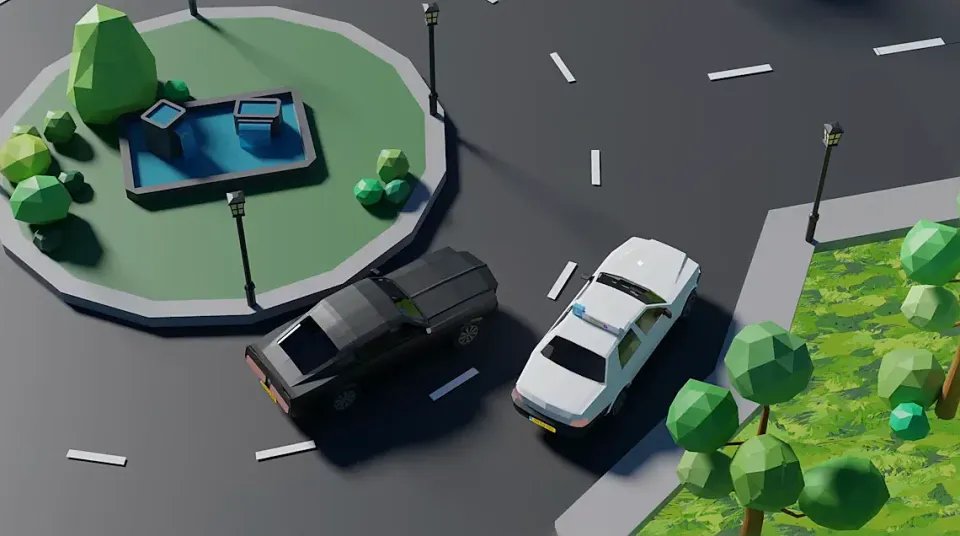
If you overtake on the right, watch drivers to your left closely. Anyone leaving the roundabout from the inner lane crosses your lane. They are changing lanes and must let you go first, but do not count on it blindly.
Indicating at a roundabout
With your indicator you let others know in time what you intend to do, so they can respond to it.
Indicating is mandatory when you change lanes, turn, or leave a roundabout.
Leaving the roundabout
Leaving a roundabout is turning. That duty to indicate is in the RVV 1990 (article 17). When leaving a roundabout, you always indicate to the right. You do this as soon as the exit you want to take is the next one you encounter.
| Your exit | Picture | Indicate right |
|---|---|---|
| First exit (turning right) | 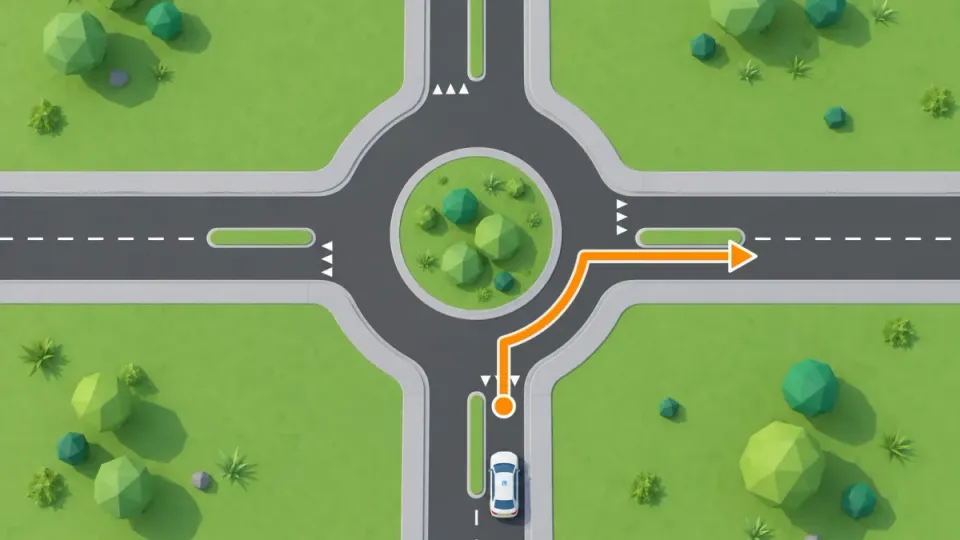 | Before you enter the roundabout |
| Second exit (straight on) | 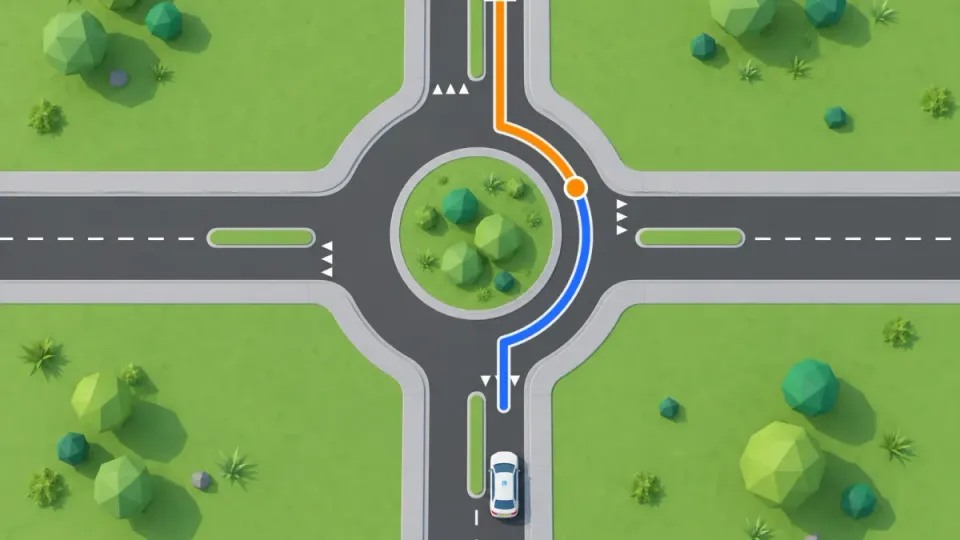 | After the first exit |
| Third exit (turning left, three quarters round) | 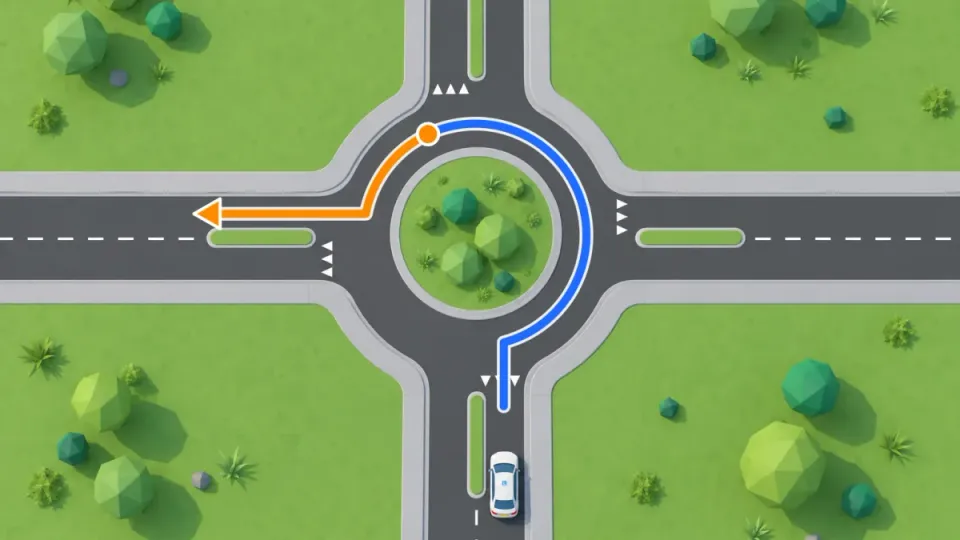 | After the second exit. Indicating left when you enter is allowed, but not required. |
| All the way round (turning back) | After the exit before the one you came from |
In the pictures the blue line means: no indicator. From the orange dot onwards you indicate right.
When entering
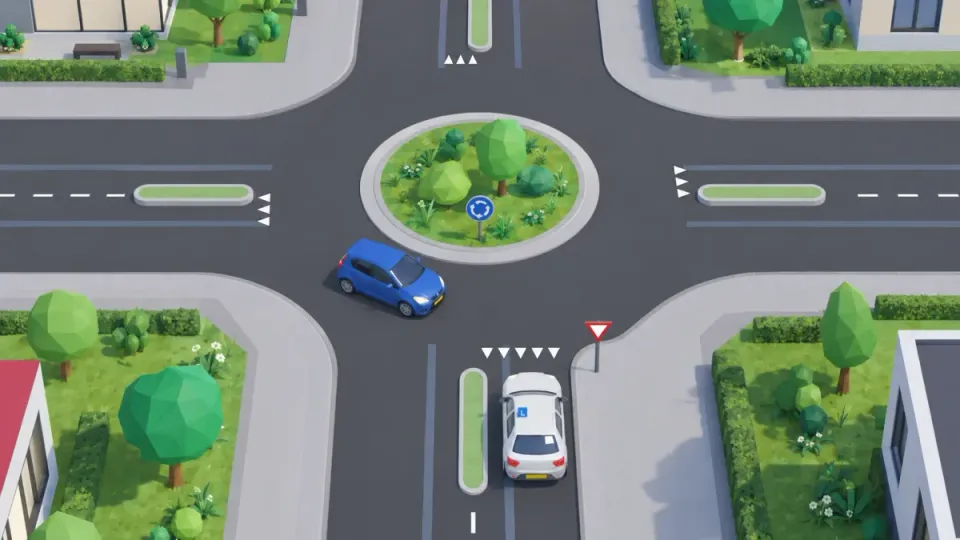
You will find different advice online about indicating when you enter. The RVV does not mention entering a roundabout separately. For the exam, remember this: if you are going further than the first exit, you enter the roundabout without indicating.
If you take three-quarters of the roundabout, meaning the third exit, then you may switch on your left indicator in advance. This can clarify your intention but is not compulsory. It does not replace indicating right when leaving.
Changing lanes on the roundabout
If you change lanes on a roundabout with more lanes, you indicate as well (article 55). You let traffic in the lane you move into go first (article 54). You may not change lanes across a solid line.
Priority rules for pedestrians and cyclists at roundabouts
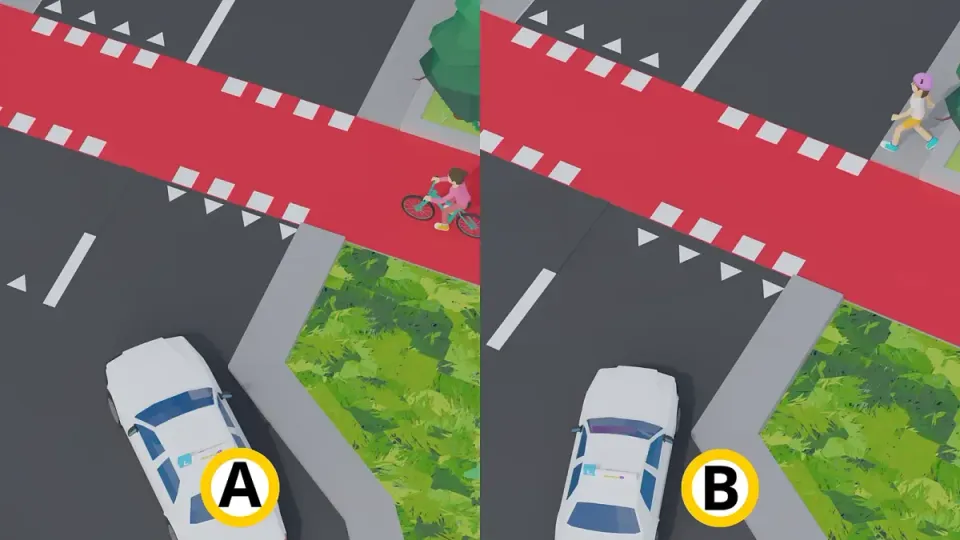
Leaving a roundabout means turning. Let anyone continuing along the same roundabout go first: cyclists and pedestrians are then going straight on along the same road. Also check the signs and give-way markings.
Check who the give-way markings apply to. Does the cyclist have give-way markings at the crossing with your road? Then the cyclist gives way there. These markings do not apply to pedestrians: they may still go first under the straight-on rule or at a pedestrian crossing. How to decide is explained under priority rules for pedestrians.
Cyclists: inside or outside a built-up area
If there is a separate cycle path around the roundabout, the road authority decides who goes first there. It usually follows the guideline of CROW, the Dutch knowledge institute for road design:
| Where | Picture | Who goes first? |
|---|---|---|
| Inside a built-up area | 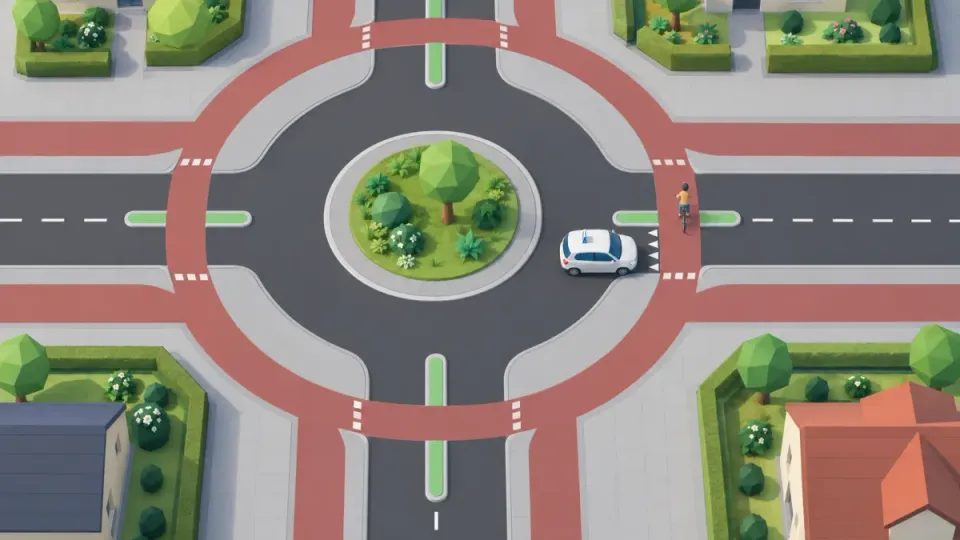 | Cyclists on the roundabout usually have priority. At the cycle path crossing you then have give-way markings, both when entering and when leaving. |
| Outside a built-up area | 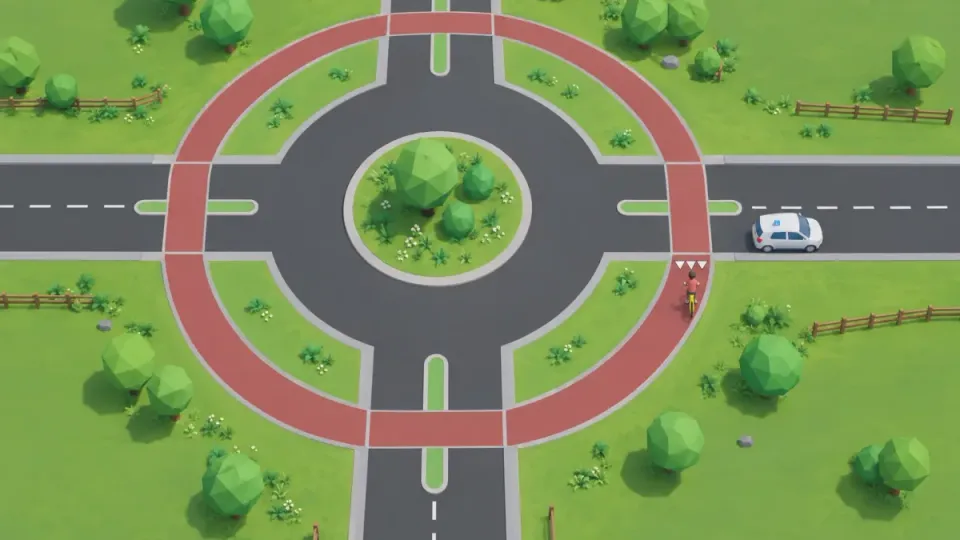 | Cyclists usually do not have priority. Then the cyclist has the give-way markings, often with sign B6. |
This is a guideline, not a law. Some municipalities and provinces do it differently. What counts are the give-way markings and signs at that spot. And even if the cyclist must give way: be prepared for them to ride on anyway.
Getting into the correct lane in time at a roundabout with multiple lanes
You can often see a roundabout coming from far away: sign J9 warns you. Use that time to see which lane belongs to your exit.
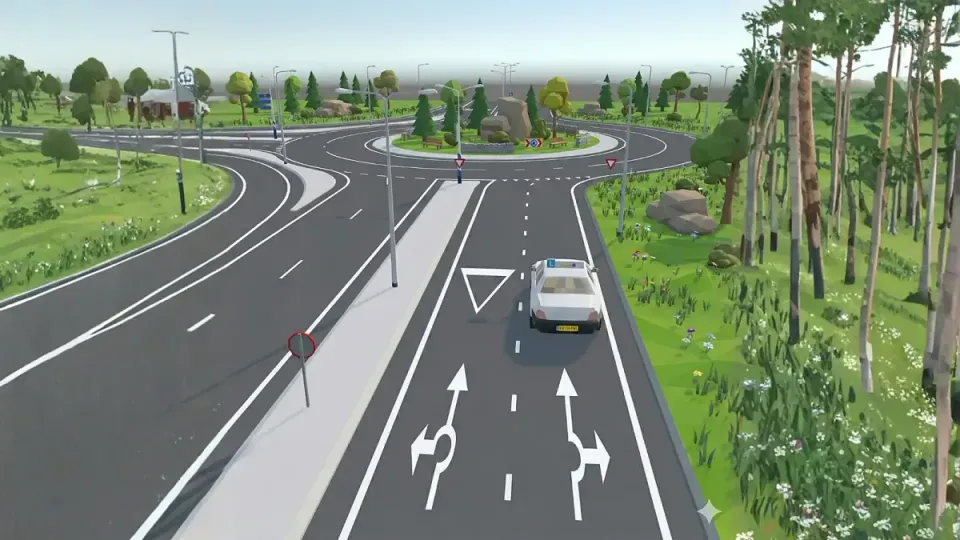
A roundabout is an exception to the rule that you always position yourself as far to the right as possible. If the roundabout has multiple lanes, it is usually indicated with arrows on the road surface which lane leads to which exit. Follow those arrows.
On the pictured roundabout, the right-hand lane leads only right or straight ahead. For the last exit, choose the lane whose arrows show that route. Other roundabouts may have a different layout. If two lanes lead to your exit, you may use both.
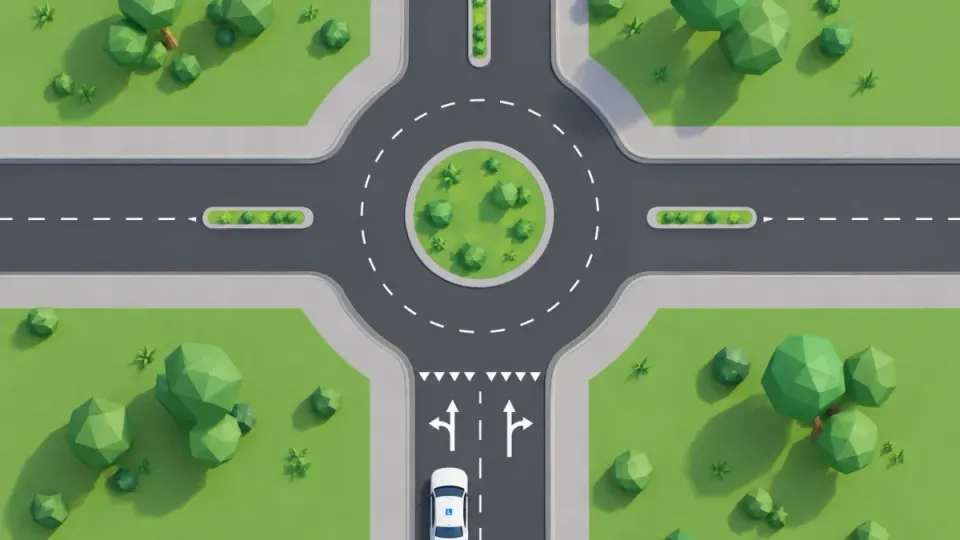
If you can already see, before the roundabout, a sign for a roundabout with multiple arrows on the road surface, this gives a clue about the roundabout layout. Also check the actual lanes and direction signs. Then position yourself in time so that you can leave at the correct moment.
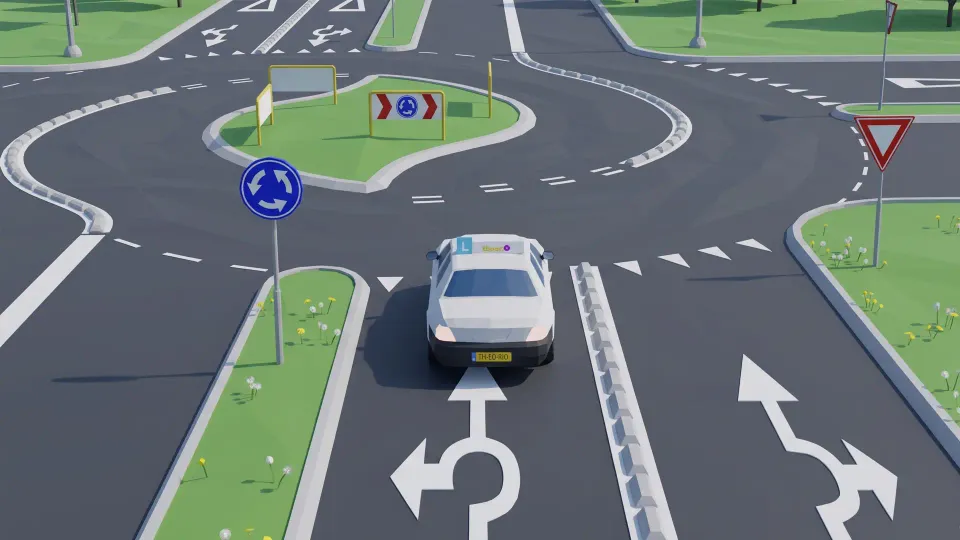
In time on the right lane
If you are in a lane that only goes left, but you still want to go straight ahead, you may not simply move over. If there is a continuous line between the lanes, you are stuck: you should have changed lanes earlier, when the line was still broken.
At a broken line, change lanes only when safe: check mirrors and blind spot, indicate and let other traffic go first. So pay close attention to where the line changes from broken to continuous.
The line rule also applies on the roundabout itself. Are you in the inner lane with a continuous line to your right? Then you may not turn off there to leave the roundabout. Indicating does not make it legal. Go round once more, or follow the route of your lane. On a turbo roundabout your lane sometimes takes you to a different exit. Take it and find a safe way back later.
Other types of roundabout you may come across
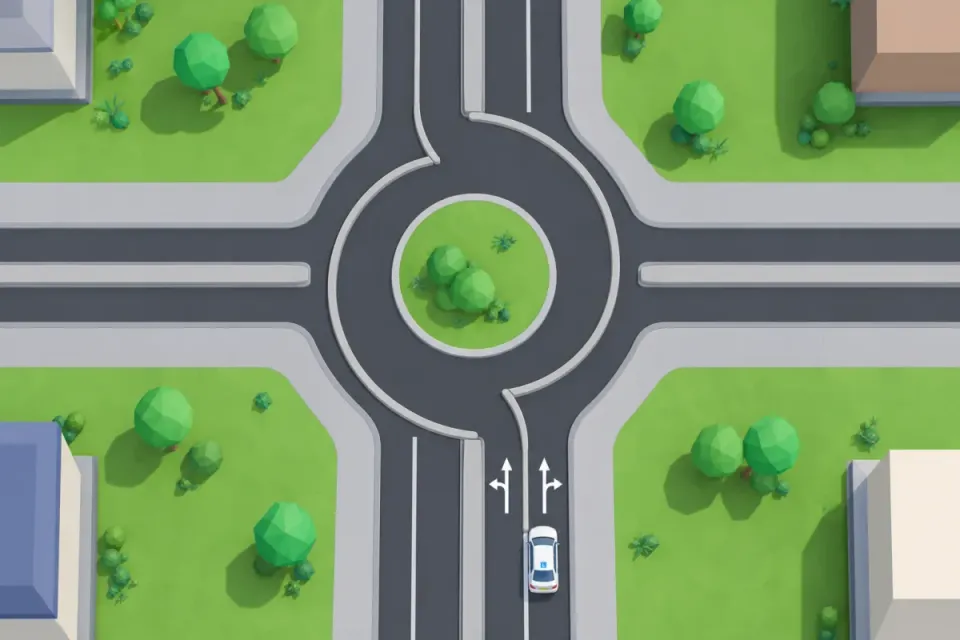
Most roundabouts have one lane around a round central island. You will also meet these types:
- Multi-lane roundabout: two or more lanes around the central island. You choose your lane with the arrows on the road, as described above.
- Turbo roundabout: the lanes are separated from each other by raised kerbs. You choose your lane before you enter the roundabout. On the roundabout itself you can no longer change lanes, and each lane takes you to fixed exits.
- Mini roundabout: a small roundabout, often in a residential area. The central island is low, so a bus or lorry can drive over it if it cannot make the turn. In a car you simply drive around it.
- Roundabout with traffic lights: at some large roundabouts traffic lights control the traffic. The lights then come before signs and give-way markings. Read more under traffic lights.
CBR pitfalls at roundabouts
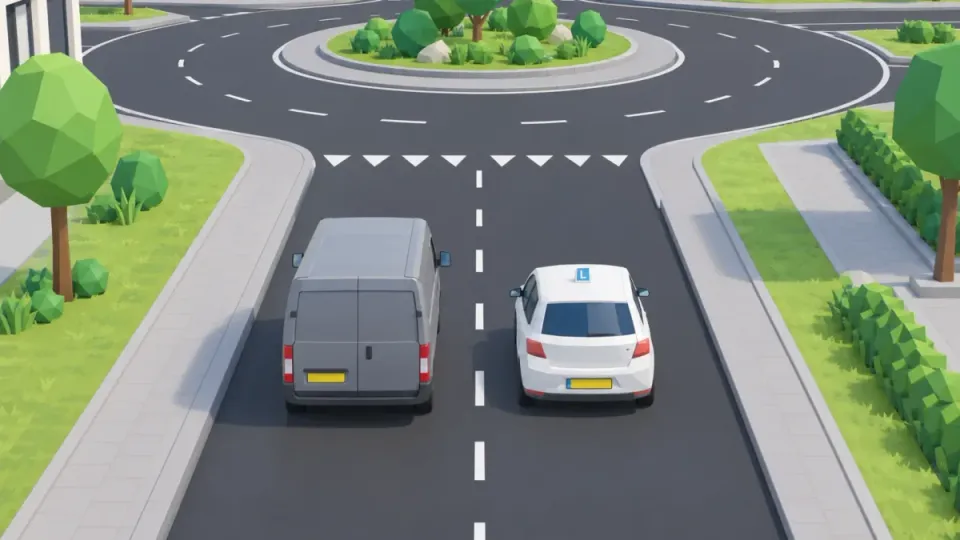
❌ Wrong: thinking overtaking on the right is not allowed on a roundabout. ✅ Right: on and just before a roundabout it is allowed.
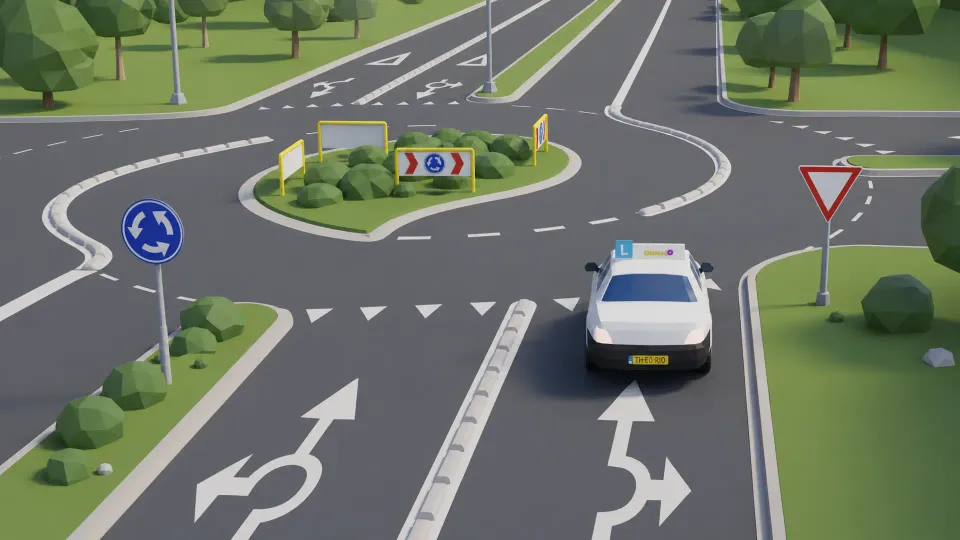
❌ Wrong: taking the right lane for three-quarters round because you must keep right. ✅ Right: the arrows on the road decide your lane.
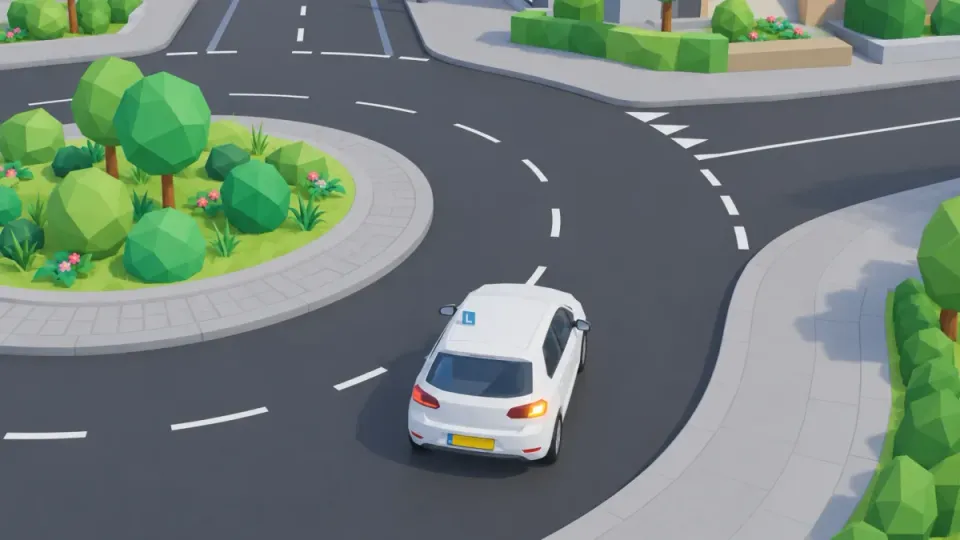
❌ Wrong: not indicating when you leave. ✅ Right: you are turning off, so you indicate right.
❌ Wrong: reading sign D1 as a priority sign. ✅ Right: for priority you look at the give-way markings and sign B6.
Practise like the exam
Example questions like in the CBR exam
Real questions from the Theorio app. You can expect similar questions in your CBR exam.
Question 1 of 4
You want to take the first exit at the roundabout. Should you wait to signal until you are on the roundabout?
Tap the answer you think is right.
You want to go straight. Are you allowed to indicate direction here?
Tap the answer you think is right.
You want to leave the roundabout. When must you yield?
Tap the answer you think is right.
Is it allowed to overtake on the right here?
Tap the answer you think is right.
Answers and explanations for the example questions
Question 1: You want to take the first exit at the roundabout. Should you wait to signal until you are on the roundabout?
Correct answer: No
You want to take the first road. That is immediately to the right. Turn on your indicator before the roundabout. Then others can see what you are going to do. They will know: you are leaving immediately.
Question 2: You want to go straight. Are you allowed to indicate direction here?
Correct answer: No
You want to go straight. Do not turn on your indicator not. If you do, other people will get confused. They will think you are going to turn right immediately. That is dangerous. First, enter the roundabout. Have you passed the first road? Only then do you turn on your light to the right. Then you exit the roundabout.
Question 3: You want to leave the roundabout. When must you yield?
Correct answer: Both situations
In both situations you must yield. In situation A, there are shark teeth for the cyclist. In situation B, you want to leave the roundabout; you must then let the through traffic on the same road (the pedestrian) go first. 🔄
Question 4: Is it allowed to overtake on the right here?
Correct answer: Yes
You can overtake on a roundabout on the left and right. Mnemonic: ‘Wrong Drivers Stay Slow Left’ You may overtake on the right in (Traffic Jam, Roundabout, Block Marking, Trams, Left-Turning Vehicle in Front) 🔄✅
FAQ
Frequently asked questions
Short answers to questions that often come up on this subject.
How do you indicate direction on a roundabout in the CBR exam?
For the first exit, indicate right before entering. For later exits, indicate right after passing the exit before yours. When going three-quarters around, you may indicate left on approach; this is optional. Choose a lane leading to your exit according to signs and arrows.
Do you have to let cyclists go first when you leave a roundabout?
If the cycle path belongs to the same road and the cyclist continues around while you turn off, you generally let them go first. Check actual signs, give-way markings and any lights at that crossing: if they require the cyclist to give way, that arrangement applies. A separate crossing farther away is not automatically the same road.
May you overtake on the right on a roundabout?
Yes. Article 48 of the RVV 1990 expressly allows it, just before the roundabout and on the roundabout itself. It is one of the few places where this is allowed. Do keep watching drivers in the inner lane who want to leave the roundabout.
What is a turbo roundabout?
A roundabout with several lanes that are separated by raised kerbs. Which exit you can take depends on the lane you choose before you enter the roundabout. So look carefully at the arrows and direction signs in advance.
Ready to practise?
Test your knowledge of Overtaking & Position on the Road with 70 practice questions in the app.
Free mock exam · no account needed
Your first quiz is free, no account needed. After that from €34.99 for 90 days of access.