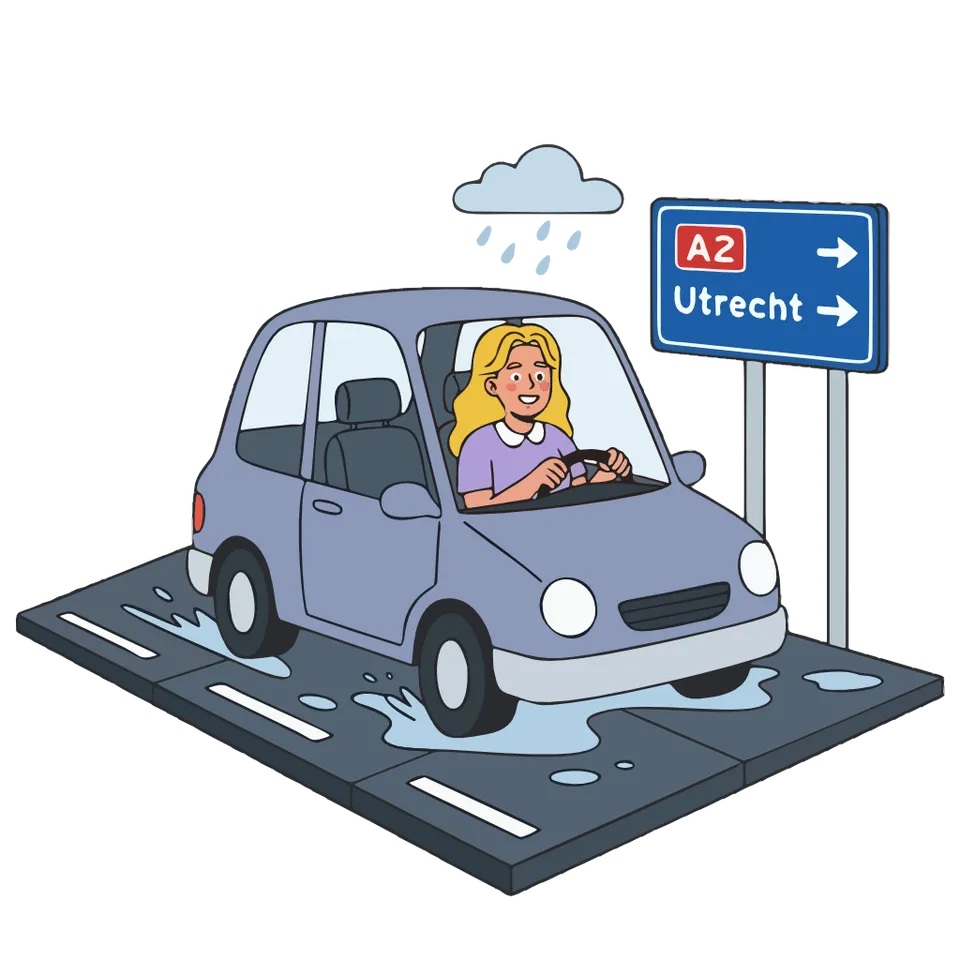
Illustration of a car on wet motorway asphalt next to a blue sign pointing toward Utrecht

Driving on the motorway

80 Questions
Medium
1 Parts

From sign G1, different rules apply than on any other road: in addition to a maximum speed, there is also a minimum speed, slow-moving traffic is prohibited, and matrix signs come before the fixed signs.

Practise car theory

Free mock exam · no account needed

Study material

What will you learn?

Motorway driving requires safe joining, keeping right, understanding signals and enough space. The default car limit outside built-up areas is 130 km/h, but applicable signs, time windows and vehicle limits may be lower.

Driving on the motorway at a glance

Here you learn how to drive safely on the motorway: joining, signals, distance and bad weather. Each part has its own explanation page.

  • Merging onto and leaving the motorway: build up speed on the slip road and let traffic on the main carriageway go first. Only slow down once you are on the exit lane.
  • Block markings: wide white blocks at slip roads, exit lanes and splits. You may cross them to change lanes. If you are to their right, you may overtake traffic on their left.
  • Rush-hour lane: an extra lane that only opens when it is busy. A green arrow means open; never drive under a red cross. When it is open, you keep right.
  • Matrix signs: a number is a mandatory speed limit, not advice. A red cross closes the lane. A diagonal arrow means: move in good time towards the side the arrow points to.
  • Driving in bad weather: bridges and viaducts are the first places to get slippery. In rain, snow, fog and strong wind you drive slower and keep more distance.
  • Aquaplaning: your tyres slide over a layer of water. Ease off the accelerator, do not brake hard and do not steer suddenly. Wide tyres and little tread increase the risk.
  • Braking and stopping distance: stopping distance is reaction distance plus braking distance. If you drive twice as fast, your braking distance becomes about four times as long.
  • Following distance: in good weather keep at least two seconds between you and the vehicle in front. At 100 km/h that is about 56 metres. In bad weather keep more.
  • Overtaking on the right on the motorway: only allowed to the right of block markings and in a traffic jam. In a jam, watch out for motorcyclists between the two left-hand lanes.

How fast you may drive is covered in motorway speed limits. What to do if your car breaks down is explained in breakdowns.
Part 1

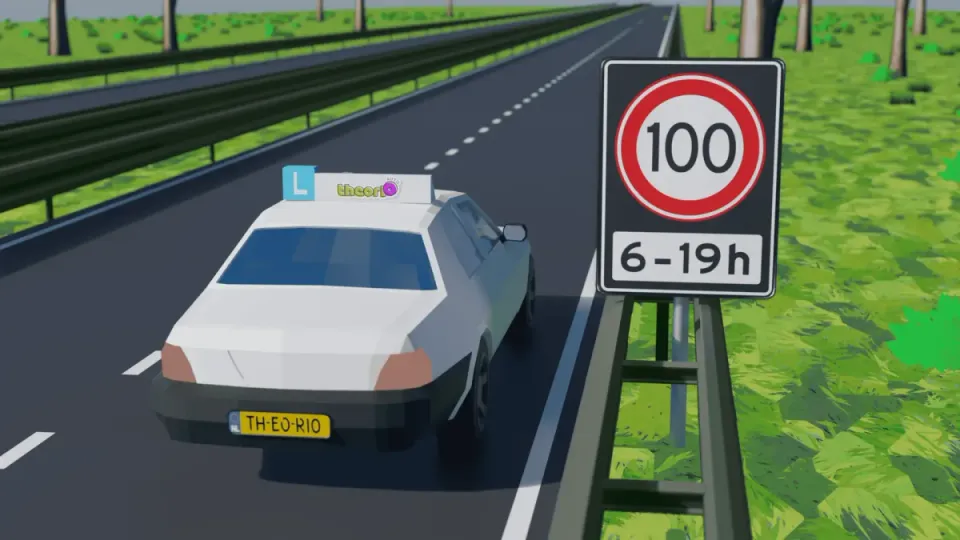
You recognise a motorway by sign G1; the limit is 130 km/h, 100 km/h during the day, with a minimum of 60 km/h.

Identify the motorway first, then read its signs. The 60 km/h requirement concerns what the vehicle can and may do; safe joining needs a speed matching traffic.

Recognising a motorway

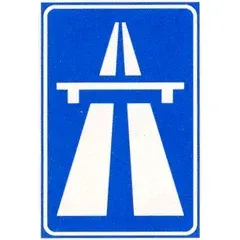
The blue sign with a viaduct and dual carriageway is G1: motorway begins. A white car on blue is G3: autoweg.

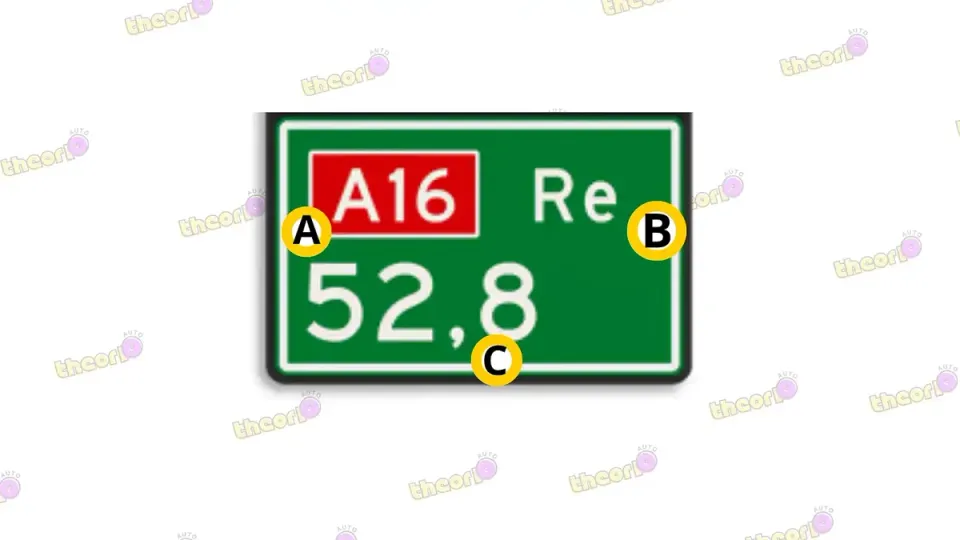
Traffic flows are separated: there is no normal oncoming or level-crossing traffic on your carriageway. An A number such as A16 is a motorway number. On a hectometre sign Re identifies the right carriageway and 52.8 gives distance in kilometres. This helps locate an emergency.

A16, Re, 52.8: road number, carriageway and kilometre position.

Which speed limit applies?

On many motorways the limit is 100 km/h between 6:00 and 19:00 and 130 km/h outside those hours; the signs decide which limit applies. Your vehicle must be able and allowed to do at least 60 km/h. All limits, including time periods, matrix signs and the end of the motorway, are explained under speed on the motorway.

100 with 6–19h applies only within that period. Outside it, ordinary road and vehicle rules plus other signs remain.

Reflector posts in darkness

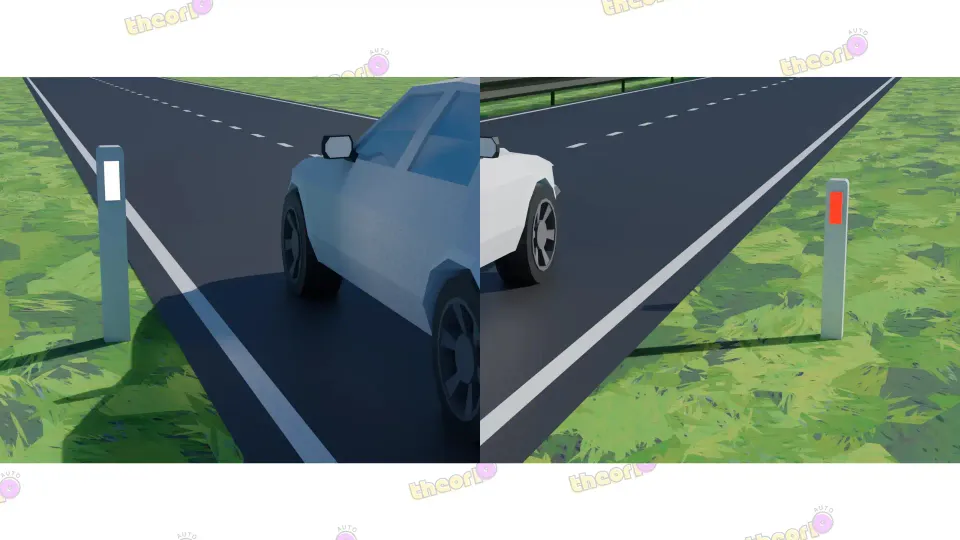
On unlit roads reflector posts help show the road’s course. In your direction of travel, right-hand reflectors are red and left-hand reflectors white. They do not replace proper lighting or a safe speed. See traffic lights and arrow signals.

Unlit road with white reflectors on the left and red on the right
Red right, white left: reflectors help identify the course of the road.

You've covered In short: recognising the motorway. Does it stick?

FAQ

Frequently asked questions

Short answers to common questions about Driving on the motorway.

Who has priority when merging onto a motorway?

Merging is a special manoeuvre: let all other traffic go first, not only drivers already in the exact lane you want. Check mirrors and your blind spot, adapt your speed and indicate in good time before moving across. An indicator gives no priority.

Do you have to use an open rush-hour lane?

An open right-hand rush-hour lane is an ordinary right-hand traffic lane. Keep as far right as practicable and use it when safe, for example when not overtaking. Check signals, markings and traffic before changing lanes. Not every rush-hour lane is on the right: an open left-hand one does not become the rightmost lane.

Which takes priority: a matrix sign or a fixed sign?

The matrix sign takes precedence when it shows a lower speed: fixed 100 km/h and matrix 70 km/h means a maximum of 70. If the sign beside the road shows a lower speed than the matrix sign, the lowest applies. So fixed 50 and matrix 70 stays 50. A matrix speed is mandatory, not advice. A lower vehicle limit, such as 90 with a trailer, still applies.

At what speed should you merge onto a motorway?

Match your speed to traffic on the main carriageway and find a safe gap. With free-flowing traffic, use the acceleration lane to build sufficient speed; in a slow queue, 60 km/h may be too fast. The 60 km/h vehicle entry requirement is not a fixed merging speed. Let all other traffic go first when merging.

What is the minimum speed on a Dutch motorway?

There is no general compulsory minimum driving speed of 60 km/h on a motorway. The entry requirement is that your motor vehicle must be able and legally permitted to reach at least 60 km/h. Adapt your actual speed to traffic, visibility, grip and the applicable maximum. In a queue, you must therefore travel much more slowly.

Keep practicing with up-to-date material

This module gives you the basics for safe driving on the motorway: speed, matrix signs, merging, and lane use. There are more rules about rush hour lanes, traffic jams, breakdowns, and temporary signs; therefore, practice in our app with the most up-to-date CBR information.

Ready to practise?

Test your knowledge of Driving on the motorway with 80 practice questions in the app.

Practise car theory

Free mock exam · no account needed

Your first quiz is free, no account needed. After that from €34.99 for 90 days of access.