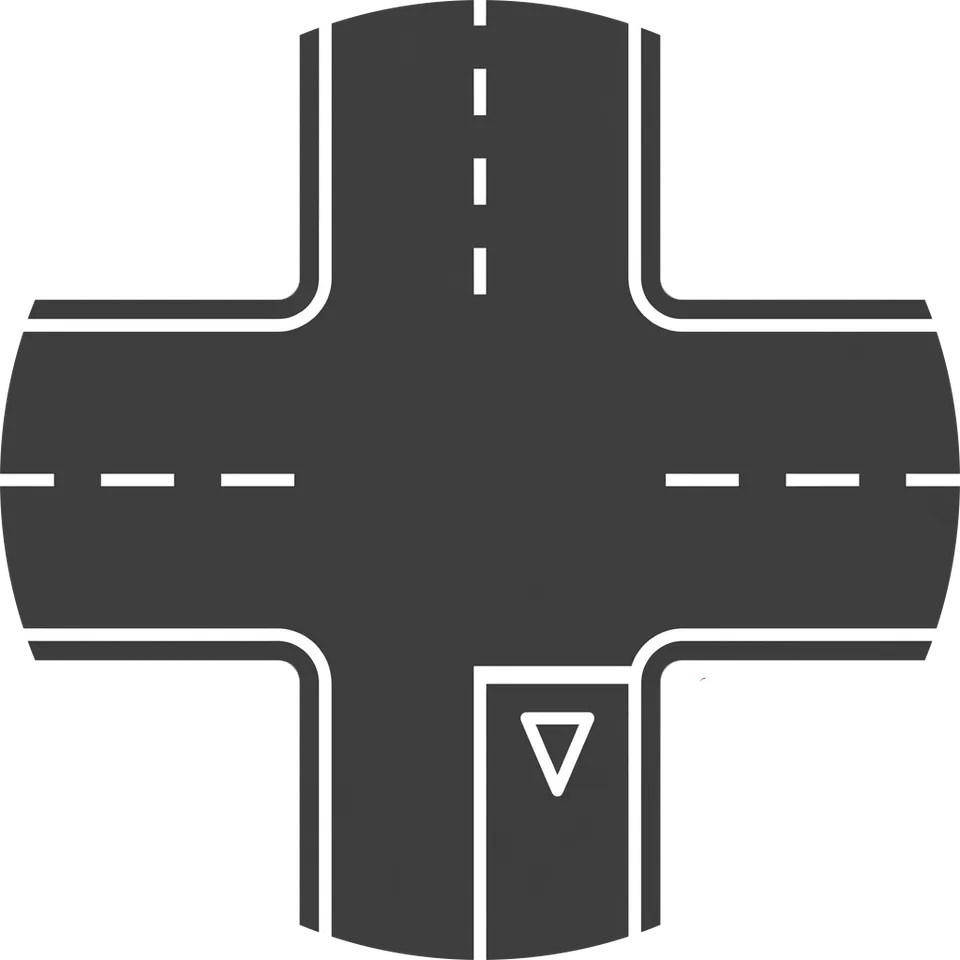
Top view of an intersection with white road markings and yield lines / shark's teeth

Road markings

30 Questions
Hard
1 Parts

Solid, broken and yellow lines, hatched areas and lanes: what road markings mean and what you may do, for the CBR exam.

Practise car theory

Free mock exam · no account needed

Study material

What will you learn?

Road markings help you choose the correct position, direction and space. Solid separators, broken lines and temporary yellow markings have different meanings. Recognising colour does not replace speed or access rules and signs.

Road markings at a glance

Here you learn what lines and areas on the road mean and where you may or may not cross. Each part has its own page.

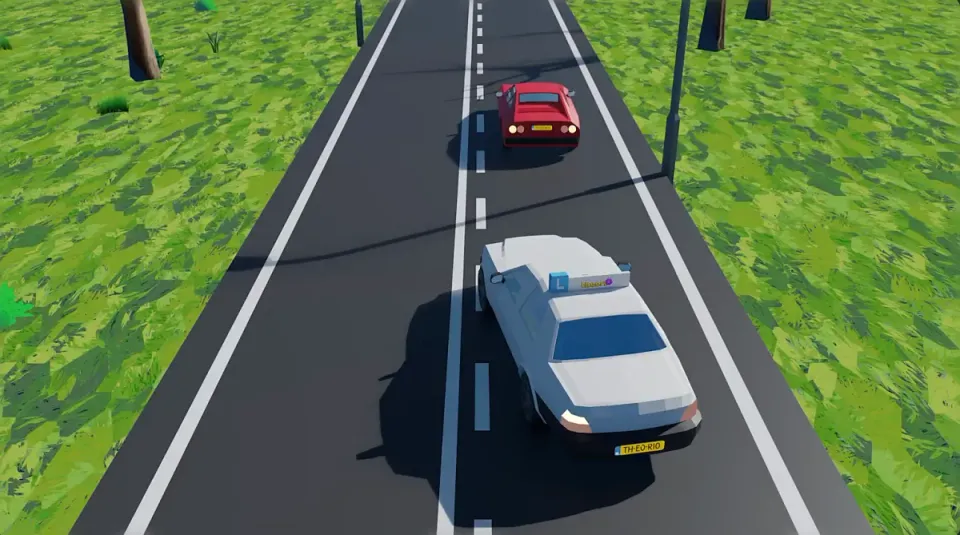
  • Broken line: you may cross it to overtake, change lanes or turn, if it is safe. Long lines with short gaps are a warning line.
  • Broken yellow line: along the kerb it means: no parking. At a solid yellow line you may not stop either. On the carriageway, yellow is temporary and comes before white.
  • Carriageway, lane and road: a lane is one strip for one row of cars, the carriageway the part of the road where vehicles drive. On every road you keep as far right as possible.
  • Solid line: you may not cross it, not to overtake, change lanes or turn. If you do, it costs € 190 to € 320.
  • Hatched road markings and zigzag lines: never drive, stop or park on hatched markings (verdrijvingsvlak) or a gore area (puntstuk). A zigzag line is only a warning: slow down and pay close attention.
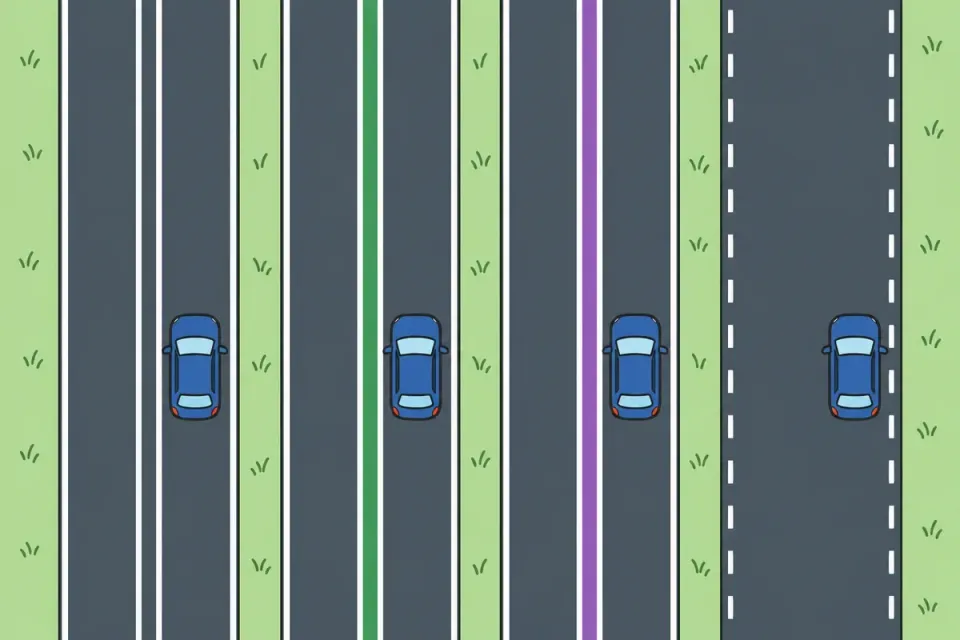
  • Green line on the road: you may usually drive 100 km/h here, often on an autoweg. A sign with a different speed comes first. The white lines tell you whether you may overtake.
  • Purple line on the road: on some roads outside built-up areas in the province of Utrecht the limit is 60 km/h. The signs set the 60; purple is not a traffic rule.

Overtaking across a solid line, and the fine, is covered under overtaking across a solid line. The short blocks on the motorway are explained under block markings.
Part 1

Edge lines, double centre lines and coloured infill help identify the layout. Access for cyclists and others follows signs and traffic rules.

Markings help you recognise the layout but do not independently decide who may use the road. Check access signs, road type and the rules positioning each kind of road user.

Edge lines only: expect different road users

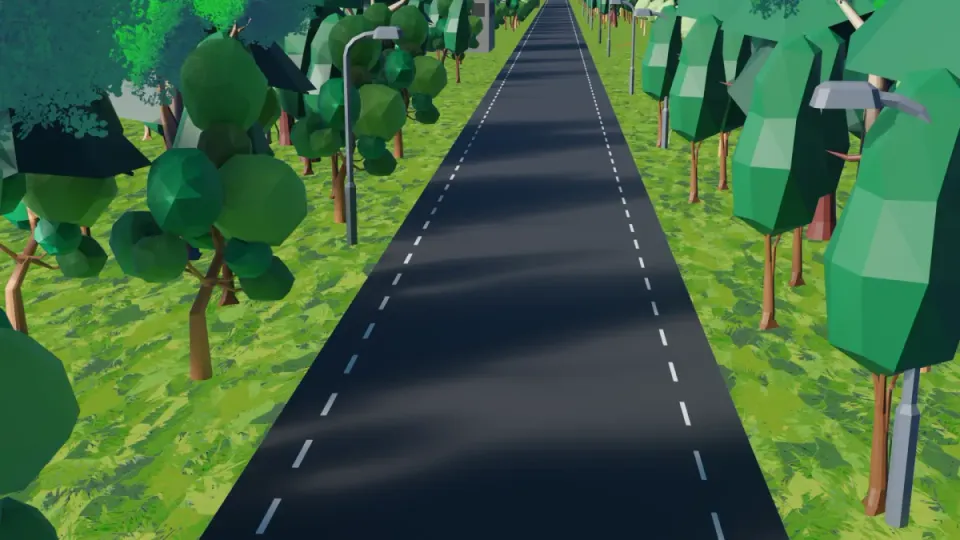
Narrow roads with edge lines and no centre line are common in rural areas. Cyclists, horse riders, pedestrians, agricultural vehicles and cars may be present when access signs permit them. No centre line does not automatically make a 60 road: an ordinary road outside built-up areas defaults to 80 unless a sign or zone states otherwise. A much lower safe speed is often necessary.

No centre line: leave space for oncoming and slower traffic. Find a safe passing place and do not force anyone onto the verge.

Pedestrians use a pavement or footpath first; if absent, the cycle or cycle/moped path; if those are absent, verge or carriageway. Horse riders use a bridleway where available, otherwise the verge or carriageway. Markings do not replace these positioning rules.

Double centre lines: no independent cycling ban

Double centre lines separate opposing flows more clearly and may help identify a road layout. They do not independently mean “motor vehicles only”. Whether cyclists or other slow users are prohibited follows signs such as an autoweg sign or a closure. Slow users may still be present with double centre lines if no access rule excludes them.

White lines tell you on which side crossing may be permitted. They do not independently admit or exclude cyclists.

Green or purple between the lines

Green helps recognise a road often designed for 100; purple is a local feature on certain Utrecht roads signed 60. Neither colour itself is a speed-limit or autoweg sign. The white line on your side, together with other rules, still determines crossing. At roadworks conflicting temporary yellow markings take priority over existing white.

Colour aids recognition; white governs crossing. Read signs for speed and access.

Read more about green, purple, yellow and hatched areas.

You've covered What lines tell you about the road. Does it stick?

FAQ

Frequently asked questions

Short answers to common questions about Road markings.

May you drive on a cycle lane before turning?

You may use a broken-line cycle lane provided you do not hinder cyclists or other authorised users; you do not have to use it before a right turn. Check mirrors and your blind spot first. Do not use a solid-line cycle lane in a car. This concerns a lane on the carriageway, not a separate cycle path.

What is the difference between a solid and broken line?

You generally may not cross a solid separating line; between opposing directions you may not drive to its left either. Article 76 has specific exceptions, such as a broken line on your side and lawful access to a rush-hour lane, hard shoulder or refuge. A true edge line falls outside this rule. Cross a broken line only when safe and otherwise permitted.

Keep practicing with up-to-date material

With this explanation you understand the basics of road markings. In traffic there are many exceptions, such as temporary markings at roadworks; therefore practise in our app with the most up-to-date CBR information.

Ready to practise?

Test your knowledge of Road markings with 30 practice questions in the app.

Practise car theory

Free mock exam · no account needed

Your first quiz is free, no account needed. After that from €34.99 for 90 days of access.