Part 3 of 5 in Speeds
Speed on the motorway: maximum and minimum speed
Minimum and maximum speed on the motorway: your vehicle must be able and allowed to do 60 km/h, the limit is 130 km/h, often 100 by day with a sign.


Written by Chris Prosman Reviewed by Dirk van Zuijlen
Updated Reviewed on 8 min read
Free mock exam · no account needed
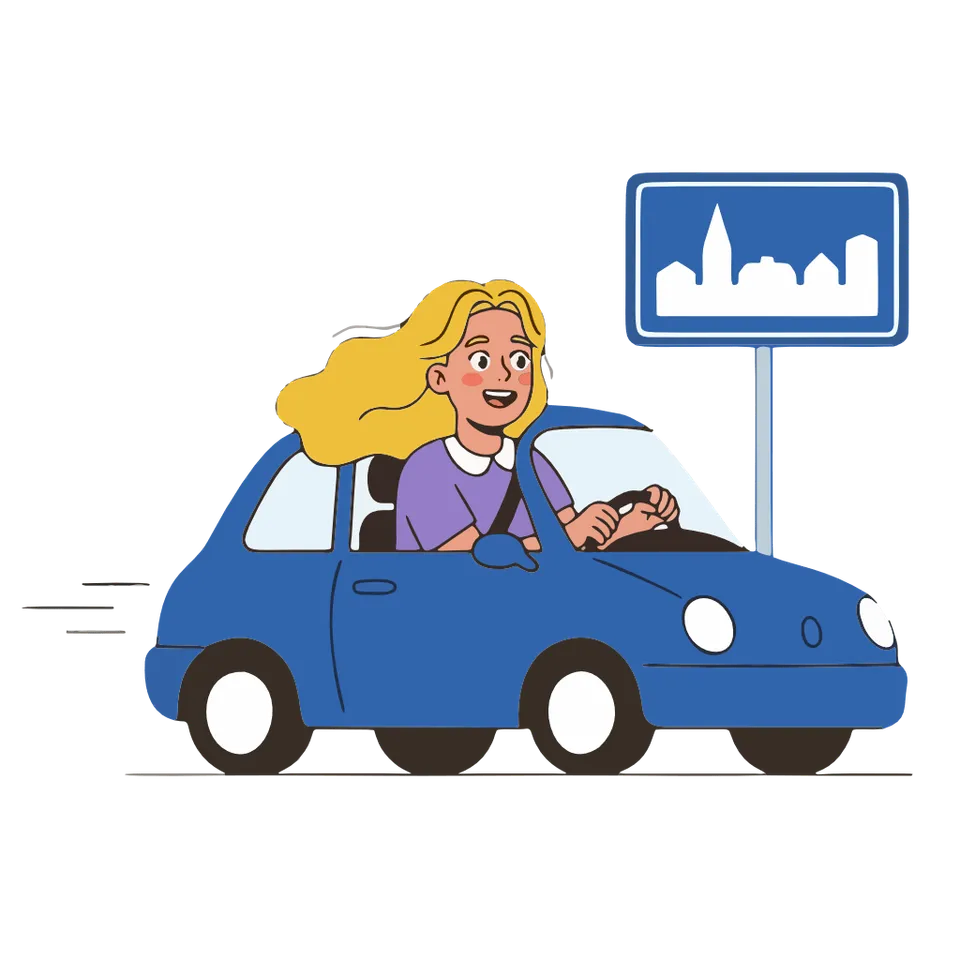
On the motorway you may drive at most 130 km/h, with a vehicle that is able and allowed to do at least 60 km/h. Signs and matrix signs can show a different speed.
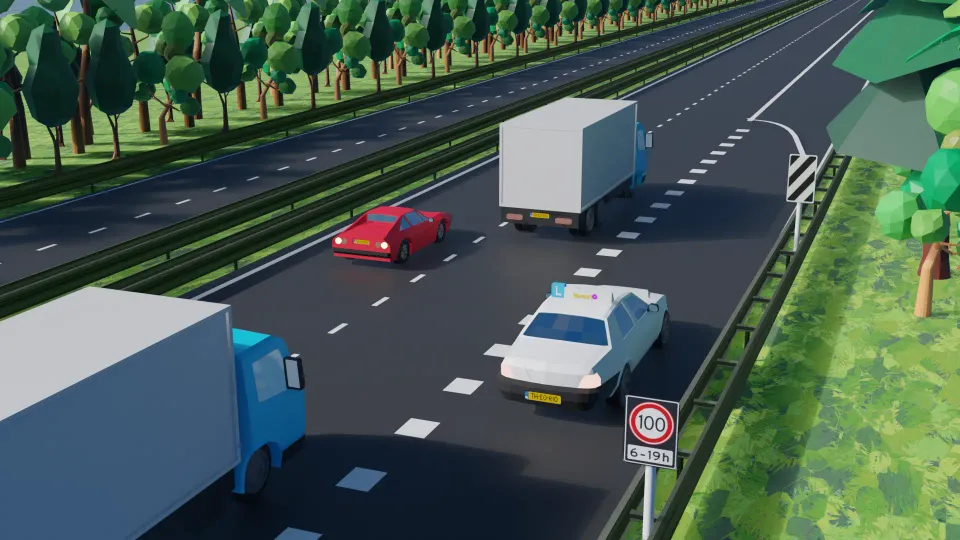
For the CBR, the key point is: watch the time of day. On many motorways there is a 100 sign with the 6-19h sub-sign. Between 6:00 and 19:00 you may drive 100 there, outside those hours 130, unless another sign shows a lower speed.
What applies on the motorway?
| Situation | Limit or action | Why? |
|---|---|---|
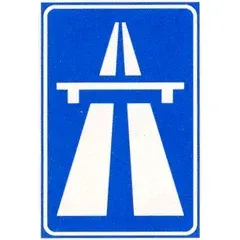 You are on a motorway without a different sign | Maximum 130 km/h | 130 is the default for a car without a trailer, unless an applicable restriction is lower. |
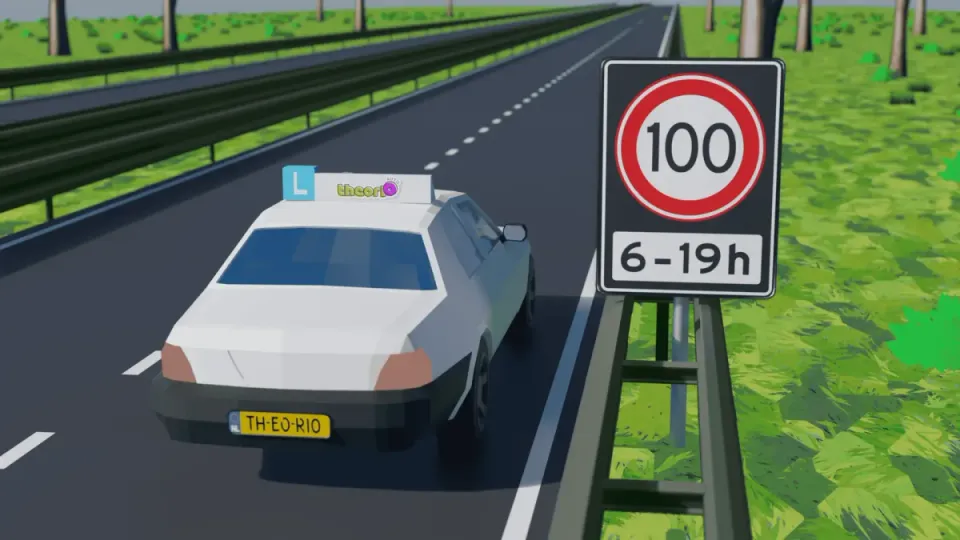 At 14:00 you pass a 100 sign with a 6-19h sub-sign | 100 km/h | The 100 sign applies at this time. |
| At 22:00 you pass a 100 sign with a 6-19h sub-sign | 130 km/h: the sign only applies from 6:00 to 19:00 | This 100 sign applies only from 06:00 to 19:00; check other signs too. |
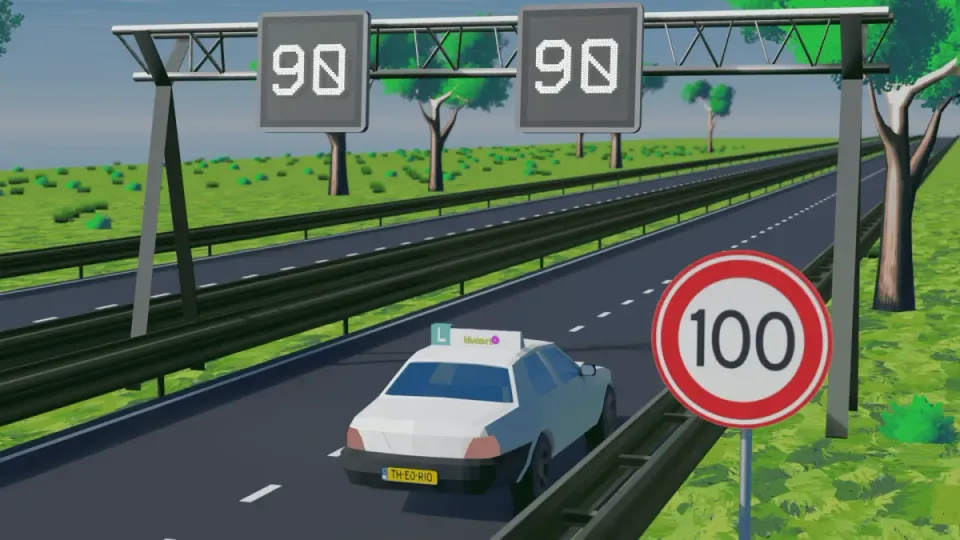
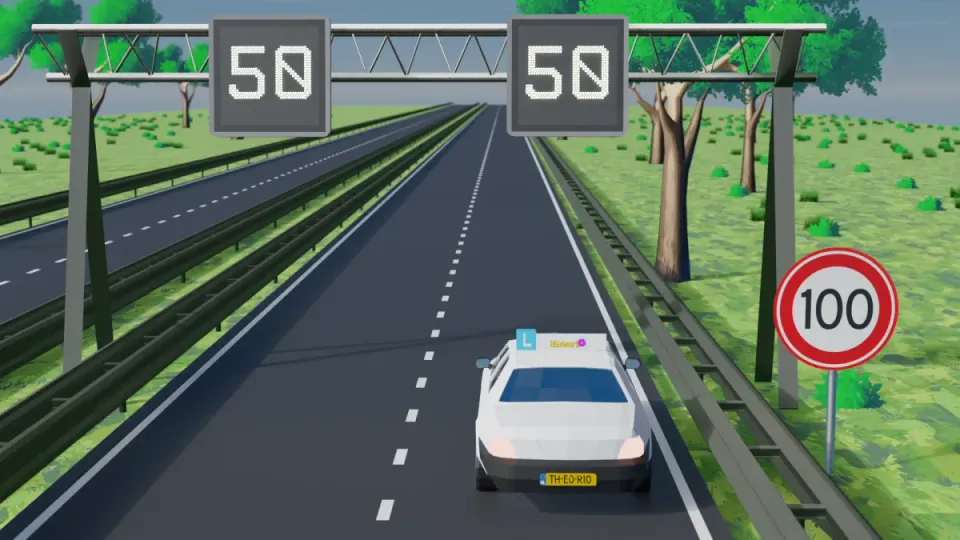 The matrix sign above your lane shows a lower speed than the fixed sign | The lower speed shown on the matrix sign | The matrix sign takes precedence when it is lower than the fixed sign. |
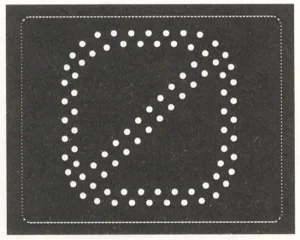 You see the end symbol on the matrix sign | The speed of the fixed signs again, otherwise 130 km/h | The end symbol ends the matrix indication; other restrictions remain in force. |
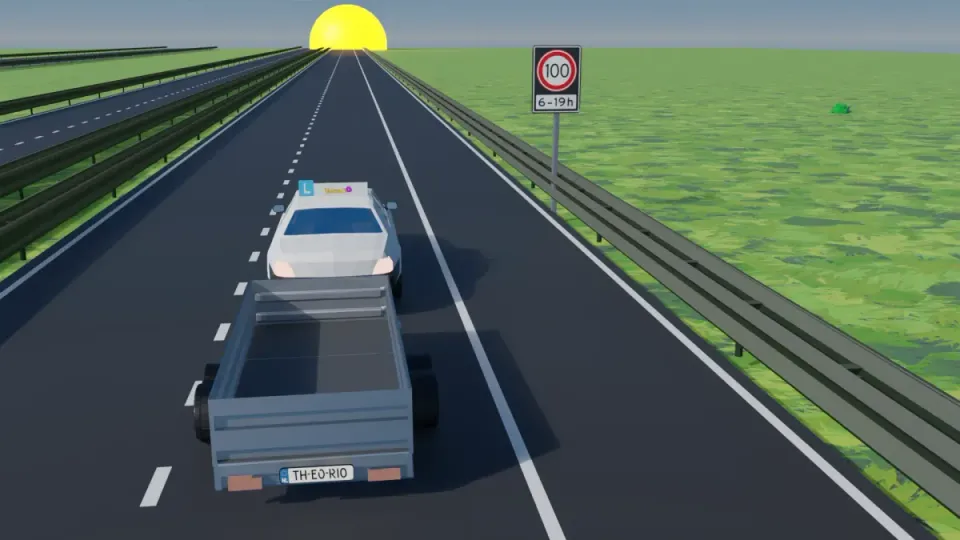 You are towing a trailer | Maximum 90 km/h | A trailer up to and including 3500 kg maximum authorised mass gives a 90 vehicle limit. |
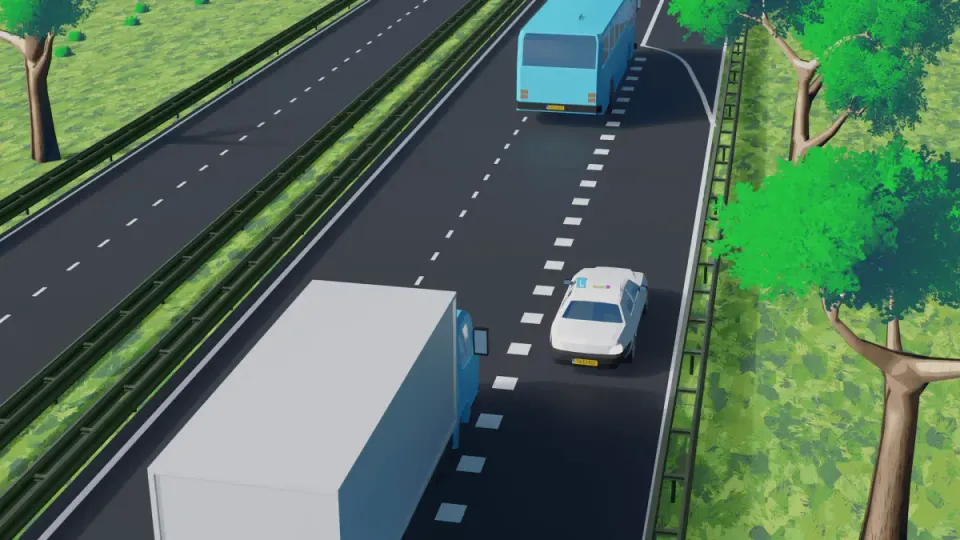 You merge from the acceleration lane | Adjust your speed to the traffic on the main carriageway | Merge safely at a speed appropriate to traffic; 60 is only a vehicle access requirement. |
Is there a minimum speed on the motorway?
No, officially there is no minimum speed on the motorway. No rule says how fast you must drive at least. So in a traffic jam you may go slower. But you may only use the motorway with a motor vehicle that is able and allowed to do at least 60 km/h (RVV 1990 article 42). That is why a microcar (brommobiel), moped or tractor may not use it. On the autoweg that limit is 50 km/h: see speed on the autoweg.
That 60 km/h is not a good speed for merging either. Traffic on the main carriageway is much faster. So first build up speed on the acceleration lane and merge when you are going about as fast. An example: there is a lorry in the right-hand lane. A lorry may drive at most 80 km/h on the motorway. If you merge just in front of or behind it, you also drive about 80 km/h. Only brake once you are on the exit lane. More under merging onto and leaving the motorway.
If you drive slower than the rest, keep right. The speed limit is not a speed you must always reach. Keep enough distance too: see following distance.
130 km/h in theory, 100 km/h between 06:00 and 19:00 in practice
By law you may drive 130 km/h on the motorway (RVV 1990 article 21). Still, on many motorways there is a 100 sign with a sub-sign showing times:
- Between 6:00 and 19:00: at most 100 km/h.
- Before 6:00 and after 19:00: 130 km/h, unless another sign says otherwise.
The 100 km/h during the day is there to reduce harmful emissions. The law has not changed: the sign with the times makes the difference. If there is no sign, the answer in the exam is 130 km/h.
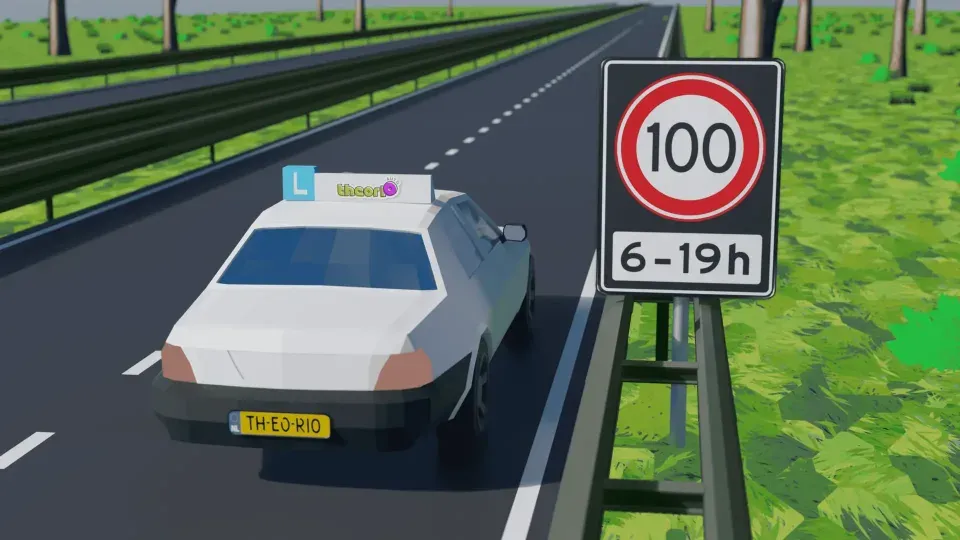
How fast may you drive on the motorway after 7 pm?
After 19:00 and before 6:00 you may drive 130 km/h on the motorway, if no other sign shows a lower speed. If the sub-sign only says 6-19h, without days, it applies every day, also at the weekend.
Where may you drive 130?
Only on the motorway, and only if no sign shows a lower speed. On many motorways that means only in the evening and at night. On an autoweg you may never drive 130: there 100 km/h is the maximum.
Traffic signs and matrix signs on the motorway
Signs come before the 130 km/h of the law. These are the ones you meet most often on the motorway:
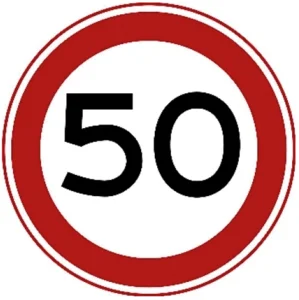 Round sign with a red border (A1): the number is your maximum speed, often with a sub-sign showing times such as 6-19h.
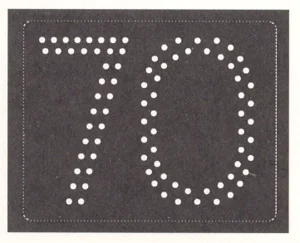 Speed on a matrix sign (A3): a mandatory maximum speed for your lane, not a recommendation. If a lower speed is shown above your lane than on the sign beside the road, the matrix sign takes precedence, for example because of a traffic jam or roadworks. If the sign beside the road shows a lower speed than the matrix sign, the lowest applies.
- End symbol on the matrix sign (F9): when you see the grey circle with a diagonal line above your lane, that matrix speed has ended. From there the fixed signs count again; without a sign, the motorway’s own limit applies.
An example: it is night and you may drive 130 km/h. A matrix sign temporarily lowers the speed to 90 km/h. If you then see the end symbol, you may drive 130 km/h again.
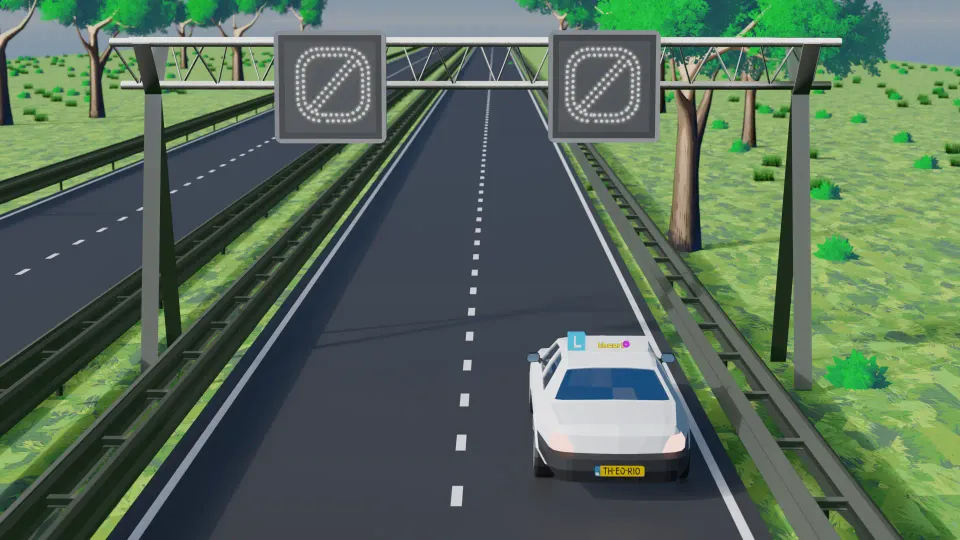
At roadworks there is often a temporary sign with a lower speed; how that works is explained under speed limit signs. What a red cross or a diagonal arrow on a matrix sign means is under matrix signs. With a trailer, 90 km/h is your limit: see maximum speed with a trailer.
Recognising that you are driving on a motorway
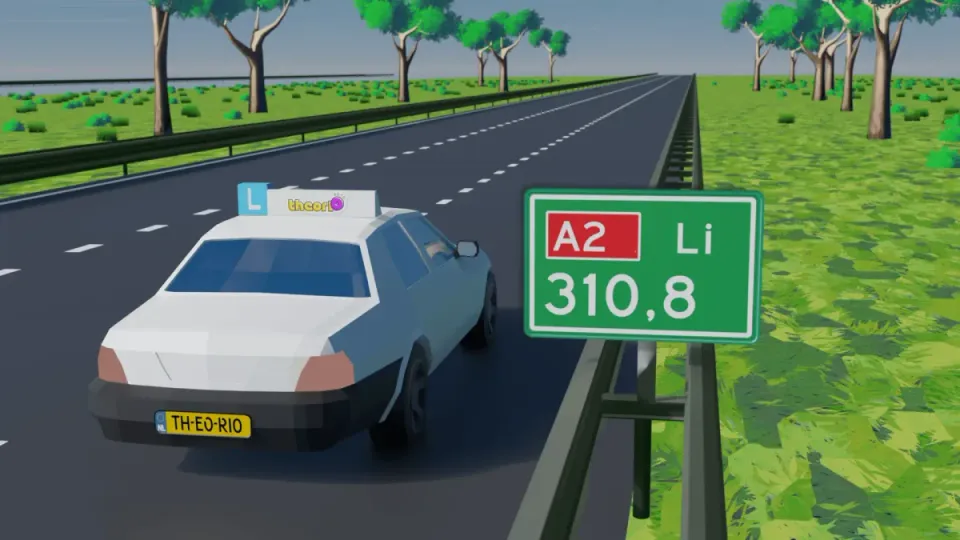
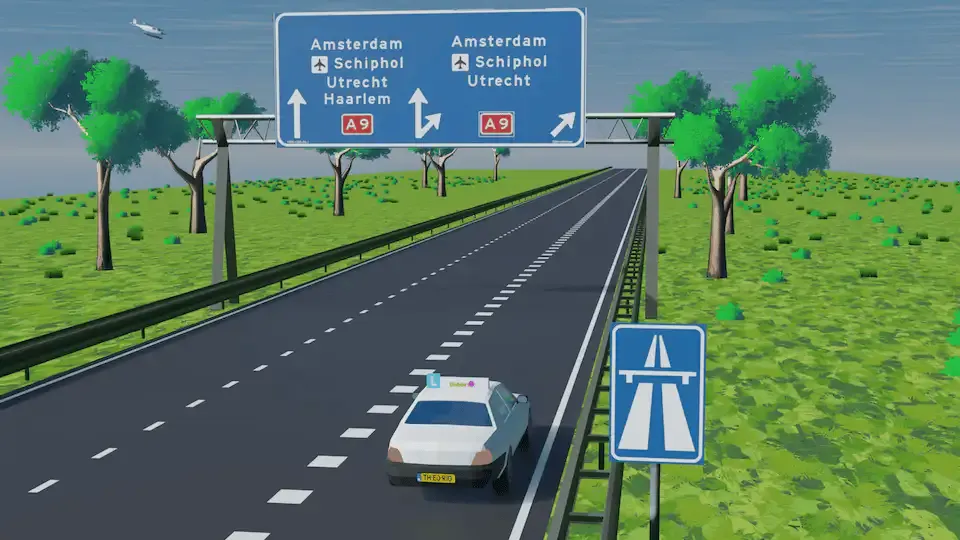
A motorway is a road for fast traffic without junctions with traffic lights. You recognise it by the blue sign with a dual carriageway and a viaduct over it (sign G1). The sign looks a bit like a race track. That helps you remember that this is where you may drive fastest.
Motorways have A numbers, such as A2 or A4. You find them on the hectometre signs along the road, every 100 metres.
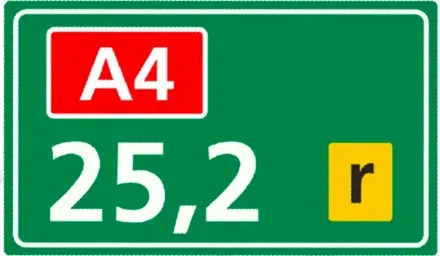
- A = motorway (for example A4, A2).
- N = not a motorway (for example N11, N207). A different speed limit applies there.
The hectometre sign also gives your exact location. At A16 Re 52,8 you are on the A16, on the right-hand carriageway (Re), at kilometre 52.8. Useful after a breakdown: you can say exactly where you are.
End of the motorway: how fast may you drive then?
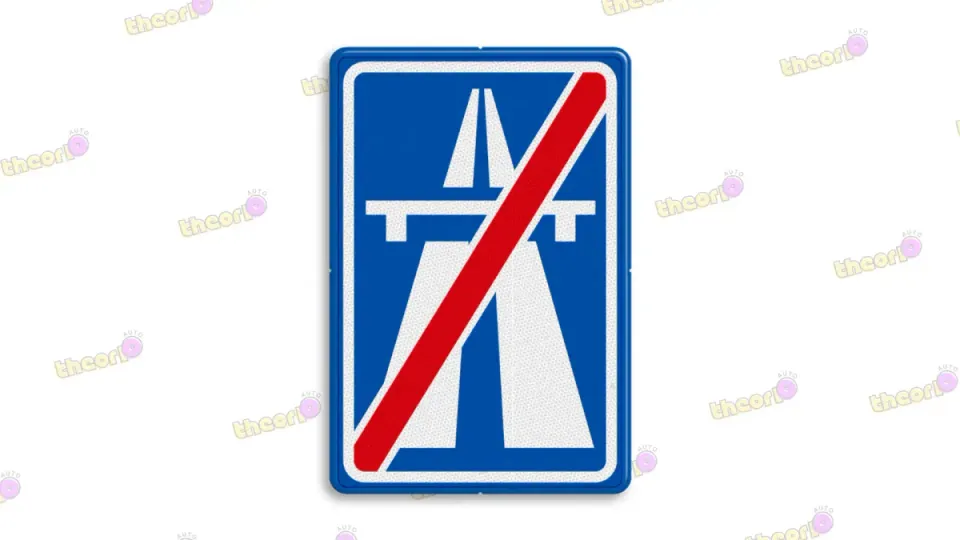
You see the end of the motorway at the same blue sign with a red line through it. After it you may not automatically drive 80. You may come onto an autoweg (100), an ordinary road outside a built-up area (80) or a road inside a built-up area (50). So look at the signs again.
CBR traps about speeds on the motorway
❌ Wrong: choosing 130 km/h straight away when you see "motorway".
✅ Right: first look at the signs, the matrix sign and the time of day. If nothing else applies, it is 130 km/h.
❌ Wrong: thinking you may only ever drive 100 km/h on the motorway.
✅ Right: only a sign with a sub-sign showing times, such as 6-19h, makes it 100 km/h within those times.
❌ Wrong: keeping to the speed of the fixed sign when the matrix sign is lower.
✅ Right: if the matrix sign is lower than the fixed sign, you drive the speed on the matrix sign.
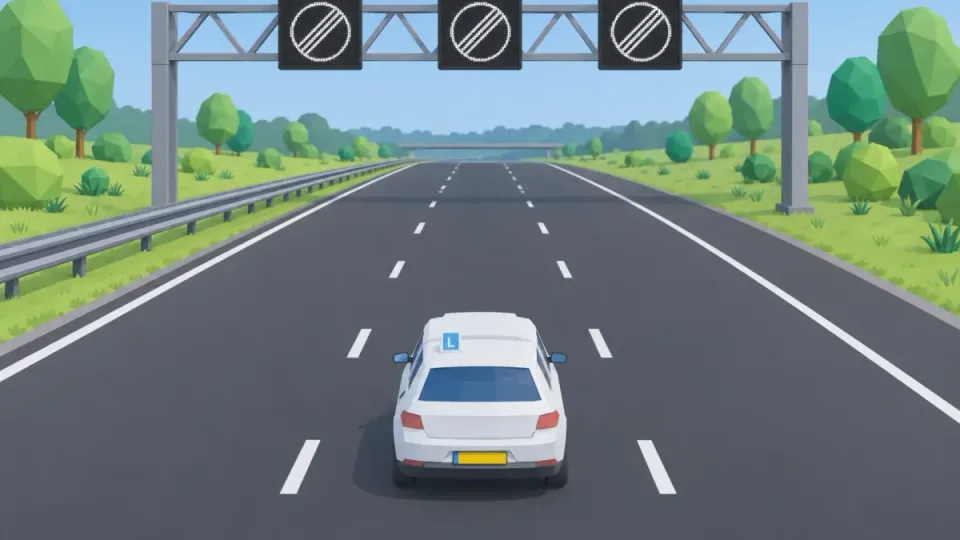
❌ Wrong: keeping the last matrix speed after the end symbol on the matrix sign.
✅ Right: the end symbol stops that speed. You follow the fixed signs again.
❌ Wrong: seeing the 60 km/h limit as a good speed for merging.
✅ Right: when merging you adjust your speed to the traffic on the main carriageway.
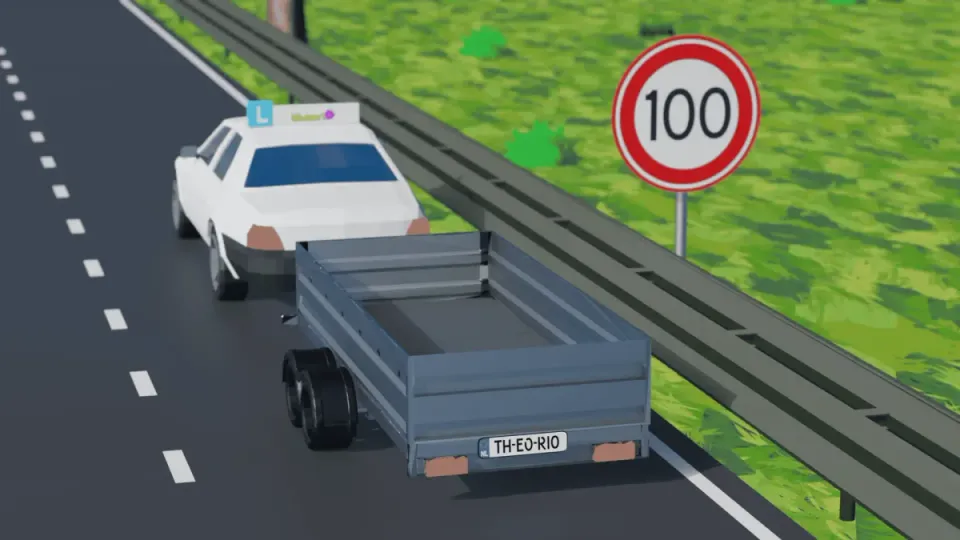
❌ Wrong: driving 100 or 130 km/h with a trailer because the sign allows it.
✅ Right: with a trailer 90 km/h is your limit, whatever the sign says.
Source for differing fixed and matrix signs: RVV 1990, artikel 63b.
Practise like the exam
Example questions like in the CBR exam
Real questions from the Theorio app. You can expect similar questions in your CBR exam.
Question 1 of 4
What is the maximum allowed speed on a motorway?
It is 9:00, what is your maximum allowed speed here?
Is it allowed to drive 130 km/h here?
Tap the answer you think is right.
It is 20:30. How fast are you allowed to drive here?
Tap the answer you think is right.
Answers and explanations for the example questions
Question 1: What is the maximum allowed speed on a motorway?
Correct answer: Correct value: 130 KM/H
The maximum allowed speed on a motorway is 130 km/h, unless otherwise indicated by signs or time windows. 🛣️
Question 2: It is 9:00, what is your maximum allowed speed here?
Correct answer: Correct value: 100 KM/H
Between 6:00 and 19:00, a maximum speed of 100 km/h applies. It is 9:00 so you may drive a maximum of 100 km/h. The time window determines that you may drive 100 km/h now. 🕘
Question 3: Is it allowed to drive 130 km/h here?
Correct answer: No
Due to heavy rain visibility is limited, you must stay below the maximum speed for safety. Weather conditions require slower driving. 🌧️
Question 4: It is 20:30. How fast are you allowed to drive here?
Correct answer: 80 km/h
This sign indicates the end of the motorway. That means your maximum speed is 80 km/h. 🕗
FAQ
Frequently asked questions
Short answers to questions that often come up on this subject.
What is the minimum speed on the motorway?
No driving rule sets a lowest speed: in slow traffic you may go slower. The 60 km/h is a requirement for the vehicle. If it cannot or may not reach that speed, like a brommobiel or a tractor, it may not use the motorway.
What does Re mean on a hectometre sign?
Re stands for the right-hand carriageway. The hectometre sign shows the road number (for example A16), the carriageway and the distance in kilometres (for example 52.8). That way you can say exactly where you are if you break down.
How fast may you drive after the end of motorway sign?
End of motorway ends the motorway rules but does not set a new speed by itself. Check subsequent signs and whether you are in a built-up area. The default on an ordinary road outside a built-up area is 80 km/h; a following motor road or another posted limit may mean a different limit.
How fast may you drive on the motorway in the evening?
Check the signs on your route. Where a 100 sign has a 6–19h supplementary plate, that restriction ends at 19:00; 130 may then apply if there is no other lower limit. A continuing 100 or 120 sign, a matrix sign, vehicle limits and conditions still matter.
Ready to practise?
Test your knowledge of Speeds with 55 practice questions in the app.
Free mock exam · no account needed
Your first quiz is free, no account needed. After that from €34.99 for 90 days of access.