Part 8 of 9 in Driving on the motorway
Following distance: the 2-second rule
Working out your following distance: at least 2 seconds; in metres, half your speed plus 10%. How to measure it with a hectometre post.


Written by Chris Prosman Reviewed by Dirk van Zuijlen
Updated Reviewed on 4 min read
Free mock exam · no account needed
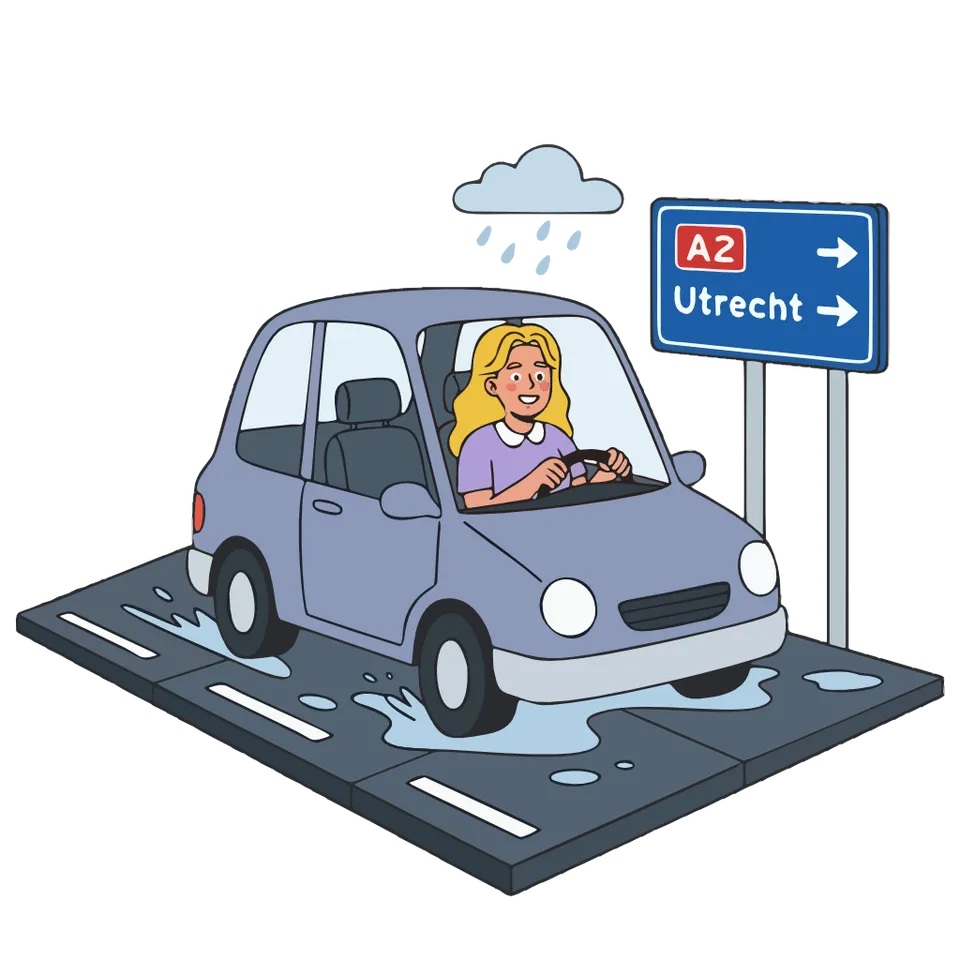
In good weather keep at least two seconds between you and the vehicle in front. In bad weather keep more. The faster you drive, the more metres those two seconds are. At 100 km/h that is about 56 metres.
Calculator
Work out your following distance
Under normal conditions you keep at least 2 seconds of distance. How many metres that is depends on your speed.
At least 2 seconds. In rain, fog or strong wind you leave more room.
Following distance
Formula: 100 km/h ÷ 3.6 × 2 s = 55.6 m
The sum for the exam
55 m
100 ÷ 2 = 50, plus 10% (5) = 55 metres
The sum (speed ÷ 2, plus 10%) is for 2 seconds and lands almost exactly on the real distance.
If the exam asks for seconds, the answer is 2, however fast you drive.
A rule of thumb from the CBR theory, not an exact calculation.
Video explanation
What is the right following distance?
At least two seconds, in good weather. Following distance is the space between you and the car in front. Two seconds is the minimum when it is dry and you can see well. It is a guideline, not a guarantee. You must always be able to stop within the distance you can see to be clear.
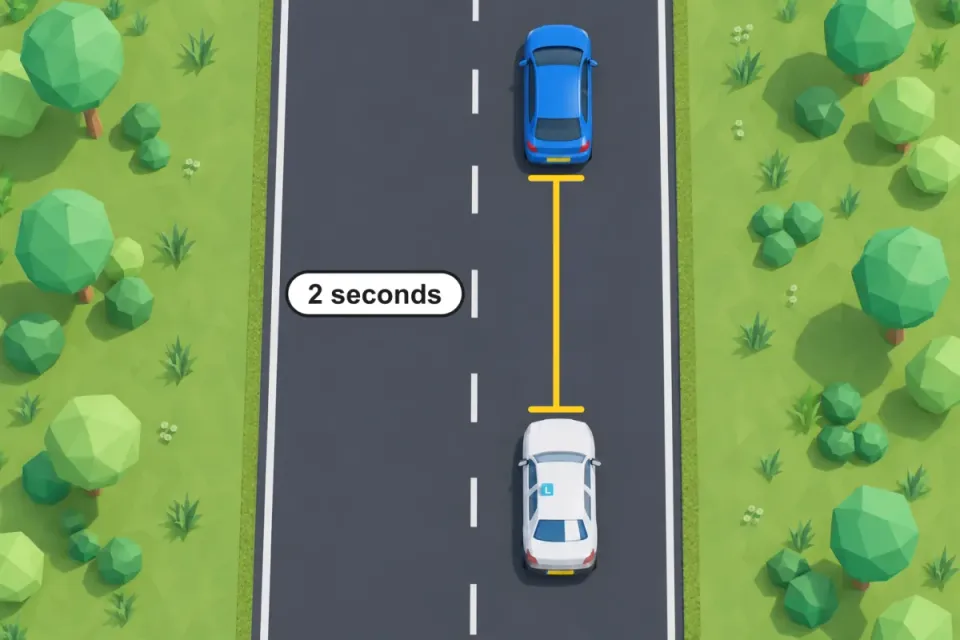
How to measure two seconds
Pick a fixed point, such as a post. As soon as the car in front passes it, count calmly one thousand and one, one thousand and two. Do you reach the point sooner? Then increase your distance by easing off the accelerator.
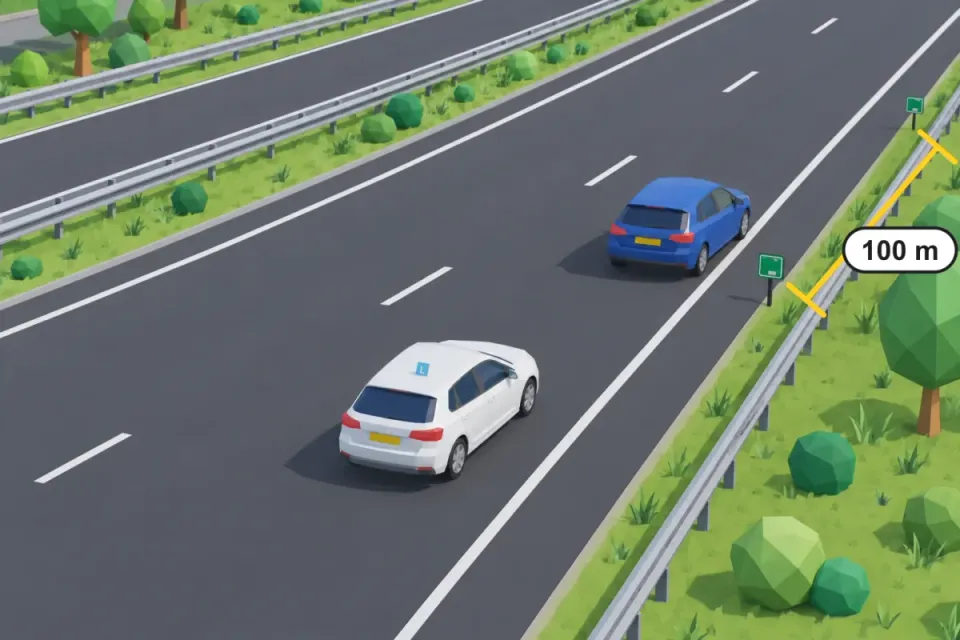
How to calculate following distance
Use this formula: distance in metres = speed in km/h ÷ 3.6 × number of seconds. At 100 km/h you travel about 27.8 metres per second. Two seconds is then about 56 metres.
A rule of thumb from driving lessons: take half your speed and add 10% of that number. At 100 km/h that is 50 + 5 = 55 metres. It is an estimate, not an exact limit.
Rather not do the maths yourself? Enter your speed in the following distance calculator at the top of this page.
| Speed | Distance in 2 seconds, rounded |
|---|---|
| 50 km/h | 28 metres |
| 80 km/h | 44 metres |
| 100 km/h | 56 metres |
| 130 km/h | 72 metres |
These numbers are not stopping distances. How to work those out is explained on stopping and braking distance.
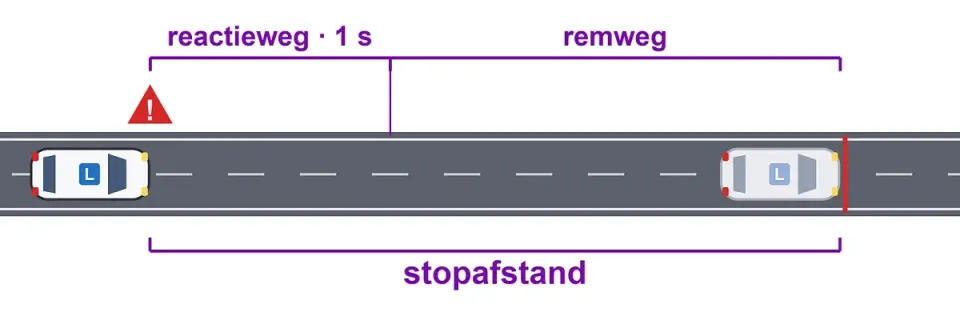
What following distance at 100 and at 130 km/h?
At 100 km/h keep at least about 56 metres. At 130 km/h that is about 72 metres. That is the minimum following distance in metres at two seconds in good weather. In rain or fog keep more.
What following distance in bad weather?
More than two seconds. There is no fixed number that is safe in all bad weather. Leave enough room to react and stop in time. Slow down too. In fog, do not blindly follow the rear lights in front. Choose a speed at which you can stop within what you can see.
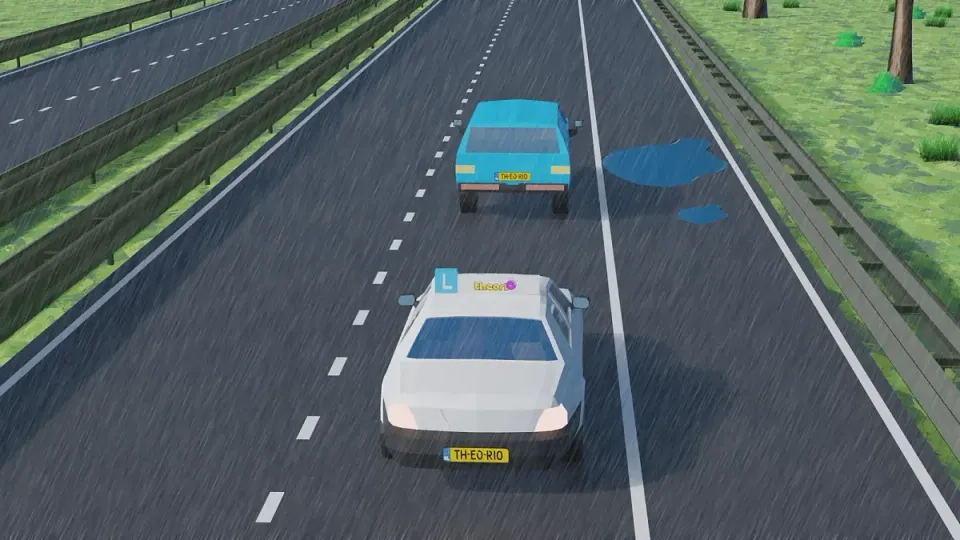
In a crosswind, watch out for high vehicles and trailers. A gust can suddenly push them sideways. So leave room to the side as well. More tips on driving in bad weather.
What affects your following distance?
Your speed, the weather and the road, your vehicle and how alert you are.
- Speed: the faster you drive, the more metres you need.
- Weather and road: in rain, snow or fog keep more distance.
- Vehicle: with a trailer or a heavy load your braking distance is longer.
- You: if you are tired or distracted, you react later.
Some cars keep their distance by themselves with adaptive cruise control. You are still responsible. See adaptive cruise control.
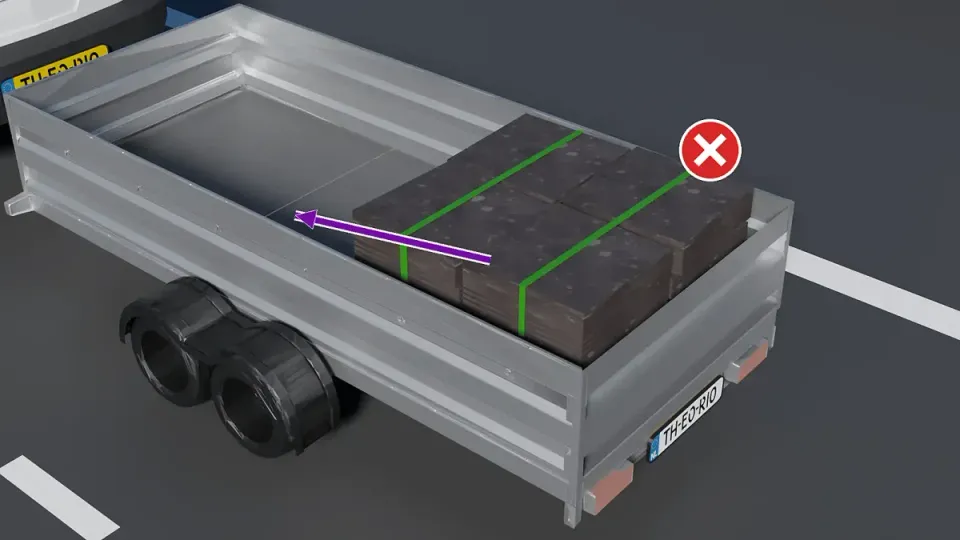
Tailgating: too little following distance
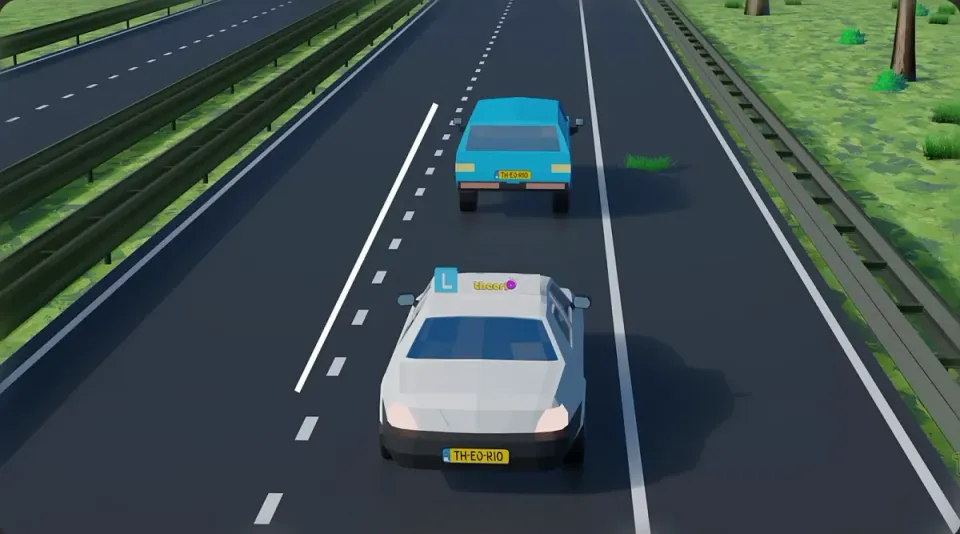
Driving far too close to the car in front is called tailgating. You then have no time to react when it brakes. The risk of a rear-end collision is high. So do not tailgate to defend your place either.
Fines and consequences of tailgating
Tailgating is forbidden. As an indication (2026): if you drive too close to the car in front at up to 80 km/h, the fine starts at €380. At higher speeds the public prosecutor decides the penalty. The current amounts are in the Boetebase of the Dutch Public Prosecution Service (in Dutch).
- Rear-end collision: if the car in front brakes suddenly, you cannot stop in time.
- You are usually at fault: you must always be able to stop within the distance you can see to be clear. If you hit the car in front, you usually get the blame.
- Pile-up: on the motorway one collision can involve a whole row of cars.
- Pressure on the driver in front: a driver who feels rushed makes mistakes more easily.
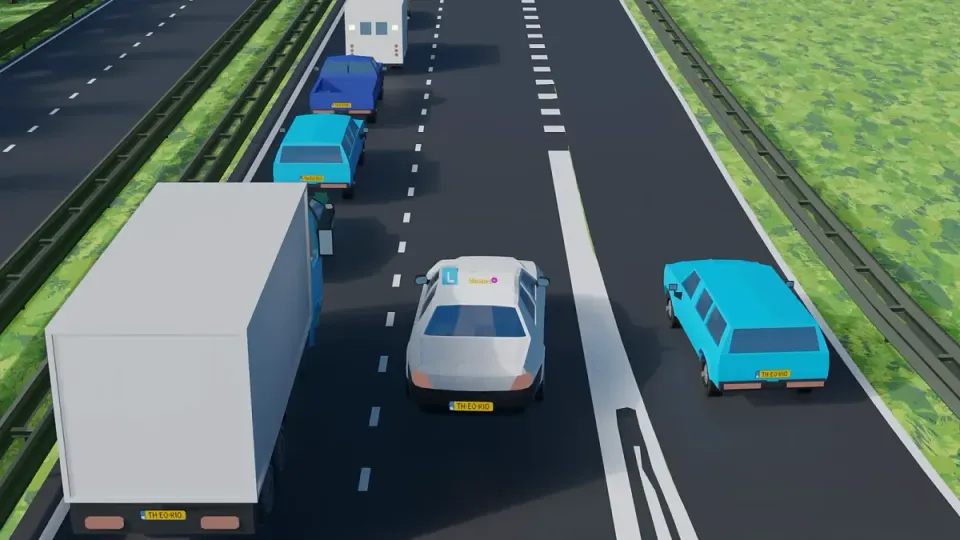
When someone merges in front of you
Does a car safely move in between you and the car in front? Ease off the accelerator so you get enough room again. Does someone want to merge and you cannot move over? Ease off to let a gap open up.
Practise like the exam
Example questions like in the CBR exam
Real questions from the Theorio app. You can expect similar questions in your CBR exam.
Question 1 of 5
What following distance must you maintain at a speed of 130 km/h?
Tap the answer you think is right.
What is the desired following distance in this situation?
Tap the answer you think is right.
What is your following distance here?
Tap the answer you think is right.
What is the desired following distance in this situation?
Tap the answer you think is right.
Your following distance is expressed in seconds. Standard 2 seconds, in bad weather more than 2 seconds.
What is the desired following distance in this situation?
Tap the answer you think is right.
Answers and explanations for the example questions
Question 1: What following distance must you maintain at a speed of 130 km/h?
Correct answer: 2 seconds
You must always maintain a minimum 2 seconds distance, regardless of your speed. In bad weather (such as rain, snow, and fog), you should increase this distance. ⏱️
Question 2: What is the desired following distance in this situation?
Correct answer: more than 2 seconds
In rain or other bad weather, keep more than 2 seconds distance. In normal conditions, maintain a distance of 2 seconds, in bad weather more than 2 seconds. 🌧️
Question 3: What is your following distance here?
Correct answer: More than 2 seconds
Normally, your following distance is 2 seconds. But in bad weather, such as rain, snow, or fog, you keep more than 2 seconds distance. ⏱️
Question 4: What is the desired following distance in this situation?
Correct answer: 2 seconds
There is no bad weather, so 2 seconds remains the norm. Maintain the same 2 seconds distance. ✅
Question 5: What is the desired following distance in this situation?
Correct answer: 2 seconds
In normal conditions, you keep a distance of 2 seconds, in bad weather more than 2 seconds. Standard you keep 2 seconds. ⏱️
FAQ
Frequently asked questions
Short answers to questions that often come up on this subject.
How do you measure a 2-second following distance?
Pick a fixed point along the road, such as a lamppost or a hectometre marker post. When the car in front passes it, count: one thousand one, one thousand two. If you reach it sooner, you are too close.
How much distance do you keep in rain or fog?
Leave substantially more space than the practical two-second guideline for good conditions and reduce speed where needed. No number of seconds guarantees safety in all rain or fog; even three seconds may be insufficient. Leave enough room to react and stop within the clear distance you can see. Do not blindly follow rear lights.
Ready to practise?
Test your knowledge of Driving on the motorway with 80 practice questions in the app.
Free mock exam · no account needed
Your first quiz is free, no account needed. After that from €34.99 for 90 days of access.