Part 6 of 9 in Driving on the motorway
Aquaplaning and the road surface
Aquaplaning and road surface: recognise when you lose grip on a wet road surface and which speed really applies at that moment.


Written by Chris Prosman Reviewed by Dirk van Zuijlen
Updated Reviewed on 4 min read
Free mock exam · no account needed
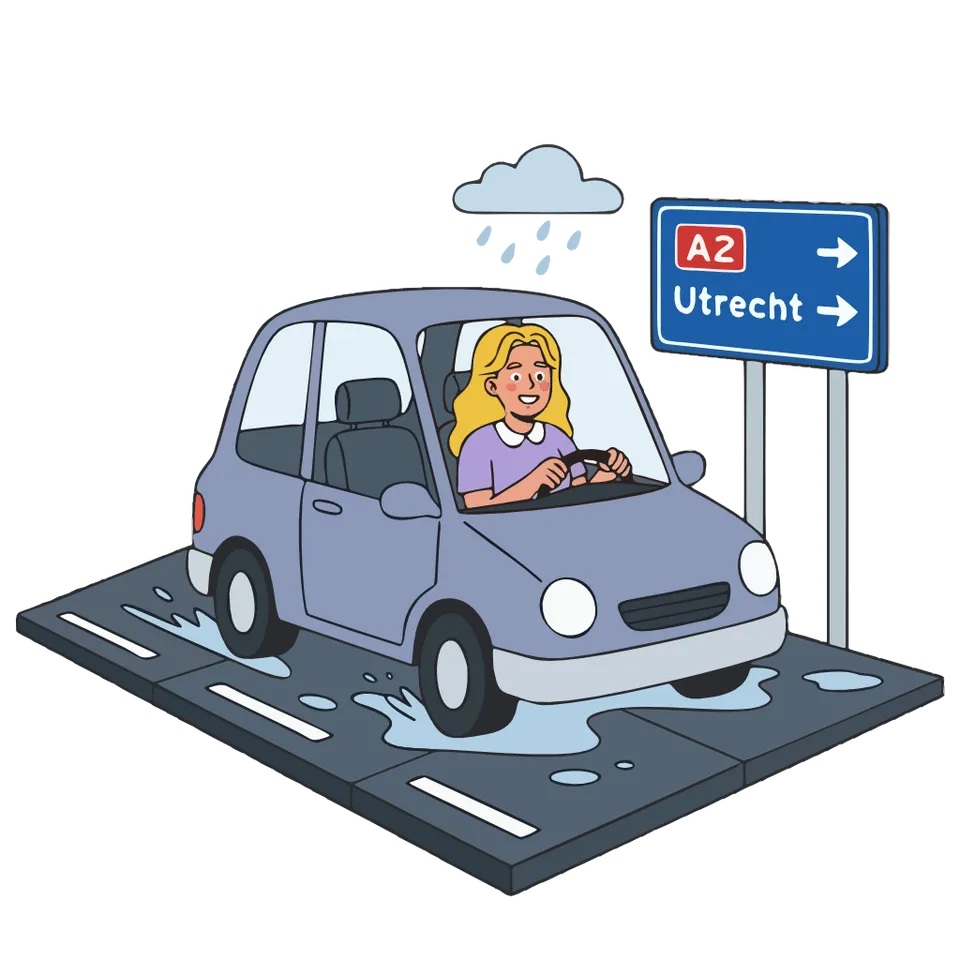
During aquaplaning your tyres slide over a layer of water. They no longer touch the road. You can then hardly steer or brake. The faster you drive, the bigger the risk. Your tyres and the road surface also play a part.
What is aquaplaning?
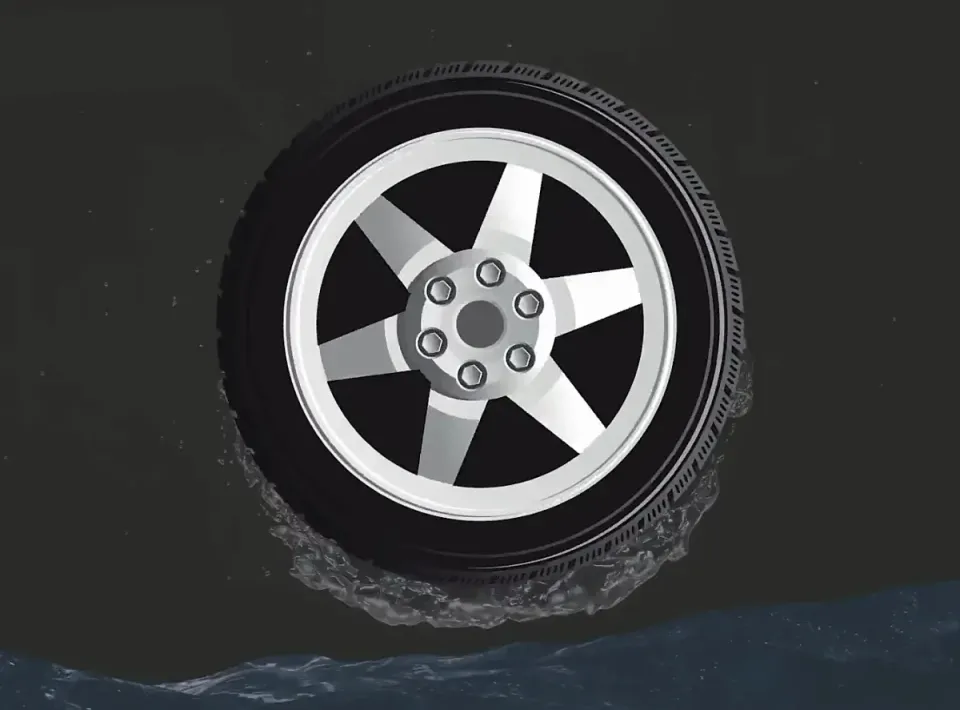
Aquaplaning means your car slides over a layer of water instead of going through it. Water gets between your tyres and the road. Your tyres can then hardly pass on any steering or braking force. Often the steering suddenly feels light.
What should you do when aquaplaning?
Gently release the accelerator and keep the steering wheel steady in the direction you want to go. Do not brake hard and do not steer suddenly. Your speed will then drop by itself. This lets your tyres touch the road again.
- Gently release the accelerator.
- Steer smoothly and straight, in the direction you want to go.
- Do not brake hard and do not jerk the wheel.
- Tyres gripping again? Drive on calmly, slower than before.

What is the main cause of aquaplaning?
Driving through water too fast. Speed is the factor you control most. The faster you drive, the less time your tyres have to push the water away. There is no fixed speed that is always safe.
When can aquaplaning happen?
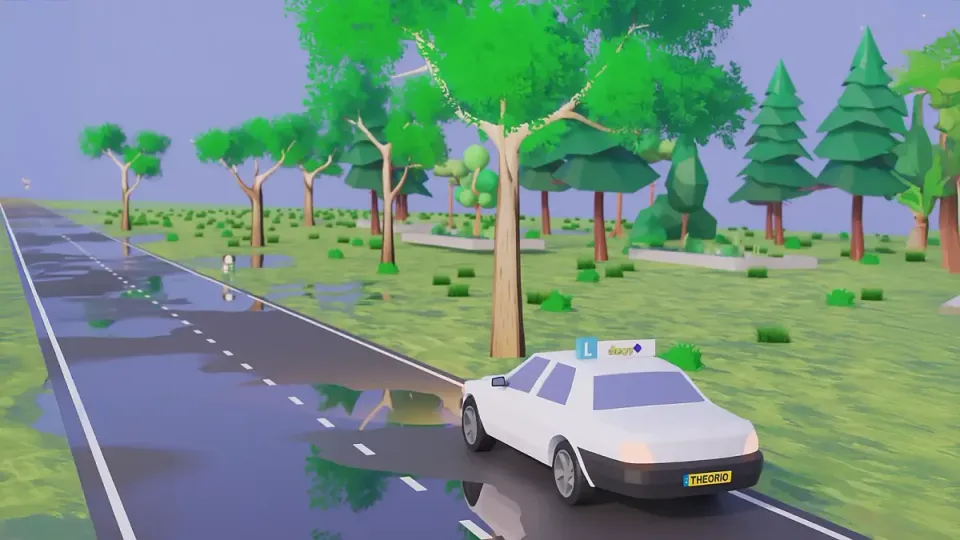
When there is water on the road: puddles, a heavy shower and ruts in the road surface. Your tyres matter too. Little tread, the wrong tyre pressure and wide tyres increase the risk.
Do you see puddles or deep ruts? Slow down before the water and keep more distance. You do not need a sign for that. A 100 limit does not mean 100 is safe. You also follow a lower matrix speed or a sub-sign for wet roads.
Which tyres increase the risk of aquaplaning?
Tyres with little tread and wide tyres. The wrong tyre pressure does not help either. Check the pressure when the tyres are cold, following the manufacturer’s advice.
The tread
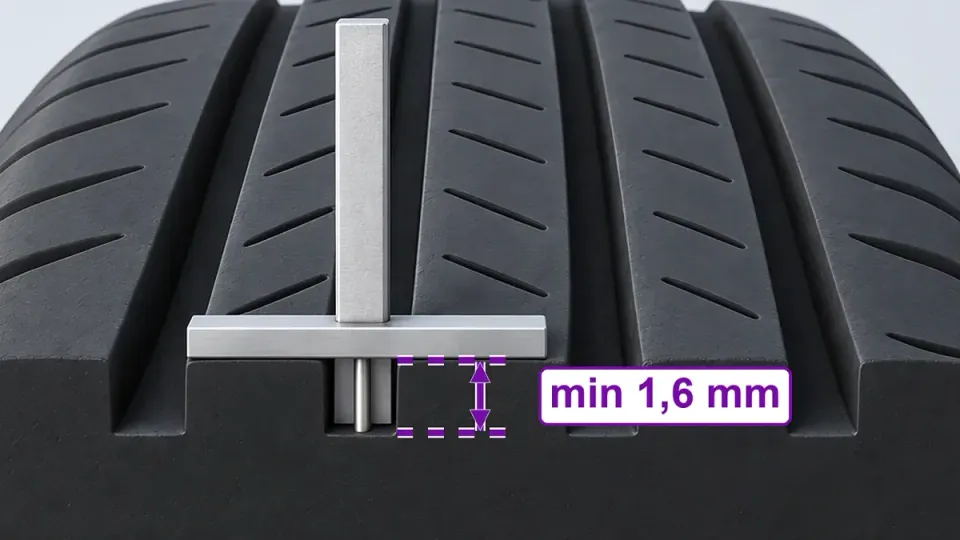
The grooves in your tyre are called the tread. They carry the water away from under the tyre. If the tread is too shallow, the water cannot get out fast enough. You start sliding sooner.
Narrow or wide tyres?
This is where many people go wrong in the exam:
- Narrow tyres cut through the water more easily. They are better against aquaplaning.
- Wide tyres slide over the water more easily. They give more risk of aquaplaning.

Is a winter tyre better in the rain?
Not always. Summer and winter tyres each give the most grip in their own season. Winter tyres are not required in the Netherlands. For aquaplaning, what counts most is your speed and the tread, pressure and width of your tyres. Which tyre to choose and how much tread you need is explained on tyre tread and summer or winter tyres.
What are ruts in the road?
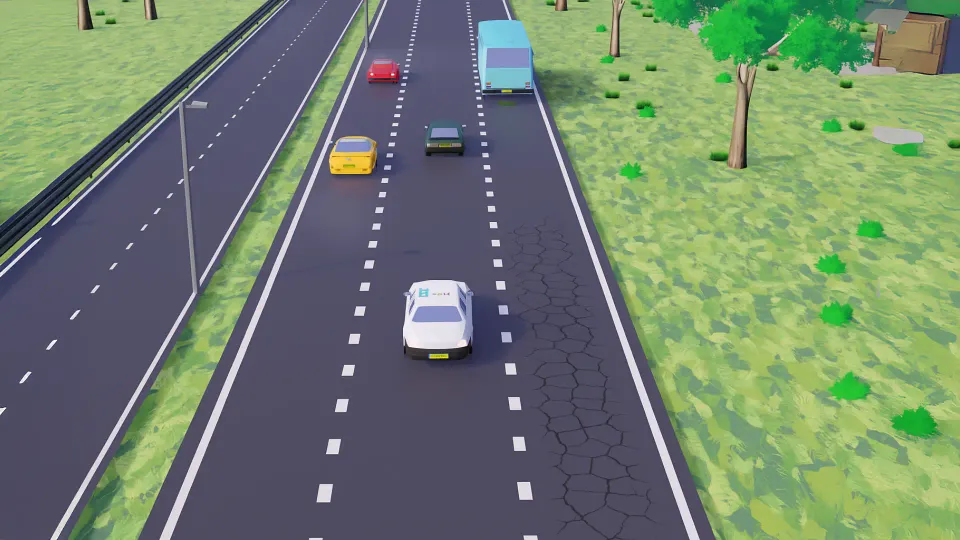
Ruts (spoorvorming) are shallow grooves in the road surface where the wheels always drive. They are caused by heavy lorries, especially in the right-hand lane. After a shower, water stays in these ruts. That makes aquaplaning more likely there.
Where is the risk of aquaplaning greatest?
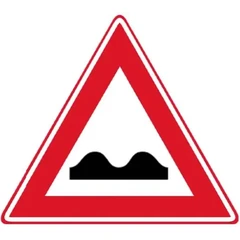
In the ruts in the right-hand lane and at puddles. That is where water stays longest. Sign J1 warns of a poor road surface, where water often collects.
Sign J1 (Poor road surface): warns about an uneven or worn road surface — exactly the kind of road where water stays.
Practise like the exam
Example questions like in the CBR exam
Real questions from the Theorio app. You can expect similar questions in your CBR exam.
Question 1 of 6
If you encounter aquaplaning, what should you do?
Tap the answer you think is right.
What should you do if you experience aquaplaning?
Tap the answer you think is right.
The right carriageway (carriageway 1) often has more rutting.
Which carriageway is usually more affected by aquaplaning?
Tap the answer you think is right.
When there is aquaplaning, a thin layer of water is present between the tire and the road surface, causing you to essentially drive on water.
Which tire is more affected by aquaplaning?
Tap the answer you think is right.
It is raining. Where is the chance of aquaplaning the greatest?
Tap the answer you think is right.
If you encounter aquaplaning, what happens to your braking distance?
Tap the answer you think is right.
Answers and explanations for the example questions
Question 1: If you encounter aquaplaning, what should you do?
Correct answer: Keep the steering straight and release the accelerator
Aquaplaning occurs when a thin layer of water forms between the tires and the road surface, causing you to lose grip. You should release the accelerator and keep the steering straight. Do not brake and do not steer abruptly, otherwise the car will become uncontrollable. 🌧️
Question 2: What should you do if you experience aquaplaning?
Correct answer: Release the gas
In aquaplaning, you gently release the gas without steering or braking. This allows the tire to make contact with the road surface 🛞👌.
Question 3: Which carriageway is usually more affected by aquaplaning?
Correct answer: Carriageway 1 (right)
Because heavy vehicles often drive on the right, rutting occurs where water can accumulate. This increases the risk of aquaplaning on the right carriageway 🌧️🚚.
Question 4: Which tire is more affected by aquaplaning?
Correct answer: Tire 1
A wide tire drains water more difficultly, causing aquaplaning to occur more quickly. The larger surface area on the water provides less grip 💦⚠️.
Question 5: It is raining. Where is the chance of aquaplaning the greatest?
Correct answer: On road surfaces with rutting
On road surfaces with rutting (grooves in the road worn by heavy traffic), water remains standing. This can create a thin layer of water between the tire and the road surface, causing you to lose grip and become uncontrollable. 🌧️
Question 6: If you encounter aquaplaning, what happens to your braking distance?
Correct answer: Braking distance becomes longer
In aquaplaning, the tire loses contact with the road surface. As a result, you can hardly brake, which means that the actual braking distance (until you come to a stop) becomes significantly longer. 🌊
FAQ
Frequently asked questions
Short answers to questions that often come up on this subject.
What should you do when aquaplaning?
Ease off the accelerator and keep steering steady without a sudden change of direction. Avoid abrupt hard braking or steering; let speed fall so the tyres can regain contact. Recovery is not guaranteed at a particular moment. ABS creates no extra grip on a water layer; respond to the actual emergency if immediate danger arises.
What is the main cause of aquaplaning?
Speed is an important factor you can directly control: faster travel through water increases the risk. Water depth, tread, tyre pressure, tyre design and water in ruts also matter. Wider tyres may be more susceptible under comparable conditions. Slow before deep puddles, leave more space and maintain your tyres.
Ready to practise?
Test your knowledge of Driving on the motorway with 80 practice questions in the app.
Free mock exam · no account needed
Your first quiz is free, no account needed. After that from €34.99 for 90 days of access.