Part 5 of 9 in Driving on the motorway
Weather conditions on the motorway
Weather on the motorway: a sub-sign determines whether a speed sign applies, for example only on a wet road surface or only within a time period.


Written by Chris Prosman Reviewed by Dirk van Zuijlen
Updated Reviewed on 4 min read
Free mock exam · no account needed
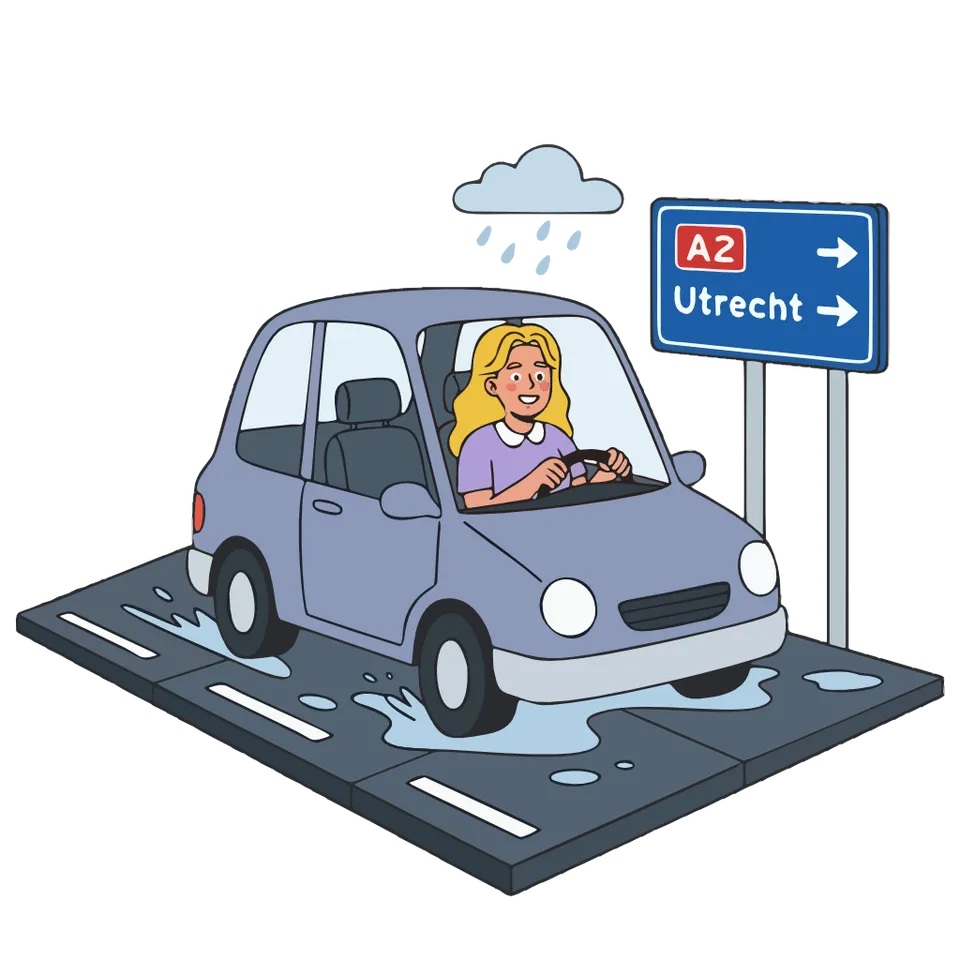
Rain, snow, fog and strong wind make the road more dangerous. Then drive slower, keep more distance and steer, accelerate and brake smoothly. The speed limit is still a maximum: in bad weather the safe speed is often lower.
Slippery roads: where does it get slippery first?
On bridges and flyovers. They cool down faster, because cold air also flows underneath them. So the road there can be slippery while it is still just above zero.
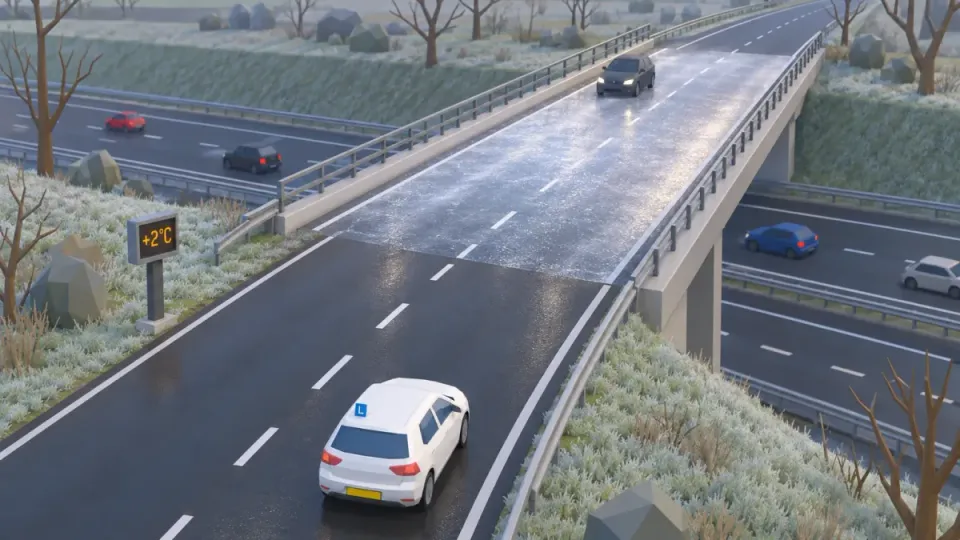
Also watch out in these places:
- shady spots, where the sun does not warm the road;
- wet leaves, mud and new asphalt;
- the first rain after a dry period: dirt and oil make the road slippery.
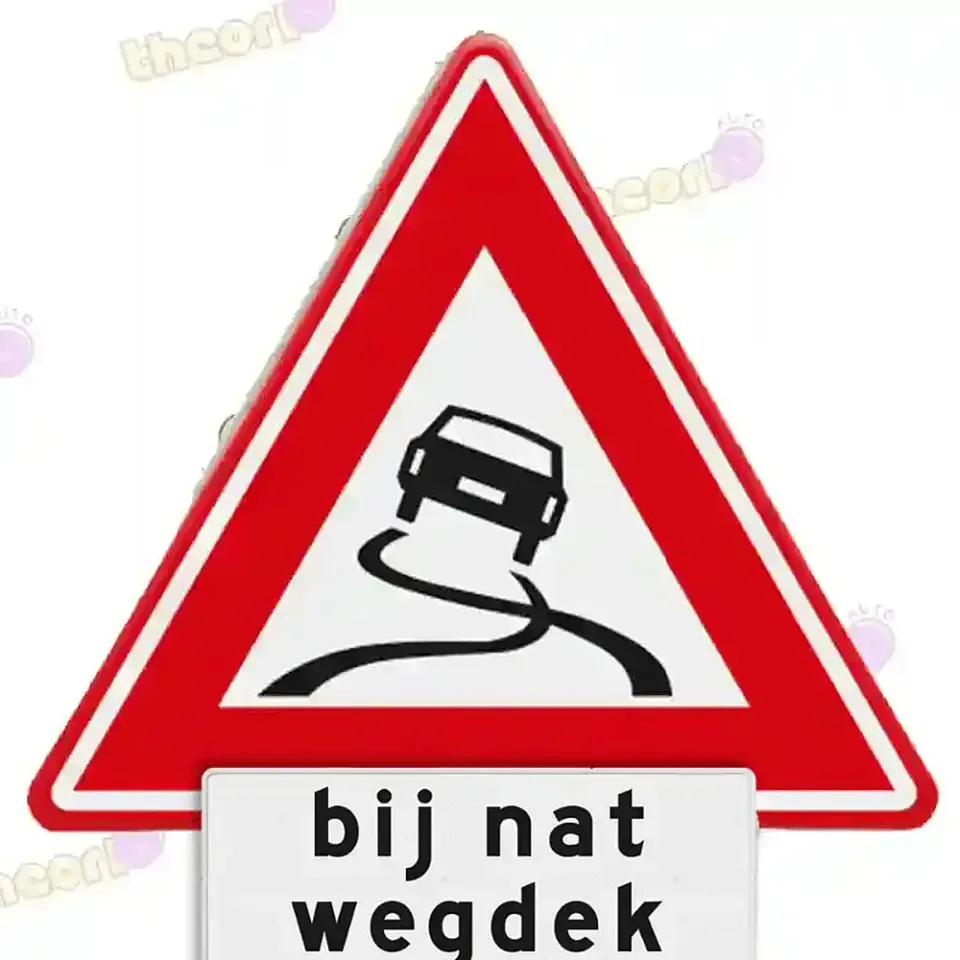
Sign J20 warns of a slippery road. Without a sub-sign it is not only a warning for wet weather. Sign J36 warns of black ice or snow.
Rain and aquaplaning
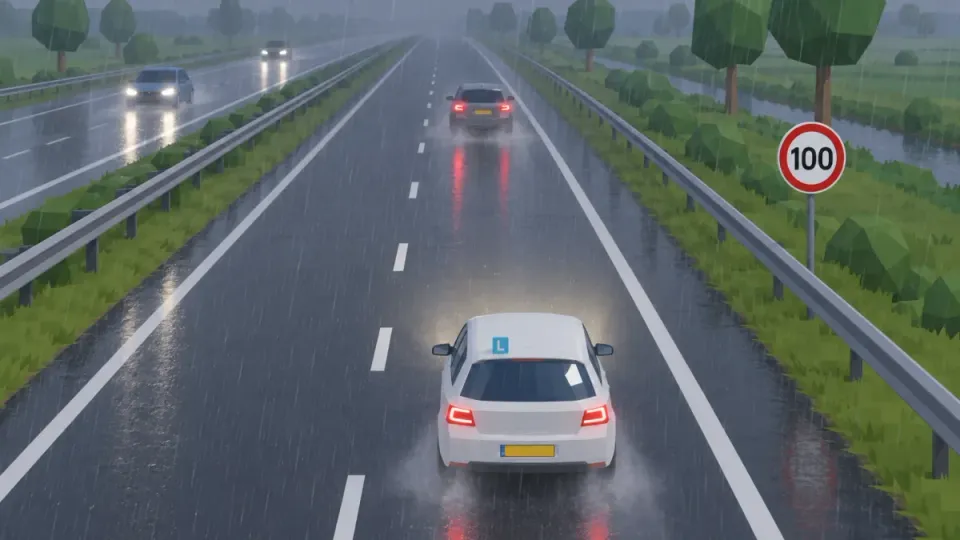
Rain also makes the road slippery and reduces your view. Your braking distance gets longer. Slow down in good time and keep more distance. Is there water on the road? Then you can start to slide. Read what to do on aquaplaning.
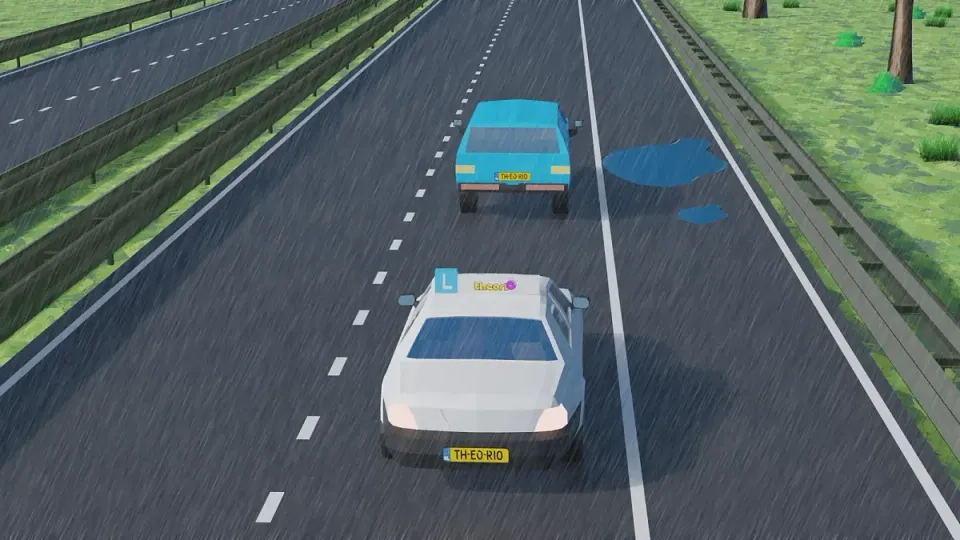
A speed sign with bij nat wegdek (when wet)
A speed sign with bij nat wegdek only applies when the road is wet. When it is dry, that limit does not apply. Other limits still do. A sub-sign 6–19h means the sign only applies between those hours. If matrix and fixed signs apply together, the lower applicable limit governs. See matrix signs.
Driving in snow: tips to avoid skidding
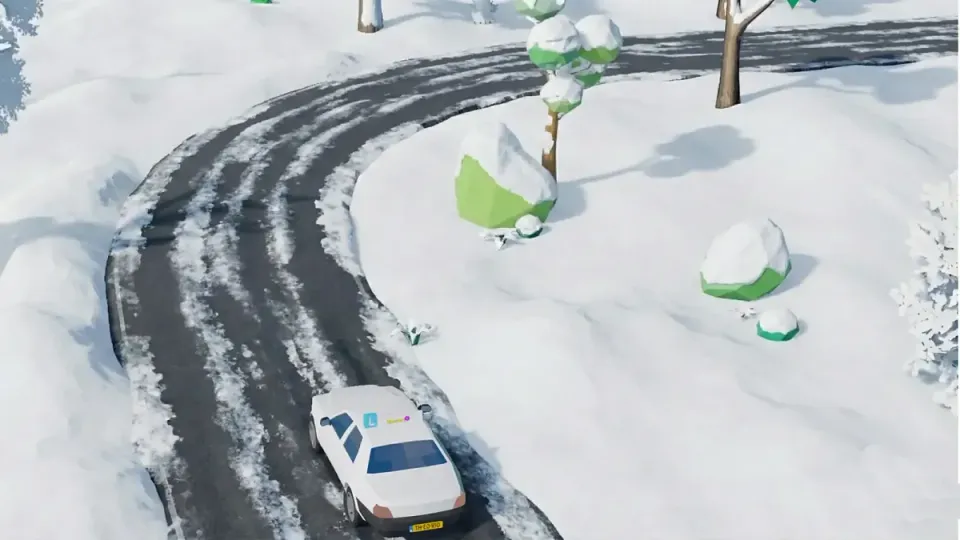
Drive calmly and leave plenty of room. These tips help:
- Slow down before the bend, not in it.
- Accelerate gently, steer smoothly and brake in good time.
- Keep much more distance than normal. Also with winter tyres.
- Choose a lane that is easy to drive on and do not change lanes without need.
Is the car starting to slide? Ease off the accelerator, look where you want to go and avoid sudden steering or braking. Do you still need an emergency stop with ABS? Then brake hard and keep pressing. ABS does not give extra grip.
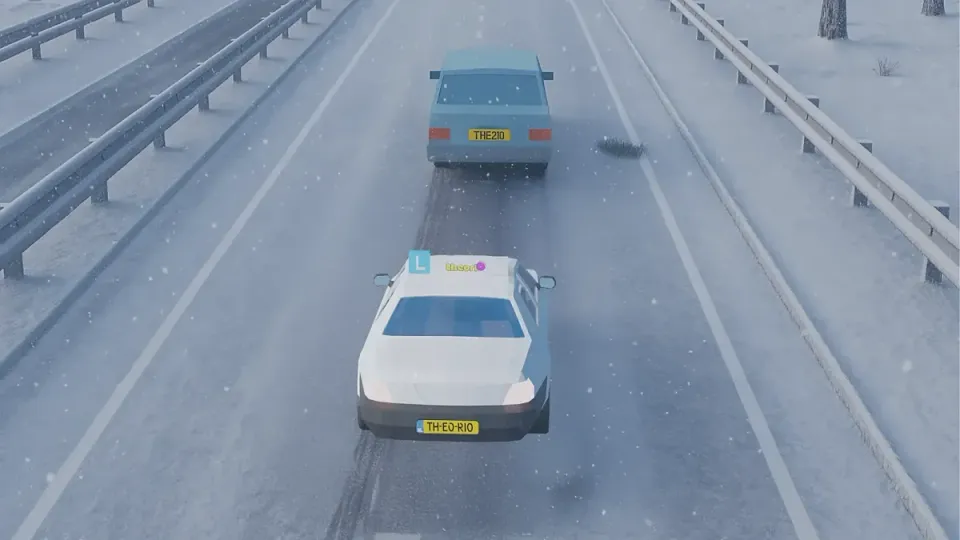
Driving in snow with summer tyres: is it allowed?
Yes, in the Netherlands it is. Winter tyres are not required here. But summer tyres have much less grip on snow and ice. Drive extra carefully, or leave the car at home. Some other countries do have rules for winter tyres. See summer or winter tyres.
Driving in snow with an automatic car
With an automatic the same tips apply: accelerate gently, brake early and keep plenty of distance. Pull away gently so the wheels do not spin. Does your car have a winter or snow mode? The owner’s manual explains what it does and when to use it.
Driving in fog
Drive at a speed that lets you stop within the distance you can see. Do not just follow the rear lights of the car in front. Use the right lights. When to use fog lights is explained on fog lights.
Low sun
A low sun can hide oncoming traffic and traffic lights. Keep your windscreen clean and use your sun visor. Adjust your speed. Remember that other drivers may be dazzled too.
Strong wind: how strong is wind force 7?
Wind force 7 means wind of about 50 to 61 km/h. That is a strong wind. You mainly notice it as a crosswind. High vehicles, vans and cars with a trailer or caravan are affected most.
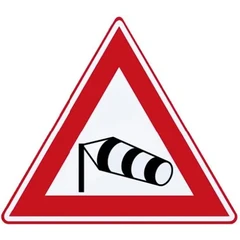
Drive slower, hold the steering wheel with both hands and leave extra room to the side of lorries. Coming out of the shelter of a lorry or a flyover? A gust can suddenly push you sideways. Sign J31 warns of crosswinds.
Off course: two wheels on the verge or a blowout
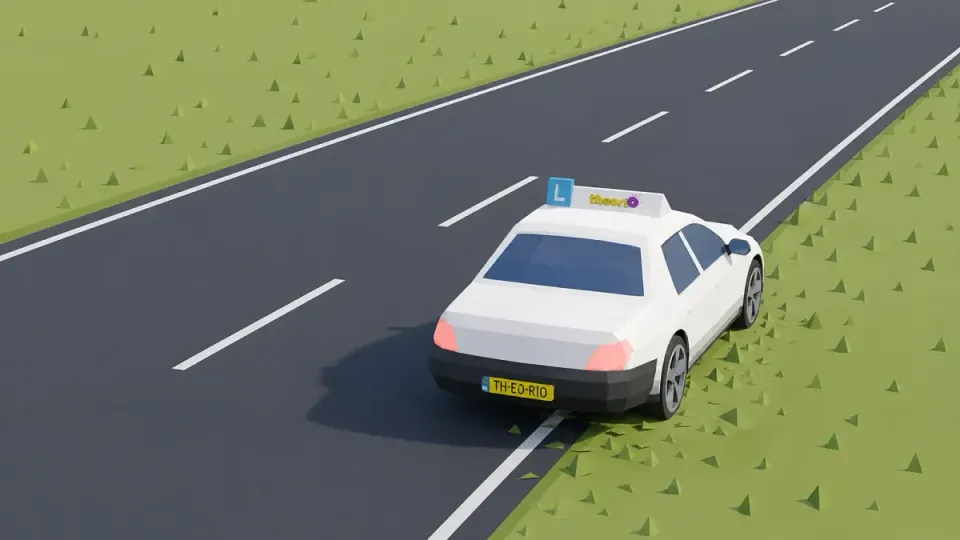
Do two wheels hit the verge? Do not pull the car back onto the asphalt suddenly. Ease off the accelerator, keep the car straight and lose speed. Only steer back when it is safe. With a blowout, hold the steering wheel firmly. Slow down gently and find a safe place to stop. Do not jerk the wheel or pull the handbrake.
Practise like the exam
Example questions like in the CBR exam
Real questions from the Theorio app. You can expect similar questions in your CBR exam.
Question 1 of 6
It is 2 degrees above 0. Should you take into account a slippery road surface due to ice formation?
Tap the answer you think is right.
It is 2 degrees above zero. Where is the chance of slipperiness the greatest?
Tap the answer you think is right.
What can you do to prevent slipping here?
Tap the answer you think is right.
Which lane do you choose?
Tap the answer you think is right.
After a long dry period, it starts to rain. What can happen to the road surface?
Tap the answer you think is right.
Which road is slippery?
Tap the answer you think is right.
Answers and explanations for the example questions
Question 1: It is 2 degrees above 0. Should you take into account a slippery road surface due to ice formation?
Correct answer: Yes
Yes. Even above freezing, the road surface can be slippery, for example on bridges and overpasses or due to freezing of wet road sections at ground level. 🧊
Question 2: It is 2 degrees above zero. Where is the chance of slipperiness the greatest?
Correct answer: On bridges and overpasses
Bridges and overpasses cool down faster because they are exposed to cold from above and below. There the chance of slipperiness is greater. 🏗️
Question 3: What can you do to prevent slipping here?
Correct answer: Give less gas
In snow and on a slippery road surface, it is wiser to give less gas and not to brake abruptly. This way, you prevent getting into a skid. ❄️
Question 4: Which lane do you choose?
Correct answer: Right lane
It is wise to use the right lane here, as the left lane is covered with snow. ❄️
Question 5: After a long dry period, it starts to rain. What can happen to the road surface?
Correct answer: The road surface becomes slippery
Oil and fuel residues seep into the road surface over time. When it rains, these residues come back to the surface, making the road surface slippery. This can make the road slick and dangerous. 🌧️
Question 6: Which road is slippery?
Correct answer: Both
Wet roads and new pavement are both slippery. Both situations result in less grip. 🌧️
FAQ
Frequently asked questions
Short answers to questions that often come up on this subject.
Can the road be slippery when it is not freezing?
Yes. The road can be colder than the air, so ice may be present even at around+2 °C. Bridges and viaducts may cool earlier because air also flows underneath. Adapt speed and distance before a potentially icy section; air temperature alone does not guarantee grip.
How do you drive in snow?
Reduce speed, increase distance and use accelerator, brake and steering smoothly. Slow before bends. Winter tyres do not guarantee grip or a short braking distance. Where safe and permitted, choose a usable lane with less snow, without abrupt changes or ignoring other restrictions. If an emergency stop is needed with ABS, press firmly and keep pressing; do not pump.
Does the skid risk sign only apply on a wet road?
No. The skid risk sign (J20) always applies. Only when there is a sub-sign saying “bij nat wegdek” (when wet) under it does it apply only when the road is wet.
Ready to practise?
Test your knowledge of Driving on the motorway with 80 practice questions in the app.
Free mock exam · no account needed
Your first quiz is free, no account needed. After that from €34.99 for 90 days of access.