Part 4 of 9 in Driving on the motorway
Matrix signs
Reading matrix signs: a number, a red cross, a diagonal arrow, and the end symbol. An active matrix sign takes priority over the fixed signs.


Written by Chris Prosman Reviewed by Dirk van Zuijlen
Updated Reviewed on 6 min read
Free mock exam · no account needed
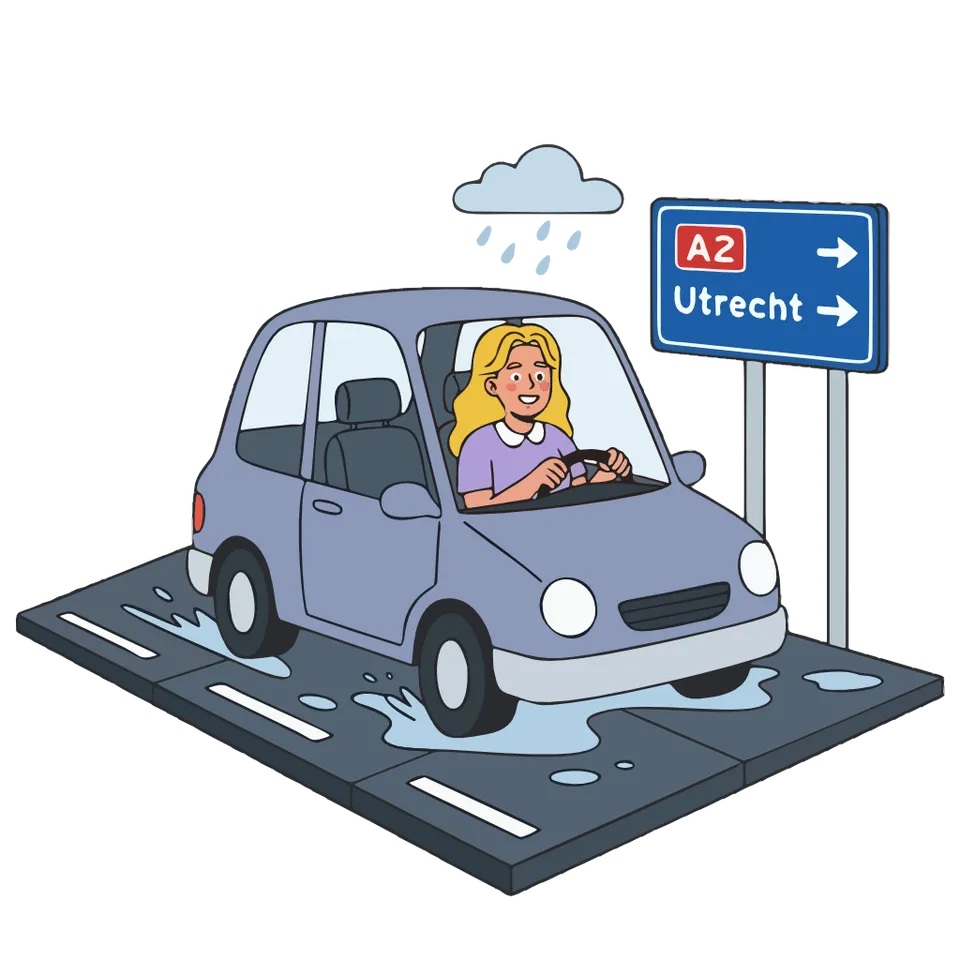
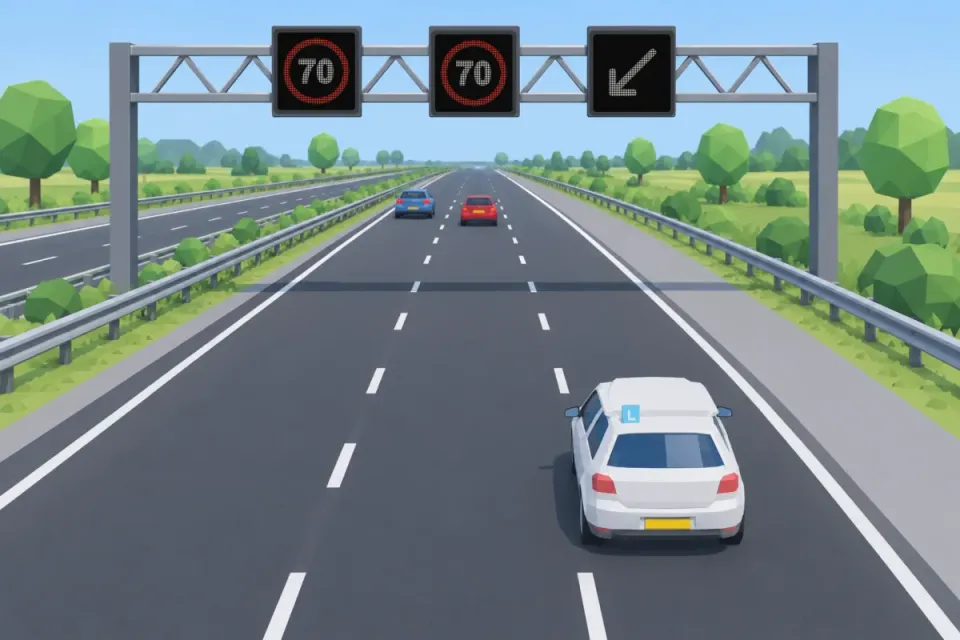
A matrix sign is an electronic sign above the lane. What it shows is mandatory for that lane. The matrix sign takes precedence: if a lower speed is shown above your lane than on the sign beside the road, you keep to the matrix sign. If the sign beside the road shows a lower speed than the matrix sign, the lowest applies. A red cross closes the lane. A diagonal arrow means: move in good time towards the side the arrow points to.
What does a matrix sign show?
A matrix sign shows for each lane how fast you may drive, whether you may use the lane and whether you must move over. Matrix signs hang above the motorway lanes, sometimes next to them. They can change while you drive.
A matrix sign has the same meaning as the ordinary traffic sign it shows. The sign is square, but that does not make it advice.
Matrix signs and their meaning: all symbols
A matrix sign shows one of these five symbols:
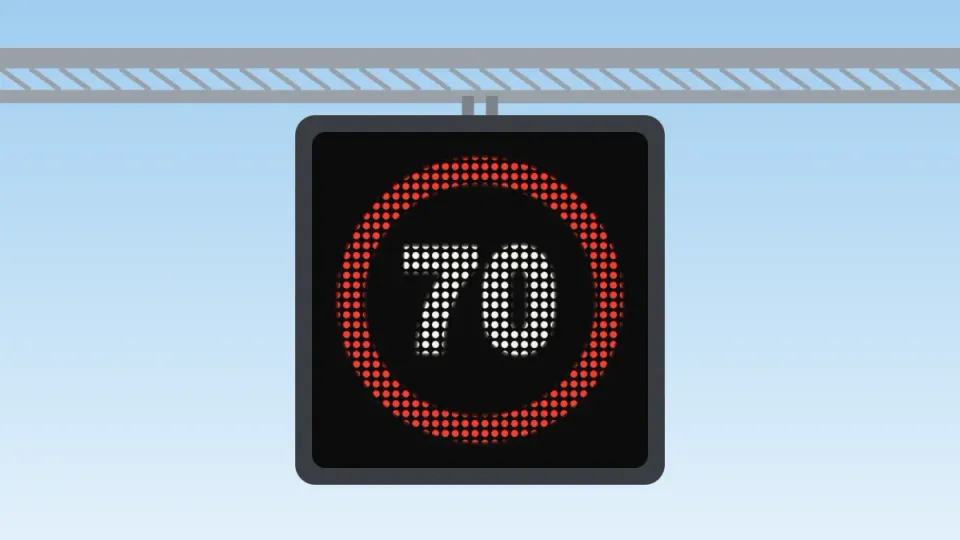
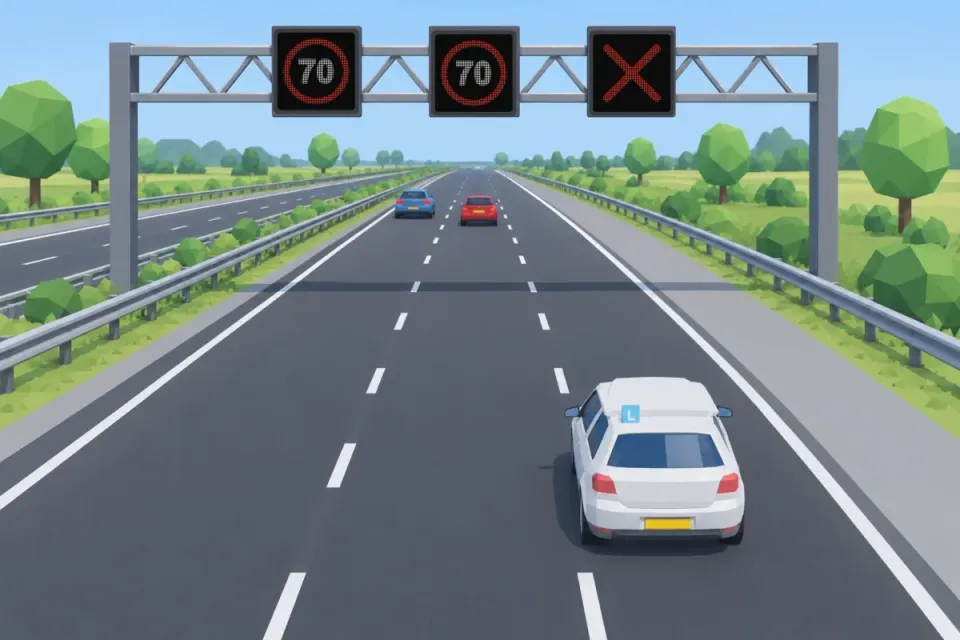
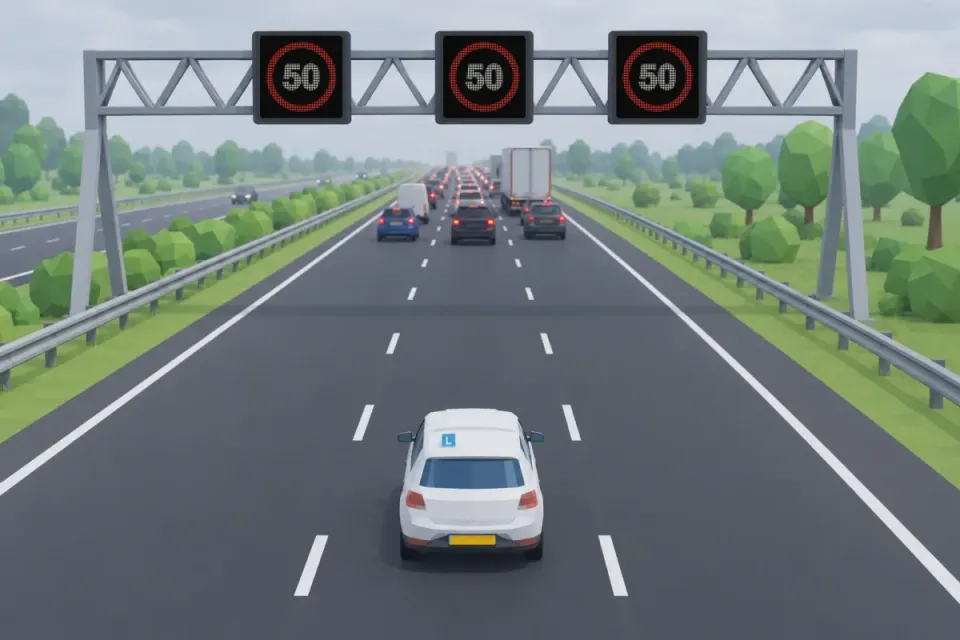
Number in a red ring: a mandatory speed limit for that lane. Not advice.
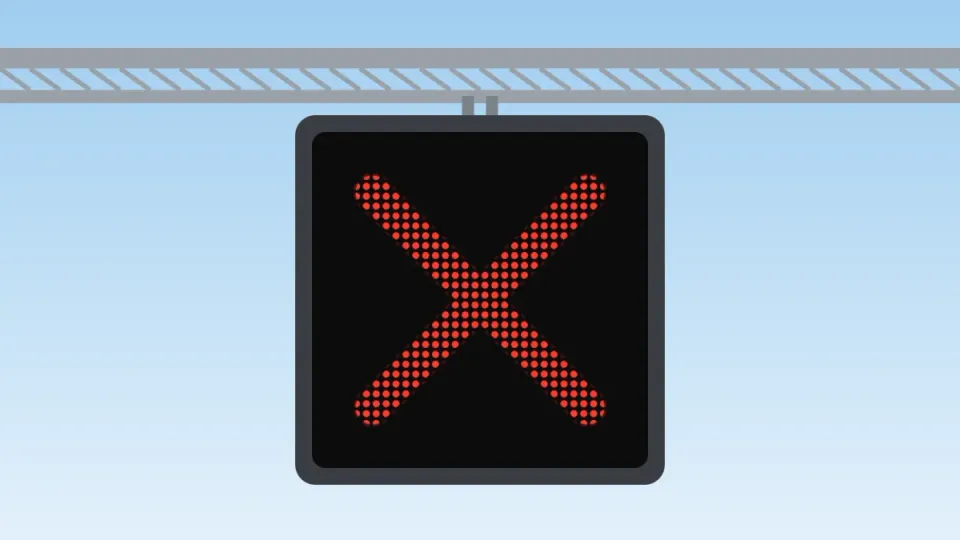
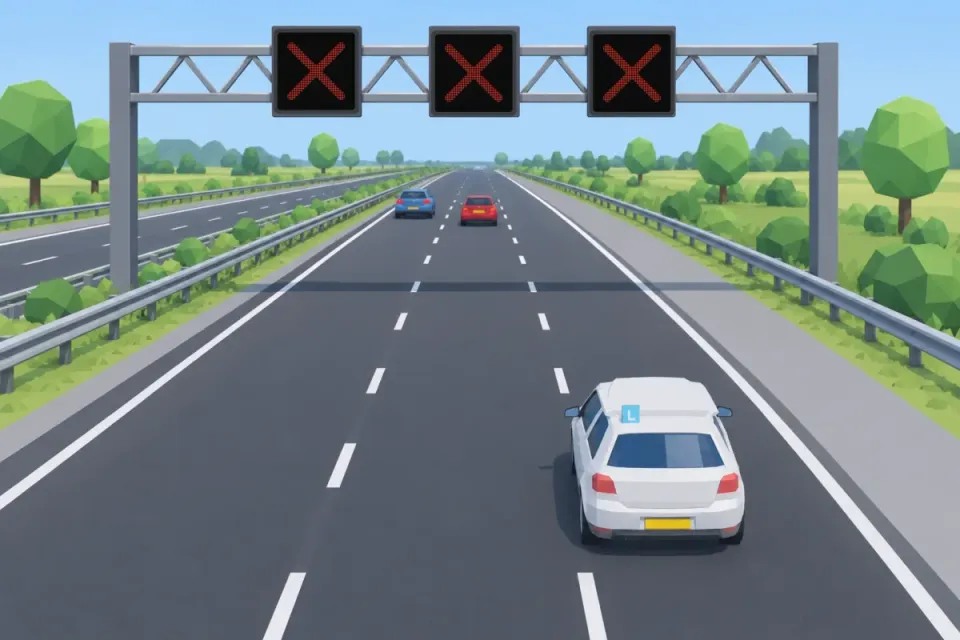
Red cross: you may not use that lane.
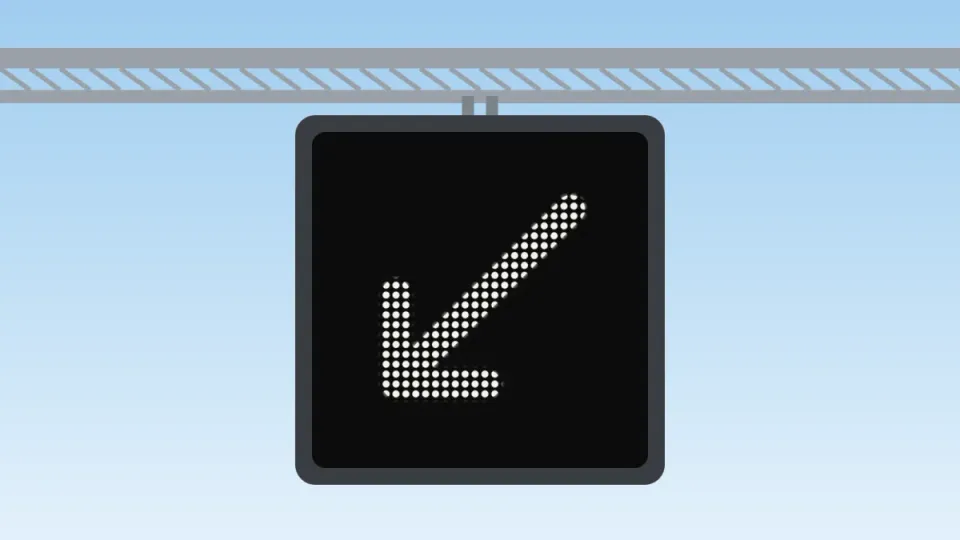
Diagonal arrow: leave this lane in the direction of the arrow.
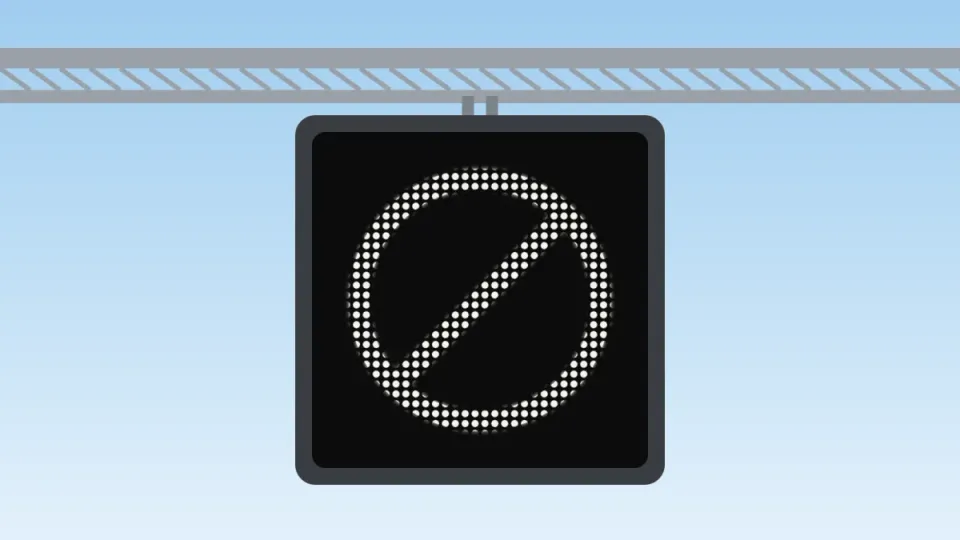
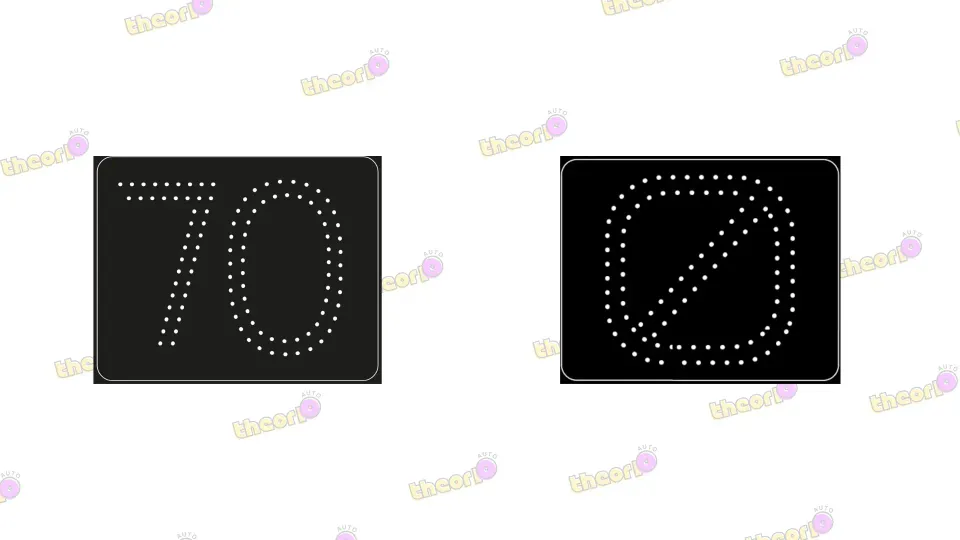
Circle with a diagonal line: end of what the matrix sign showed, including the matrix speed. Fixed signs, time windows and limits for your vehicle still apply. So check again which speed applies.
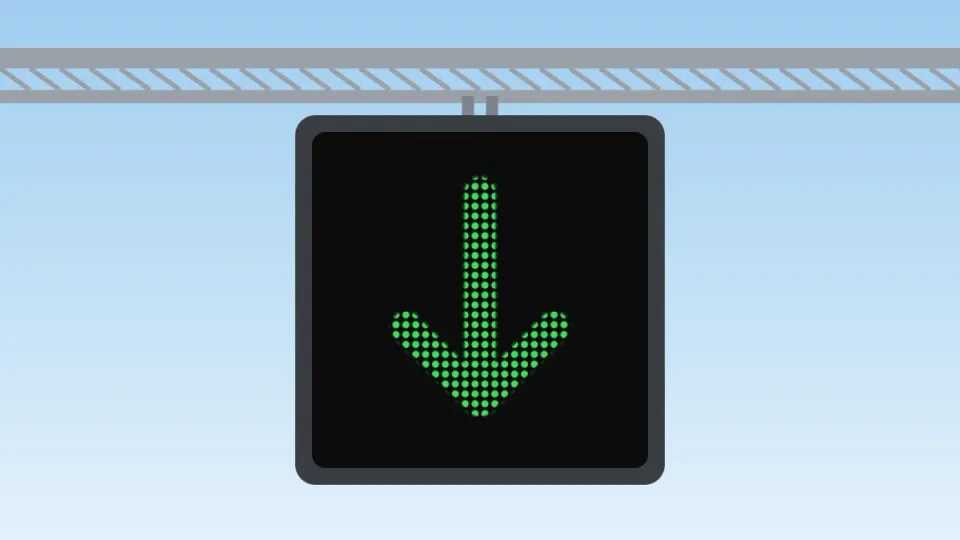
Green arrow pointing down: the lane below is open. You mainly see it above a rush-hour lane.
Diagonal arrow or red cross: what is the difference?
Both say: soon you cannot drive here. The difference is the moment.
Diagonal arrow: your lane is about to end. You still have room to move to the next lane in the direction of the arrow. This is called zip merging.
Red cross: the lane is closed. Leave the lane before the cross. Can you not do that because of a jam? Then do not drive past the cross, but wait before it until you can merge safely. Indicate in good time.
Red crosses above all lanes: the whole carriageway is closed. Stop and switch off your engine.
Why do matrix signs switch on?
Matrix signs usually switch on automatically. They warn of a jam, an accident or a closed lane ahead. They lower the speed well in advance. This lets you slow down calmly instead of braking hard.
Not a matrix sign: traffic jam and travel time signs
There are other electronic signs above the motorway too. Around big cities you sometimes see a map of the ring road. Coloured lines show where the jams are. Is the clockwise route jammed and the other way white? Then you are better off going the other way.
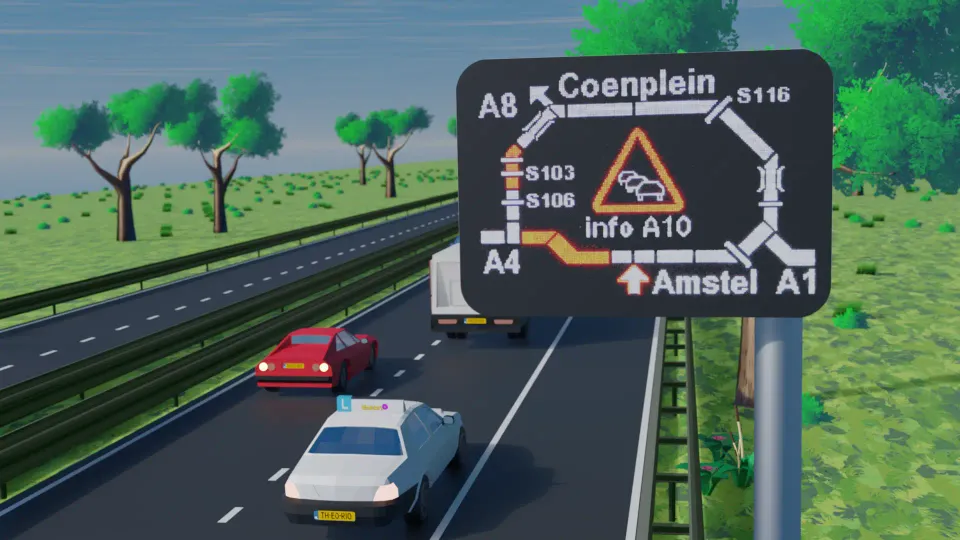
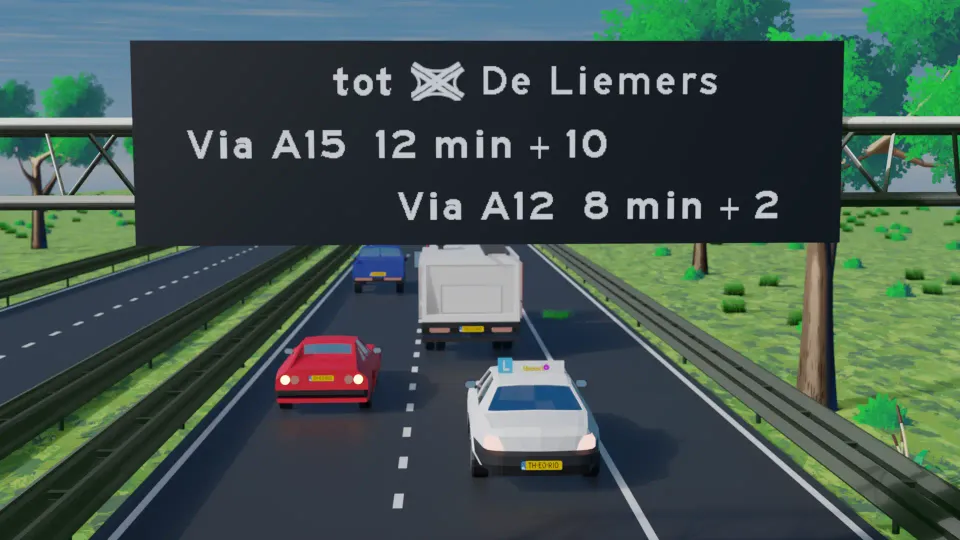
A travel time sign shows how long a route takes. A number such as +3 means three minutes of delay. Compare the travel times to the same place, not just the plus number.
Matrix signs: advice or mandatory?
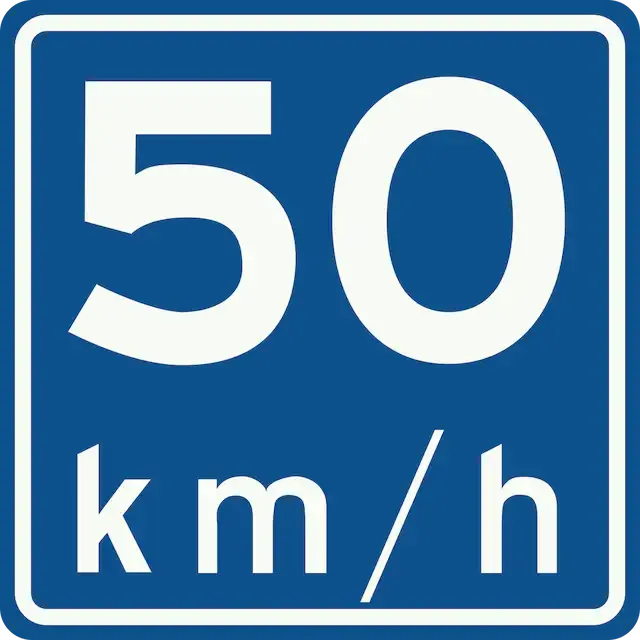
Mandatory. A number on a matrix sign is a speed limit, not advice. Only a square blue sign with white numbers is an advisory speed.
| Sign | Meaning | Mandatory? |
|---|---|---|
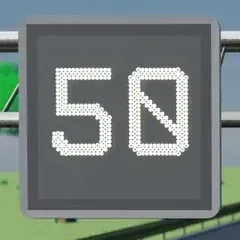 Active matrix sign with a number | New maximum speed | Yes |
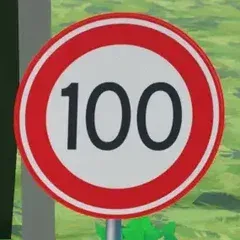 Round white sign with a red border | Mandatory maximum speed | Yes |
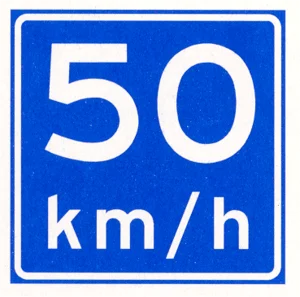 Square blue sign with white numbers | Recommended speed | No |
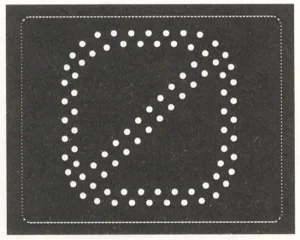 Grey circle with a diagonal line on a matrix sign | End of that speed limit | Yes, you follow the normal speed again |
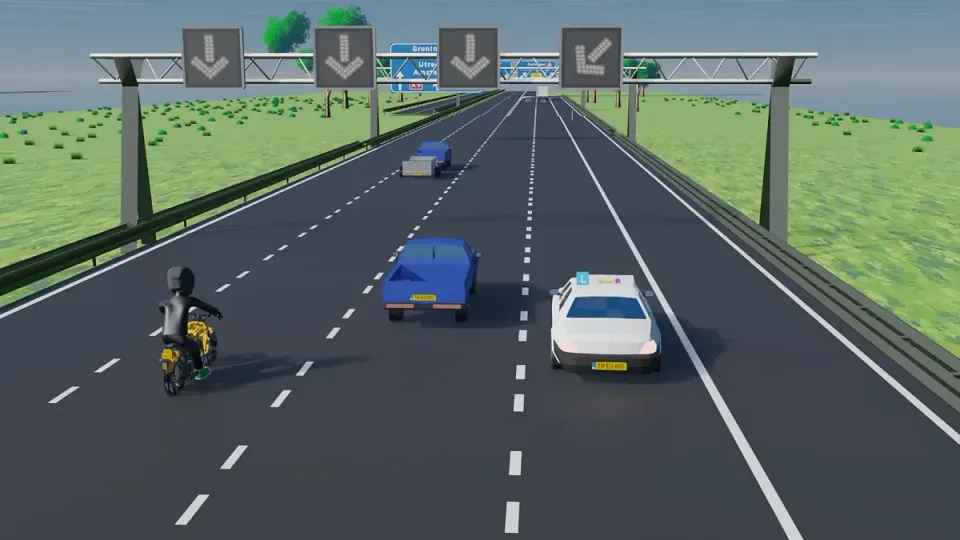 Diagonal arrow on a matrix sign | This lane ends like this—merge in by ritsen | Yes |
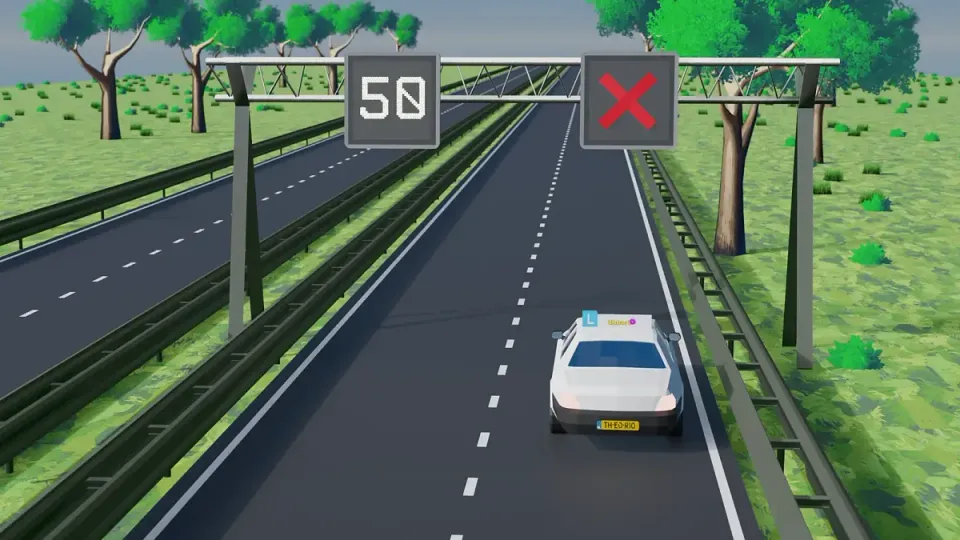 Red cross on a matrix sign | Lane closed; leave it safely before the cross, waiting before it if a safe gap is not yet available | Yes |
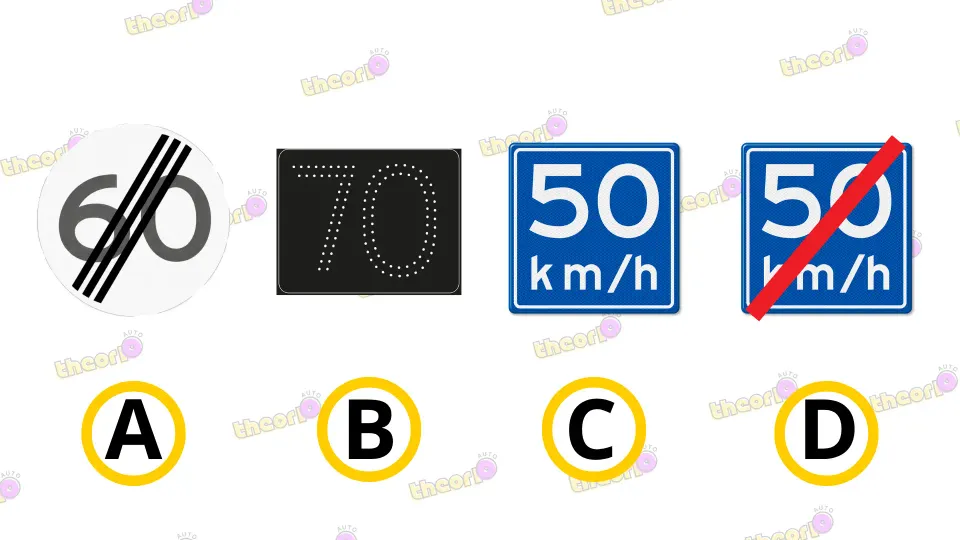
- A: end of the 60 speed limit. The limit of 60 stops here.
- B: matrix sign with 70. This is a mandatory speed limit.
- C: advisory speed 50. Sensible, but not a limit.
- D: end of the advisory speed 50.
Is a matrix sign an advisory speed?
No. You recognise an advisory speed by a square blue sign with white numbers. You mainly see it before a sharp bend. It is wise to follow it, but it is not a limit. Read more about advisory speeds on speed signs.
Can you get a speeding fine at a matrix sign?
Yes, you can. The speed on a matrix sign is mandatory. Driving faster is an offence. Driving under a red cross is also forbidden and can lead to a fine.
As an indication, the 2026 amounts on the motorway (after the measuring correction, plus €9 administration costs):
- 10 km/h too fast: €84;
- 20 km/h too fast: €229;
- 30 km/h too fast: €389.
There is no fixed amount for driving under a red cross. The public prosecutor decides the fine. According to the police it is at least €250. The current amounts are in the Boetebase of the Dutch Public Prosecution Service (in Dutch).
Matrix sign speed: which speed applies?
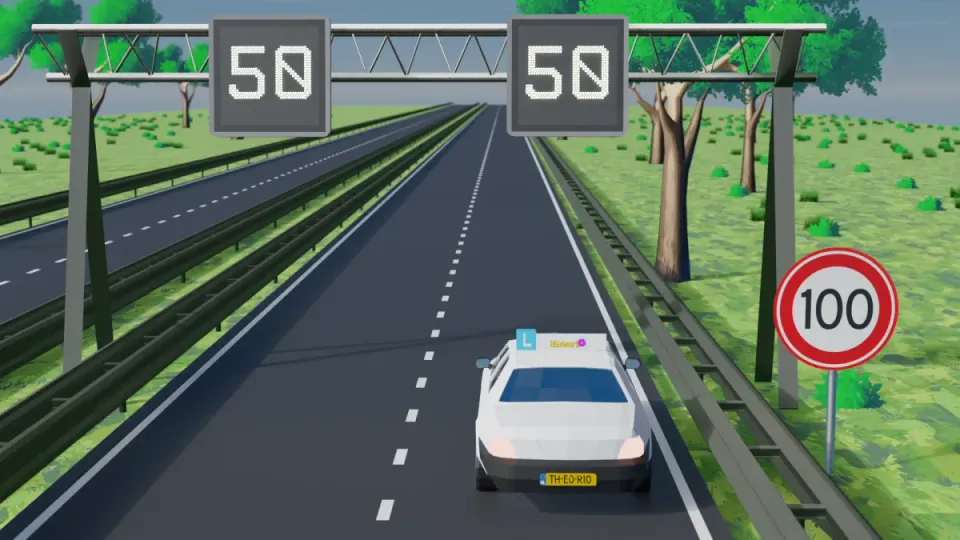
Concretely: if there is a fixed sign along the road with 100 km/h and above your lane a matrix sign shows 70, then you drive 70: the matrix sign takes precedence, even though the fixed sign is higher. The 70 restriction applies until it ends or other applicable signals change the situation.
After the end symbol, the relevant matrix restriction ends; applicable fixed signs, time windows and vehicle limits remain. Reassess the limit.
Practise like the exam
Example questions like in the CBR exam
Real questions from the Theorio app. You can expect similar questions in your CBR exam.
Question 1 of 4
Matrix signs above the motorway indicate whether a carriageway is open or what speed applies.
Are you allowed to continue driving in this lane if there is a red cross above?
Tap the answer you think is right.
Are you allowed to continue driving here?
Tap the answer you think is right.
Are you allowed to drive 100 km/h now?
Tap the answer you think is right.
What is your maximum allowed speed here?
Answers and explanations for the example questions
Question 1: Are you allowed to continue driving in this lane if there is a red cross above?
Correct answer: No
A red cross means a closed lane. You are not allowed to drive here. ❌
Question 2: Are you allowed to continue driving here?
Correct answer: Yes
The matrix indicates end of the speed limit. You can return to the normal maximum speed. 🚀
Question 3: Are you allowed to drive 100 km/h now?
Correct answer: No
The matrix signs indicate the applicable speed. If it says 50 km/h, you are not allowed to drive faster than 50 km/h. 5️⃣0️⃣
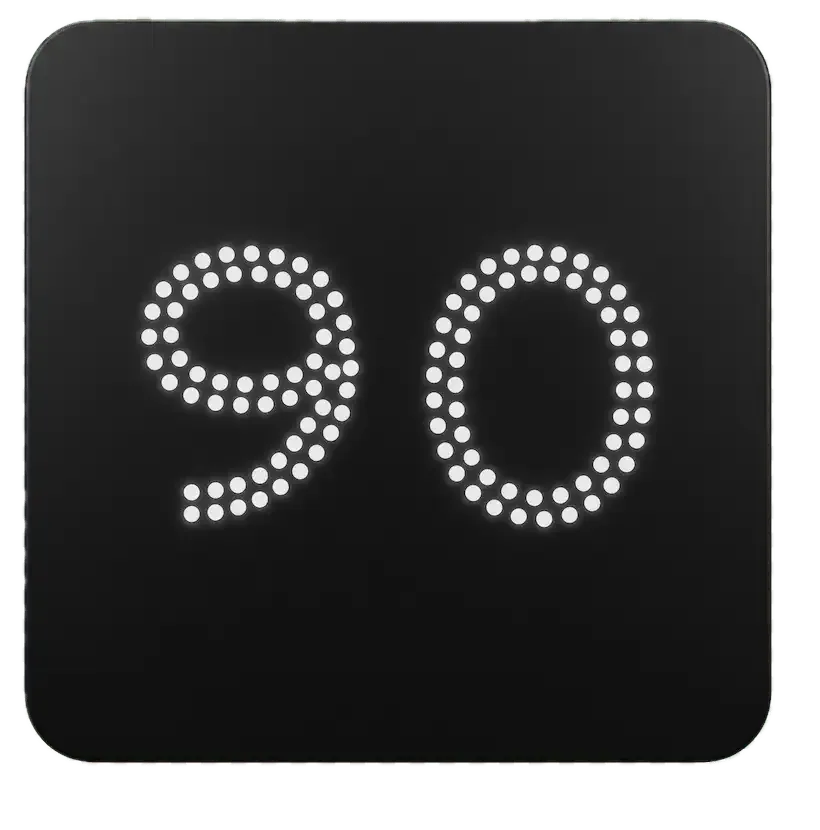
Question 4: What is your maximum allowed speed here?
Correct answer: Correct value: 90 KM/H
The maximum allowed speed is 90 km/h, as indicated on the matrix board. These electronic boards take precedence over normal traffic signs. 🔆📢
FAQ
Frequently asked questions
Short answers to questions that often come up on this subject.
What do you do if you are driving under a red cross on a matrix sign?
A red cross closes the lane. If possible, leave it safely before the cross: check, indicate in good time and let other traffic go first. Do not drive under it. If no safe gap exists, wait before the closure without abruptly creating new danger. If every lane is closed, stop safely and follow signals or instructions; switch off during a longer wait.
What does the grey circle with a diagonal line on a matrix sign mean?
This end sign ends the prohibitions displayed on electronic signalling, including the previous matrix speed. It does not cancel a separate fixed speed sign or vehicle limit. Then determine the limit from all remaining applicable signs, times, road rules and your vehicle. It does not automatically mean 130 km/h.
Ready to practise?
Test your knowledge of Driving on the motorway with 80 practice questions in the app.
Free mock exam · no account needed
Your first quiz is free, no account needed. After that from €34.99 for 90 days of access.