Part 1 of 9 in Driving on the motorway
Merging onto and leaving the motorway
Merging onto the motorway: use the acceleration lane to build up speed and match the traffic on the main carriageway.


Written by Chris Prosman Reviewed by Dirk van Zuijlen
Updated Reviewed on 9 min read
Free mock exam · no account needed
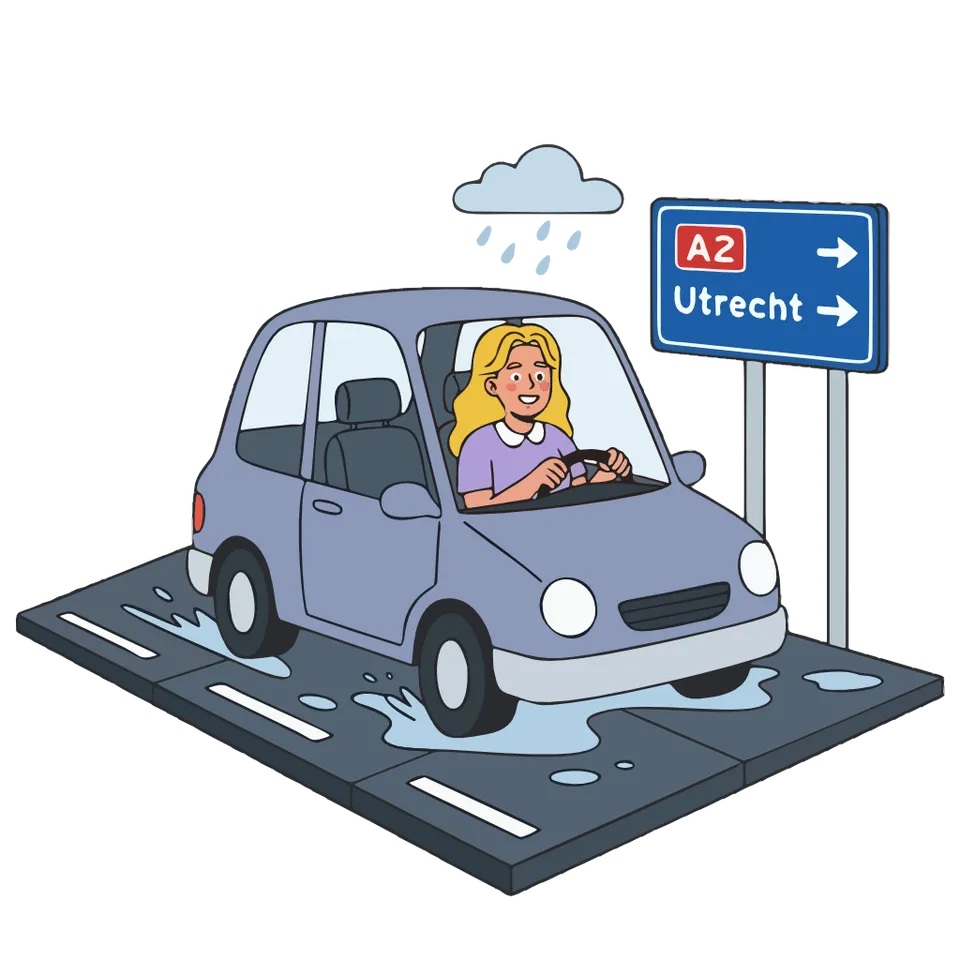
Joining and leaving the motorway are special manoeuvres: you let other traffic go first. Build up speed on the slip road so you match the traffic. Slow down on the exit lane, unless a traffic jam or danger makes you slow down earlier.
How to merge onto the motorway: the rules
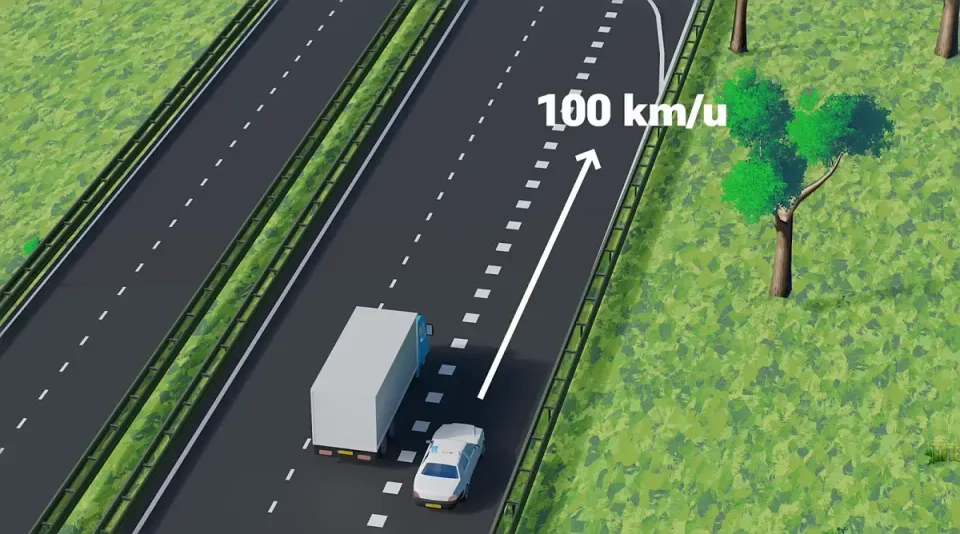
On the slip road you build up speed. Then you merge into the traffic on the main carriageway. These are the rules:
- Use the slip road to build up speed. Match your speed to the traffic next to you.
- Let the traffic on the main carriageway go first. You must not get in anyone’s way.
- Check your mirrors and look over your shoulder into the blind spot. Only switch on your indicator when there is a gap and you are really going to merge.
- You do not have to drive to the very end of the slip road. Fast enough and there is a gap? Then merge.
- Never cross several lanes in one go. Merge, look again, and only then move one more lane.
The slip road ends, so you must leave it before the end. In the exam the right answer is usually: build up speed first, then merge at the pace of the traffic.
How fast should you merge onto the motorway?
As fast as the traffic you are joining. There is no fixed merging speed. Your vehicle must be able and allowed to drive at least 60 km/h on the motorway. That is a rule for your vehicle, not a safe merging speed. In a traffic jam, 60 can even be too fast.
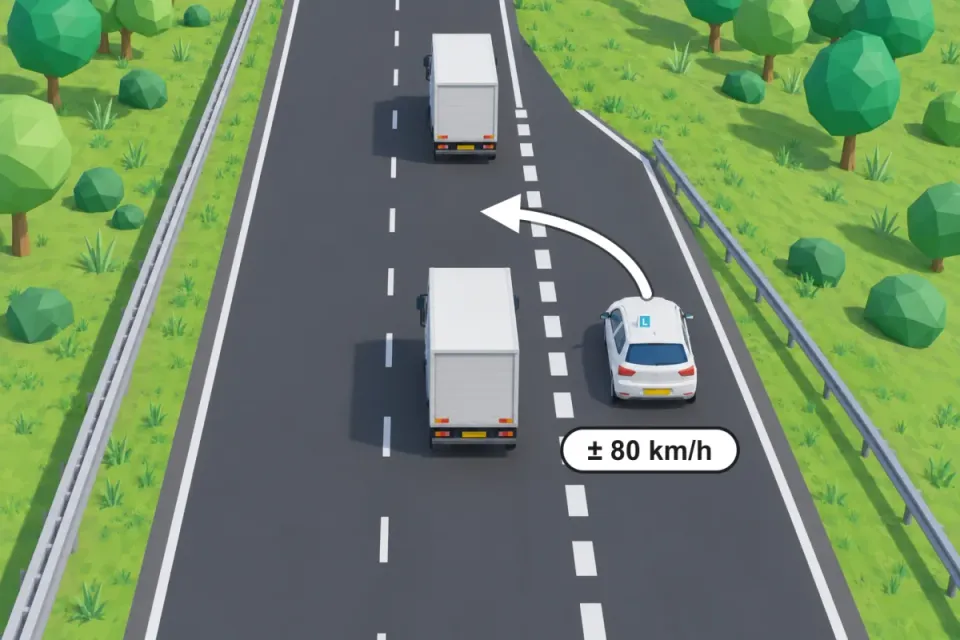
Are lorries driving at about 80 km/h in the right lane? Then you merge between two lorries at about 80 km/h, even if you are allowed to go faster.
Read more about the minimum speed on speed on the motorway.
Do you have right of way when merging onto the motorway?
No. A driver who is merging does not have right of way. Merging is a special manoeuvre: you let all other traffic go first. Your indicator does not give you right of way either. Other drivers do not have to brake for you.
Only switch on your indicator when you are really going to merge. In practice you see drivers switch it on earlier, to show that they want to merge. In the CBR exam that is wrong: no gap yet means no indicator yet.
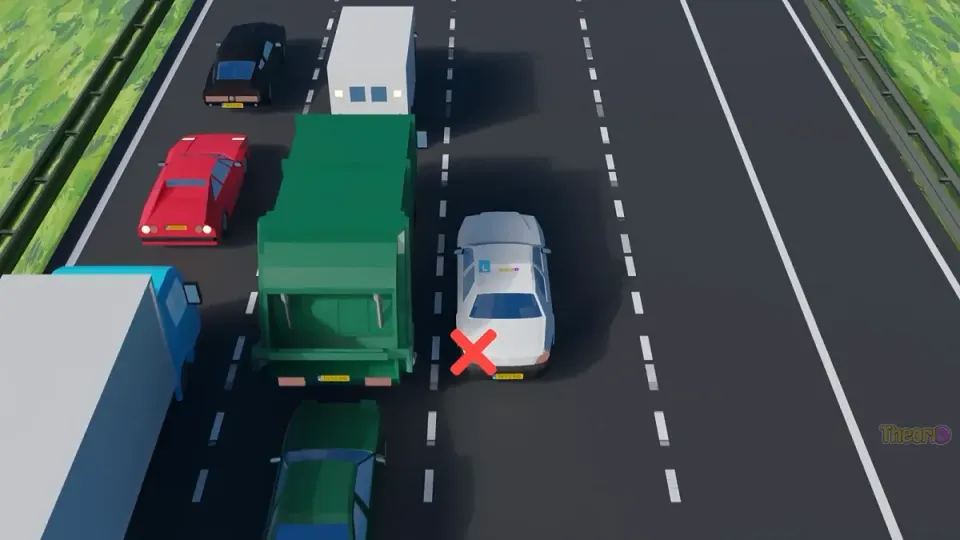
Making room for a merging driver
Are you driving on the main carriageway? Then you do not have to give way to a merging driver. You may help if it is safe. Ease off the accelerator a little so a gap opens up. Or move to the left if your mirrors, blind spot and the road markings allow it. Do not brake suddenly and do not force anyone aside.
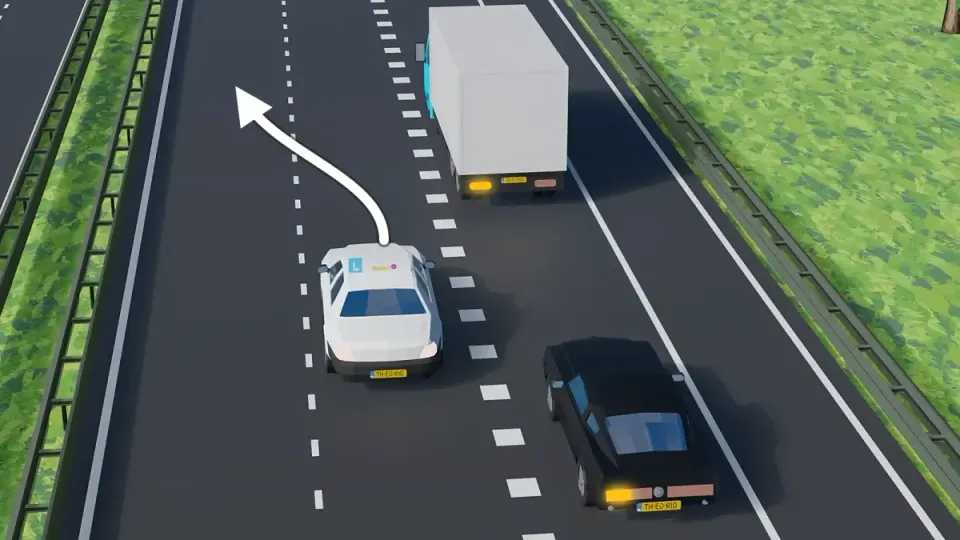
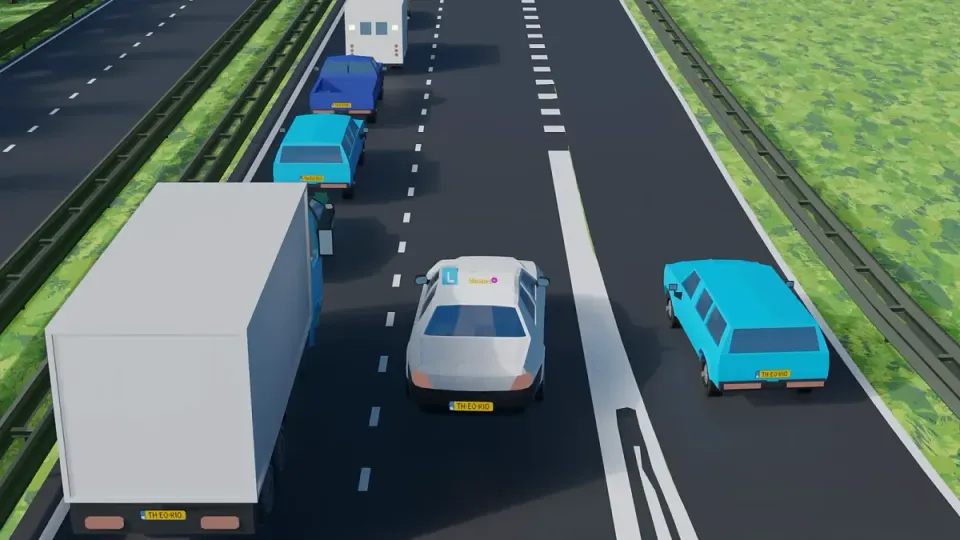
Merging from a short slip road
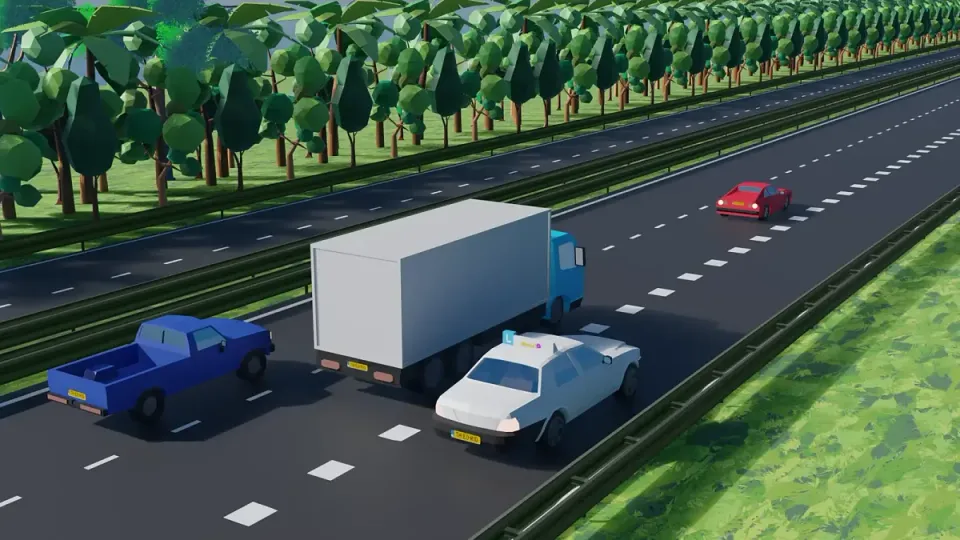
On a short slip road you have little time. So look at the traffic early. Are there lorries in the right lane? They drive at 80 km/h at most. Match your speed to them, not to the fastest traffic. Otherwise you will have to brake hard just after merging.
Merge in front of or behind the lorry?
Is the slip road still long and is there enough room? Then merge in front of the lorry. Is it short with little room? Ease off and merge behind the lorry. The lorry goes first. In both cases you must not get in its way.
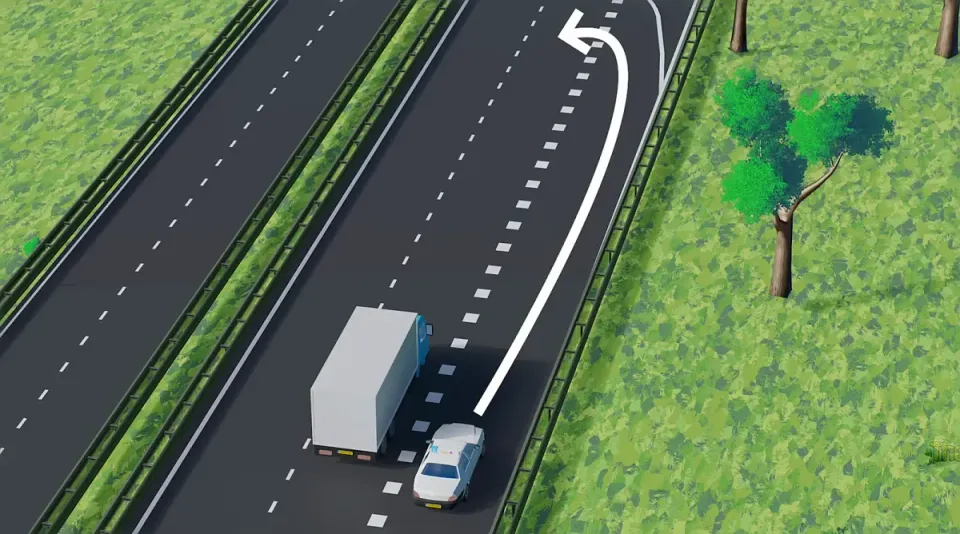
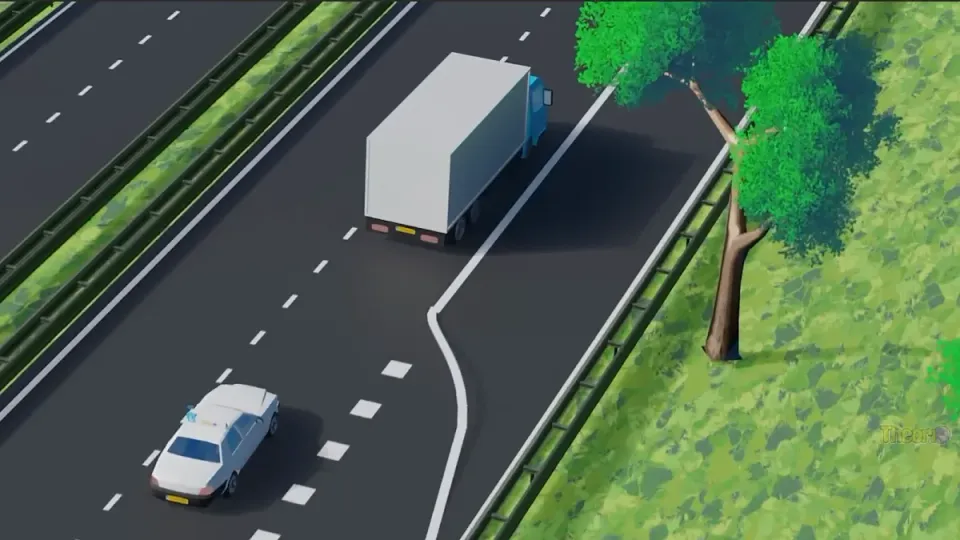
What if you can’t merge onto the motorway?
Ease off and look for a gap further on. Is the slip road almost over? Then brake gently and wait at the end until there is room. Do not drive on along the hard shoulder or over the hatched area.
Zip merging: does it apply when joining the motorway?
Not on a normal slip road. There you merge and let the traffic on the main carriageway go first. Zip merging is for a lane that ends, for example at roadworks or when a lane is closed. A sign such as ritsen na 300 m (zip merge after 300 m) warns you.
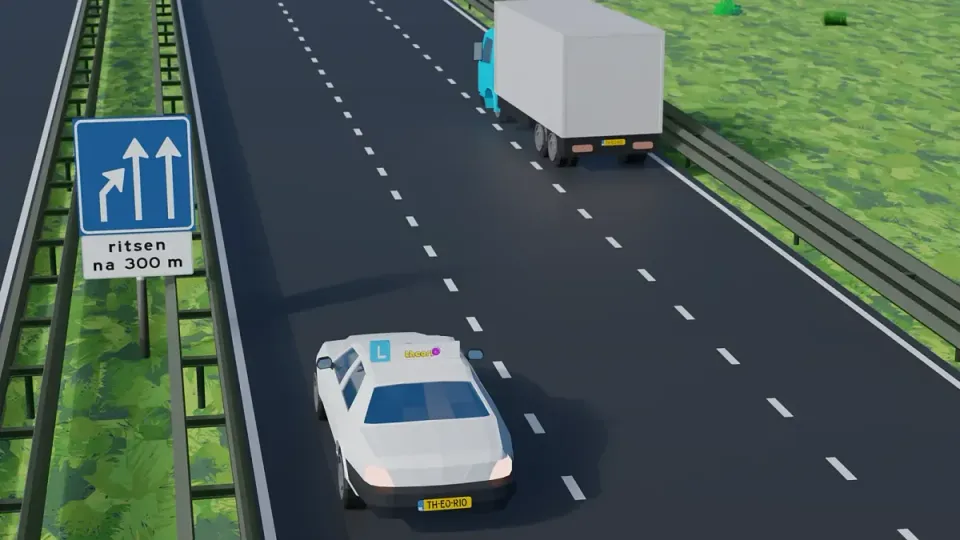
This is how zip merging works:
- In busy traffic, use both lanes up to the point where they meet.
- There, cars merge one at a time, like the teeth of a zip.
- Is traffic still moving well and is there enough room earlier on? Then you do not have to wait until the last moment.
- Are you in the lane that continues? Leave room and do not speed up to block someone.
Zip merging does not give right of way. Whoever changes lanes lets other traffic go first. Too late? Then wait before the end of your lane until you can merge safely. A diagonal arrow on a matrix sign also means your lane is ending.
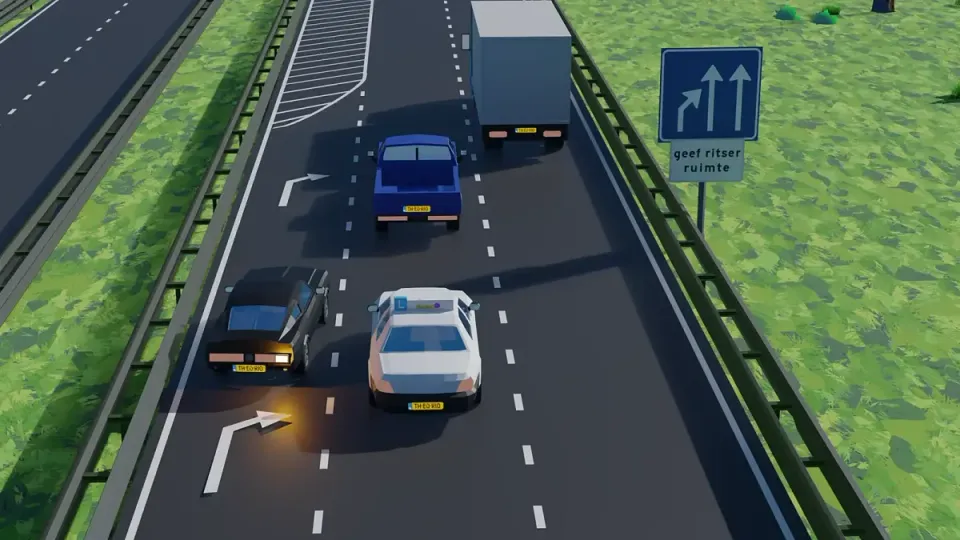
Leaving the motorway: where do you slow down?
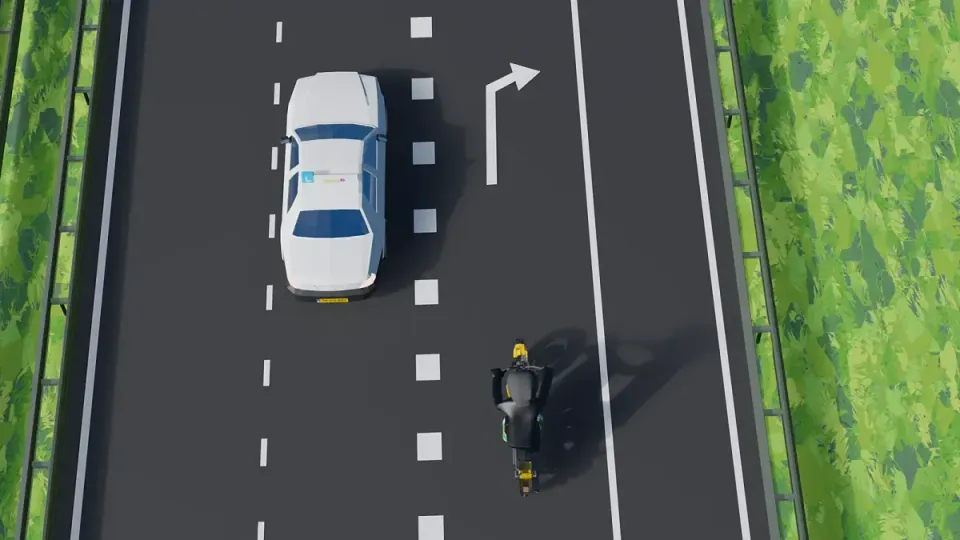
On the exit lane. Keep driving at your normal speed on the main carriageway. Only slow down once you are on the exit lane. If you brake on the main carriageway, you get in the way of the traffic behind you. Is there a jam or is the exit lane short? Then slow down earlier, but gently.
Watch out for late leavers. As long as there are block markings next to you, someone on the main carriageway can still suddenly pull onto the deceleration lane right in front of you. Especially in a traffic jam: if you drive on the deceleration lane past a jam, expect someone to leave the jam for the exit.
How far before the exit do you indicate?
About 300 metres before a normal exit. This is a driving-lesson guideline, not a fixed distance in the law. Indicating far too early can confuse others. Turn your indicator off as soon as you are on the exit lane.
Missed your exit? Drive on to the next one
If you miss your exit, drive on to the next one. Turning round and reversing are not allowed on the motorway. See special manoeuvres.
- No arrows on the exit lane yet? Going back to the main carriageway is only allowed when it is safe and permitted. Let all other traffic go first.
- Arrows on the road? Follow them. You may no longer go back onto the motorway.
- Red crosses above the exit? The exit is closed. Drive on to the next exit.
Driving over the hatched area to still make the exit is not allowed either.
A traffic jam at the exit or on the motorway
Do you see an unexpected traffic jam ahead? Briefly switch on your hazard lights. This warns the traffic behind you. Switch them off when the warning is no longer needed. Let your car slow down gently and brake in good time. This helps prevent a rear-end collision.
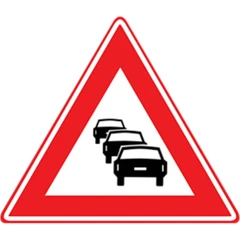
Sign J33 (Traffic jam): you are approaching a place where traffic jams regularly occur. Matrix signs often reduce the speed here well in advance. Note: such a traffic jam warning applies to the whole carriageway, not just the deceleration lane.
In a jam it helps to stay in your own lane as much as possible and keep a steady speed. Every lane change slows down the traffic behind you.
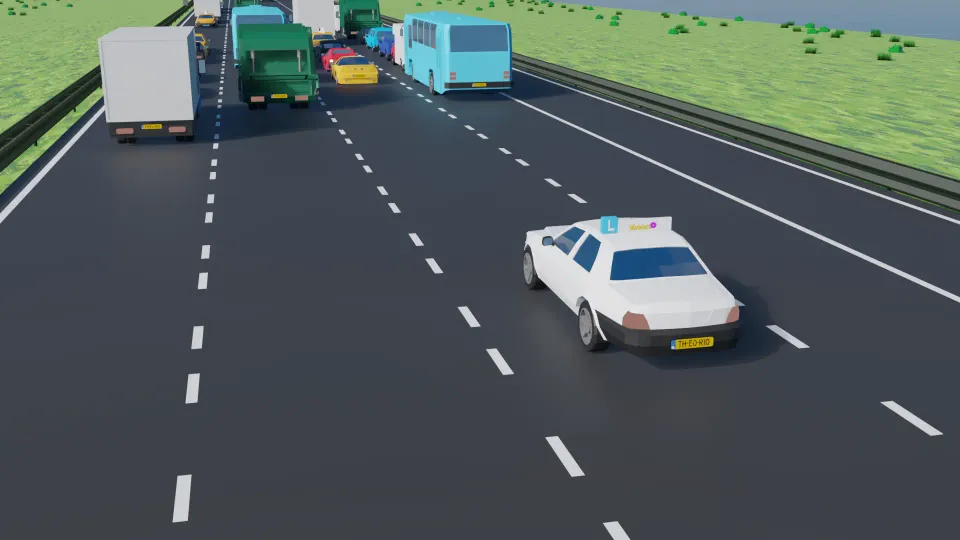
Is leaving the motorway a special manoeuvre?
Yes. Leaving the motorway is a special manoeuvre, just like merging. You move from the main carriageway to the exit lane. You let all other traffic go first, including traffic already on the exit lane.
Who goes first: leaving or joining traffic?
In the CBR exam, the driver leaving the motorway goes first. On a weaving section, one driver wants to join and another wants to leave at the same spot. Whoever leaves the motorway goes first (1). Then the other driver joins (2). Like on a bus: people get off first, then get on.
The law does not call this a right-of-way rule. You are both making a special manoeuvre. So work it out with the other driver and do not force your way in.
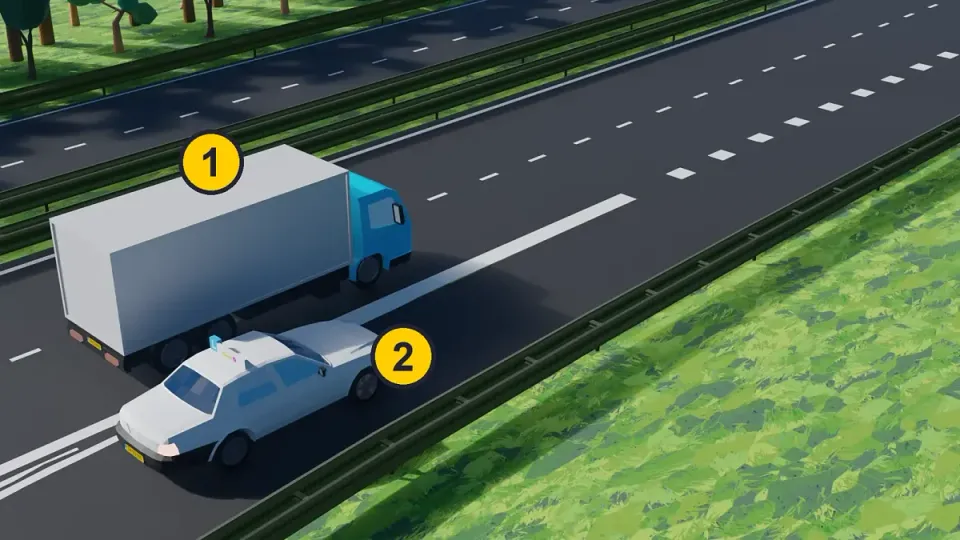
Note: is the joining driver already in the lane you want? Then you are the one changing lanes. Let them go first and leave behind them.

Practise like the exam
Example questions like in the CBR exam
Real questions from the Theorio app. You can expect similar questions in your CBR exam.
Question 1 of 6
At block marking you may overtake on the left and right.
Should you give way to exiting traffic?
Tap the answer you think is right.
Where should you reduce your speed when leaving the motorway?
Tap the answer you think is right.
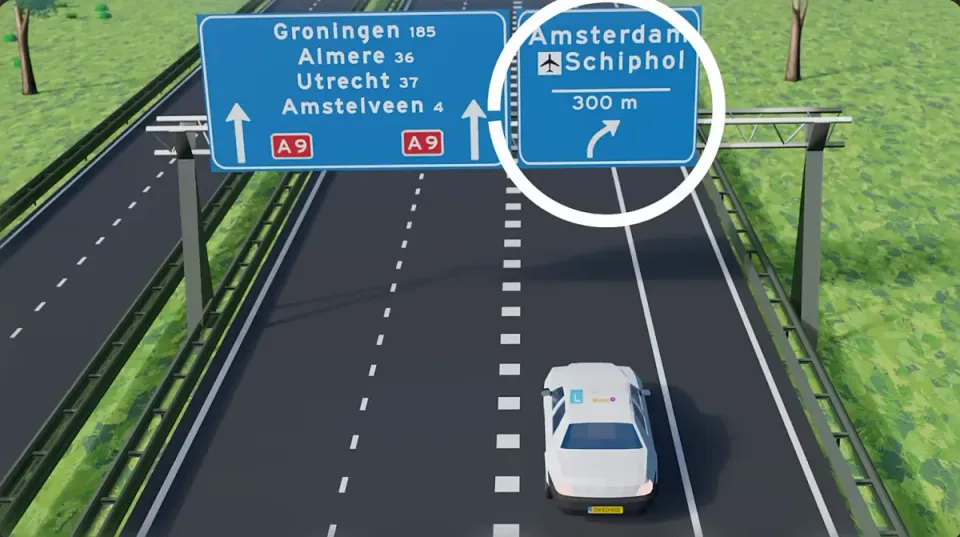
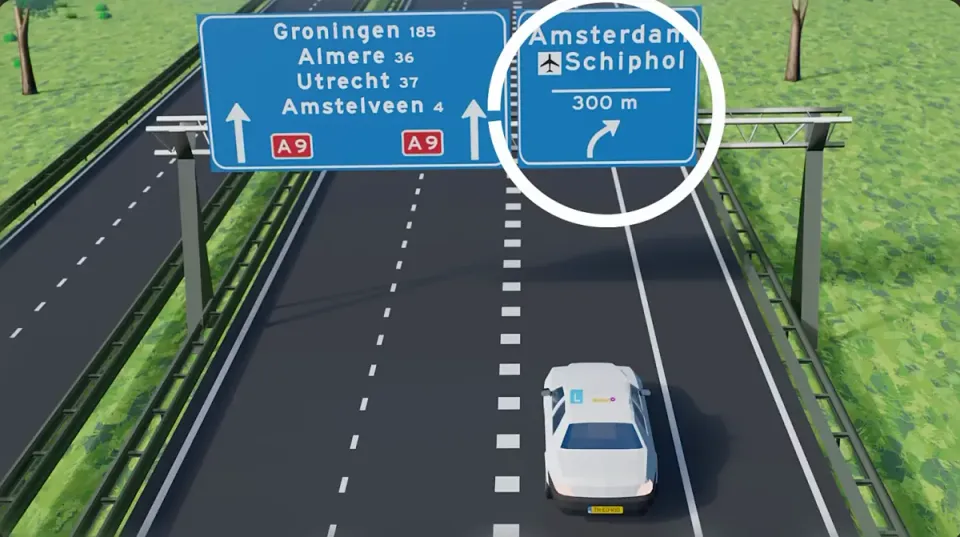
You want to leave the motorway. Are you allowed to signal here?
Tap the answer you think is right.
You want to leave the motorway. Are you allowed to signal here?
Tap the answer you think is right.
You are driving here at 100 km/h, what do you do?
Tap the answer you think is right.
What should you do?
Tap the answer you think is right.
Answers and explanations for the example questions
Question 1: Should you give way to exiting traffic?
Correct answer: Yes
Exiting traffic has priority over merging traffic, this promotes flow. Exiting traffic therefore has priority. 🚘
Question 2: Where should you reduce your speed when leaving the motorway?
Correct answer: On the exit lane
You only reduce your speed on the exit lane, so that the ongoing carriageway is not hindered. This keeps the flow smooth. 🌊
Question 3: You want to leave the motorway. Are you allowed to signal here?
Correct answer: Yes
Yes, you may signal 300 meters before the exit (often at the height of the exit sign) to inform the other traffic in a timely manner. ↔️
Question 4: You want to leave the motorway. Are you allowed to signal here?
Correct answer: No
No, you normally signal about 300 meters before the actual exit lane. Here it is still too early. 📏
Question 5: You are driving here at 100 km/h, what do you do?
Correct answer: Merge in front of the truck
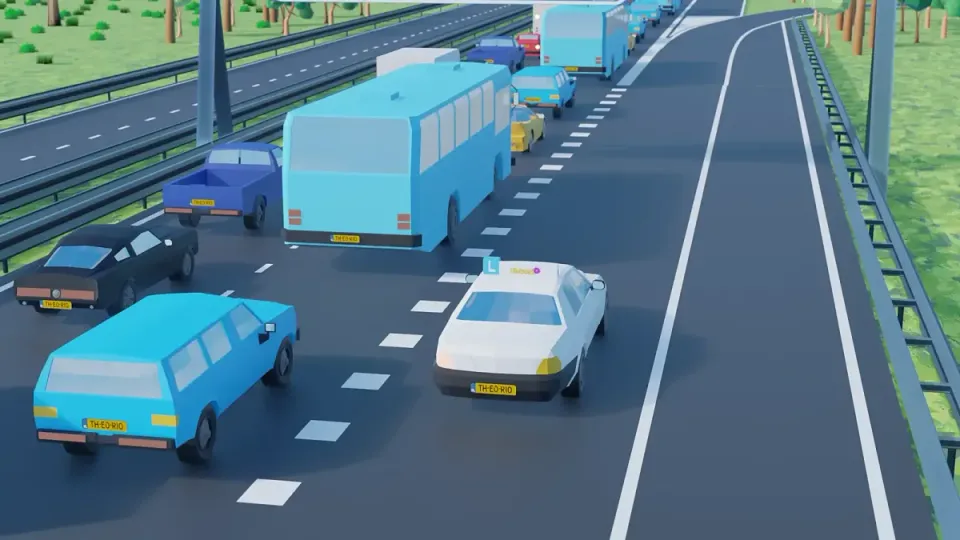
A truck usually drives at 80 km/h. The driving school car drives faster, namely 100 km/h (or 130 km/h depending on the time). You have enough space to merge in front of the truck, so that is the right choice. 🚚
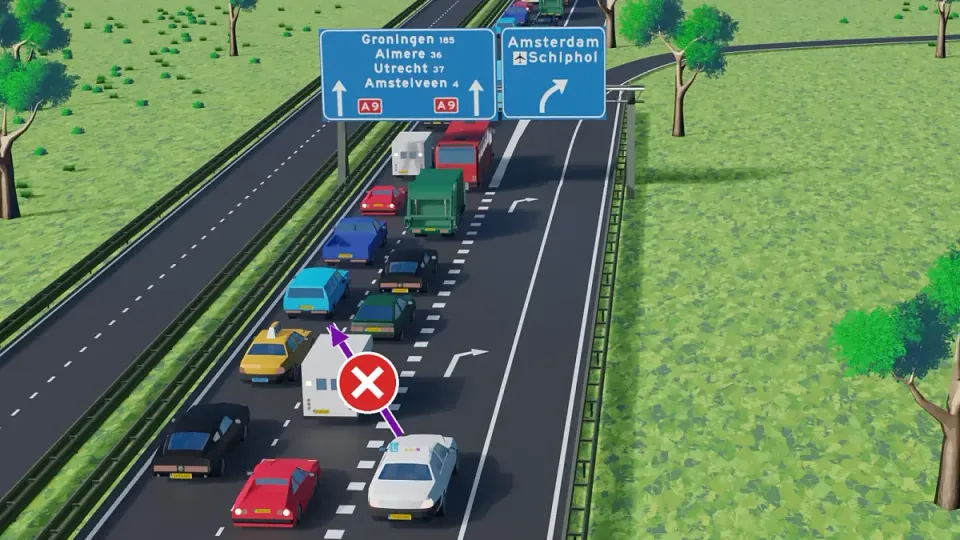
Question 6: What should you do?
Correct answer: Release the gas and merge behind the blue car
You must release the gas and merge behind the blue car. You won't make it to safely merge in front of the van, and going directly to the right won't work in this situation either. 📉
FAQ
Frequently asked questions
Short answers to questions that often come up on this subject.
When do you indicate to leave the motorway?
Indicate right in good time before beginning to leave, without misleading others. At an ordinary motorway exit, around 300 metres is a practical teaching guideline, not a fixed legal distance for every situation. Cancel the indicator once the lateral movement is complete; you need not keep indicating unnecessarily along a long stretch of block markings.
What do you do if you miss your motorway exit?
Continue to the next exit if you can no longer leave safely and legally. Do not turn around or reverse on the motorway, or cross a hatched area. If already on the exit lane, return only where markings and arrows permit it and it is safe in good time. Let all other traffic go first. Follow the exit lane’s mandatory direction.
Who goes first: someone merging or someone leaving the motorway?
“Leave first, then join” is a useful teaching guideline for simultaneous movements in a weaving section, not a special legal priority rule. Both drivers changing lanes perform a special manoeuvre and may not force a gap. If someone already occupies the lane you want, let them go first and find a safe space.
Ready to practise?
Test your knowledge of Driving on the motorway with 80 practice questions in the app.
Free mock exam · no account needed
Your first quiz is free, no account needed. After that from €34.99 for 90 days of access.