Part 3 of 7 in Road markings
Carriageway, lane and road
Lane, carriageway and road are not the same. How to tell them apart, choose the right lane and know what rush hour and plus lanes are.


Written by Chris Prosman Reviewed by Dirk van Zuijlen
Updated Reviewed on 8 min read
Free mock exam · no account needed
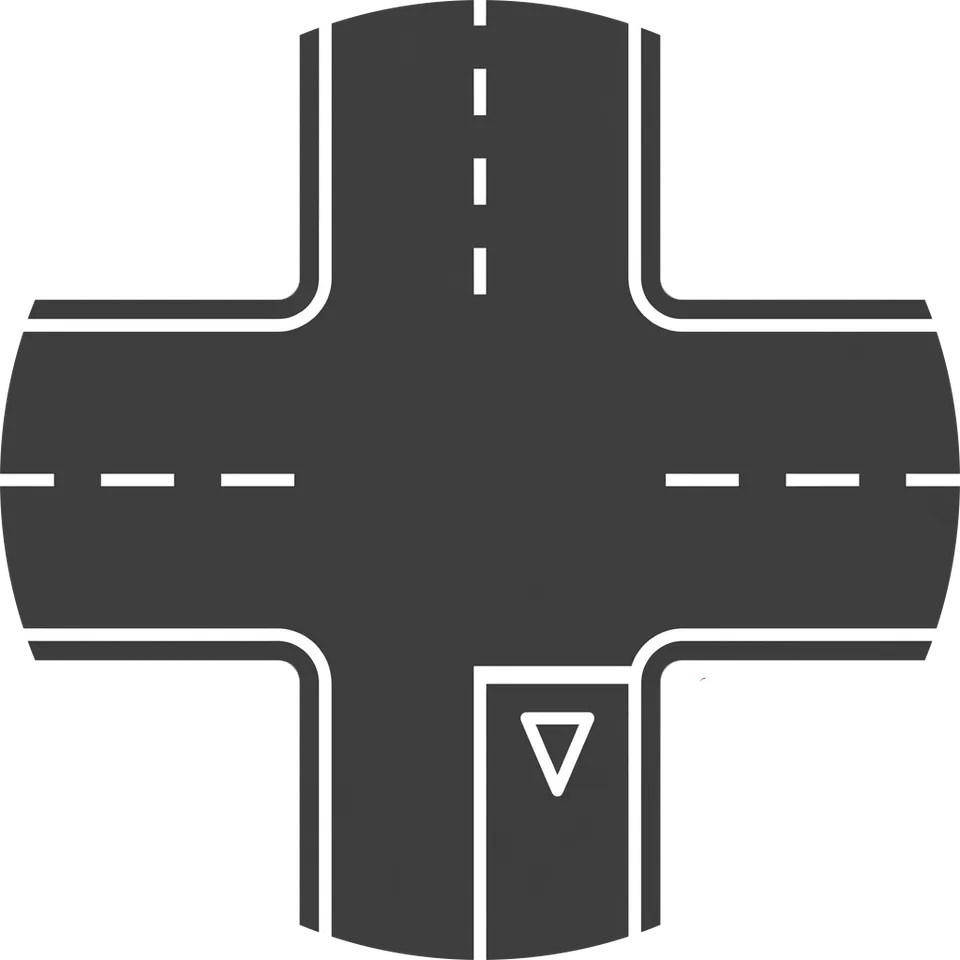
Carriageway, lane and road are not the same. A lane is one strip for one row of cars. A carriageway is the part of the road where vehicles drive, often with several lanes. The road is everything together, including verges and cycle paths. On every road you keep as far right as possible.
Carriageway, lane, road and hard shoulder: what are the differences?
The difference between a carriageway and a lane: a carriageway is made up of one or more lanes. This is how the parts of the road fit together:
- What is a lane? A part of the carriageway marked with lines. One row of cars fits on it.
- What is a carriageway? The part of the road for moving vehicles. Cycle paths are not part of it. A carriageway can carry traffic in one or two directions. On a motorway each direction has its own carriageway.
- Road: the whole thing. So the carriageways, but also the hard shoulder, the verges and the cycle paths along the carriageway.
- Hard shoulder: the strip to the right of the solid line. It is not a normal lane. You only use it in an emergency, for example when you break down.
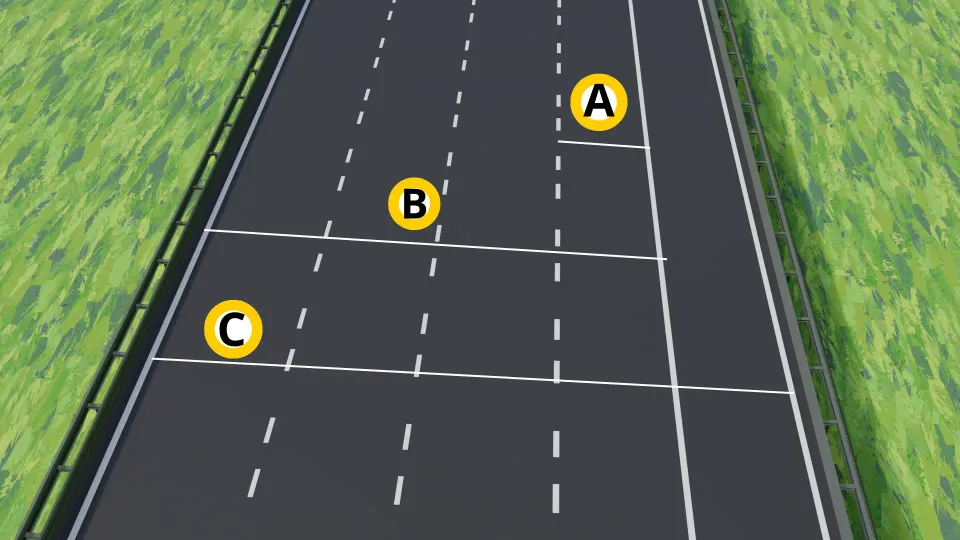
Bus road or bus lane?
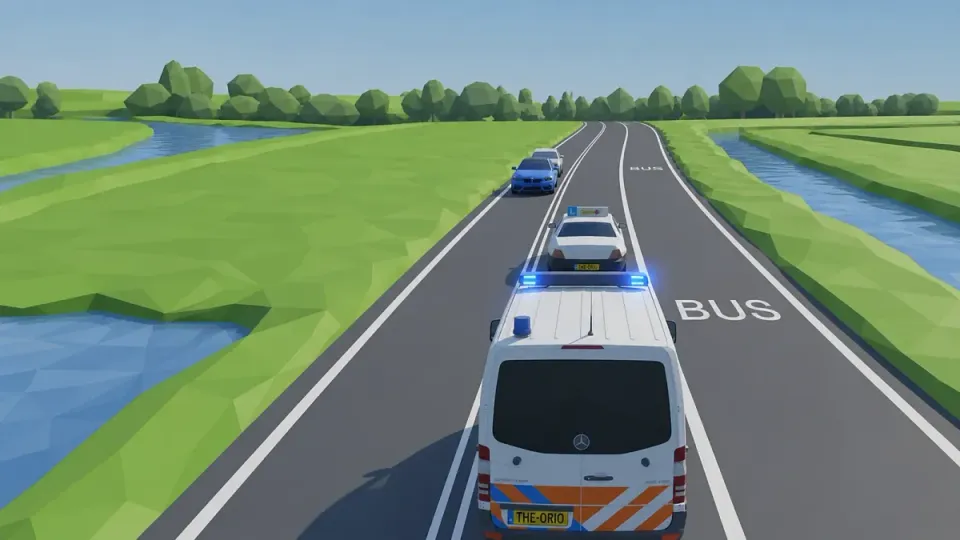
May you drive in a bus lane? No, not in a normal car. Both have BUS or LIJNBUS painted on the road. The difference is where they are:
- Bus road (busbaan): a carriageway of its own, separate from the carriageway for other traffic.
- Bus lane (busstrook): a lane on the normal carriageway, with a line in between.
With BUS, scheduled buses, other buses and trams may use it. With LIJNBUS only scheduled buses and trams. A sign can say the same, such as 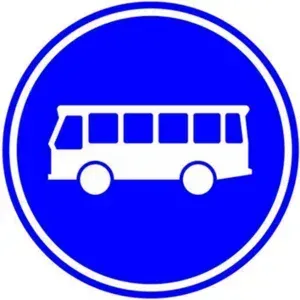 sign F13. What to do when an ambulance is behind you is explained under emergency vehicles.
Which lane should you drive in?
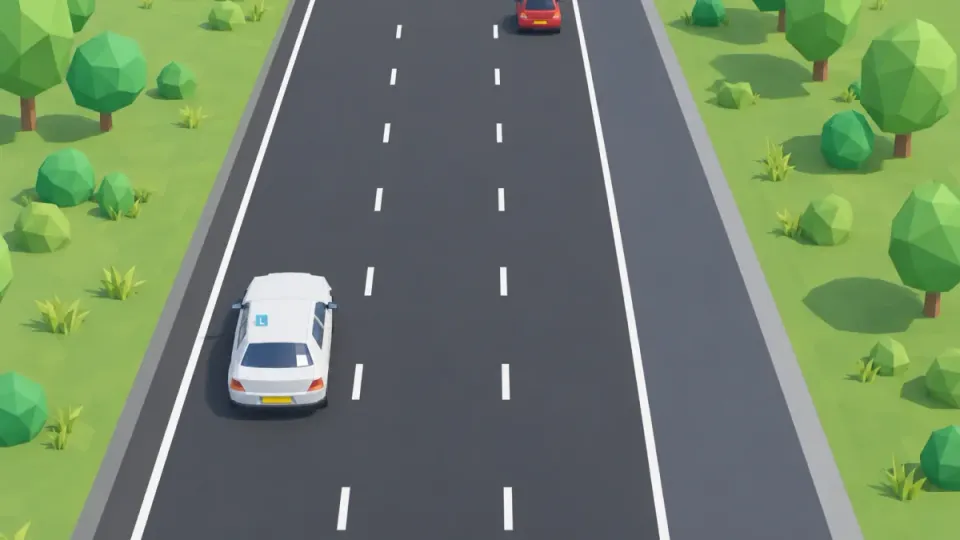
❌ Wrong: staying in the left lane while the lanes to your right are free.
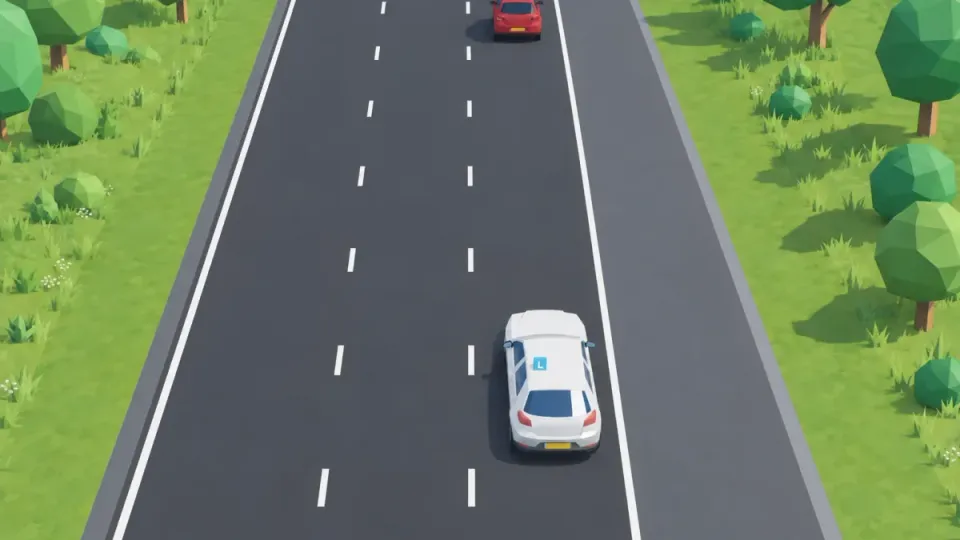
✅ Right: you drive in the right lane. You only move left to overtake.
On all roads you keep as far right as possible. That applies on the motorway, in town and in a woonerf.
- On the motorway you drive in the right-hand lane.
- You overtake on the left. Then you go back to the right as soon as possible.
- Staying on the left for no reason is not allowed. You can get a fine for it.
- Are there solid lines between the lanes? Then you stay in your own lane until the line is broken again.
On a motorway with three or more lanes, lorries may only use the two right-hand lanes. The same goes for a car and trailer that are longer than 7 metres together. See driving with a trailer.
In a traffic jam you no longer have to keep right. When traffic is stuck, you may also pass the queue on the right (RVV 1990 article 13). When else overtaking on the right is allowed is explained under overtaking rules.
The correct lane on the motorway
Choose the rightmost of the lanes that go your way. The blue signs above and beside the road show which lanes those are. How to do this step by step is explained under getting in lane.
Changing lanes
Only change lanes when you are sure it is safe. Traffic in the other lane goes first. How overtaking works and when it is allowed on the left or right is explained under overtaking rules.
How to change lanes safely
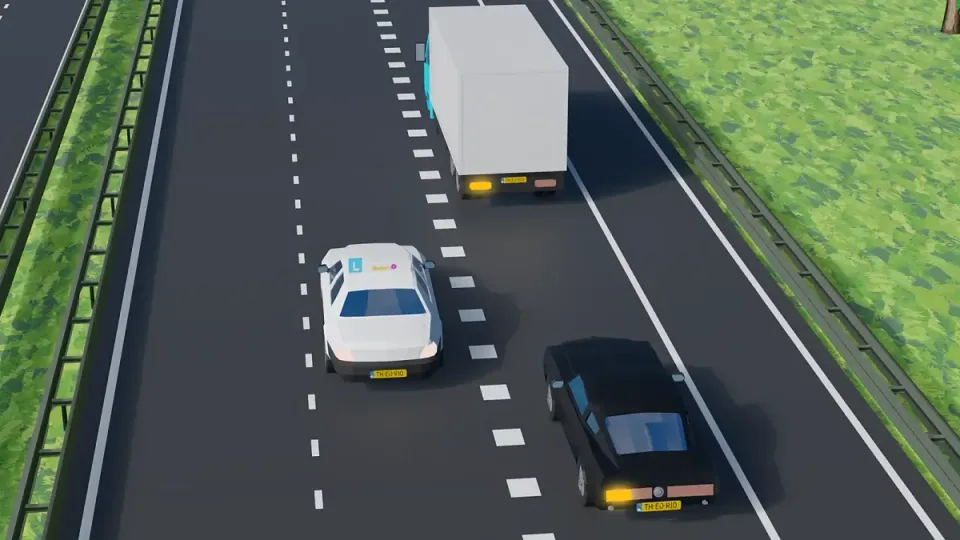
- Check your mirrors. First the interior mirror, then the door mirror on the side you want to go to.
- Check your blind spot. Take a quick look over your shoulder. More under mirrors and blind spot.
- Is there a gap? Indicate. Then other traffic knows what you are going to do.
- Look once more. Is someone coming up fast?
- Steer calmly into the other lane and adjust your speed.
- One lane at a time. Need to go one more lane over? Repeat the steps.
- Indicator off as soon as you are in your new lane.
Zip merging
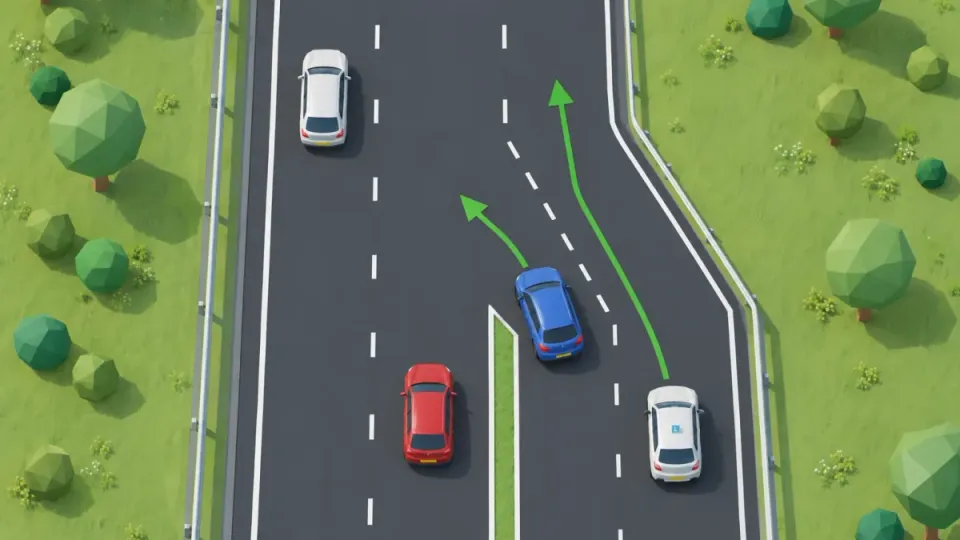
Does your lane end? Then you merge into the lane next to it. This is called zip merging. Are you in the lane that continues? Then give room and do not box anyone in.
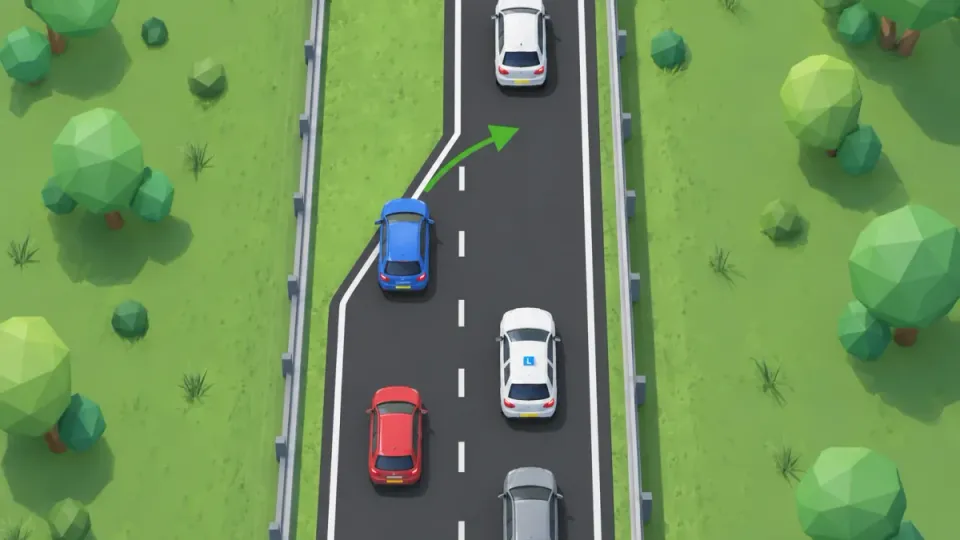
Where exactly to merge and what to do if you are too late is explained under merging and leaving the motorway.
Rush hour lane and plus lane
On busy motorways an extra lane sometimes opens during rush hour:
- Rush hour lane (spitsstrook): on the right. It is the hard shoulder, used as a lane at those times.
- Plus lane (plusstrook): on the left. It is an extra lane, made by making the other lanes narrower.
- Open or closed? A green arrow above the lane: open. A red cross: closed.
- Is the rush hour lane open? Then it is a normal lane and you use it. You keep right as much as possible, so you drive in the open rush hour lane when you are not overtaking.
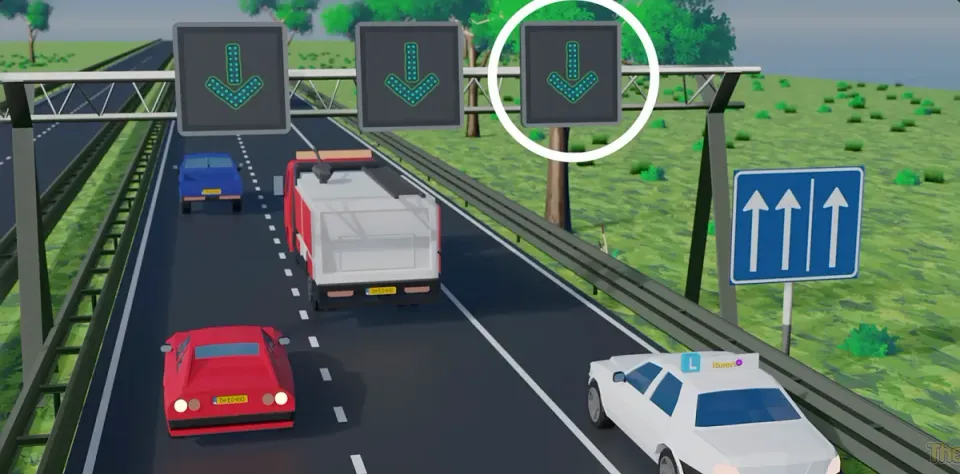
Which speed applies and which signs go with it is explained on the rush hour lane page.
Lane closed or end of lane
A lane is closed when a red cross is lit above it. You may not use that lane. These signs above the road are called matrix signs. You follow a signal for your lane on a matrix sign, even if the blue signs show something else.
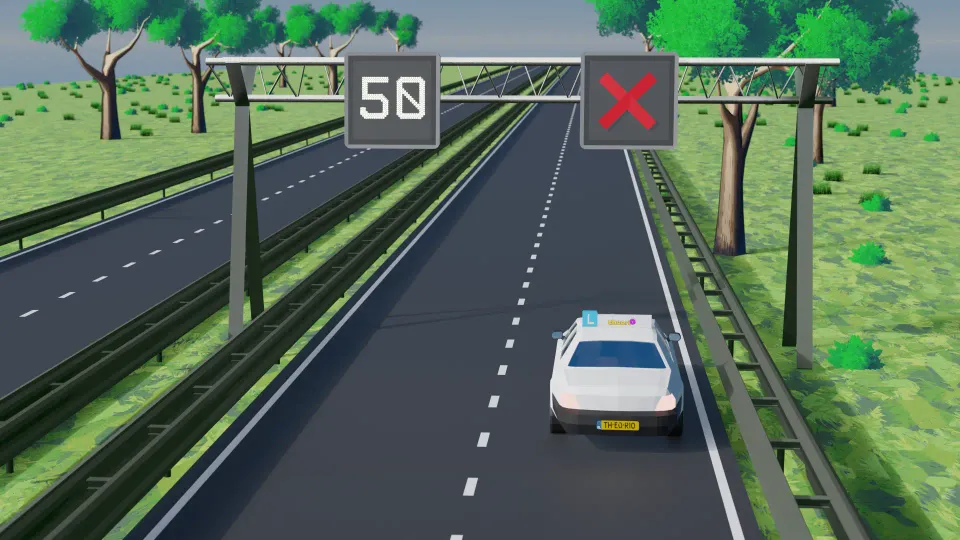
The difference between a slanted arrow and a red cross is explained under matrix signs.
Fine for a closed lane
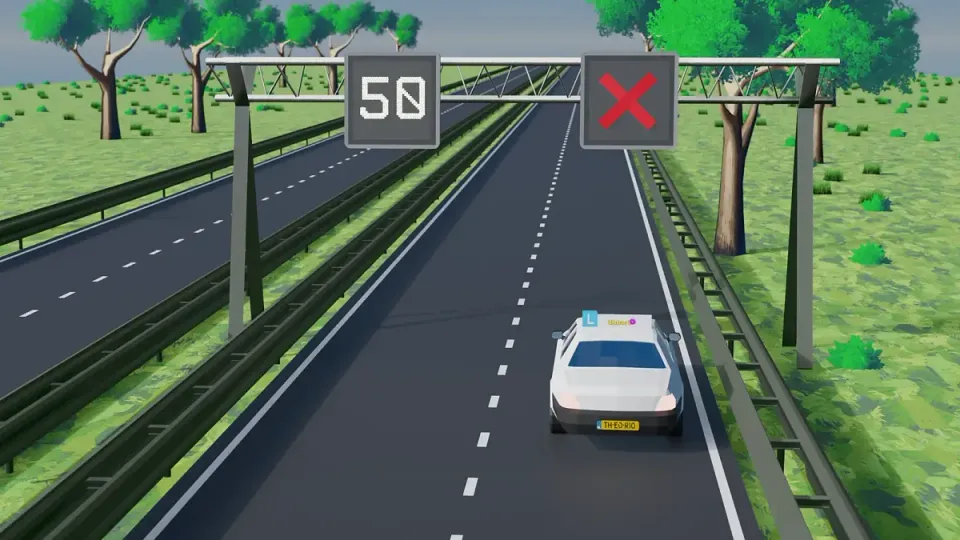
Do you drive under a red cross, or on the hard shoulder without need? There is no fixed fine for that: these are criminal offences and the public prosecutor decides the penalty (ANWB, fines 2026). So the fine comes from the Public Prosecution Service, not from the CJIB. A closed rush hour lane on the right is simply the hard shoulder. Source: OM Boetebase.
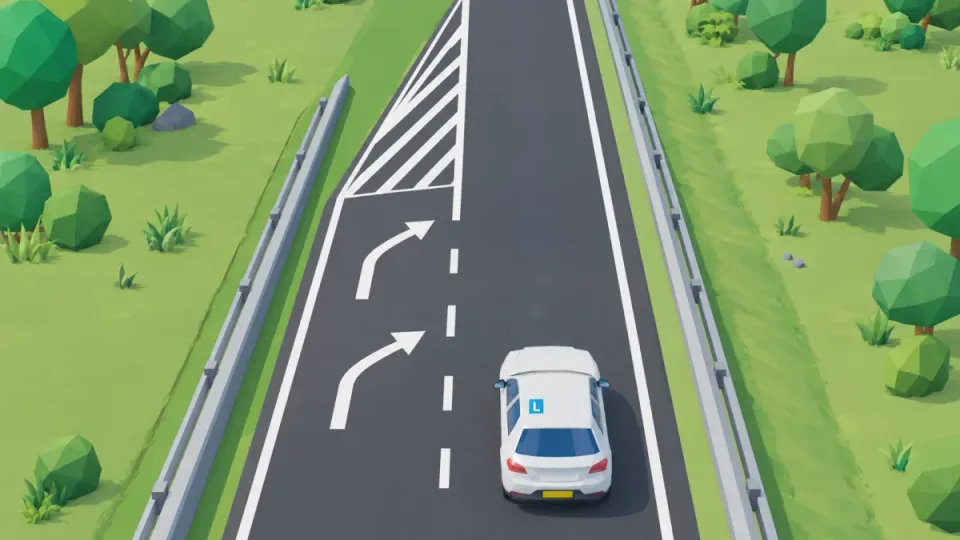
End of lane: sign L5
If your lane ends, you can see it coming in time:
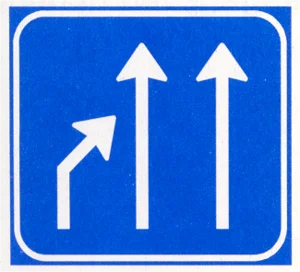 Sign L5 (end of lane): the arrows show which lane ends and which lane you must move to.
- Slanted arrows on the road (verdrijfpijlen) point you to the lane next to you.
- Hatched road markings (diagonal white lines) at the end of the lane: you do not drive over them. See hatched road markings.
Signs that say something about lanes
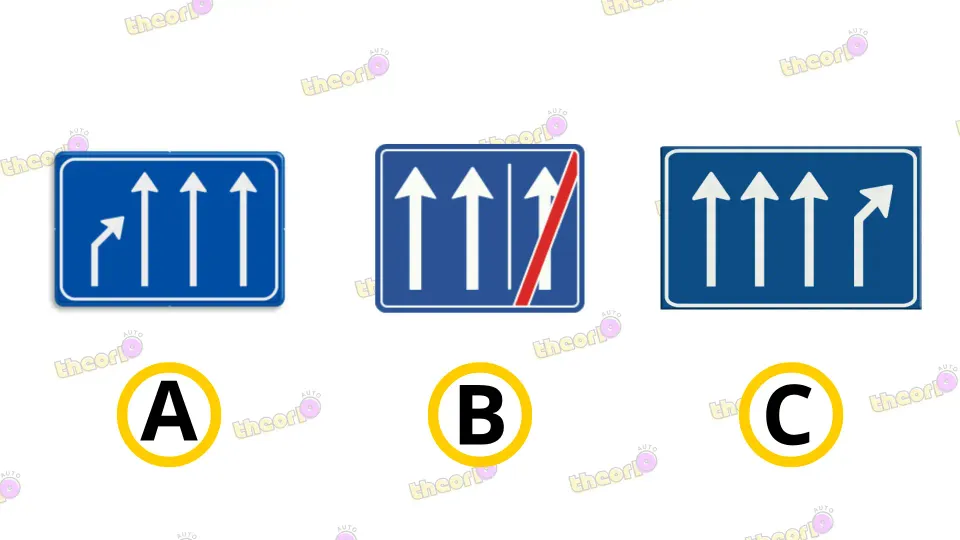
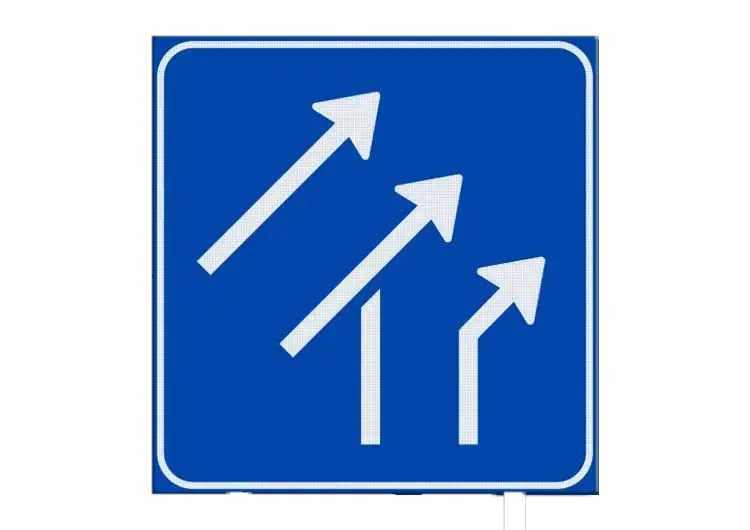
Above and beside the road there are signs with arrows. They show what happens to the lanes. Look at the direction of the arrows:
- Merging: an arrow points towards the other arrows. A lane ends.
- Splitting: an arrow points away from the other arrows. The lanes split.
- Tapered connection: all arrows point the same way and the middle one looks like a slanted T. Two streams of traffic come together. Look at the lines on the road to see if your lane continues.
The white sub-sign underneath
A white sub-sign often hangs under such a sign. There is a fixed rule for it:
- Two arrows on it? Then the sign applies now, over that distance.
- Only a distance on it? Then the sign applies only after that distance.
A sign with "1.3 km" and two arrows means: for the next 1.3 kilometres there are two lanes. After that something changes, usually one lane less.
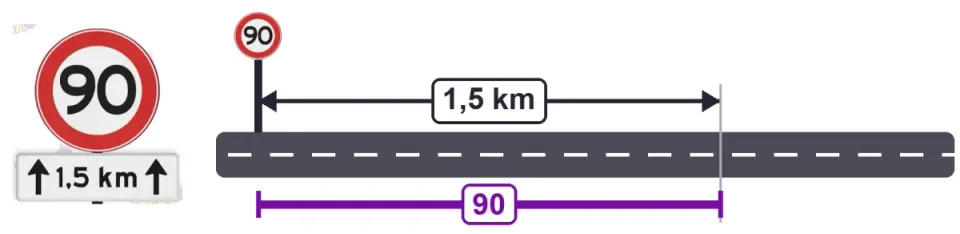 | With arrows: the 90 applies from the sign, over a length of 1.5 km. |
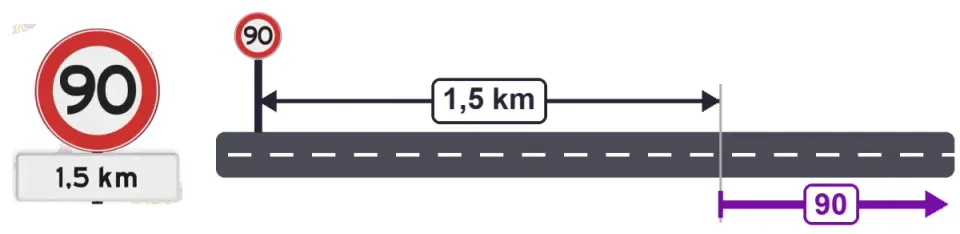 | Without arrows: the 90 only starts 1.5 km after the sign. |
Arrows in the lane
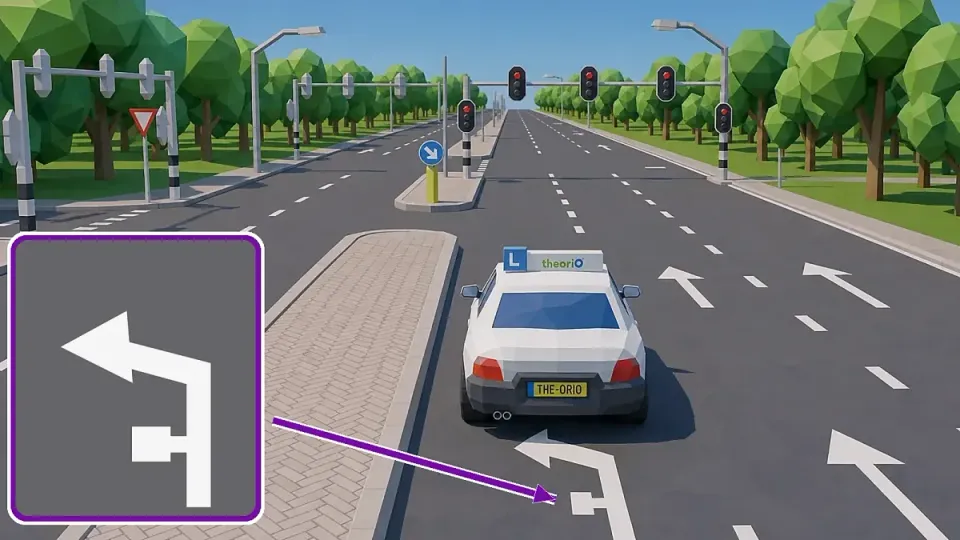
Arrows on the road show which way you can go from that lane. An arrow with a small block points to the second road in that direction, not the first. How to use these arrows to get in lane is explained under getting in lane.
CBR exam pitfalls for carriageway and lane
❌ Wrong: Carriageway and lane are the same? ✅ Right: No. A carriageway can have several lanes.
❌ Wrong: Rush hour lane without a green arrow? ✅ Right: Closed. It is then the hard shoulder.
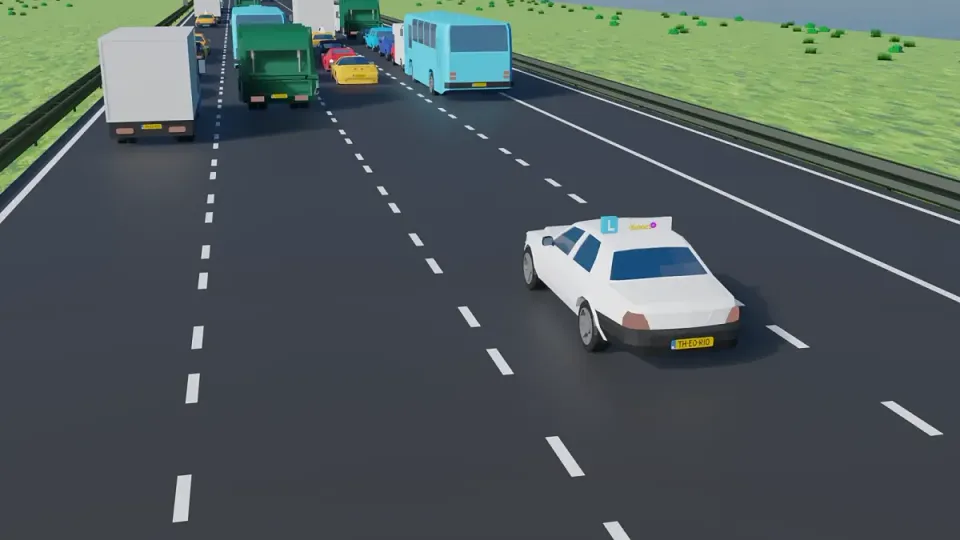
❌ Wrong: Keep right in a traffic jam? ✅ Right: Not needed when traffic is stuck.
❌ Wrong: Sub-sign with only a distance? ✅ Right: The sign applies only after that distance.
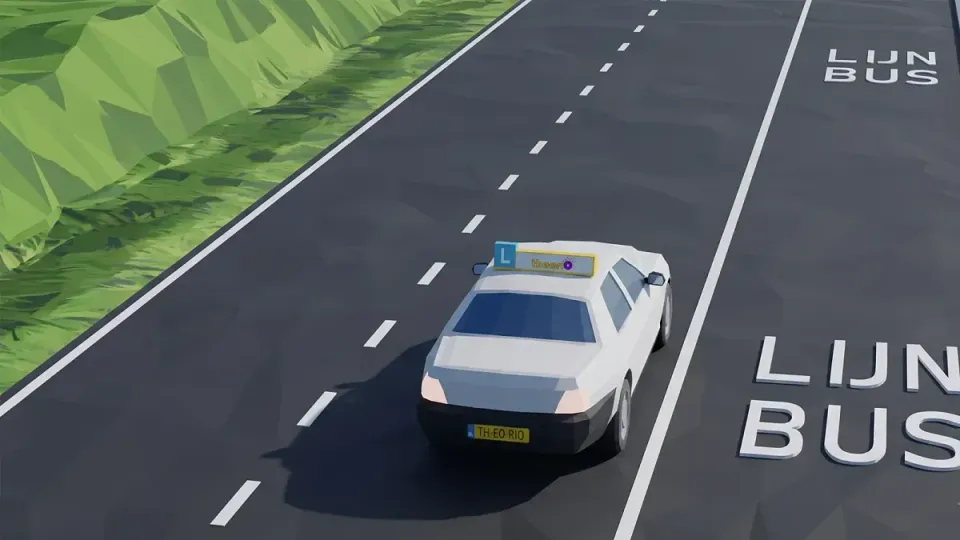
❌ Wrong: Empty bus lane? ✅ Right: You still do not drive in it.
Practise like the exam
Example questions like in the CBR exam
Real questions from the Theorio app. You can expect similar questions in your CBR exam.
Question 1 of 6
Do you need to change lanes here (back to the right)?
Tap the answer you think is right.
The truck wants to merge. What should you do in this situation?
Tap the answer you think is right.
What should you do in this situation?
Tap the answer you think is right.
Are you allowed to merge here?
Tap the answer you think is right.
You are 1.8 meters wide, are you allowed to drive in the leftmost lane?
Tap the answer you think is right.
You want to turn left, do you need to change lanes?
Tap the answer you think is right.
Answers and explanations for the example questions
Question 1: Do you need to change lanes here (back to the right)?
Correct answer: No
No, you do not need to change lanes. Normally, we drive as far to the right as possible, but now someone is merging from the right. So we will continue driving on the left to make space. ↔️
Question 2: The truck wants to merge. What should you do in this situation?
Correct answer: Move lane to the left
It is usually not wise to brake on the motorway if it is not necessary. You can safely create space by moving one lane to the left. ⬅️
Question 3: What should you do in this situation?
Correct answer: Go to the right
Someone is about to merge and is coming onto the middle lane. You need to move one lane to the right. This creates space for the merging driver. ➡️
Question 4: Are you allowed to merge here?
Correct answer: Yes
Yes, merging (inserting) is allowed here. This is often indicated on the signs along the road. 🤐
Question 5: You are 1.8 meters wide, are you allowed to drive in the leftmost lane?
Correct answer: Yes
The sign gives a closed statement for wider vehicles (more than 2 m). With a width of 1.8 m, you are still allowed to drive left. ↔️
Question 6: You want to turn left, do you need to change lanes?
Correct answer: No
No, the road marking and the sign show that your lane goes straight ahead as well as to the left ⬅️. You can stay in this lane✔️.
FAQ
Frequently asked questions
Short answers to questions that often come up on this subject.
What is zip merging?
When a lane ends, match speed and merge one by one into the continuing lane. Follow signs and cooperate. In heavy traffic, use the available lanes up to the indicated merge; in flowing traffic, an earlier spacious opportunity may be appropriate. The driver changing lanes lets other traffic go first and may not force a gap.
What does an arrow with a small block on the road mean?
The marking helps distinguish the intended turn from an intervening road or carriageway. In the type of example shown, take the second road in the arrow’s direction rather than the first, for example to avoid entering a one-way road against its direction. Also read signs and actual guidance rather than blindly counting every access.
Which lanes may a lorry use on the motorway?
On a motorway with three or more lanes in the same direction, lorries normally use only the two rightmost lanes. An exception applies when positioning for a turn. A separate vehicle-specific sign may further restrict use. The same two-lane rule applies to combinations longer than 7 metres.
What is the difference between a carriageway and a lane?
A traffic lane is a marked part of the carriageway wide enough for a row of motor vehicles with more than two wheels. A carriageway is the road section intended for moving vehicles, excluding separate cycle and cycle/moped paths. It may have several lanes and traffic in one or both directions. On a motorway, each direction normally has its own carriageway.
What is a plus lane (plusstrook)?
An additional, often narrower lane on the left that may be opened temporarily to provide capacity. Opening depends on traffic and safety, not solely fixed rush-hour times. Follow the actual signals: green means open, a red cross closed. Keeping as far right as practicable still applies.
What is the difference between a bus road and a bus lane?
A bus carriageway is separate; a bus lane is marked off on the ordinary carriageway. BUS and LIJNBUS indicate different permitted categories: BUS allows scheduled buses, other buses and trams; LIJNBUS allows scheduled buses and trams. Do not use them in an ordinary car unless an applicable exception or exemption permits it. Signs may also determine the reservation.
Ready to practise?
Test your knowledge of Road markings with 30 practice questions in the app.
Free mock exam · no account needed
Your first quiz is free, no account needed. After that from €34.99 for 90 days of access.