Part 7 of 7 in Road markings
Purple line on the road
Purple line on the road: in Utrecht, purple marks a road outside built-up areas with a 60 km/h limit. Not a traffic rule: the signs set your speed.


Written by Chris Prosman Reviewed by Dirk van Zuijlen
Updated Reviewed on 4 min read
Free mock exam · no account needed
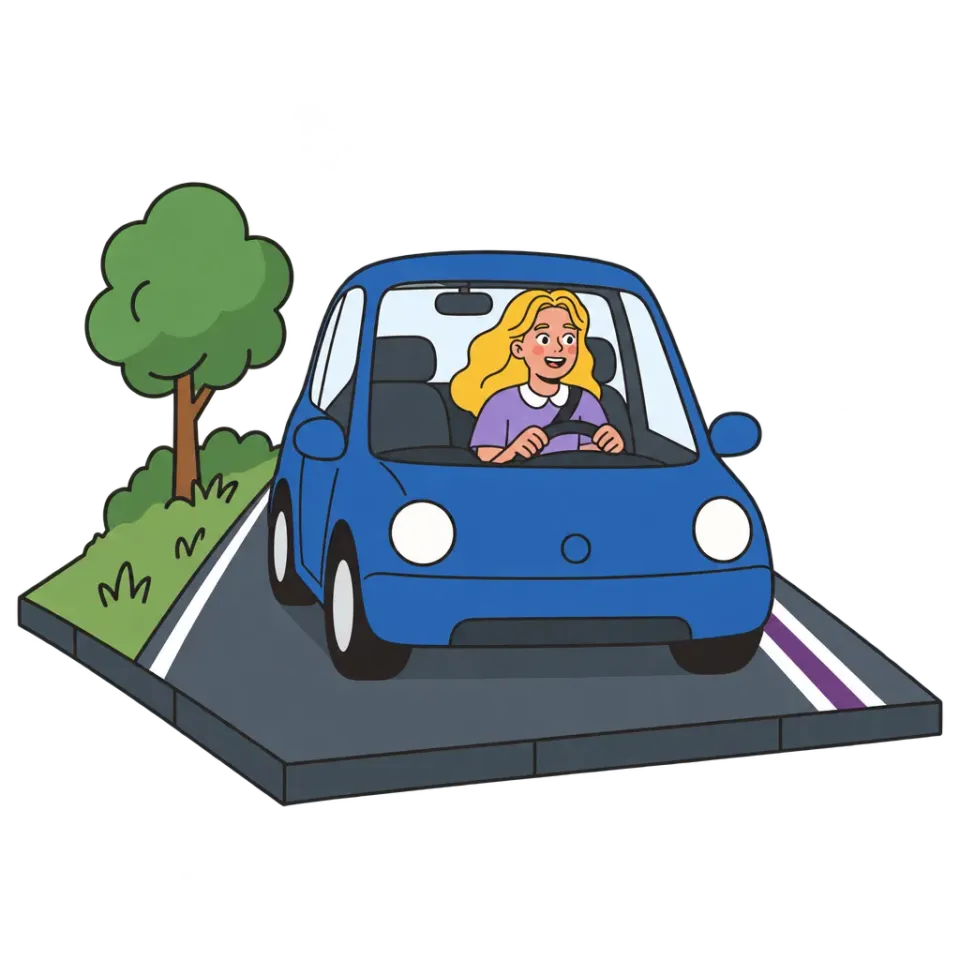
You see a purple line on the road on some roads outside built-up areas in the province of Utrecht. You may drive 60 km/h there, less than the 80 you expect on such a road. Note: the 60 is on the signs. The purple itself is not a traffic rule.
What does a purple line on the road mean?
A purple (or lilac) line between two white centre lines means: usually 60 km/h applies here. The province of Utrecht uses it on provincial roads outside built-up areas where the speed was lowered from 80 to 60 km/h. Because you do not expect 60 there, the road gets an eye-catching colour.
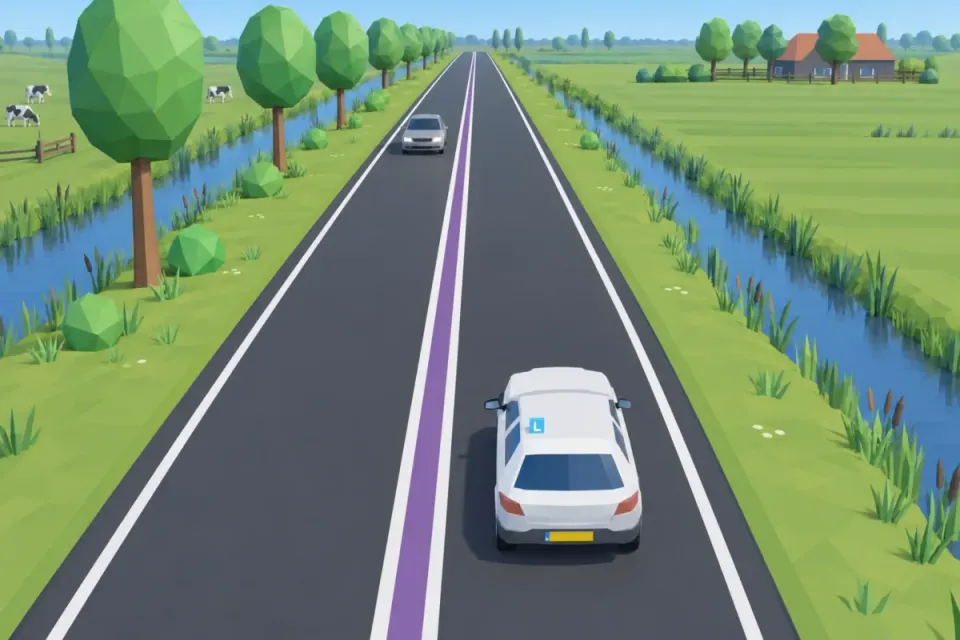
Not a traffic rule: the signs decide
The purple line is not in the traffic rules (RVV 1990). A road authority may add extra markings on the road, for example to remind you of the speed (BABW). The purple line falls under that. That is also why you should not expect the purple line in your CBR exam.
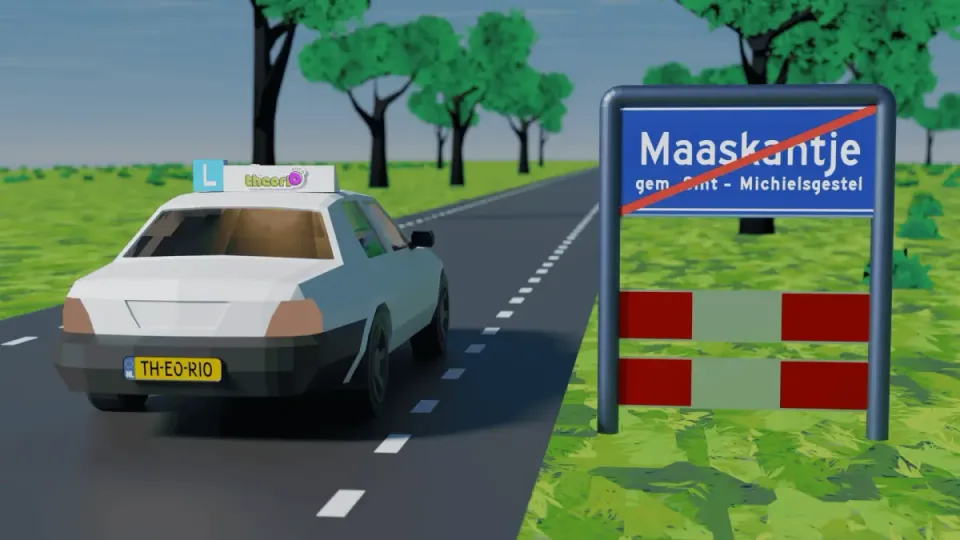
- The signs set your speed. The 60 km/h is on a sign (sign A1 with 60).
- Without such a sign, 80 km/h simply applies outside built-up areas, purple or not.
- A sign can lower the speed even more, for example at roadworks. Then you follow the sign too.
More under speed inside and outside built-up areas and speed signs.
Purple with a solid or broken line
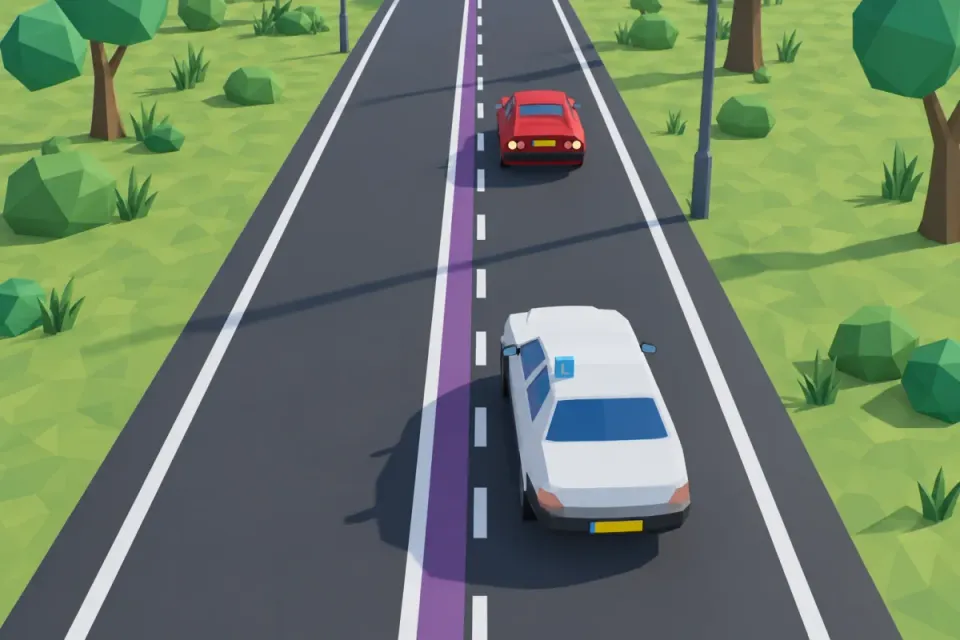
Whether you may overtake depends on the white lines next to the purple. Look at the line on your side:
- Solid: you may not overtake. See the solid line.
- Broken: you may overtake when it is safe. See the broken line.
- Solid and broken side by side: you may only overtake from the broken side.
Which line is used differs per stretch of road. On the N226 near Leusden, for example, part of the road has a solid line and there is a broken line at exits.
Where you do (and do not) find a purple line on the road
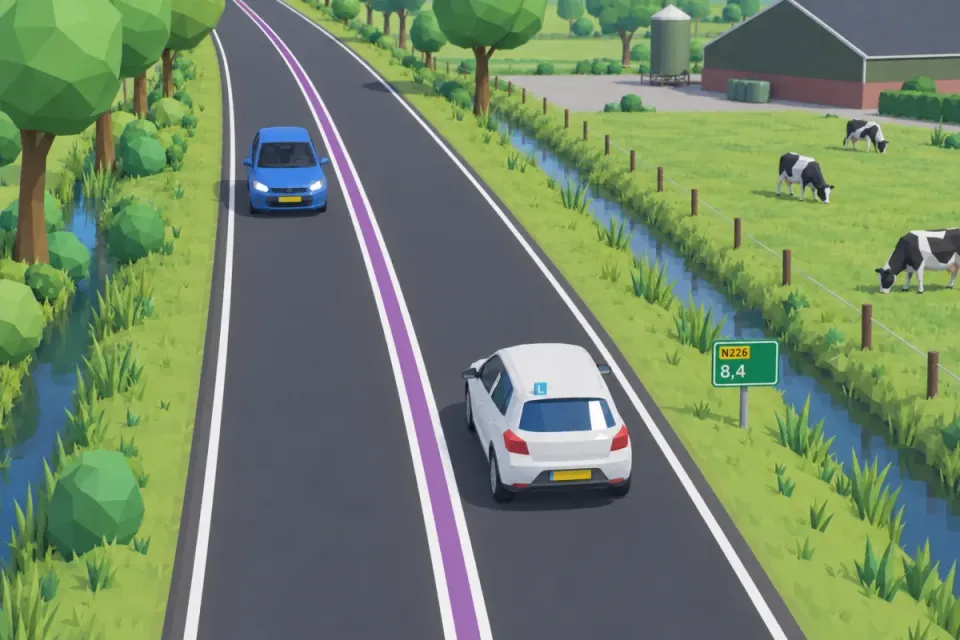
You see a purple line on provincial roads with an N number in the province of Utrecht, outside built-up areas. Often these used to be 80 km/h roads. Examples:
- part of the N402 in Stichtse Vecht (traffic decision 2026);
- about 4 kilometres of the N226 near Leusden (traffic decision 2026);
- the provincial road between Baarn and Hilversum, which was in the news in 2024 (TopGear).
Since when has there been a purple line on the road? It was in the news in 2024, and in 2026 more roads in Utrecht were added. We have not found it outside Utrecht in official decisions. You do not see it inside built-up areas, on autowegen or on motorways.
On these roads there are often priority signs (B3, B4 or B5) at side roads. How priority works there is explained under the T-junction.
Why purple? According to the province, purple was not yet used in traffic, and almost everyone sees the colour the same way, including people who are colour-blind.
Recognising different roads by their lines
How do you know whether you may drive 60 or 80? First look at the signs. If you see no sign, the centre line helps:
| What do you see? | Type of road | Speed |
|---|---|---|
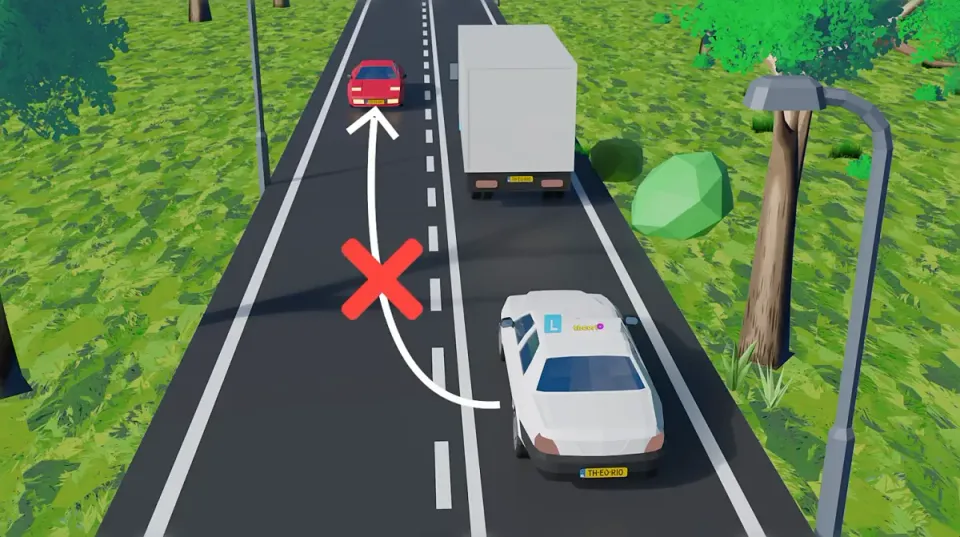 Two white lines, nothing in between | Ordinary road outside built-up areas | 80 km/h |
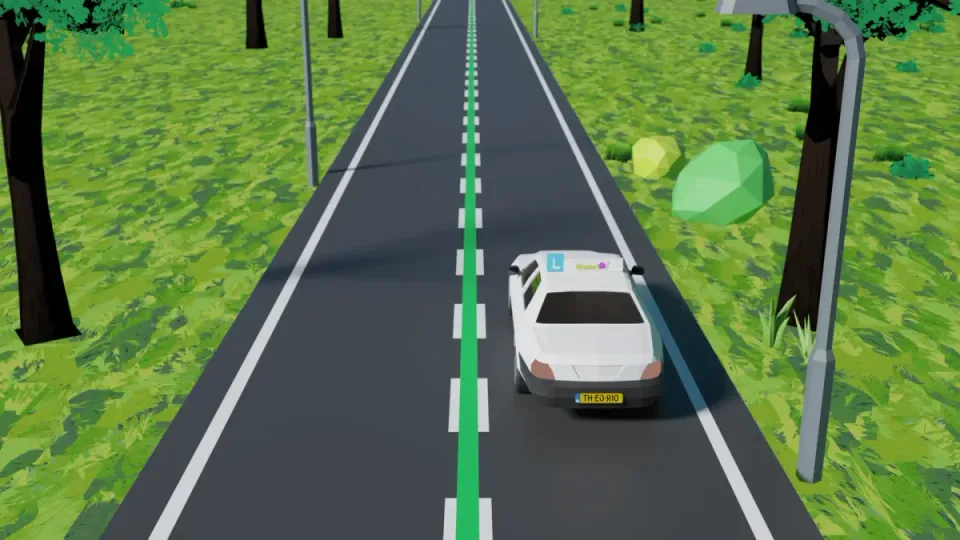 Green line | Usually an autoweg | 100 km/h. See the green line |
| Purple line | Road in the province of Utrecht | 60 km/h, on the signs |
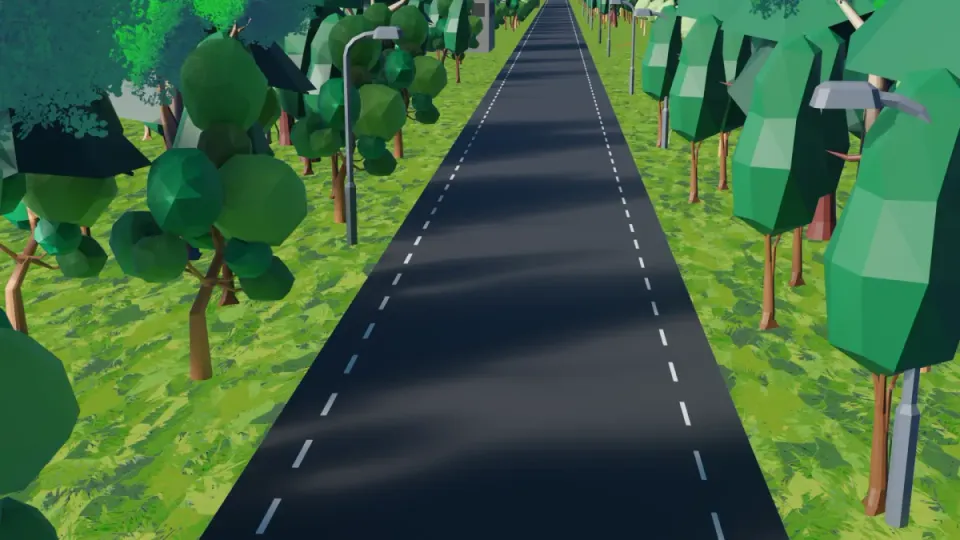 No centre line | Narrow road outside built-up areas | 80 km/h, 60 only with a sign |
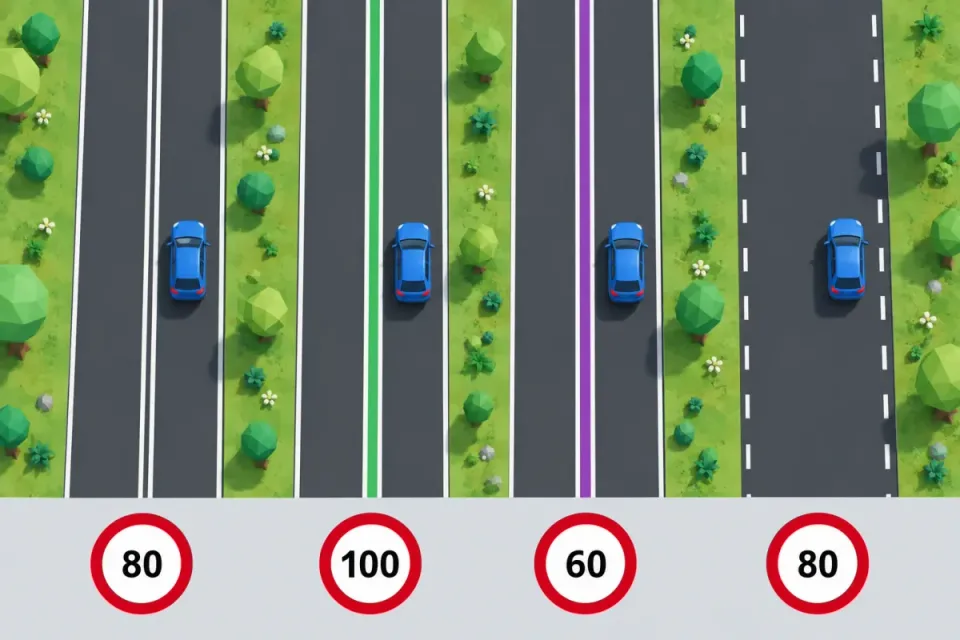
Sources: RVV 1990 (art. 21, 63a and 76–81), wetten.overheid.nl; BABW art. 6, wetten.overheid.nl; Uitvoeringsvoorschriften BABW inzake verkeerstekens, chapter IV, wetten.overheid.nl; province of Utrecht traffic orders, Provinciaal Blad 2026, 10573 (N402) and 2026, 13574 (N226); ANWB, Tekens op het wegdek; TopGear, 24 August 2024 (after RTL Nieuws).
CBR exam pitfalls for the purple line
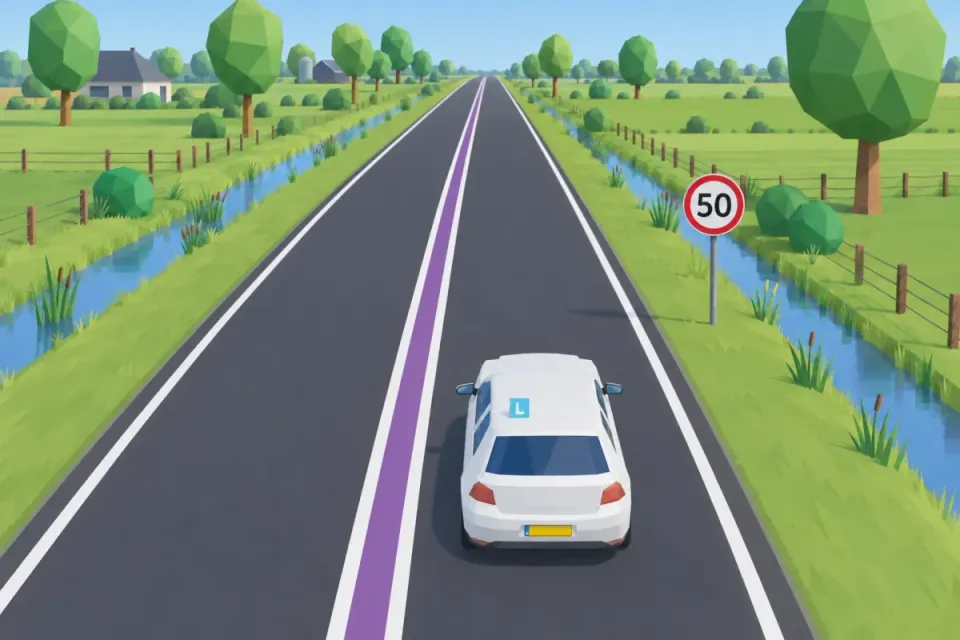
❌ Wrong: Purple line comes before the sign? ✅ Right: No. The sign comes first.
❌ Wrong: Purple means no overtaking? ✅ Right: No. The white lines decide.
❌ Wrong: No sign in the photo, so no 60? ✅ Right: Not necessarily. A sign you passed earlier still applies.
Practise like the exam
Example questions like in the CBR exam
Real questions from the Theorio app. You can expect similar questions in your CBR exam.
Question 1 of 4
You are driving on a road with a purple stripe between the centre lines. Does the purple colour set your speed limit by itself?
Tap the answer you think is right.
You are driving behind the blue car. On your side there is a solid white line next to the purple. May you overtake the blue car?
Tap the answer you think is right.
You see four roads, from left to right A, B, C and D. On which road is the limit usually 60 km/h?
Tap the answer you think is right.
A little way back you passed a 60 km/h sign. Now you see the purple stripe but no sign. What is your speed limit here?
Tap the answer you think is right.
Answers and explanations for the example questions
Question 1: You are driving on a road with a purple stripe between the centre lines. Does the purple colour set your speed limit by itself?
Correct answer: No, the signs set your speed
The purple stripe is not in the traffic rules. On these roads the 60 km/h limit is on signs, and the sign always comes first.
Question 2: You are driving behind the blue car. On your side there is a solid white line next to the purple. May you overtake the blue car?
Correct answer: No, you may not cross the solid line
The purple does not change the white lines. If the line on your side is solid, you may not cross it to overtake.
Question 3: You see four roads, from left to right A, B, C and D. On which road is the limit usually 60 km/h?
Correct answer: Road C
Road C has a purple stripe: the limit there is usually 60 km/h, set by signs. On A (white, no colour) and D (no centre line) it is usually 80 km/h, on B (green) usually 100 km/h.
Question 4: A little way back you passed a 60 km/h sign. Now you see the purple stripe but no sign. What is your speed limit here?
Correct answer: 60 km/h
A speed sign stays valid until another sign says something else. Not seeing a sign right now does not change that.
FAQ
Frequently asked questions
Short answers to questions that often come up on this subject.
What does a purple line on the road mean?
In the province of Utrecht, purple between the double white centre line marks a provincial road where the limit is 60 km/h. It helps you recognise the road; it is not a traffic rule. The speed limit is on the signs.
How fast may you drive on a road with a purple line?
Follow applicable speed signs and traffic rules. On the described Utrecht sections, signs establish 60 km/h; purple itself sets no speed. Without another applicable limit, the passenger-car default outside built-up areas on an ordinary road is 80. A sign absent from a photograph may still apply if passed earlier.
May you cross a purple line to overtake?
The purple says nothing about that. Look at the white centre line on your side: if it is solid, you may not cross it; if it is broken, you may when it is safe.
What is the difference between a green and a purple line?
Green aids recognition of a layout often associated with 100 km/h; purple is used locally on certain Utrecht roads with a sign-imposed 60 km/h limit. Neither colour is itself a speed-limit or motor-road sign. The white lines retain their own meaning for crossing.
Is the purple line part of the CBR theory?
Purple is not an independent mandatory or prohibitory rule in the RVV. Assess a traffic situation containing it by reading road type, signs and white markings. The colour may aid recognition but creates no speed limit, priority or overtaking ban itself.
Ready to practise?
Test your knowledge of Road markings with 30 practice questions in the app.
Free mock exam · no account needed
Your first quiz is free, no account needed. After that from €34.99 for 90 days of access.