Part 6 of 7 in Road markings
Green line on the road
What does a green line on the road mean? Usually you may drive 100 km/h, often on an autoweg. Signs come first and the white lines decide about overtaking.


Written by Chris Prosman Reviewed by Dirk van Zuijlen
Updated Reviewed on 3 min read
Free mock exam · no account needed
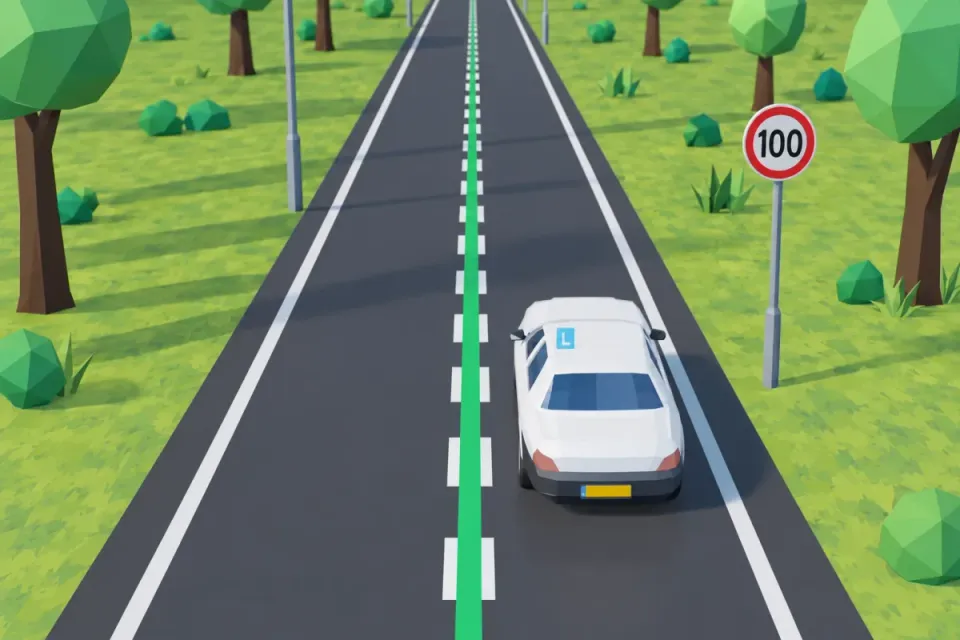
A green line on the road means: you may usually drive 100 km/h here. Often you are on an autoweg. Is there a sign with a different speed? Then the sign comes first. The white lines next to the green tell you whether you may overtake.
What does a green line on the road mean?
Green between two white centre lines means: you may usually drive 100 km/h here. How fast may you drive with a green line? Basically 100. But the signs along the road decide.
You can expect a lower speed:
- just before a junction or a dangerous spot: there is often a 70 sign;
- at roadworks: temporary signs show a lower speed;
- when a matrix sign above the road shows a lower speed.
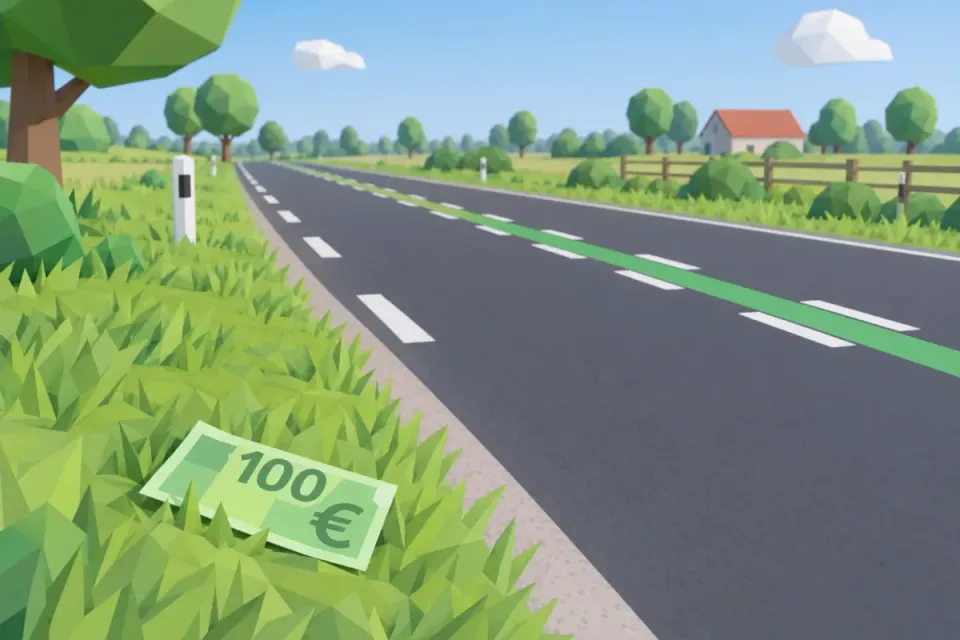
Memory aid: green = 100, just like the green 100-euro note. But the sign always comes before the colour. So a 70 or 80 sign still applies, even if the green continues.
Green with a solid or broken line
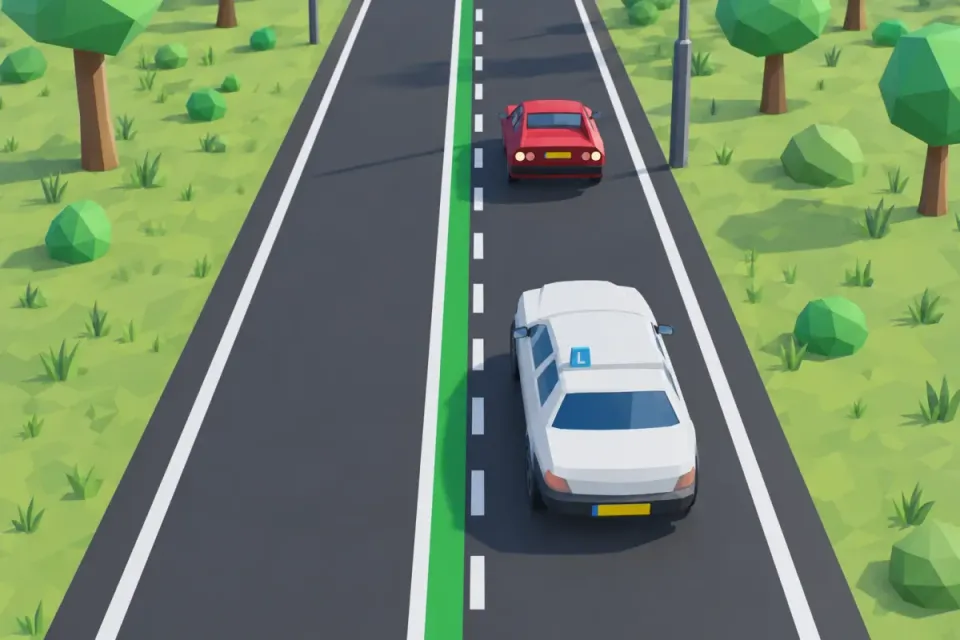
May you overtake at a green line? That depends on the white lines, not on the green:
Broken white lines: you may overtake when it is safe.
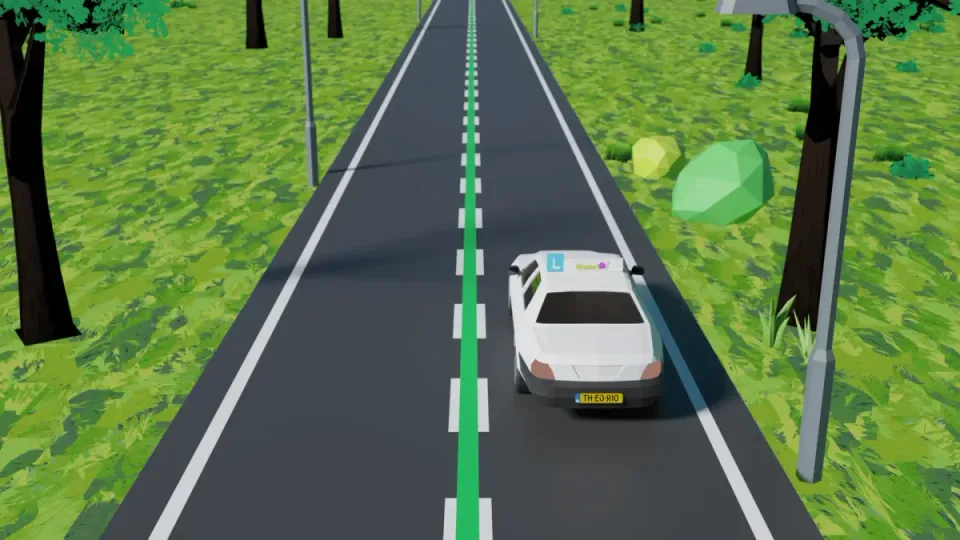
Solid white lines: you may not overtake. See the solid line.
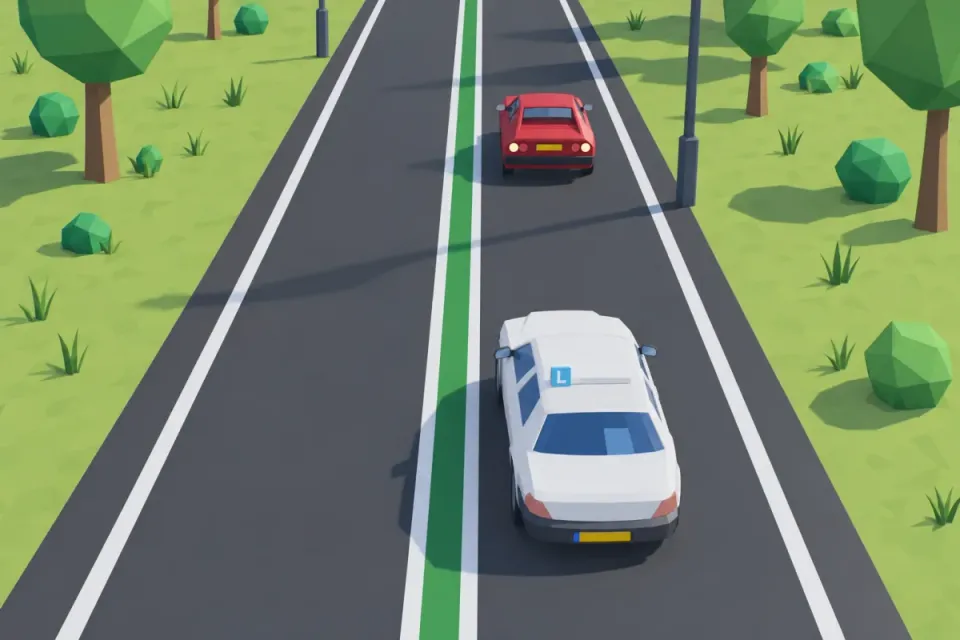
One broken and one solid: you may only overtake from the side with the broken line.
Where you do (and do not) find a green line on the road
You see a green line on roads outside built-up areas where 100 km/h applies. Usually that is an autoweg. Many autowegen have an N number, such as the N34. The N number itself says nothing about the speed.
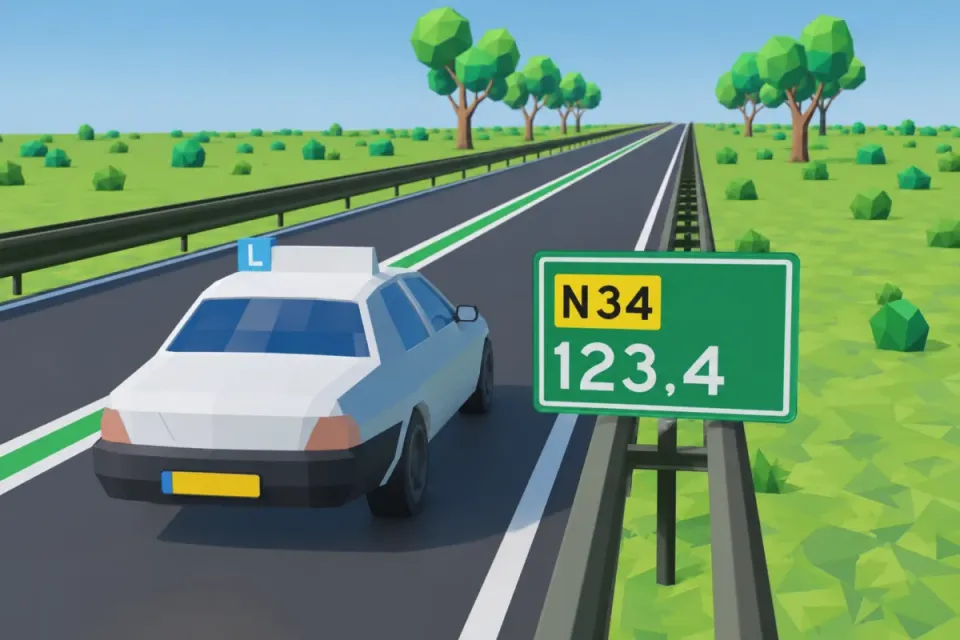
You do not see a green line:
- on the motorway: the directions are already separated there;
- inside built-up areas;
- on ordinary roads outside built-up areas where 80 km/h applies.
Green line or autoweg sign?
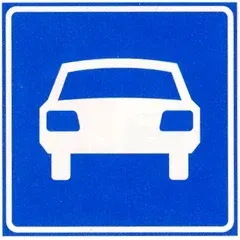
Whether you are on an autoweg is shown by sign G3, not by the green line. So an autoweg without green is possible too. What an autoweg is and how fast you may drive there is explained under speed on the autoweg. Which sign comes first when several speeds are shown is explained under speed signs.
Recognising different roads by their lines
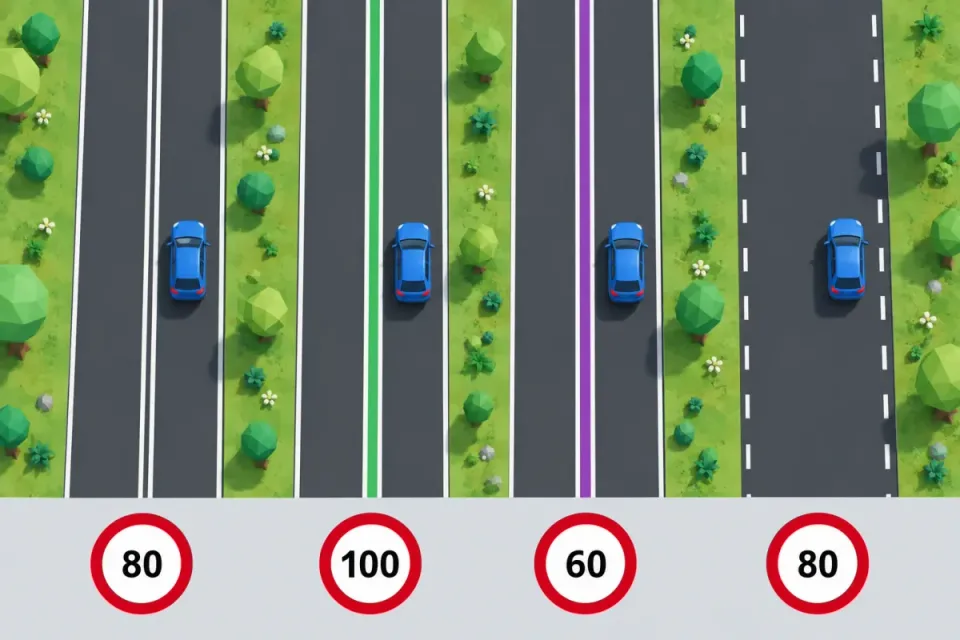
What do the coloured lines on the road mean? If there is no sign, the centre line helps you know the speed. This is how you know whether you may drive 80 or 100:
| What do you see? | Type of road | Speed |
|---|---|---|
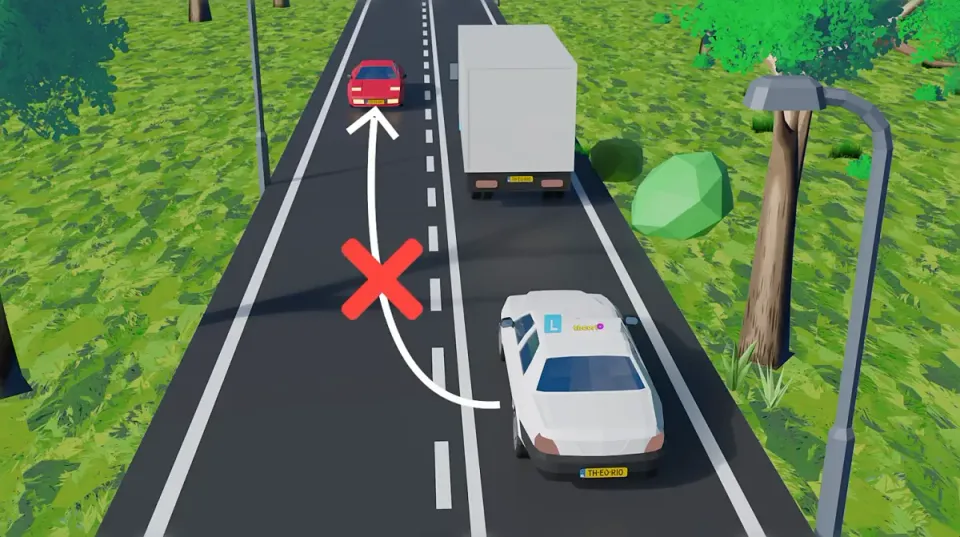 Two white lines, nothing in between | Ordinary road outside built-up areas | 80 km/h |
| Green line | Usually an autoweg | 100 km/h |
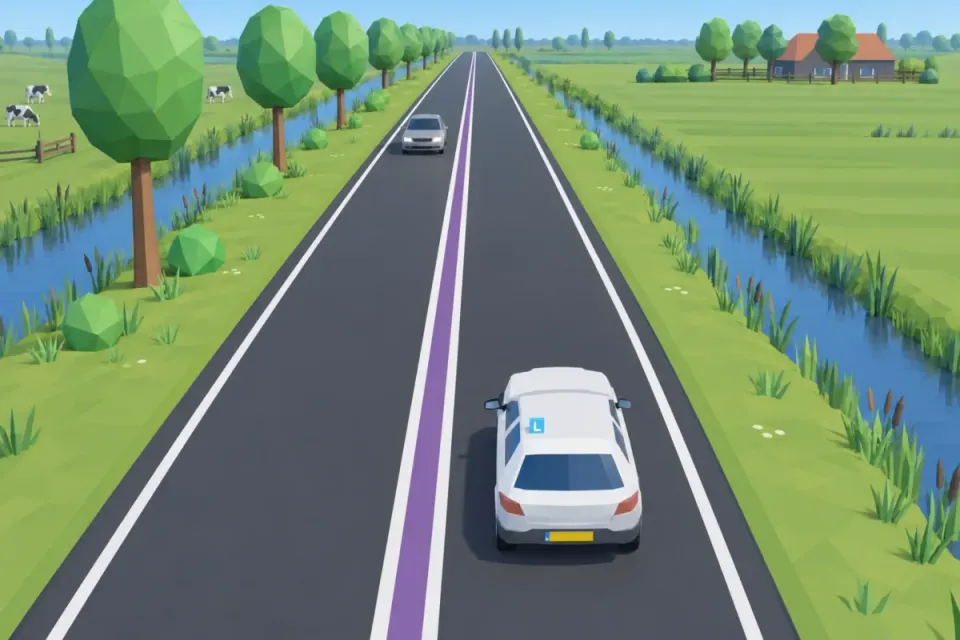 Purple line | Road in the province of Utrecht | 60 km/h, on the signs. See the purple line |
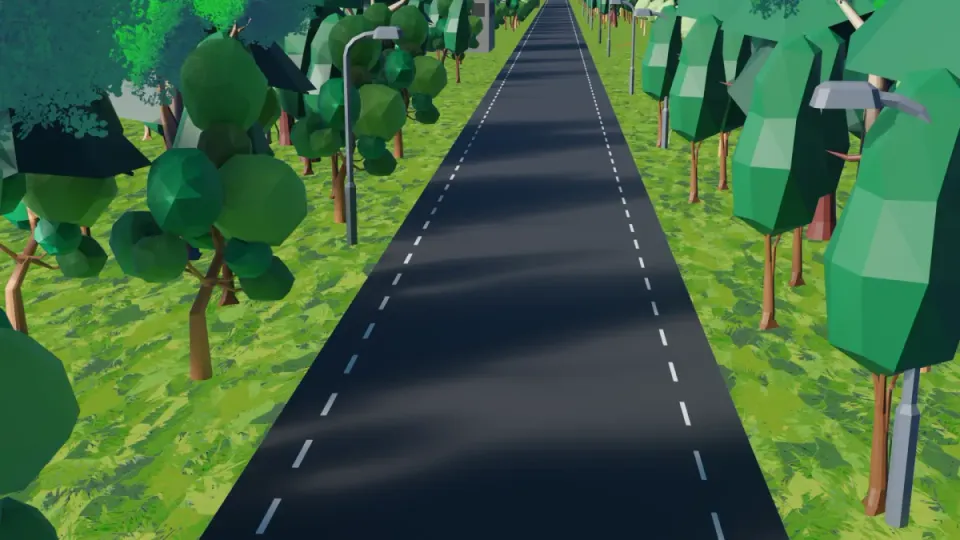 No centre line | Narrow road outside built-up areas | 80 km/h, 60 only with a sign |
CBR exam pitfalls for the green line
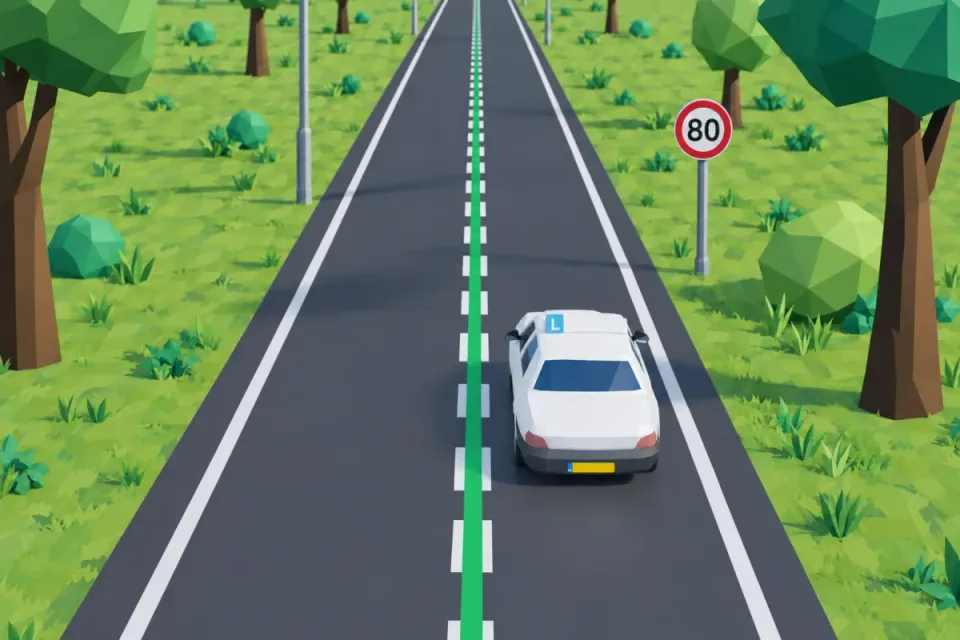
❌ Wrong: Green line comes before the sign? ✅ Right: No. The sign comes first.
❌ Wrong: Green means no overtaking? ✅ Right: No. The white lines decide.
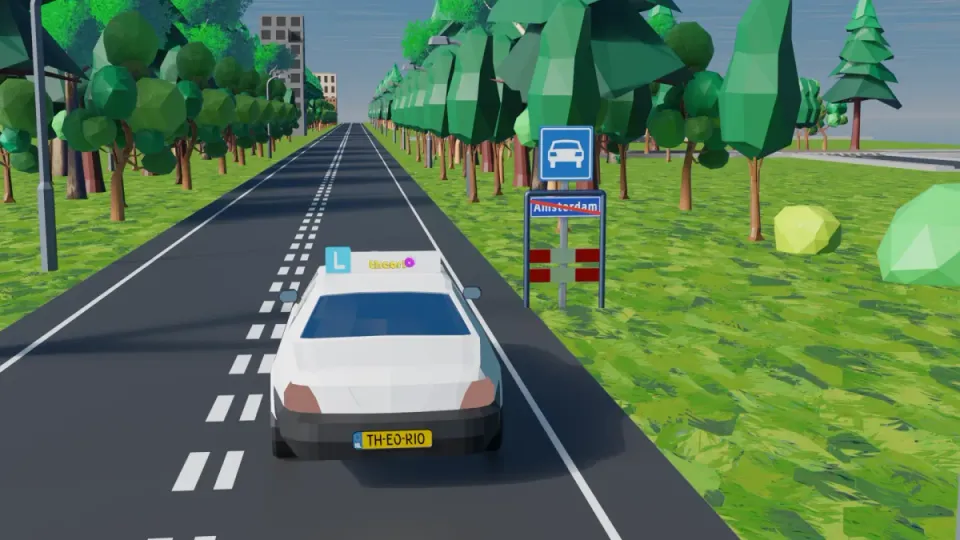
❌ Wrong: No green, so no autoweg? ✅ Right: No. Sign G3 decides that.
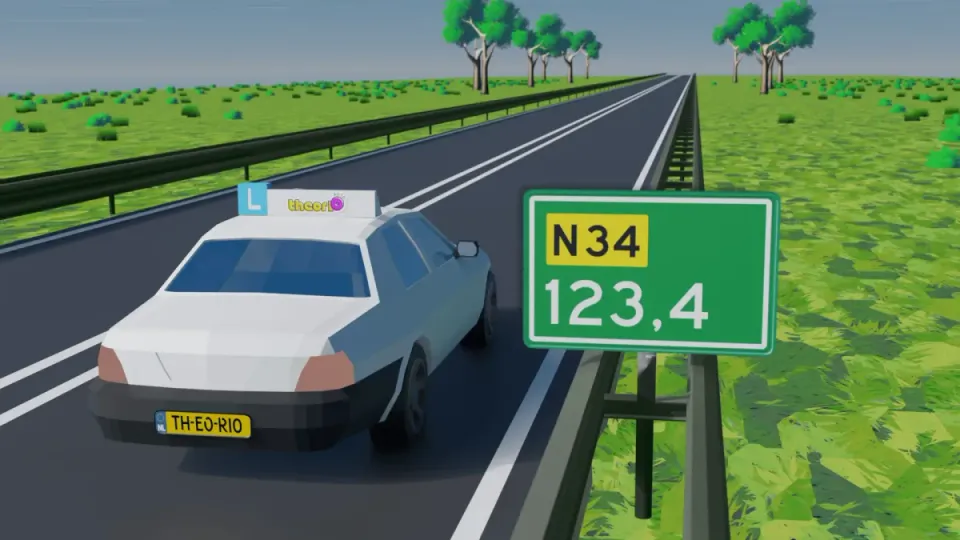
❌ Wrong: N number, so 100? ✅ Right: No. The N number says nothing about the speed.
Practise like the exam
Example questions like in the CBR exam
Real questions from the Theorio app. You can expect similar questions in your CBR exam.
Question 1 of 4
Who can you expect here?
All options
- Passenger cars
- Trucks
- Brommobiel (microcar)
- Camper van
Are you allowed to overtake here?
Tap the answer you think is right.
Stripes on the road can divide a carriageway into lanes or indicate what the maximum speed is. Traffic signs precede the stripes.
Which road is designed for a maximum speed of 100 km/h?
Tap the answer you think is right.
Outside the built-up area you pass this blue sign. There is no green stripe and no other speed sign. What is your speed limit here?
Tap the answer you think is right.
Answers and explanations for the example questions
Question 1: Who can you expect here?
Correct answer: Passenger cars; Trucks; Camper van
On an expressway, only vehicles that can and are allowed to drive at least 50 km/h may drive. A brommobiel (microcar) may drive a maximum of 45 km/h and is therefore prohibited. The other vehicles can go fast enough and you may expect them here yes 🚗.
Question 2: Are you allowed to overtake here?
Correct answer: Yes
The green solid line indicates that this is an expressway where you may drive 100 km/h. Because the white lines are broken, you may simply overtake. 🏎️
Question 3: Which road is designed for a maximum speed of 100 km/h?
Correct answer: Road A
Road A has double white center stripes with a green filling. This indicates a maximum speed of 100 km/h. Road B, with double white stripes without green, represents 80 km/h. 🚀
Question 4: Outside the built-up area you pass this blue sign. There is no green stripe and no other speed sign. What is your speed limit here?
Correct answer: 100 km/h
The blue sign with the car (G3) means an autoweg starts here. The limit there is 100 km/h, even without a green stripe.
FAQ
Frequently asked questions
Short answers to questions that often come up on this subject.
How fast may you go at a green line on the road?
Green alone sets no legal speed limit. It often helps recognise a road laid out for 100 km/h, but check the road type and applicable signs. For a passenger car outside built-up areas, the default is 100 on a motor road and 80 on an ordinary road, unless another applicable limit applies. Green paint does not itself make the road a motor road.
May you overtake at a green line?
Green itself does not regulate overtaking. To cross the centre markings, check the white line on your side: broken may permit it, solid normally does not. Even with broken white, visibility, space and other rules must allow it. Passing entirely within your own half also requires safe lateral clearance.
Is a road with a green line an autoweg?
No, not from the colour alone. The blue motor-road signG 3 establishes motor-road status. The green centre strip aids recognition and does not itself impose a 100 km/h limit. Read signs, road type and the question context; a motor road can also exist without a green centre strip.
On which roads do you see a green line?
Mainly on roads outside built-up areas laid out for 100 km/h, often motor roads with an N-number. Ordinary motorways already separate opposing directions and do not normally have this centre marking. This is recognition, not an absolute geographical rule or separate speed limit. Always read actual road type and signs.
Ready to practise?
Test your knowledge of Road markings with 30 practice questions in the app.
Free mock exam · no account needed
Your first quiz is free, no account needed. After that from €34.99 for 90 days of access.