Part 5 of 7 in Road markings
Hatched road markings and zigzag lines
What are hatched road markings (verdrijvingsvlak)? You may not drive, stop or park on them. Learn the exceptions, the fine and what zigzag lines mean.


Written by Chris Prosman Reviewed by Dirk van Zuijlen
Updated Reviewed on 4 min read
Free mock exam · no account needed
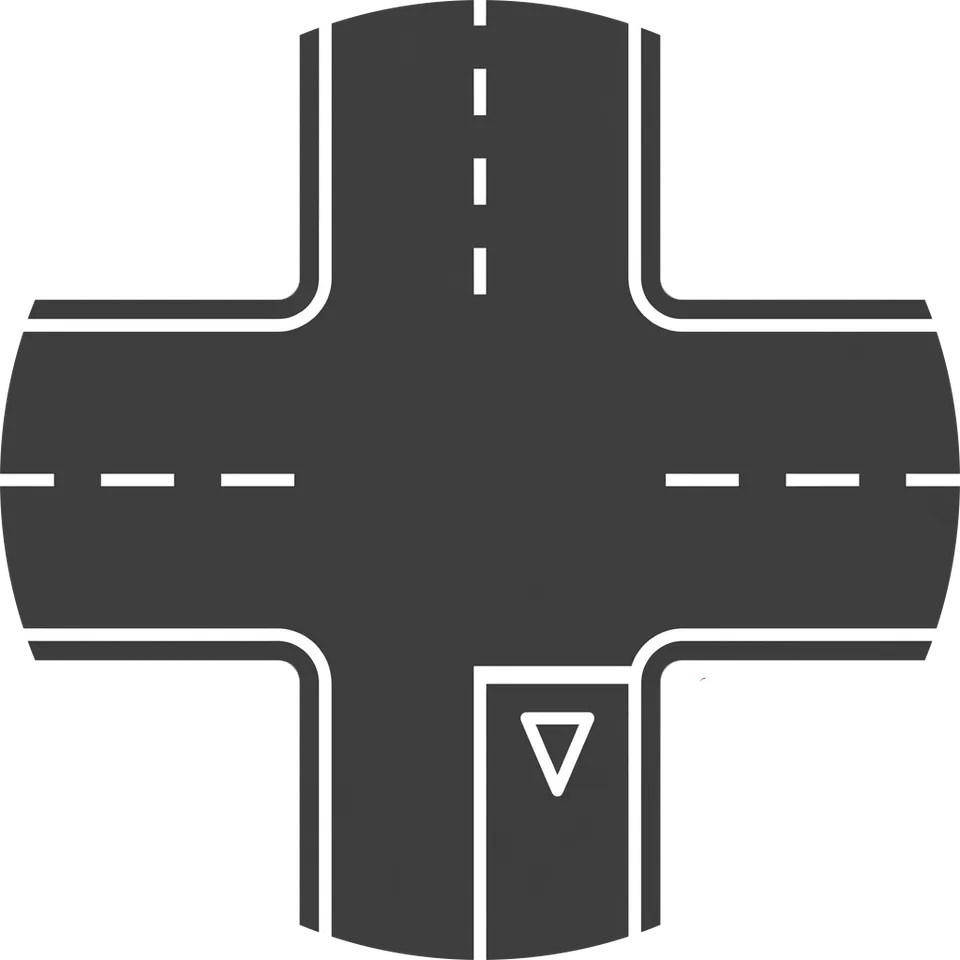
You never use hatched road markings (verdrijvingsvlak) or a gore area (puntstuk): you do not drive over them, stop on them or park on them. A zigzag line is only a warning: slow down and pay close attention.
What are hatched road markings?
Hatched road markings (verdrijvingsvlak) are an area on the road with diagonal white lines. You may not drive over them. The area pushes you to the lane next to it. This way it guides traffic calmly to another lane and keeps space clear.
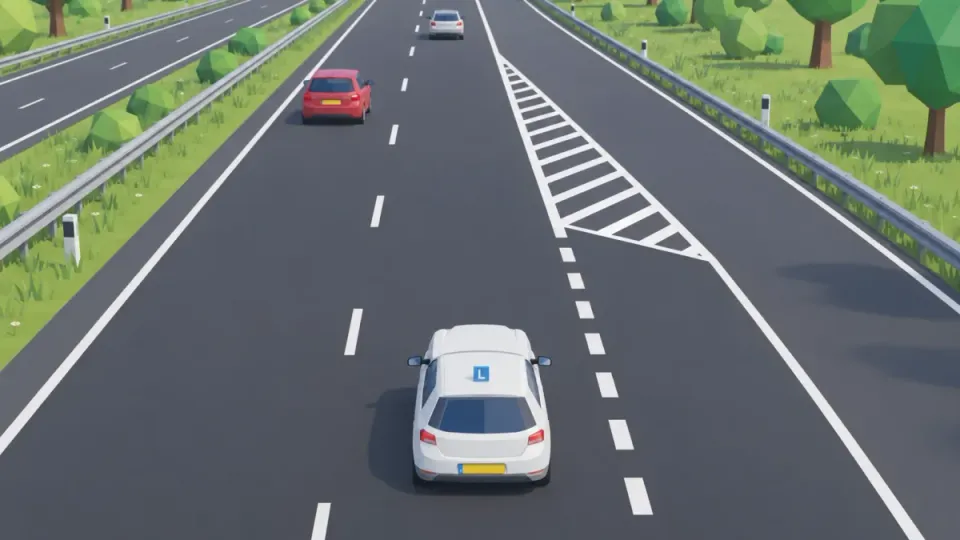
You mainly see hatched road markings:
- where a lane ends. The area guides you to the lane next to it. See carriageway, lane and road.
- where a turning lane begins, for example a lane for turning left.
- where roads split or merge, such as at an exit or slip road. Often together with a gore area.
What is a gore area (puntstuk)?
A gore area is a white, pointed area where roads or lanes split or come together. You see it for example at a motorway exit, between the main road and the exit.
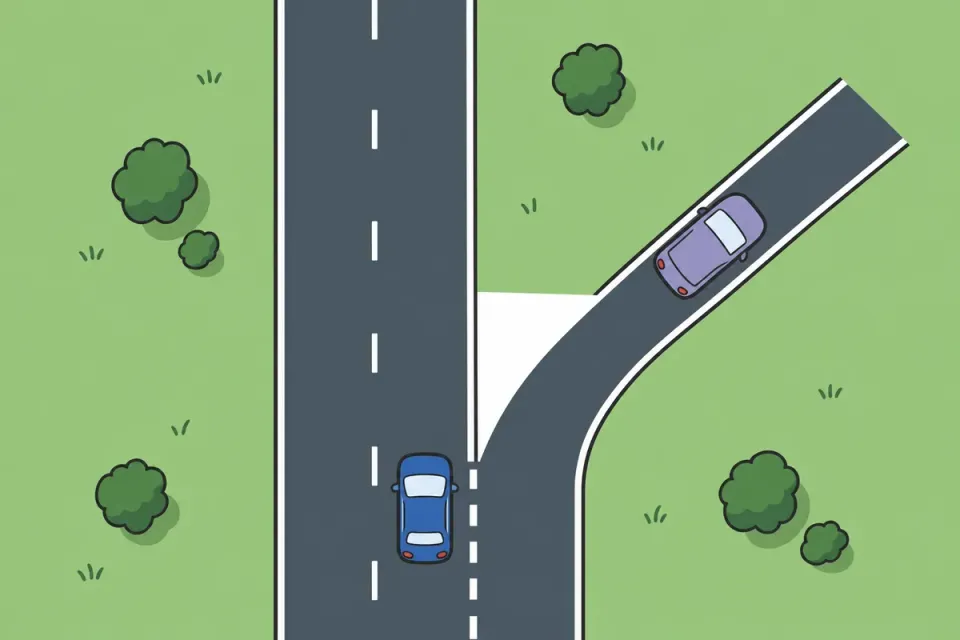
The same rule applies as for hatched road markings: you may not use it (RVV 1990 article 77). Small white triangles across your lane are something else: those are shark teeth. There you give way.
Rules: what is not allowed on hatched road markings?
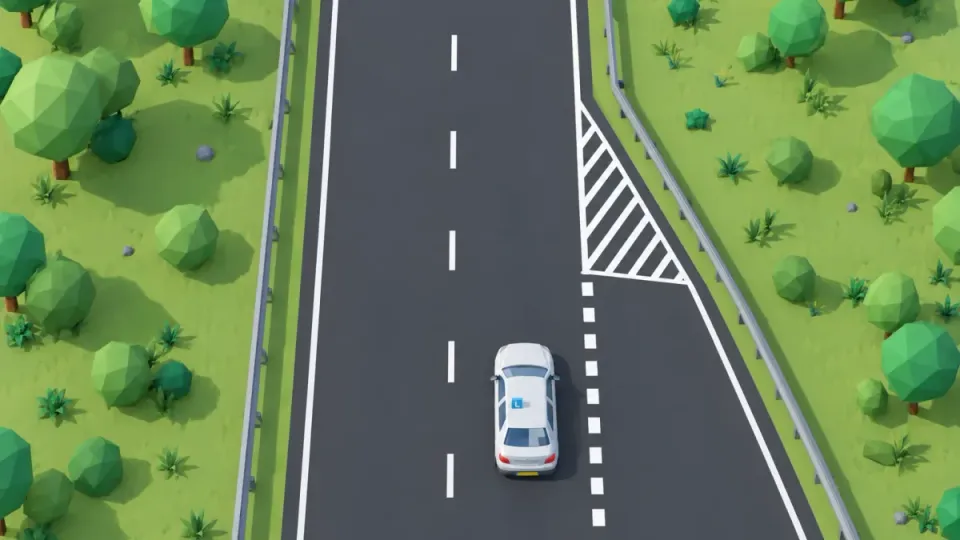
You may not use hatched road markings or a gore area. So:
- do not drive over them, not even with two wheels or a little bit;
- do not stop on them, not even briefly to wait;
- do not park on them.
Not even when you are too late
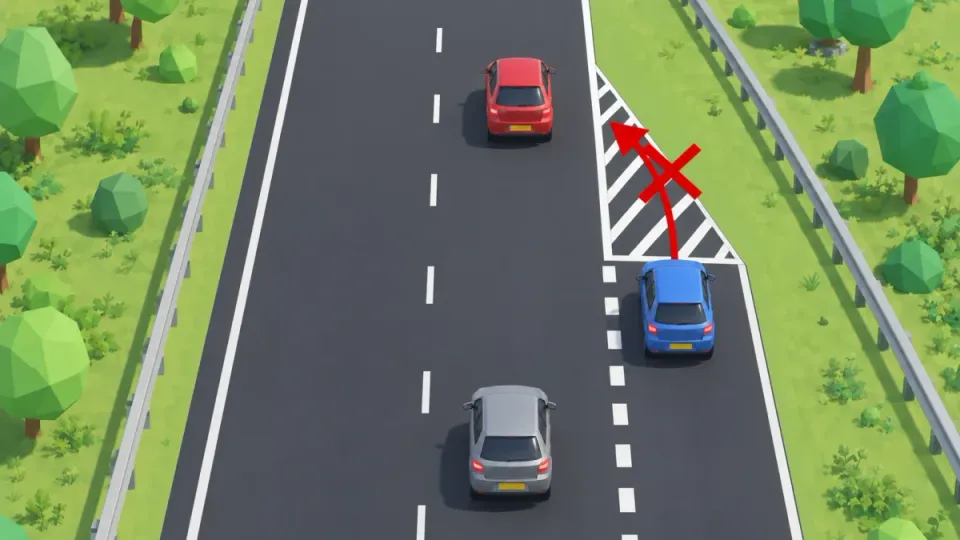
- Too late to merge? Do not cross the diagonal lines. What to do instead is explained under merging and leaving the motorway.
- Nearly missed your exit? Not then either. See missed your exit.
- Ambulance behind you? Even then you do not go onto the hatched area. How to make room is explained under emergency vehicles.
When may you use hatched road markings?
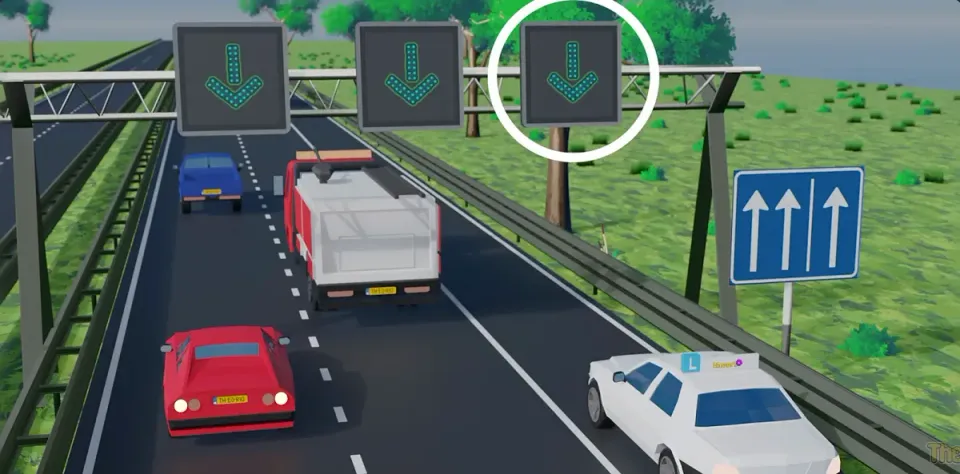
Only in two cases:
- An open rush hour lane. Does an open rush hour lane run over the area? Then you follow the rush hour lane, also over the diagonal lines. Is it closed? Then you may not. See the rush hour lane.
- A bus on its bus road or bus lane. Does the bus road cross a split or merge? Then the bus may cross the area. You in your car may not.
Animation
How to drive past hatched road markings
Watch the learner car take a motorway exit, and see what you may and may not do at hatched road markings.
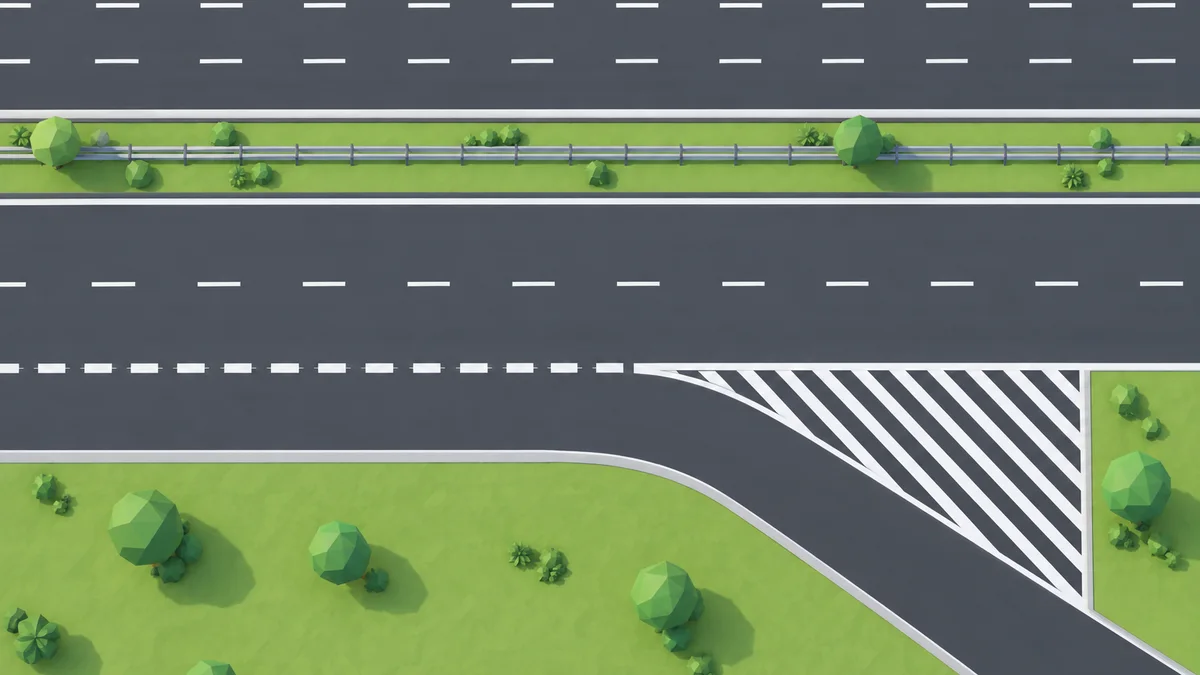
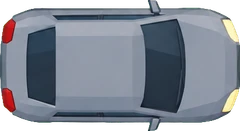
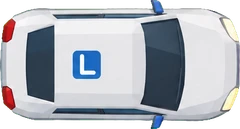
You want to take the exit. Signal in good time and move into the exit lane.
Fine for hatched road markings or a gore area
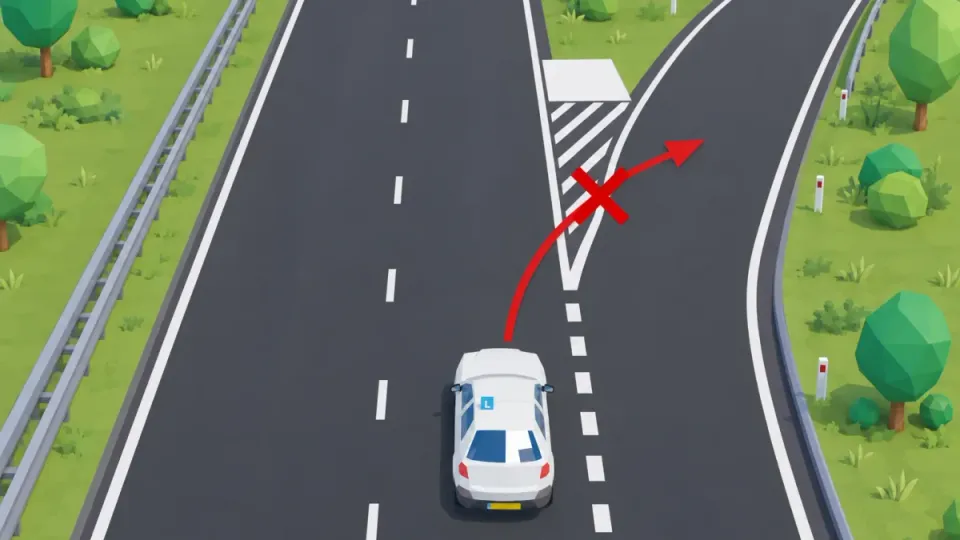
If you drive over hatched road markings, the fine in 2026 is € 320 (offence code R618). For a gore area it is also € 320 (offence code R618a). Add € 9 administration costs. What crossing a solid line costs is explained under the solid line.
Zigzag line: only a warning
Zigzag lines on the road mean: watch out, danger ahead. Slow down and pay extra attention. You see them before a dangerous junction or an obstacle, often at a busy junction with a cycle path.
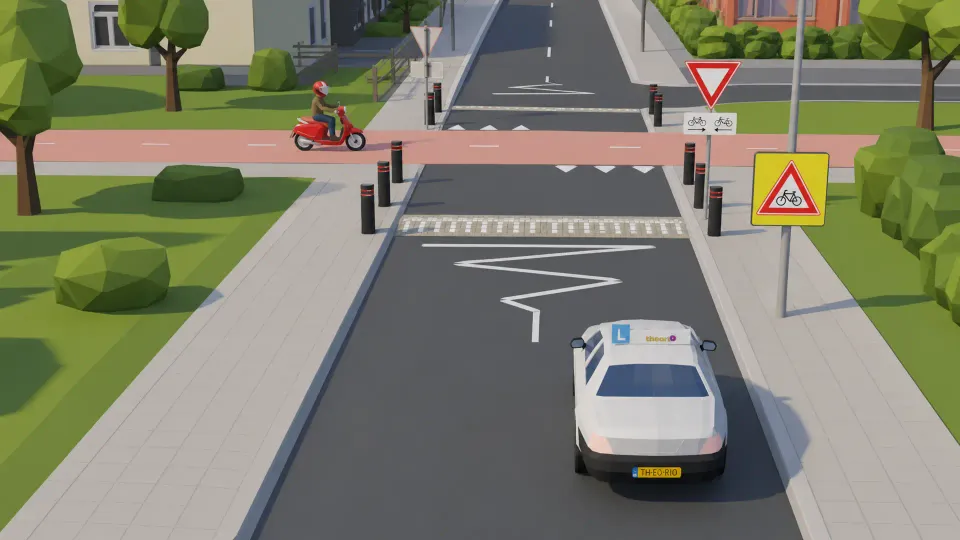
A zigzag line does not forbid anything. It does not give anyone priority either: who goes first is shown by the signs and shark teeth.
In the United Kingdom you may not stop on zigzag lines at a zebra crossing. In the Netherlands zigzag does not mean that. Whether you may stop depends on other rules here. For example, you do not stop on a zebra crossing or within 5 metres of it.
CBR exam pitfalls for hatched road markings and zigzag lines
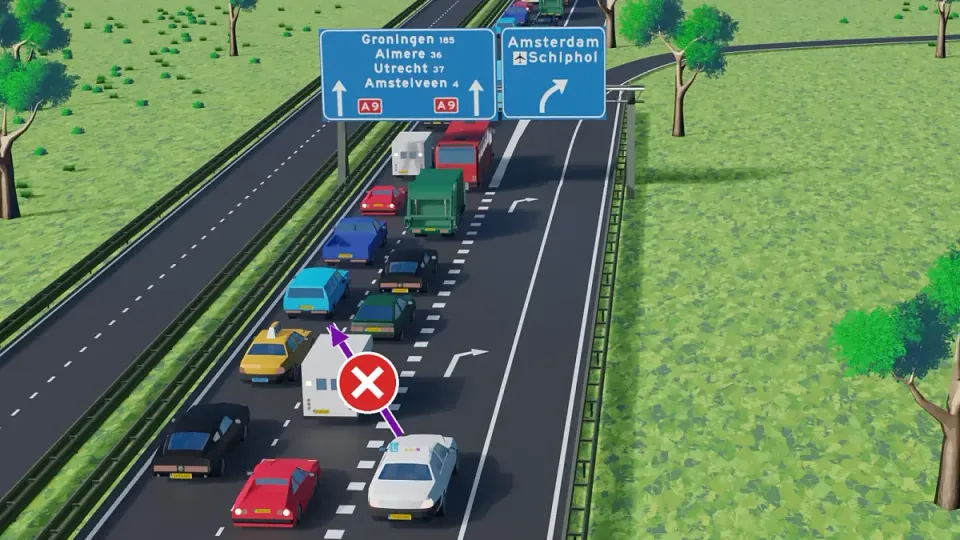
❌ Wrong: Nearly missed the exit? ✅ Right: Do not steer over the area. Drive on.
❌ Wrong: Stopping briefly on the area? ✅ Right: Not allowed, not even for a moment.
❌ Wrong: Rush hour lane over the area? ✅ Right: Only follow it when it is open.
❌ Wrong: Zigzag? ✅ Right: No stopping ban and no priority. Only: pay attention.
Practise like the exam
Example questions like in the CBR exam
Real questions from the Theorio app. You can expect similar questions in your CBR exam.
Question 1 of 4
What does this road marking warn for?
Tap the answer you think is right.
You have almost missed the exit. May you still drive over the white gore area to the exit?
Tap the answer you think is right.
The lane to the right of the learner car ends at the hatched area. A driver in that lane is too late to merge. May he drive over the diagonal stripes?
Tap the answer you think is right.
May you stop on a hatched area, for example to wait for a moment?
Tap the answer you think is right.
Answers and explanations for the example questions
Question 1: What does this road marking warn for?
Correct answer: Dangerous situation
This road marking has a distinctive shape, similar to a tornado 🌪️ or lightning bolt ⚡️, and indicates a dangerous situation ahead. It indicates that extra caution is required.
Question 2: You have almost missed the exit. May you still drive over the white gore area to the exit?
Correct answer: No, you drive on to the next exit
You may not use a gore area (puntstuk), just like a hatched area (RVV 1990 article 77). If you miss the exit, drive on to the next one.
Question 3: The lane to the right of the learner car ends at the hatched area. A driver in that lane is too late to merge. May he drive over the diagonal stripes?
Correct answer: No, he brakes calmly and waits for a gap
Driving over a hatched area is not allowed, not even when you are too late. If merging does not work, brake calmly and wait for a gap.
Question 4: May you stop on a hatched area, for example to wait for a moment?
Correct answer: No, you may not drive or stop on it
A hatched area is not a lane and not a waiting spot. You may not drive over it, stop on it or park on it.
FAQ
Frequently asked questions
Short answers to questions that often come up on this subject.
May you drive over hatched road markings?
Normally not: hatching is not a traffic lane or waiting place, and a missed exit is no exception. Article 77 has specific exceptions for following an open rush-hour lane or a lawfully used bus carriageway/lane where it passes a split or merge. This gives your car no general permission to use a hatched area.
What does a zigzag line on the road mean?
A zigzag line warns of a dangerous situation, such as a busy junction with a cycle path or an obstacle. It forbids nothing, but you slow down and pay extra attention.
What is a gore area (puntstuk)?
An often white, pointed area on the surface where roads, lanes or carriageways split or merge, for example at a motorway exit. Normally do not use it for driving, stopping or parking. Article 77 has specific route exceptions for following an open rush-hour lane or a lawfully used bus carriageway/lane at such a split or merge.
How high is the fine for driving over hatched road markings?
In 2026 € 320 (offence code R618), plus € 9 administration costs. The amount is the same for a gore area.
May you stop on hatched road markings?
Do not use hatching as an ordinary waiting or parking place. A missed exit or briefly dropping someone off is no exception. Specific statutory route exceptions for open rush-hour lanes or lawful bus-lane use do not give general permission for voluntary stopping or parking.
Ready to practise?
Test your knowledge of Road markings with 30 practice questions in the app.
Free mock exam · no account needed
Your first quiz is free, no account needed. After that from €34.99 for 90 days of access.