Part 1 of 7 in Road markings
Broken lines and warning lines
Broken line: you may cross it to overtake or change lanes. Plus the warning line, double lines and lines with a colour between them.


Written by Chris Prosman Reviewed by Dirk van Zuijlen
Updated Reviewed on 4 min read
Free mock exam · no account needed
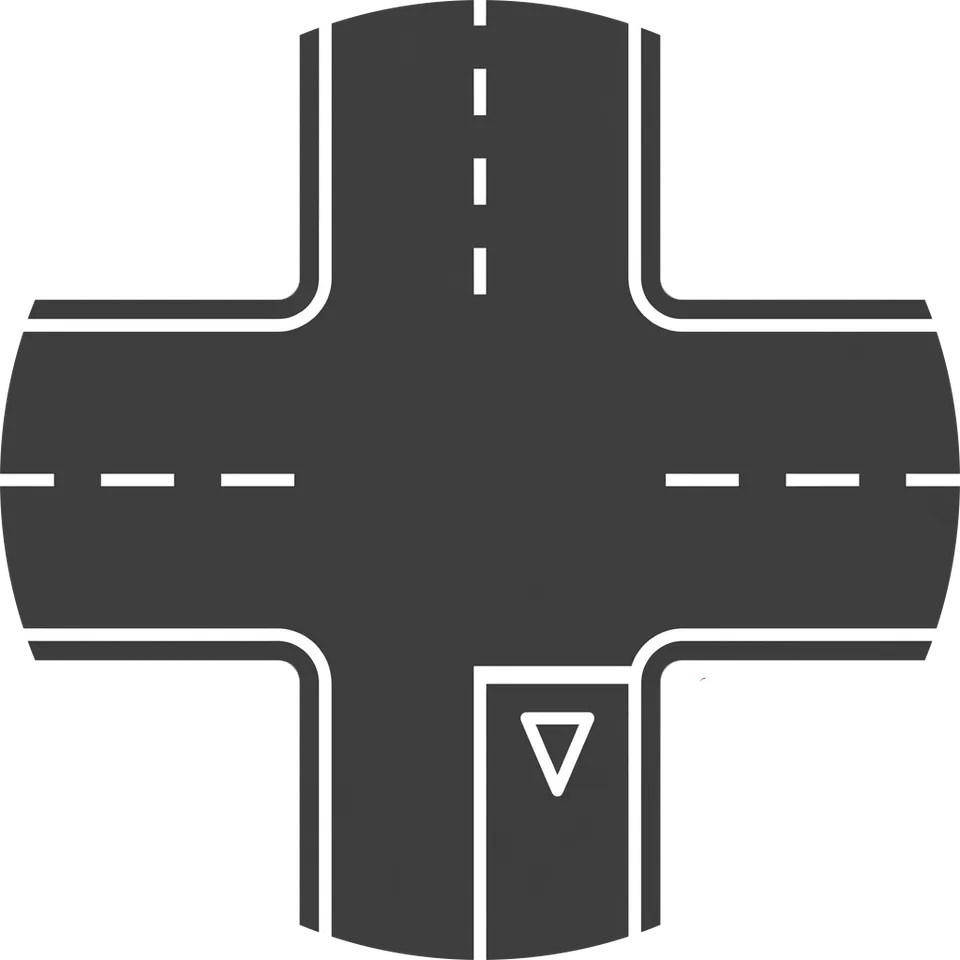
A broken line is a white line with gaps in it. You may cross it to overtake, change lanes or turn, if it is safe. Are the lines long and the gaps short? Then it is a warning line: something changes further ahead.
What is a broken line on the road?
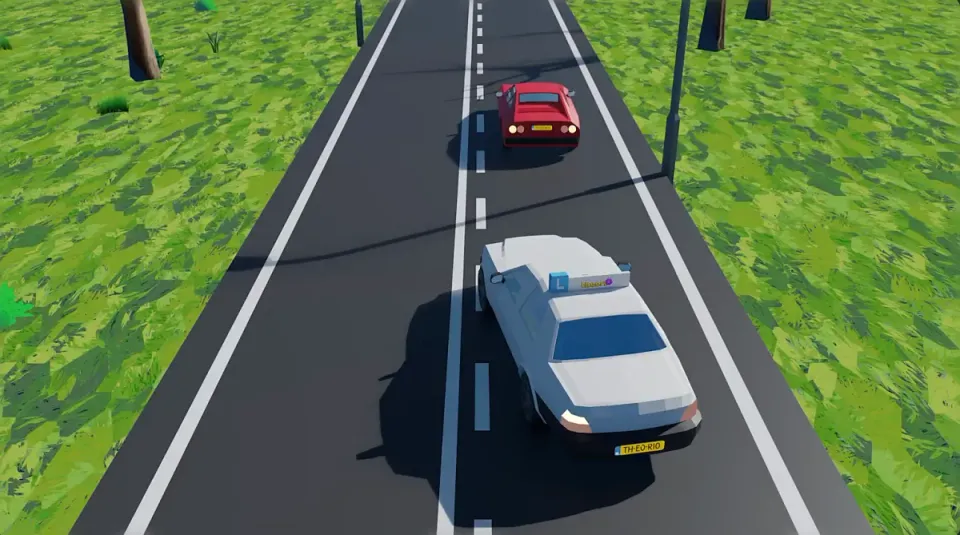
A broken line is a white line with gaps in it. You see it between lanes or in the middle of the road. You may cross this line.
When may you cross a broken line? When it is safe and no sign forbids it. For example to:
- overtake;
- change lanes;
- turn.
A sign can still forbid overtaking, such as the no-overtaking sign (sign F1). The sign then comes first.
The painted parts are shorter than the gaps: 1 part line, 3 parts gap. Outside built-up areas this is usually 3 metres of line and 9 metres of gap. Inside built-up areas 1 metre of line and 3 metres of gap.
A yellow broken line along the kerb is something else. It means: no parking here. You can read about it on the yellow line page.
Cycle lane with a broken line
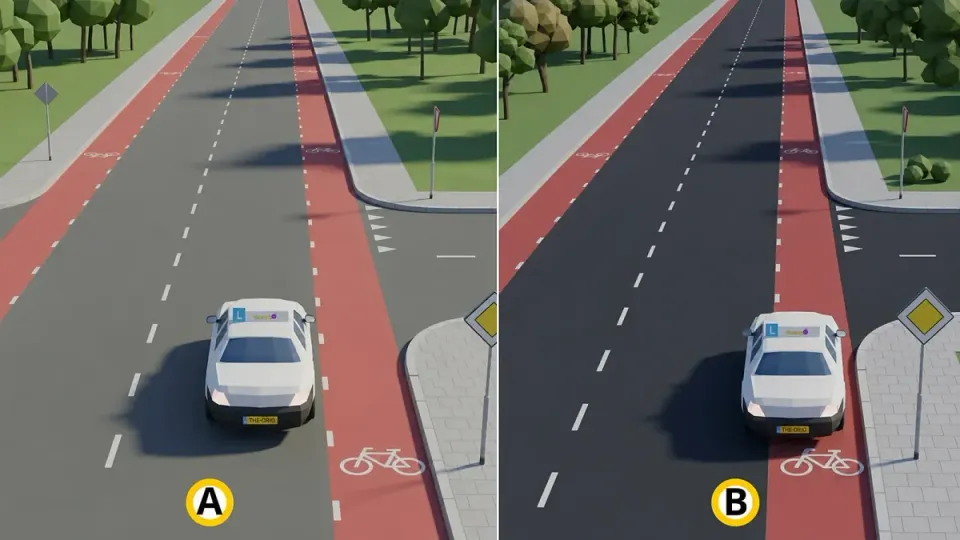
Is a cycle lane marked with a broken line? Then you may drive on it with your car, as long as you do not get in the way of cyclists. With a solid line you may not. Stopping or parking on a cycle lane is never allowed. Whether you may get in lane on the cycle lane before turning is explained on getting in lane.
Warning line on the road surface
A broken line is a warning line when the lines are long and the gaps are short. It is exactly the other way round from a normal broken line: 3 parts line, 1 part gap.
- Outside built-up areas: 9 metres of line and 3 metres of gap.
- Inside built-up areas: 3 metres of line and 1 metre of gap.
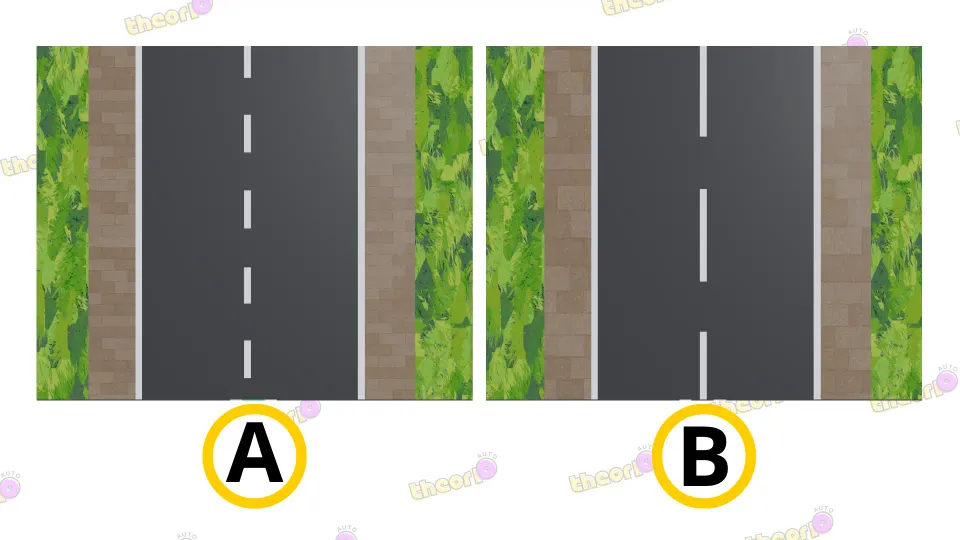
From a distance a warning line almost looks like a solid line. You see it just before a solid line, a bend or a junction. Crossing there is riskier.
May you cross a warning line? Yes, it is still a broken line. But something changes further ahead. So do not start an overtake that you cannot finish in time.
Double lines on the road
May you overtake at a double broken line?
Yes. At a double broken line you may cross from both sides, for example to overtake. Only do this when you can see far enough ahead and no oncoming traffic is coming.
Solid and broken line side by side
✅ Broken on your side: you may cross it, for example to overtake, when it is safe.
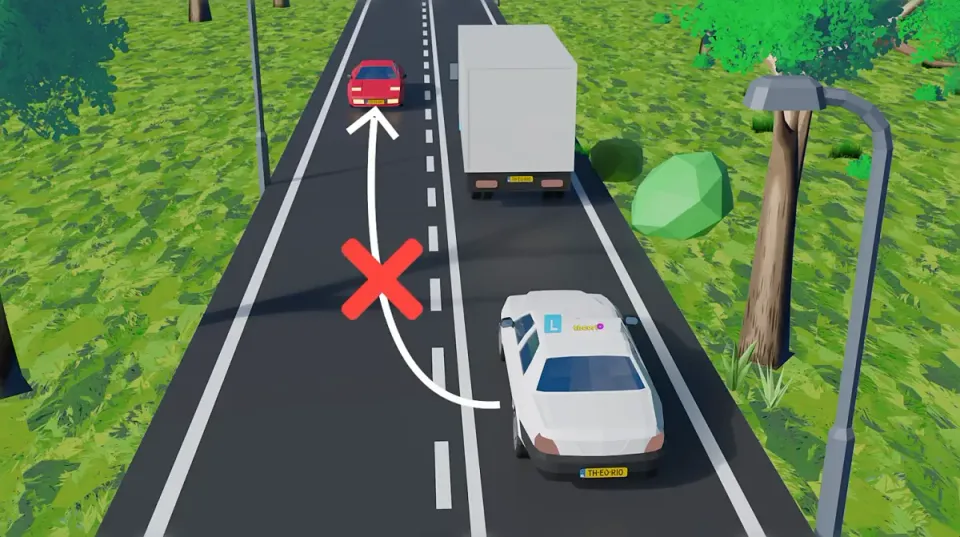
❌ Solid on your side: you may not cross it. So overtaking is not allowed here.
Is there a broken line next to a solid line? Then the line on your side counts. You may only cross from the broken side. Where you see this combination is explained on the solid line page.
Double broken line with a colour
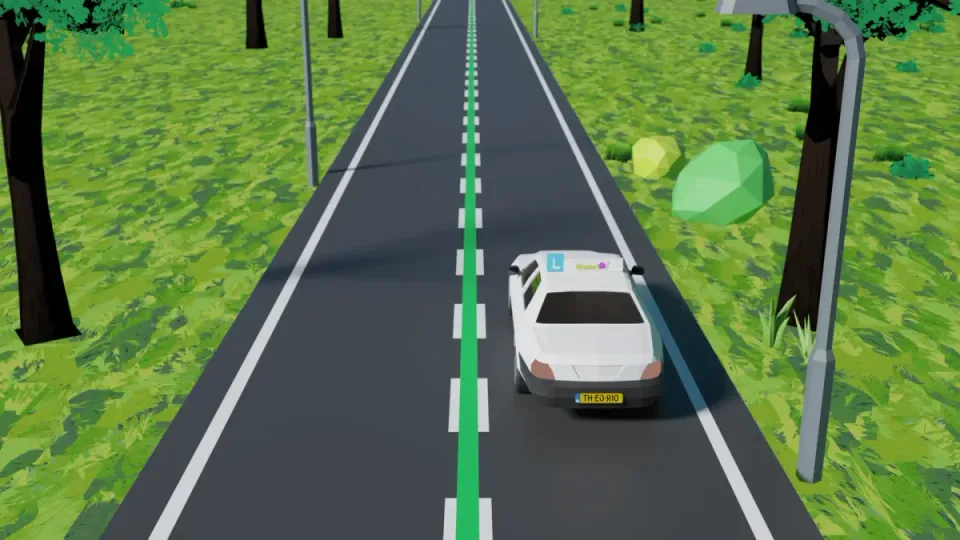
Sometimes there is a colour between two broken centre lines. The colour tells you something about the speed. It does not change anything about overtaking:
- Green: usually a road where you may drive 100 km/h. Read more on the green line page.
- Purple: a road in the province of Utrecht where the signs show 60 km/h. Read more on the purple line page.
The signs along the road set the speed, not the colour. You may simply overtake across the broken white lines here. Do it carefully: overtaking takes time and space, and oncoming traffic is also driving fast.
CBR exam pitfalls for the broken line
❌ Wrong: Warning line? ✅ Right: You may still overtake. Something just changes further ahead.
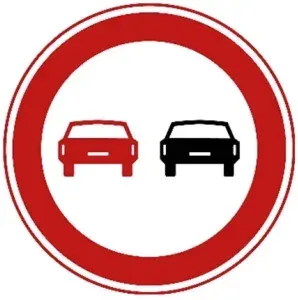
❌ Wrong: Sign F1? ✅ Right: The sign comes before the broken line.
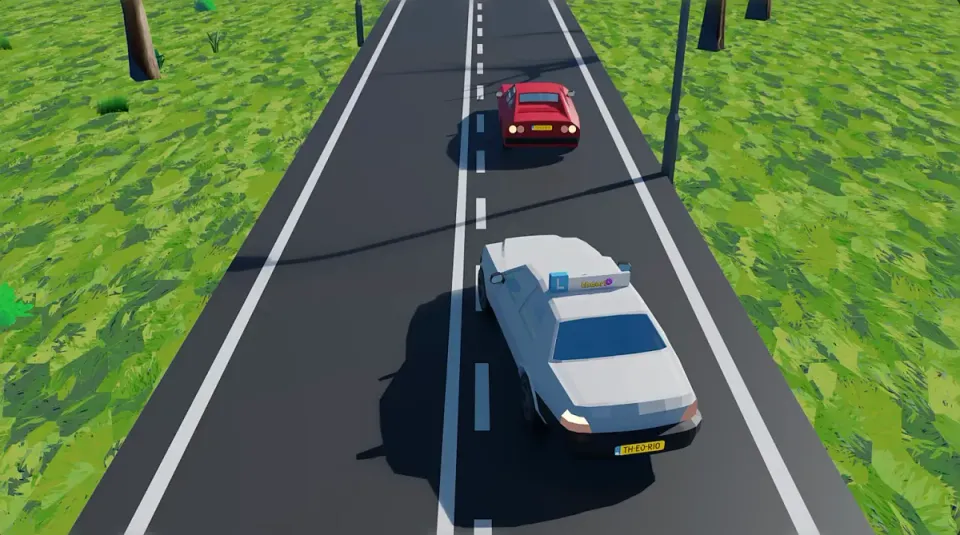
❌ Wrong: Two lines? ✅ Right: The line on your side counts.
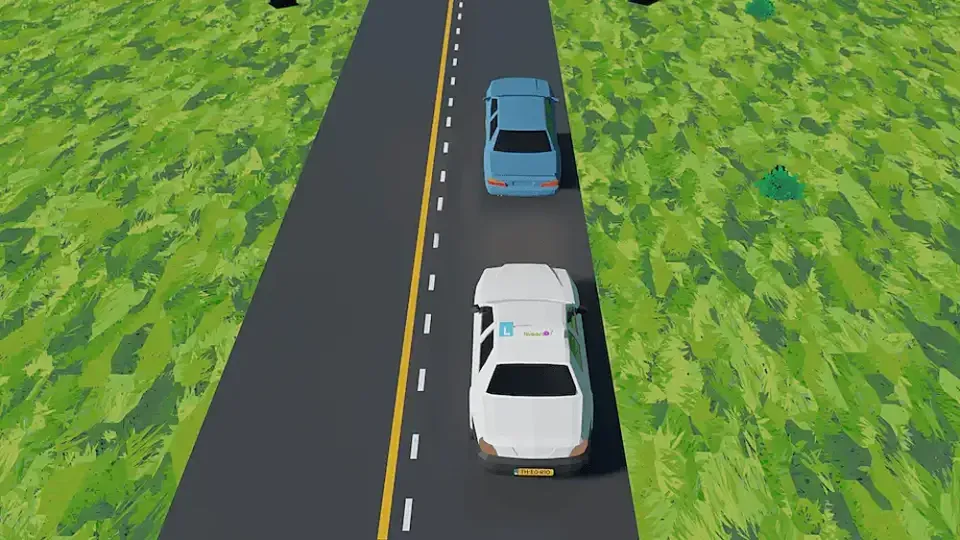
❌ Wrong: Roadworks? ✅ Right: Yellow comes before white.
❌ Wrong: Green or purple? ✅ Right: That says nothing about overtaking. The white lines decide.
Practise like the exam
Example questions like in the CBR exam
Real questions from the Theorio app. You can expect similar questions in your CBR exam.
Question 1 of 5
Which road marking warns of a changed road situation?
Tap the answer you think is right.
Roads with double road markings indicate that there may also be oncoming traffic on this road.
Are you allowed to overtake here?
Tap the answer you think is right.
Is overtaking allowed here?
Tap the answer you think is right.
An oncoming vehicle is coming close.
Can you overtake now?
Tap the answer you think is right.
Are you allowed to overtake here?
Tap the answer you think is right.
Answers and explanations for the example questions
Question 1: Which road marking warns of a changed road situation?
Correct answer: Road marking B
Road marking B consists of longer broken lines that function as warning lines ⚠️. They indicate that overtaking is possible, but riskier👀.
Question 2: Are you allowed to overtake here?
Correct answer: Yes
The broken line on your side means that you are allowed to overtake. On the other side, the line is solid, which means the oncoming traffic is not allowed to overtake.
Question 3: Is overtaking allowed here?
Correct answer: Yes
You may overtake here with a broken line 🚗, Overtaking is allowed 🏁.
Question 4: Can you overtake now?
Correct answer: No
Because the oncoming vehicle is too close, overtaking is too dangerous. 🚗💥
Question 5: Are you allowed to overtake here?
Correct answer: Yes
Yes, the white broken lines indicate that you are allowed to overtake 🏎️. The green solid line only indicates the maximum speed (100 km/h 💶).
FAQ
Frequently asked questions
Short answers to questions that often come up on this subject.
May you overtake at a warning line?
A warning line is broken and does not itself prohibit crossing. This does not permit every overtake: check signs, visibility, oncoming traffic and space. Long marks with short gaps warn of a changing or risky situation, so waiting may be sensible.
May you overtake across a double broken line?
A double broken centre line may be crossed from either side when safe and otherwise permitted. An overtaking prohibition or insufficient visibility may prevent it. Green or purple between the lines does not change the white marking and sets no legal speed itself; signs and road type determine that.
Ready to practise?
Test your knowledge of Road markings with 30 practice questions in the app.
Free mock exam · no account needed
Your first quiz is free, no account needed. After that from €34.99 for 90 days of access.