Part 2 of 7 in Road markings
Broken yellow line and other yellow lines on the road
Broken yellow line: no parking, stopping allowed. Solid yellow: no stopping. Plus yellow markings at roadworks and the fines.


Written by Chris Prosman Reviewed by Dirk van Zuijlen
Updated Reviewed on 5 min read
Free mock exam · no account needed
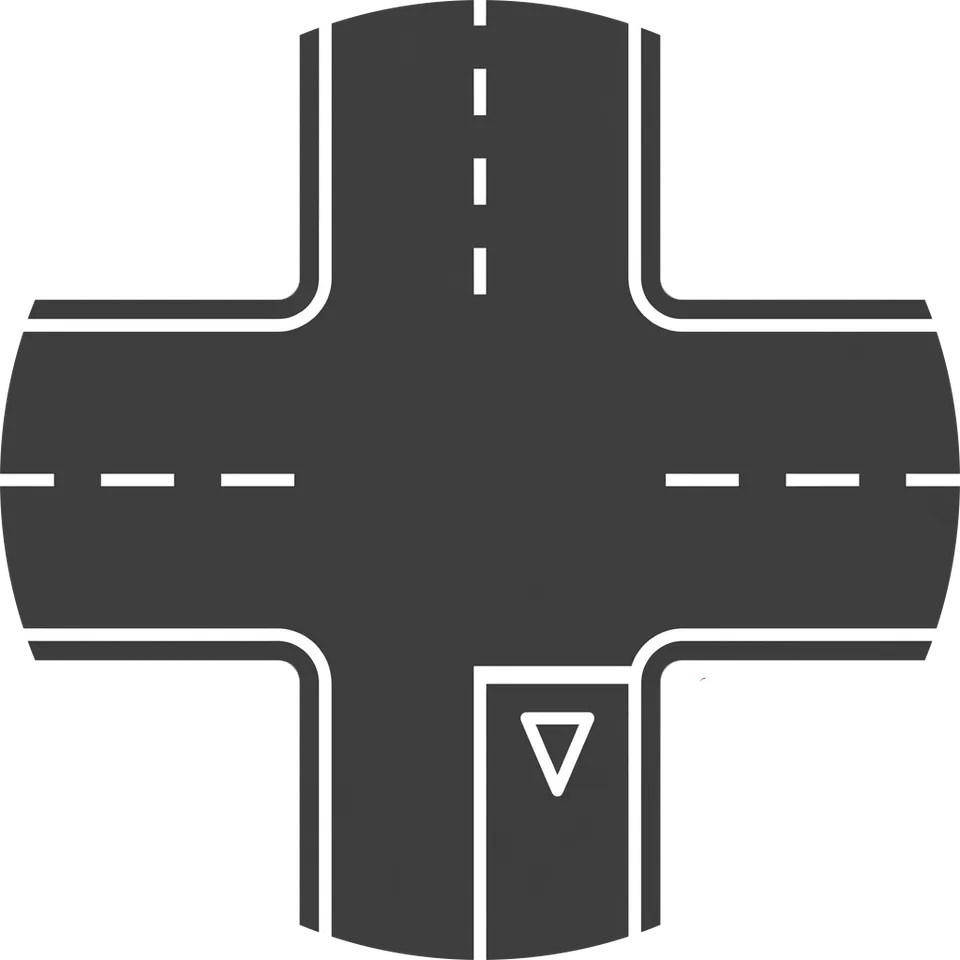
A yellow line on the road means one of two things. Along the kerb it is about stopping and parking. At a broken yellow line you may not park. At a solid yellow line you may not stop either. On the carriageway, yellow is a temporary line, for example at roadworks. It then comes before white.
What does a yellow line on the road mean?
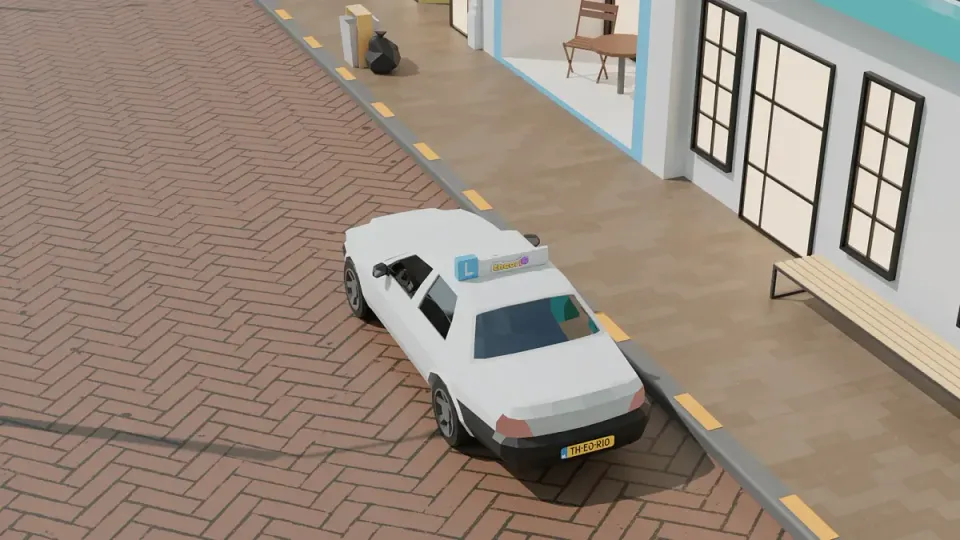
A yellow line is about parking or stopping, or it is a temporary line at roadworks. So first look where the yellow is:
- Along the edge of the road, usually on the kerb: a ban on parking or stopping.
- On the carriageway itself: temporary lines, for example at roadworks.
For the lines along the road you need to know the difference between stopping and parking:
- Stopping is a short stop to let someone get in or out right away, or to load or unload something right away.
- Parking is everything else. Waiting in the car for someone is also parking, even with the engine running.
This is in RVV 1990 article 1. More about it under stopping.
What does a yellow line on the kerb mean?
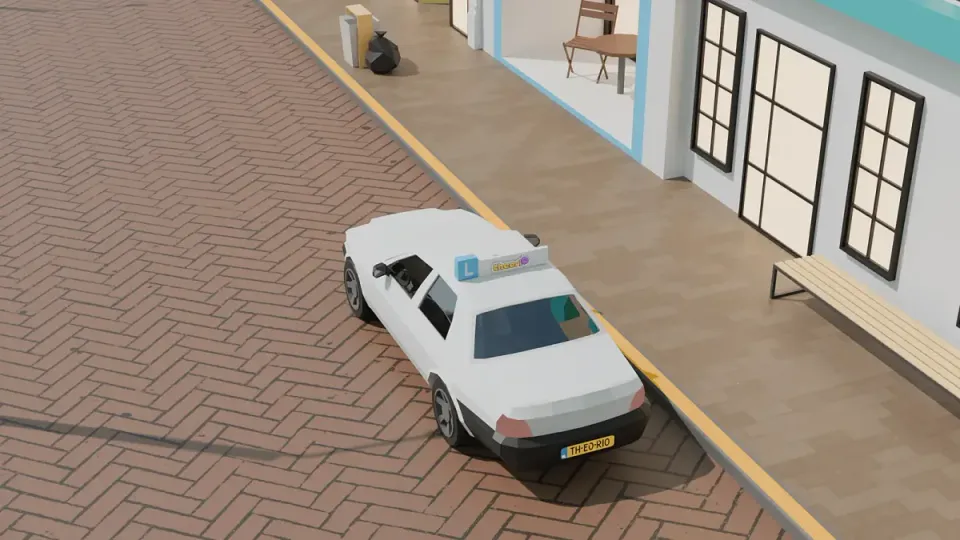
A yellow line on the pavement or kerb is a ban, just like a sign. So it counts. No sign is needed next to it.
- The ban only applies on the side of the road where the line is.
- It applies along the whole length of the line.
- Is the line on the other side? Then the ban applies there, not on your side.
Broken yellow line along the road
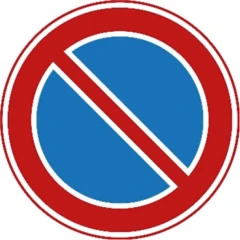 At a broken yellow line you may not park. Stopping is allowed: to let someone get in or out, and to load and unload. It means the same as sign E1, no parking (RVV 1990 article 24).
May you wait at a broken yellow line until someone arrives? No. Waiting is parking.
Solid yellow line along the road
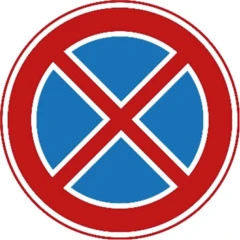 At a solid yellow line you may not stop, and so you may not park either. So you may not let anyone get in or out here, and you may not load or unload. Not even for a moment. It means the same as sign E2, no stopping (RVV 1990 article 23).
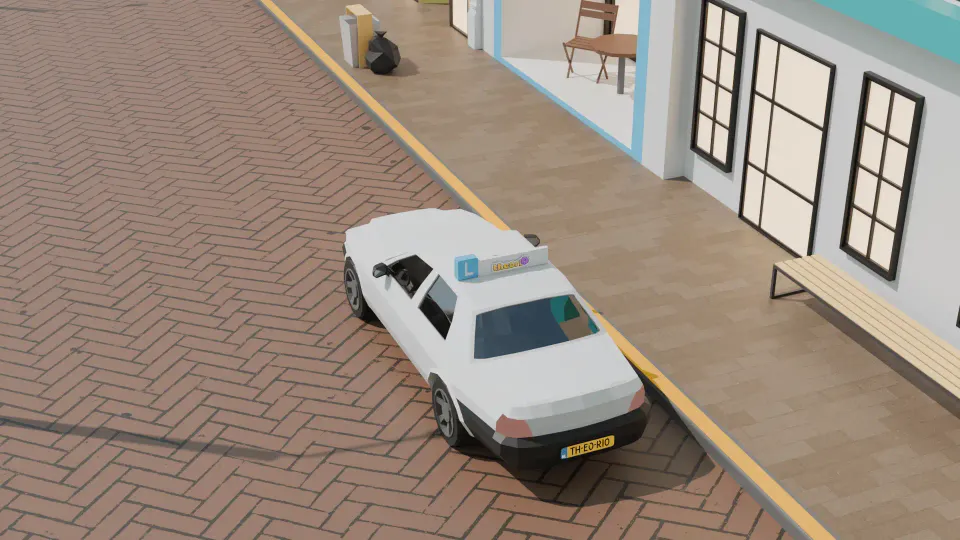
Memory aid: with dashes you may stop briefly, with one long line you may do nothing. Which signs say the same thing is explained under the parking signs.
Yellow road markings at roadworks
At roadworks a yellow line on the carriageway comes before the white lines. The road is laid out differently for a while. The temporary lines and arrows are yellow, so you do not mix them up with the normal white ones (RVV 1990 article 63a).
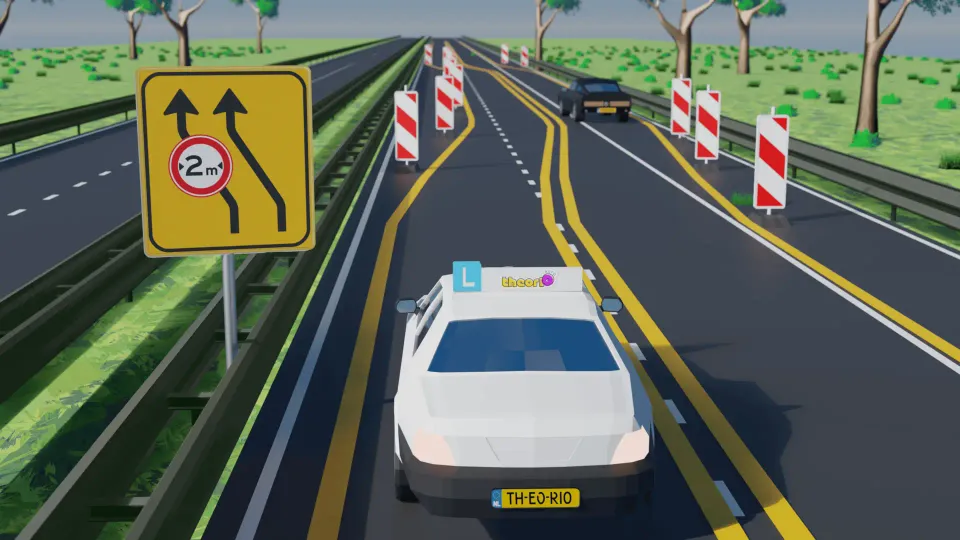
Do the yellow lines lead you across a solid white line? Then you follow the yellow. It also works the other way: you may not cross a solid yellow line, even if the white line next to it is broken.
Overview of the yellow lines
| Yellow line | Where | Meaning | Same as |
|---|---|---|---|
| Broken | Along the road | No parking, stopping allowed | Sign E1 |
| Solid | Along the road | No stopping, no parking | Sign E2 |
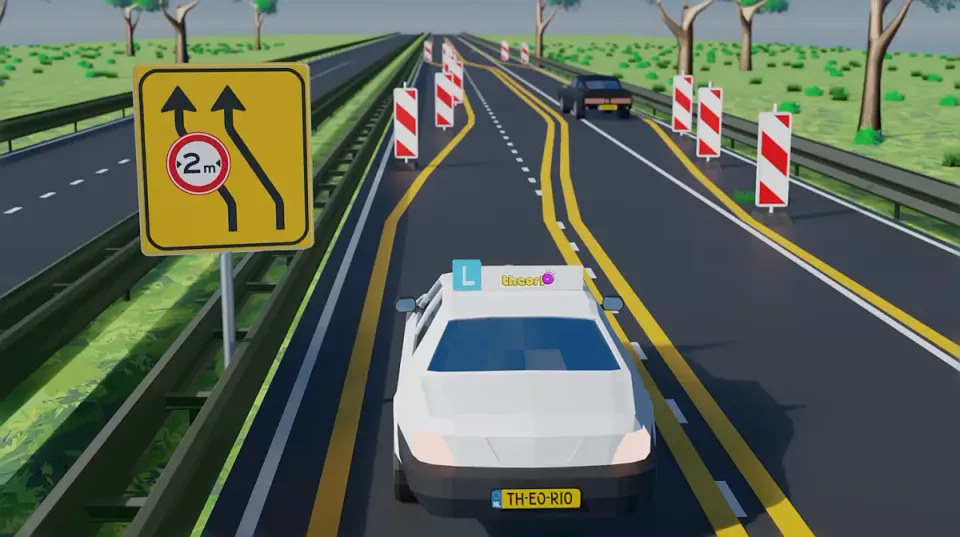 Broken | On the carriageway, at roadworks | You may cross it when safe | White broken line |
| Solid | On the carriageway, at roadworks | Do not cross it | White solid line |
Yellow on the carriageway comes before white. Yellow along the kerb is about stopping and parking.
Fines for ignoring yellow lines
Do you park along a broken yellow line? Then the fine is € 130. These are the amounts for a car in 2026:
| What you do | Fine 2026 |
|---|---|
| Parking along a broken yellow line | € 130 |
| Stopping along a solid yellow line | € 130 |
| Crossing a solid yellow line on the carriageway | € 190 or € 320 |
Add € 9 administration costs (OM Boetebase, offence codes R 397 g, R 396 i and R 617). A solid yellow line on the carriageway counts as a solid line. When it is € 190 or € 320 is explained under the solid line.
The difference between a yellow and a blue line
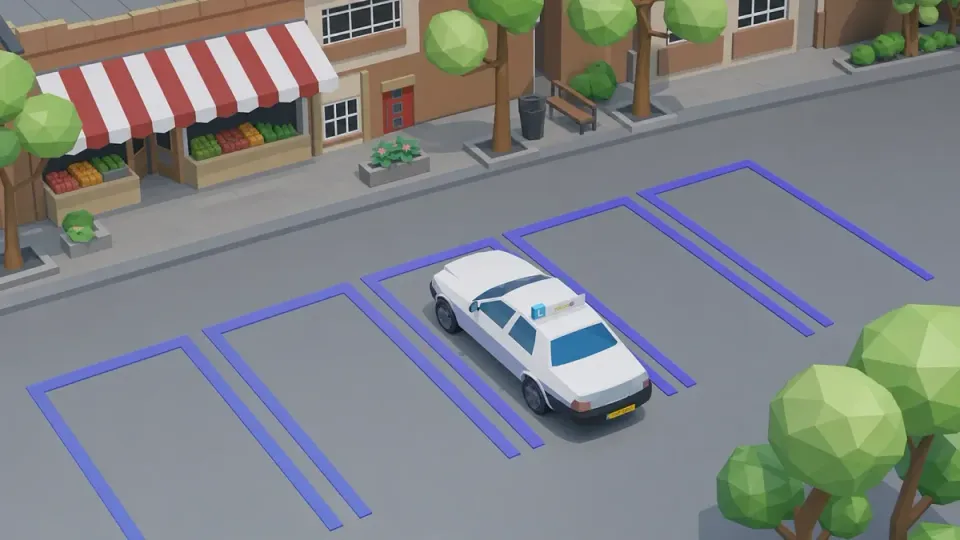
A yellow line is a ban: no parking or no stopping. A blue line is a place where you may park. It belongs to a blue zone. You put a parking disc behind your windscreen and do not park longer than the sign says. More about it under the parking disc.
Where you usually find yellow lines
A yellow line is used where a stopped car would be in the way or block the view. It gives space and safety. You see it for example:
- in a narrow street, so buses, lorries and emergency services can get past;
- just before a junction or in a bend, so you see each other in time;
- at an entrance or exit that must always stay clear, such as at a fire station;
- at roadworks: then the yellow is on the carriageway.
CBR exam pitfalls with yellow lines on the road
❌ Wrong: Yellow on the kerb does not count? ✅ Right: It works like a sign.
❌ Wrong: Waiting briefly with the engine running? ✅ Right: That is parking. Not allowed at yellow dashes.
❌ Wrong: Quickly dropping someone off at a solid yellow line? ✅ Right: Not allowed.
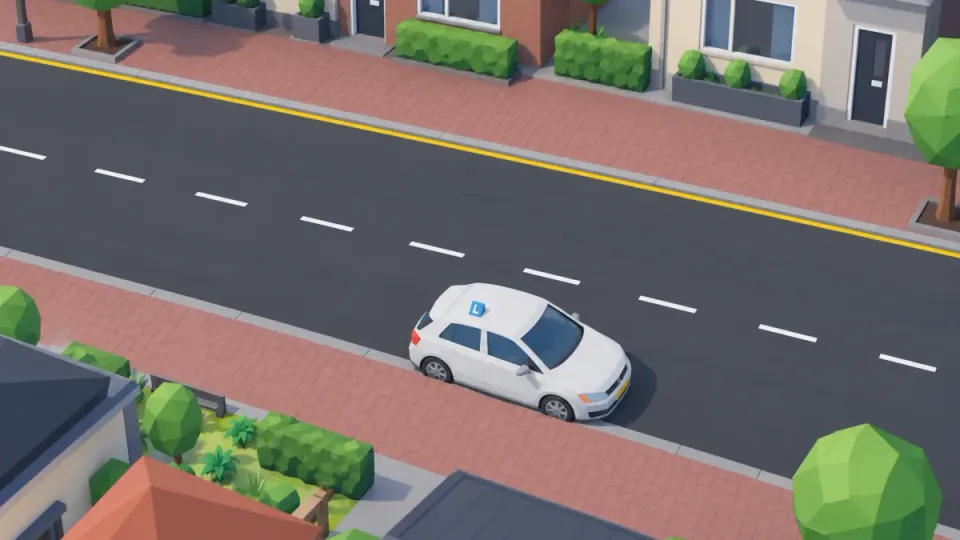
❌ Wrong: Line on the other side? ✅ Right: It only applies on that side.
❌ Wrong: Roadworks? ✅ Right: Yellow comes before white.
Practise like the exam
Example questions like in the CBR exam
Real questions from the Theorio app. You can expect similar questions in your CBR exam.
Question 1 of 5
Are you allowed to let someone get in and out here?
Tap the answer you think is right.
Are you allowed to load and unload here?
Tap the answer you think is right.
Are you allowed to let someone get in and out here?
Tap the answer you think is right.
What does the yellow marking indicate?
Tap the answer you think is right.
Are you allowed to drive over the white line?
Tap the answer you think is right.
Answers and explanations for the example questions
Question 1: Are you allowed to let someone get in and out here?
Correct answer: No
A yellow solid line means no stopping 🚧. You are not allowed to stop here at any moment.
Question 2: Are you allowed to load and unload here?
Correct answer: No
A yellow solid line means no stopping 🚧. Loading and unloading is not allowed.
Question 3: Are you allowed to let someone get in and out here?
Correct answer: Yes
A yellow broken line indicates a no parking zone, but you are allowed to stop here briefly to let someone get in or out and to load and unload 🕒.
Question 4: What does the yellow marking indicate?
Correct answer: Temporary road marking
The yellow line indicates that there is a temporary road marking during construction work 🚧. The yellow marking takes precedence over the white line🛠️.
Question 5: Are you allowed to drive over the white line?
Correct answer: Yes
Yes, the yellow marking is leading and takes precedence over the white line 🟨. This means you can consider the white line as subordinate. The yellow marking determines the rules✔️.
FAQ
Frequently asked questions
Short answers to questions that often come up on this subject.
At roadworks, do you follow the yellow or the white lines?
Where temporary yellow lane markings conflict with existing white markings, follow the temporary yellow ones under Article 63 a. Existing markings that do not conflict remain relevant. Yellow along the kerb is a different rule: broken means no parking and solid means no voluntary stopping.
Which side of the road does a yellow line on the kerb apply to?
Only to the side of the road where the line is. A yellow line works just like a sign: a broken yellow line means no parking, a solid yellow line means no stopping.
May you stop at a broken yellow line?
Immediate boarding or alighting and immediate loading or unloading are allowed where other rules permit. Waiting for someone is parking, even if you stay inside or leave the engine running. The activity determines the distinction, not a fixed time limit: necessary loading does not automatically become parking merely because it takes longer.
What does a solid yellow line along the road mean?
Solid yellow along the road edge prohibits voluntary stopping and therefore parking, comparable withE 2. Immediate alighting or loading/unloading is not allowed there either. A stop required by traffic or traffic rules, such as waiting at red, is different. The prohibition applies to the marked side.
What is the difference between a yellow and a blue line?
Yellow along the road edge gives a prohibition: broken means no parking, solid no voluntary stopping. Blue markings identify spaces in a parking-disc zone. Read the zone sign: during its stated validity, use the disc and respect the permitted parking time unless a valid exception applies.
How high is the fine for parking along a yellow line?
In 2026 € 130 for a car, plus € 9 administration costs. You pay the same amount if you stop along a solid yellow line.
Ready to practise?
Test your knowledge of Road markings with 30 practice questions in the app.
Free mock exam · no account needed
Your first quiz is free, no account needed. After that from €34.99 for 90 days of access.