Part 4 of 7 in Road markings
Solid line: meaning and fine
Solid line: you may not cross it, not even to overtake or turn. The exceptions, double lines and the fine in 2026.


Written by Chris Prosman Reviewed by Dirk van Zuijlen
Updated Reviewed on 6 min read
Free mock exam · no account needed
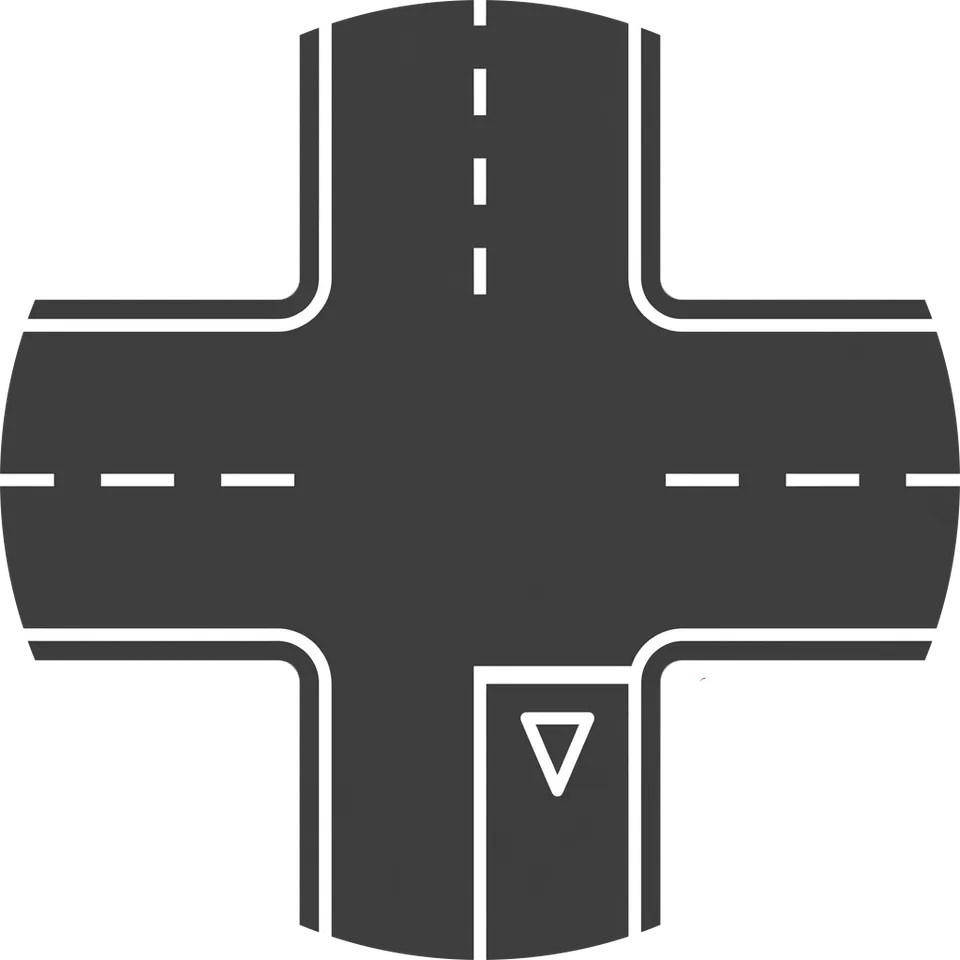
A solid line is a white line without gaps, between lanes or in the middle of the road. You may not cross it: not to overtake, not to change lanes and not to turn. If you do, it costs € 190 to € 320.
What does a solid line on the road mean?
A solid line means: you may not cross it. It is a white line without gaps, in the middle of the road or between two lanes. Does the line separate traffic going in two directions? Then you may not drive to the left of it either (RVV 1990 article 76).
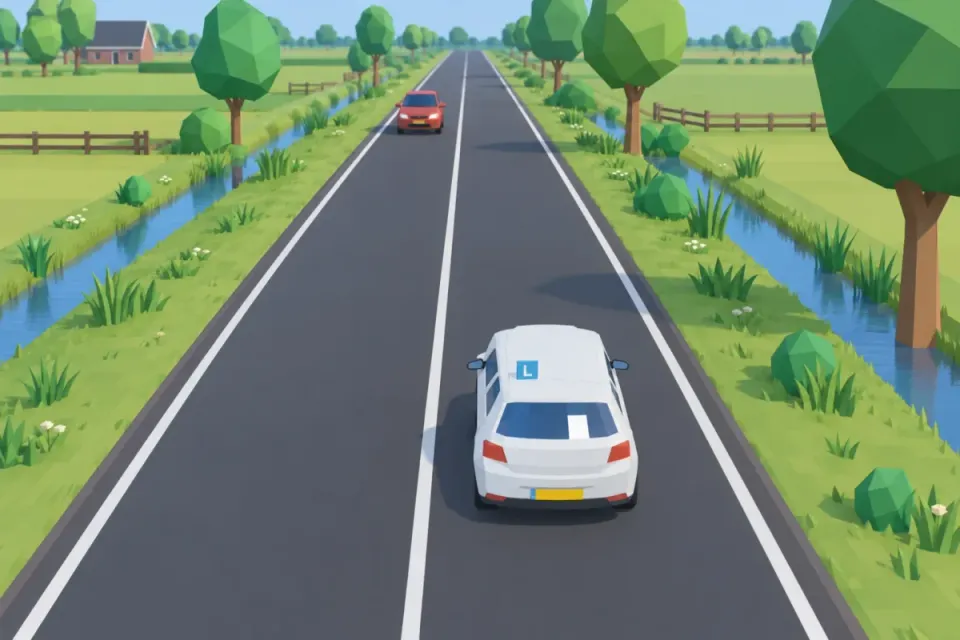
A solid line along the edge of the road is called an edge line. It only marks the edge. The verge and the hard shoulder have their own rules.
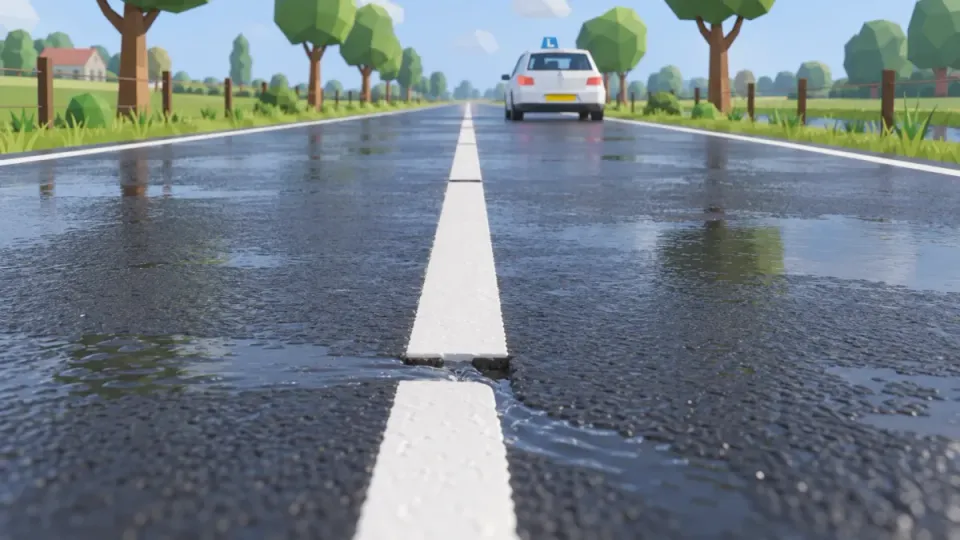
Do you see a small gap in the line about every metre? That is for water to drain away. It means nothing else: the line is still a solid line.
Overtaking at a solid line
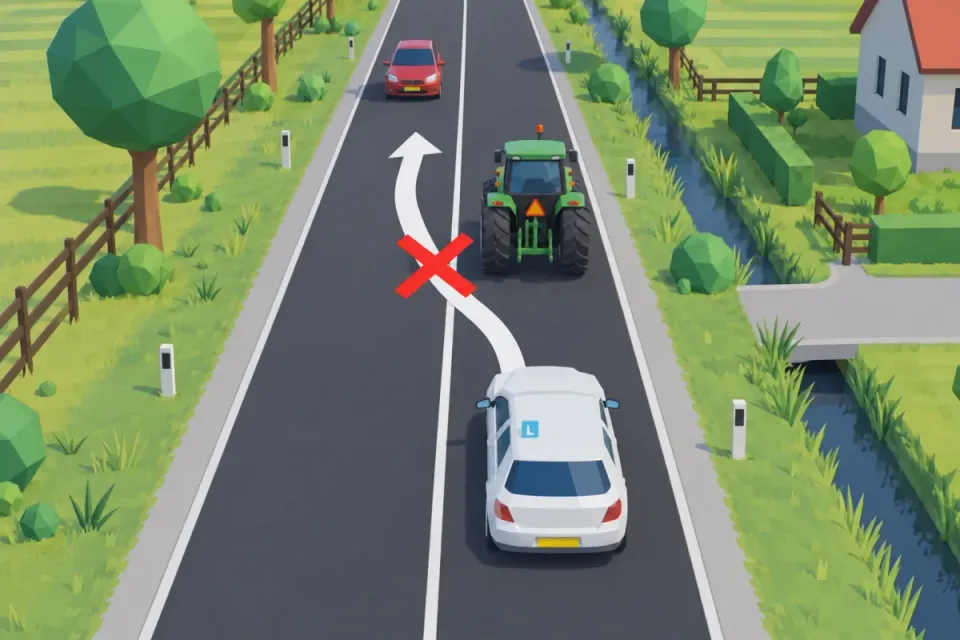
To overtake a car or tractor you almost always have to cross the line. That is not allowed here. So a solid line usually means: no overtaking.
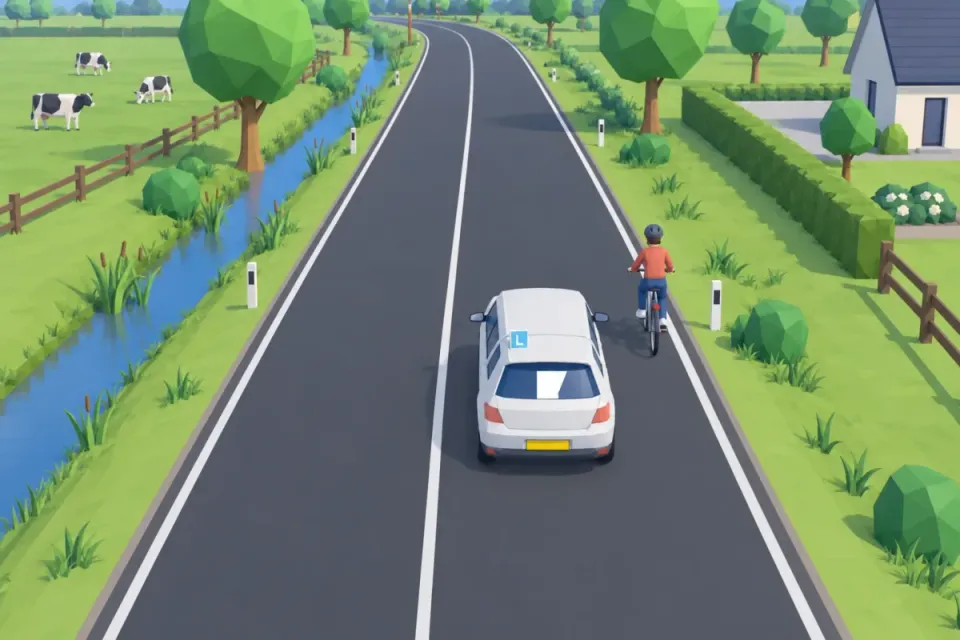
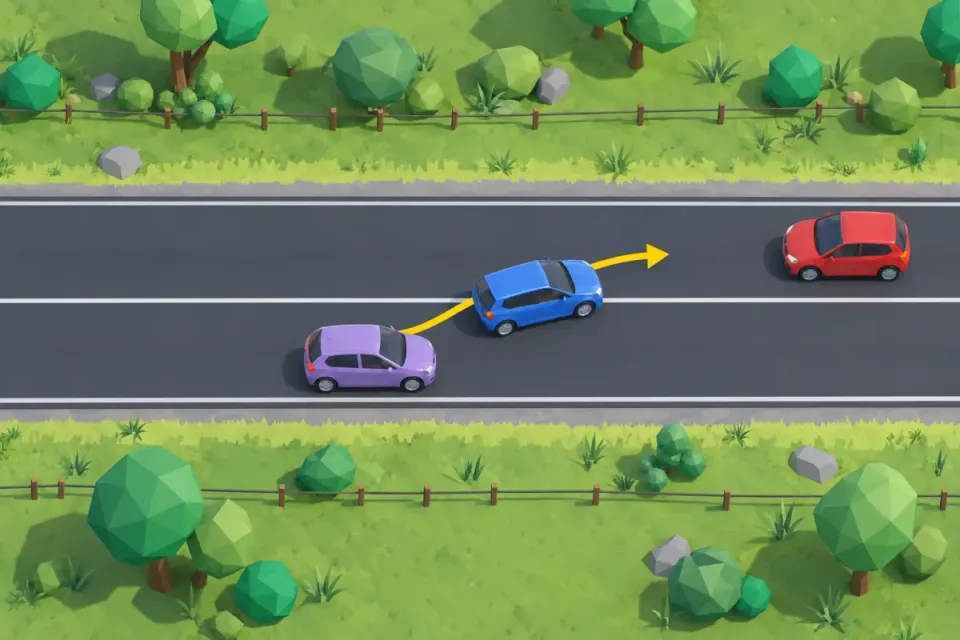
You may pass a cyclist or moped rider if you do not touch the line. For example when they fit next to you in your own lane, or ride in a cycle lane. Leave enough room to the side. More about overtaking and lines under overtaking and road markings.
Changing lanes or turning
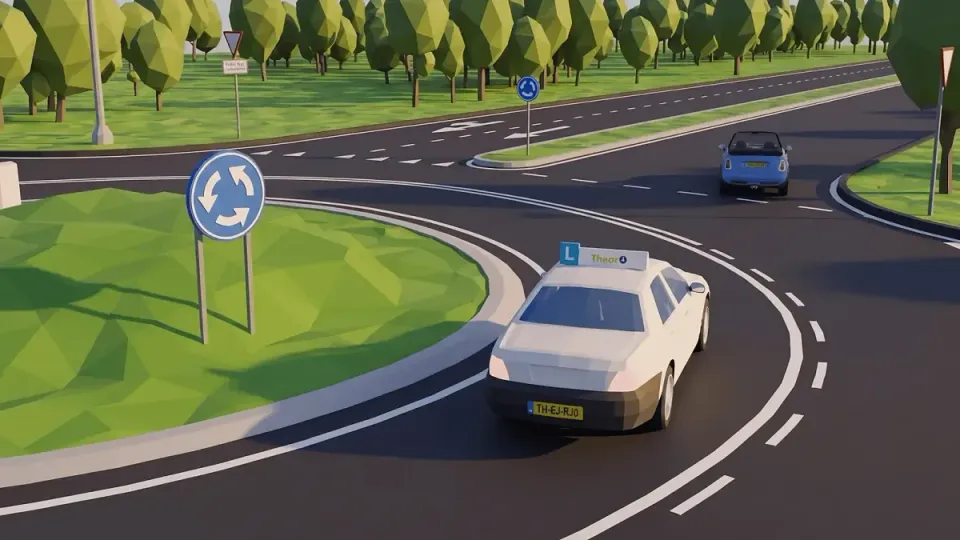
You may not cross a solid line to change lanes or to turn either. So choose the right lane in time: see carriageway, lane and road. Does the line become broken again? Then you may change lanes when it is safe. What the line means on a roundabout is explained under the roundabout.
When may you cross a solid line?
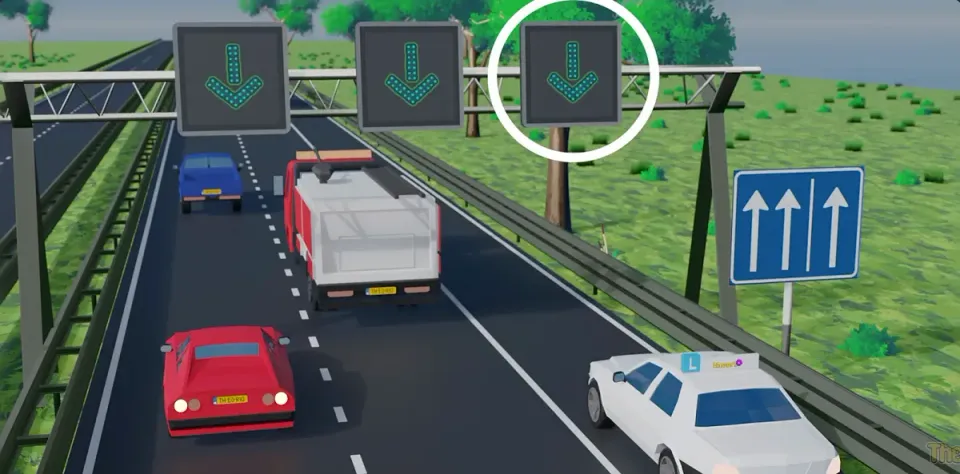
Only in these three cases:
- To or from a rush hour lane, hard shoulder or lay-by. Is the rush hour lane open? Then you may cross the line to get onto it (see the rush hour lane). You only use the hard shoulder and lay-by in an emergency.
- There is a broken line on your side. With two lines side by side, the line on your side counts.
- You ride in a cycle lane separated by a solid line, and you are allowed to use that cycle lane.
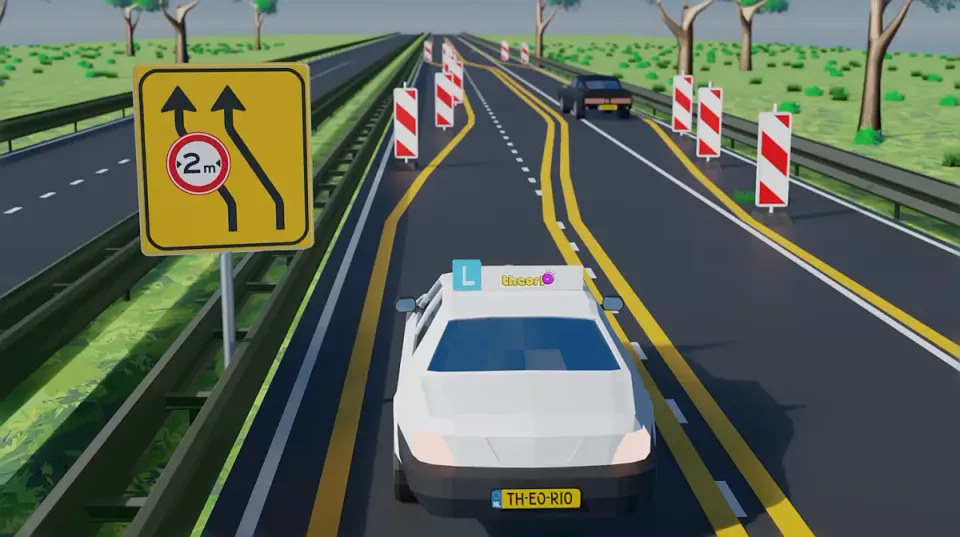
At roadworks yellow lines may say something else: see the yellow line. You do not drive over hatched road markings (diagonal white lines) either.
Double lines on the road
In the middle of the road there are often two lines side by side. Two lines mean: there is oncoming traffic. They separate your direction from the traffic coming towards you. There are two kinds:
- Double solid line: nobody may cross it, from either direction. So you may not overtake either.
- A solid and a broken line: the line on your side counts. Broken on your side? Then you may cross it to overtake, if it is safe. Solid on your side? Then you may not.
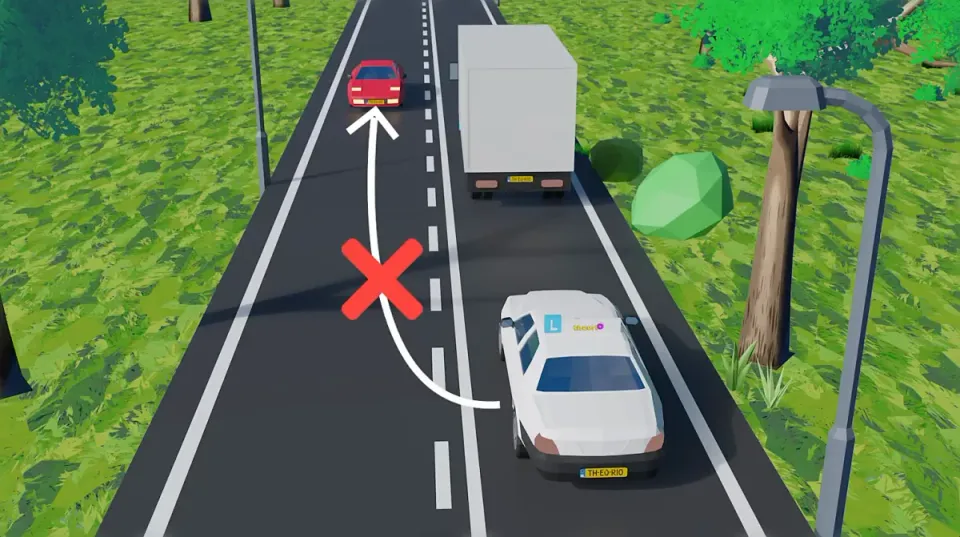
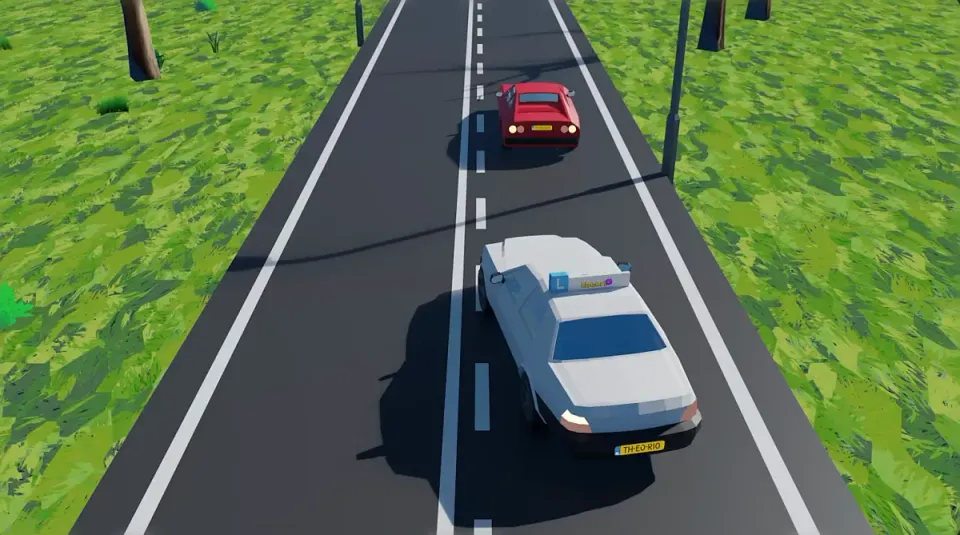
Are you on the solid side? Then traffic on the other side may cross. So an oncoming driver may come onto your half of the road to overtake. Keep that in mind.
Where do you see a solid and a broken line side by side?
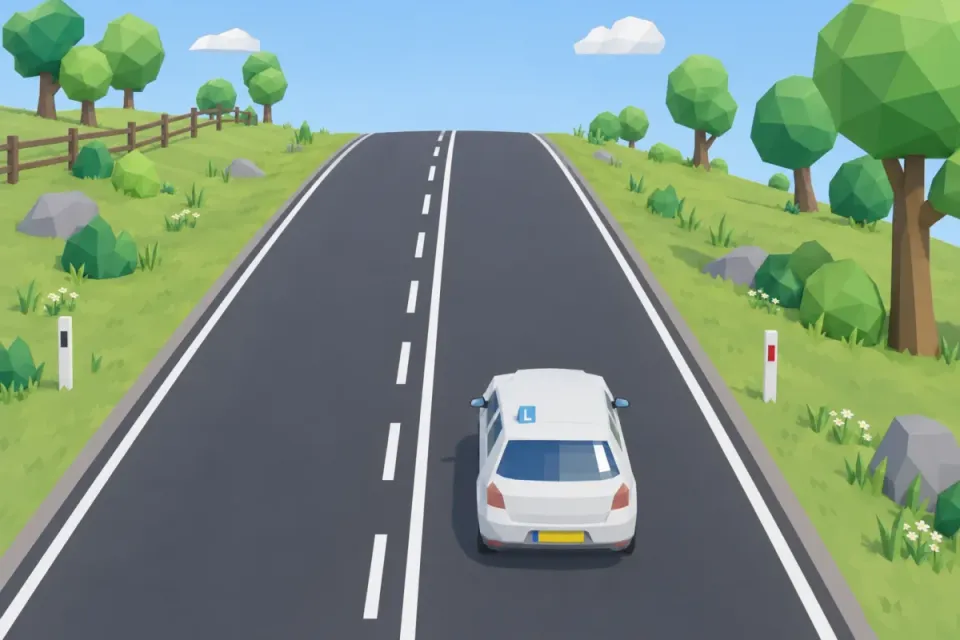
Mostly in bends, on hills and where the number of lanes changes. There you often see oncoming traffic too late. Sometimes one direction can see far enough to overtake and the other cannot. Then only the side that can see far enough gets a broken line. That is usually a warning line: long lines with short gaps. See the broken line.
Fine for crossing a solid line
If you cross a solid line in a car, the fine is € 190 or € 320. That also applies to a double solid line. The amounts in 2026:
| What you do | Fine |
|---|---|
| Crossing the line between two lanes going the same way | € 190 |
| Crossing the line on a road with oncoming traffic | € 320 |
| Driving to the left of the solid centre line | € 320 |
Add € 9 administration costs (OM Boetebase, offence codes R 617 a, b and c).
Why is the fine so high? A solid line is only used where crossing is dangerous. For example because you see oncoming traffic too late in a bend or on a hill. The highest amount applies with oncoming traffic: if you cross the line there, you are driving on their half of the road.
Double solid line with a colour
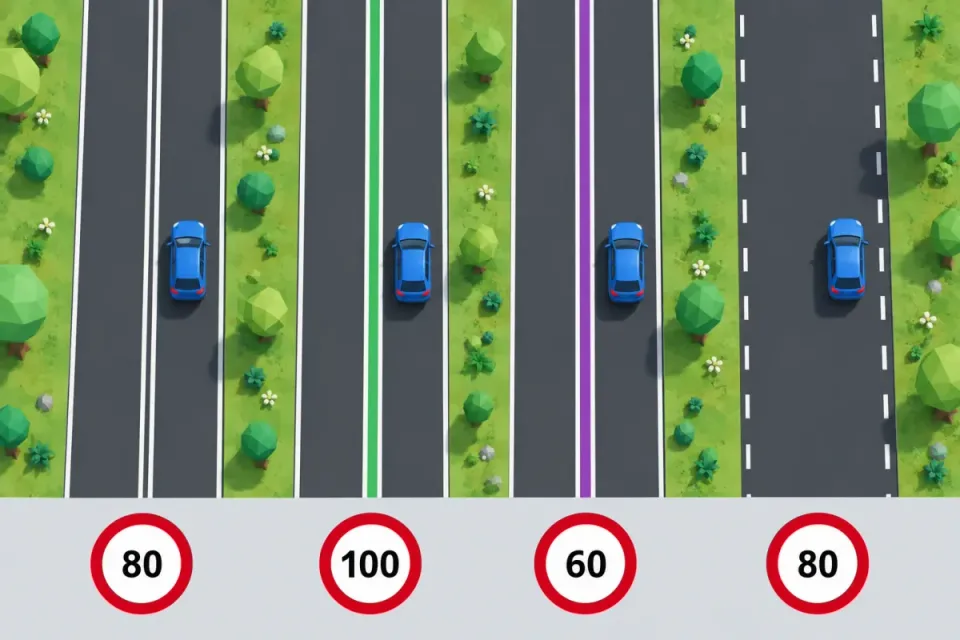
Sometimes there is a colour between two solid centre lines. The rule stays the same: you may not cross. The colour tells you something about the speed:
- Green: usually a road where you may drive 100 km/h. See the green line.
- Purple: a road in the province of Utrecht where the signs show 60 km/h. See the purple line.
In both cases the sign beside the road comes before the colour. Yellow is something else: a temporary line, for example at roadworks. Yellow then comes before white (see the yellow line).
CBR exam pitfalls for a solid line
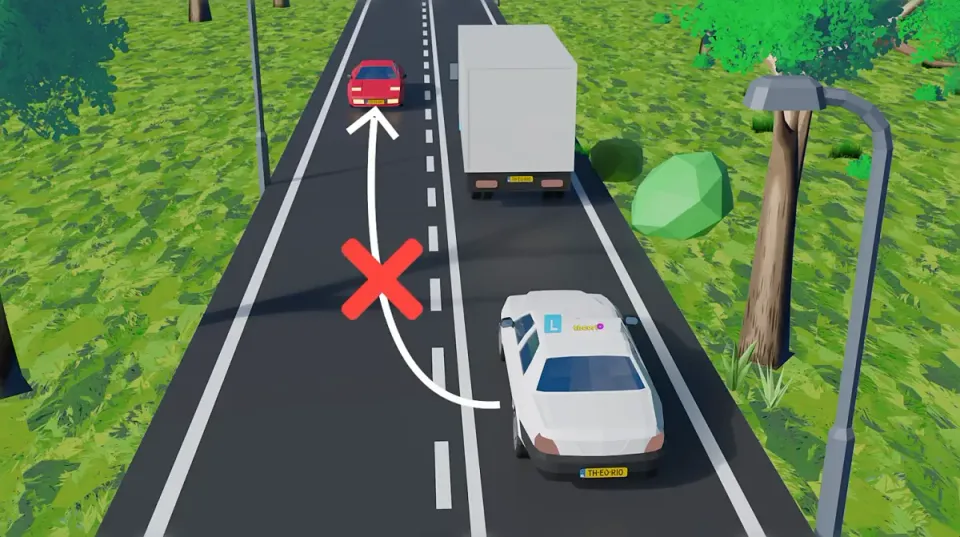
❌ Wrong: Two lines side by side? ✅ Right: Look at the line on your side.
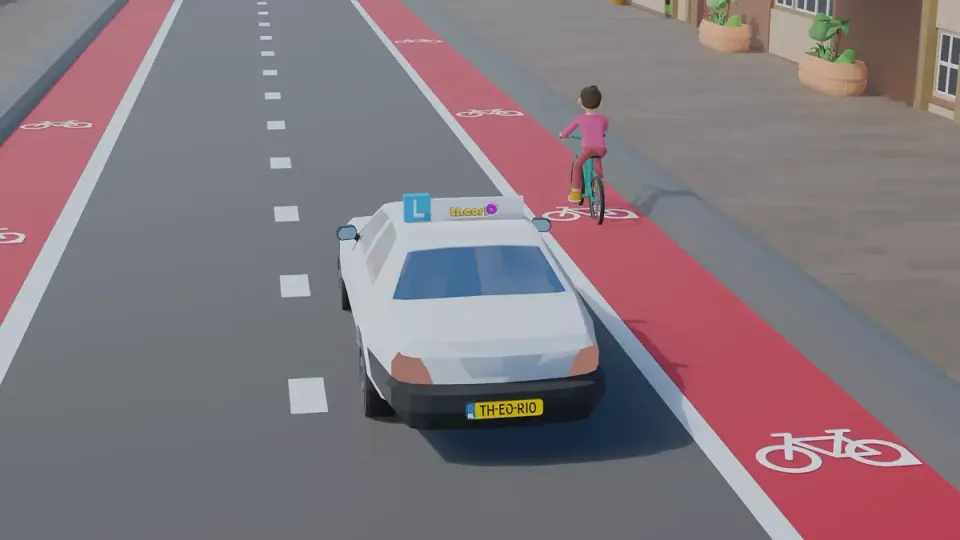
❌ Wrong: Cyclist in their own lane? ✅ Right: You may pass if you do not touch the line.
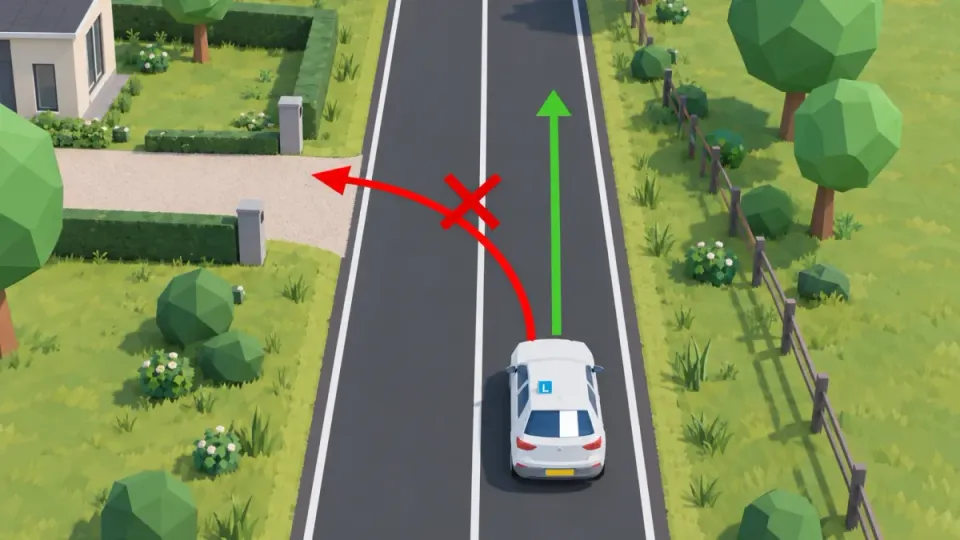
❌ Wrong: Turning left into a driveway across a solid centre line? ✅ Right: Not allowed.
❌ Wrong: Wrong lane on a roundabout? ✅ Right: Do not cut across. Drive on.
❌ Wrong: Small gaps in the line? ✅ Right: They are for water. It is still a solid line.
Practise like the exam
Example questions like in the CBR exam
Real questions from the Theorio app. You can expect similar questions in your CBR exam.
Question 1 of 4
Is overtaking allowed here?
Tap the answer you think is right.
Can you be overtaken?
Tap the answer you think is right.
Is overtaking allowed here?
Tap the answer you think is right.
Are you allowed to overtake here?
Tap the answer you think is right.
Answers and explanations for the example questions
Question 1: Is overtaking allowed here?
Correct answer: No
Overtaking is not allowed with a solid line 🚫. Overtaking is prohibited.
Question 2: Can you be overtaken?
Correct answer: No
On your side, the line is solid, which means that the oncoming traffic cannot overtake you 🚫. The opposing vehicle has a broken line, which means it is allowed to overtake..
Question 3: Is overtaking allowed here?
Correct answer: No
No, the yellow solid line indicates a temporary road marking where overtaking is not permitted 🚧. The yellow marking takes precedence over the white lining.
Question 4: Are you allowed to overtake here?
Correct answer: No
No, despite the broken white line, there is a solid yellow line present 🚧. The yellow line is above the white line, so overtaking is not allowed. The yellow marking is decisive🚫.
FAQ
Frequently asked questions
Short answers to questions that often come up on this subject.
May you overtake across a solid line?
Not for an ordinary overtake requiring you to cross the solid centre line. Two solid centre lines do not create an overtaking opportunity either. Article 76 does have specific line exceptions; a slow vehicle ahead is not itself one. Sometimes you can pass entirely within your own half with enough lateral clearance and no other prohibition.
May you cross a solid line to turn?
A desired turn is not an exception to a solid separating line. Choose your position in good time and follow the permitted route. Where the line ends or is broken on your side, crossing may become possible if signs, priority, markings and safety allow it. A true edge line has a different function.
How high is the fine for crossing a solid line?
In 2026 you pay € 190 in a car if the traffic on both sides of the line goes the same way. On a road with oncoming traffic, or if you drive to the left of the solid centre line, it is € 320. On top of that come € 9 administration costs.
May you overtake a cyclist at a solid line?
Yes, if you do not have to cross the line to do so: the cyclist fits next to you in your own lane or rides on a cycle lane. If you can only do it by crossing the line, stay behind.
Ready to practise?
Test your knowledge of Road markings with 30 practice questions in the app.
Free mock exam · no account needed
Your first quiz is free, no account needed. After that from €34.99 for 90 days of access.