How many mistakes are you allowed to make on the Dutch CBR car theory exam?
This blog explains that you are allowed a maximum of six mistakes on the 50-question CBR theory exam, while also providing effective strategies and insights into the latest exam components to maximize your chances of passing.
How Many Mistakes Are Allowed on the Theory Exam?
The current CBR car theory exam consists of 50 questions that you must answer within 30 minutes. Out of these 50 questions, you are allowed a maximum of 6 mistakes. This means you pass if you answer at least 44 questions correctly within the allotted time.
Historical Context: From Oral to Written
Did you know that before 1963, the car theory exam was actually an oral exam? At that time, there was no hard limit on the number of mistakes you could make. You sat across from an examiner and answered questions about traffic rules, after which the examiner determined if you had sufficient knowledge to pass.
After 1963, the written exam was introduced. Back then, you received 40 or 50 questions exclusively about legislation, and you were allowed a maximum of 5 mistakes. A major difference compared to today was the retake policy: if you failed, you could immediately retake the exact same exam. You could simply walk back into the hall, register, and try again.
The Current Structure of the CBR Exam
The current structure of the CBR exam went into effect in April 2025. Previously, the exam consisted of three separate parts: hazard perception, knowledge, and insight. In the new setup, these components have been merged into a single continuous exam. The questions in the current exam are divided into the following categories:
- Traffic signs
- Speeds
- Traffic controllers and signals
- Highways
- Parking
- Lighting
- Overtaking
- Positioning and special vehicles
- Environment and breakdowns
- Legislation
- Trailers and tires
- Intersections
- Insight questions
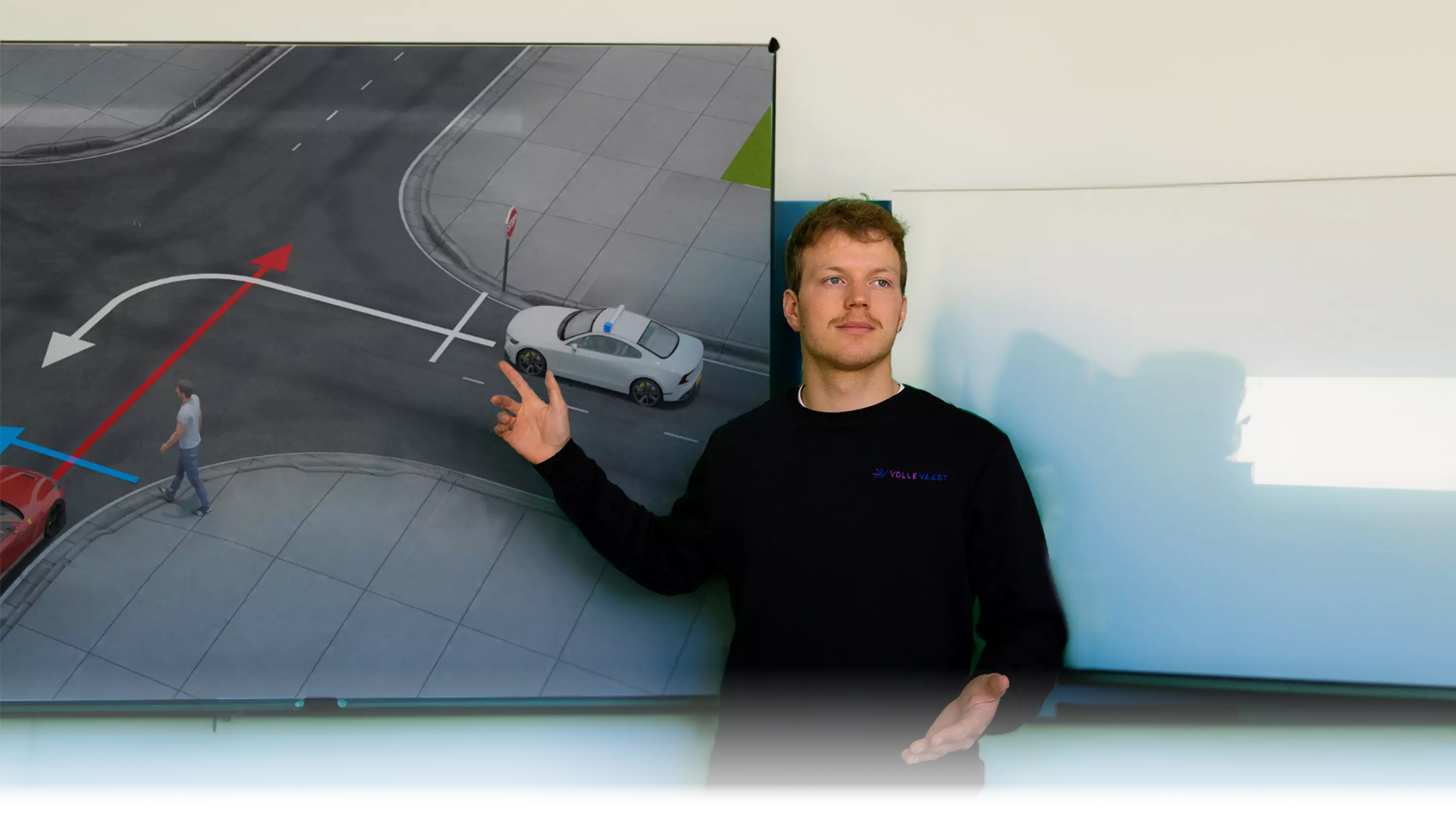
You can prepare extremely well for almost all of these components simply by cramming the rules. The exception to this is the insight questions. These are animated questions where you must judge the best course of action in a specific situation. These questions are generally experienced as the most difficult part of the CBR exam.
New Developments: ADAS on the Exam
The world of traffic does not stand still. Since April 2026, the CBR has started testing questions about ADAS (Advanced Driver Assistance Systems). Although these questions do not officially appear on the exam yet, they are being developed and tested by the Theory Product Management department. The CBR always announces such changes three months in advance, so educators can adjust their teaching materials in time. Read more.
Keep in mind that the CBR is known for implementing test questions that do not count towards your final score. They do this to analyze how students react to new types of questions. So, do not panic if you get a question at the beginning of your exam about a topic you have not encountered before.
What exactly is ADAS?
ADAS stands for Advanced Driver Assistance Systems. These systems act as an extra pair of eyes and ears for the driver. The system uses various sensors placed around the vehicle:
- Cameras: Usually placed behind the windshield or in the grille to 'read' road lines and traffic signs.
- Radar: Measures the distance to and the speed of vehicles in front of or behind you.
- Ultrasonic sensors: The well-known 'parking sensors' for short distances.
- Lidar: Uses laser pulses (often in more luxurious models) to create a detailed 3D image of the surroundings.
ADAS is a collective term for various systems that you may already get questions about, such as Cruise Control, Lane Keeping Assist (LKA), Autonomous Emergency Braking (AEB), Blind Spot Detection (BSD), and traffic sign recognition.
Strategy: How to Make the Fewest Mistakes Possible?
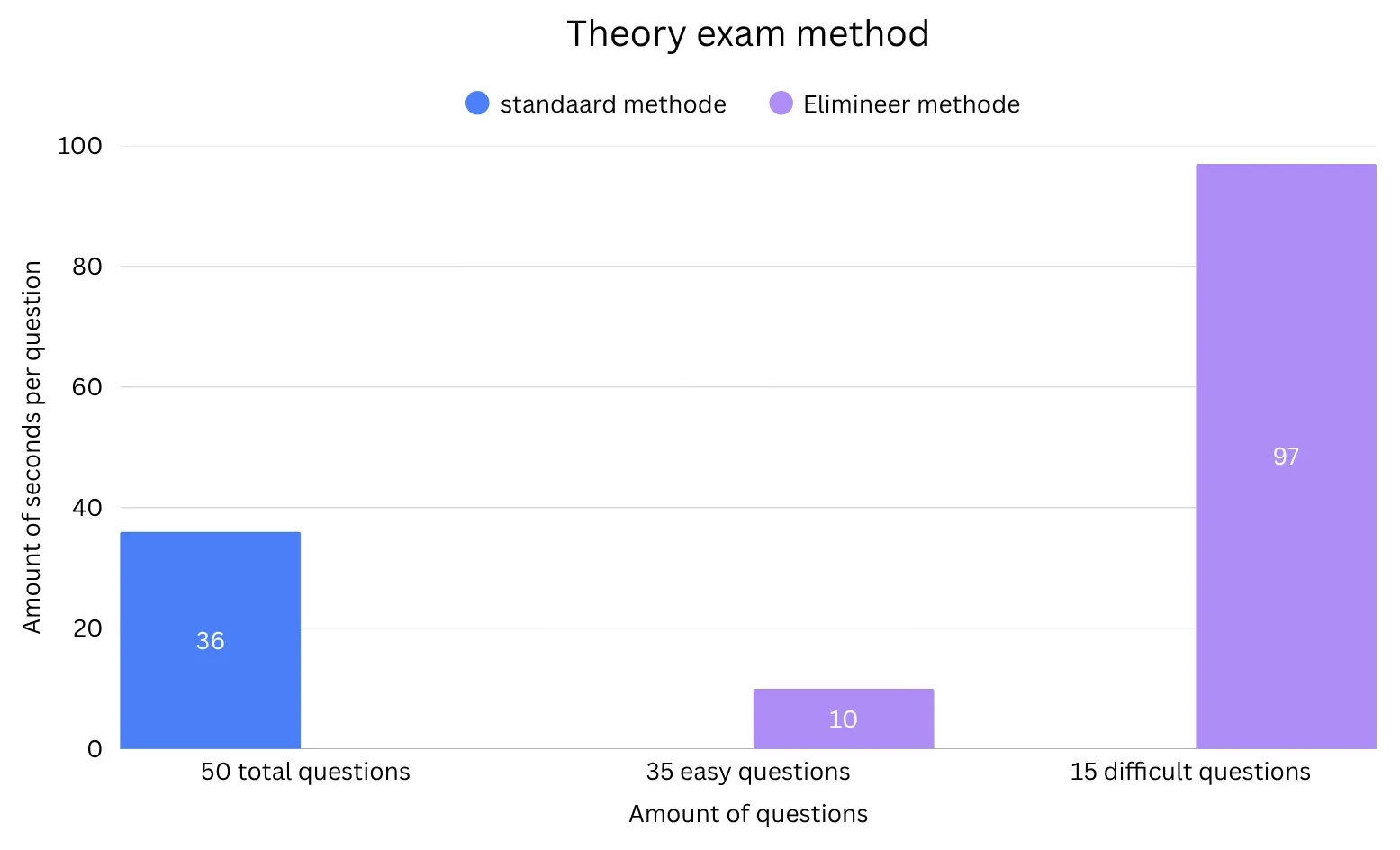
Let's look at the numbers. You have 50 questions and 30 minutes. This comes down to an average of 36 seconds per question. That is relatively tight for the tricky parts.
To minimize mistakes and save more time for the complex questions, we recommend the elimination method. Instead of simply working through the questions one by one, apply the following strategy:
- Speed with certainty: There are usually 35 to 40 questions based purely on factual knowledge. If you have practiced well, you will recognize these immediately. Answer these within 5 to 10 seconds.
- Skip when in doubt: Can't answer a question with absolute certainty right away? Skip it and move on to the next one.
- Capitalize on time saved: By answering the easy questions quickly (for example, 35 questions in 15 seconds each), you have over 21.5 minutes left for the remaining 15 difficult questions. This gives you an average of 1.5 minutes per tricky question, significantly increasing your chances of getting a correct answer.
What If You Fail the Theory Exam?
If you unexpectedly fail your car theory, it's not the end of the world. You can retake the exam an unlimited number of times, although each attempt naturally comes with costs. For students who struggle with the standard exam, there are extra options:
- Exam with extra time: Ideal if you need more reading time or want to experience less time pressure.
- Guided exam: After four failed attempts, you are eligible for a special guided exam, where an employee assists you with the process.
Read more about these options in our blog: What if you fail your theory 3 times?
Your Roadmap to Success
Good preparation is half the battle. The exam contains various components, each containing between 50 and 130 possible questions. Although this seems like a lot, many questions show strong similarities. You can practice all these components in a targeted manner via our Study Roadmap in the Intro package.
Want a free sneak peek? Start immediately with our free trial module: including two practice components, 135 exam questions, and a full practice exam of 50 questions that you can repeat an unlimited number of times.
The Most Frequently Made Mistakes on the CBR Exam
Over the past 2 years, we have had thousands of students and collected data on what the most difficult questions are on the CBR exam. I have listed four of these most difficult questions below in a nice overview. Can you solve them?