Part 5 of 6 in Overtaking & Position on the Road
Getting in lane before turning
Getting in lane for the CBR: choose the right place on the road when turning, at cycle lanes, one-way streets, multiple lanes and roundabouts.


Written by Chris Prosman Reviewed by Dirk van Zuijlen
Updated Reviewed on 7 min read
Free mock exam · no account needed
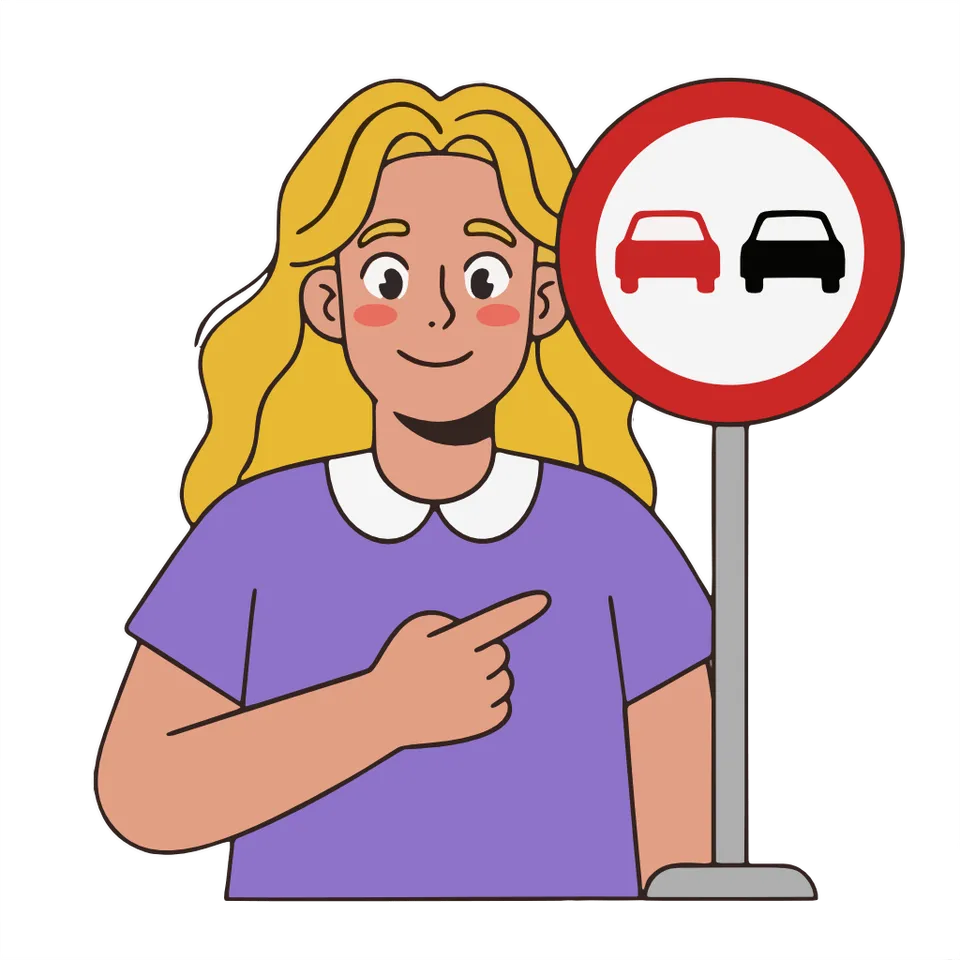
Getting in lane means choosing the right place on the road in good time before you turn. For a right turn you move right, for a left turn close to the centre of the road or, with no oncoming traffic, fully on the left. Watch out for oncoming traffic, cyclists, arrows on the road and buses or lorries that need room.
What is getting in lane (voorsorteren)?
Getting in lane means choosing, in good time before a junction or turn, the position on the road that matches your direction. That way others can see what you plan to do.
In the CBR exam there are 3 ways to get in lane:
| Way | Picture | When? |
|---|---|---|
| As far right as possible | 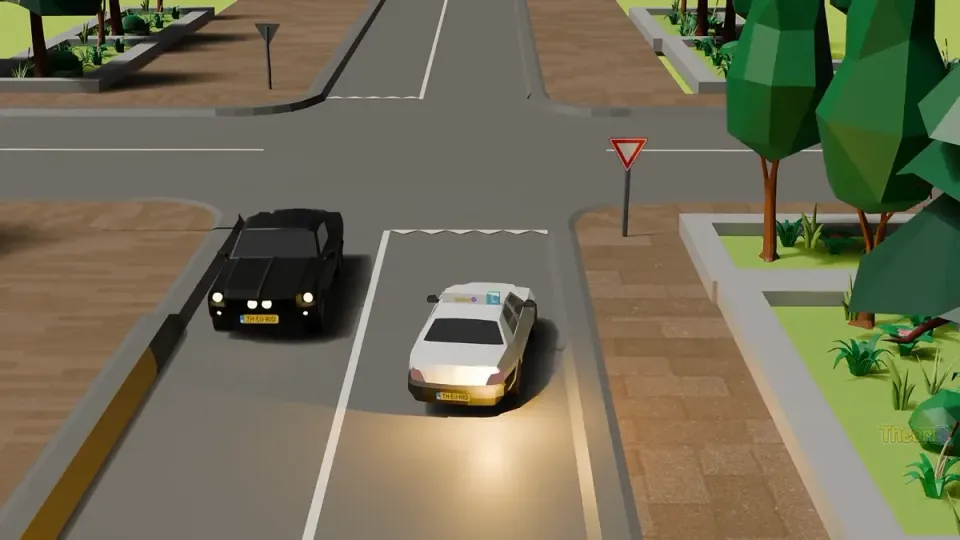 | You want to turn right. The learner car wants to go right, so it already moves as far right as possible, without driving onto the pavement. |
| Against the centre line | 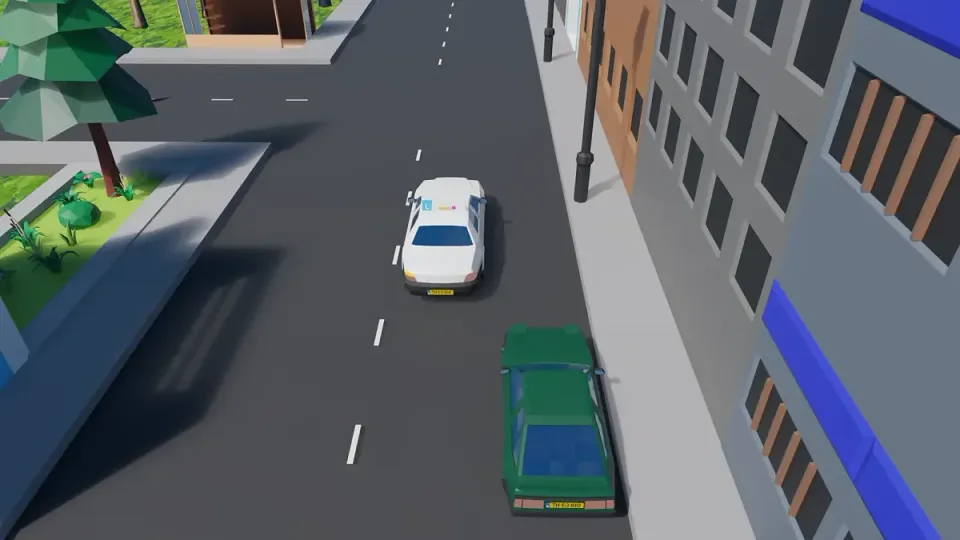 | You want to turn left and oncoming traffic is possible. You drive on the left of your own half of the road. |
| As far left as possible | 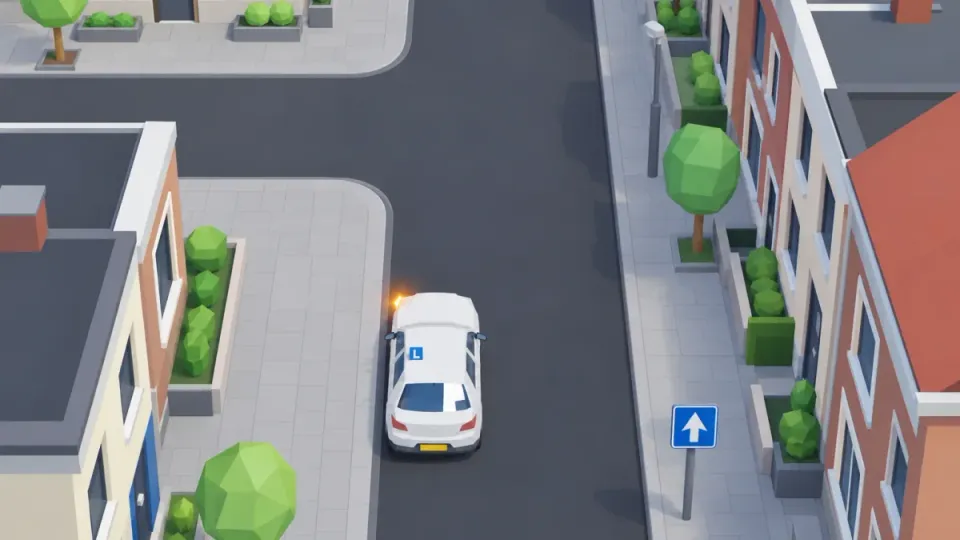 | You want to turn left and no oncoming traffic is possible, for example on a one-way street. |
Going straight on? Keep right, or choose the lane with the straight-ahead arrow.
First check your mirrors and over your shoulder, and signal. Your indicator does not give you priority. You may only move to another lane once the other traffic has gone first. When turning, let cyclists and light-moped riders going straight on go first.
Is getting in lane compulsory?
The law says you may get in lane (Article 17 RVV). But you must keep as far right as possible and signal before you turn. And are you in a lane with an arrow? Then you must follow that direction (Article 78 RVV). So for the CBR exam you do learn where you should be.
Turning left: get close to the centre of the road
In the CBR exam you often get this question: you want to turn left here, how do you get in lane? For a left turn you have two choices: against the centre line, or fully on the left. Which one depends on one thing: can oncoming traffic come?
What does against the centre line mean?
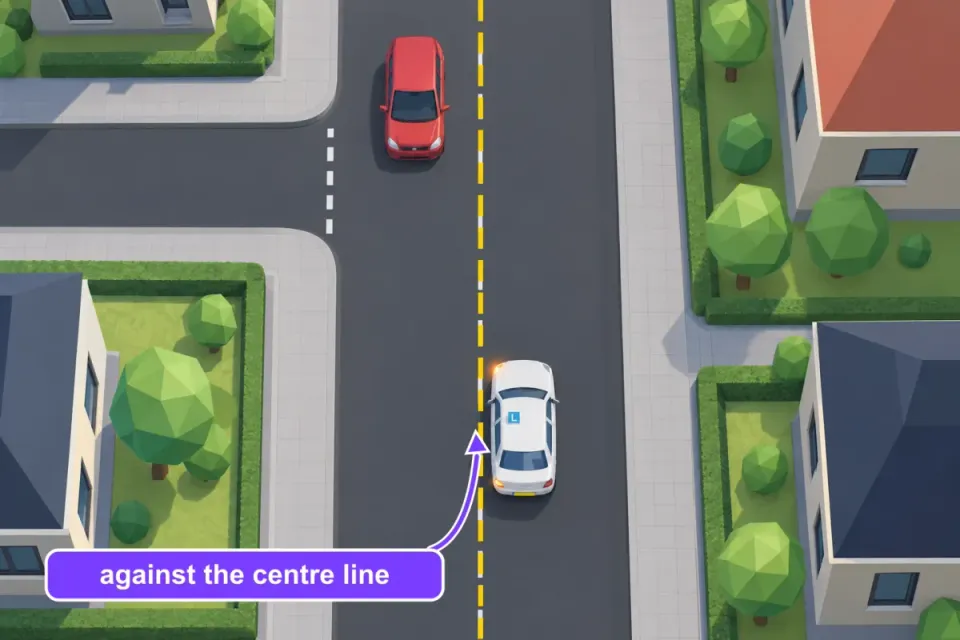
The centre line (in Dutch: de as van de weg) is the imaginary line in the middle between the two directions of traffic. Driving against it means: as far left as possible, but on your own half of the road. Do not cross the centre line or a continuous line. If you stay in the middle of your half, traffic behind you cannot pass you on the right.
You only get in lane against the centre line when you can expect oncoming traffic: on a road with traffic in two directions. Have you moved over to the left and are you indicating left? Then others may overtake you on the right. Let oncoming traffic going straight on or turning right go first.
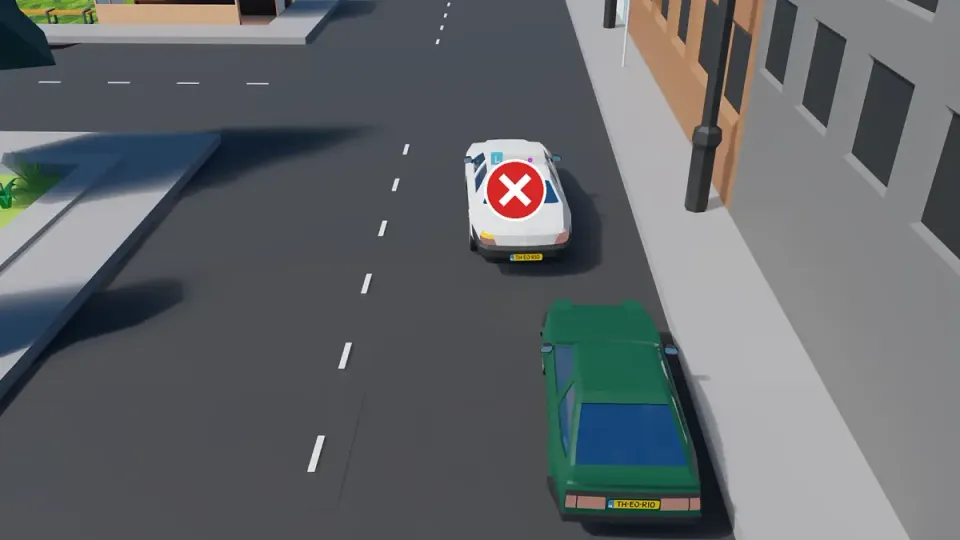
No oncoming traffic? Then fully on the left
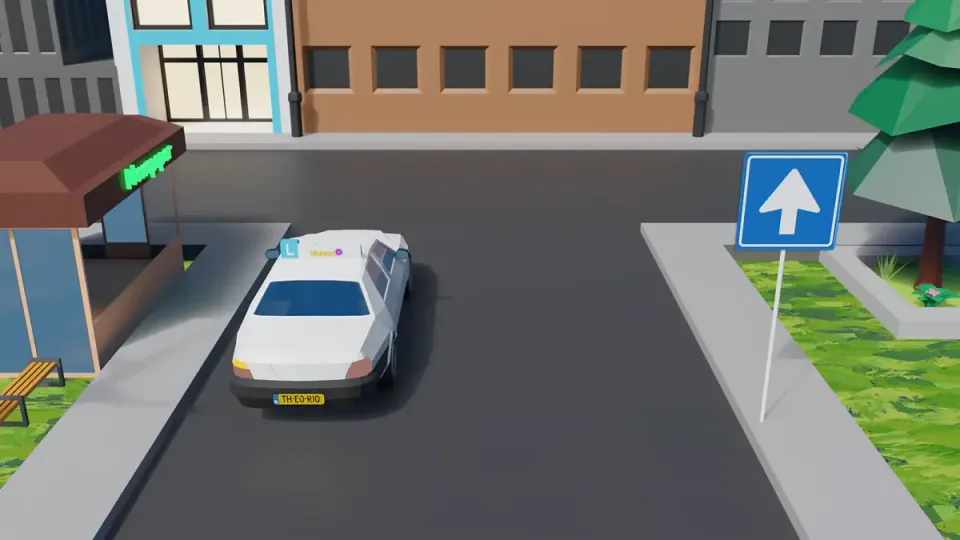
If no oncoming traffic can come, as on a one-way street, you get in lane for a left turn as far left as possible. More about this below under the one-way street.
Step by step: you want to turn left, how do you get in lane?
| Question | Answer | How you get in lane |
|---|---|---|
| Can oncoming traffic come? | Yes, the road has traffic in two directions | Against the centre line |
| Can oncoming traffic come? | No, for example on a one-way street | Fully on the left |
Waiting: keep your wheels straight
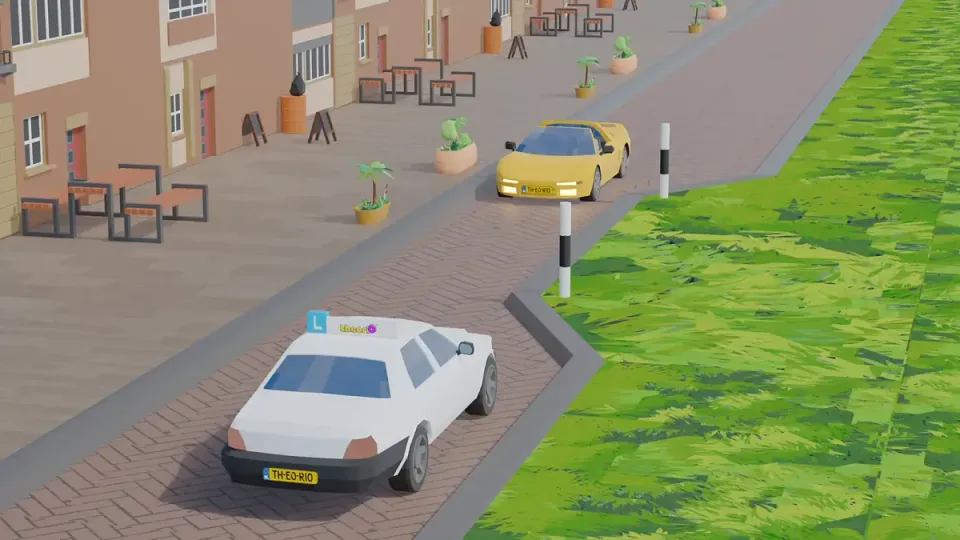
Do you have to wait for oncoming traffic? Keep your front wheels straight until you can turn. If you are hit from behind, you will not slide onto the other half of the road. Do not enter a junction if a queue would leave you standing on it: blocking a junction is not allowed (Article 14 RVV). Keep the zebra crossing and cycle crossing clear too.
Leave room for a bus or lorry
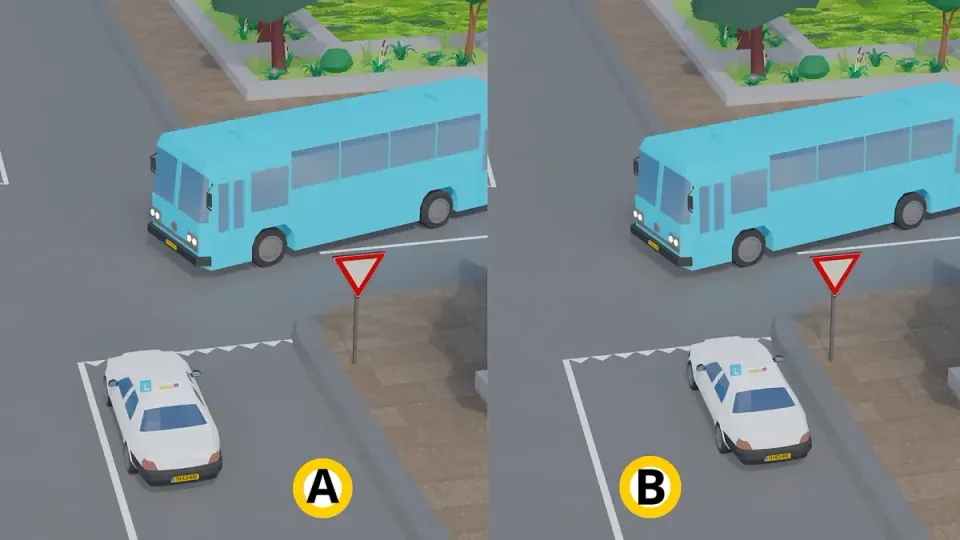
A bus or lorry needs a lot of room to turn and may cross the centre line. Then wait further back and more to the right, even if you want to turn left. At shark’s teeth you do not have to move right to the front if that blocks the turn. Do not drive alongside a large turning vehicle: think of the blind spot and the rear that swings out.
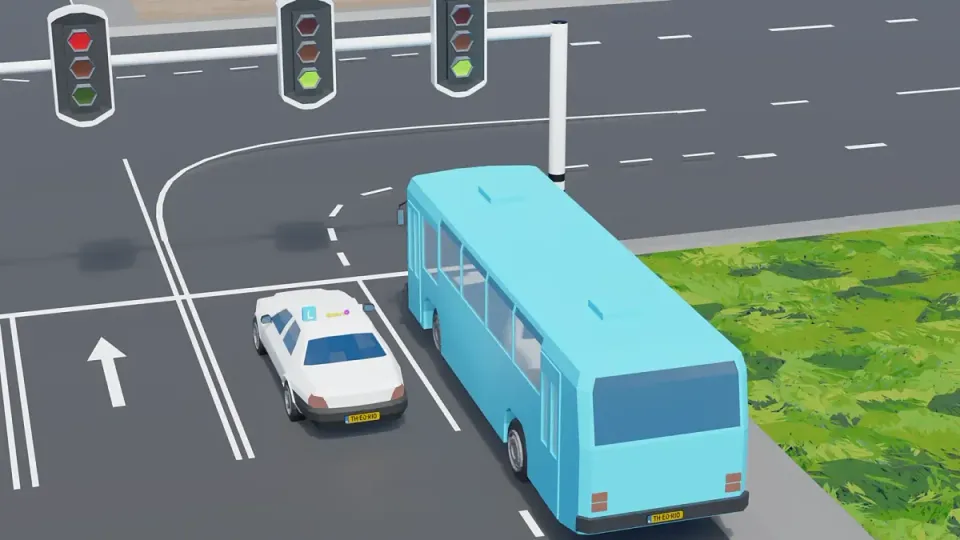
Getting in lane on a one-way road
On a one-way road you may move fully to the left to turn left. Do check the supplementary plates: sometimes cyclists or moped riders may ride against the flow. Leave room for them.
Note: a one-way sign that points sideways is about the road you turn into, not your road. Can oncoming traffic use your road? Then stay near the centre on your own half. The signs are under one-way roads and compulsory directions.
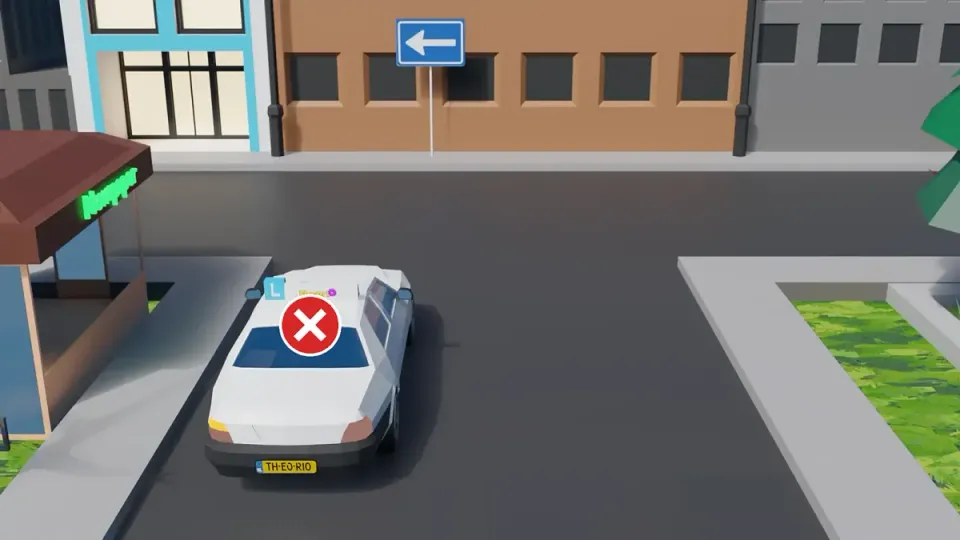
Game
Where do you get in lane?
Situation 1 of 4
You want to turn left here. Where do you get in lane?
Drag the learner car to the right box, or tap a box.
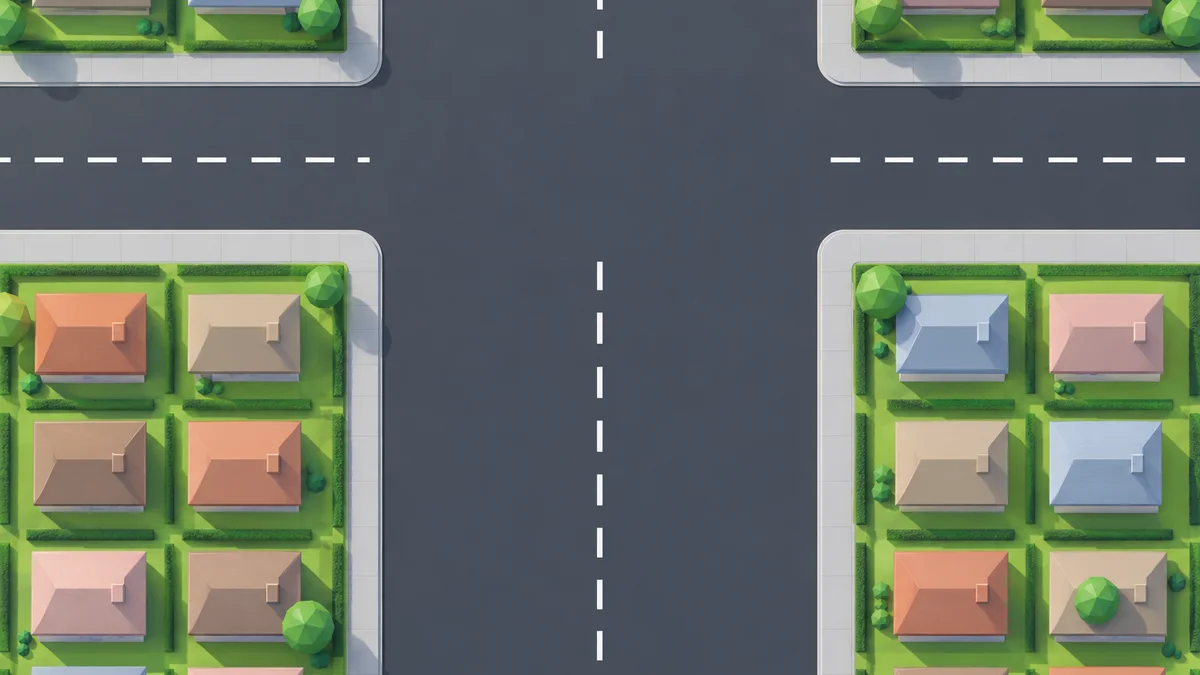
May you get in lane on a cycle lane?
It depends on the line. A cycle lane (fietsstrook) is part of the road with bicycle symbols, marked off with a line. A cycle path (fietspad) is a separate path with its own sign. You never drive a car on a cycle path.
| Picture | Line | Where do you get in lane? |
|---|---|---|
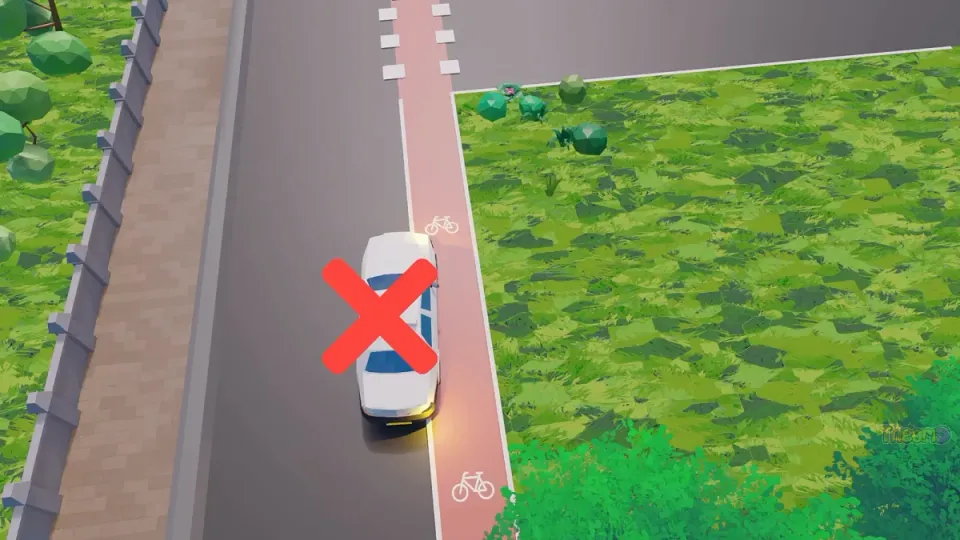 | Solid line | No. Stay to the left of the cycle lane in your car. |
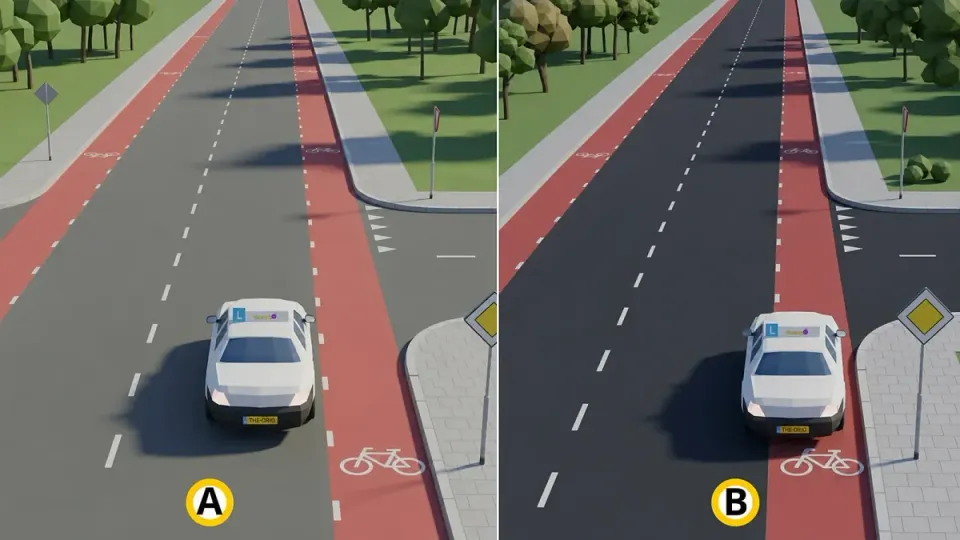 | Broken line | Yes, if you do not hinder cyclists and other permitted traffic. You do not have to: A and B are both correct. |
Always check your mirror and over your shoulder first: a cyclist can come up beside you. At traffic lights there is sometimes a waiting box for cyclists in front of the stop line for cars. Wait in your car behind your own stop line. Do not use a bus lane to get in lane: it is only for buses and trams (Article 81 RVV).
Which turning lane do you choose?
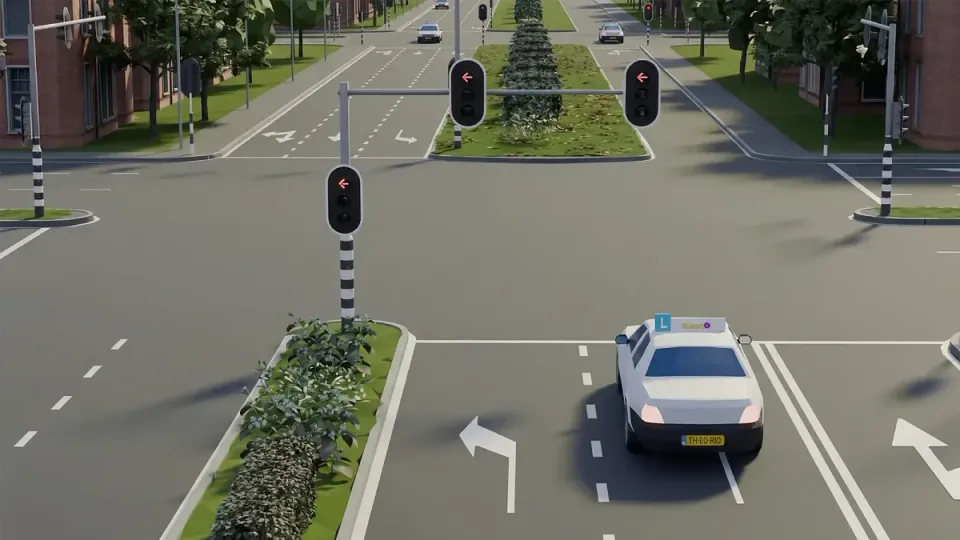 and keeping as far right as possible." width="480" loading="lazy" decoding="async" style="width:480px;height:auto;max-width:100%;display:block;object-fit:contain;margin:1rem auto" />
A turning lane (voorsorteervak) is a lane with an arrow for one or more directions. Read the arrows and signs before the lanes split. Choose the right-most lane that allows your direction. A lane with two arrows, such as left and straight on, also counts. On the junction you stay in your own lane. Where lanes end or merge is explained under lanes and carriageways.
When can you still change lanes?
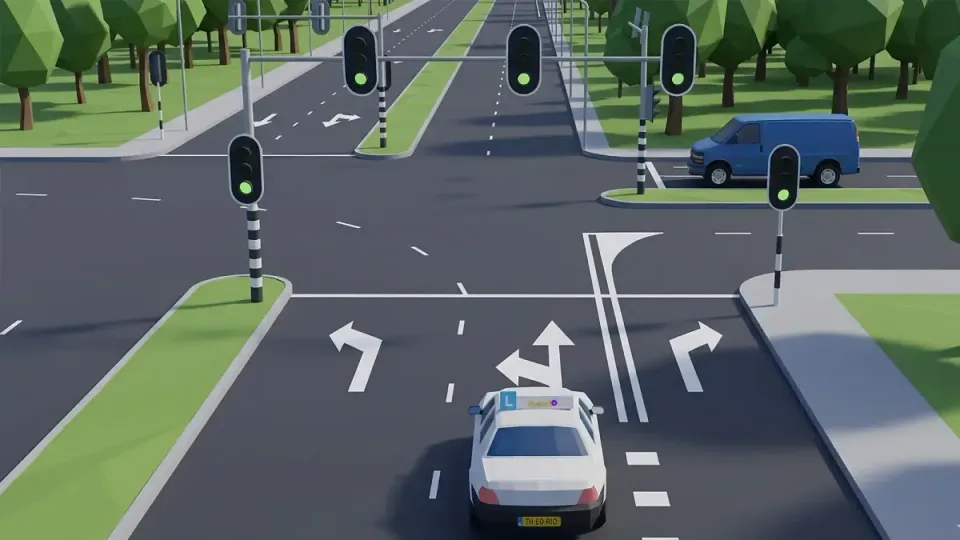
Only while the line is broken and it is safe. Then let all other traffic go first. Is the line solid, or can you no longer do it safely? Then follow the arrow of your lane and take another route later. You have to: you must follow the direction of your turning lane (Article 78 RVV).
What is the fine for using the wrong turning lane?
Do you go a different way from the arrow of your turning lane? In 2026 that costs €320 (offence code R619), plus €9 administration costs. Source: OM fines book 2026 (Dutch).
Getting in lane at a roundabout
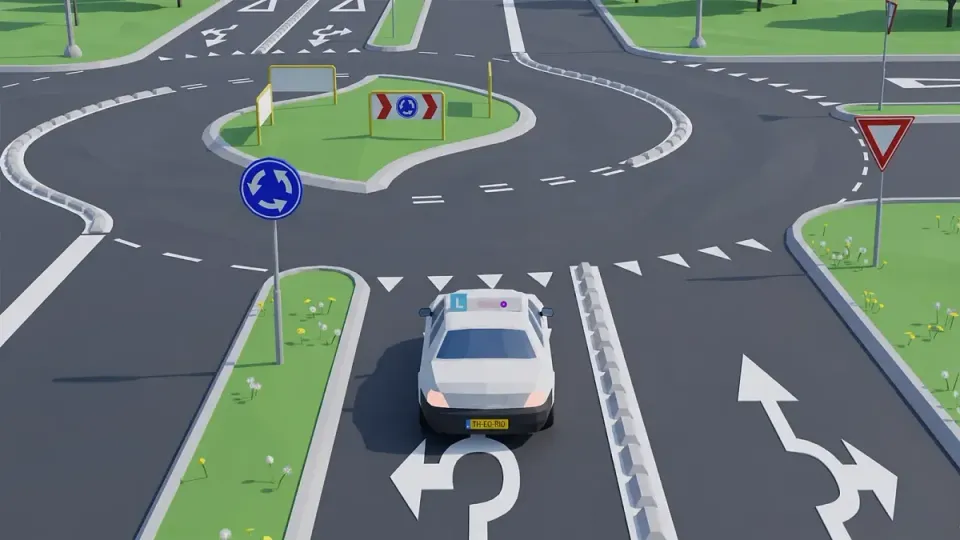
At a roundabout with several lanes, choose the lane the arrows show for your exit. Just before and on a roundabout you may stop keeping right. On a turbo roundabout, follow the lines and do not cut across lanes. Who goes first and when to signal is explained under roundabouts.
Overtaking signs · Overtaking on the left and right · Overtaking by situation · Road markings when overtaking · Getting in lane
Practise like the exam
Example questions like in the CBR exam
Real questions from the Theorio app. You can expect similar questions in your CBR exam.
Question 1 of 6
The centerline of the road is an imaginary or actual line in the middle of the road that separates the lanes.
Why should you position yourself against the centerline of the road when turning left?
Tap the answer you think is right.
Are you turning left? With no oncoming traffic you keep as far left as possible; if there is oncoming traffic, you stay closer to the center of the road.
You want to turn left. Are you positioned correctly like this?
Tap the answer you think is right.
You want to turn left. Are you positioned correctly like this?
Tap the answer you think is right.
Do you want to turn left, is this the correct positioning?
Tap the answer you think is right.
Are you turning left? At a road with oncoming traffic stay close to the center of the road to avoid ending up in their lane.
Do you want to turn left, are you positioning yourself correctly?
Tap the answer you think is right.
In which situation do you sort well in advance?
Tap the answer you think is right.
Answers and explanations for the example questions
Question 1: Why should you position yourself against the centerline of the road when turning left?
Correct answer: So that traffic behind you can overtake on the right
By standing against the centerline of the road, you allow following traffic to pass on the right. This promotes the flow of traffic 🚗.
Question 2: You want to turn left. Are you positioned correctly like this?
Correct answer: Yes
There is no oncoming traffic, so you prepare as far left as possible. This ensures a smooth traffic flow.
Question 3: You want to turn left. Are you positioned correctly like this?
Correct answer: No
You should position yourself near the center of the road. This allows oncoming traffic to maintain sufficient space. This ensures a safe traffic situation ⚠️.
Question 4: Do you want to turn left, is this the correct positioning?
Correct answer: Yes
You are now correctly positioned against the center of the road. This allows following traffic to safely overtake on the right and gives oncoming traffic enough space. This provides smooth traffic flow.
Question 5: Do you want to turn left, are you positioning yourself correctly?
Correct answer: No
Oncoming traffic can appear here. So stay closer to the center, so you do not block their lane. This is |the correct way to position yourself.
Question 6: In which situation do you sort well in advance?
Correct answer: B
Explanation: You see a large bus coming around the corner. A bus or truck is long. It needs a lot of space to turn. Often the front of the bus crosses over the center line when turning. Are you on the left (Situation A) or in the middle? Then you are in the way. The bus can hit you. Are you on the right (Situation B)? Then you give the bus enough space to make the turn. Note: Even if you want to turn left yourself, you should wait here on the right for a moment. Safety comes first.
FAQ
Frequently asked questions
Short answers to questions that often come up on this subject.
Why do you keep your wheels straight while waiting to turn left?
Straight front wheels reduce the risk of a rear impact pushing you into the opposite half and oncoming traffic. Turn the wheels only when you can turn safely. Also keep the junction and crossings clear.
What do you do if you are in the wrong lane before a junction?
Before the junction, change lanes only if the markings and traffic allow you to do so safely and in good time. Let all other traffic go first and indicate. If this is no longer possible or a solid line prevents it, follow your lane arrow and choose another route later.
Ready to practise?
Test your knowledge of Overtaking & Position on the Road with 70 practice questions in the app.
Free mock exam · no account needed
Your first quiz is free, no account needed. After that from €34.99 for 90 days of access.