Part 1 of 6 in Special Manoeuvres & Vehicles
Priority vehicles and emergency services
Priority vehicles use a blue flashing light and a siren. Make way safely, but don't run a red light. The CBR rules for emergency services.


Written by Chris Prosman Reviewed by Dirk van Zuijlen
Updated Reviewed on 5 min read
Free mock exam · no account needed
You recognise a priority vehicle by its blue flashing lights and siren. Let it go first safely and calmly make room. You may not run a red light, speed or use the bus lane to do so.
What are priority vehicles?
This is what the best-known priority vehicles look like, with blue lights and siren on:
| Police | Fire service | Ambulance |
|---|---|---|
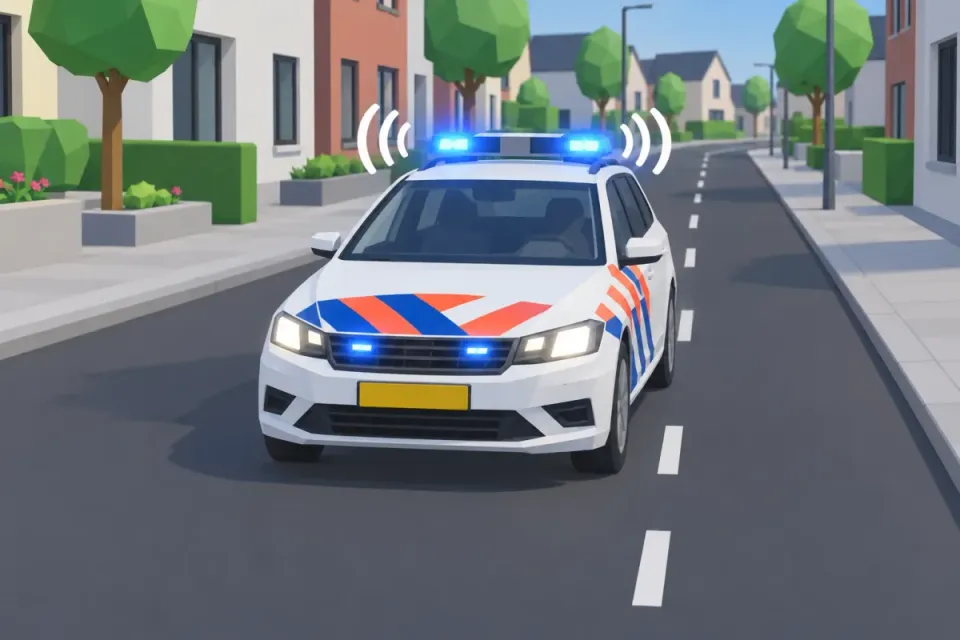 | 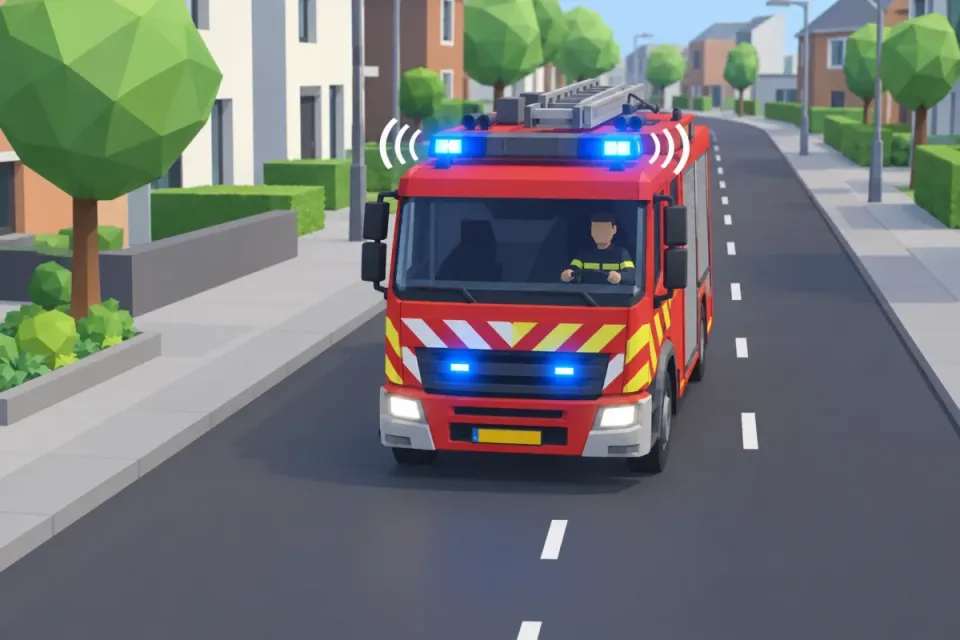 | 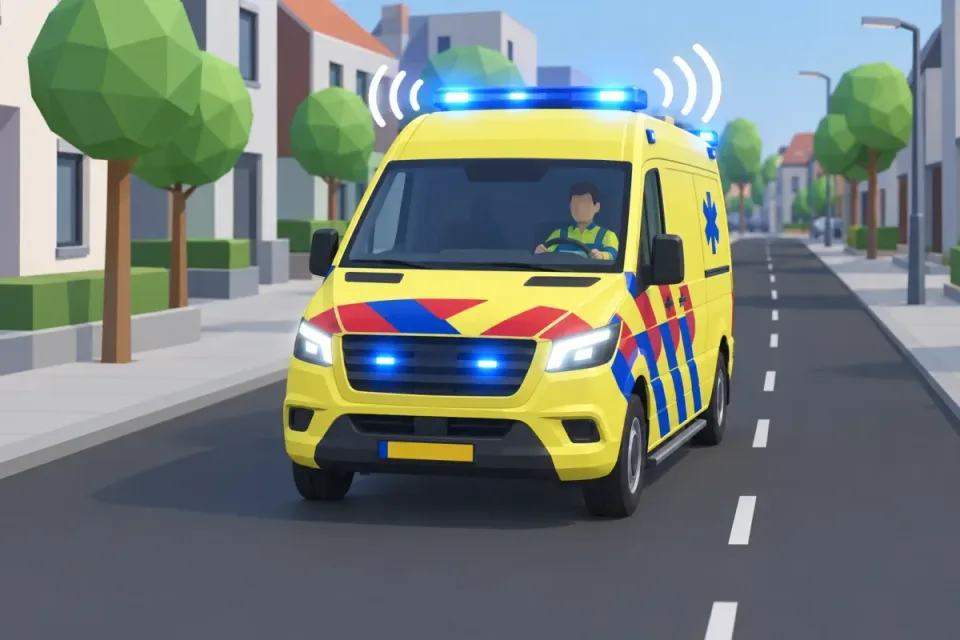 |
A priority vehicle is an emergency service vehicle with blue flashing lights and a siren switched on. Only with both signals together is it a priority vehicle. The service uses them for an urgent task, such as an accident, a fire or someone whose life is in danger.
Everyone lets a priority vehicle go first. That also applies when you have a green light or drive on a priority road. Trams, cyclists and pedestrians let it go first too.
Which vehicles count as priority vehicles in the Netherlands?
Police, fire brigade and ambulance vehicles. The minister has also named a list of other emergency services. Some examples:
- the Royal Netherlands Marechaussee;
- Rijkswaterstaat road inspectors;
- Sanquin, for urgent blood transport;
- urgent transport of organs for a transplant;
- lifeguard brigades;
- the Defence explosive ordnance disposal service.
These vehicles are also only priority vehicles when their blue lights and siren are on.
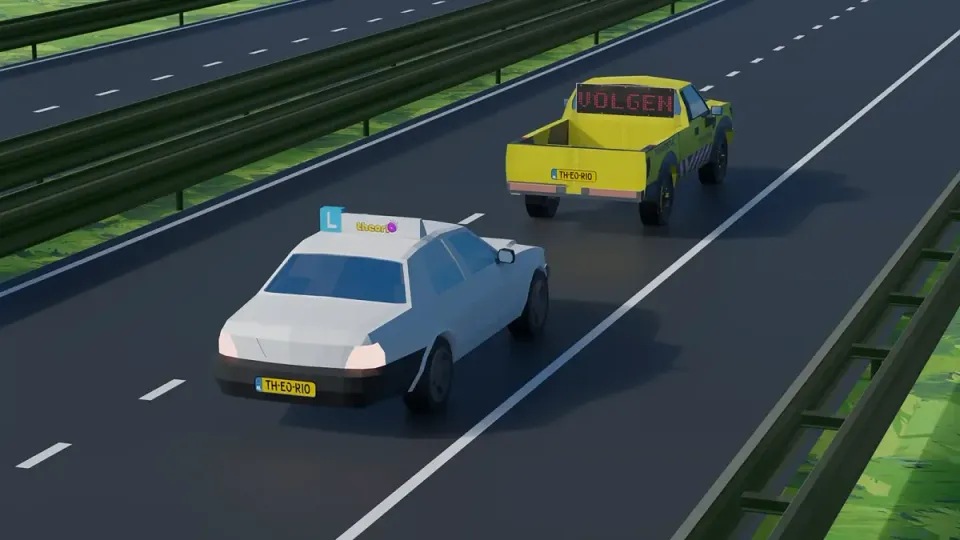
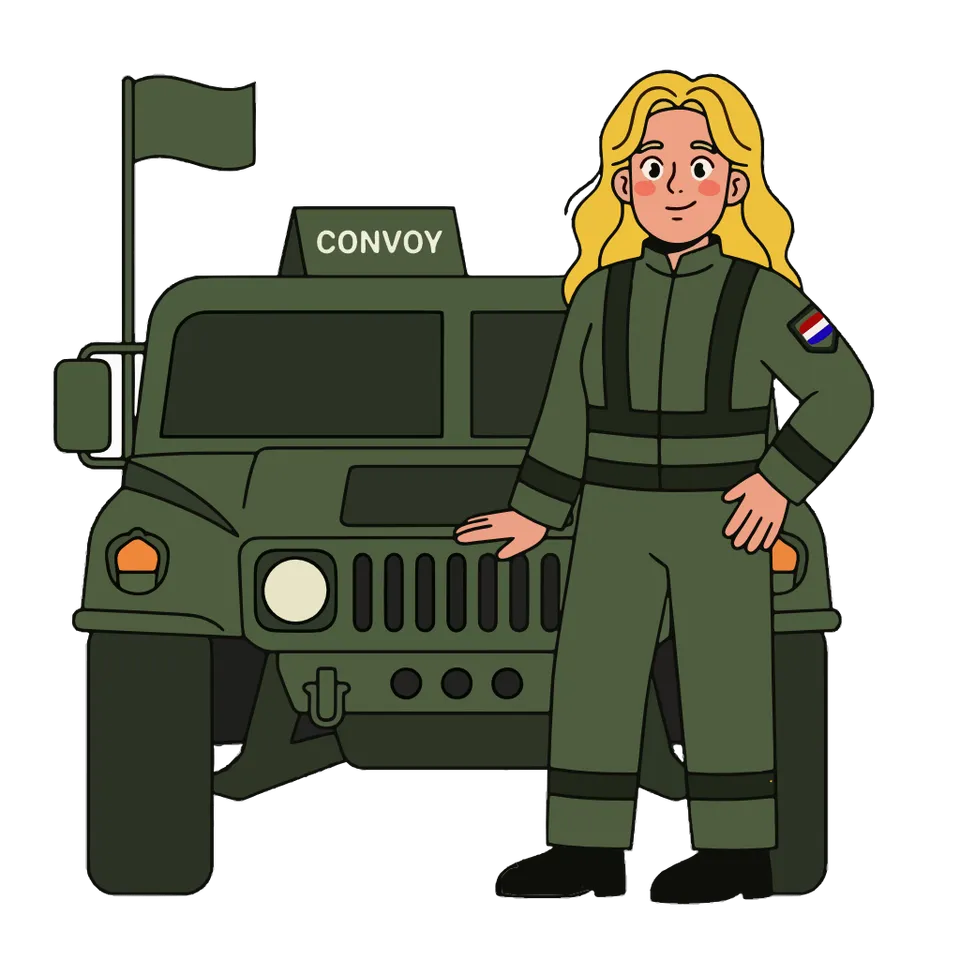
A tram, a military convoy and a funeral procession are not priority vehicles. They do have their own rules. Read more about the tram, the military convoy and the funeral procession.
Dutch regulation on optical and audible signals 2009: list of services.
Is an animal ambulance a priority vehicle?
No. An animal ambulance (dierenambulance) is not on the list of services that may use blue lights and a siren. So it is not a priority vehicle.
That is why it may not run a red light either. The normal traffic rules apply to its driver, just like to you. If it comes from the right at an equal junction, it does go first.
How do you recognise a priority vehicle?
By two signals at the same time: blue flashing lights and the siren. During the day they may also flash their headlights. Words like "police" or "ambulance" on the vehicle are not enough.
| Picture | What do you see or hear? | Priority vehicle? | What do you do? |
|---|---|---|---|
| Blue lights and siren | Yes | Let it go first and make room safely. |
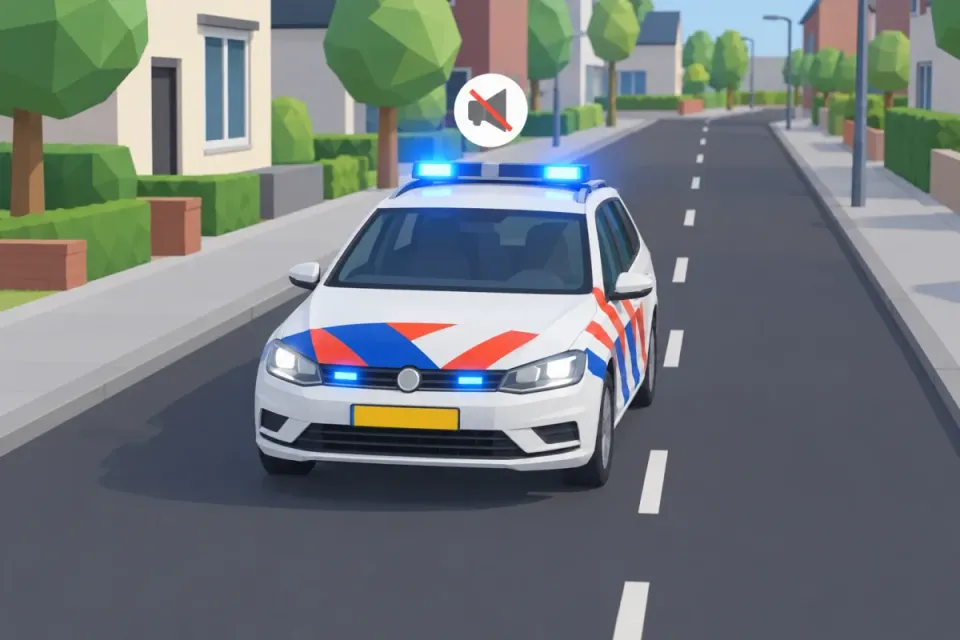 | Only blue lights, or only a siren | No | The normal rules apply. Stay alert and do not hinder the service. |
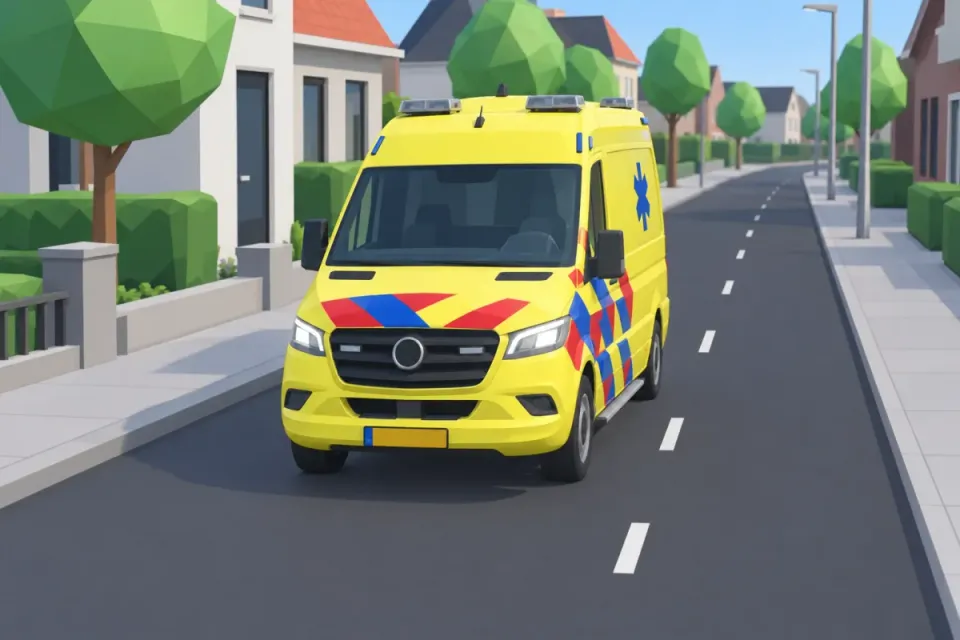 | No signals | No | The normal priority rules apply. |
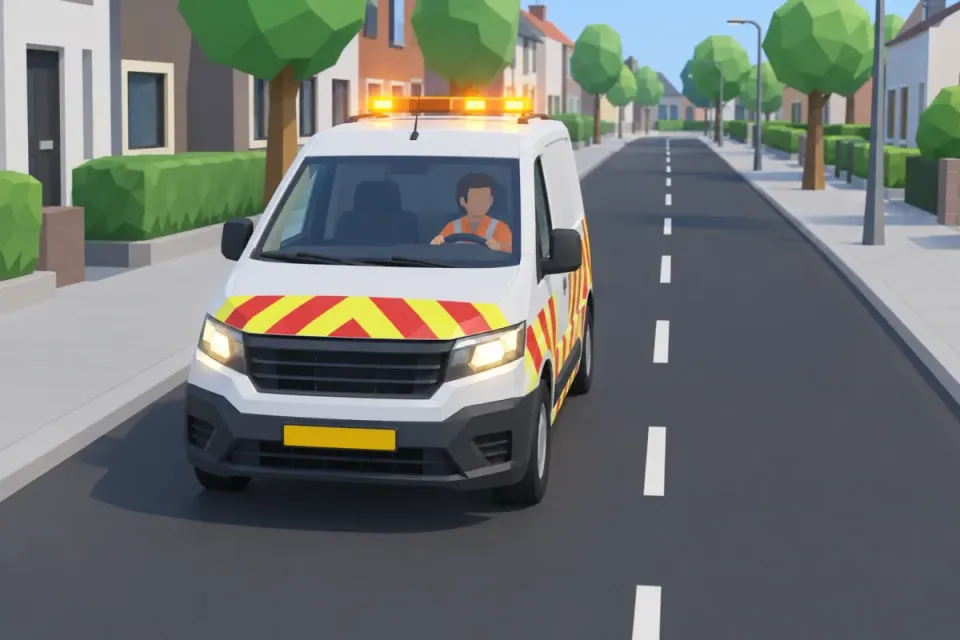 | Yellow or orange flashing light | No | It warns of danger or roadworks. Adjust your speed. |
Is a police car always a priority vehicle?
No. A police car without blue lights and a siren is not a priority vehicle. The same goes for an ambulance without a siren. Then the normal priority rules apply: if it comes from the right, it goes first. Always follow an instruction from a police officer.
Rules for priority vehicles: how to make room
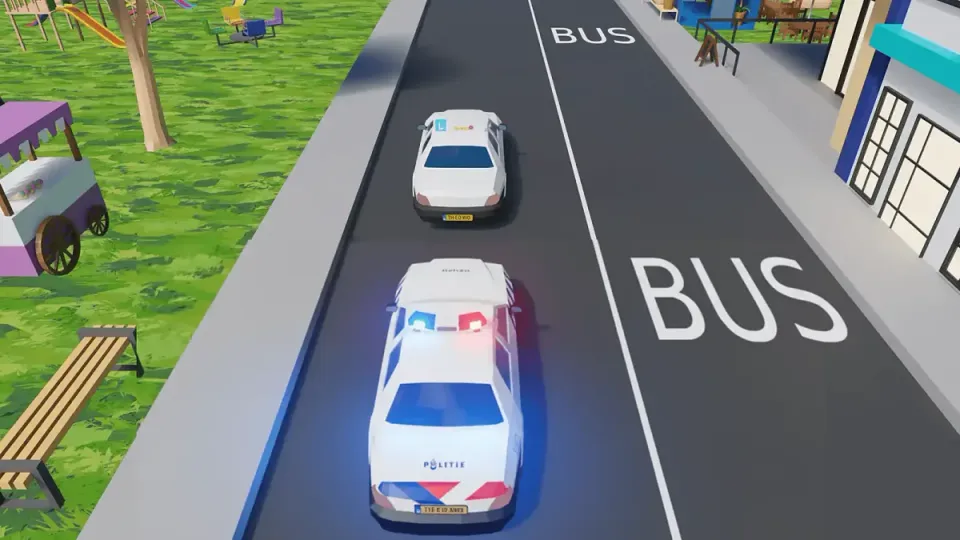
First look where the priority vehicle is coming from and where it wants to go. Can it already pass you? Then calmly drive on. Only make room if it is needed and safe. Do not brake suddenly and signal if you move aside.
You may not do this to make room:
- run a red light;
- drive faster than the limit;
- use the bus lane, hard shoulder, verge or a hatched area;
- drive onto a cycle path.
This is allowed, if it is safe: moving over on your own half of the road, or onto an empty cycle lane with a broken line. The priority vehicle may run a red light and use the bus lane. You may not.
May you run a red light for an ambulance?
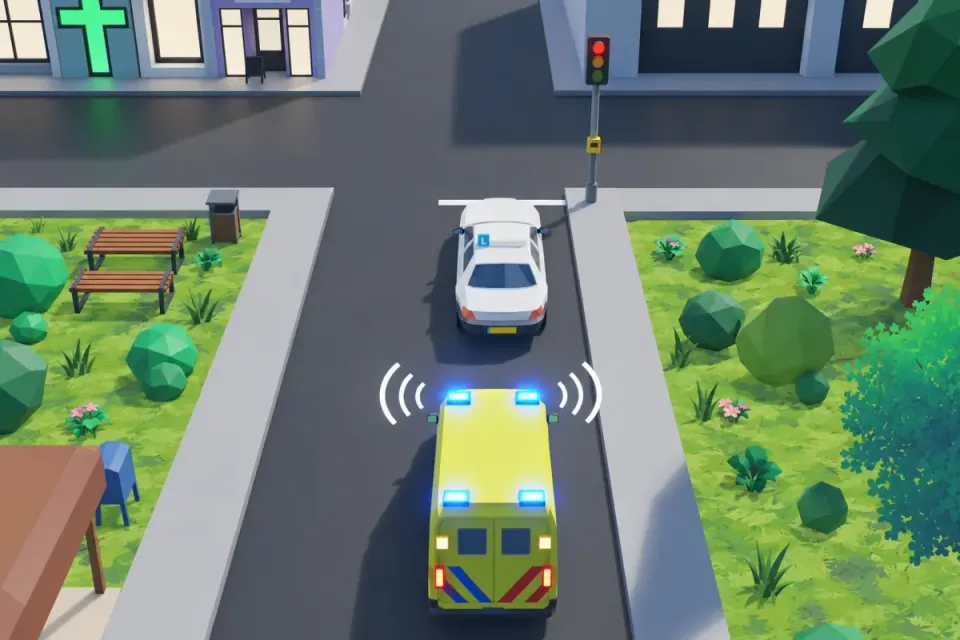
No. Are you waiting at a red light and an ambulance comes up behind you? Stay where you are, or move over a little if that is safe. The ambulance finds its own way. Do not drive onto the junction or a zebra crossing either.
May you move onto the cycle lane?
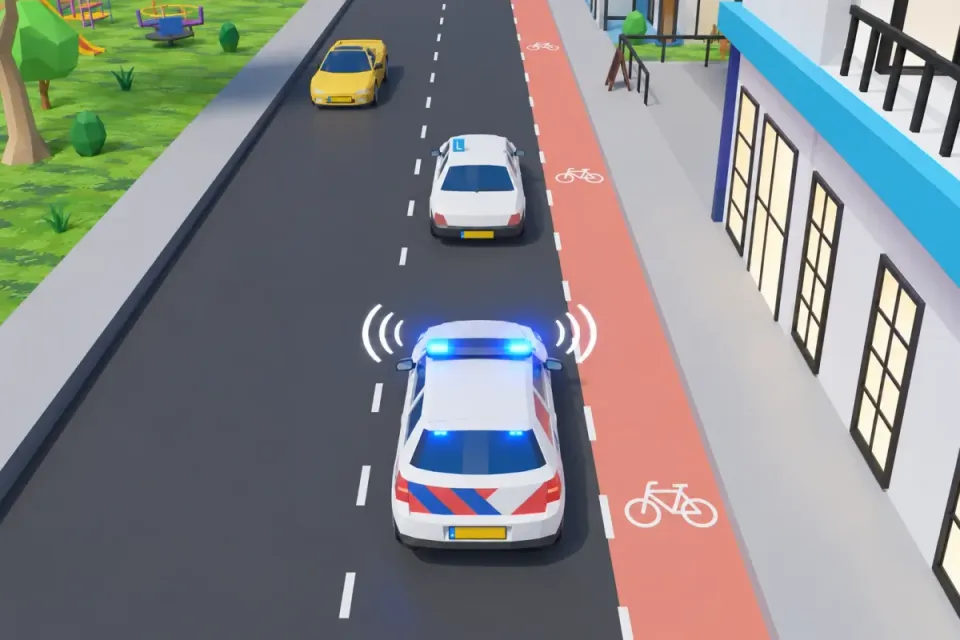
Only onto a cycle lane with a broken line, if it is empty and you do not hinder cyclists. A cycle lane with a solid line or a separate cycle path is not for you, not even when you hear a siren.
On the motorway and in a traffic jam

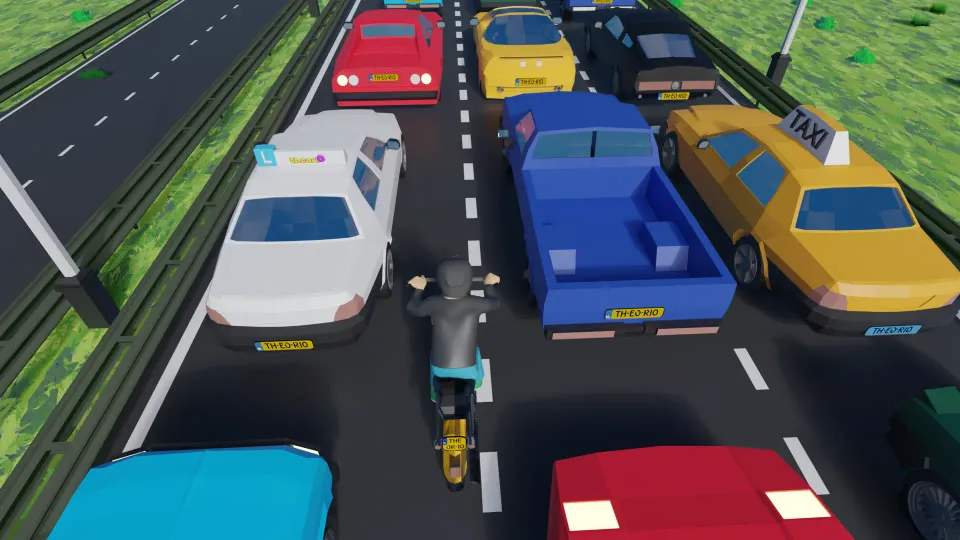
If traffic keeps moving, stay in your lane. The police will find a way past. Is traffic at a standstill or moving very slowly? Then make room between the lanes. With two lanes, the left row moves left and the right row moves right. With more lanes, the far-left row moves left and the other rows move right.
On a roundabout
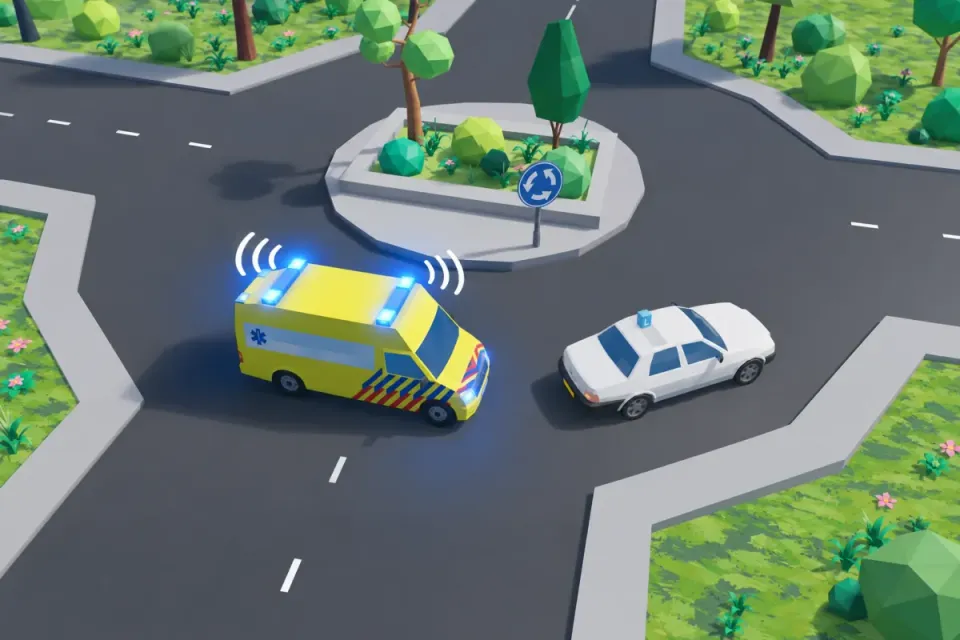
Do not quickly take an exit to get out of the way. The ambulance may need to go there too. Calmly keep going round until the ambulance has left the roundabout.
After that, the normal rules apply again
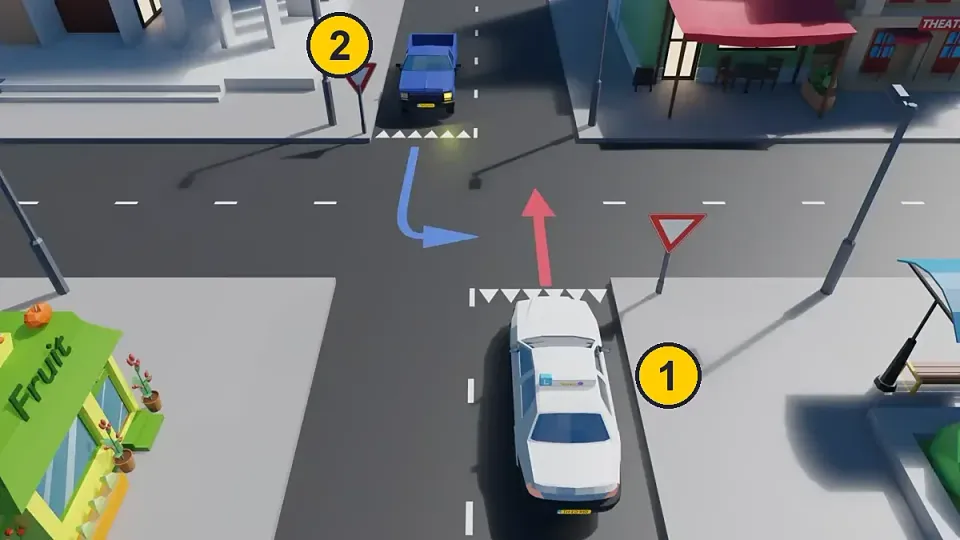
Once the priority vehicle has passed, the normal priority rules apply again.
Practise like the exam
Example questions like in the CBR exam
Real questions from the Theorio app. You can expect similar questions in your CBR exam.
Question 1 of 6
Which vehicle is a priority vehicle?
Tap the answer you think is right.
A priority vehicle can be recognized by optical and sound signals (police, ambulance, fire brigade, and Rijkswaterstaat with signals).
Which vehicle is a priority vehicle?
Tap the answer you think is right.
The siren and the flashing light of the ambulance are on.
An ambulance with optical and sound signals is driving behind you. What do you do?
Tap the answer you think is right.
An ambulance with optical and sound signals is driving behind you. What do you do?
Tap the answer you think is right.
The siren and flashing light of the ambulance are on.
The traffic light is red, can you drive through?
Tap the answer you think is right.
Do you have to yield for the police car with optical and sound signals?
Tap the answer you think is right.
Answers and explanations for the example questions
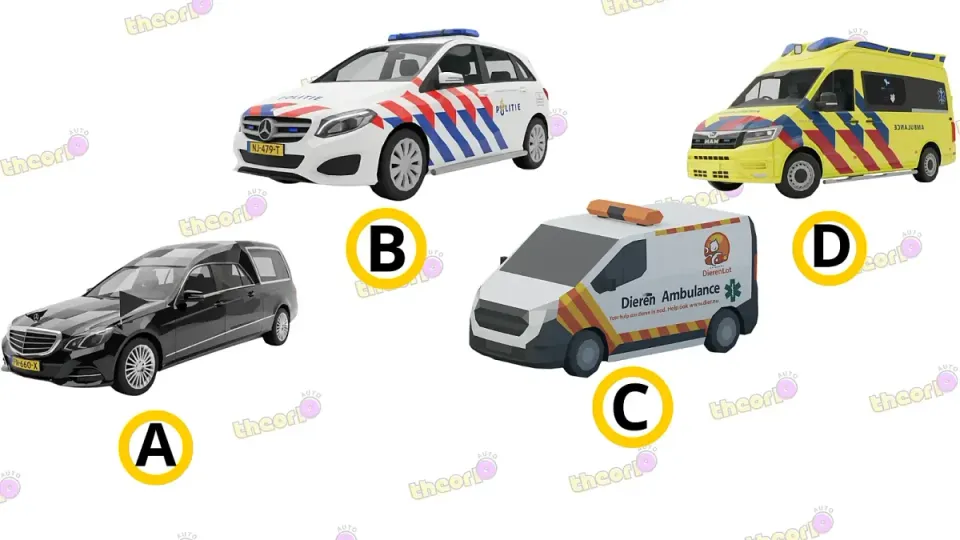
Question 1: Which vehicle is a priority vehicle?
Correct answer: B, D
Explanation: A priority vehicle must have blue flashing lights and a siren. Look at B and D. They have blue lights on the roof. If they have the lights and siren on, you must pull over. Look at C. The animal ambulance has orange lights. Orange light does not give priority. Look at A. The hearse has no flashing lights. So only the police and the regular ambulance are priority vehicles.
Question 2: Which vehicle is a priority vehicle?
Correct answer: Vehicle C
Vehicle C (for example, a Rijkswaterstaat vehicle with optical and sound signals) must be given priority.
Question 3: An ambulance with optical and sound signals is driving behind you. What do you do?
Correct answer: Stay on the roundabout
By staying on the roundabout, you give the ambulance space to safely take the desired exit. If you take an exit to make way and the ambulance chooses the same, a problem arises. Therefore, you must stay on the roundabout.
Question 4: An ambulance with optical and sound signals is driving behind you. What do you do?
Correct answer: Stay on the carriageway
You cannot simply drive onto the hard shoulder or a displacement area to make way for an ambulance. Emergency vehicles do not expect this either. If you do drive onto the hard shoulder, especially in wet or muddy weather, this can lead to a serious accident. In this case, the ambulance will simply overtake you and you do not need to do anything. You only swerve if the ambulance cannot swerve itself.
Question 5: The traffic light is red, can you drive through?
Correct answer: No
Even if you want to make way for an emergency vehicle, you should never run a red light. In this case, the ambulance is overtaking you. You are never expected to run a red light for an emergency vehicle; this is even punishable. You may, however, swerve or move to the right to make it easier for the ambulance, but running a red light is prohibited.
Question 6: Do you have to yield for the police car with optical and sound signals?
Correct answer: Yes
If it is safe to do so, you may, for example, ride on the bike path to make space. This gives priority to emergency services 🚨.
FAQ
Frequently asked questions
Short answers to questions that often come up on this subject.
Do you have to let an ambulance without a siren go first?
Without the prescribed combination of blue lights and a multi-tone siren, an ambulance does not have special priority-vehicle status. That does not mean you never let it go first: ordinary rules may give it priority, for example from the right at an equal junction. Stay alert, make room safely where possible and obey applicable authorised instructions.
May you drive through a red light to make way for an ambulance?
Not on your own initiative merely because an ambulance is behind you. Its exemption does not extend to you: do not run red lights or speed. Move only within permitted space when safe, without blocking crossing traffic; if there is nowhere safe to go, remain stopped. Do follow a direct applicable instruction from an authorised police officer or traffic controller.
Do you have to move onto the hard shoulder for the police on the motorway?
Do not abruptly or on your own initiative enter the hard shoulder to let a police vehicle with blue lights and siren pass. Keep the shoulder clear and make predictable space where safe and permitted. In a queue the leftmost row moves left and the other rows move right where possible, within safe limits. Observe the emergency vehicle’s chosen route and obey applicable authorised instructions.
Ready to practise?
Test your knowledge of Special Manoeuvres & Vehicles with 75 practice questions in the app.
Free mock exam · no account needed
Your first quiz is free, no account needed. After that from €34.99 for 90 days of access.