Part 5 of 5 in Speeds
Speed limit signs
Speed limit signs at a glance: round with a red border is a maximum, blue square a recommendation. Plus matrix signs, sub-signs and roadworks.


Written by Chris Prosman Reviewed by Dirk van Zuijlen
Updated Reviewed on 7 min read
Free mock exam · no account needed
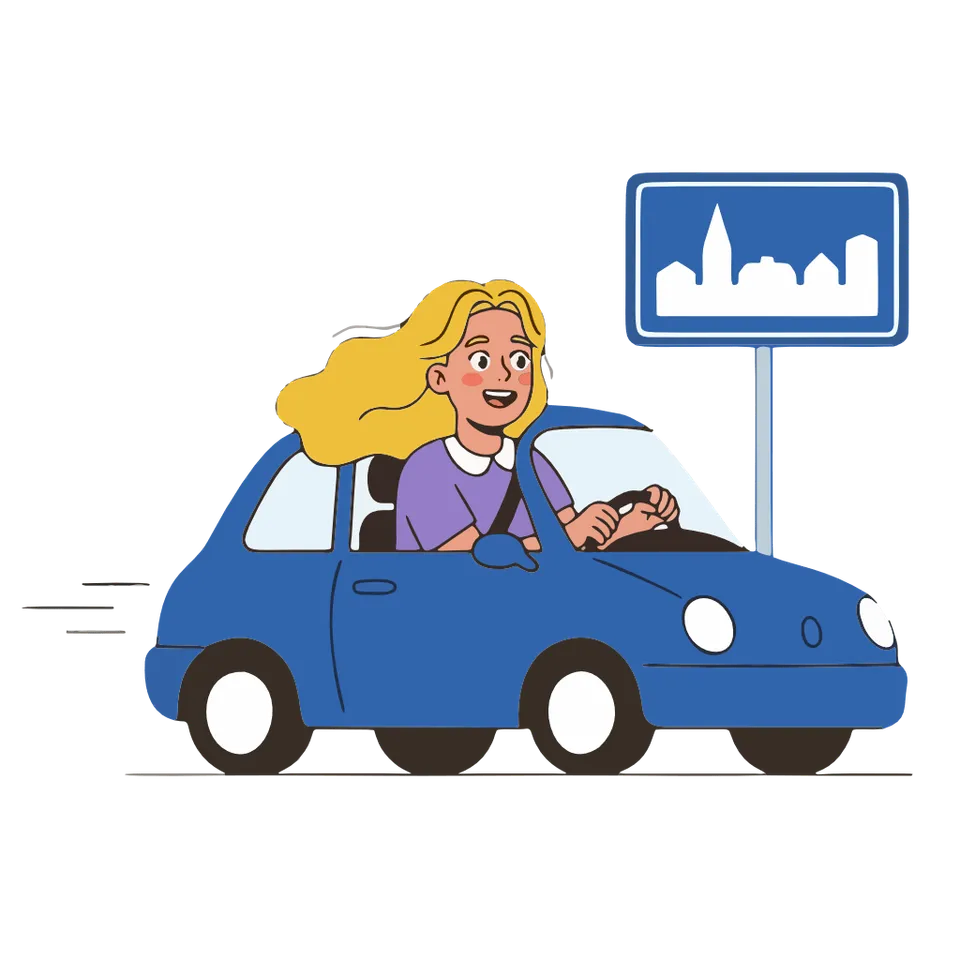
You recognise speed limit signs by shape and colour. A round white sign with a red border gives a maximum speed you must follow, a blue square sign only a recommendation. On the motorway a matrix sign can lower the speed for a while, and a sub-sign tells you when a sign applies.
Which sign does what?
| Sign | Shape and colour | Meaning | Mandatory? |
|---|---|---|---|
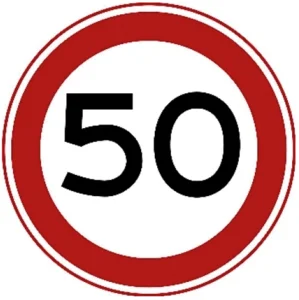 Maximum speed (A1) | Round, white with a red border | The highest speed allowed | Yes |
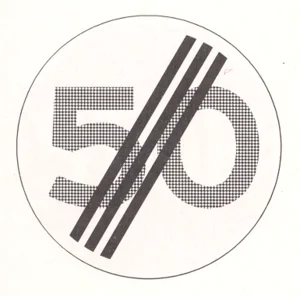 End of maximum speed (A2) | Round, white, grey numbers with black diagonal stripes | The restriction ends; then the normal speed of the road applies | Yes |
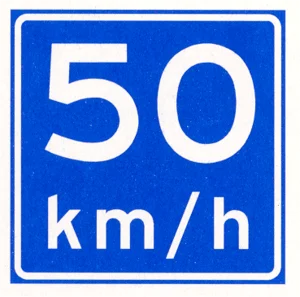 Recommended speed (A4) | Square, blue with white numbers | Recommended speed, often before a bend | No — square = friendly |
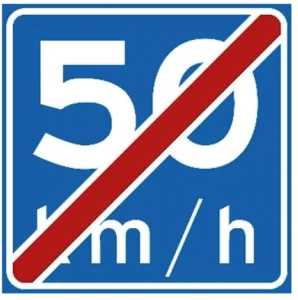 End of recommended speed (A5) | Square, blue with a red diagonal line | The recommendation ends | — |
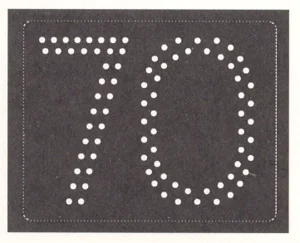 Speed on a matrix sign (A3) | Electronic, above the lane | Maximum speed for that lane; if it is lower than the fixed sign, the matrix sign takes precedence; if the fixed sign is lower, the lowest applies | Yes, while it is lit |
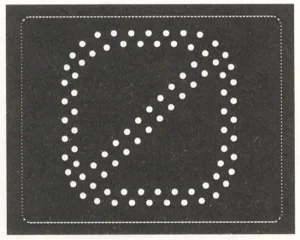 End symbol on a matrix sign (F9) | Electronic, a grey circle with a diagonal line | End of that speed limit | — |
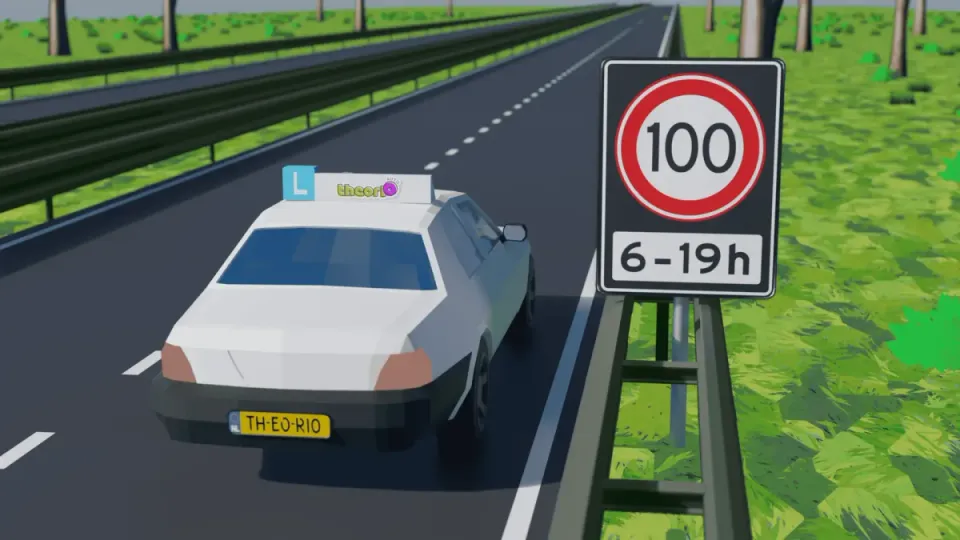 Sub-sign | White and rectangular, below the sign | When or where the sign above applies | The sign then applies only that way |
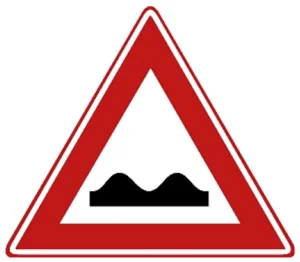 Warning sign | Triangle, white with a red border | Warns of a danger | No speed restriction |
Maximum speed signs
A maximum speed sign is a round white sign with a red border and a number. You may not drive faster than that number there. The sign applies until a next sign says something else. It is not a target speed: adjust your speed to visibility, the road and the traffic.
- Maximum speed (A1): you may not go faster than the number on the sign.
- End of maximum speed (A2): a white sign with grey numbers and black lines through it. The restriction stops. After it the normal speed of the road applies, for example 80 km/h outside a built-up area. See speed limits inside and outside built-up areas.
Does the sign say "zone", as with a 30 zone? Then the speed applies in the whole area, until the end of zone sign.
Speed signs at roadworks
At roadworks there is often a temporary speed sign. The speed is on that sign. It is not always 90 km/h. The sign applies as long as it is there, also when nobody is working at that moment. The fixed speed signs have usually been removed or covered for a while.
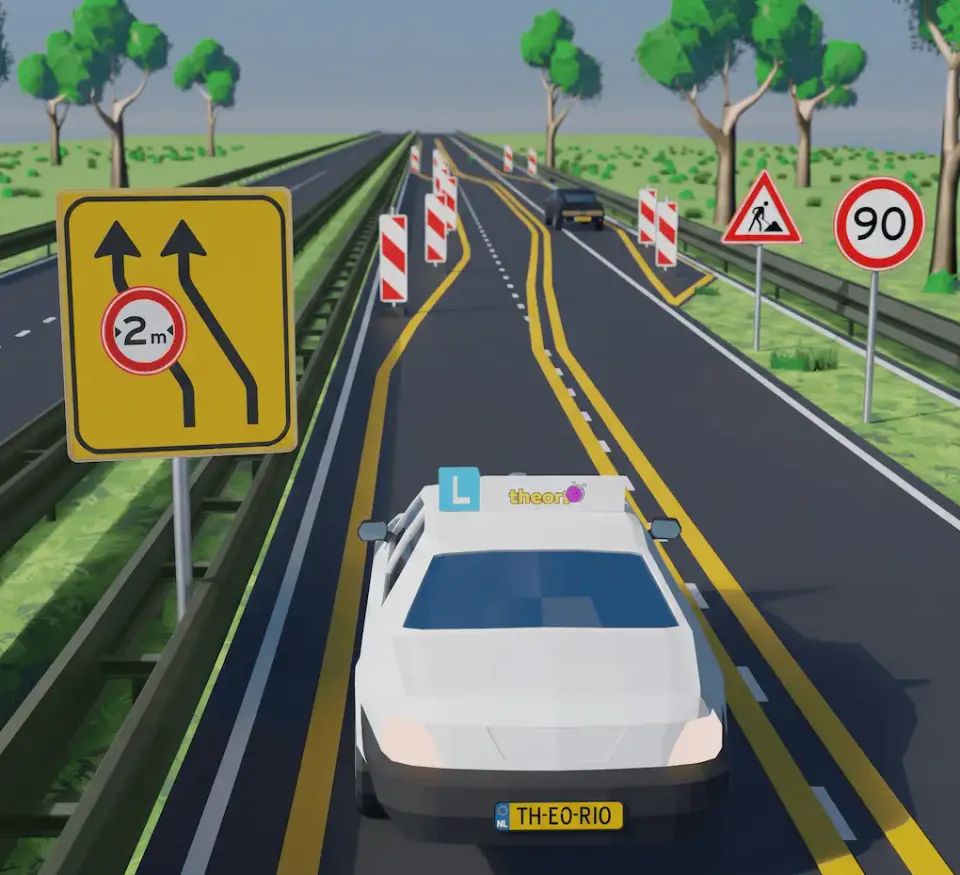
If you speed at roadworks, the fine is higher than for the same offence elsewhere.
Recommended speed sign: square = friendly
A recommended speed sign is a square blue sign with white numbers (sign A4). You see it mainly before sharp bends.
Is a recommended speed mandatory? No. Square = friendly: it is advice. Do follow it, because it is there for a reason. If you take the bend faster anyway, you can come off the road. The advice ends at the end of recommended speed sign (A5): the same blue square with a red diagonal line.
Matrix signs
On the motorway, electronic signal signs hang above the lanes: matrix signs. If a number is lit above your lane (sign A3), that is a mandatory maximum speed for that lane, not a recommendation.
The matrix sign takes precedence: if a lower speed is shown above your lane than on the sign beside the road, you keep to the matrix sign, even though the fixed sign is higher. If the sign beside the road shows a lower speed than the matrix sign, the lowest applies. It is switched on for example at roadworks or when there is a traffic jam further on, so that you can reduce speed in time.
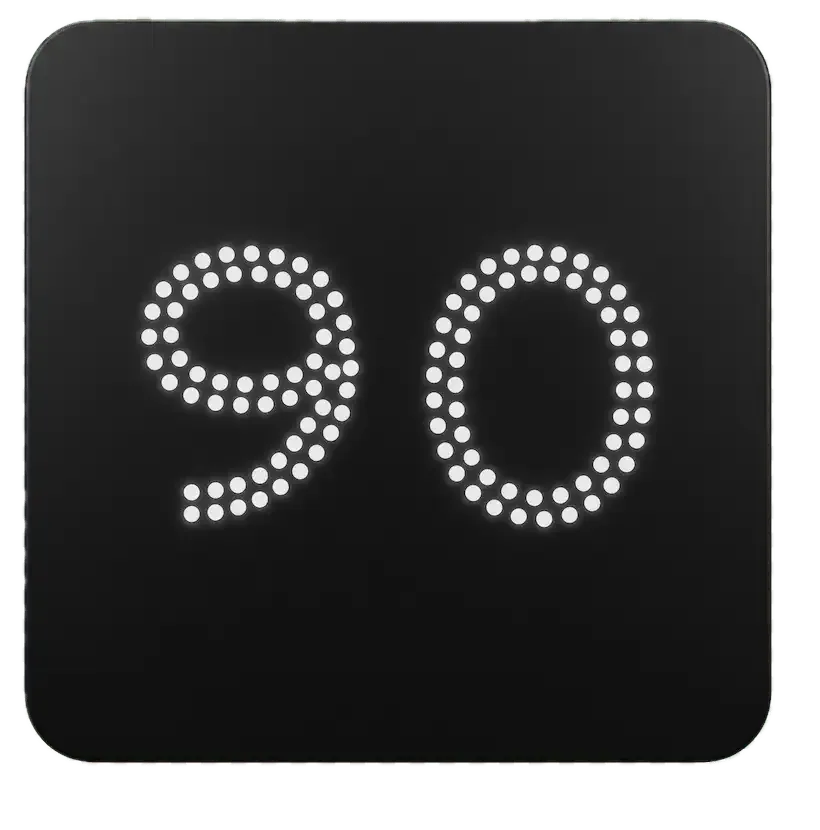
What else a matrix sign can show, such as a red cross or a diagonal arrow, is explained under matrix signs.
End of a matrix indication
The end of a speed on the matrix sign is shown by a grey circle with a diagonal line (sign F9): end of that speed limit. You follow the fixed signs again, or the normal speed of the road if there is no sign.
Other electronic speed signs
An electronic or digital speed sign with a red border means the same as an ordinary sign. A traffic sign may be shown on an electronic sign. Such variable speed signs can show a different speed, for example in busy traffic or bad weather. The number that is lit is your speed limit.
A speed display is something else. It only shows how fast you are driving, sometimes with a smiling or angry face. It does not set a speed limit itself. How fast you may go, you read from the traffic signs.
Sub-signs: times and conditions
Does a speed sign only apply at certain times or in certain situations? Then that is always shown on a white sub-sign below it. No sub-sign means: the sign always applies. Read the sign from top to bottom: the speed at the top, when it applies below.
Times, such as 6-19h under a 100 sign: the sign only applies between those times. What you may drive outside those times on the motorway is under speed on the motorway.
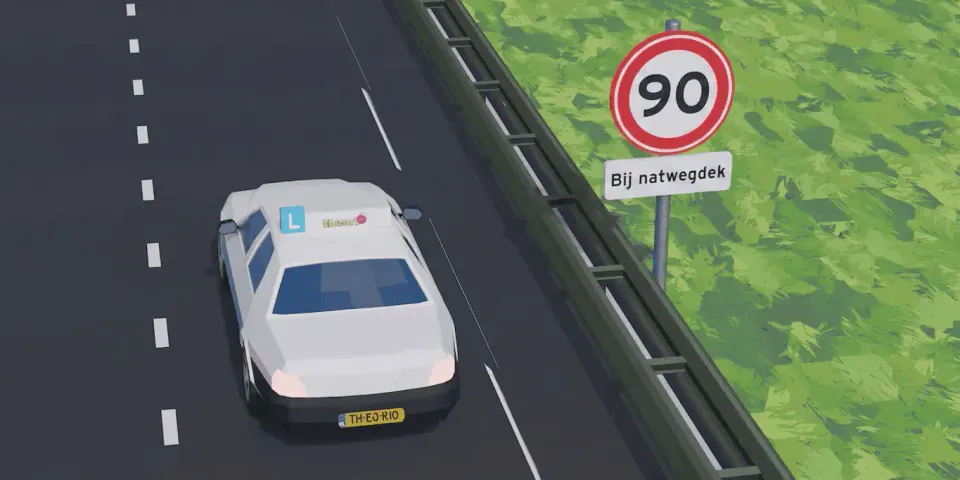
Conditions, such as "when wet" (bij nat wegdek): the sign only applies when the road is wet. More about rain and slippery roads under weather conditions on the motorway.
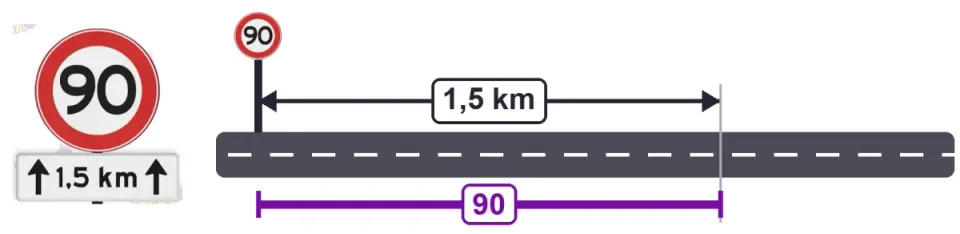
A distance or length: if there are arrows next to the number, the sign applies from the sign onwards, over that length. Without arrows it only starts after that distance. More under sub-signs.
Warning signs do NOT set a speed limit
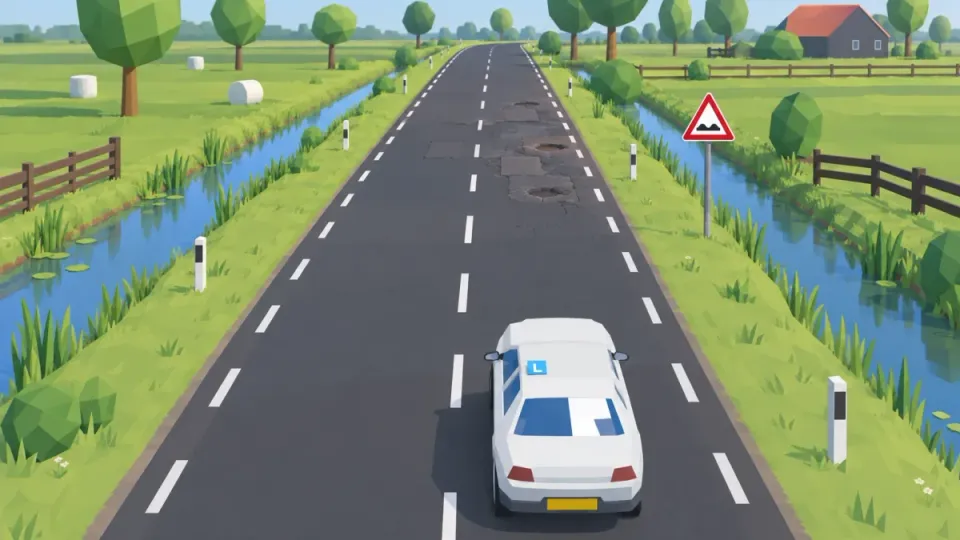
A triangular sign with a red border only warns you of danger, such as a bad road surface, a speed bump or a traffic jam. The speed limit stays what the road and the speed signs say. What you do at such a sign is under warning signs.
CBR traps around speed limit signs
❌ Wrong: treating a square blue speed sign as a mandatory speed limit.
✅ Right: square blue = advice. Round with a red border = mandatory.
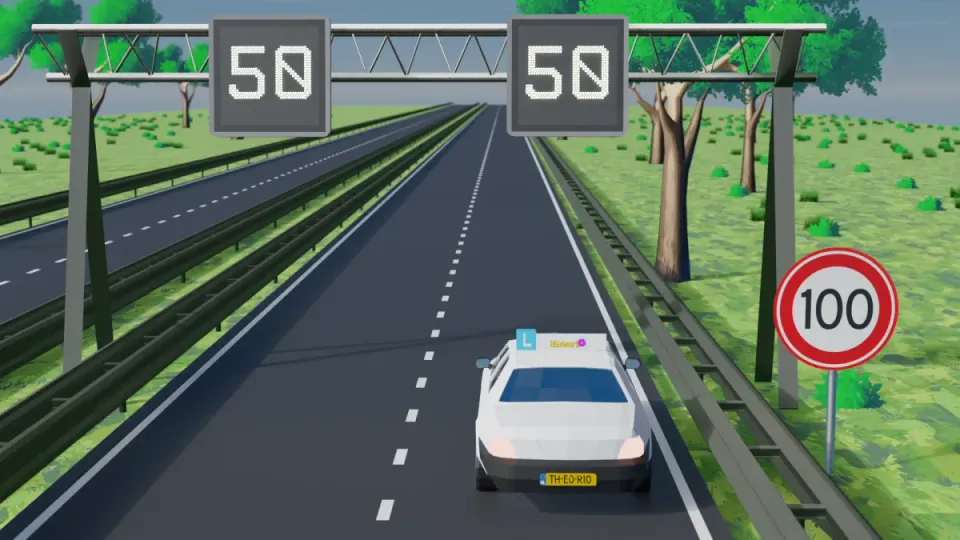
❌ Wrong: ignoring a lower speed on the matrix sign because the fixed sign is higher.
✅ Right: if a lower speed is lit above your lane, you drive that speed.
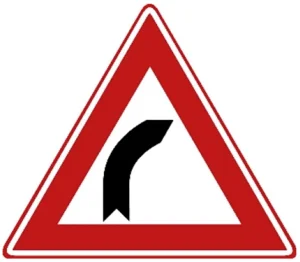
❌ Wrong: thinking a warning sign sets a speed limit itself.
✅ Right: a warning sign only warns. The speed limit does not change.
❌ Wrong: imagining a time or weather condition that is not shown.
✅ Right: such a restriction is always on a white sub-sign. No sub-sign: the sign always applies.
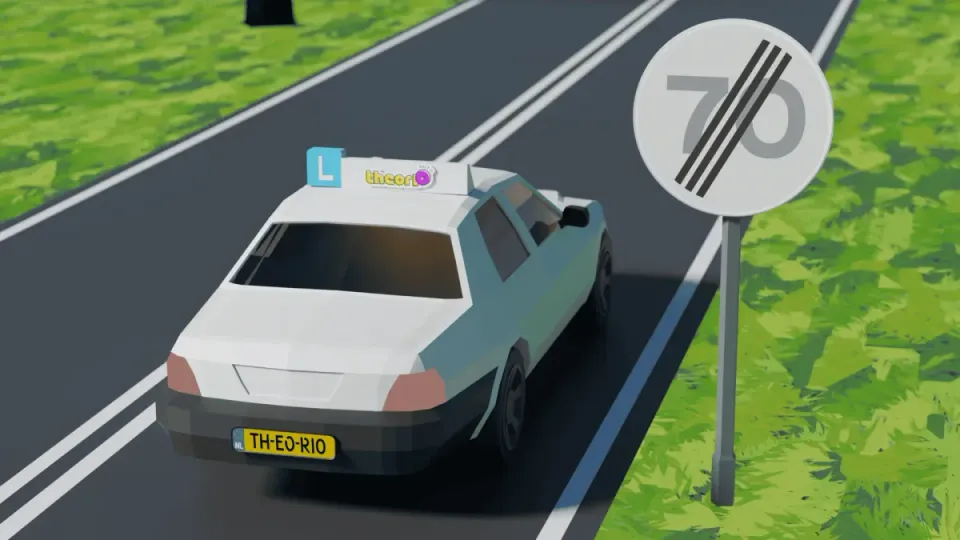
❌ Wrong: thinking there is no limit after the end of maximum speed sign.
✅ Right: then the normal speed of the road applies, 80 km/h outside a built-up area.
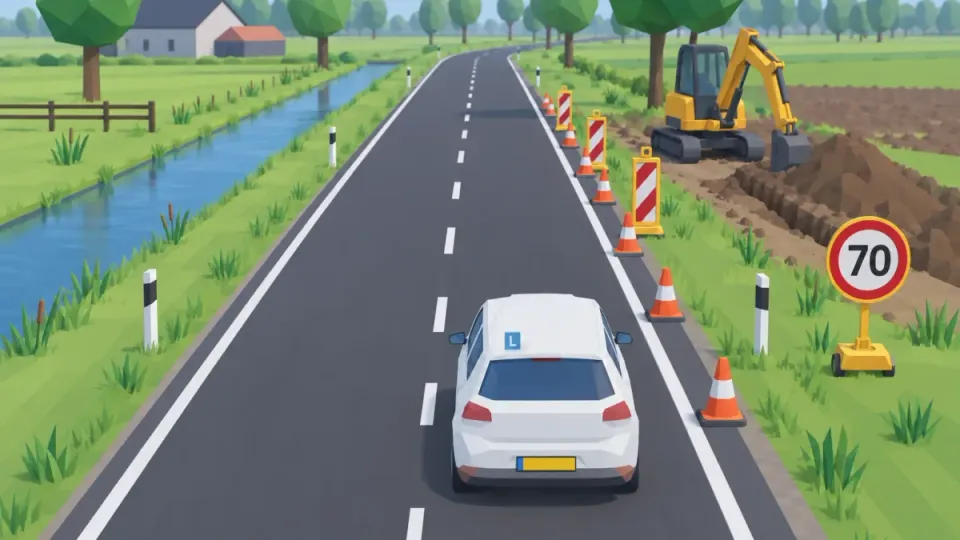
❌ Wrong: ignoring a speed sign at roadworks because nobody is working.
✅ Right: the sign applies as long as it is there.
Source for differing fixed and matrix signs: RVV 1990, artikel 63b.
Practise like the exam
Example questions like in the CBR exam
Real questions from the Theorio app. You can expect similar questions in your CBR exam.
Question 1 of 5
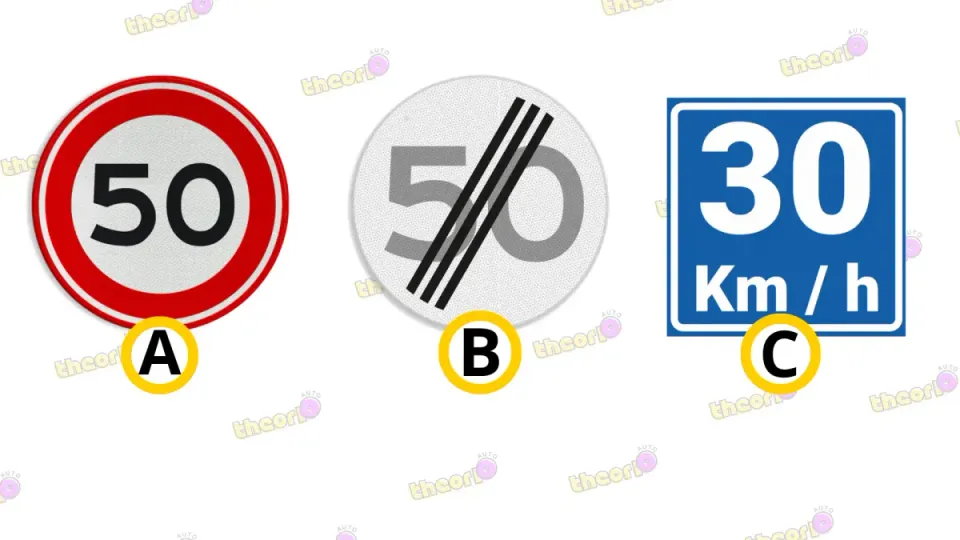
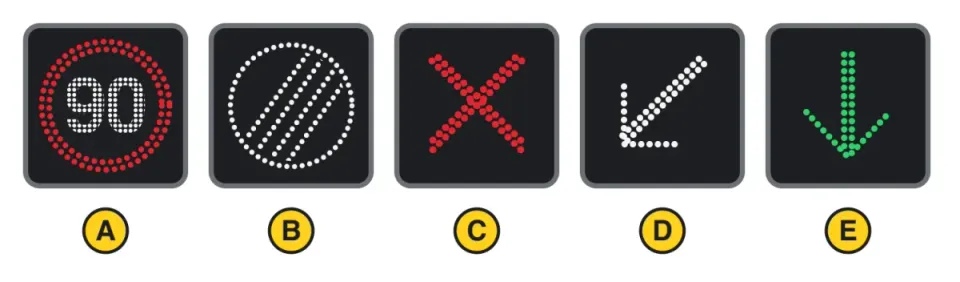
Which sign indicates a maximum speed?
Tap the answer you think is right.
Which sign indicates an advisory speed?
Tap the answer you think is right.
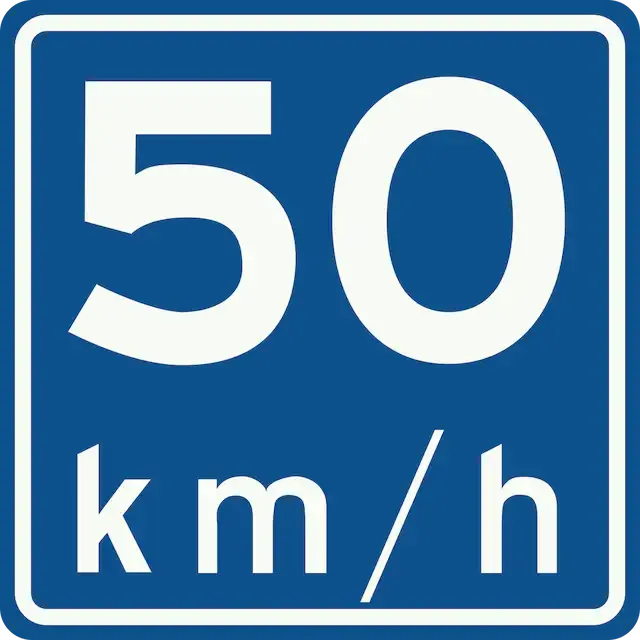
What does this sign indicate?
Tap the answer you think is right.
What is your maximum allowed speed here?
Are you allowed to continue driving at 90 km/h here?
Tap the answer you think is right.
Answers and explanations for the example questions
Question 1: Which sign indicates a maximum speed?
Correct answer: Sign A
Sign A (round red border) indicates a maximum speed. Sign B indicates the end of the maximum speed, and Sign C (square blue sign) indicates an advisory speed. 🛑
Question 2: Which sign indicates an advisory speed?
Correct answer: Sign C
Sign C (the blue square sign) indicates an advisory speed. Sign A is a prohibition sign for maximum speed and Sign B lifts that restriction. ℹ️
Question 3: What does this sign indicate?
Correct answer: Advisory speed of 50 km/h
This sign indicates an advisory speed of 50 km/h. It is a recommended speed that often appears before curves. 🏁
Question 4: What is your maximum allowed speed here?
Correct answer: Correct value: 30 KM/H
The maximum allowed speed is 30 km/h, this is a zone sign. The sign is valid until the end of the zone. 🛑
Question 5: Are you allowed to continue driving at 90 km/h here?
Correct answer: Yes
Yes, this sign only warns of a poor road surface. It indicates no speed limit. So you may continue driving at 90 km/h, as long as you adjust your driving behavior to the conditions. ⚠️
FAQ
Frequently asked questions
Short answers to questions that often come up on this subject.
Is a blue square speed sign mandatory?
No. A blue square sign with white numbers is a recommended speed, often before a bend. Mandatory is a round white sign with a red border, or a speed on a matrix sign above your lane.
Which speed applies if the matrix sign says something different from the sign beside the road?
The matrix sign takes precedence when it is lower. With a roadside 100 sign and 50 above your lane, your limit is 50, even though the fixed sign is higher. If the sign beside the road shows a lower speed than the matrix sign, the lowest applies. So fixed 80 and matrix 100 stays 80. If the matrix sign shows nothing, you follow the fixed sign.
Does a speed sign at roadworks also apply when nobody is working?
Yes. As long as the sign is there, the speed on it applies, also when nobody is working at that moment.
Ready to practise?
Test your knowledge of Speeds with 55 practice questions in the app.
Free mock exam · no account needed
Your first quiz is free, no account needed. After that from €34.99 for 90 days of access.