Part 1 of 5 in Speeds
Speed limits inside and outside built-up areas
Speed limits inside and outside built-up areas: 50 km/h inside, 80 km/h outside, 30 in a 30 zone and walking pace on an erf. How to tell which applies.


Written by Chris Prosman Reviewed by Dirk van Zuijlen
Updated Reviewed on 9 min read
Free mock exam · no account needed
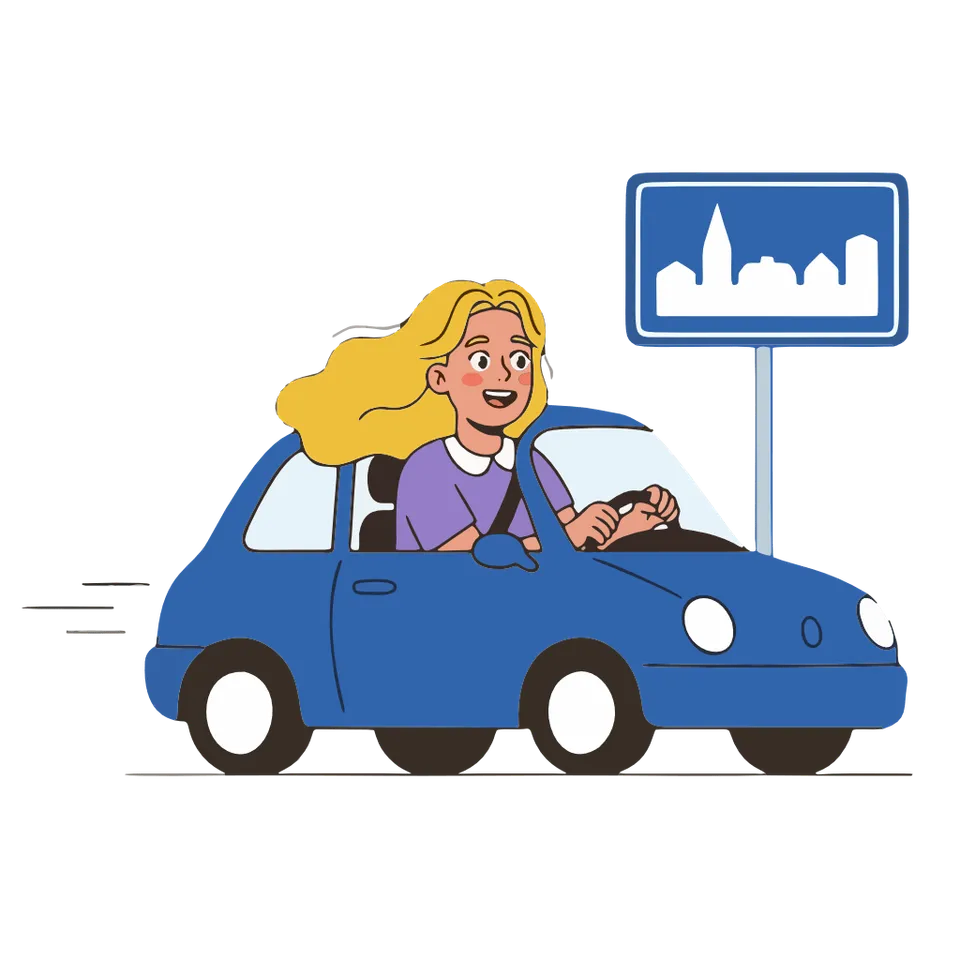
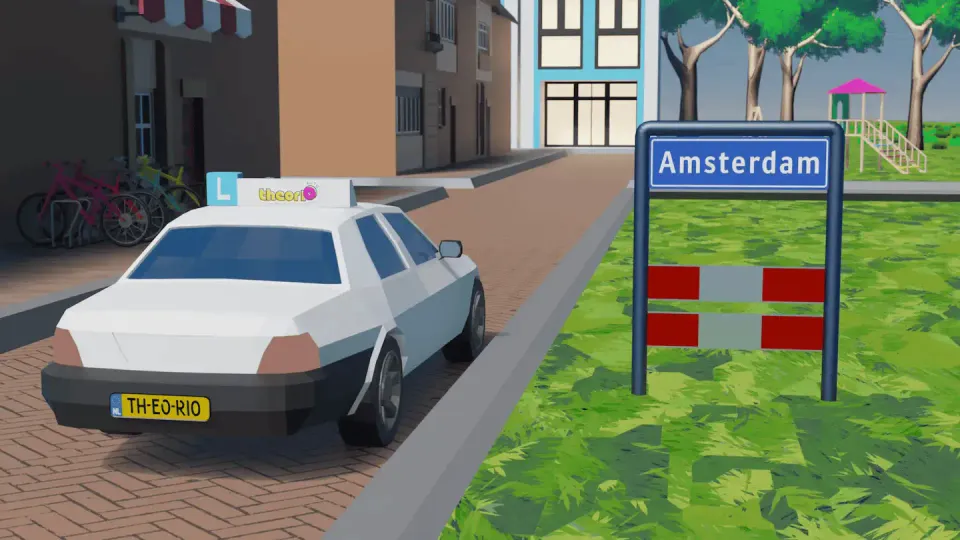
Inside a built-up area the maximum speed is 50 km/h, outside it 80 km/h, unless a sign says otherwise. In a 30 zone you may drive 30, on an erf at walking pace (at most 15 km/h). The place-name sign tells you whether you are inside or outside.
Inside a built-up area
| Where | You recognise it by | Maximum speed |
|---|---|---|
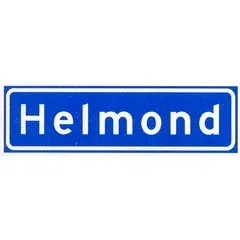 Ordinary road | Blue place-name sign | 50 km/h |
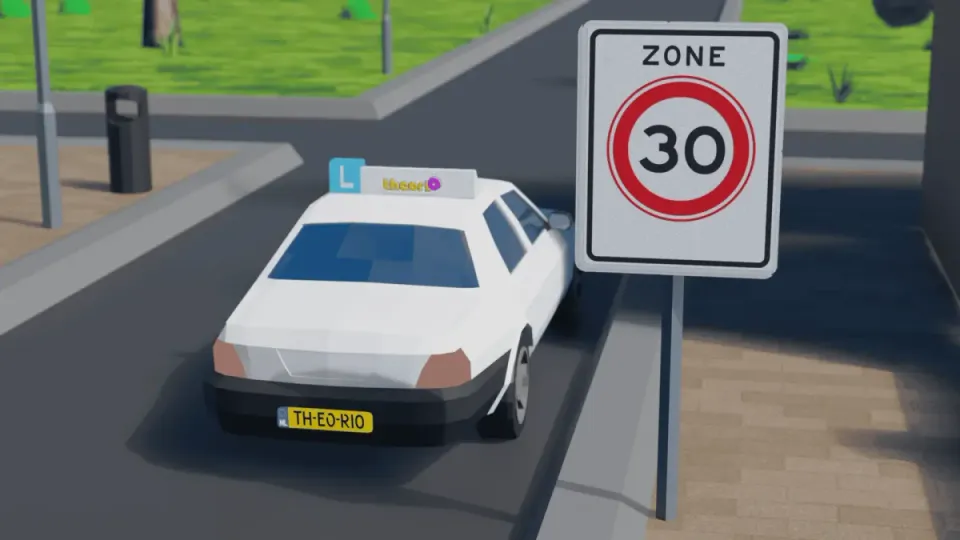 30 zone | Zone sign 30; often speed bumps and brick paving | 30 km/h |
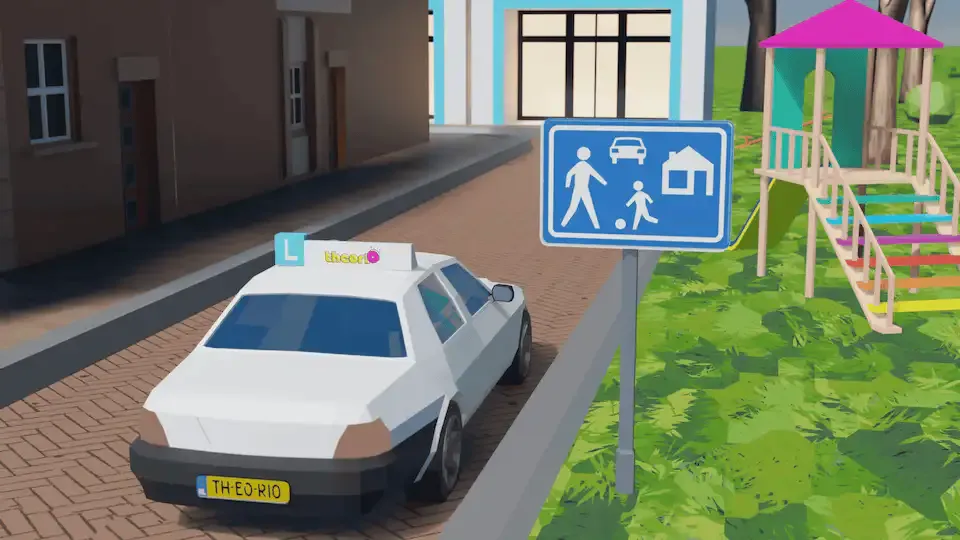
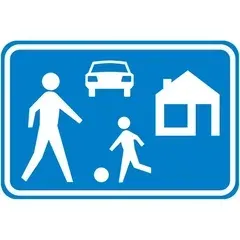 Erf | Blue erf sign with a house and children playing | Walking pace, at most 15 km/h |
Outside a built-up area
| Where | You recognise it by | Maximum speed |
|---|---|---|
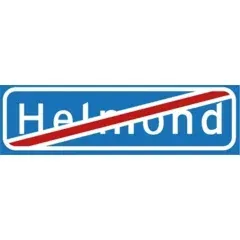 Ordinary road | Place-name sign with a red line through it | 80 km/h |
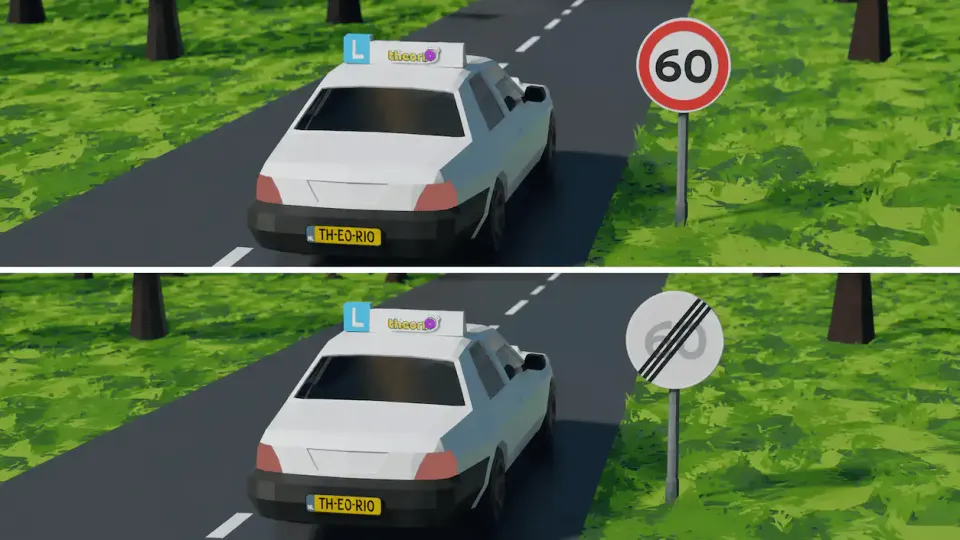
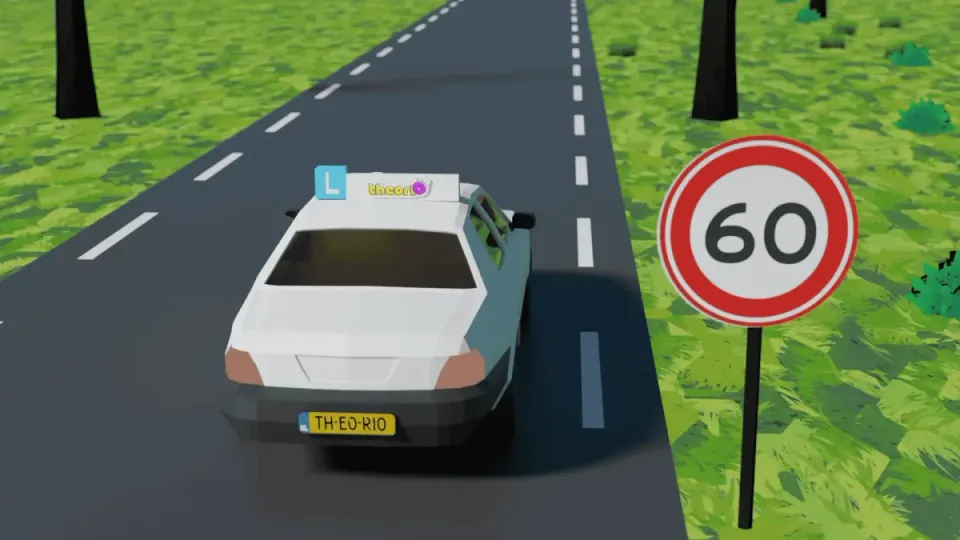 Road with a 60 sign | Round 60 sign with a red border | 60 km/h, while that restriction applies |
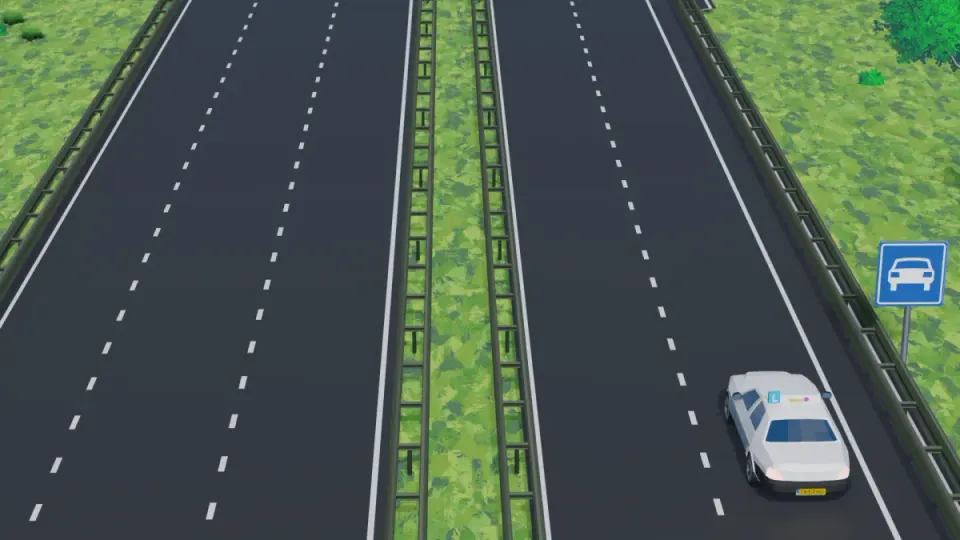
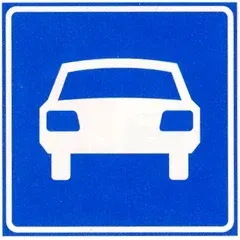 Autoweg | Blue sign with a white car | 100 km/h (speed on the autoweg) |
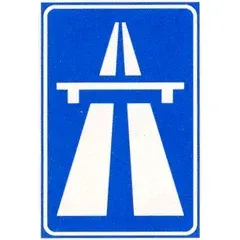 Motorway | Blue sign with a viaduct | 130 km/h (with a 100 sign showing times: 100 within those times) (speed on the motorway) |
Maximum speed inside a built-up area
How fast may you drive inside a built-up area? At most 50 km/h, even when there is no speed sign (RVV 1990 article 20).
The built-up area starts at the blue sign with the name of the town or village. It ends at the same sign with a red line through it. Often there is also a 50 sign next to the place-name sign. That sign is extra: without it, 50 km/h still applies.
If you speed inside a built-up area, the fine is higher than for the same offence outside one. What 10, 15 or 30 km/h too fast costs, you can look up in the OM fine database (Boetebase). These limits are for a car. Mopeds and microcars (brommobielen) have other limits: see moped, e-bike and motorcycle.
30 km/h zone
In a 30 zone you may drive at most 30 km/h, in every street of the zone. The zone starts at the zone 30 sign and only ends at the end of zone sign. Still inside the built-up area after that? Then you may drive 50 km/h again.
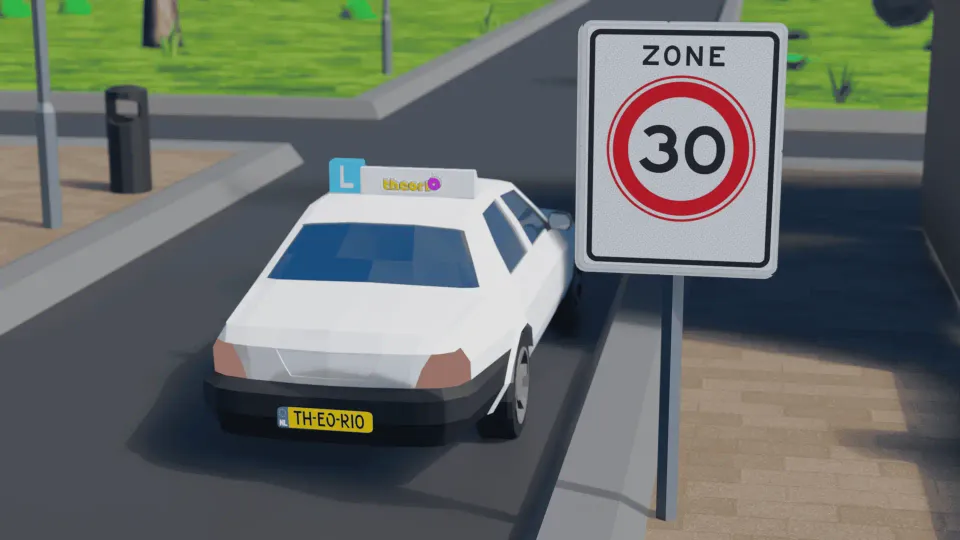
Speed bumps and brick paving ask you to drive calmly. But a speed bump does not turn a road into a 30 km/h road. The speed limit comes from the sign, the zone sign or the general rule. A safe speed can be even lower.
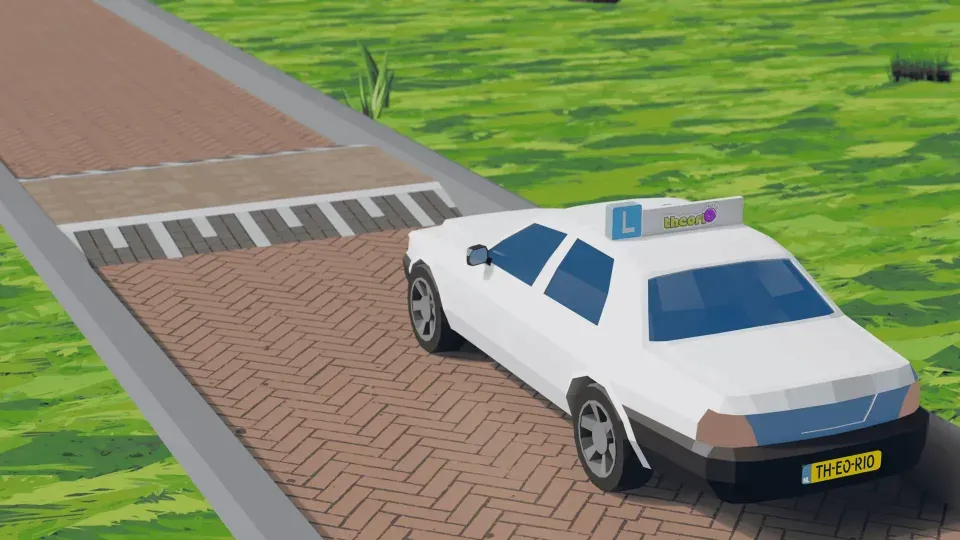
On an erf: 15 km/h and pedestrians everywhere
On an erf (residential zone) you drive at walking pace: at most 15 km/h. You recognise an erf by the blue sign with a house and children playing. All the rules on speed, priority and parking in an erf are under woonerf (residential zone).
- Pedestrians and children playing may use the whole road, including the carriageway.
- Cars drive only on the carriageway.
- Keep to the right as much as you can: there may be oncoming traffic.
- At 15 km/h you can stop in time if a child runs into the road.
Maximum speed outside a built-up area
How fast may you drive outside a built-up area? On an ordinary road at most 80 km/h, even when there is no speed sign (RVV 1990 article 21). You are outside the built-up area as soon as you pass the place-name sign with the red line.
On an autoweg you may drive 100 km/h and on a motorway 130 km/h. See speed on the autoweg and speed on the motorway. On an ordinary road outside a built-up area there is no minimum speed.
Why is it sometimes 60 km/h outside a built-up area?
On narrow roads outside built-up areas there is often a 60 sign. There you meet many cyclists, oncoming cars and tractors. Then 60 km/h is safer.
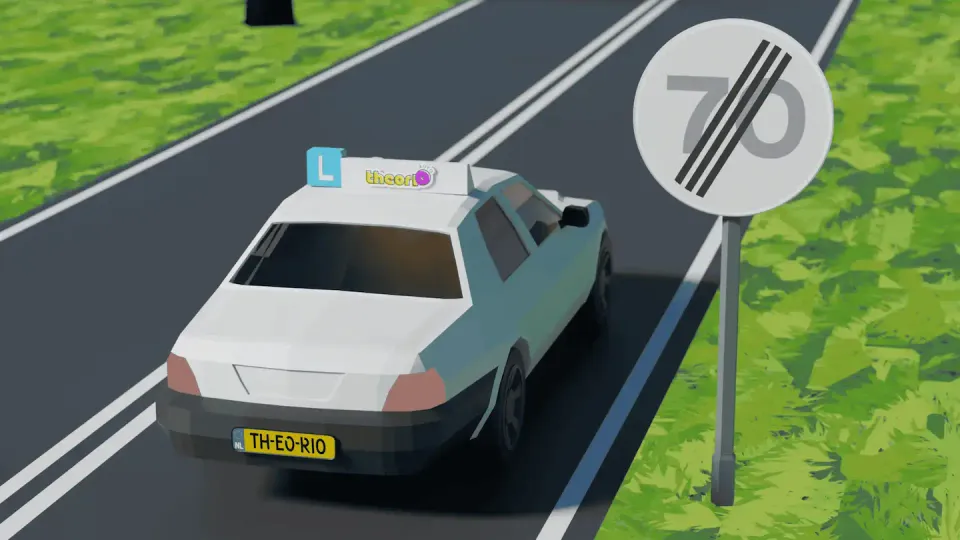
The 60 stops at a new speed sign or at the end of maximum speed sign. That is a round white sign with the old speed in grey numbers and black lines through it. After it you may drive 80 km/h again outside a built-up area. If the end sign is inside a built-up area, 50 km/h applies after it, unless another sign says otherwise.
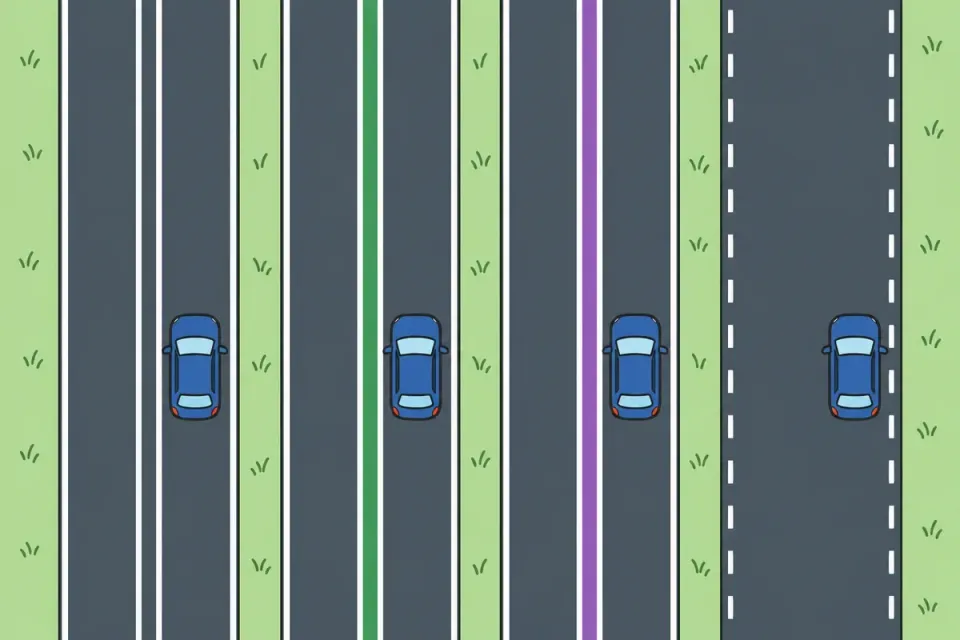
Recognising the speed from the road itself
Did you miss a sign, or is there no sign? Then the road itself helps you. But a sign always comes first. Lines and colours do not set a speed of their own. If there is a 70 sign, you may drive 70, even with green between the lines.
Double white line in the middle, no sign → usually an ordinary road: 80 km/h.
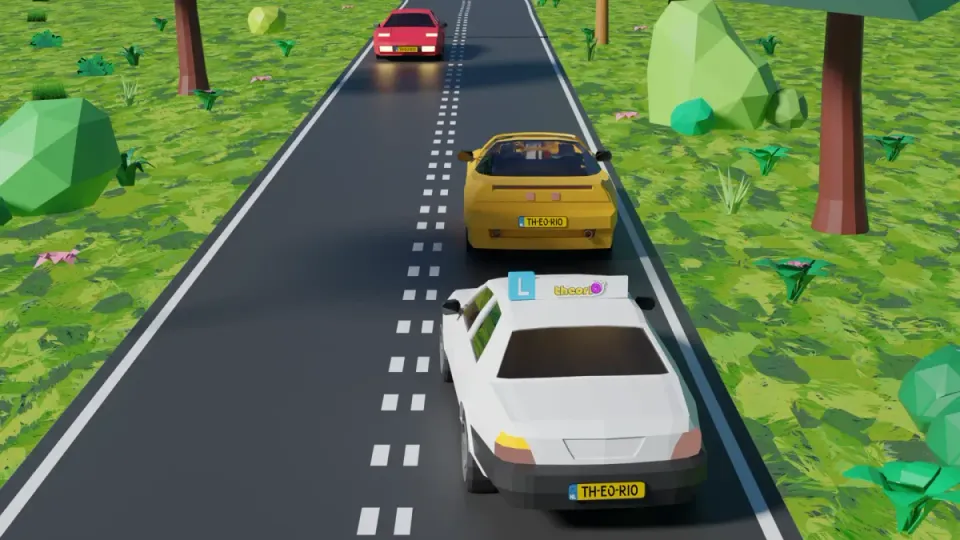
Only lines at the edges, no sign → usually also 80 km/h.
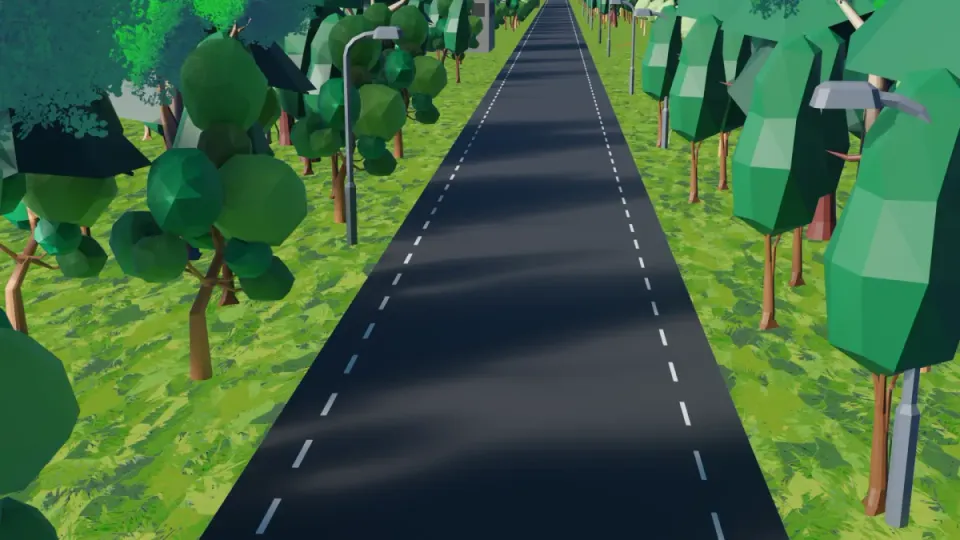
Green between the white lines → often a road where you may drive 100. Think of a green 100-euro note. But green alone does not make a road an autoweg. More under green line on the road.
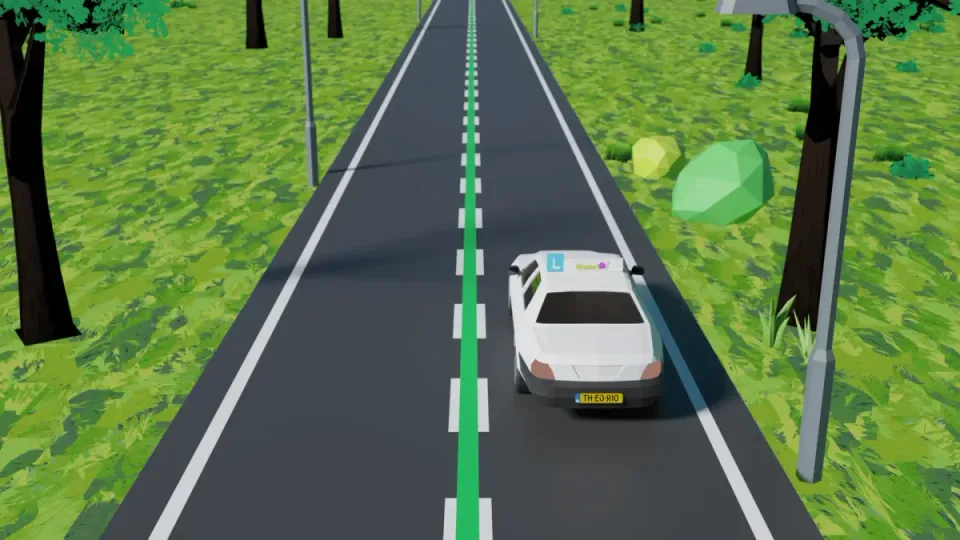
A central reservation between the carriageways → says nothing about the speed. Look at the sign.
How fast can you drive here? Find the speed limit in 5 steps
1. First check: inside or outside a built-up area?
| Inside a built-up area | Outside a built-up area |
|---|---|
| 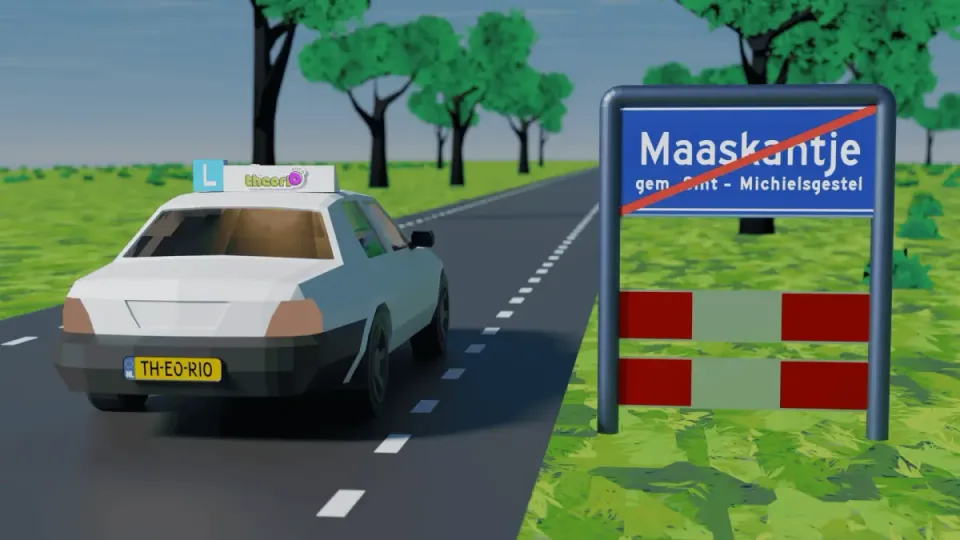 |
| Place-name sign without a line: you enter the built-up area. At most 50 km/h. | Place-name sign with a red line: you leave the built-up area. On an ordinary road at most 80 km/h, unless a sign says otherwise. |
You decide this with the place-name sign. Not with your feeling and not with the houses.
Sometimes the question tells you: "You are driving outside a built-up area." So read the question first and look closely at the picture. Only then look at the answers.
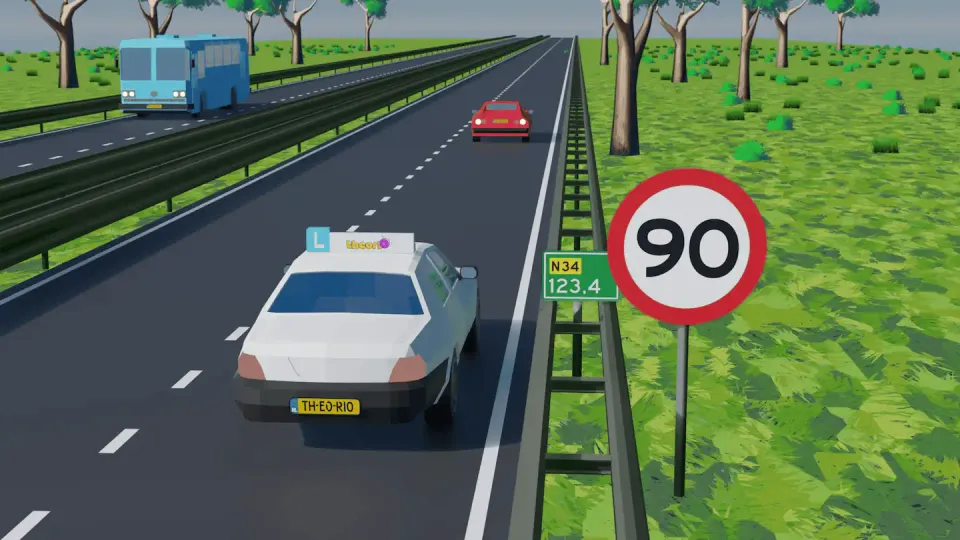
2. Is there a speed sign? Then follow the sign
If there is a speed sign, you follow that sign. Even if the road looks different from what you expect.
3. No sign? Then the default applies
Without a speed sign, the normal speed of the place where you drive applies: 50 inside a built-up area, 80 outside it, 30 in a 30 zone and walking pace on an erf.
4. After an end sign, back to the default
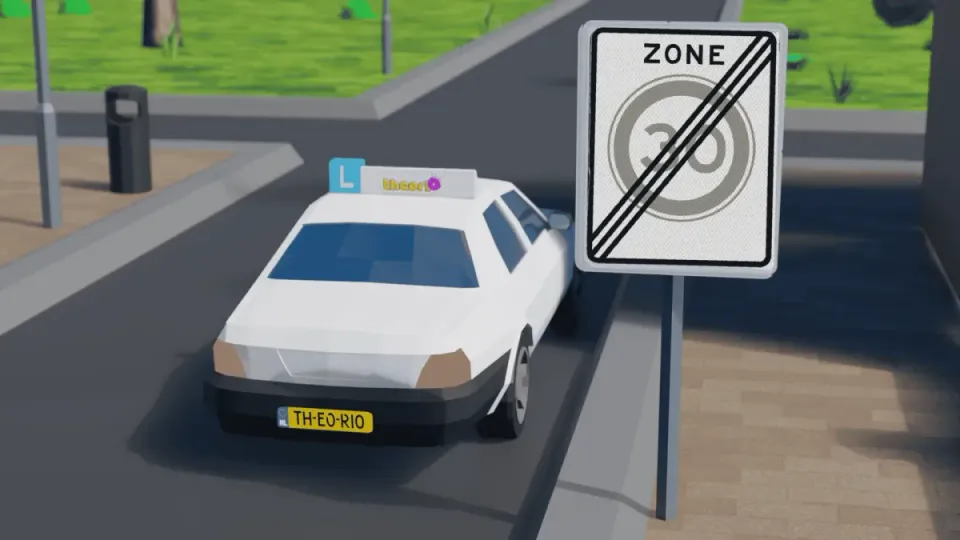
After the end of 30 zone sign you may drive 50 again inside the built-up area. After the end of maximum speed sign you may drive 80 again outside it. So an end sign does not mean "no limit", but the normal speed of the road.
5. The speed limit is not a target speed
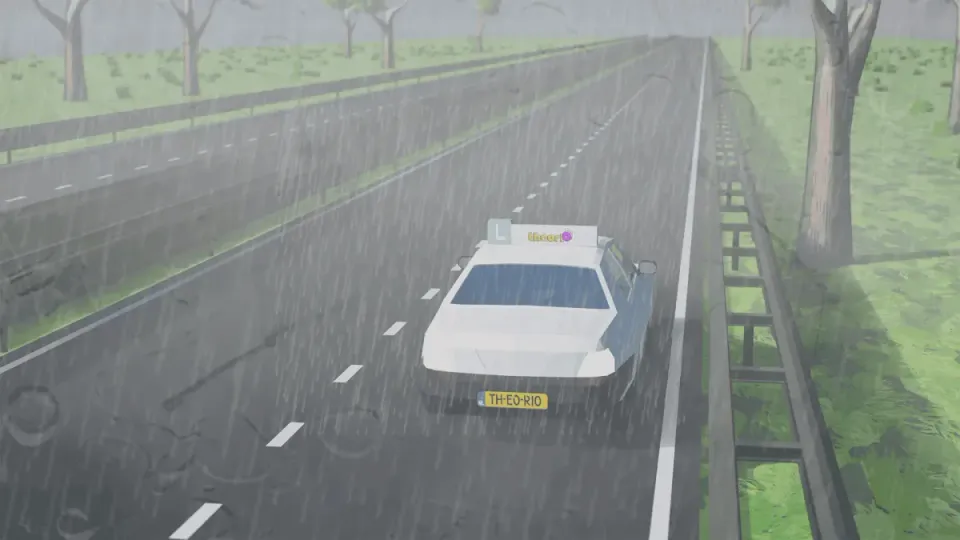
You may always drive slower than the sign. Near children, in rain, fog or a situation you cannot oversee, you must. You must be able to stop within the distance you can see. Read more under stopping and braking distance.
Differences you must be able to recognise
| Look alike | The difference | What applies |
|---|---|---|
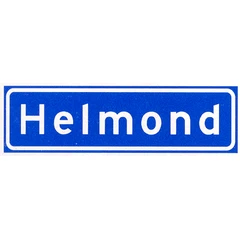 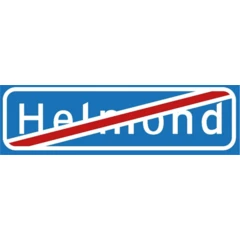 Place-name sign with or without a red line | Without the line you enter the built-up area, with the line you leave it | 50 km/h or 80 km/h |
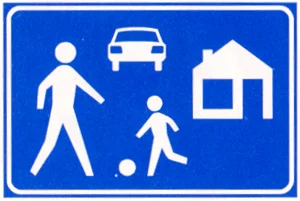 Zone sign 30 and erf sign | In a 30 zone it is an ordinary street; on an erf pedestrians may use the whole road | 30 km/h or walking pace (at most 15 km/h) |
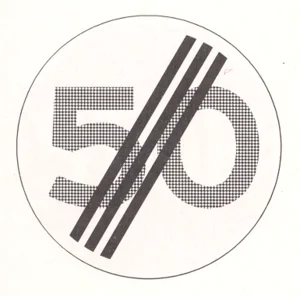 End of 30 zone and end of maximum speed 60 | An end-of-zone sign ends the whole zone; A2 ends the displayed speed restriction. Your location determines the new limit | Usually 50 inside a built-up area or 80 on an ordinary rural road, unless another restriction applies |
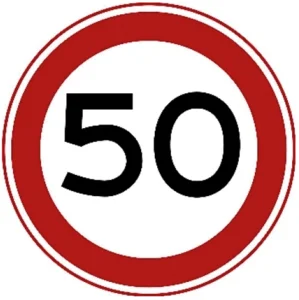 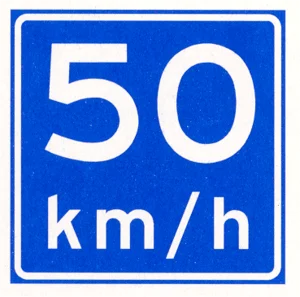 Round 50 sign and blue square 50 sign | Round with a red border is a maximum, blue square is a recommendation (speed limit signs) | Mandatory or only advice |
| Ordinary road without a centre line and road with a green centre strip | The layout helps recognition; applicable signs and the road type remain decisive | Ordinary rural road default 80; autoweg outside a built-up area default 100, absent another restriction |
CBR traps around speed limits on the road
❌ Wrong: thinking you must keep driving 30 after a 30 zone.
✅ Right: inside the built-up area you may drive 50 km/h again after the end of zone sign.
❌ Wrong: thinking you must drive exactly 30 at a 30 sign.
✅ Right: the number is a maximum. Slower is always allowed.
❌ Wrong: thinking you are in a built-up area because there are houses.
✅ Right: you look at the place-name sign.
❌ Wrong: driving as fast on an erf as in a 30 zone.
✅ Right: on an erf you drive at walking pace, at most 15 km/h.
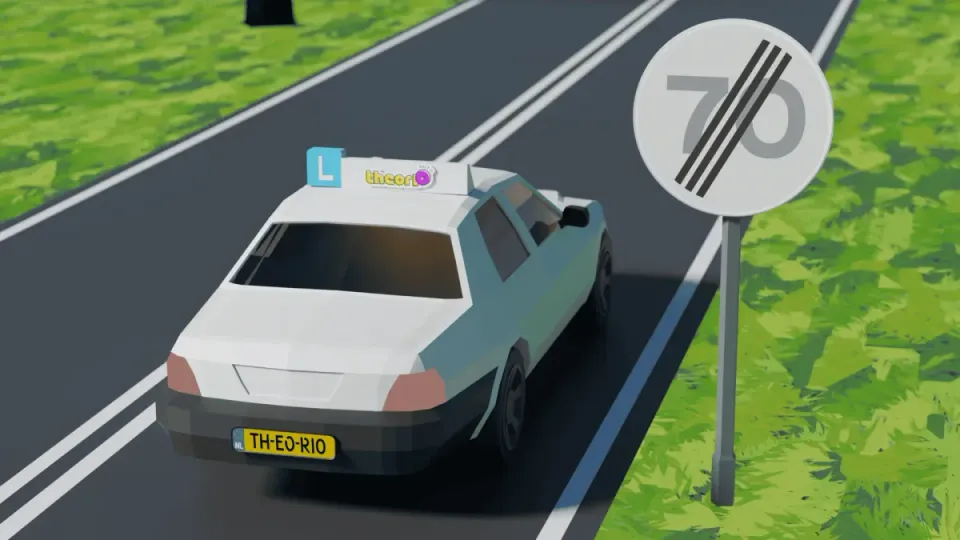
❌ Wrong: thinking there is no limit after the end of maximum speed sign.
✅ Right: then the normal speed applies: outside a built-up area 80 km/h.
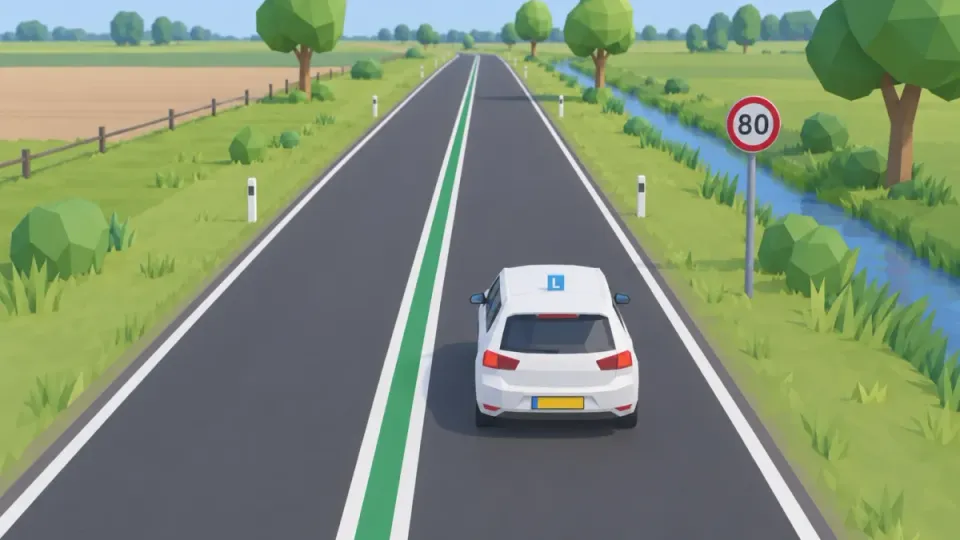
❌ Wrong: finding the lines more important than the sign.
✅ Right: a sign always comes first. Lines only help when there is no sign.
Practise like the exam
Example questions like in the CBR exam
Real questions from the Theorio app. You can expect similar questions in your CBR exam.
Question 1 of 6
Which sign indicates the beginning of the built-up area?
Tap the answer you think is right.
What is the maximum allowed speed on this road?
What is the maximum allowed speed on this road?
What is your maximum allowed speed after passing this sign?
What is your maximum allowed speed after passing this sign?
What is the maximum speed in a residential area?
Answers and explanations for the example questions
Question 1: Which sign indicates the beginning of the built-up area?
Correct answer: Sign A
Sign A indicates the beginning of the built-up area. This sign shows a blue place name. Sign B indicates a maximum speed of 50 km/h, but can also be located elsewhere. 🏁
Question 2: What is the maximum allowed speed on this road?
Correct answer: Correct value: 50 KM/H
You are driving within the built-up area, recognizable by the blue signs with a place name. Here, a maximum speed of 50 km/h applies. 🌆
Question 3: What is the maximum allowed speed on this road?
Correct answer: Correct value: 80 KM/H
This road has no center line. Here you may drive 80 km/h, unless a sign indicates 60 km/h. 🧠 Remember: - double white center lines with green color in between: 100 kilometers per hour - double white center lines without green color: 80 kilometers per hour - no center line: 80 kilometers per hour
Question 4: What is your maximum allowed speed after passing this sign?
Correct answer: Correct value: 80 KM/H
After passing an end-speed-sign for 70 km/h, the normal maximum speed limit of 80 km/h applies again. After this sign, you may again drive 80 km/h. 🚀 🧠 Remember: After end 50, 60, 70 km/h -> 80 km/h After end 30 km/h -> 50 km/h
Question 5: What is your maximum allowed speed after passing this sign?
Correct answer: Correct value: 50 KM/H
After passing an end-speed-sign for 30 km/h the normal maximum speed of 50 km/h applies again. 🧠 Remember: After end 50, 60, 70 km/h -> 80 km/h After end 30 km/h -> 50 km/h
Question 6: What is the maximum speed in a residential area?
Correct answer: Correct value: 15 KM/H
Driving at walking pace is a maximum of 15 km/h, comparable to cycling speed. This gives drivers time to react to pedestrians, playing children, and other road users in a residential area.
FAQ
Frequently asked questions
Short answers to questions that often come up on this subject.
How fast may you drive on a road without a centre line?
Outside a built-up area at most 80 km/h, unless a sign says otherwise. 60 km/h only applies if a sign says so.
How fast may you drive after an end of speed limit sign?
After the end of a speed restriction, use the limit determined there by road type, built-up area, any continuing zone and other signs. On an ordinary road outside a built-up area this is usually 80; inside it is usually 50. An end sign does not mean unlimited speed.
Does 50 km/h apply in a built-up area when there is no speed sign?
Yes. The place-name sign is enough: inside a built-up area 50 km/h applies, even without an extra 50 sign. Only a 30 zone, an erf or another speed sign changes that.
Is a road with speed bumps a 30 km/h road?
Not automatically. Speed humps and paving are reasons to adapt your speed but do not set a statutory 30 km/h limit by themselves. A 30 zone or speed sign sets that limit. A zone continues until its end sign, including past junctions.
Ready to practise?
Test your knowledge of Speeds with 55 practice questions in the app.
Free mock exam · no account needed
Your first quiz is free, no account needed. After that from €34.99 for 90 days of access.