Part 13 of 13 in ADAS (driver assistance systems)
eCall, hill hold and RCTA
eCall, hill hold and RCTA explained: calling for help yourself, pulling away on a slope and reversing with a warning for traffic from the side.
Summarize with AI
In short
Besides the well-known driver assistance systems, also know eCall, hill hold and rear cross-traffic alert; each helps in a different situation, with its own controls and limits.
- eCall calls 112 automatically after a serious crash, but you can also start it yourself.
- Hill hold briefly holds brake pressure when pulling away on a slope, with no guarantee.
- RCTA warns of traffic from the left or right when reversing.
- When reversing you give way to all other traffic, even without a warning.
eCall: automatic and manual emergency calling
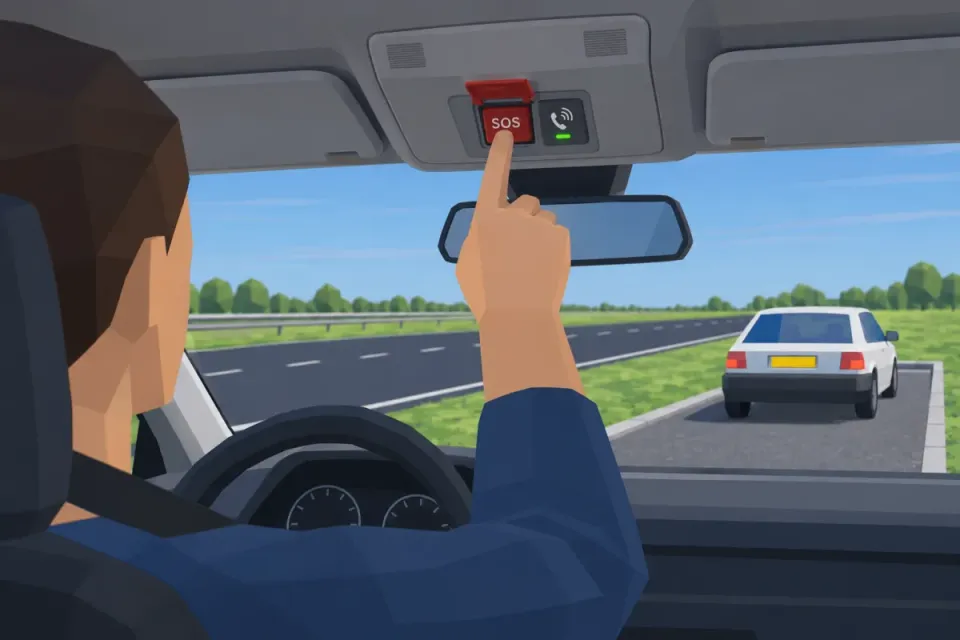
The 112 eCall system can automatically contact an emergency centre after a detected serious crash, transmitting necessary information including location. It can also be activated manually when urgent help is needed. This distinction matters: eCall is not exclusively automatic or something you never operate yourself.
Do not assume every collision triggers a call. It does not replace ordinary steps to protect yourself and others and arrange help. The 112 service is free. EU fitment requirements cover new car and light-van types since 31 March 2018; there is no general retrofit duty for existing cars. See Your Europe on eCall.
Hill hold: brief help when starting uphill
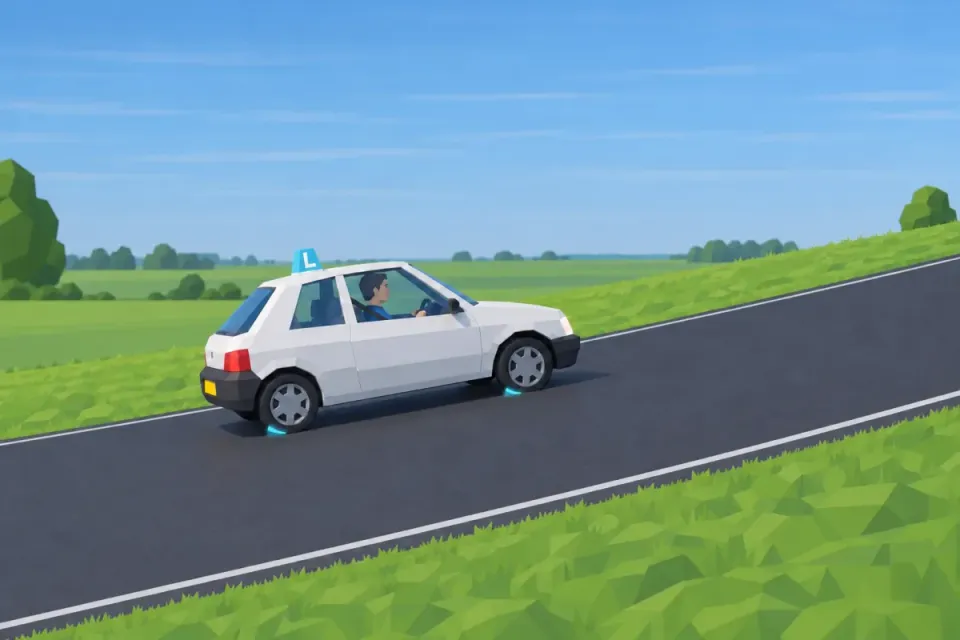
Hill hold assist may briefly maintain brake pressure after releasing the pedal, reducing rollback while you move off. Duration and activation conditions differ by vehicle. A fixed one- or two-second limit does not apply to every version.
It does not guarantee remaining stationary or automatically move the car off safely. Operate accelerator and clutch as applicable, check traffic and remain ready to brake again. Distinguish hill hold from Auto Hold and the parking brake: use the appropriate function for prolonged stopping or parking.
RCTA: warning about traffic approaching from the side
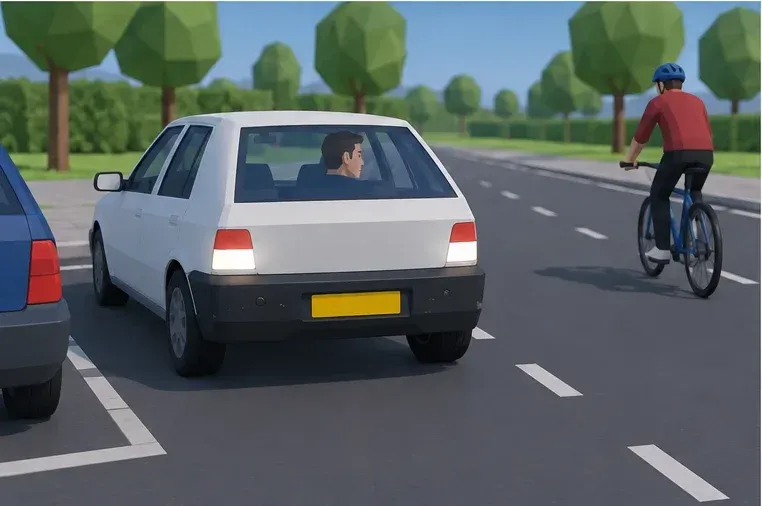
Rear Cross Traffic Alert may warn of traffic approaching from left or right while reversing, for example out of a bay between tall vehicles. Range and recognition of cars, cyclists and pedestrians depend on the version. Some vehicles additionally have a separate braking function.
Never wait for a warning when you see someone yourself. Reversing is a special manoeuvre: let all other traffic go first. Stop when uncertain, look around and proceed only when space is safe.
About the editorial team
Written by people who know the CBR exam, checked by a second pair of eyes before it goes live.

Chris is the architect of Theorio's learning environment and Head of Product. He turns studying into an interactive, adaptive and motivating experience that helps learners practice exactly where they can still grow.

Dirk is the driving force and strategic mind behind Theorio's mission. He focuses on broad social impact: better theory education, safer drivers and fewer unnecessary failed exams.
See if you can handle the new question style
Three quizzes of ten questions on driver assistance systems, in the style the CBR uses as of 1 October. Instant explanation with every answer.
4.7/5 on the App Store 18,000+ students
30 questions · start for free
Your first quiz is free, no account needed. After that from €34.99 for 90 days of access.