Part 3 of 8 in ADAS (driver assistance systems)
Automatic emergency braking (AEB)
Automatic emergency braking (AEB) brakes by itself when a collision threatens. A last resort, not a driving style: how it works and what the CBR asks.


Written by Chris Prosman Reviewed by Dirk van Zuijlen
Updated Reviewed on 2 min read
30 questions · start for free
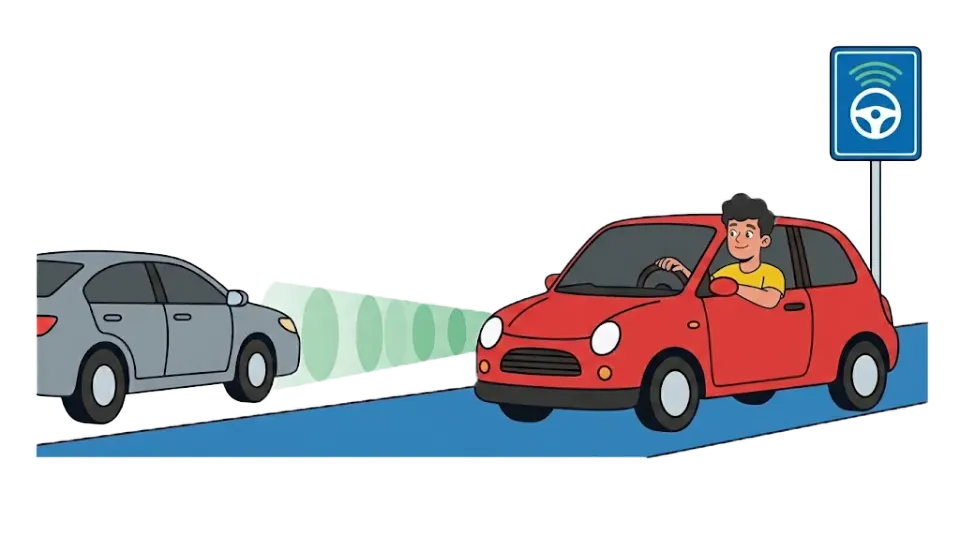
Automatic emergency braking brakes by itself when the car sees a collision coming. It can prevent a crash or make it less serious. You look ahead and brake yourself as soon as it is needed. Never wait for the system.
How does automatic braking in a car work?
Automatic emergency braking is also called AEB (Autonomous Emergency Braking) or emergency brake assist. Autonomous here means: the car brakes by itself. Radar, cameras or other sensors look ahead of the car. When a collision threatens, this usually happens:
- The car warns you with a sound or a light.
- The brakes are prepared.
- If you do not react in time, the car brakes by itself.
With sudden danger there is not always time for a warning. The aim is to prevent a collision or to lower the speed of the impact. At higher speed the car cannot always stop. Grip, distance and speed decide what is still possible.
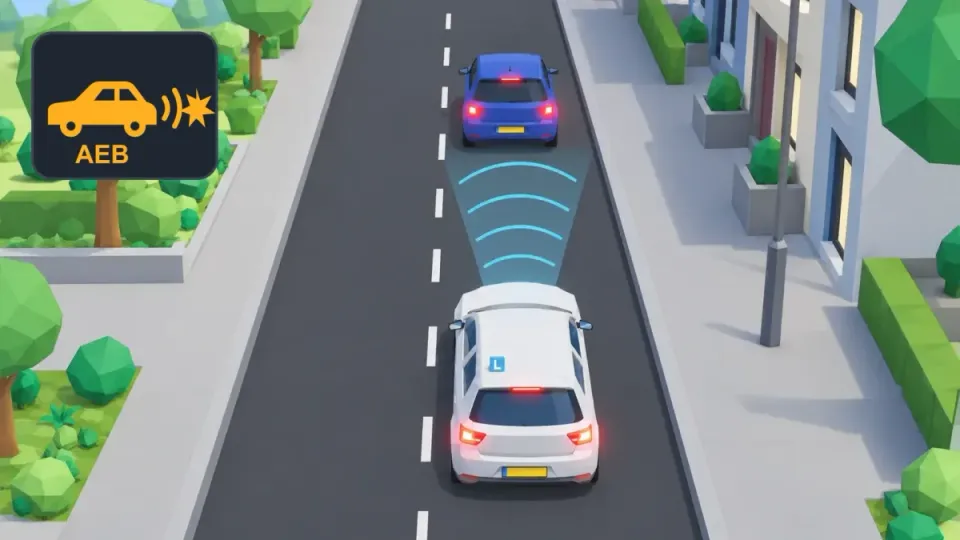
Do not drive closer to the car in front because your car has emergency braking. You remain responsible for driving.
What does emergency brake assist see, and what not?
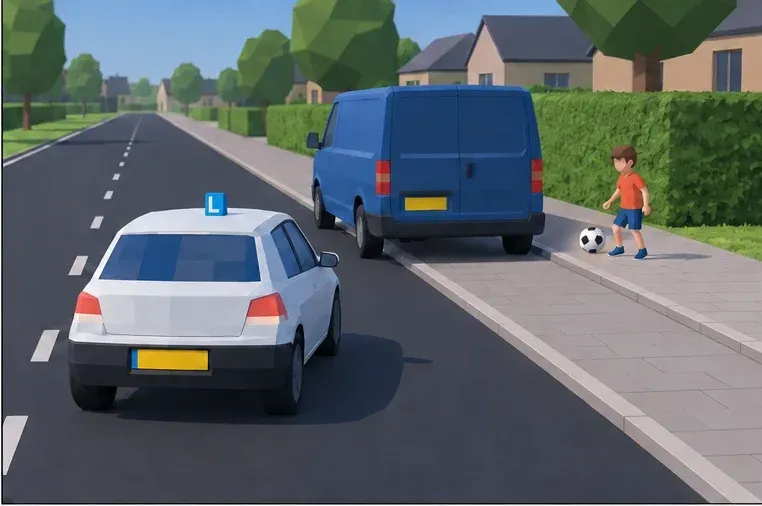
Emergency brake assist mainly looks at vehicles in front of you. Whether it also recognises pedestrians, cyclists or crossing traffic differs per car and per year of manufacture. The system may react late or miss something with:
- darkness or dazzling light;
- rain, snow or fog;
- someone suddenly coming out from behind a parked car;
- dirt, snow or ice on the sensor.

Do you see a child with a ball next to a van? Ease off already. Do you get an error message? Drive extra carefully and clean the sensor in a safe place.
Which car safety systems are mandatory from 2026?
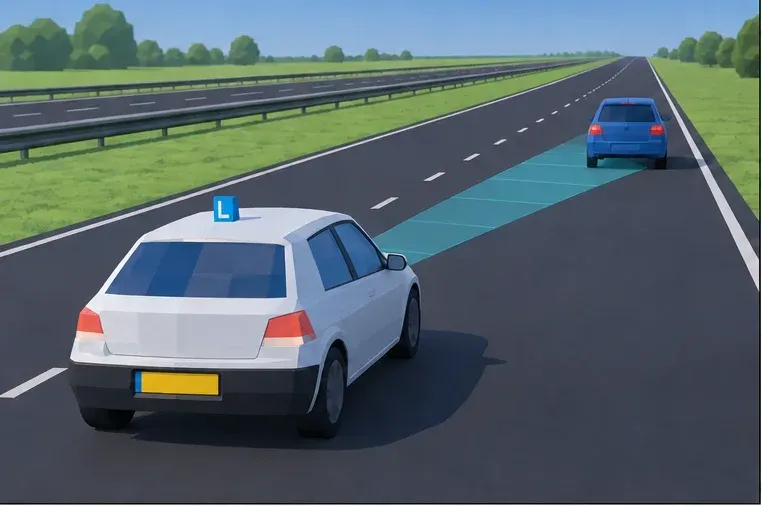
New cars in the EU must have more and more safety systems. Since 7 July 2024 every new car and van must have, among other things:
- automatic emergency braking;
- intelligent speed assistance (ISA);
- an emergency lane keeping system (lane assist);
- a drowsiness warning.
Since 7 July 2026 extra requirements apply. For example, emergency braking must recognise pedestrians and cyclists better. Older cars do not have to be converted. Sources: the EU General Safety Regulation and the 2026 extension.
Practise like the exam
Example questions like in the CBR exam
Real questions from the Theorio app. You can expect similar questions in your CBR exam.
Question 1 of 3
A child plays with a ball beside this van. What do you do?
Tap the answer you think is right.
A fault warning appears with this dirty sensor. What is sensible?
Tap the answer you think is right.
You see hard braking is necessary. What do you wait for?
Tap the answer you think is right.
Answers and explanations for the example questions
Question 1: A child plays with a ball beside this van. What do you do?
Correct answer: Slow down and expect a sudden crossing
You can recognise the risk before the child enters the road. Obstruction and sudden movement may delay detection.
Question 2: A fault warning appears with this dirty sensor. What is sensible?
Correct answer: Control safe speed and distance yourself and check the sensor safely
A fault means you cannot count on assistance. Clean or investigate at a safe location as instructed.
Question 3: You see hard braking is necessary. What do you wait for?
Correct answer: Nothing: brake early yourself
Emergency braking is an additional safeguard. Your observation determines when to brake; intervention alone does not establish fault.
See if you can handle the new question style
Three quizzes of ten questions on driver assistance systems, in the style the CBR uses as of 1 October. Instant explanation with every answer.
30 questions · start for free
Your first quiz is free, no account needed. After that from €34.99 for 90 days of access.