Rijprocedure B gives eight guidelines for driving with driver assistance systems, four in chapter 1 and four in chapter 2: you remain the driver and take over yourself when needed.
Before setting off you learn how the systems in an unfamiliar car work and are operated.
Check sensors and cameras for dirt, snow and blockages.
Choose a safe ACC distance, not the shortest one to keep merging traffic out.
No blind-spot warning does not mean the space is clear: look yourself.
1. Prepare for this car’s systems
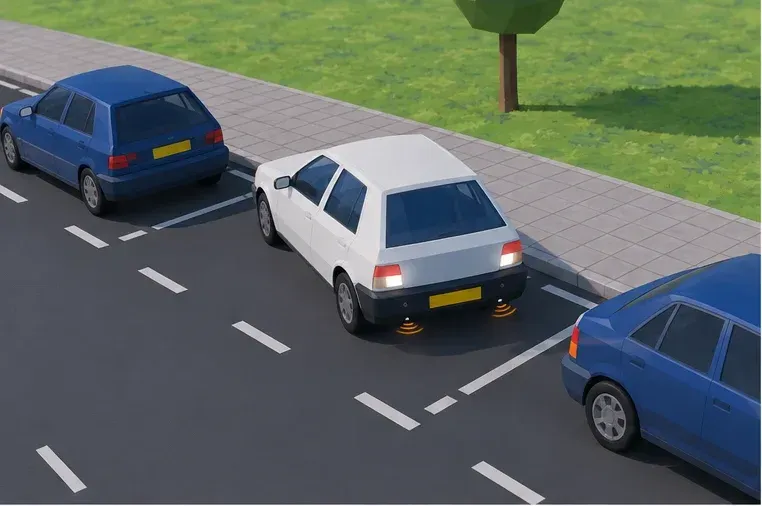
Before driving find out whether parking assistance only provides information or also steers.
In an unfamiliar car, check which systems affect driving. Learn controls, availability messages and takeover. A familiar system name does not mean identical controls or behaviour.
2. Check sensors and respond to faults
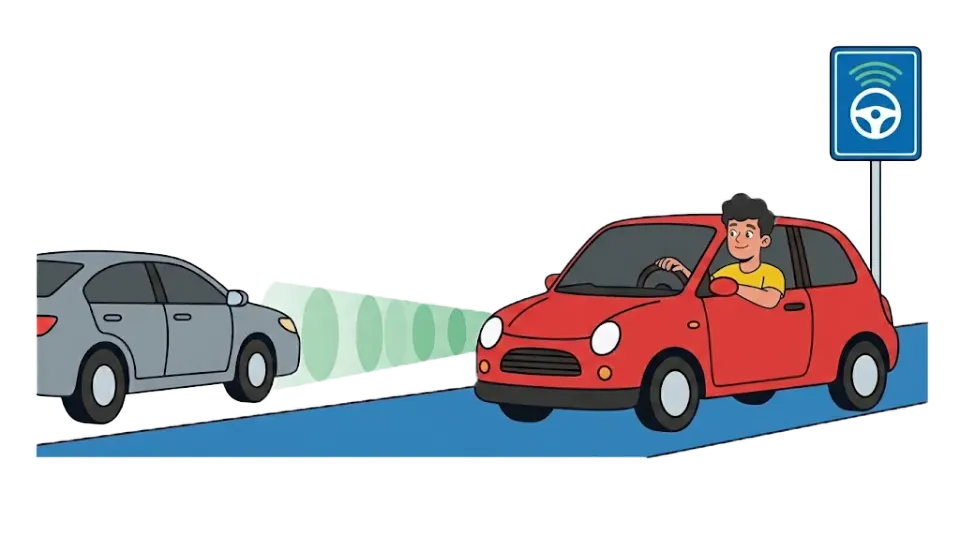
Snow and mud around the front sensor require checking before relying on assistance.
Check cameras and sensors for dirt, snow and obstruction. Stay alert to faults or unexpected behaviour. Take control, adapt speed and gap and investigate only at a safe location.
3. Choose safe settings
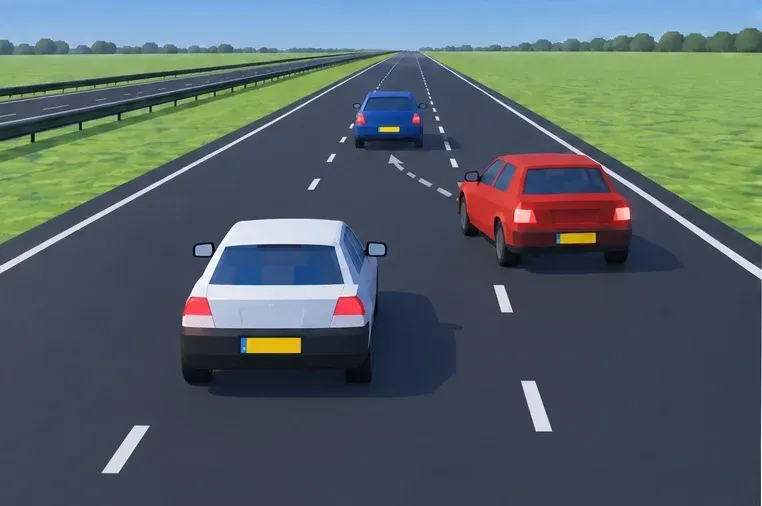
The merger uses space ahead. A safe ACC gap remains necessary.
Choose settings that support safe, comfortable and considerate driving. Selecting the shortest ACC gap to block merging is the wrong aim. Menu bars are not a universal distance; assess actual space.
4. Remain ready to take over
Hands remain on the wheel and attention follows the bend.
Sit actively, watch the road and remain able to brake or steer immediately. Lane assistance is no reason to lean back or let go. Operate the car without distraction.
5. Monitor both the car and traffic
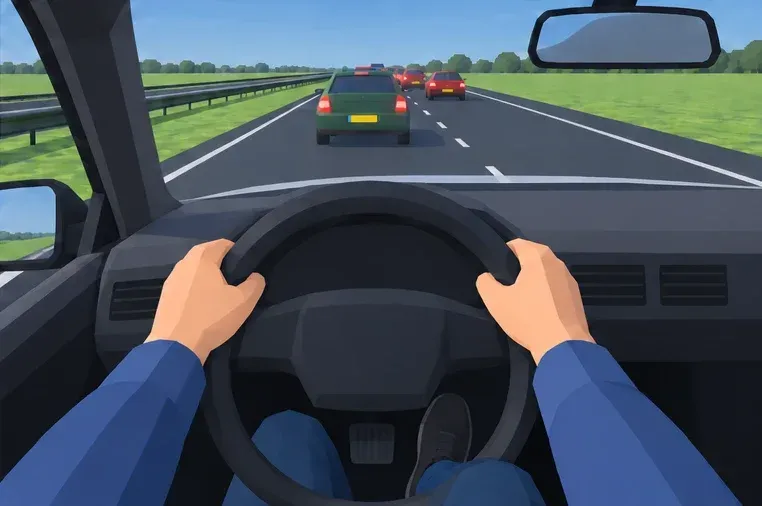
The queue is visible through the windscreen. Also monitor your own car’s response.
Continue monitoring traffic and the car’s response. Look beyond one vehicle ahead. Check whether support remains active and speed and gap stay safe, without prolonged staring at a screen.
6. Observe directly and choose consciously
A shoulder check supplements mirrors before a lane change.
Base manoeuvres on direct observation and safe space. Choose ordinary support deliberately. A blind-spot lamp provides extra information; no warning does not permit moving without looking. Emergency interventions do not replace preparation.
7. Respond smoothly and appropriately to warnings
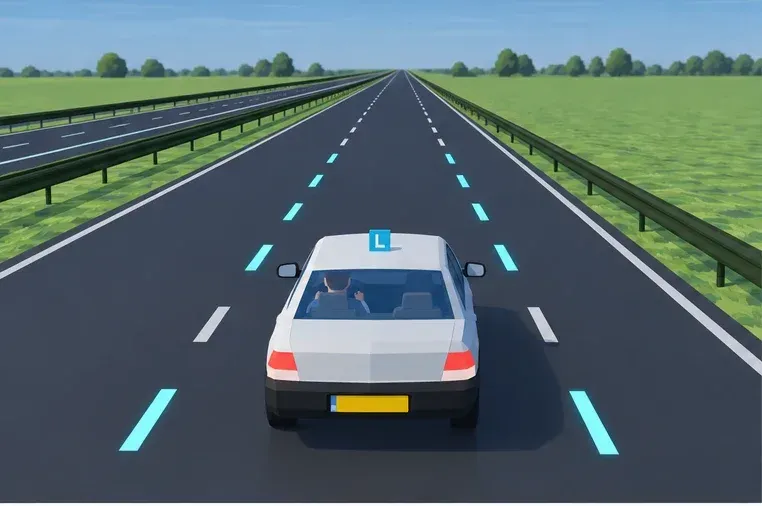
A recognised lane and a warning require checking your actual position.
Check what is actually happening and respond to the traffic situation. Steering vibration may require correcting position; an imminent collision may require immediate braking. Do not jerk the wheel or make a blind sudden manoeuvre just to silence a beep.
8. Adapt assistance when the situation requires
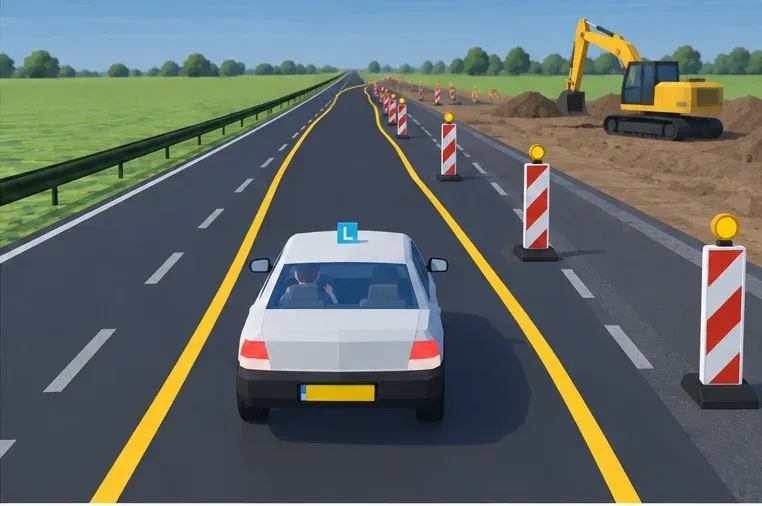
Temporary yellow lines may differ from the camera’s choice. Follow the correct route yourself.
Road, weather, traffic, driver condition or system messages can require a different setting or activation/deactivation. Systems differ. First take over safely and follow the handbook; stop somewhere safe if uncertain.
Practice situations like those in the exam
First inspect the picture and question. The options, correct answer and explanation follow below. These are Theorio practice questions, not official CBR questions.
You enter an unfamiliar rental car. What do you do before departure?
Before driving find out whether parking assistance only provides information or also steers.
Check relevant systems and controls
Try every button while driving
Assume it matches your lesson car
Correct answer: Check relevant systems and controls
Explanation: Preparation prevents searching and distraction during driving.
A warning says the front sensor is blocked. What do you do?
Snow and mud around the front sensor require checking before relying on assistance.
Keep relying on gap control
Drive safely yourself and check the cause at a safe place
Ignore it while things seem fine
Correct answer: Drive safely yourself and check the cause at a safe place
Explanation: Do not count on potentially unavailable assistance. Clean safely as instructed.
You select the shortest ACC gap to block merging. Is that appropriate?
The merger uses space ahead. A safe ACC gap remains necessary.
Yes, others must wait
No, choose an actually safe gap
Yes, AEB solves every problem
Correct answer: No, choose an actually safe gap
Explanation: Assistance must not encourage closer or less considerate following.
The car assists steering and gap control. May you read your phone?
Hands remain on the wheel and attention follows the bend.
Yes, while the lamp is green
No, remain active and ready
Only at low speed
Correct answer: No, remain active and ready
Explanation: This assistance does not take over the whole driving task. Keep attention on the road, traffic and car.
What do you monitor with ACC in a queue?
The queue is visible through the windscreen. Also monitor your own car’s response.
Only the ACC setting
Only the car directly ahead
Traffic and your car’s response and status
Correct answer: Traffic and your car’s response and status
Explanation: Active monitoring combines events outside with the car’s actual response.
Your blind-spot lamp stays off. What do you do before moving across?
A shoulder check supplements mirrors before a lane change.
Check mirrors, blind spot and space yourself
Steer immediately
Only indicate
Correct answer: Check mirrors, blind spot and space yourself
Explanation: No warning does not guarantee clear space. Your observation remains necessary.
Lane assistance vibrates while you drift towards a line. What do you do?
A recognised lane and a warning require checking your actual position.
Jerk the wheel without looking
Check position and correct smoothly
Ignore it because the car steers
Correct answer: Check position and correct smoothly
Explanation: The response must safely fit your position and other traffic.
At roadworks LKA steers towards the wrong marking. What do you do?
Temporary yellow lines may differ from the camera’s choice. Follow the correct route yourself.
Keep following the system
Follow the applicable route yourself and safely adjust or cancel support
Search menus at length while driving
Correct answer: Follow the applicable route yourself and safely adjust or cancel support
Explanation: Your route judgement comes first. Safe takeover comes before changing settings.
Chris is the architect of Theorio's learning environment and Head of Product. He turns studying into an interactive, adaptive and motivating experience that helps learners practice exactly where they can still grow.
Dirk is the driving force and strategic mind behind Theorio's mission. He focuses on broad social impact: better theory education, safer drivers and fewer unnecessary failed exams.