Part 4 of 8 in ADAS (driver assistance systems)
Blind spot detection (BSD)
Blind spot detection (BSD) warns about traffic beside you, but can miss cyclists and motorcyclists. The shoulder check stays mandatory. What the CBR asks.


Written by Chris Prosman Reviewed by Dirk van Zuijlen
Updated Reviewed on 3 min read
30 questions · start for free
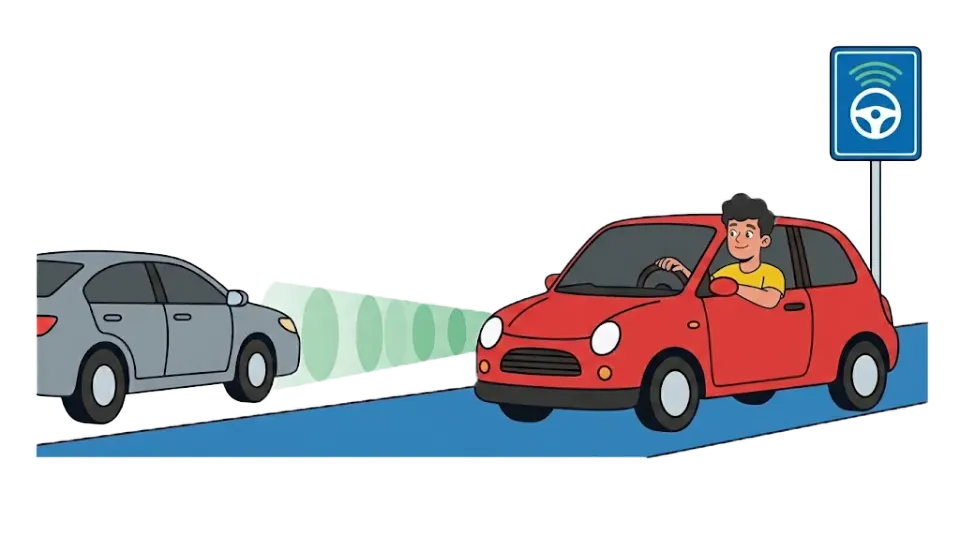
Blind spot detection warns you about traffic next to you or diagonally behind your car. It is an extra help on top of your mirrors and shoulder check. No warning light? Then you still do not know for sure that the lane is free.
What is blind spot detection?
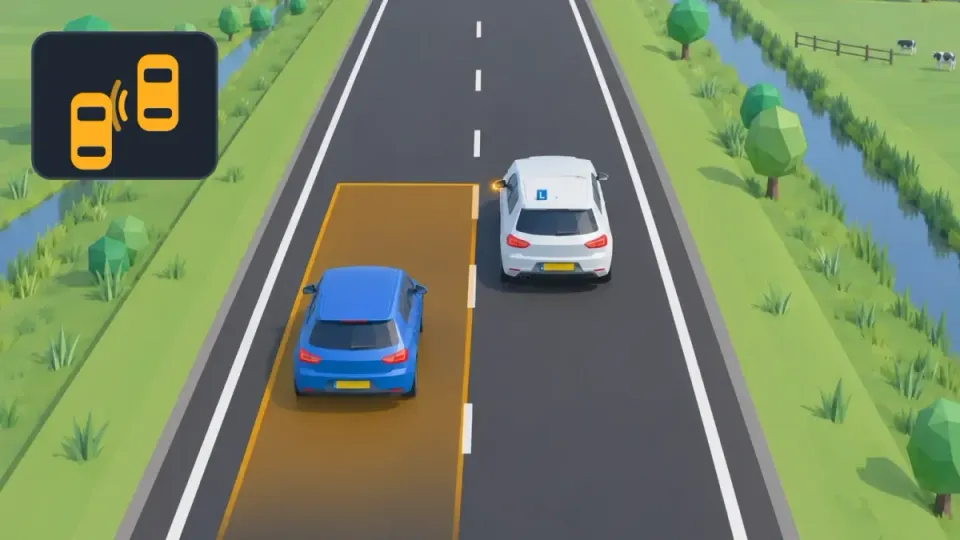
Blind spot detection is a system that watches the blind spot next to and diagonally behind your car. Other names are Blind Spot Warning or Side Assist. In Dutch it is called dodehoekdetectie. If someone is in that zone, a light comes on in or near your door mirror. That light, or your dashboard, often shows a symbol of two cars side by side. What the symbol looks like differs per car.
What the blind spot is exactly and how to set your mirrors is explained under mirrors and blind spot.
How does blind spot detection work?
Usually there are radar sensors behind the rear bumper. They measure whether a vehicle is next to you or diagonally behind you. Many systems only work above a certain speed. Depending on your car, this happens:
- Someone is in the zone? The light in the mirror comes on.
- You switch on your indicator then? The light flashes or you hear a sound.
- Some cars also steer back gently.
Blind spot light in the mirror: what should you do?
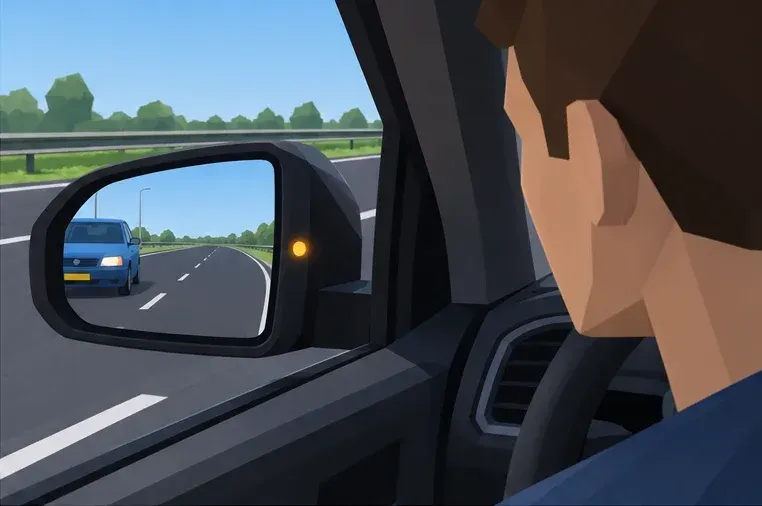
Is the light on? Then someone is probably next to you or diagonally behind you. Do not change lanes. Wait until there is enough space.
Is the light off? Still check yourself. Always do it like this:
- Look in your interior mirror and your door mirror.
- Take a quick look over your shoulder into the blind spot.
- Indicate in good time.
- Only move over when you do not get in anyone’s way.
Indicating does not give you right of way.
Active blind spot assist: what does the car do?
With active blind spot assist the car steers back gently when you steer towards a lane where someone is already driving. This is an emergency help. You cannot count on it always stepping in. Do you feel such a correction? Steer calmly back into your own lane and look again.
Blind spot detection does not always work: watch for cyclists and motorcycles
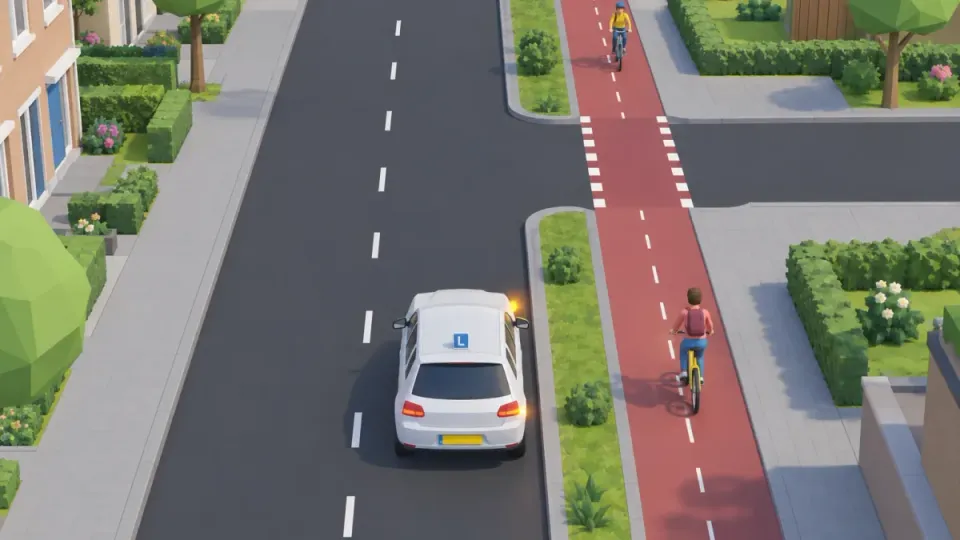
A sensor does not see everything. A fast motorcycle can come from far behind and only enter the zone late. Cyclists and pedestrians are narrow. Not every system recognises them well.
Turning across a cycle path? Check the whole cycle path yourself. Also think of cyclists from the other side on a two-way cycle path. A sensor does not decide who has right of way.
Dirt, ice, a damaged bumper, a bike rack or a trailer can disturb the sensors. Some cars adjust when you hitch a trailer. Check your owner’s manual.
Is blind spot detection mandatory?
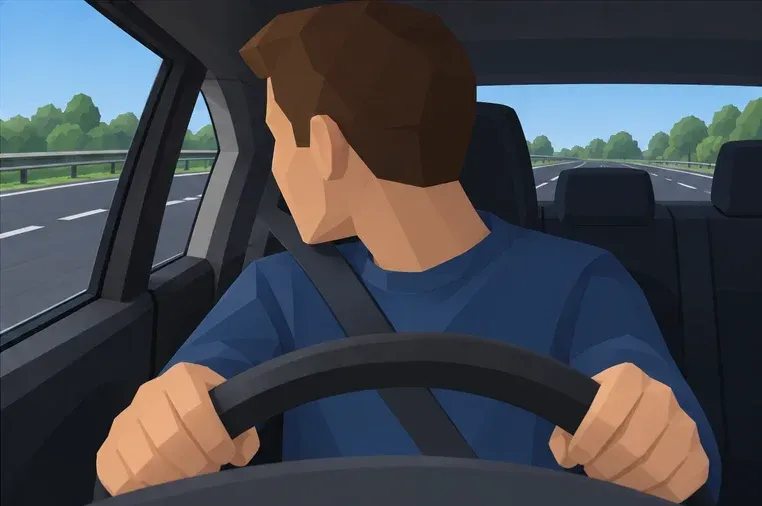
No, blind spot detection is not mandatory for cars. Many new cars do have it. Your shoulder check is always needed. In the CBR driving test the examiner checks that you look properly yourself. Keep your shoulder check short. If you look sideways too long, you miss the road ahead.
Practise like the exam
Example questions like in the CBR exam
Real questions from the Theorio app. You can expect similar questions in your CBR exam.
Question 1 of 3
No blind-spot lamp is lit. Can you change lanes immediately?
Tap the answer you think is right.
The amber mirror lamp is lit while you intend to move left. What do you do?
Tap the answer you think is right.
You turn beside this cycle path. There is no warning. What remains necessary?
Tap the answer you think is right.
Answers and explanations for the example questions
Question 1: No blind-spot lamp is lit. Can you change lanes immediately?
Correct answer: No, first check mirrors, blind spot and safe space
No warning does not guarantee a clear lane. The system does not replace your observation.
Question 2: The amber mirror lamp is lit while you intend to move left. What do you do?
Correct answer: Postpone and assess the space yourself
Indicating gives no priority. Wait for safe space and keep observing approaching traffic.
Question 3: You turn beside this cycle path. There is no warning. What remains necessary?
Correct answer: Check the path and relevant directions yourself
Detection may miss a cyclist. Observe the whole conflict area and apply priority rules.
See if you can handle the new question style
Three quizzes of ten questions on driver assistance systems, in the style the CBR uses as of 1 October. Instant explanation with every answer.
30 questions · start for free
Your first quiz is free, no account needed. After that from €34.99 for 90 days of access.