Road markings and intersections determine where you are on the road and the priority rules in traffic.
Traffic signs on the road surface and instructions from traffic controllers override general traffic rules.
Road markings & Intersections at a glance
Overview Road markings & Intersections
The most important CBR rules for road markings and intersections are divided into 5 categories.
Topic
Most important CBR rule
Solid line
Never cross it or overtake over the line.
Lane positioning (voorsorteren)
Take up position in time in the rightmost lane for your direction.
Priority junction (gelijkwaardig kruispunt)
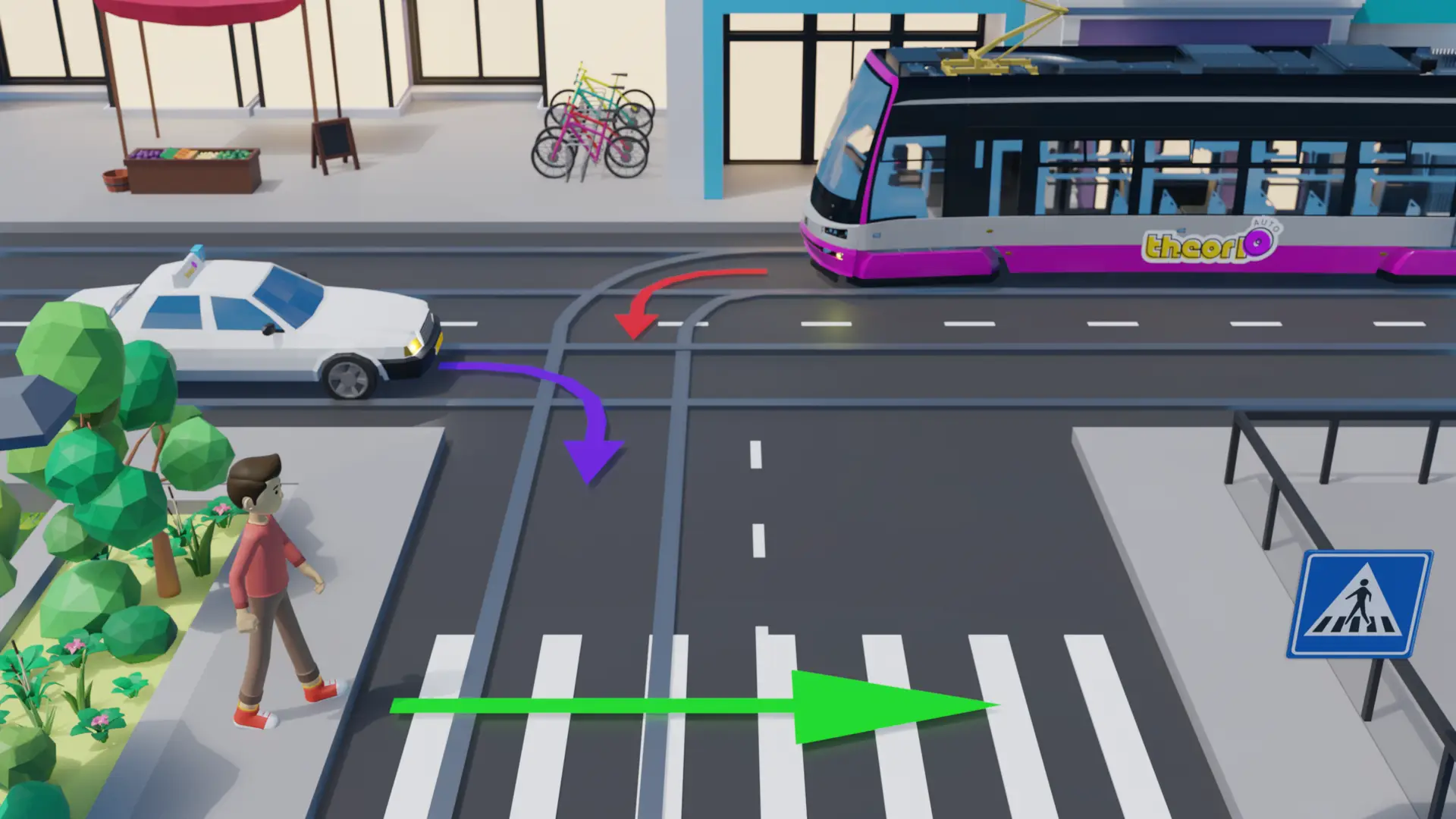
Drivers coming from the right have priority. Trams always have priority.
Driveway construction (uitritconstructie)
Traffic leaving a driveway gives priority to all traffic.
Traffic controller (verkeersregelaar)
Instructions override all lights, signs and rules.
CBR order of priority in traffic
1. Instructions from authorised persons: Traffic controllers and police come above everything.
2. Traffic lights: Light signals come above traffic signs and road markings.
3. Traffic signs and symbols: Sign and line come above general rules.
4. General traffic rules: The right has priority at a priority junction (gelijkwaardig kruispunt).
What is a solid line?
A solid line separates lanes or carriageways and may not be crossed.
You may not drive over it and you may not overtake if you would have to cross the line.
What is a broken line?
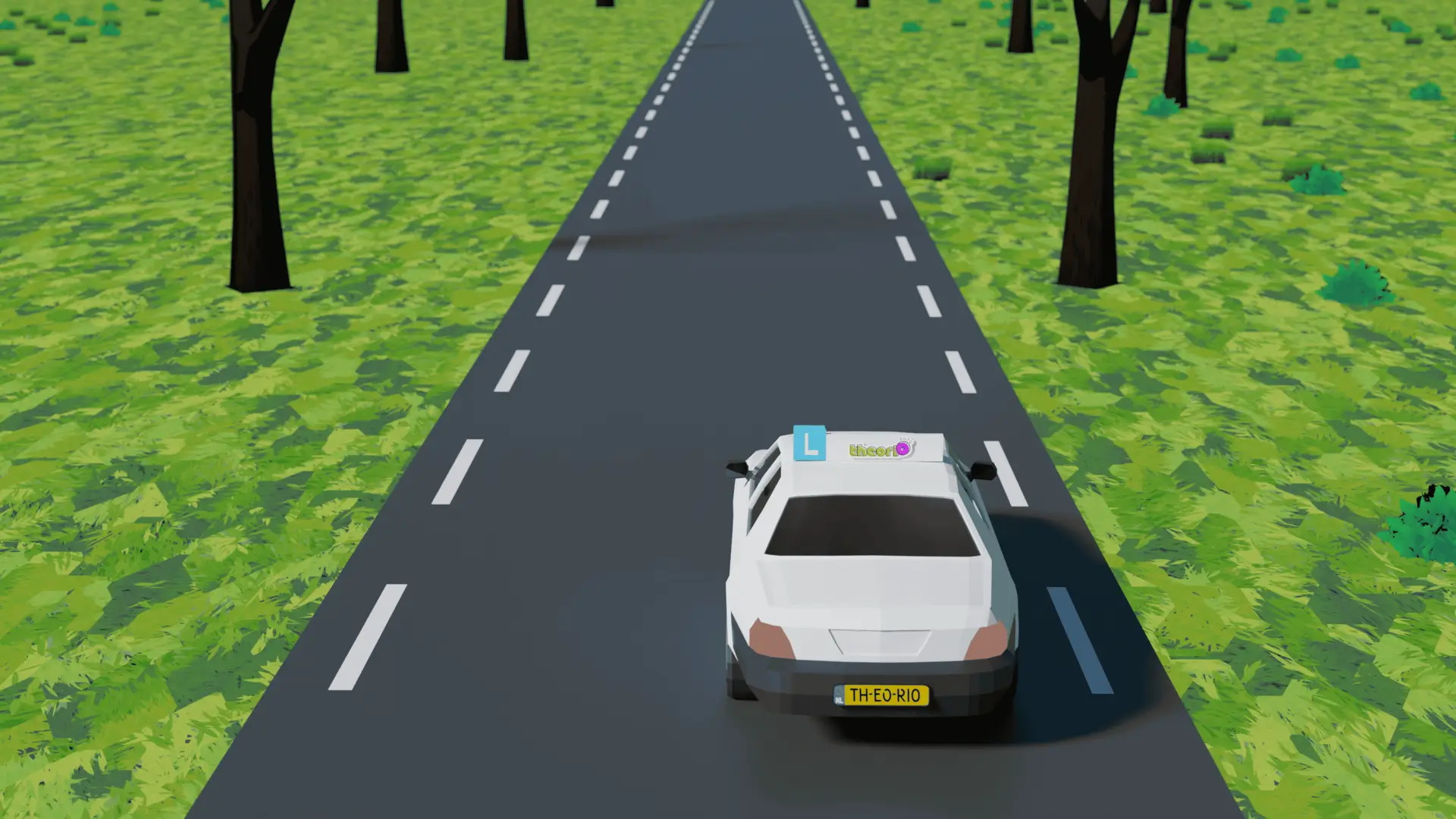
A broken line consists of short white dashes with large gaps.
You may cross this line to overtake or to change lanes.
Warning line on the road surface
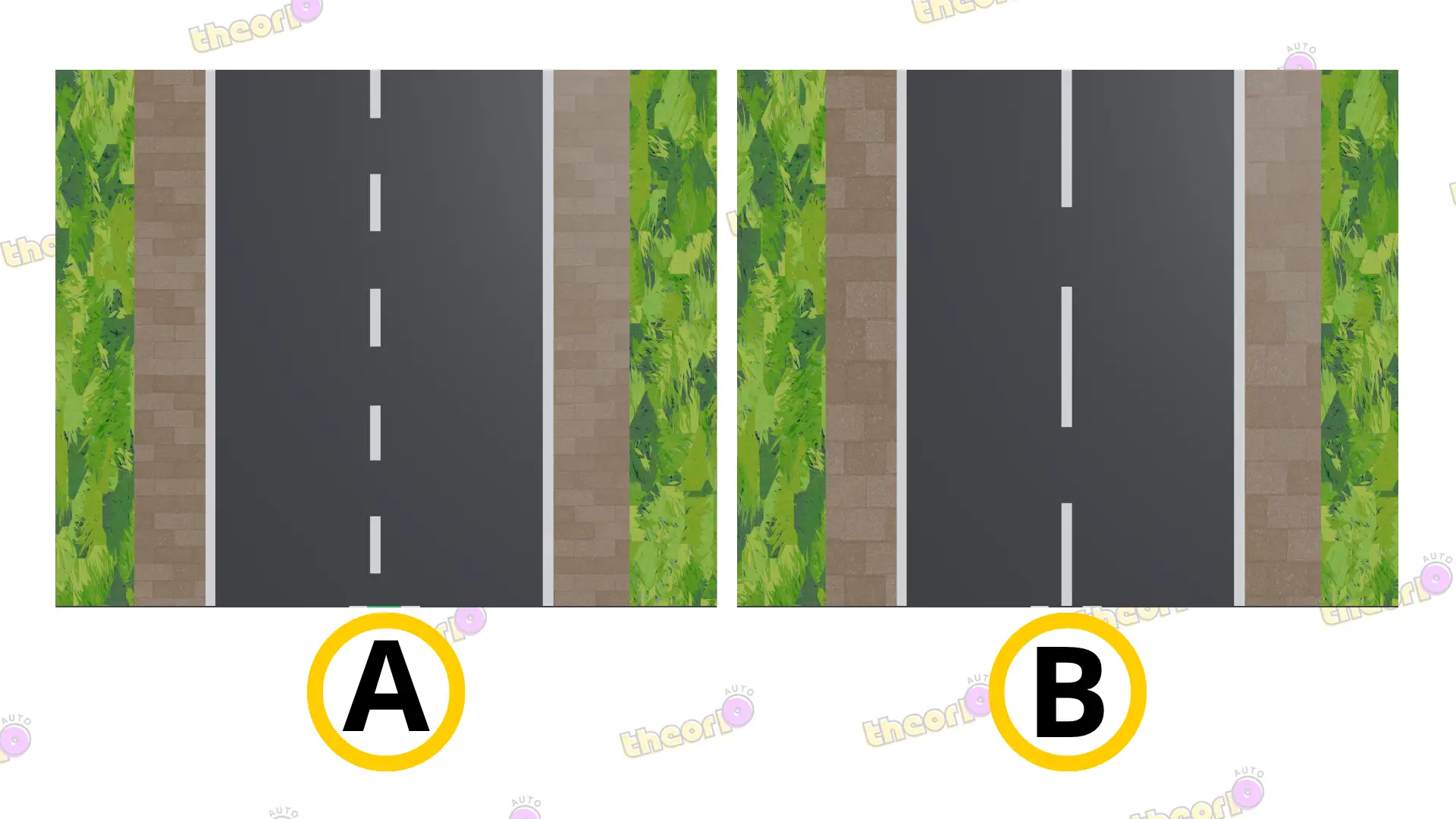
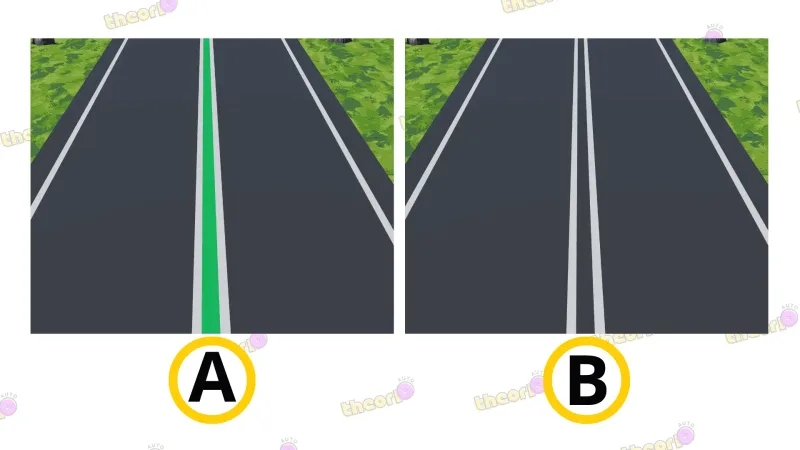
A warning line has very short gaps between the white dashes and is often longer than the standard white line. This warns of an approaching dangerous situation, a changing road situation or a solid line. In this picture, A shows the normal broken line and B shows the warning line.
With a warning line, overtaking is not forbidden — it is and remains a broken line. Still, it is sensible to wait until you are past the change on the road. The line is there for a reason: something changes further ahead.
The difference between white and yellow lines
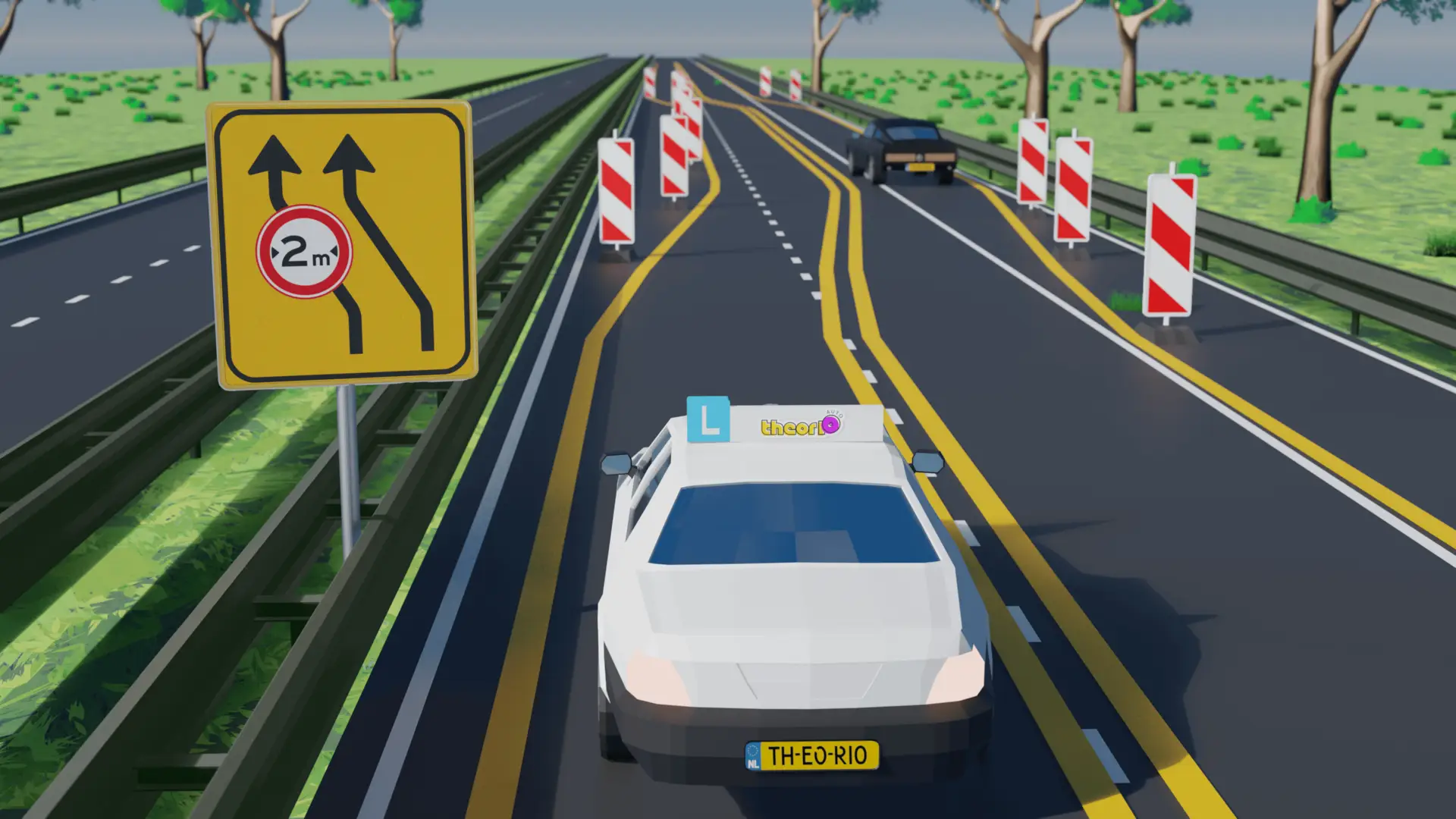
Yellow lines and yellow road markings are used for temporary roadworks.
Temporary yellow lines always have priority over the normal white lines.
During roadworks, the white lines are usually not removed: they simply remain visible under or next to the yellow ones. You are then required to follow the yellow markings. It works the other way too: if there is a white solid line, but the yellow marking indicates that you may change lanes, then you may do so.
Type of line
Rule about crossing
Is overtaking allowed?
Solid line
Strictly forbidden
No, never over the line
Broken line
Allowed if safe
Yes, if there is a clear way
Combined line
Follow the line on your side
Only from the broken-line side
Temporary yellow line
Always follow yellow above white
Depends on the type of yellow
Warning line
Allowed; it remains a broken line
May, but better to wait until after the change
Combined solid and broken line
With a double line, the rule applies to the line on your side of the road.
If the broken line is on your side, then you may change lanes.
If the solid line is on your side, then you may not drive over it.
Note that this works both ways: if you are driving alongside the solid-line side, you may not cross it, but the traffic on the other side may come onto your lane. So expect traffic that merges next to you, even if you yourself are not allowed to cross.
Hatched road markings and zigzag lines
A hatched road marking area consists of slanted white dashes on the road and is forbidden territory.
An exception applies when a rush hour lane is open across the hatched road marking area.
The name says exactly what the area does: it effectively pushes you away from the road. Practically that means: you cannot change lanes at the last moment in such a place. For a hatched road marking area, the same applies as for a solid line — you may not drive over it.
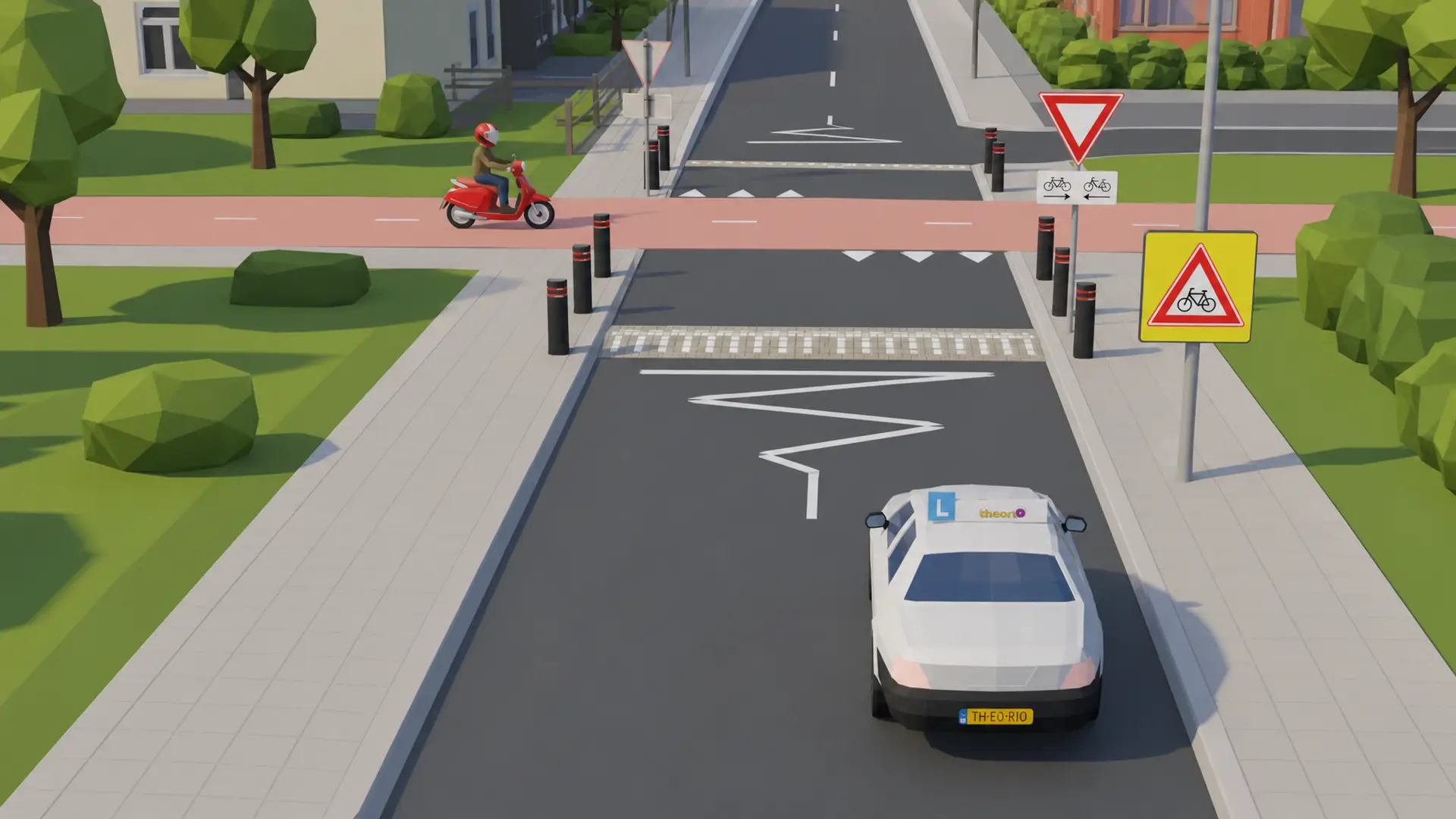
A zigzag line warns of a dangerous intersection or an approaching obstacle.
Often it is a busy intersection with a cycle path in front of it. The zigzag line does not forbid anything, but says: reduce your speed and pay extra attention.
What the lines tell you about who you can expect
Lines not only tell you whether you may overtake or change lanes. They also reveal what kind of road you are driving on, and therefore which road users you may encounter. On many roads, this is not indicated anywhere with a sign.
Only lines on the sides
If you only see (broken) lines on the sides of the road and the middle is empty, then this is an ordinary road where everyone may come: cars, but also cyclists, riders and pedestrians. You often see this in the countryside and in nature areas. Riders and pedestrians may walk in the verge (berm), but they are not required to — they may also just use the road.
Only side lines, no middle line: here you can expect all kinds of road users.
A double line in the middle
If there is a double line in the middle of the road, then only motor vehicles may drive there. Cyclists are not motor vehicles and therefore do not belong there. Whether that double line is solid or broken does not matter for this question: double is double.
Double middle line: only motor vehicles. A speed sign of 70 km/h or higher often goes with this.
A green strip between the lines
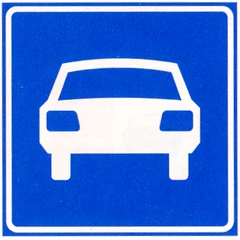
If there is a green strip between the two lines, then you are driving on an autoweg. An autoweg has a minimum speed of 50 km/h, which means, for example, that agricultural vehicles and brommobielen may not enter.
Memory aid: the note of one hundred euros is also green — green = 100 km/h. 💶
Sign G3 (Autoweg): the same road, but then with a sign instead of with a line.
CBR trap
❌ Wrong: reading a warning line as a solid line and thinking that overtaking is forbidden.
✅ Correct: it is a broken line, so overtaking is allowed. It is only unwise, because something changes further ahead.
❌ Wrong: during roadworks, following the white lines because they are still there.
✅ Correct: yellow always comes above white, even if yellow allows more than white.
❌ Wrong: driving over a hatched road marking area in order to change lanes quickly at the last moment.
✅ Correct: a hatched road marking area is just as forbidden as a solid line. Only an opened rush hour lane is an exception.
❌ Wrong: thinking that on a road with a double middle line you can also encounter cyclists.
✅ Correct: a double middle line means: only motor vehicles. Without a middle line, with only side lines, you can expect everyone.
You've covered Lines & Road markings (Solid, Broken & Yellow). Does it stick?
Road markings and roadside markings tell you where you may drive, when you may not cross, and where extra danger is present.
For the theory test, you mainly need to recognize quickly: which marking applies, whether you may cross it and whether a temporary marking takes priority.
Lane, carriageway, road and hard shoulder
Lane positioning is about the question of where you are going to drive. For that, you first need to know what the road is called that you are driving on. You can drive on all three, but they do not mean the same thing.
Lane: one lane that fits one line of vehicles.
Carriageway: all lanes for your direction together.
Road: the carriageway plus the hard shoulder.
Hard shoulder: the lane to the right next to the solid line. You may not drive there; you may only stop in case of a breakdown (autopech) or an emergency.
A = the separate lanes, B = the carriageway, C = the road. The lane to the right of the solid line is the hard shoulder.
Keep as far right as possible
On all roads the rule is: keep as far right as possible. Whether you are driving on the motorway, on a woonerf or on a road with 50 to 80 km/h.
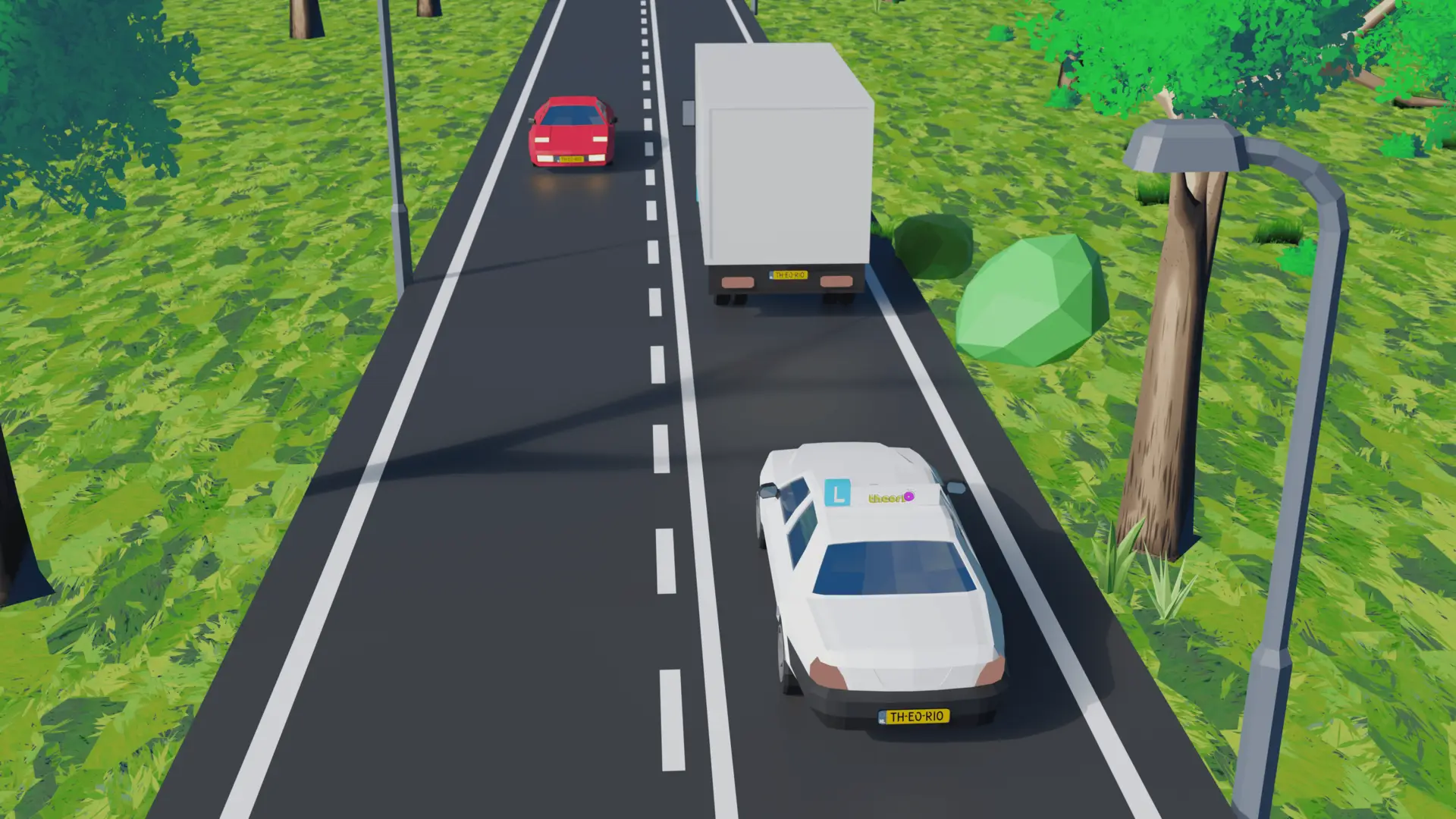
On the motorway that means: stay in the rightmost lane. You overtake on the left, and then you go back to the right as quickly as possible. Staying unnecessarily in the left lane is forbidden and can result in a hefty fine.
One important exception: if there are solid lines between the lanes, then you may not cross them and you must stay in your own lane until the line is broken again.
How do you position correctly for turning left?
If you want to turn left, you position as close as possible to the centre of the road.
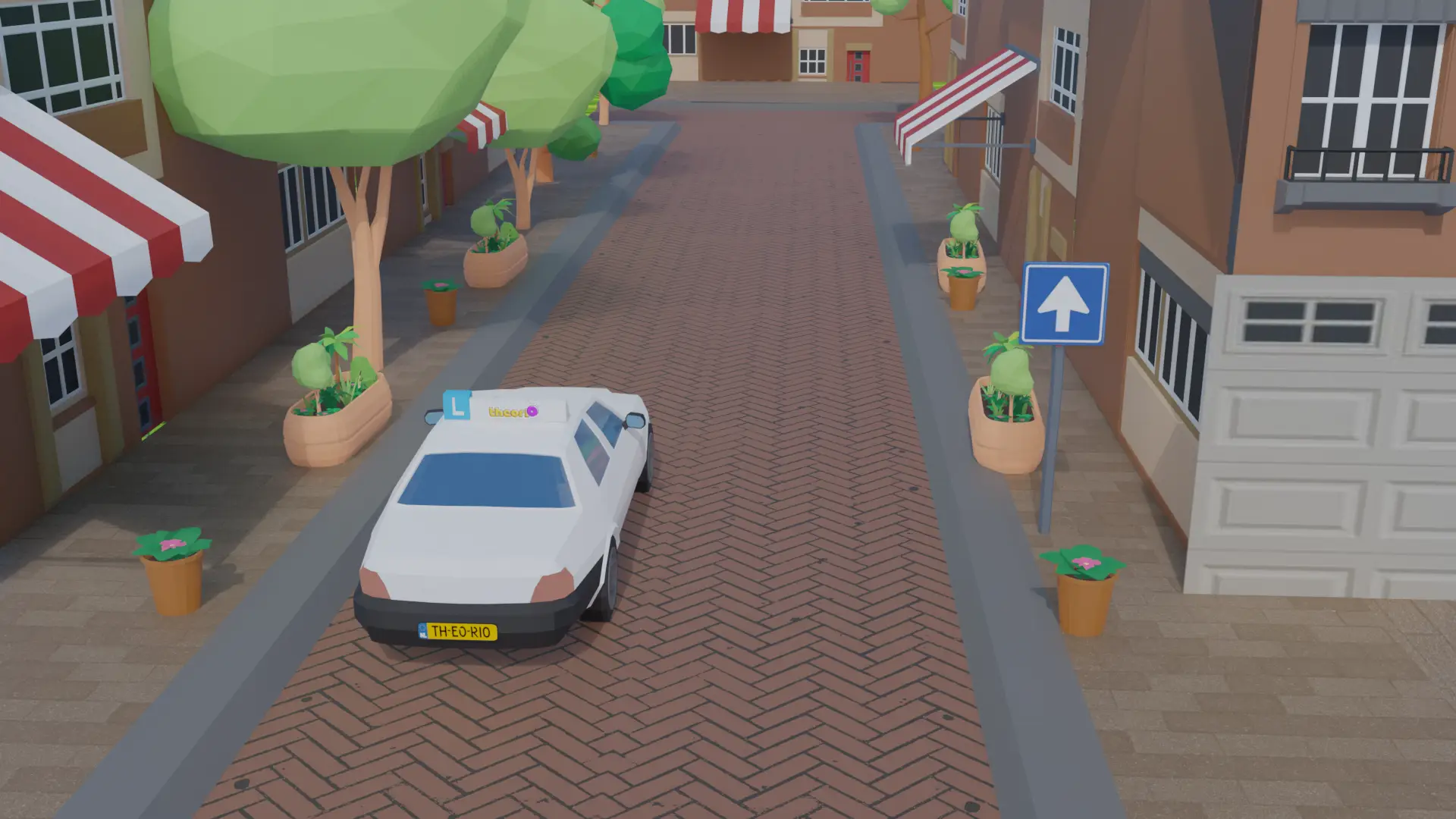
On a one-way street you position all the way on the left side of the road in front of you.
How do you position correctly for turning right?
If you want to turn right, you position as far as possible on the right side of the lane in front of you.
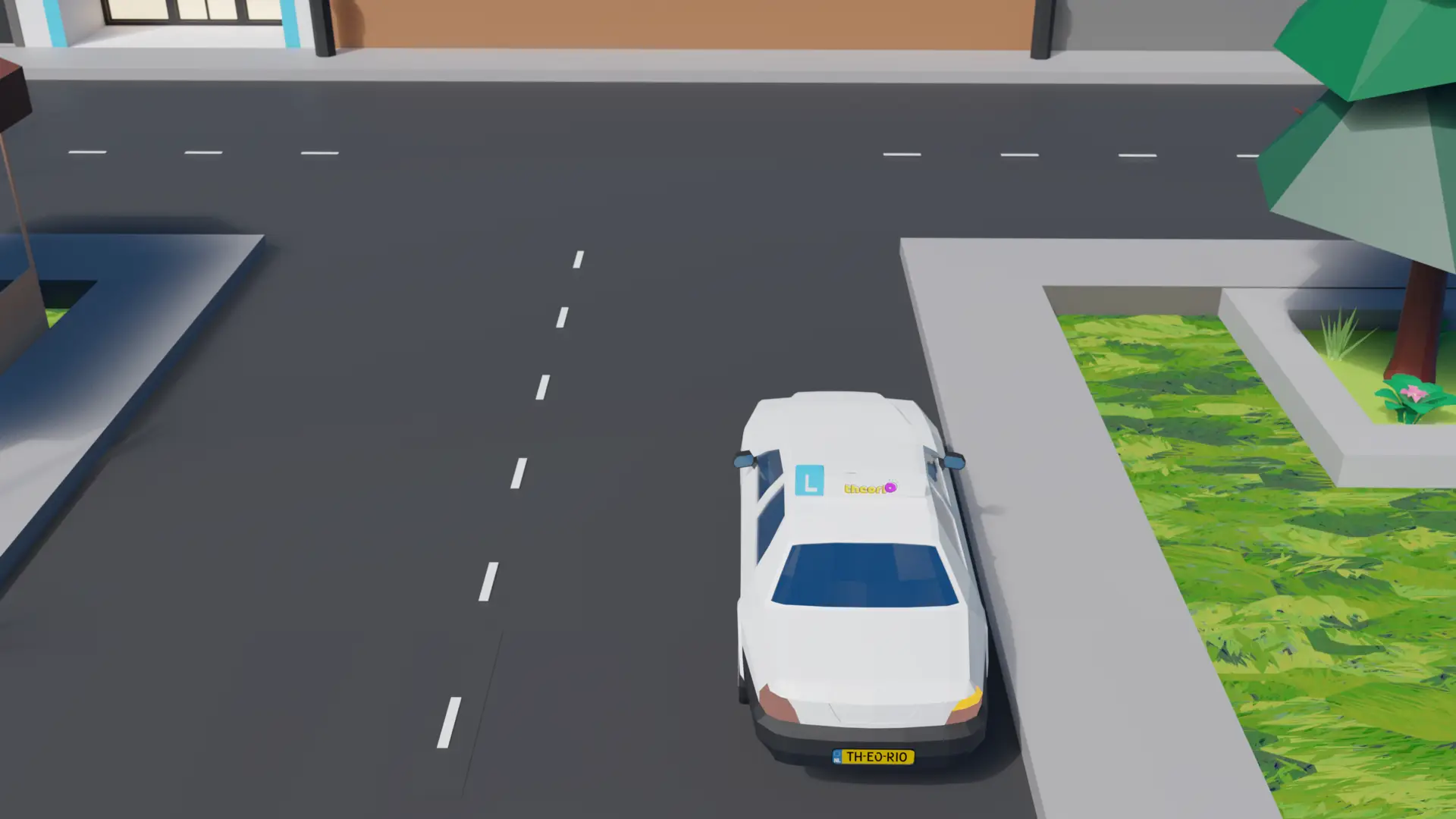
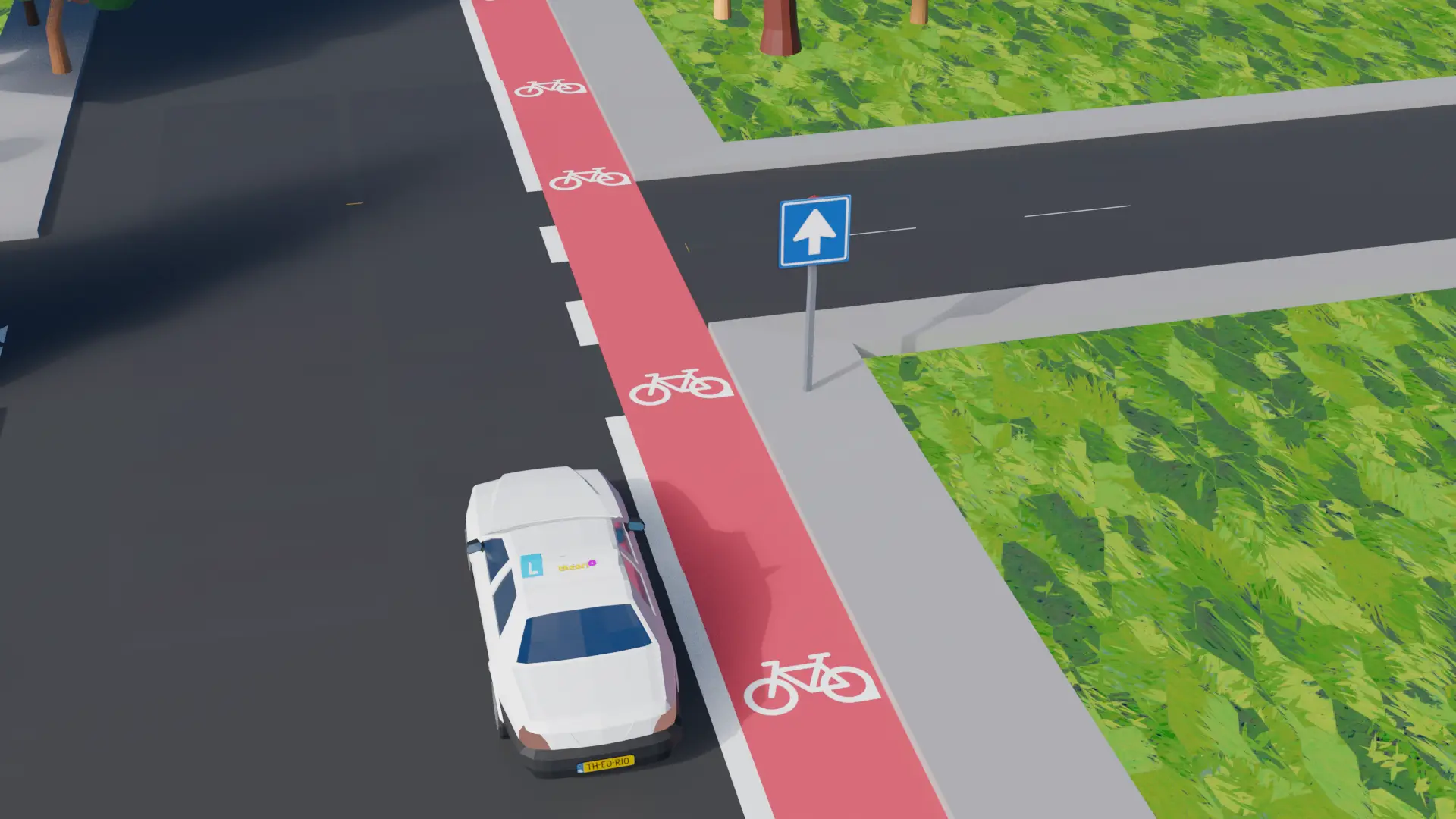
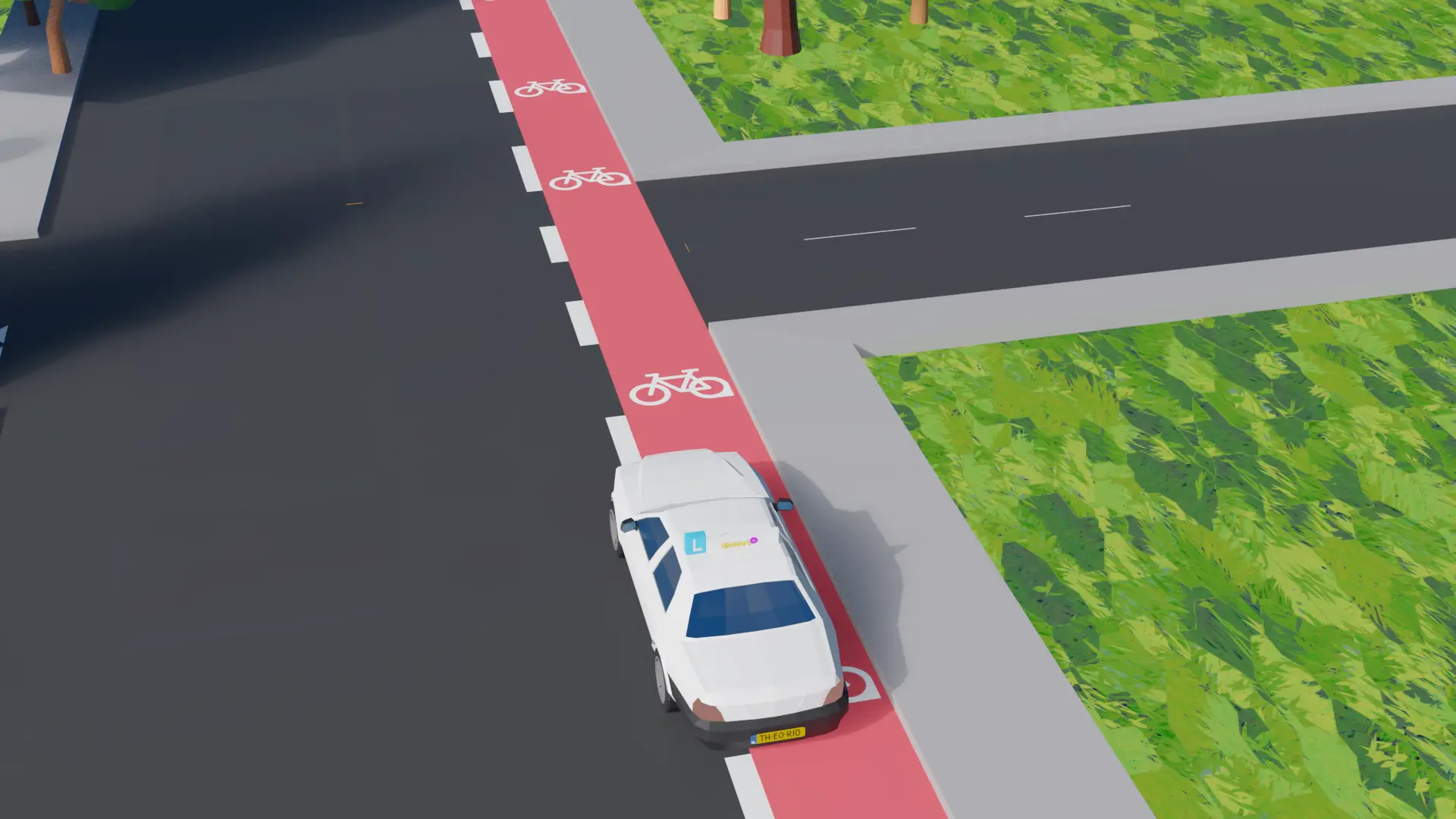
Lane positioning at cycle lanes
At a cycle lane with a solid line, you may never drive over the line.
At a cycle lane with a broken line, you may use the lane to position yourself.
Always pay close attention to cyclists and snorfietsers coming up behind you before you move into position.
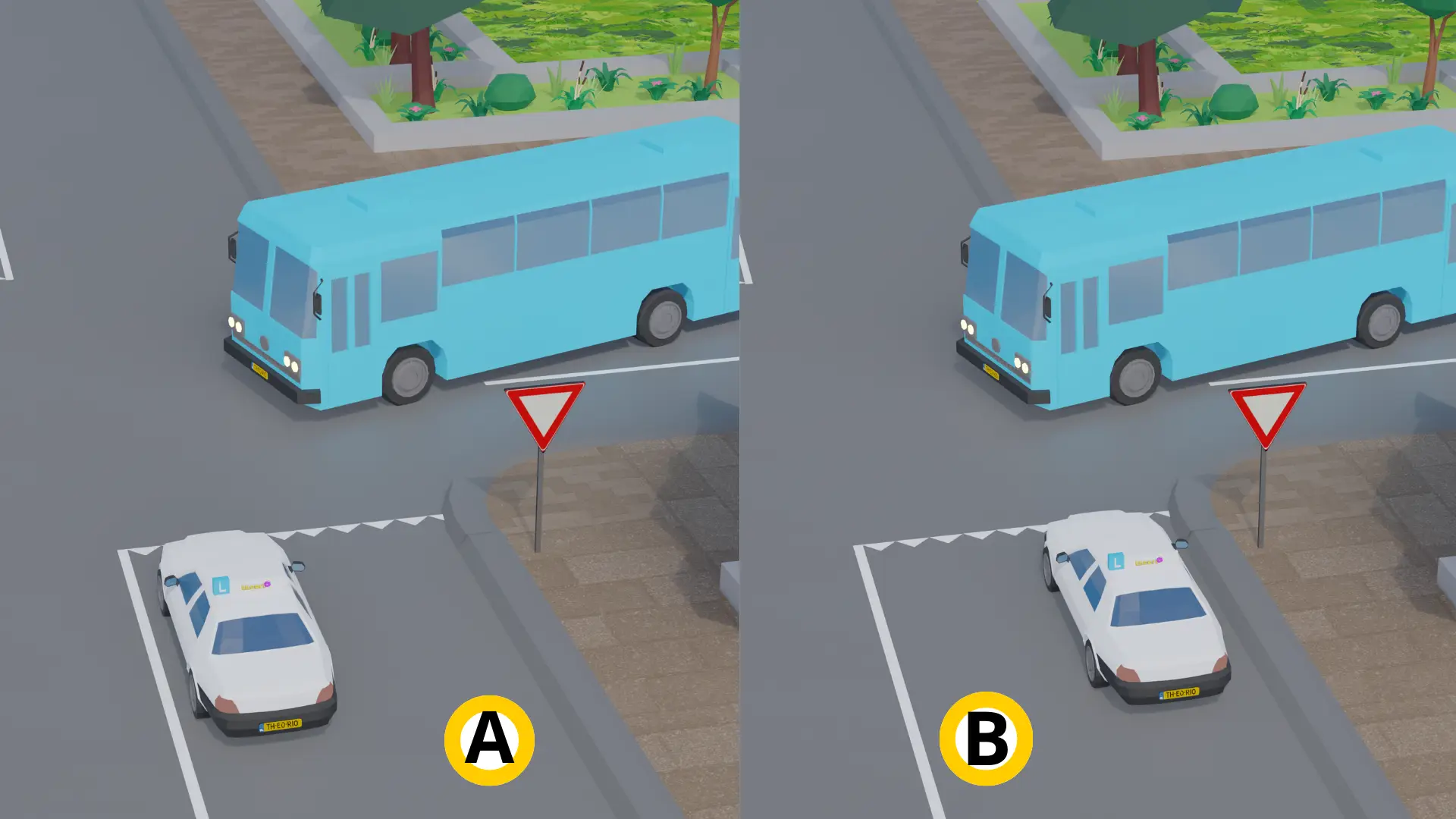
Lane positioning for large vehicles
Lorries and buses have a large turning circle and need extra space in the bend.
When positioning, stay a little further behind the centre to give large oncoming vehicles space. In this case B is therefore correct because you give the bus more room to pass and to make the turn.
Situation
Correct position for lane positioning
Turning left (two directions)
Against the centre (the middle) of the road
Turning left (one-way street)
All the way on the left side of the road
Turning right (normal)
As far as possible on the right side of the lane
Cycle lane solid
Stay next to the line; do not drive over it
Cycle lane broken
Position on the cycle lane provided it is clear of cyclists
Roundabout with arrows on the road surface
Follow the arrows, not the rule “as far right as possible”
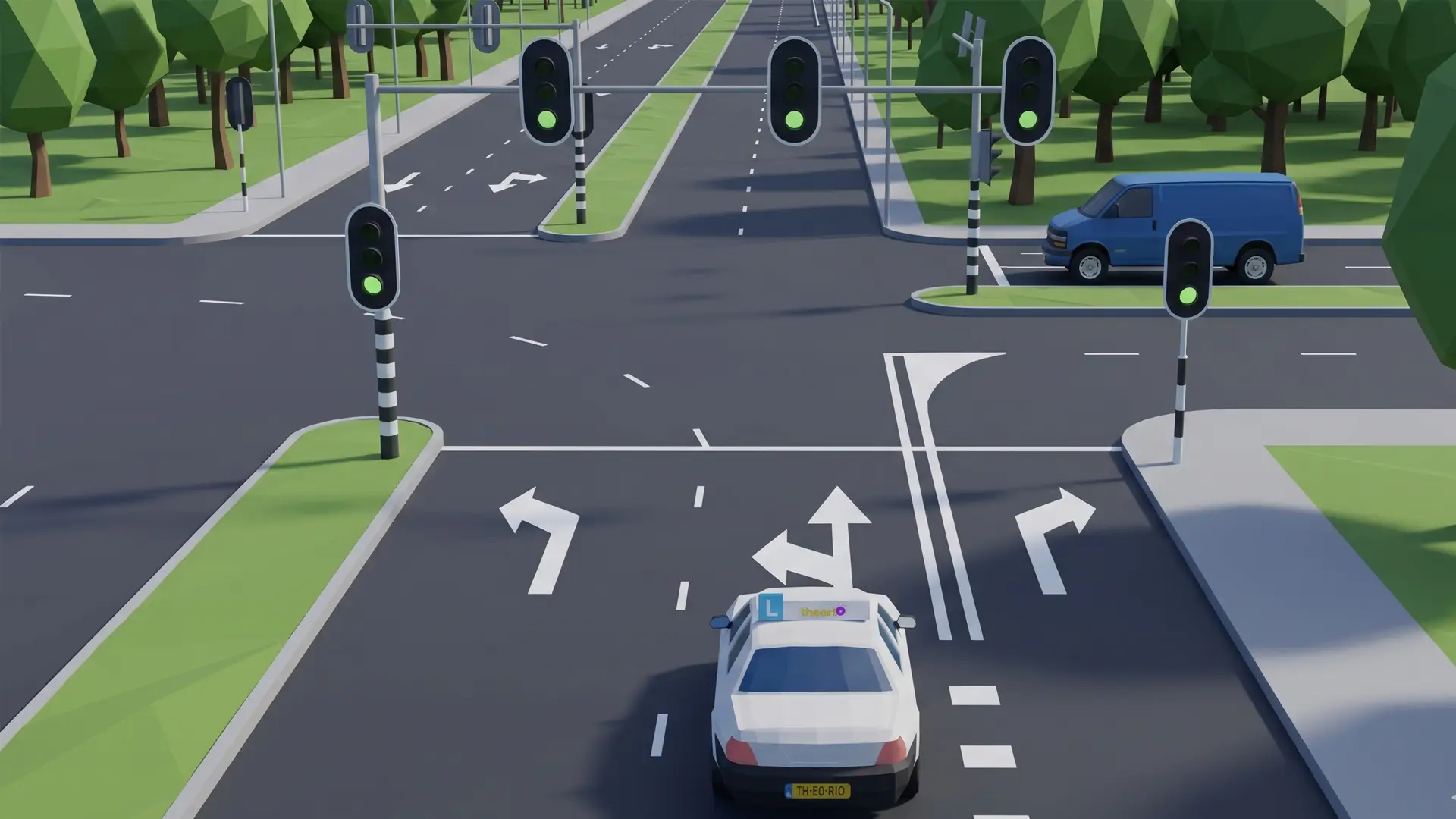
Multiple lane positioning lanes
If there are multiple lanes for your direction, always choose the rightmost lane.
This keeps the left lanes free for other traffic that wants to overtake or turn off.
It is strictly forbidden to stop on a zebra crossing or right in front of an intersection.
This also applies if two or more lanes go in your direction: you choose the rightmost of them. If in such a case you are all the way on the left while the middle lane is also going in your direction, then you are positioning incorrectly.
This is not how it should be: the middle lane is also going this way, so it is the rightmost lane for this direction.
Do not let yourself be confused by a lane where multiple directions are allowed — for example, a lane where you may turn left and go straight. Even then, you simply choose the rightmost lane that goes in your direction.
A lane with two arrows simply counts as a lane for your direction.
The correct lane on the motorway
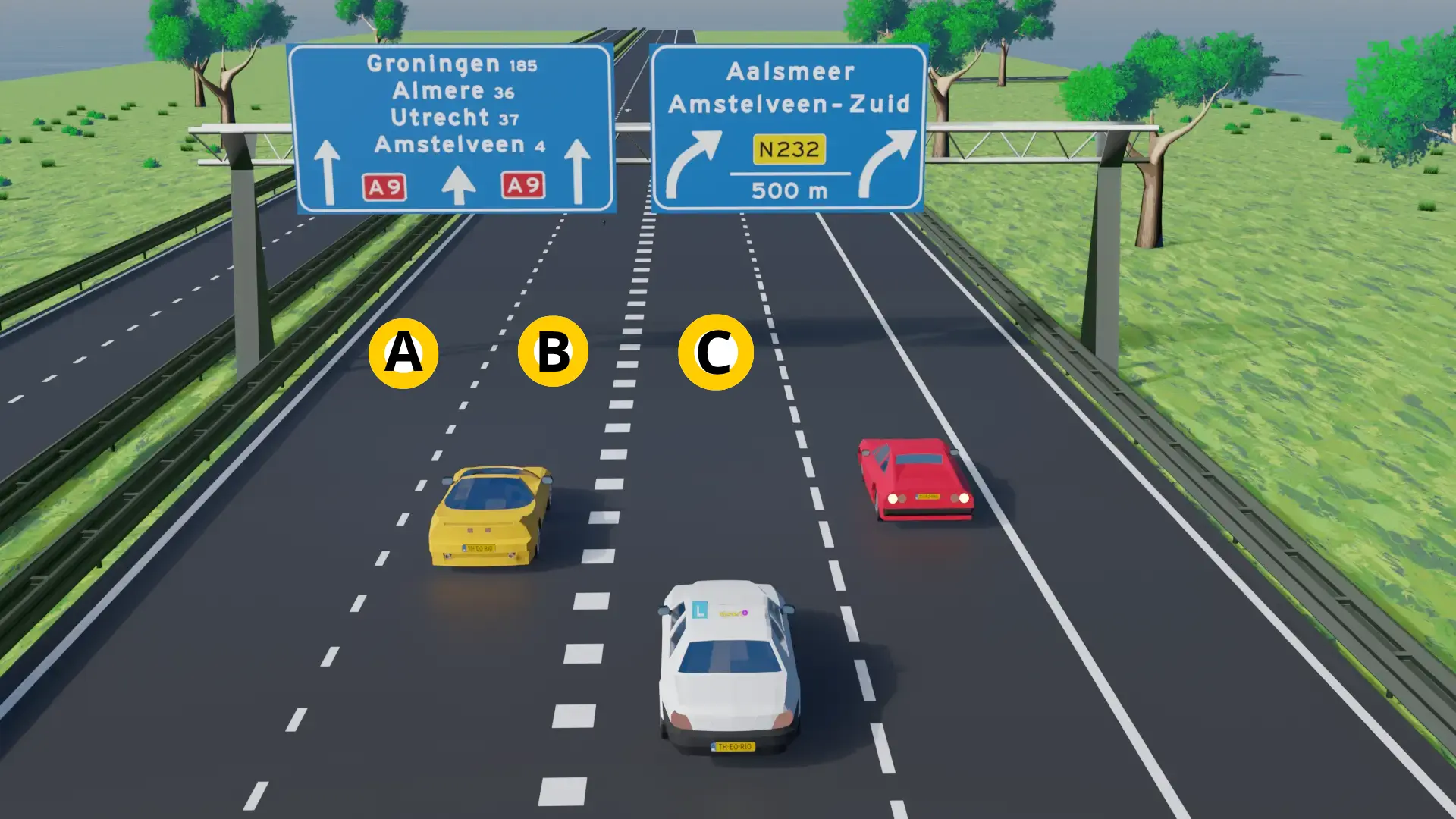
You do not only position at traffic lights, intersections and roundabouts. On the motorway you also consciously choose a lane. The rule is the same: as far right as possible of the lanes that go in your direction. You can read which lanes these are from the blue signs above and along the road.
Lane A is only there to overtake; B and C go in different directions.
Do you want to go to Nijmegen and do both left lanes go to Nijmegen and Utrecht? Then choose lane B: that is the rightmost lane in your direction. Lane C does not lead to your destination and lane A is only intended for overtaking.
Lane closed or an extra lane
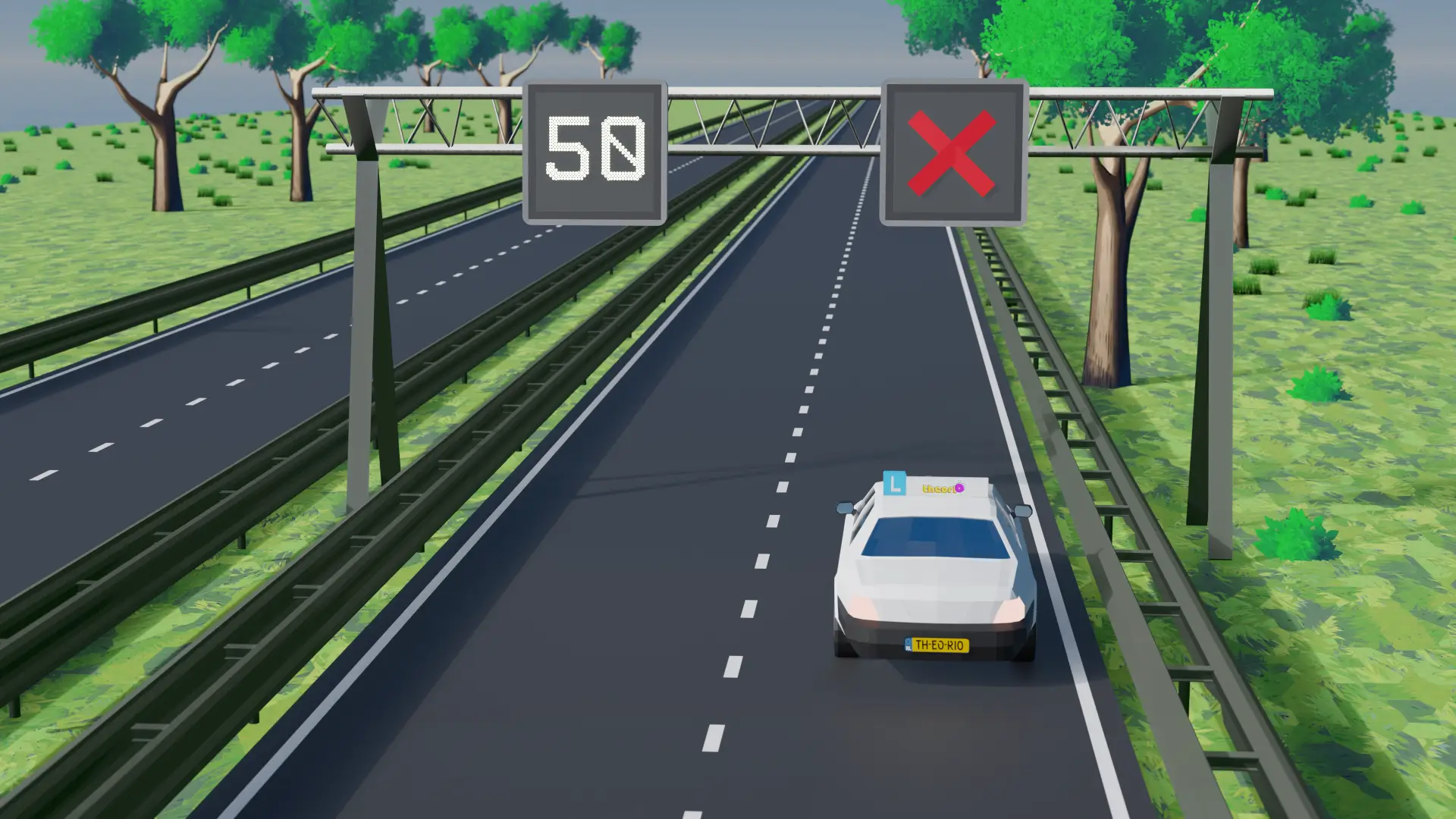
Normally you read which lane you must have from the blue signs. But above the road, matrix signs (electronic signalling signs) may also be lit. They come before everything that the blue signs say.
A matrix sign can give a new maximum speed, but it can also indicate whether a lane is open or closed. If you see a red cross, then that lane is closed and you may not drive on it.
The rush hour lane
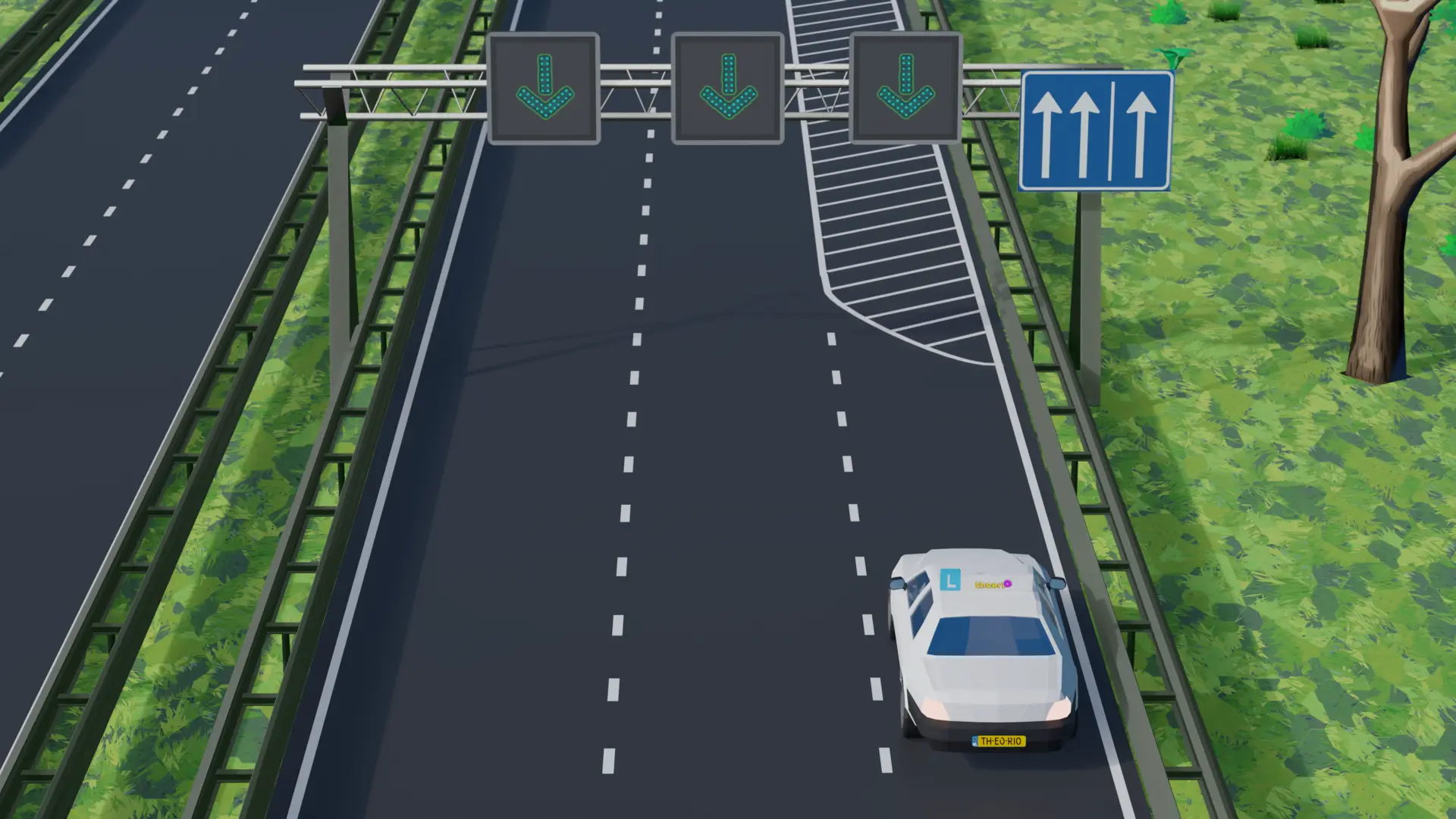
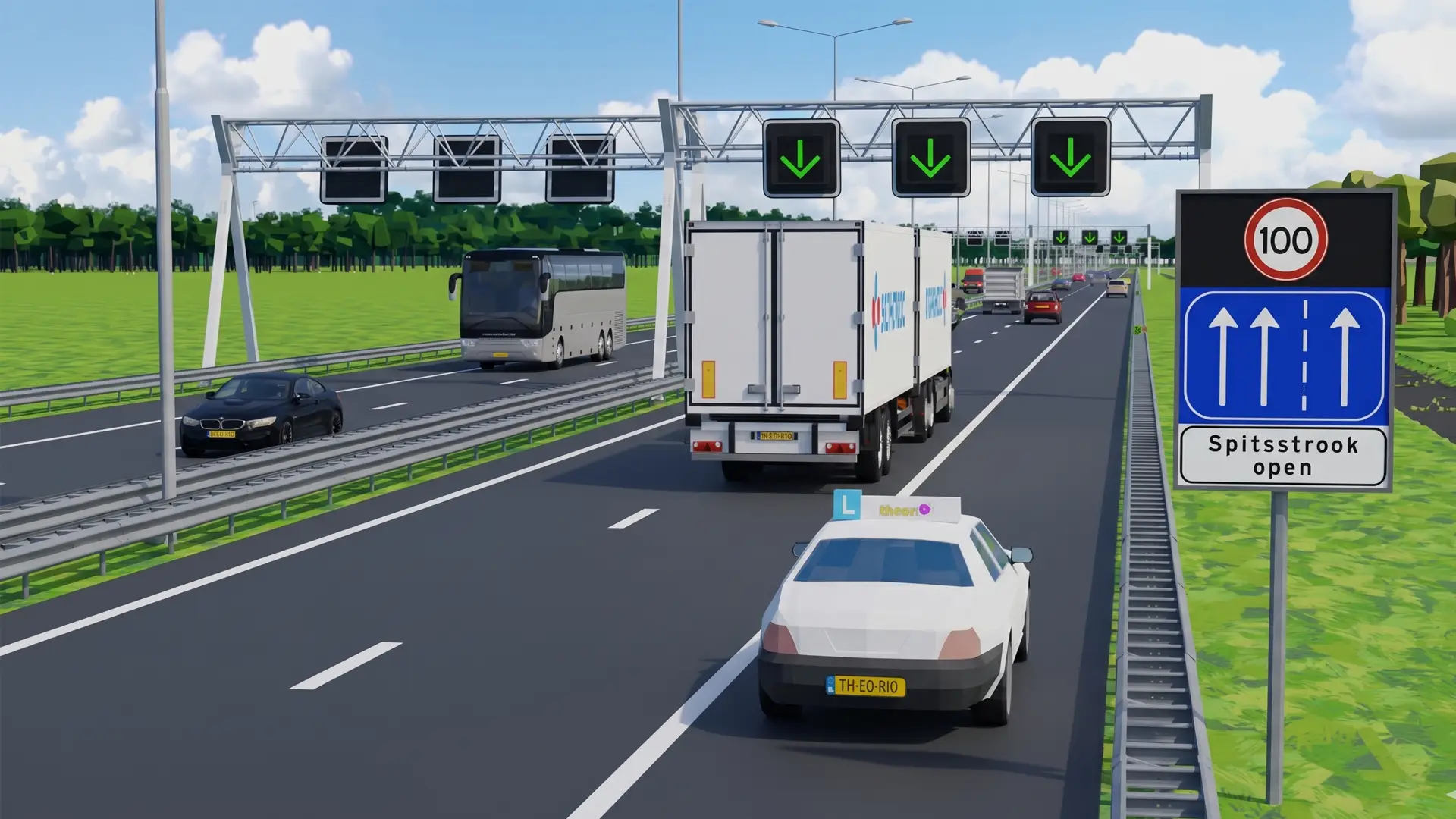
A matrix sign can also open an extra lane. On some roads, during rush hour the hard shoulder then becomes a rush hour lane. On the matrix sign there is a green arrow pointing down ↓. That means you may drive over the white solid line and use the rush hour lane.
At that moment, the rush hour lane becomes the rightmost lane. And because you always have to keep as far right as possible, you are then even required to use it.
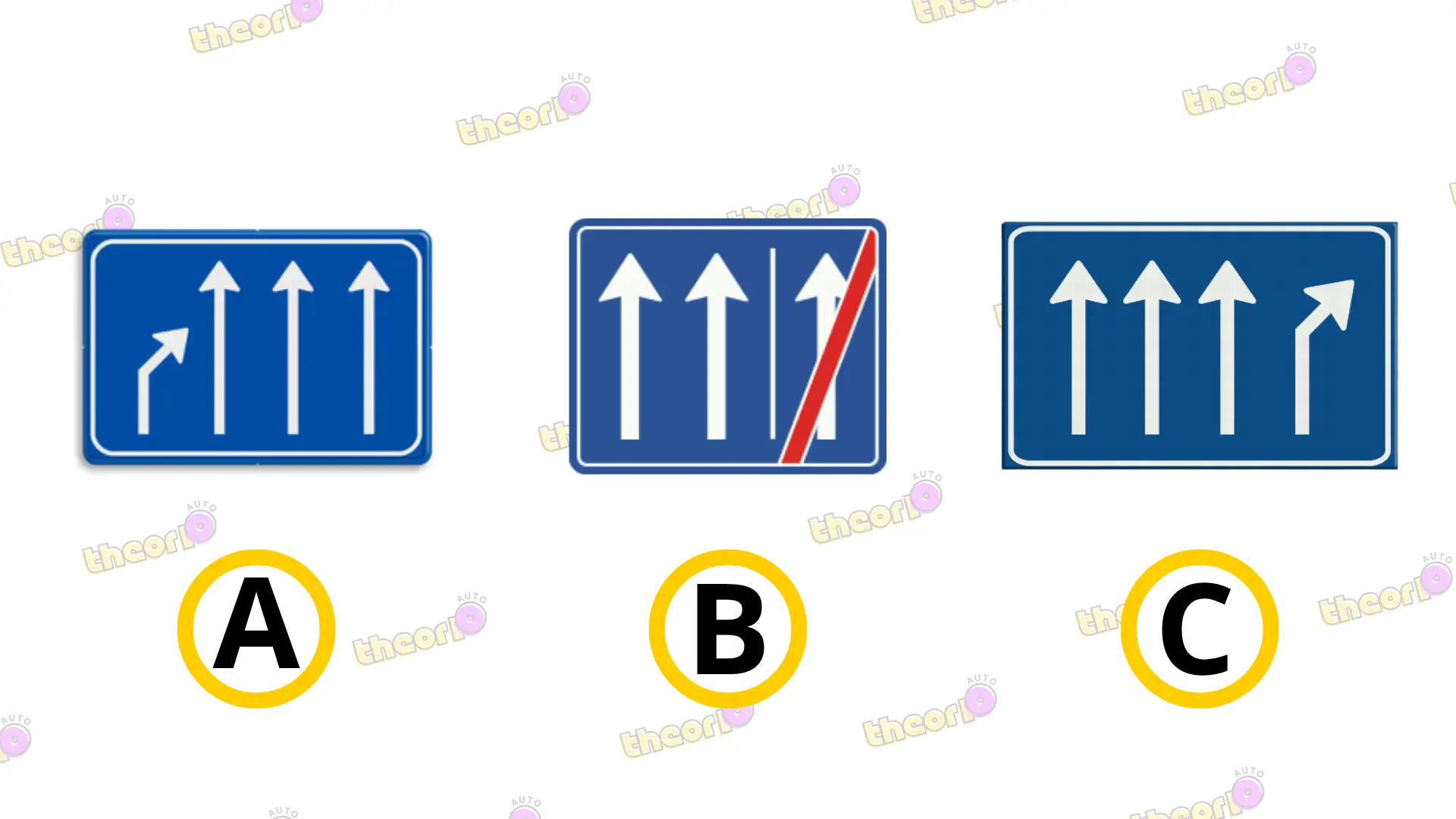
You can see that a rush hour lane is open in three ways: the green arrow on the matrix sign, a sign along the road with the text “rush hour lane open”, and a sign showing the number of lanes of the normal carriageway followed by a solid line with the rush hour lane next to it.
These three signs look similar: A = off the rush hour lane, B = rush hour lane open, C = rush hour lane closed.
Signs that say something about lanes
Above and along the road there are signs that use arrows to show what happens to the lanes. The direction of the arrows determines the meaning.
Merging: an arrow points towards the other arrows. A lane ends and merges.
Splitting: an arrow points away from the other arrows. The lanes split apart.
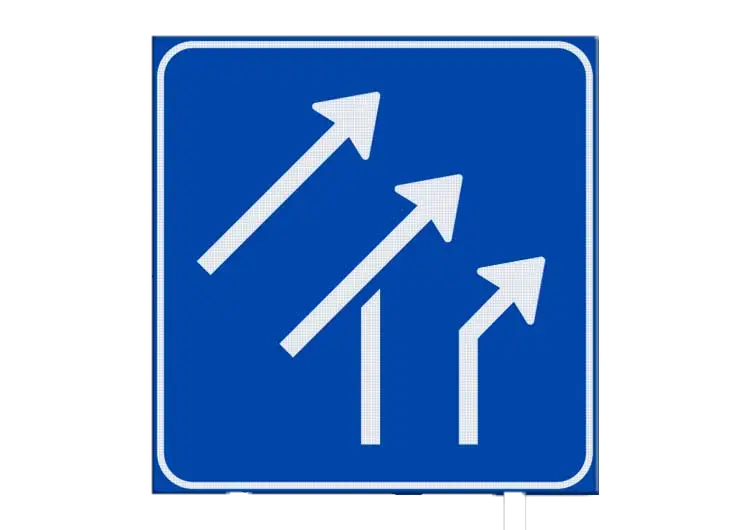
Tapering connection: all arrows point in the same direction and the middle one looks like a slanted T. The acceleration lane automatically becomes the main carriageway — you do not have to change lanes. The number of arrows indicates how many lanes are coming together.
If the arrow points towards the other arrows, it is a merging. If it points away from them, it is a splitting.The slanted T in the middle: a tapering connection of three lanes.
The white sub-sign underneath
Often a white sub-sign hangs under such a sign. For that there is a fixed rule:
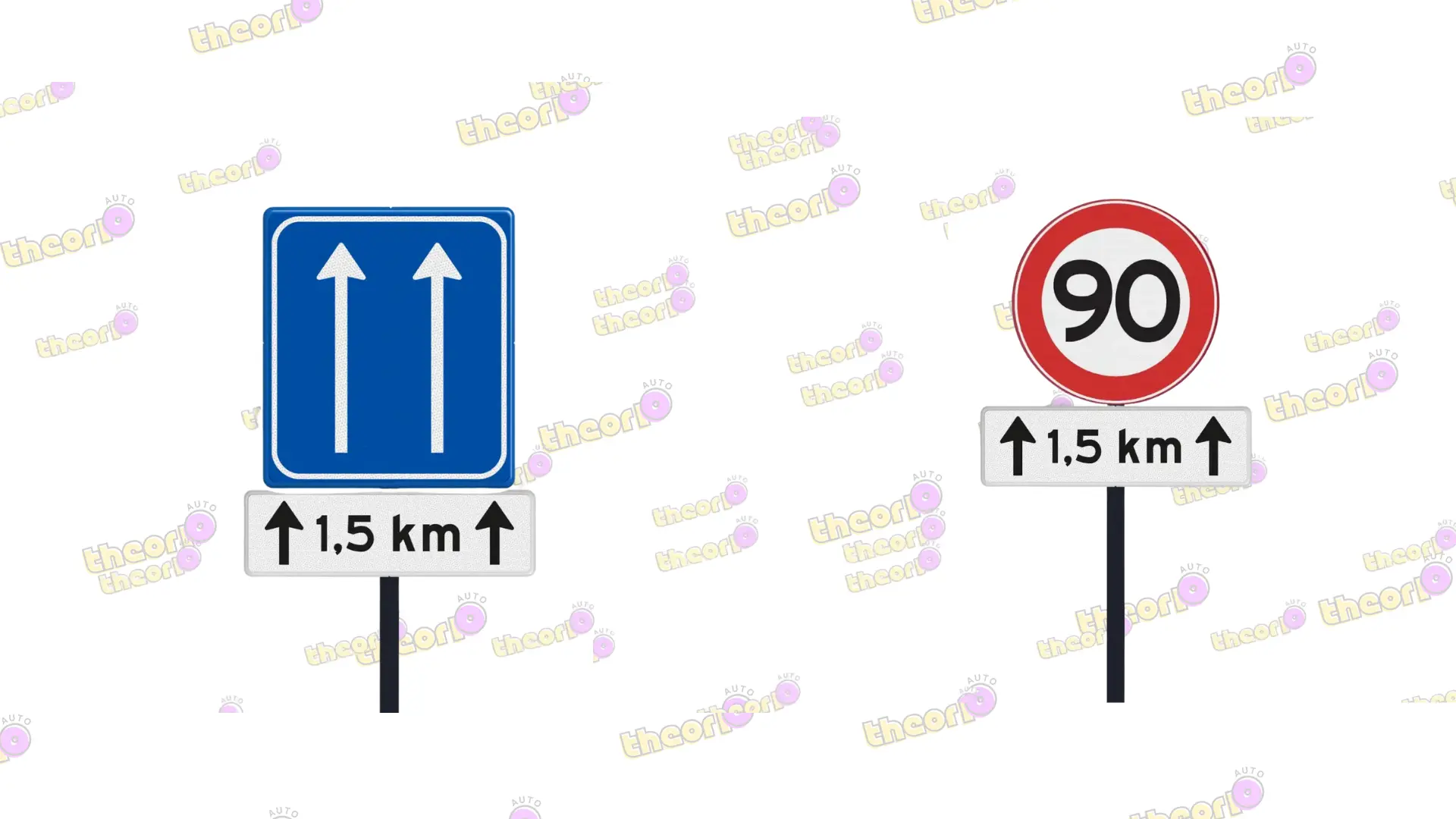
If there are two arrows, then the sign applies immediately.
If there is only a distance, then the sign applies only after that distance.
A sign with “1.3 km” and two arrows therefore means: the next 1.3 kilometres there are two lanes. After that, something will probably change again — usually one lane less. A sign with “1.5 km” under a speed sign of 90 means: for the next 1.5 kilometres the speed limit is 90 km/h.
Two arrows = it applies now. Only a distance = it applies further ahead.
Changing lanes
Changing lanes is not something you do just like that. Whether you are merging, overtaking or simply shifting over: first look carefully at who is driving around you, and then pay attention to the signs and the road markings.
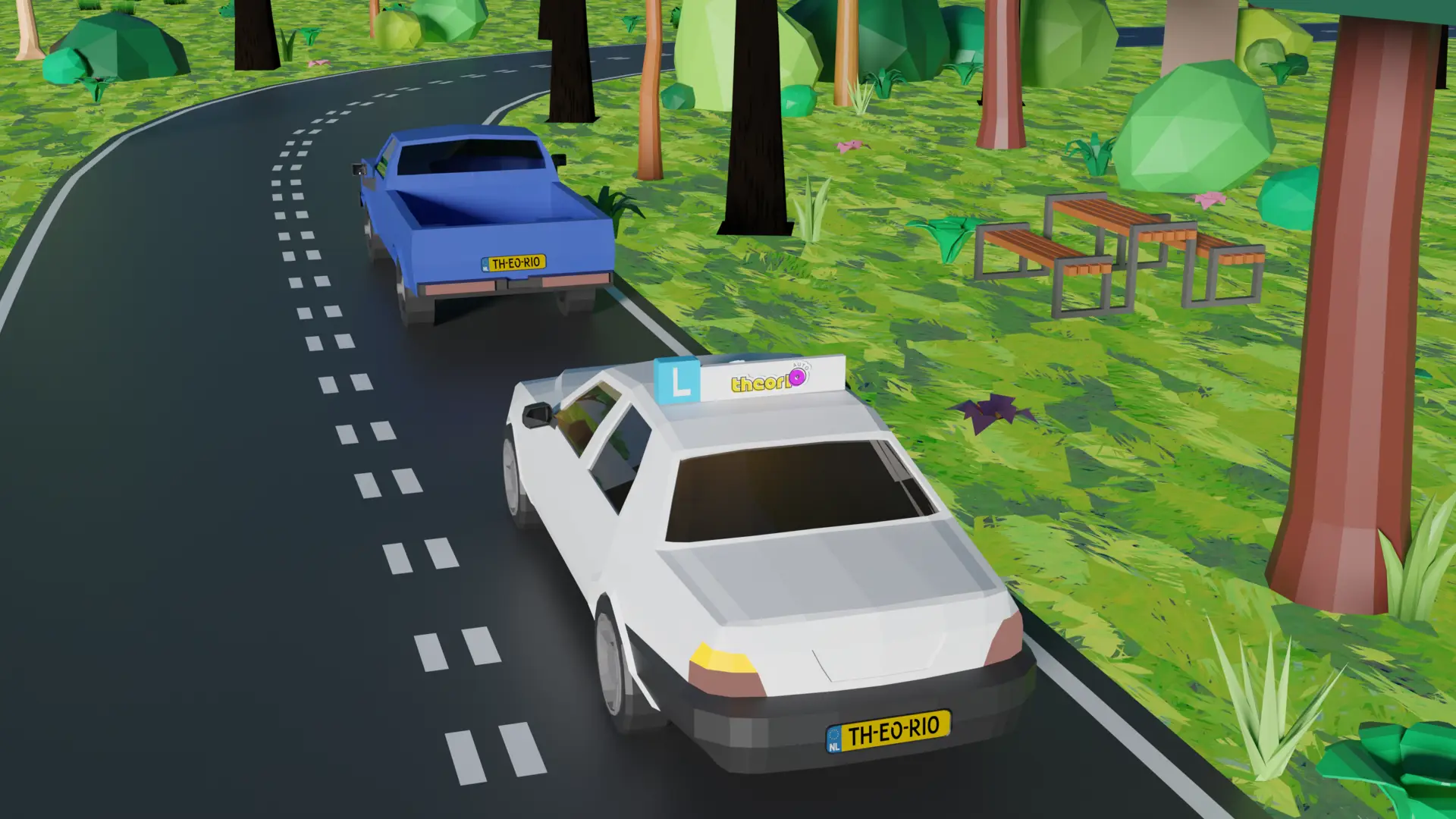
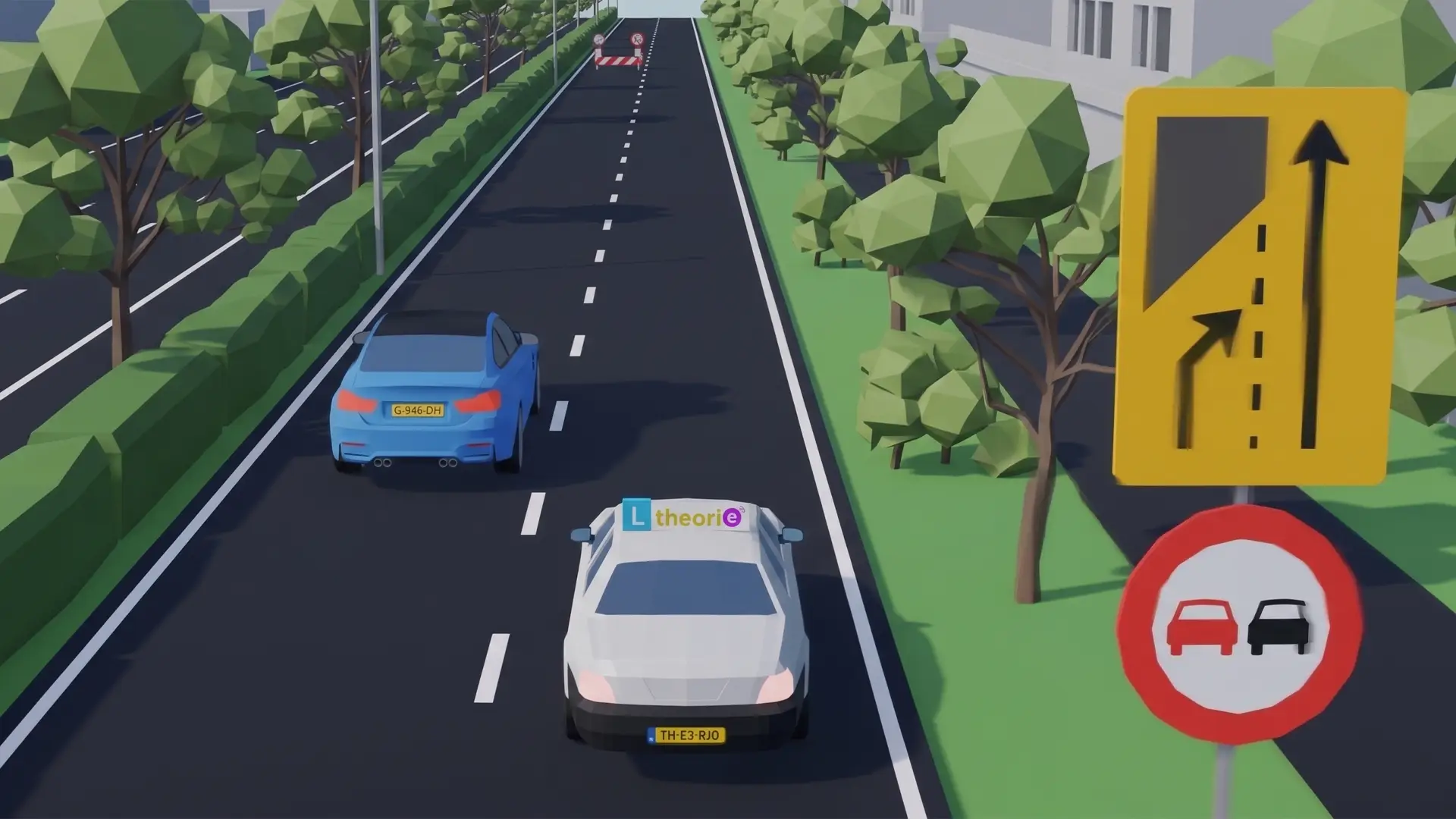
For example, if there is a yellow sign indicating that the left lane ends, then you know that traffic on that lane must move to the right. Only then adjust your speed and give that driver space, so he does not have to cut you off.
The left lane ends: give the blue car space instead of driving it tightly.
Example situations
Situation 1 — three lanes to Utrecht
You have to go to Utrecht. On the sign above the road you see two arrows pointing straight ahead to Utrecht, and one arrow pointing straight ahead and to the right.
Correct choice: move into the most right of those three lanes.
Why: all three lanes go to Utrecht, so you are required to take the rightmost lane in your direction.
Situation 2 — one lane to Breda
Your destination is Breda and you are driving with a trailer. On the sign you can see that only one lane leads to Breda; further ahead, the block markings show that this is the leftmost lane in your direction.
Correct choice: move in time to the left lane.
Why: that lane is the only one that goes in your direction, and then it is also immediately the rightmost lane in your direction. Having a trailer makes no difference here.
Situation 3 — a split with block markings to Rotterdam
On the way to Rotterdam you come across a split: block markings divide the motorway into two parts. Both routes lead to Rotterdam. On the left sign it says that the left route is forbidden for lorries.
Correct choice: with a passenger car you may take both routes, and on the route you choose you keep to the right.
Why: if both routes go to your destination, you may choose. Lorries must keep to the right here.
You've covered Lane positioning & Lane use. Does it stick?
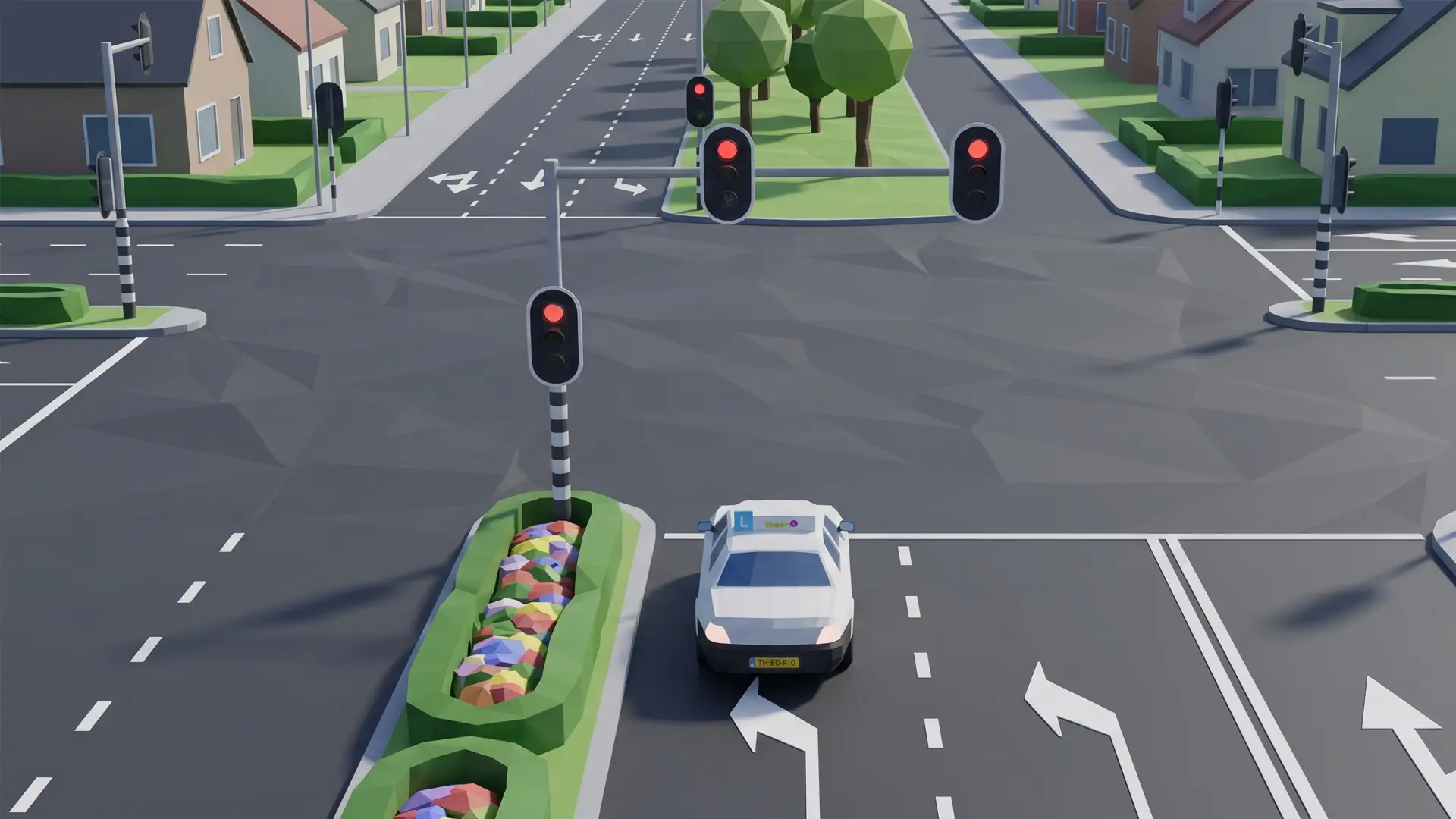
In the CBR theory exam, you must first recognize what controls priority at an intersection: traffic lights, signs/road markings, or nothing at all.
Only then can you decide who may go first.
Three types of intersections
An intersection is a place where multiple roads come together and cross each other. It can be a clear intersection in a quiet residential area, or a complex intersection in the middle of a large city. For the exam, what is especially important is how priority is arranged, and that can be done in three ways.
With traffic lights. Green means you may drive, red means you must stop, orange/yellow means you must stop if you can still do so. This makes it clear for everyone who may go through when.
With signs and symbols on the road. We call this a priority junction. You follow the signs and the yield lines / shark's teeth.
With nothing. Are there no lights, no signs and no symbols? Then it is a priority junction (gelijkwaardig kruispunt) and the standard priority rules apply.
What is a priority junction (gelijkwaardig kruispunt)?
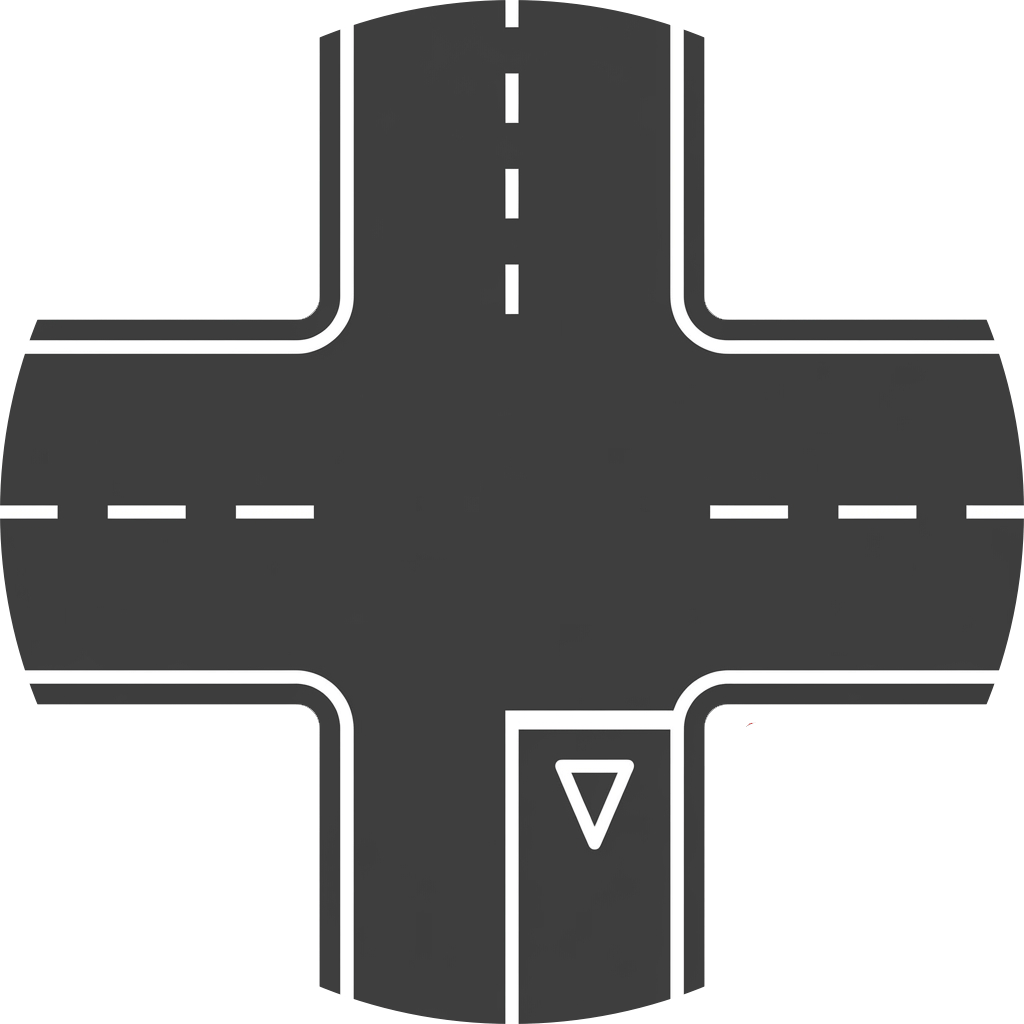
A priority junction has no priority signs, yield lines / shark's teeth or working traffic lights.
At this type of intersection, the same basic rule applies to all roads and all road users.
The right-hand rule at a priority junction
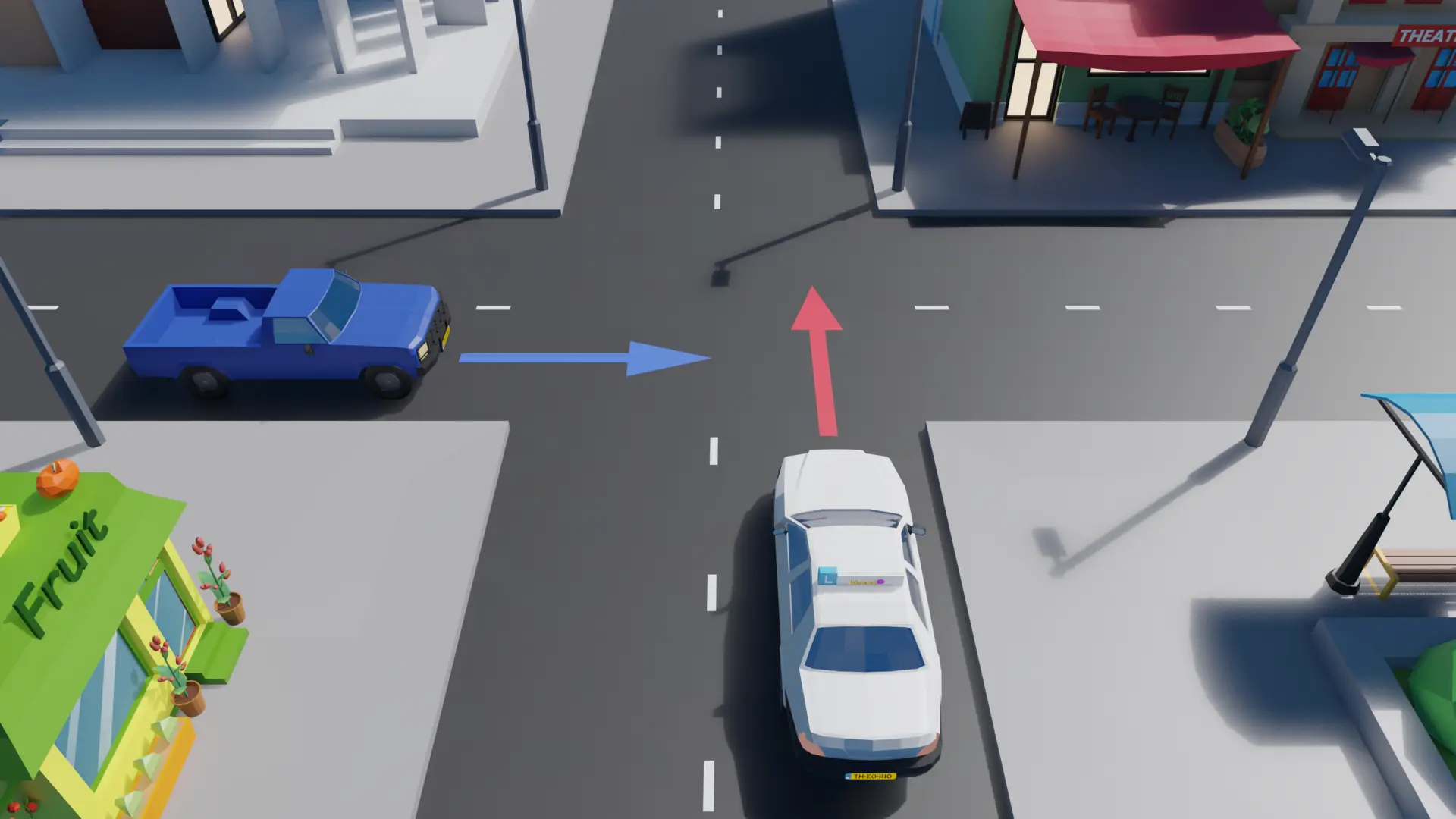
Give priority to all drivers coming from the right.
This applies to cars, motorcycles, cyclists, moped riders and riders coming from the right.
Pedestrians are not drivers and have no priority at a priority junction.
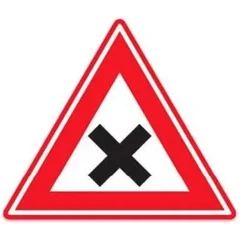
Sign J8 (Dangerous intersection): Warns of an approaching priority junction where the right has priority.
There are three rules, not one
“The right has priority” is the best-known rule, but at a priority junction there are three. You go through them in this order.
Give priority to drivers coming from the right.
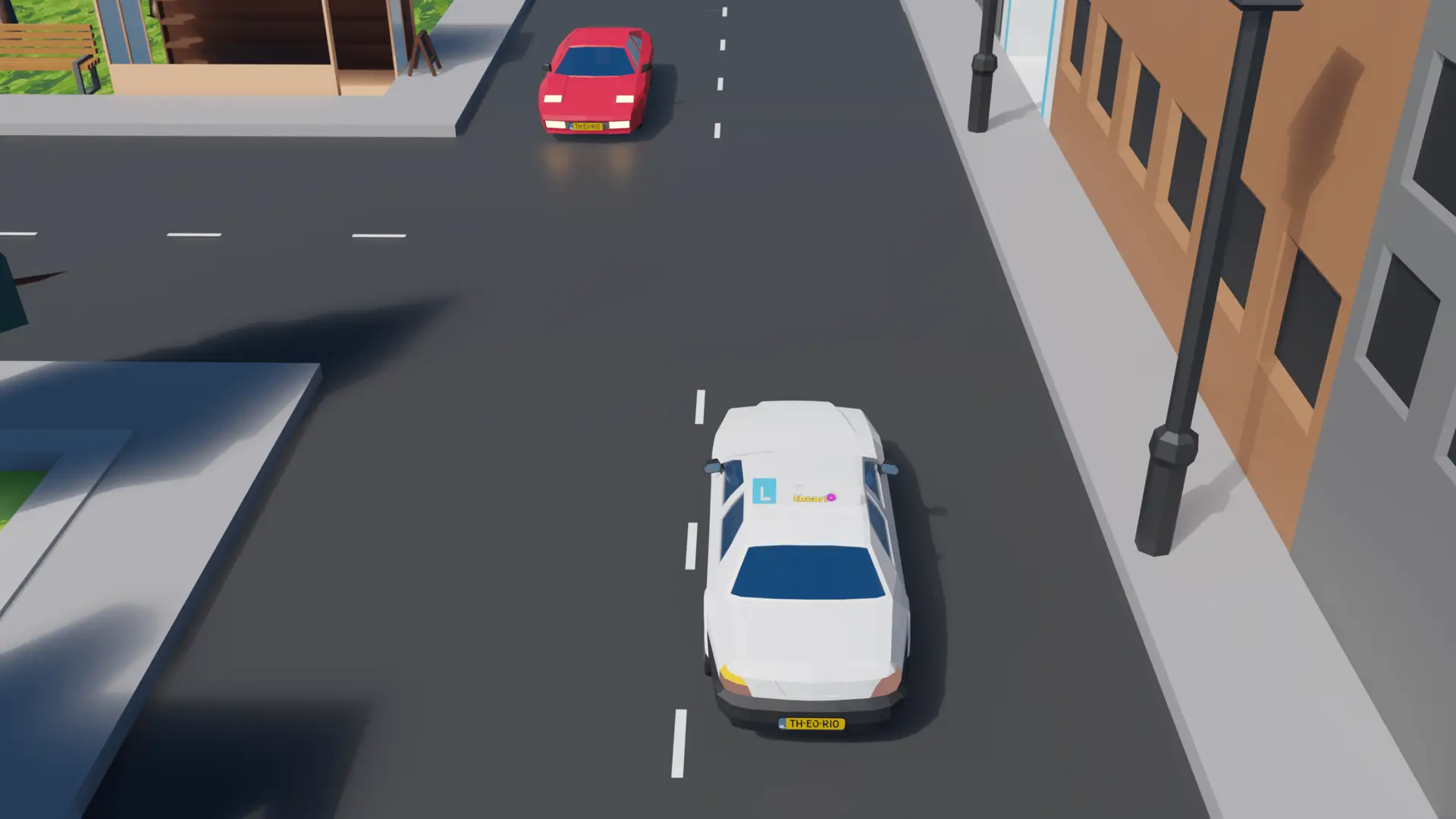
Straight-ahead traffic on the same road has priority over turning traffic coming from the same road. If you are coming from the same road and you want to turn while the other goes straight ahead, then the other has priority.
The short turn has priority over the long turn. If two oncoming vehicles both turn off, then the one with the short turn (turning right) has priority over the one with the long turn (turning left).
Rule 3 shown: who makes the short turn goes first over who makes the long turn.
Exception for trams
A tram always has priority at a priority junction.
The tram goes first, regardless of whether it is coming from the left or from the right.
The difference between a driveway and a priority junction
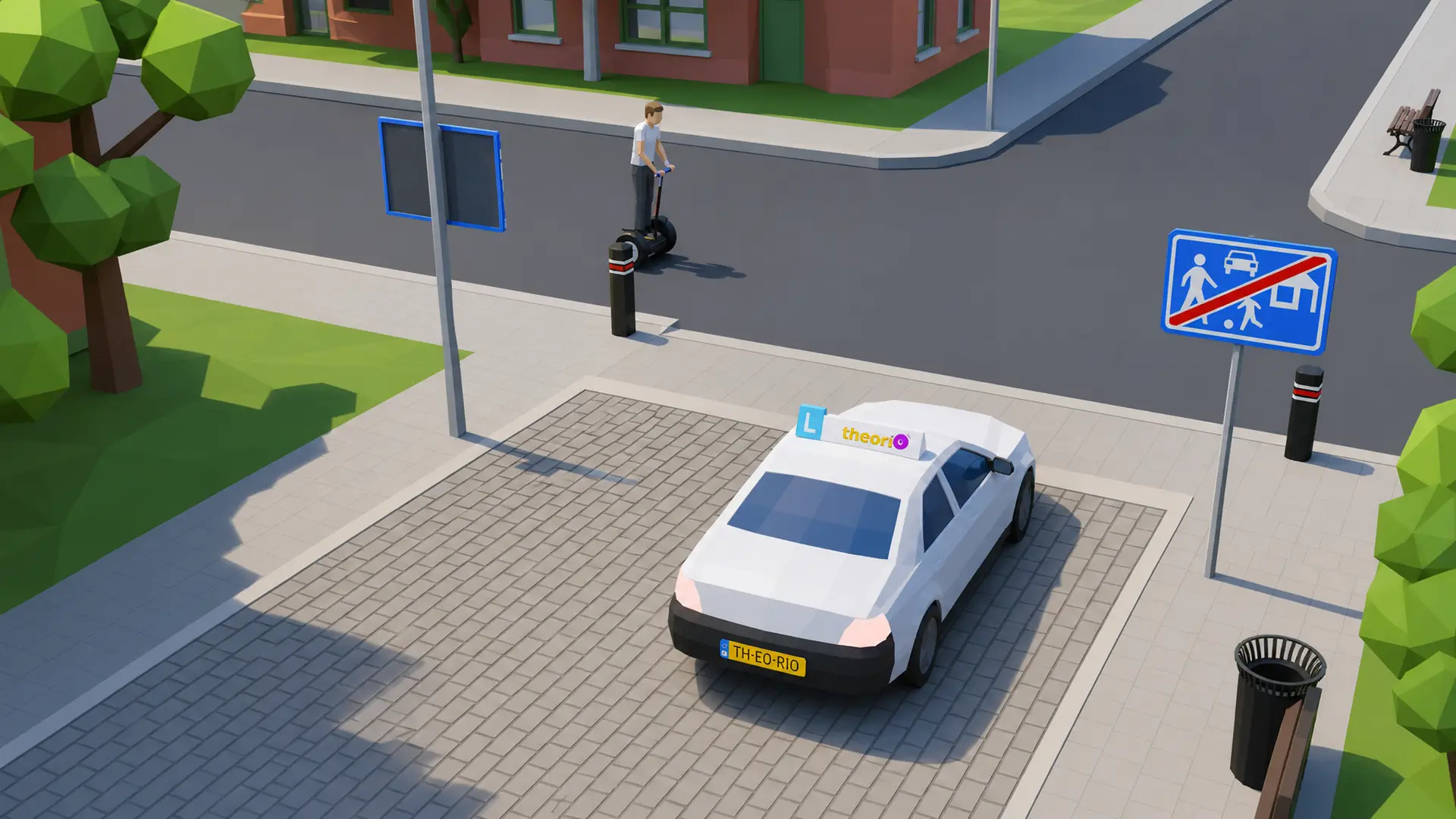
You can recognise a driveway by a lowered kerb edge or continuous paving.
When you leave a driveway, you perform a special manoeuvre.
You must then give way to all traffic, including pedestrians on the pavement.
Feature
Priority junction
Driveway construction (uitritconstructie)
Paving
Road surface continues without interruption
Continuous pavement or lowered kerb edge
Right-hand priority
Yes, drivers coming from the right have priority
No, the right-hand rule does not apply here
Pedestrians
No right-hand priority
Always have priority from the driveway
Trams
Always have priority
Always have priority
You've covered Priority junctions & Driveway constructions. Does it stick?
At an equal intersection, there are no traffic lights, priority signs, or road markings regulating priority. Then you solve the situation with the standard rules: traffic from the right goes first, and on the same road straight traffic goes before turning traffic.
If you face each other on the same road and both turn, then: the short turn goes before the long turn.
Traffic signs at priority junctions
Sign B1 indicates that you are driving on a priority road and have priority over side roads.
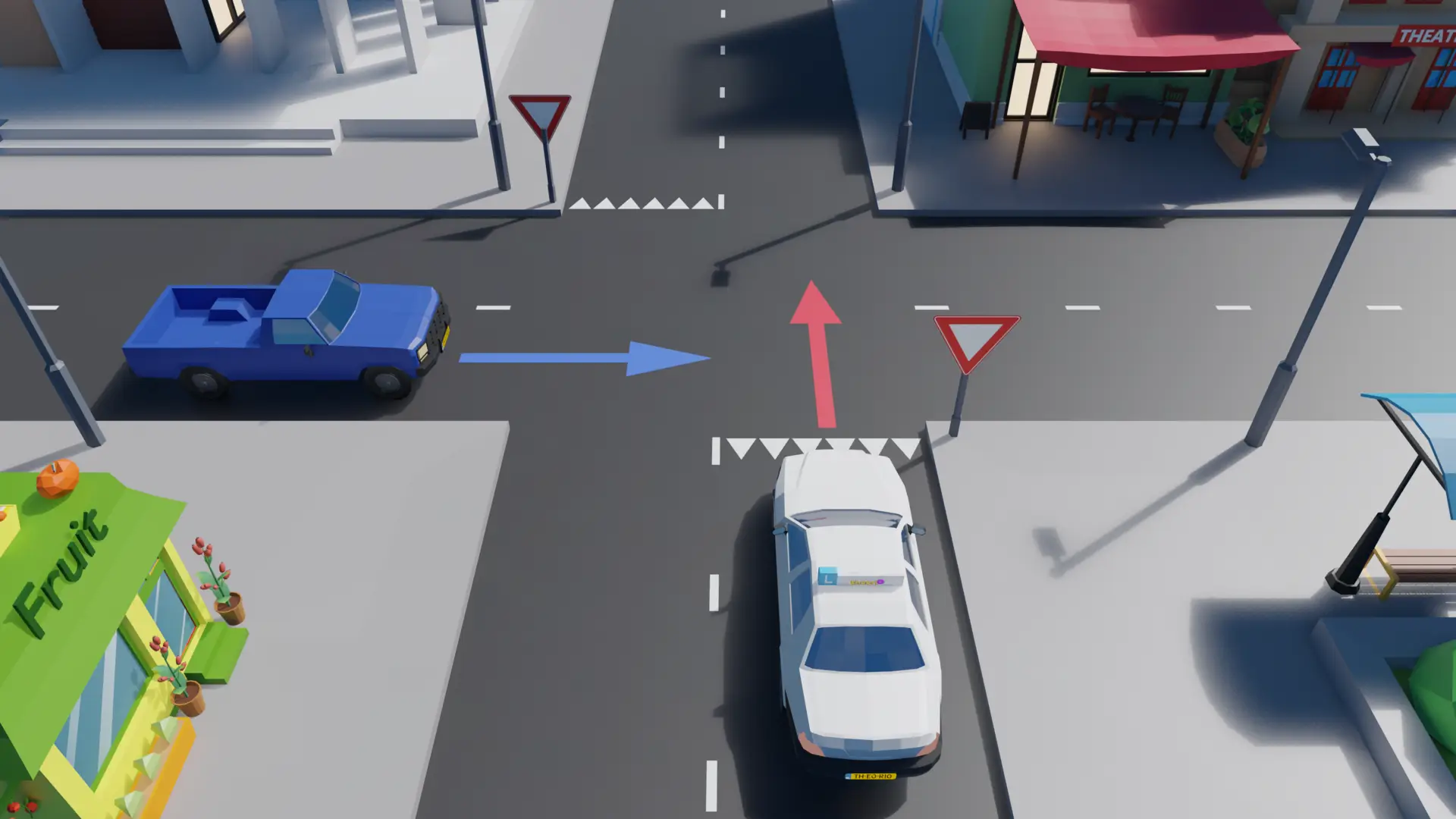
Yield lines / shark's teeth on the road surface have the same legal meaning as sign B6.
At yield lines / shark's teeth, you give priority to drivers on the intersecting road.
Mandatory stop at sign B7 and stop line
Sign B7 requires you to always stop physically at the white stop line.
You must also stop if, at that moment, no other traffic is approaching.
Priority road that bends away
A priority road that bends away is indicated with a thick curved line on a supplementary sign.
If you stay on the priority road, you keep priority over the other traffic.
If you leave the priority road, you must give way to through traffic on the priority road.
Priority rules at roundabouts
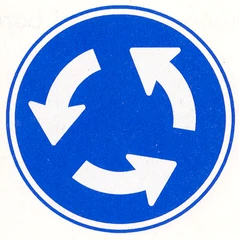
Are sign D1 and yield lines / shark's teeth placed at the entrance to a roundabout?
Then traffic on the roundabout has priority over the entering traffic.
Sign D1 (Roundabout): Compulsory direction of travel on a roundabout.
Are there no signs or yield lines / shark's teeth at a roundabout?
Then it is an equal-priority roundabout where traffic from the right (the entrance) has priority.
Roundabout type
Signs / markings
Who has priority?
Priority roundabout
Sign D1 + yield lines / shark's teeth at the entrance
Traffic on the roundabout goes first
Equal-priority roundabout
No signs or markings present
Traffic from the right (entrance) goes first
Leaving the roundabout
Indicate to the right
Through cyclists/pedestrians go first
Getting into the correct lane in time at a roundabout with multiple lanes
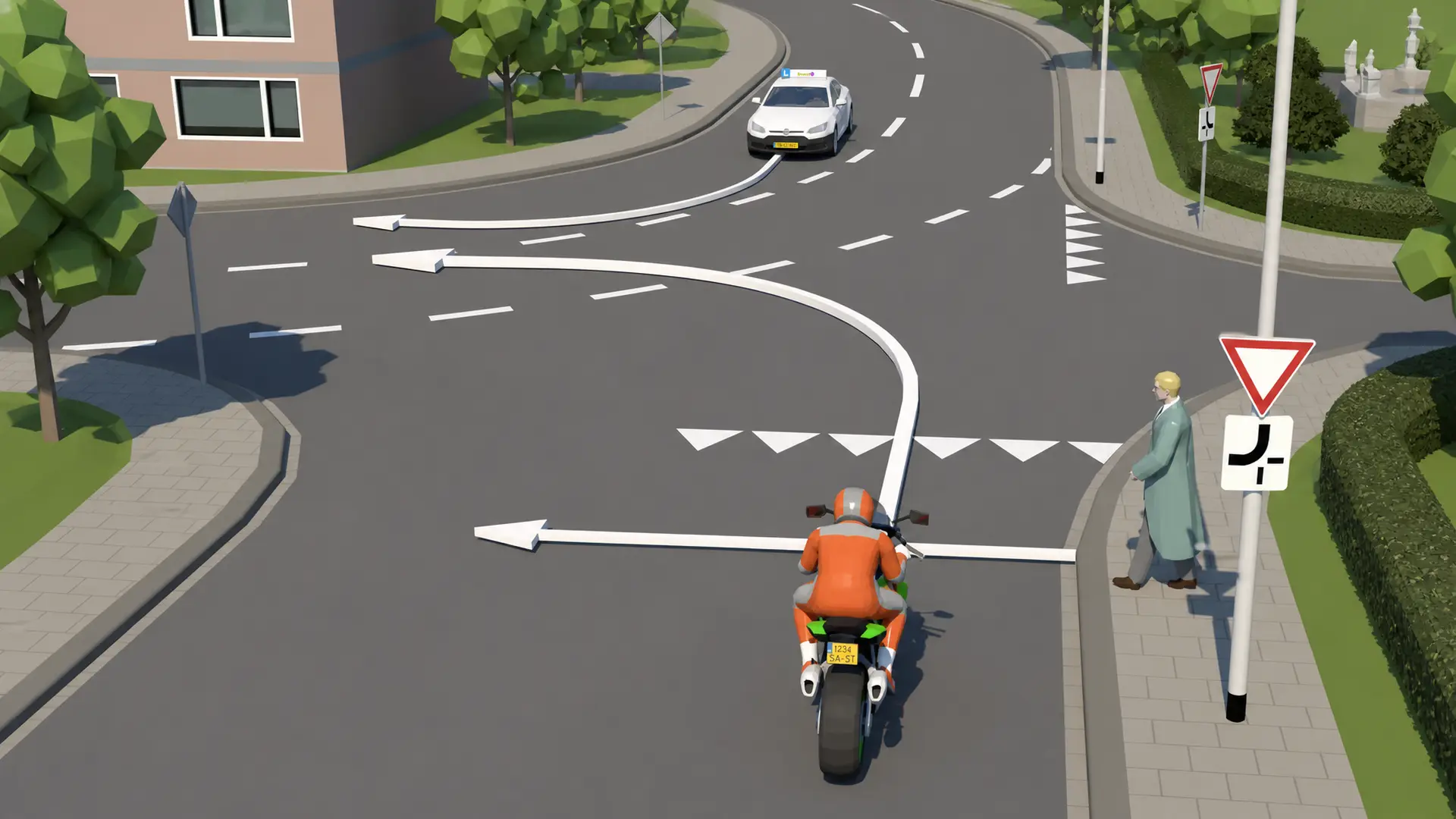
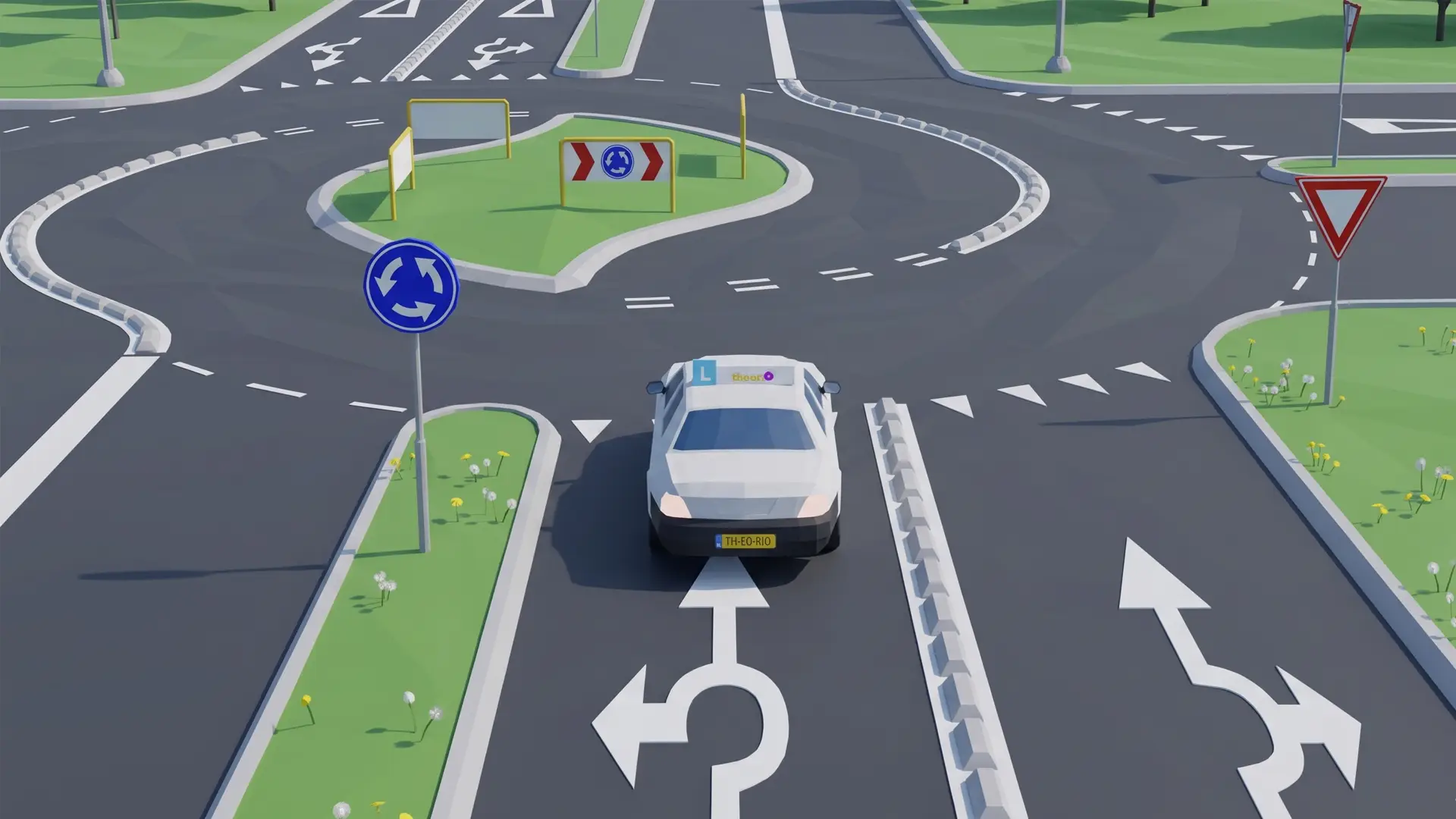
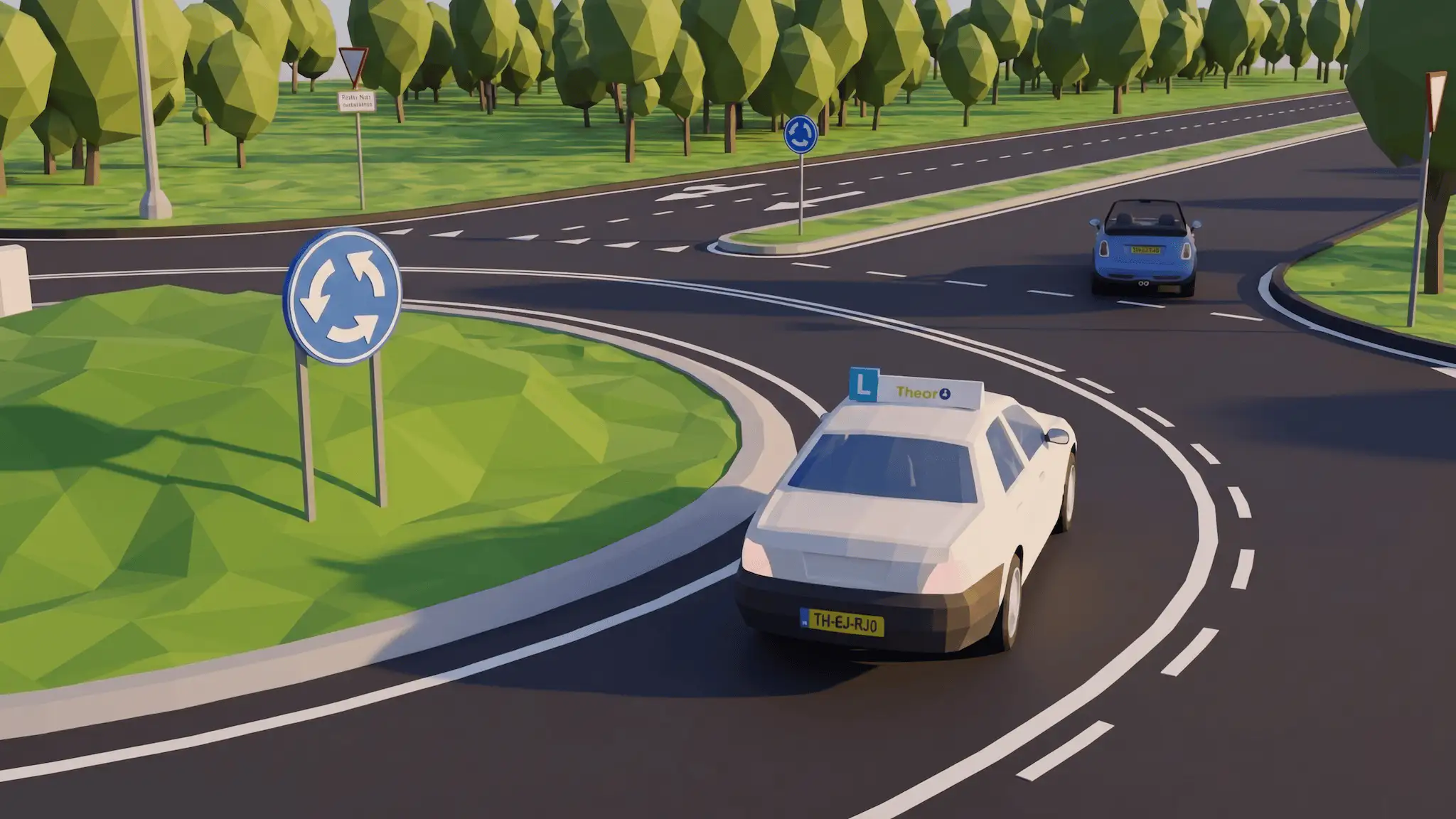
A roundabout is an exception to the rule that you always position yourself as far to the right as possible. If the roundabout has multiple lanes, it is usually indicated with arrows on the road surface which lane leads to which exit. Follow those arrows.
If you want to take the last exit, it makes no sense to position yourself in the far-right lane — there you can only go straight on or turn right. If two lanes lead to your exit, you may use both.
The arrows on the road surface determine here where you should position yourself, not the rule “as far to the right as possible”.
If you can already see, before the roundabout, a sign for a roundabout with multiple arrows on the road surface, you can assume that the roundabout has multiple lanes. Then position yourself in time so that you can leave at the correct moment.
Multiple arrows on the roundabout sign on the road surface: expect multiple lanes.
In time on the right lane
If you are in a lane that only goes left, but you still want to go straight ahead, you may not simply move over. If there is a continuous line between the lanes, you are stuck: you should have changed lanes earlier, when the line was still broken.
If you are still next to a broken line, you may change lanes. So pay close attention to where the line changes from broken to continuous.
Too late: once you are past the continuous line, you may no longer go back to the straight-ahead lane.
Bus lanes at an intersection
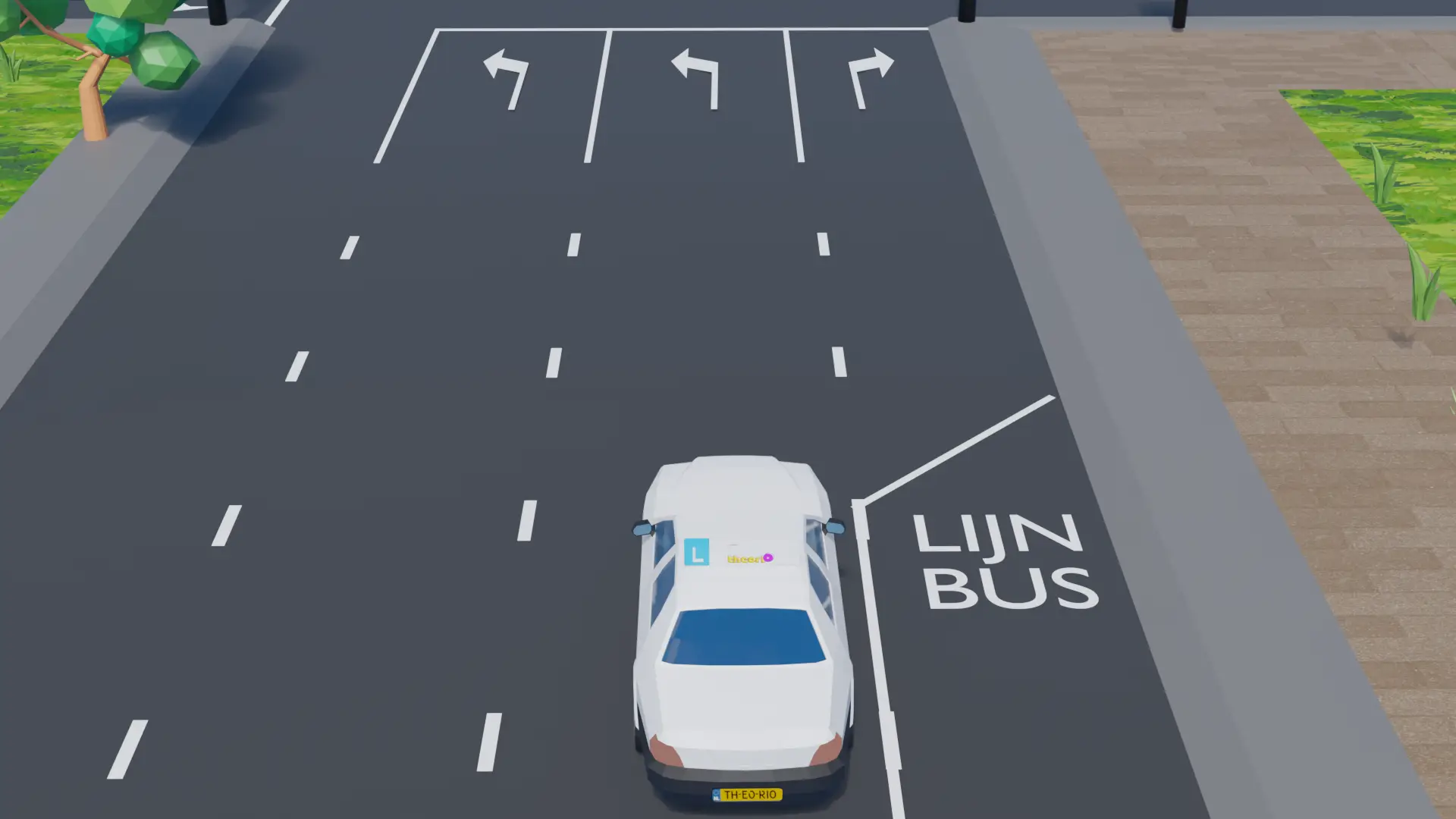
A bus lane is often separated from the rest of the road by a continuous line. At an intersection or traffic lights, that line usually changes into a broken line, so other traffic is allowed to use the bus lane there to turn right.
Where the line becomes broken, you may enter the bus lane to turn right.
A continuous line on the roundabout itself
The normal line rule also applies on a roundabout. If there is a continuous line to your right, you may not turn off there to leave the roundabout. Then you drive around one more time until the line is broken.
A continuous line to your right: here you cannot leave the roundabout.
Anticipate at intersections and exits
Other drivers do not always behave in a predictable way, but sometimes you can see their behaviour coming. Do you see a traffic jam further ahead and is there an exit right before it? Then there is a good chance that cars are taking that exit to avoid the traffic jam.
Most drivers change lanes in time. But someone who is distracted does it at the last moment. Take that into account, especially right before an intersection or an exit.
You've covered Priority junctions & Roundabouts. Does it stick?
At tricky junctions, answer in a fixed order: first signs and road markings, then traffic from the right, and only then same-road rules.
Especially with short turn, long turn and bending priority roads, the CBR often checks whether you are misled by a sign that is the same for both drivers.
More than just signs
Besides the signs along the road, there are other things that tell you what you have to do: the lights, the small posts along the road, and the lines and markings on the road surface. They show you where you may drive, when you may pass, whether you may change lanes, and whether there is danger.
So don’t just pay attention to the signs. Everything that tells you something in traffic is there to keep you and others safe.
Traffic lights with an arrow and round traffic lights
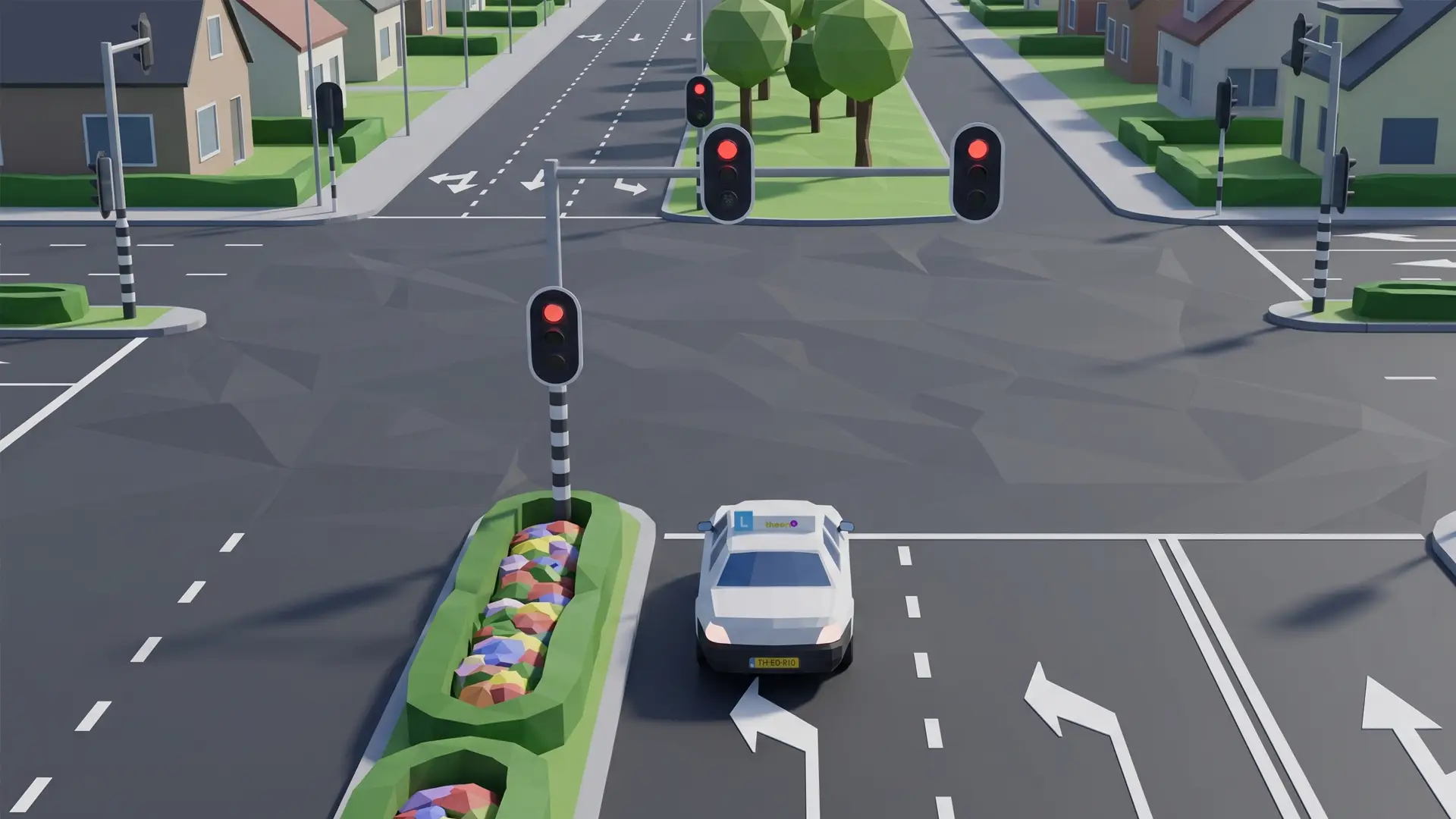
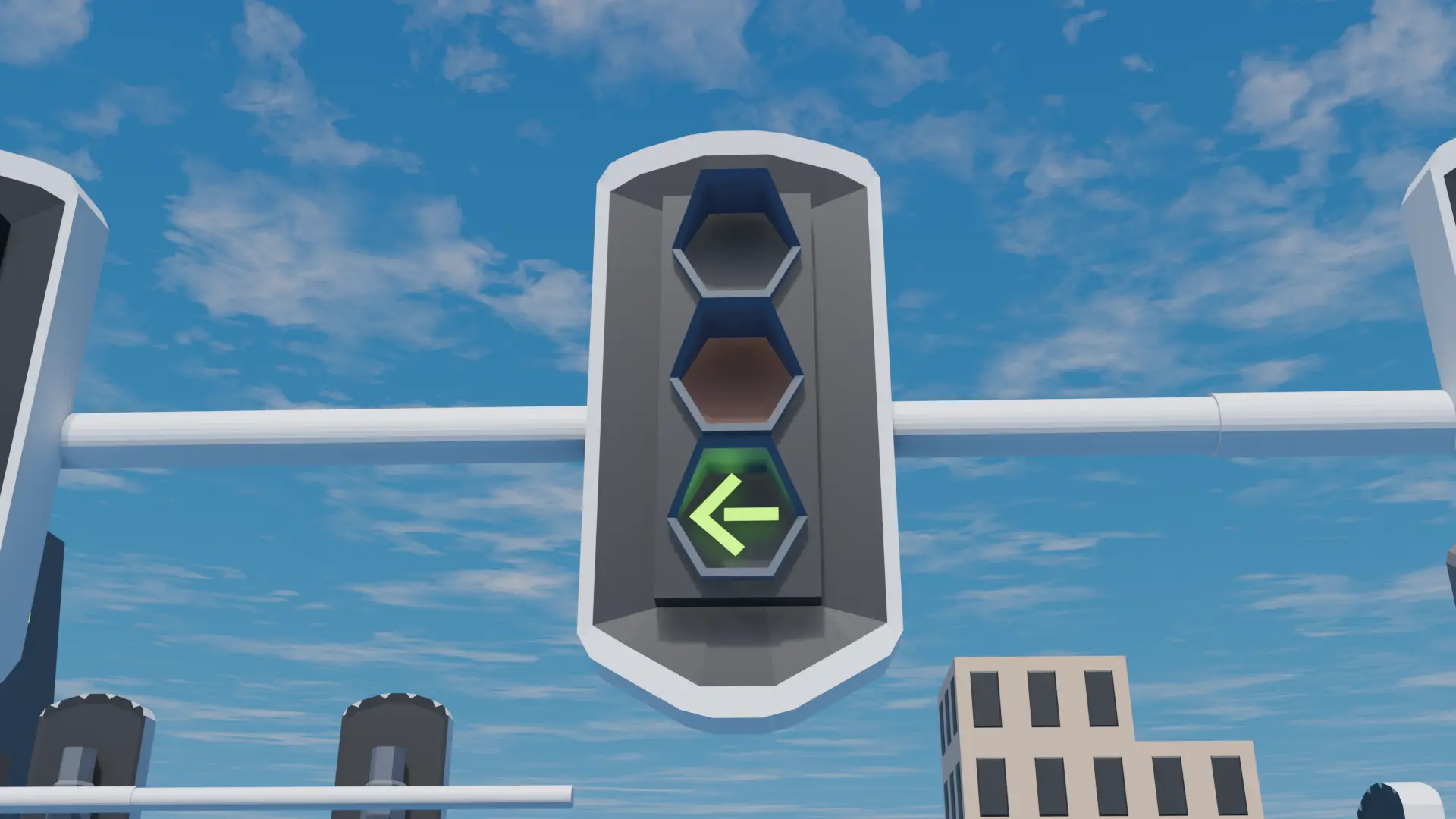
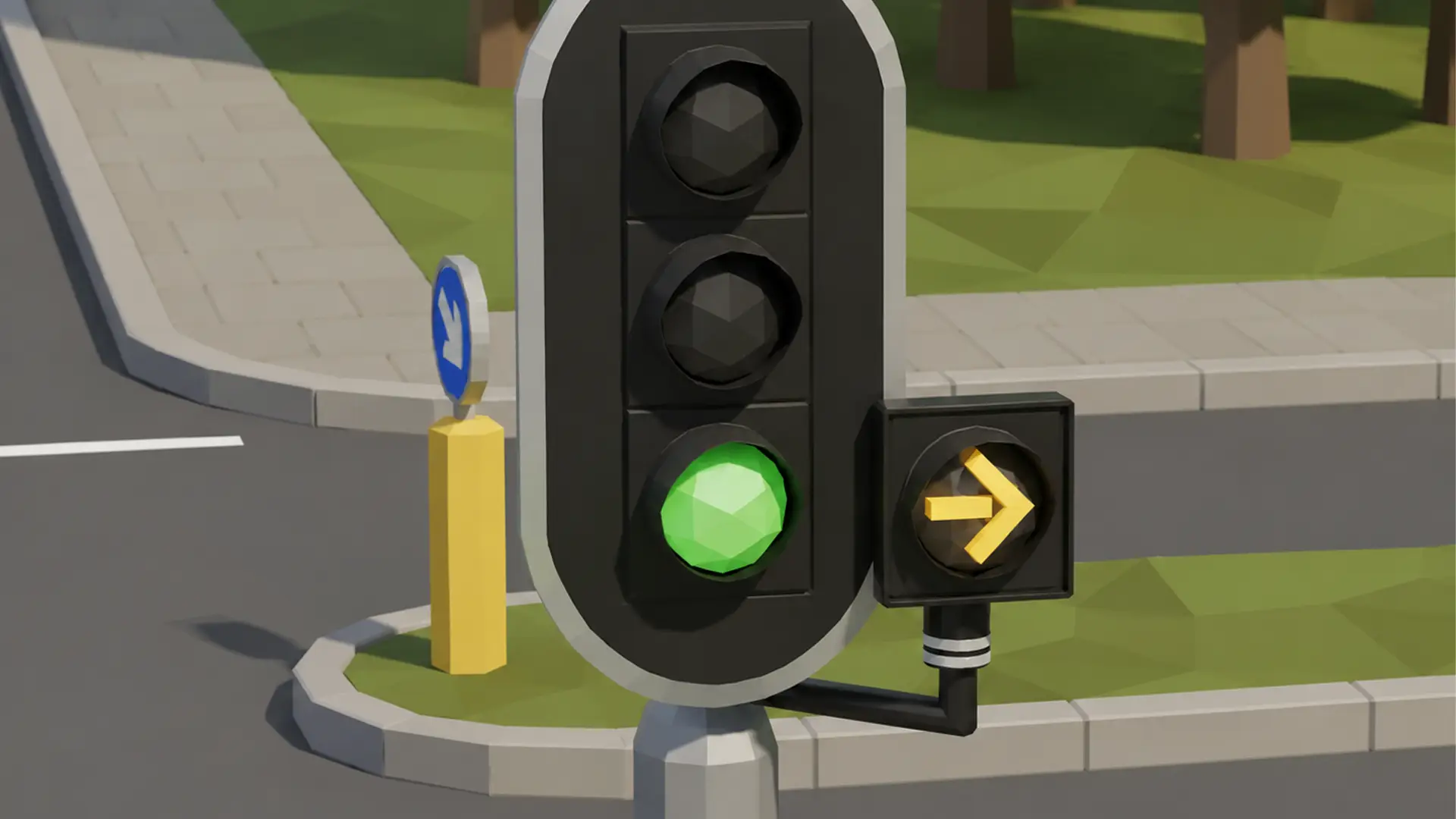
A green traffic light with an arrow means that your direction of travel is clear of oncoming traffic.
A round green traffic light means that you may drive, but oncoming traffic can also have green.
With a round light, you must give way to oncoming traffic and crossing pedestrians.
With a yellow light, you must stop if it is still possible to do so safely.
Memory aid for the round light: the round lamp looks like the letter “O” — Overall traffic can come from anywhere. With an arrow, you may only go in the direction the arrow points, but then you do know for sure that there are no oncoming vehicles. With a round light, you always have to keep looking yourself.
Whether you can still stop at yellow depends on your speed. If you approach the intersection at 15 km/h, you will stop in plenty of time. If you approach at 40 km/h, you would have to brake hard and the traffic behind you will not expect that — then continuing is often safer.
Hazard warning lights and yellow arrows
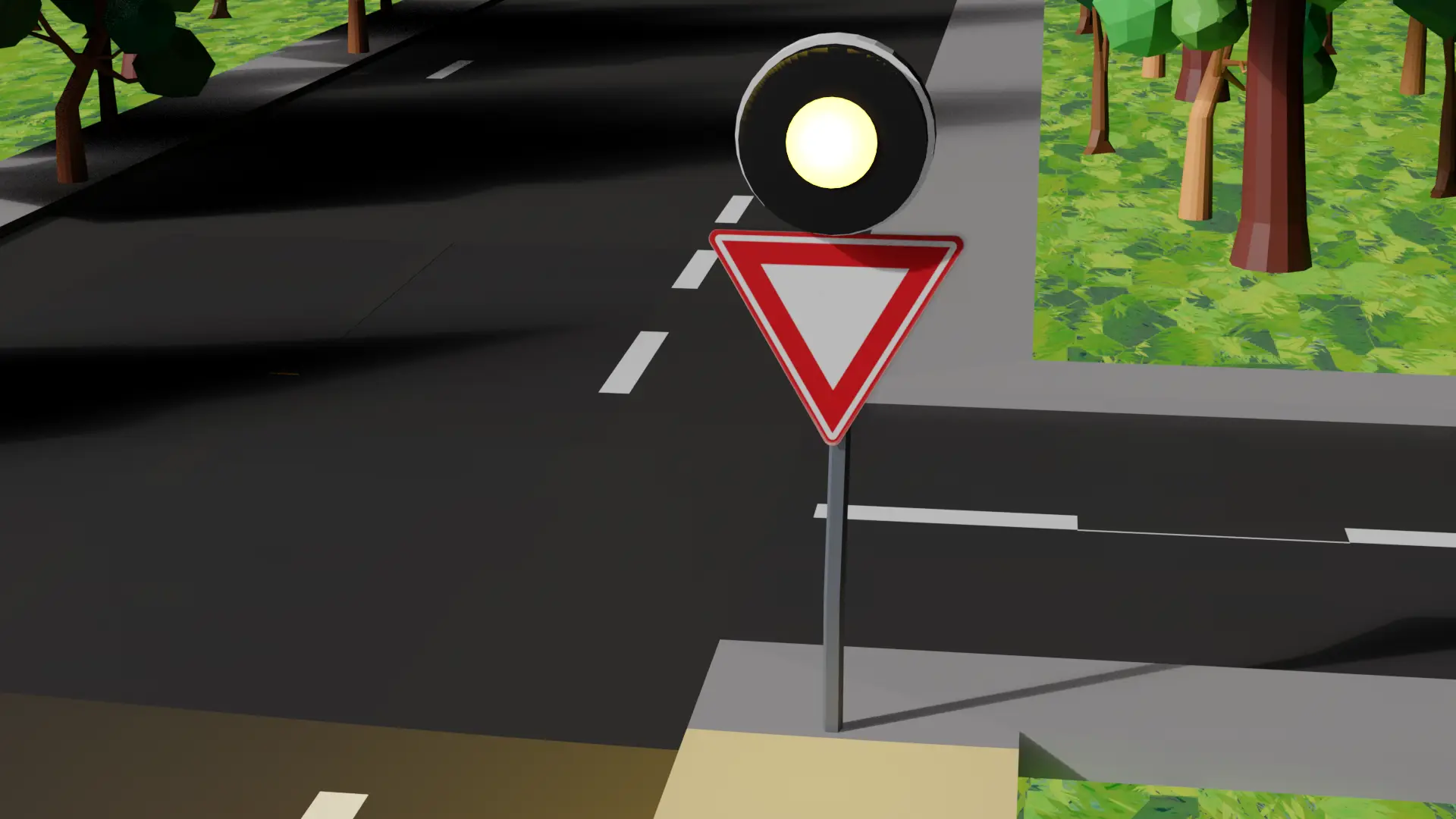
At a yellow traffic light you stop if it is safe to do so. That does not apply to a warning light. If only one lamp is on and it is flashing, then it is only a warning. You do not have to stop, but you must pay extra attention.
One flashing lamp: a warning, not an obligation to stop.
The same applies to a small yellow arrow next to a three-colour traffic light. That arrow does not require you to stop, but warns you that you must be extra alert when you take the turn.
Also think about the round green light. That means that, besides going straight on, you may also simply turn right. But if you turn right, you often cross a cycle path — and at that moment those cyclists usually also have green. So they may have priority.
The yellow arrow warns you about the cycle path you cross when turning.
Railway level crossings, lights and signals
A tram track light with two flashing red lights requires you to stop for a tram.
Such a light with two lamps is not there for decoration: if they are flashing, a tram is coming and you may not drive through. Only when the light is off may you continue.
Sign J12 (Single track): 1 railway crossing means a single track.
Sign J13 (Multiple tracks): 2 railway crossings mean two or more tracks.
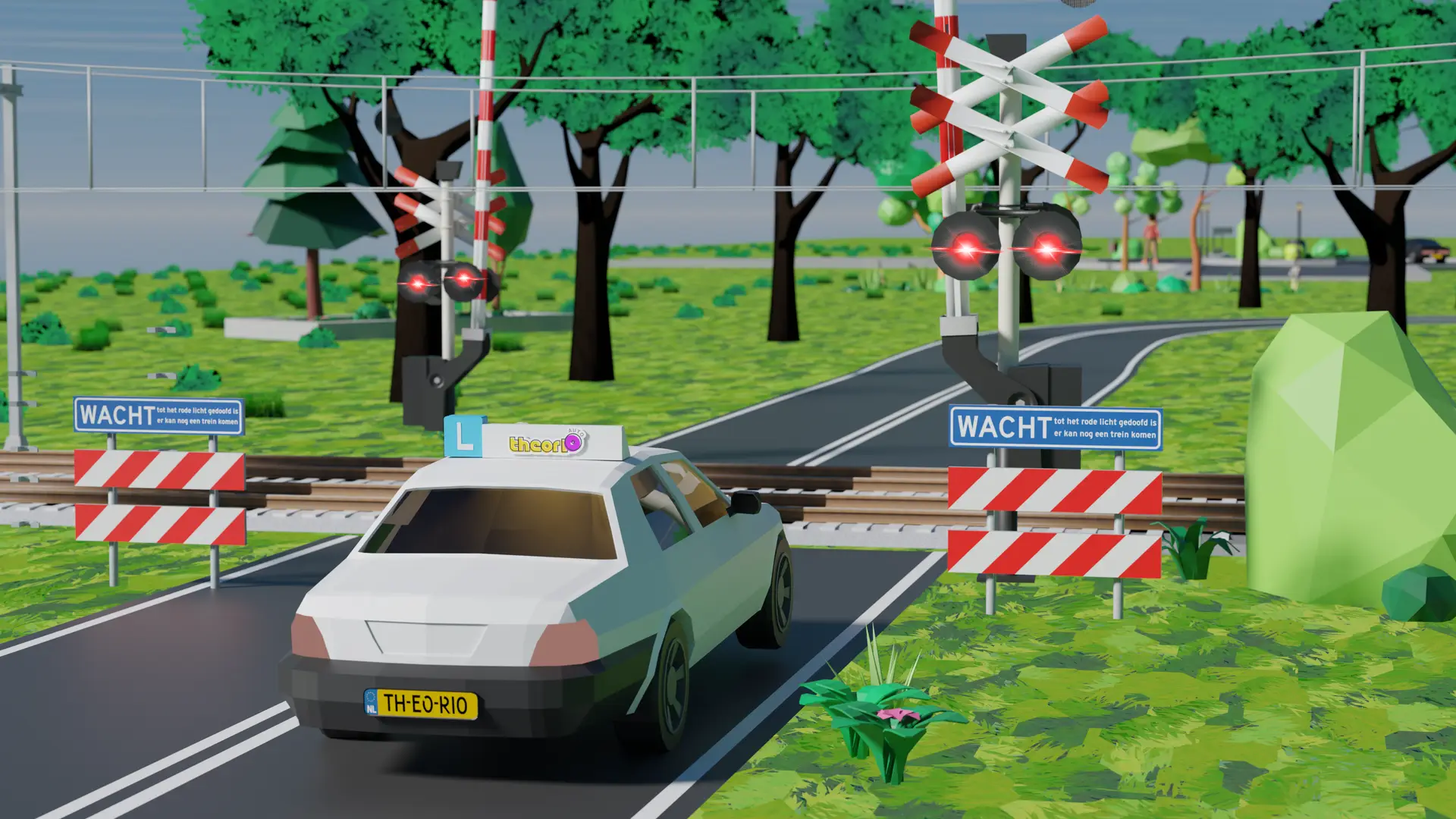
At a railway level crossing with flashing red lights, a train is coming and you must stop. This also applies if there are no barriers: you can never win a fight with a train.
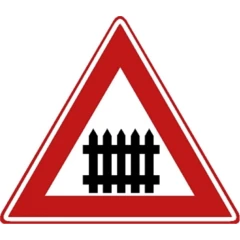
Sign J10 (Crossing with barriers): you are approaching a crossing that is closed with barriers.
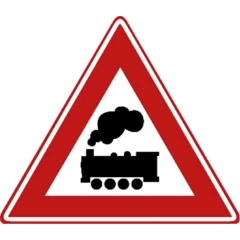
Sign J11 (Crossing without barriers): no barriers, but if the red lights are flashing, you stop just the same.
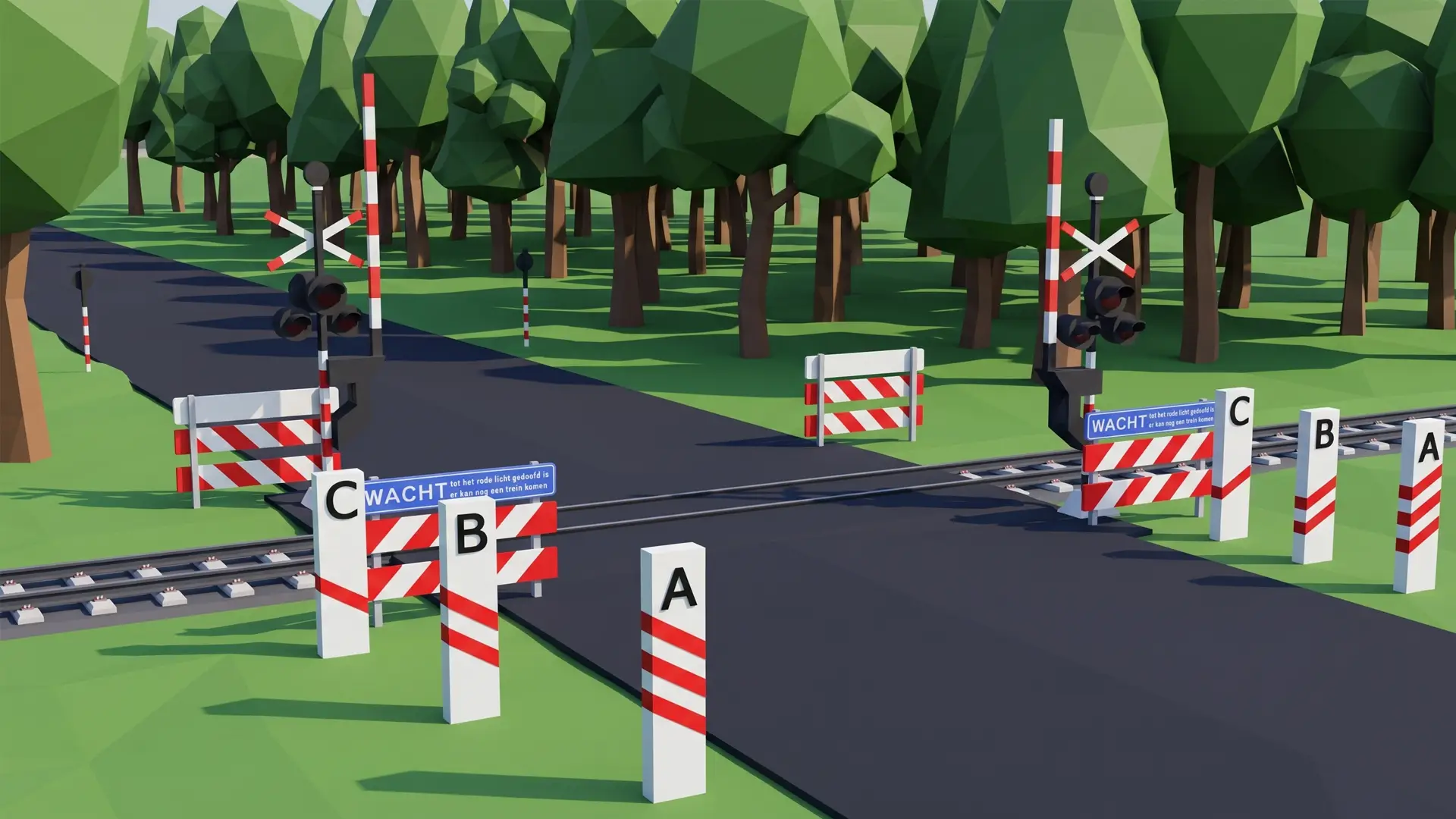
Each slanted stripe on a railway signal post indicates a distance of 80 metres to the crossing.
Three stripes is 240 metres, two stripes is 160 metres, and 1 stripe is 80 metres.
Work it out simply: number of stripes × 80 metres = the distance to the crossing. Also pay attention to the direction of the slanted stripes: the bottom always points towards the road, so you can see on which side of the signal post you must drive.
Posts with reflectors
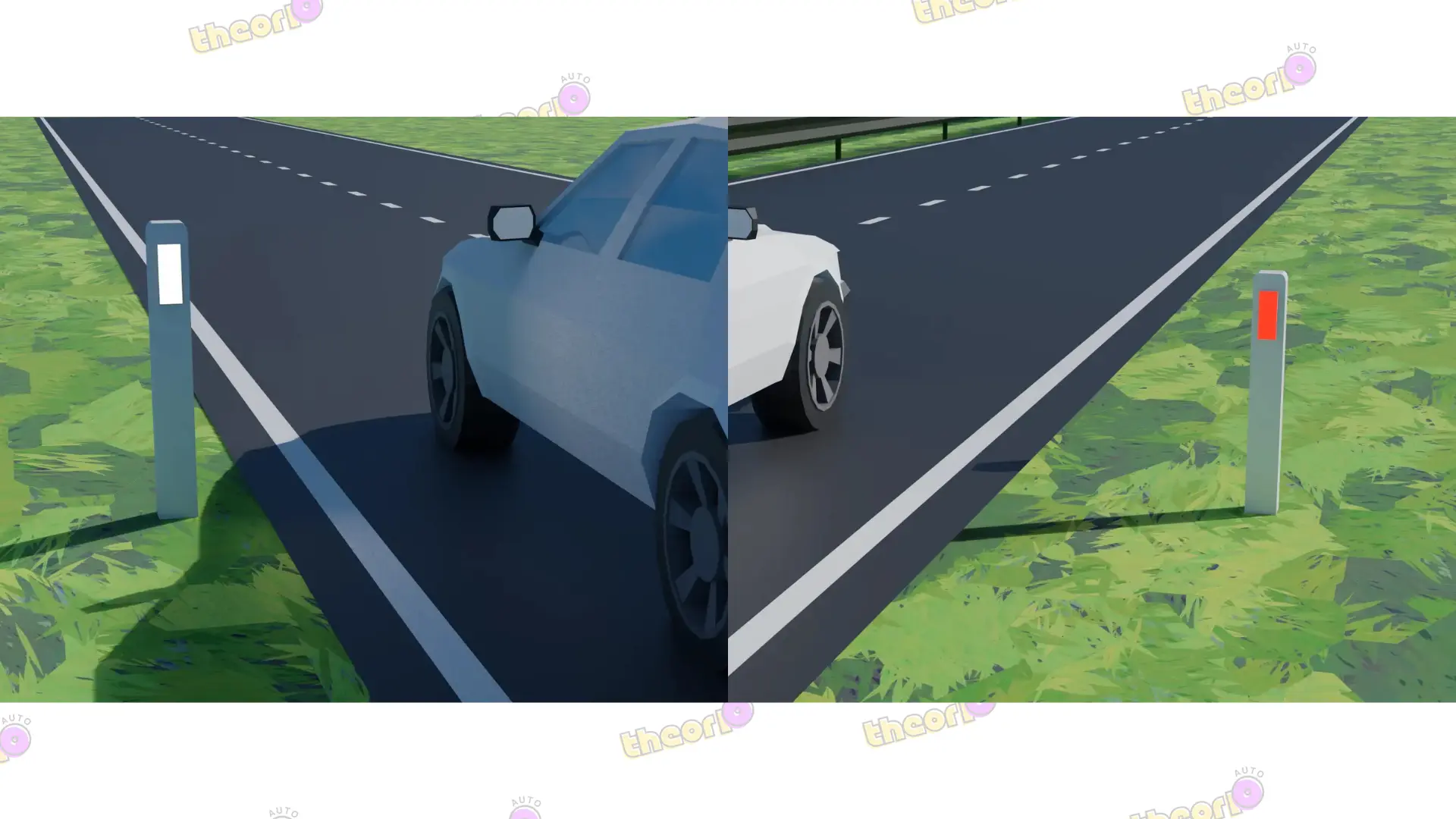
Along roads without street lighting there are posts with reflectors. They help you not to end up in the verge or on the wrong carriageway in the dark.
The white reflectors are on the left-hand side of the road, the red ones on the right-hand side. Compare it with the lights of other cars: on the left you see the white headlights of oncoming vehicles, on the right the red rear lights of the car in front of you.
Memory aid: red starts with an R, just like right.
White left, red right — the same colours as the headlights and rear lights around you.
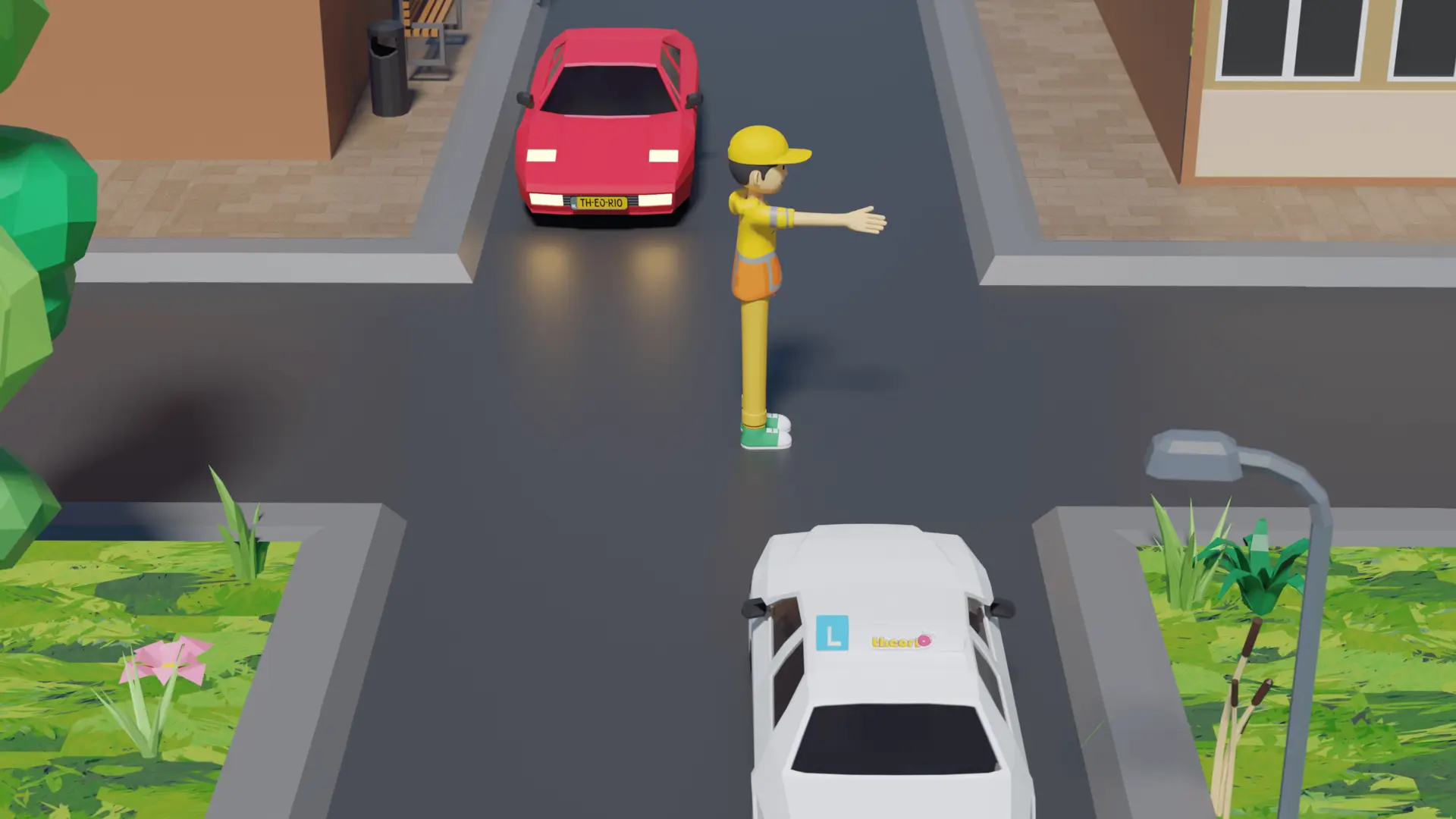
Instructions and gestures of the traffic controller
Instructions from authorised persons take priority over all traffic lights, signs and rules.
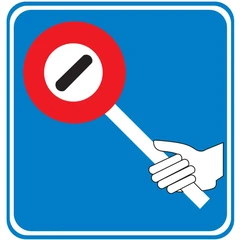
If you see the traffic controller’s chest or back, that counts as a closed barrier.
You can recognize a traffic controller by the bright yellow vest with an orange panel and a reflective triangle. You must always follow their instructions — even if it is not a police officer, and even if the signs along the road say something else.
An arm raised means that traffic from all directions must stop.
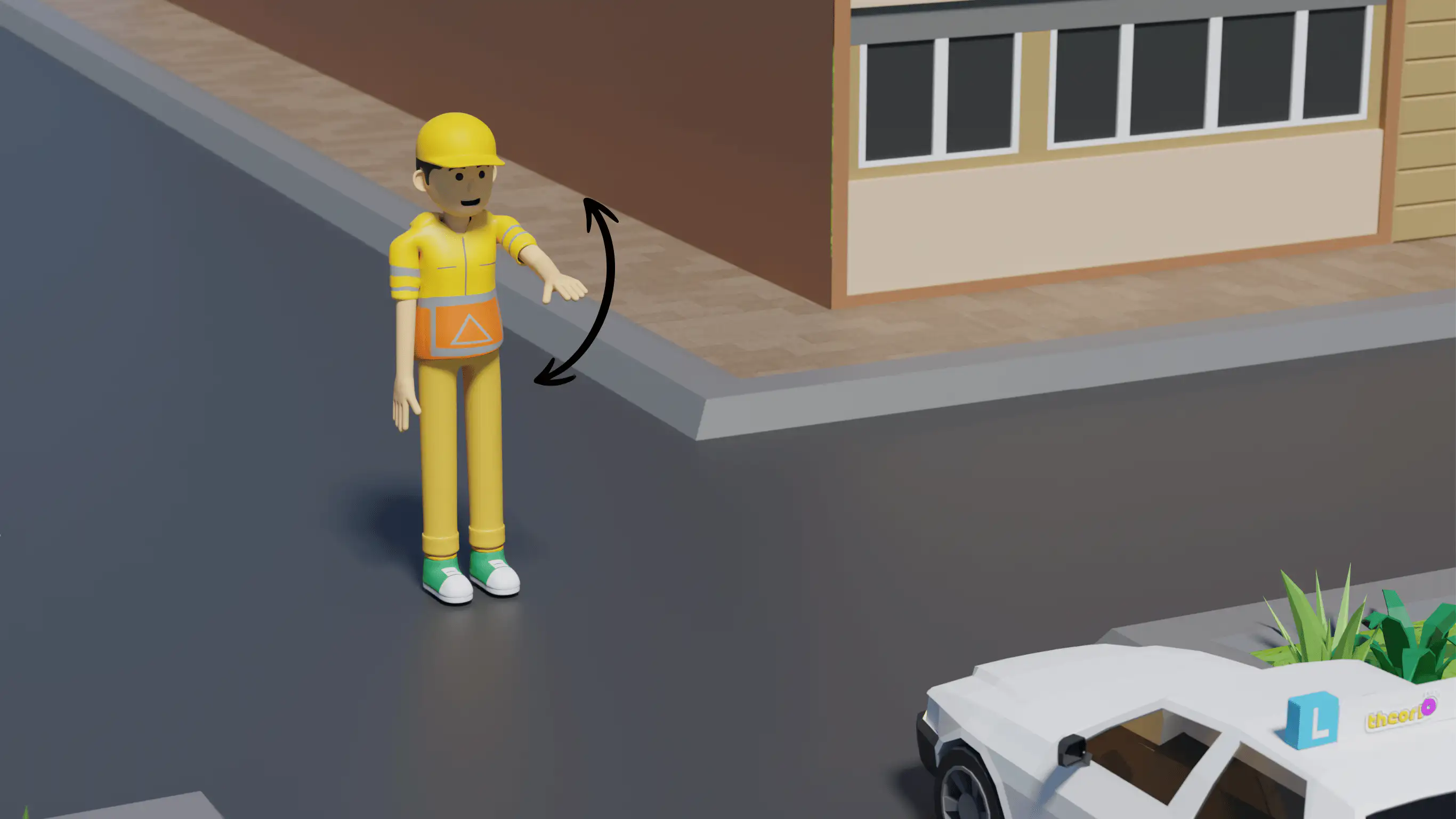
If the traffic controller moves their arm up and down, you must drive more slowly.
The barrier system
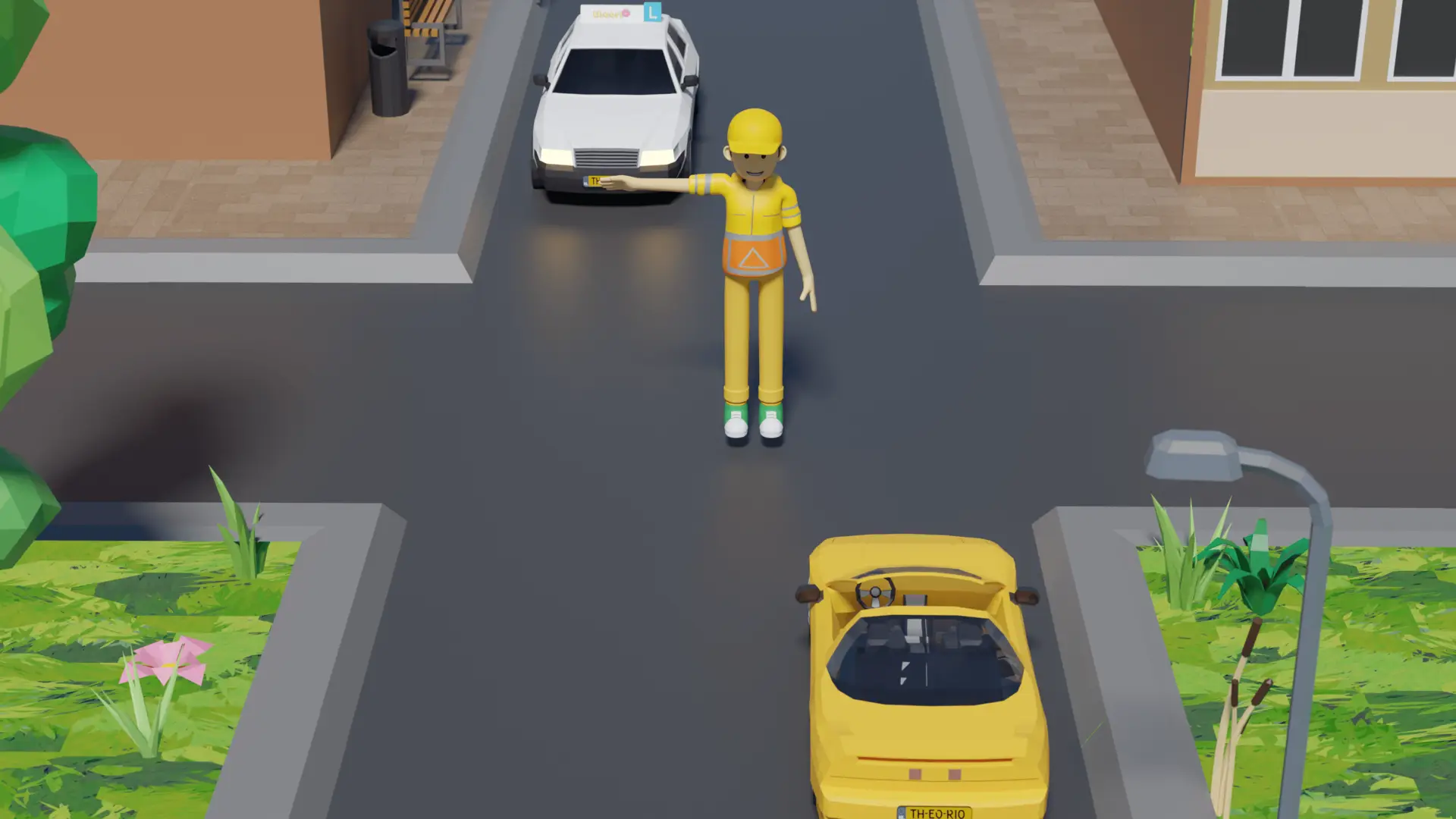
The traffic controller stands in the middle of the intersection. If you are driving in the right-hand lane, you pass them on their right side. When doing so, look at the arm on your side and treat that arm as a barrier: if the barrier goes down, you stop.
Do they extend the arm on your side? Stopping — otherwise you drive into the barrier.
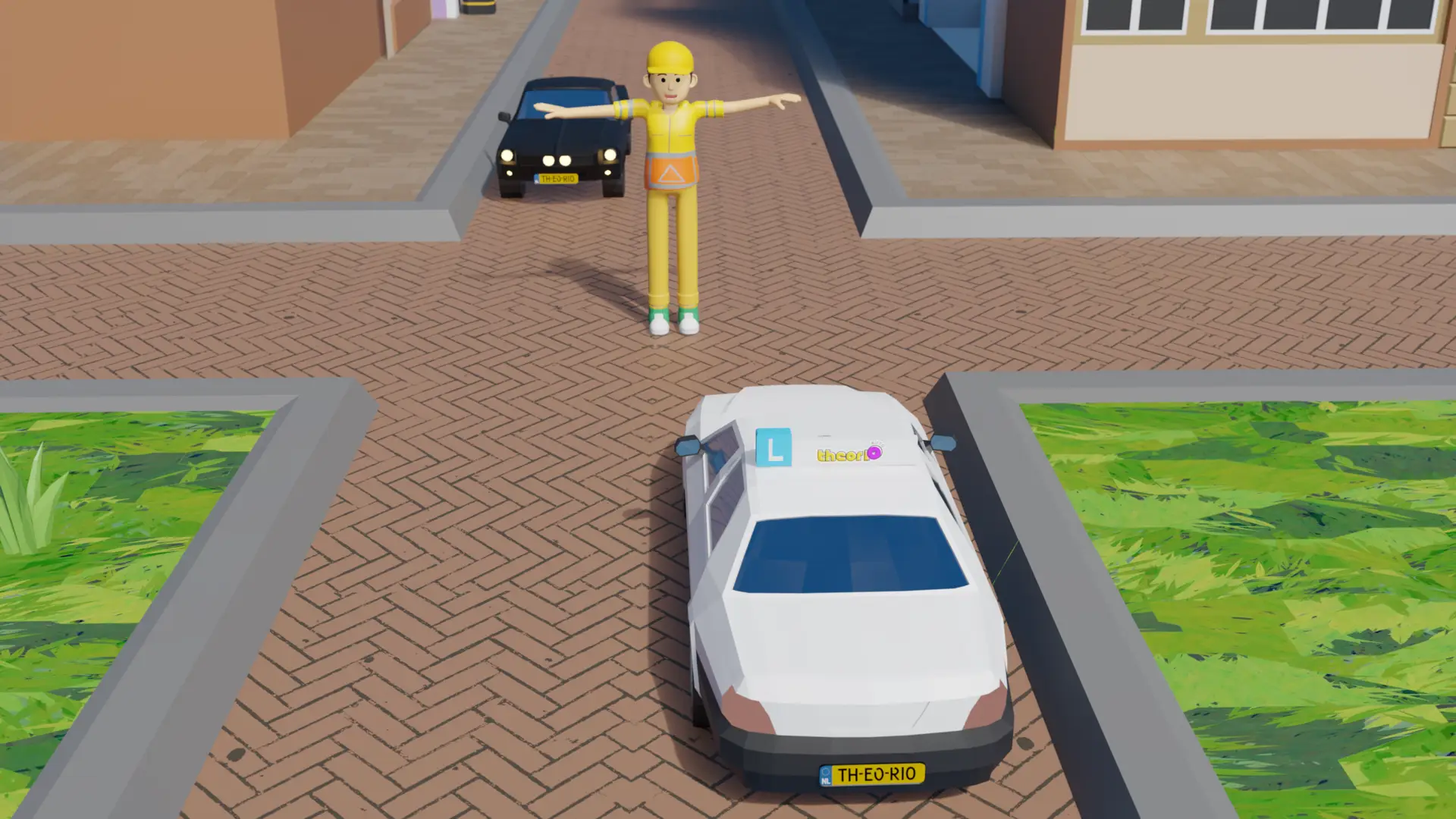
Do they extend both arms? Then the traffic approaching them from the front stops and the traffic approaching them from behind also stops.
Are you approaching them from the side? Then they keep their arm stretched forward, so you can still see the barrier.
The arm on your side is your barrier. What the other arm does applies to the traffic from the other side.Approached from the side: the arm stretched forward is the barrier for you.
The stop sign — the hand raised in your direction — works differently. This applies to all vehicles, from whichever direction they come. With the barrier system, you look only at the arm on your side.
Gesture traffic controller
Meaning for the driver
Chest or back facing you
Stop for traffic coming from the front or from behind
Arms stretched out to the side
Stop for crossing traffic approaching with arms
One arm straight up
Stop sign for all traffic from all directions
Arm moving up and down
Reduce speed and drive more slowly
Arm stretched forward (you are approaching from the side)
Stop — the arm is also then your barrier
You've covered Traffic lights, tram lights & traffic controllers. Does it stick?
FAQ
Frequently asked questions
Short answers to common questions about Road markings & Intersections.
How far is a railway beacon with three stripes from the level crossing?
Each diagonal stripe on a railway beacon represents 80 metres distance. Three stripes mean the crossing is 240 metres away.
What is the hierarchy between traffic controllers, traffic lights and road signs?
Instructions from traffic controllers override traffic lights and road signs. Traffic lights override road signs. Road signs override the general right-hand rule.
How do you recognize an exit construction on the exam?
An exit has continuous paving over the pavement or a lowered kerb. Drivers leaving an exit must yield to all other traffic.
May you drive on a cycle lane before turning?
You may drive on a cycle lane with a broken line to filter. With a solid line you may not drive on the cycle lane.
When does traffic from the right not have priority at an equal intersection?
Traffic from the right does not have priority when coming from an exit. A tram always has priority at an equal intersection.
What is the difference between a solid and broken line?
You may never cross a solid line. You may cross a broken line if it is safe to do so.
Keep practicing with up-to-date material
With this explanation you understand the basics of road markings, traffic lights and intersections. In traffic there are many exceptions, such as temporary markings, arrow lamps and instructions from traffic controllers; therefore practise in our app with the most up-to-date CBR information.
Ready to practise?
Test your knowledge of Road markings & Intersections with 65 practice questions in the app.
Your first quiz is free, no account needed. ·After that from €19.99 for 90 days of access.

 Sign G3 (Autoweg): the same road, but then with a sign instead of with a line.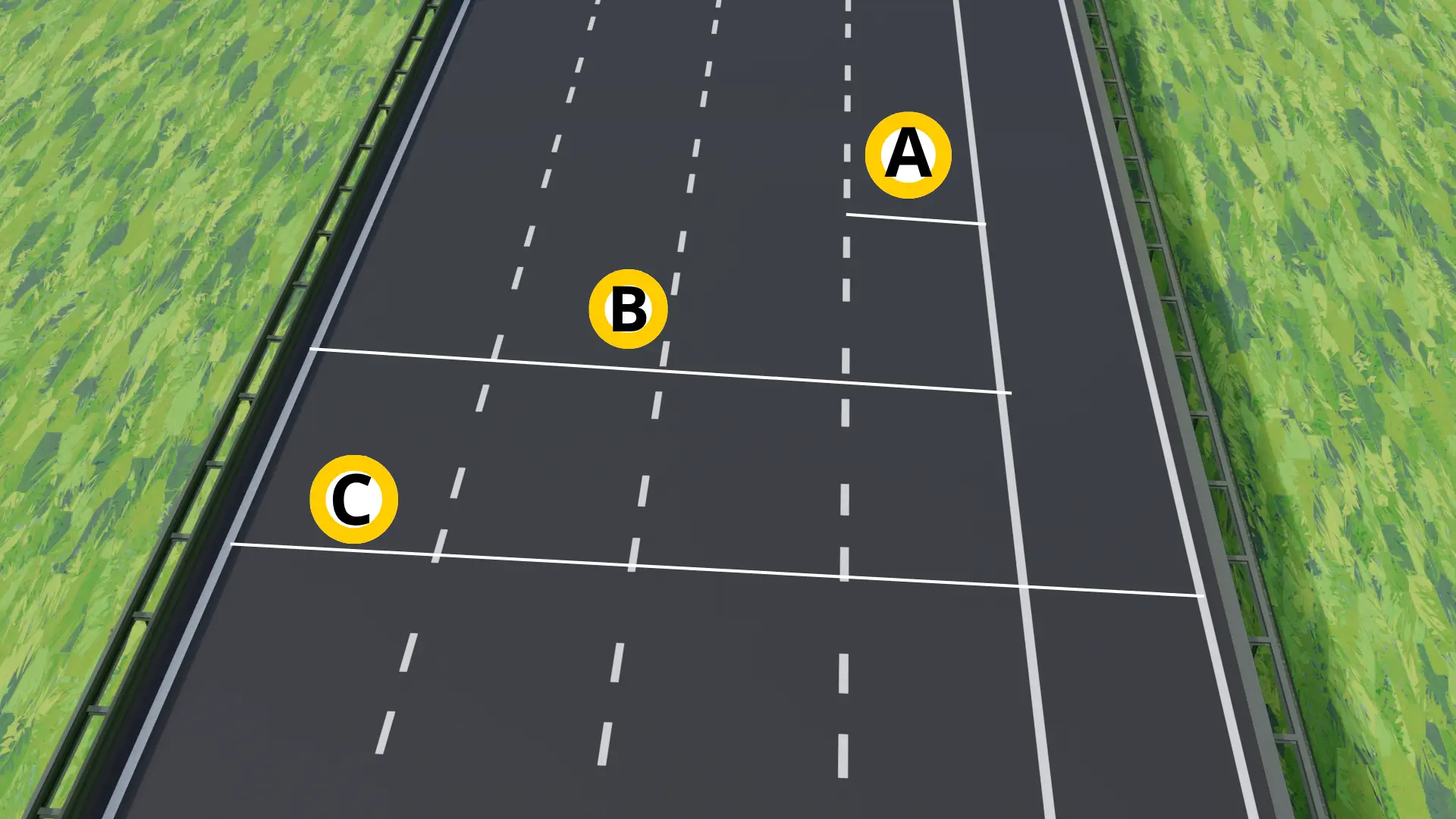
 Sign J8 (Dangerous intersection): Warns of an approaching priority junction where the right has priority.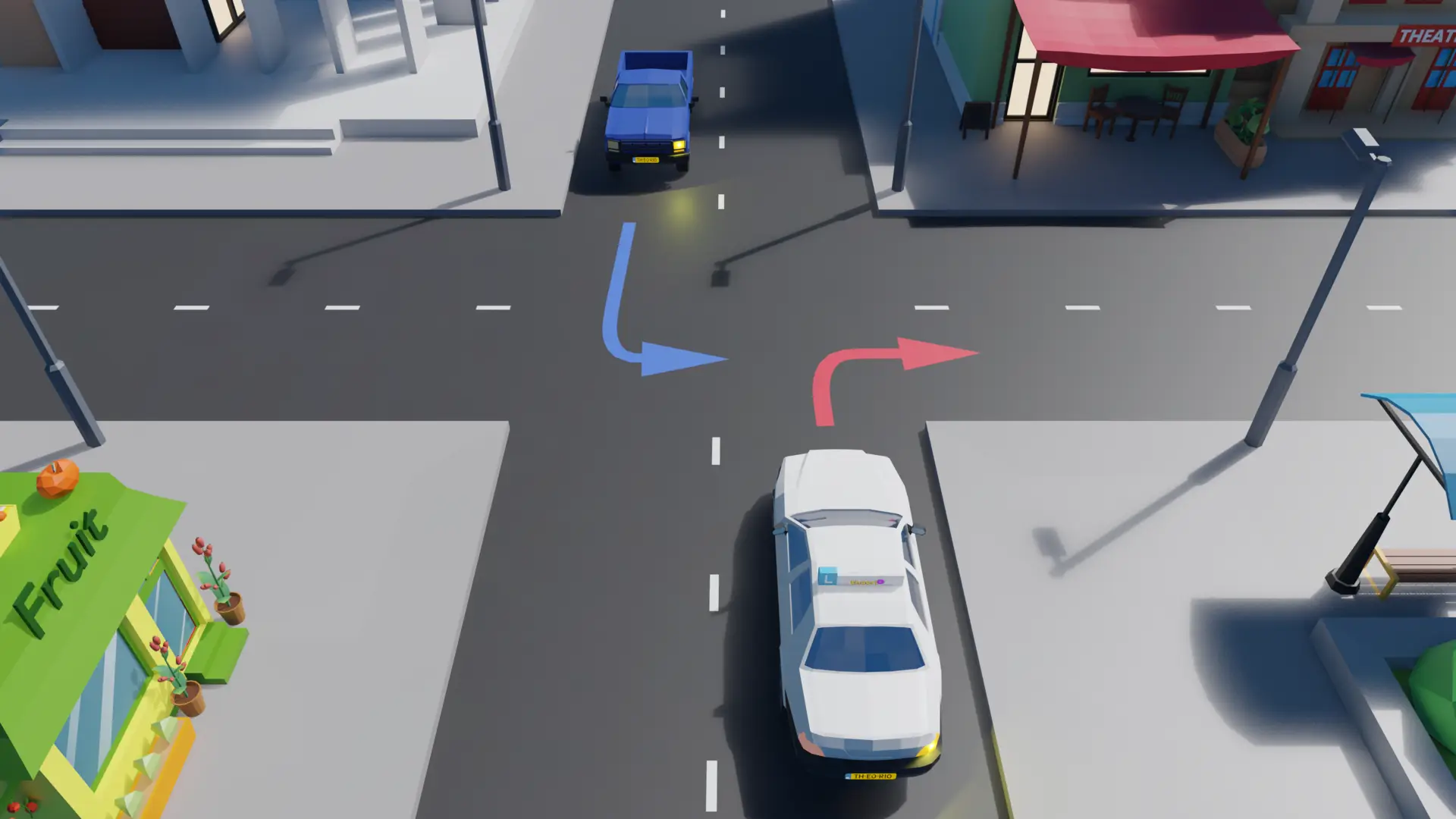
 Sign D1 (Roundabout): Compulsory direction of travel on a roundabout.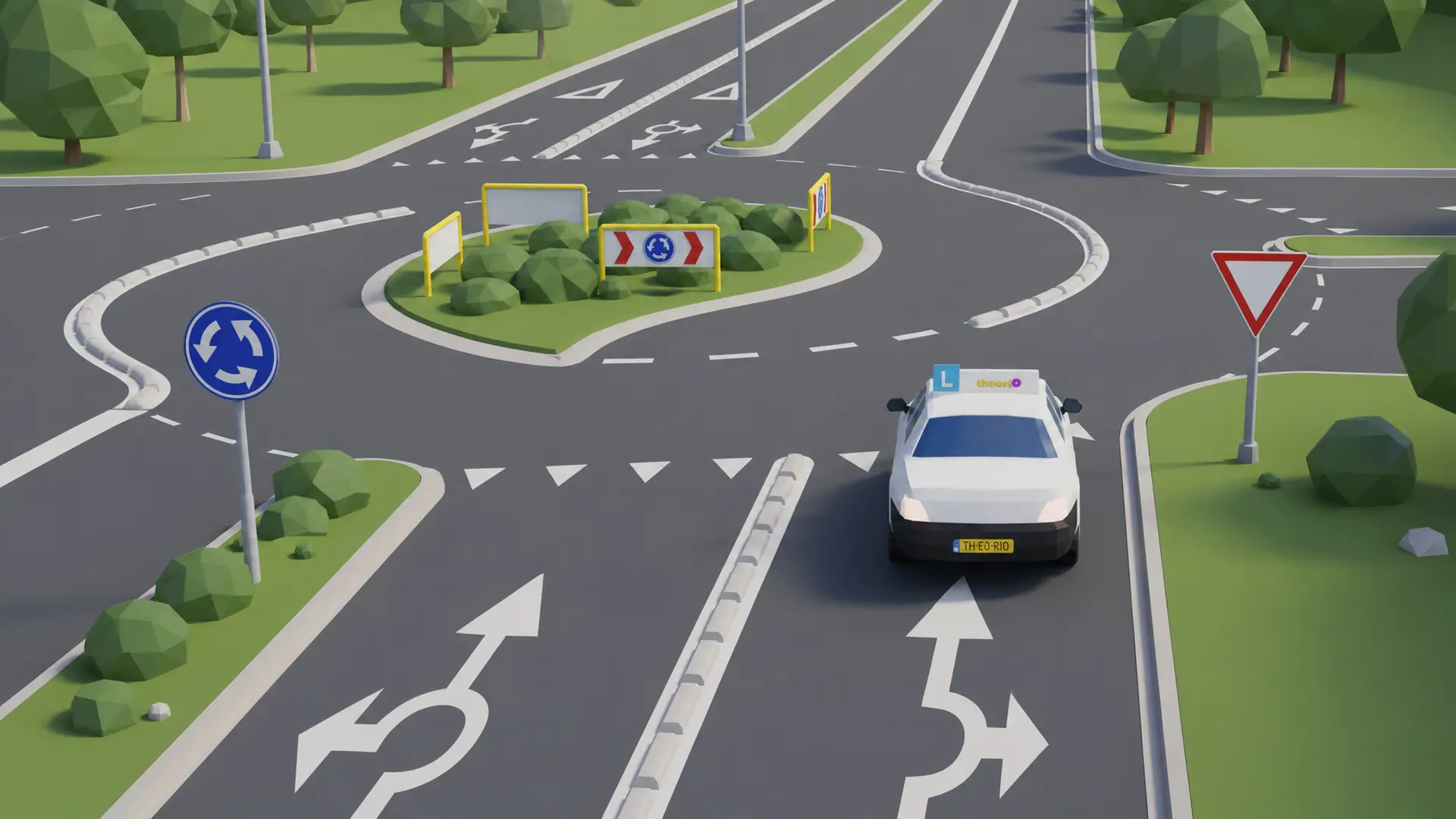
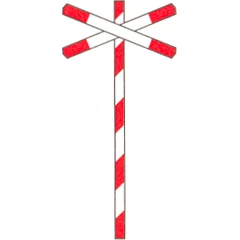 Sign J12 (Single track): 1 railway crossing means a single track.
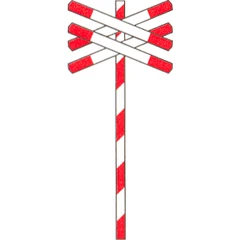 Sign J13 (Multiple tracks): 2 railway crossings mean two or more tracks.