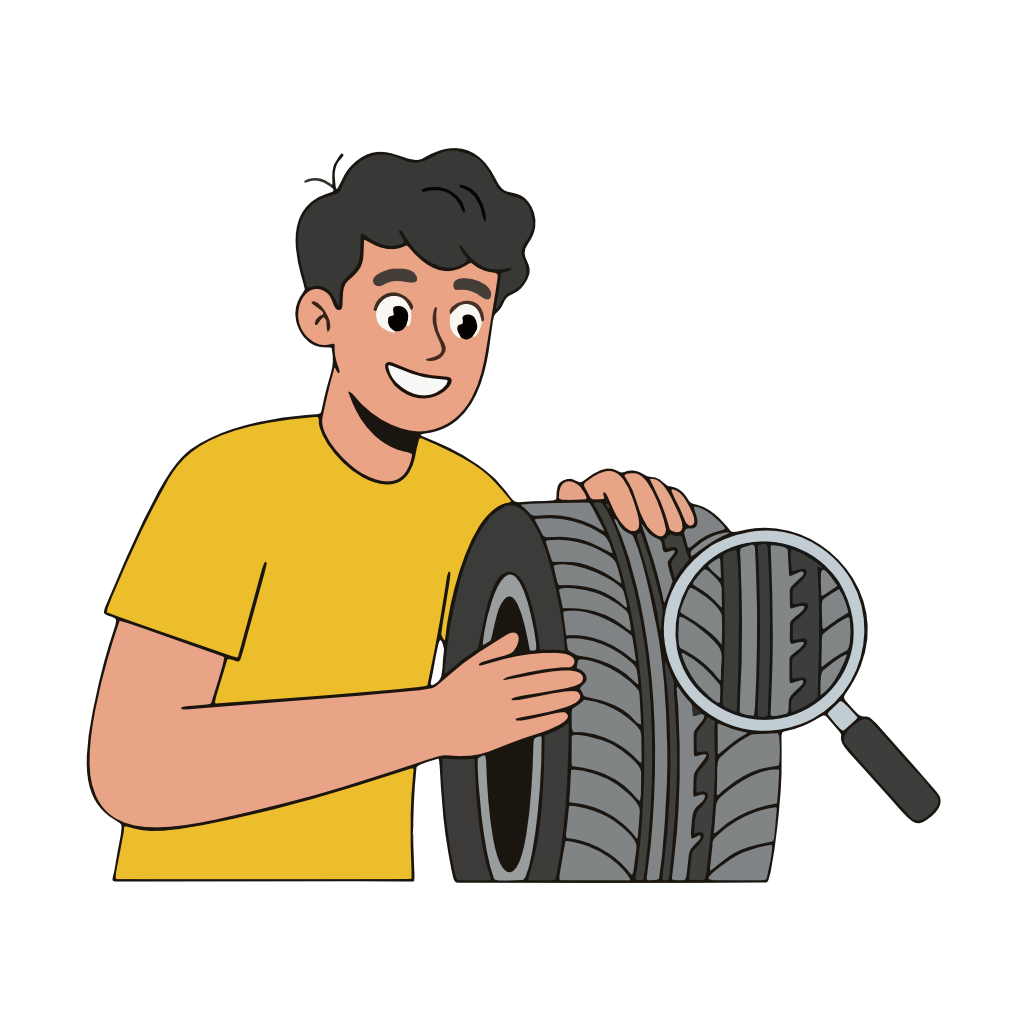

Illustration of a mechanic checking the tread of a car tyre with a magnifying glass

Vehicle requirements, Tyres & Load

50 Questions
Medium
4 Parts

Learn everything about legal vehicle and tyre requirements, how to transport cargo safely, and rules for trailers. Practice for free for your CBR car theory exam.

Chris Prosman Chris Prosman

Study material

What will you learn?

Your car must meet legal requirements before you go onto the road. This module covers tyres, cargo, and trailers.

Vehicle requirements, Tyres & Load at a glance

Requirements for the car itself

With driving licence B, the car may weigh no more than 3500 kg with everything you transport, and may be no more than 4 metres high. Windows all around the driver may not be made opaque, the number plate must always be visible and illuminated, and if a door is not properly closed, you close it first. If you tow a car, the distance between the two cars is at most 5 metres and both drivers have a driving licence.

Transporting cargo safely

Cargo must be secured properly and may not lie loose in the car. With a car, non-divisible cargo may protrude by a maximum of 20 cm on each side and 1 metre at the front and rear; bicycles on a carrier also count as cargo. On the roof you use load carriers. With a trailer, cargo may not protrude at the front; if it protrudes more than 1 metre at the rear, a red-and-white marking board is mandatory.

Tyre tread and tyre pressure

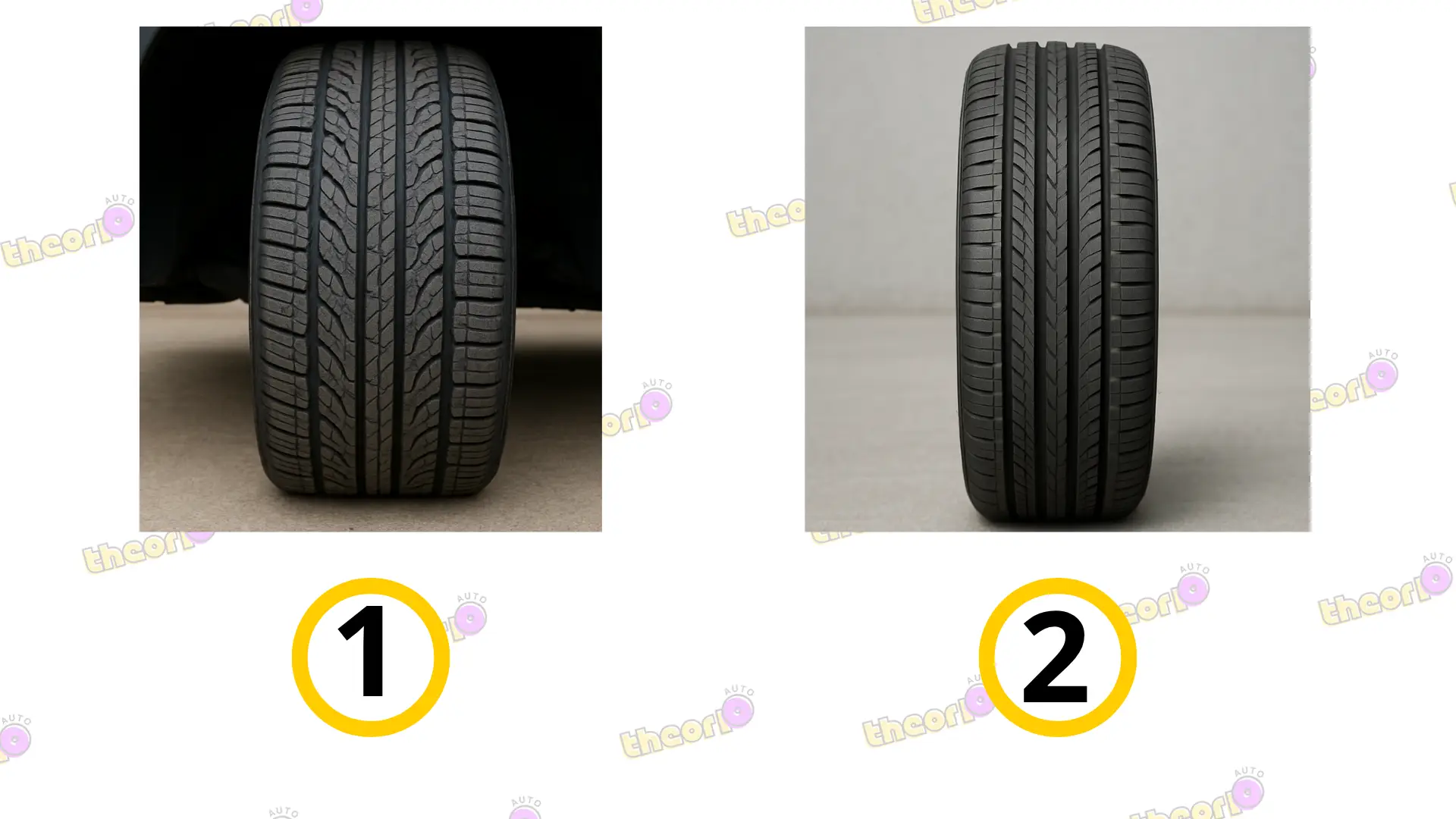
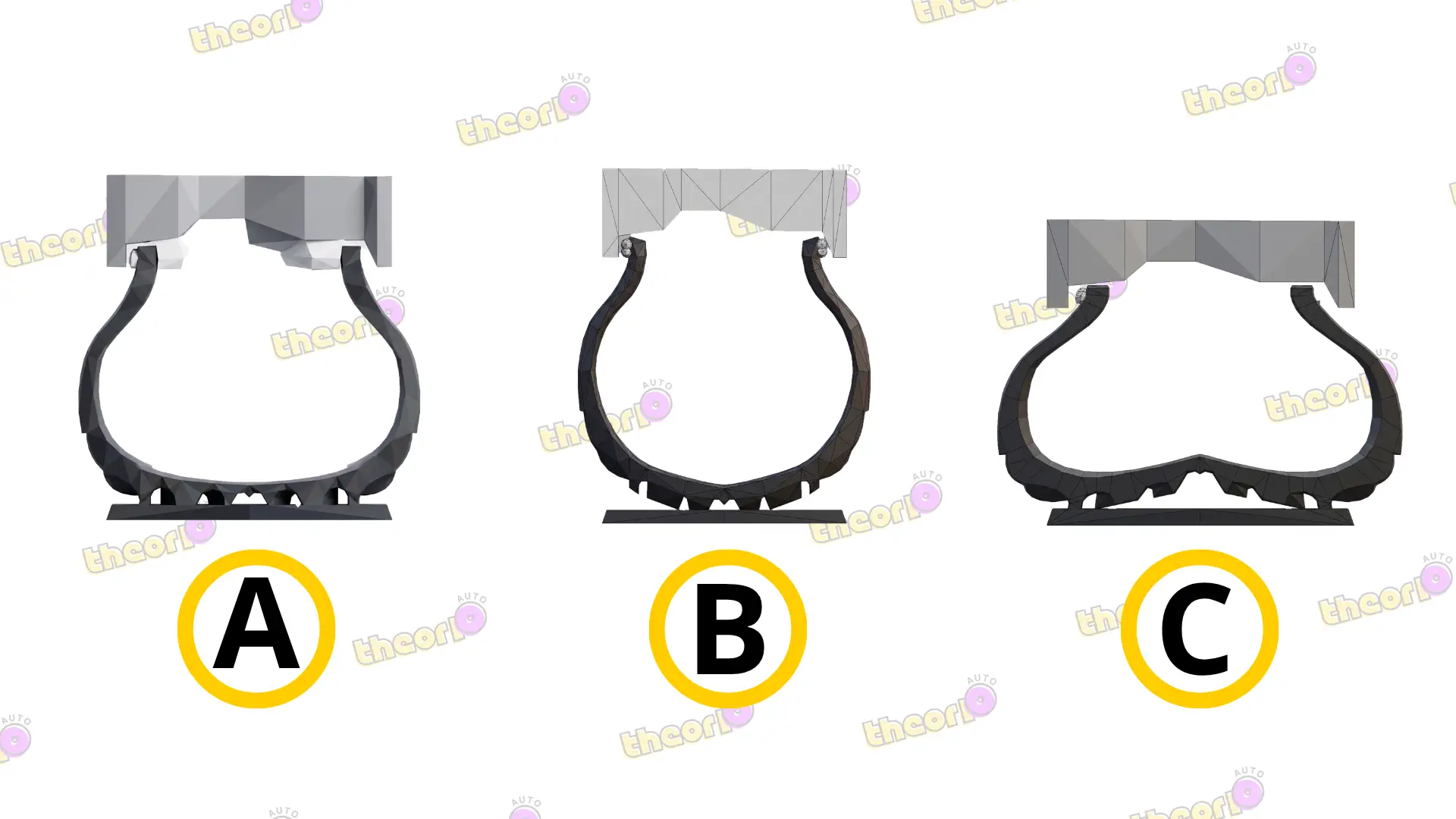
All tyres, including those of the trailer and the spare tyre, have a minimum tread depth of 1.6 mm; winter tyres (below 7 °C) have a minimum of 4 mm. With the correct tyre pressure you have the most grip and you save fuel. Tyres that are too hard only touch the road in the middle, tyres that are too soft wear at the sides and can overheat. If the car is heavily loaded, you increase the pressure. Winter tyres are not mandatory in the Netherlands, but with the tyre that matches the season you stop fastest.

Trailers

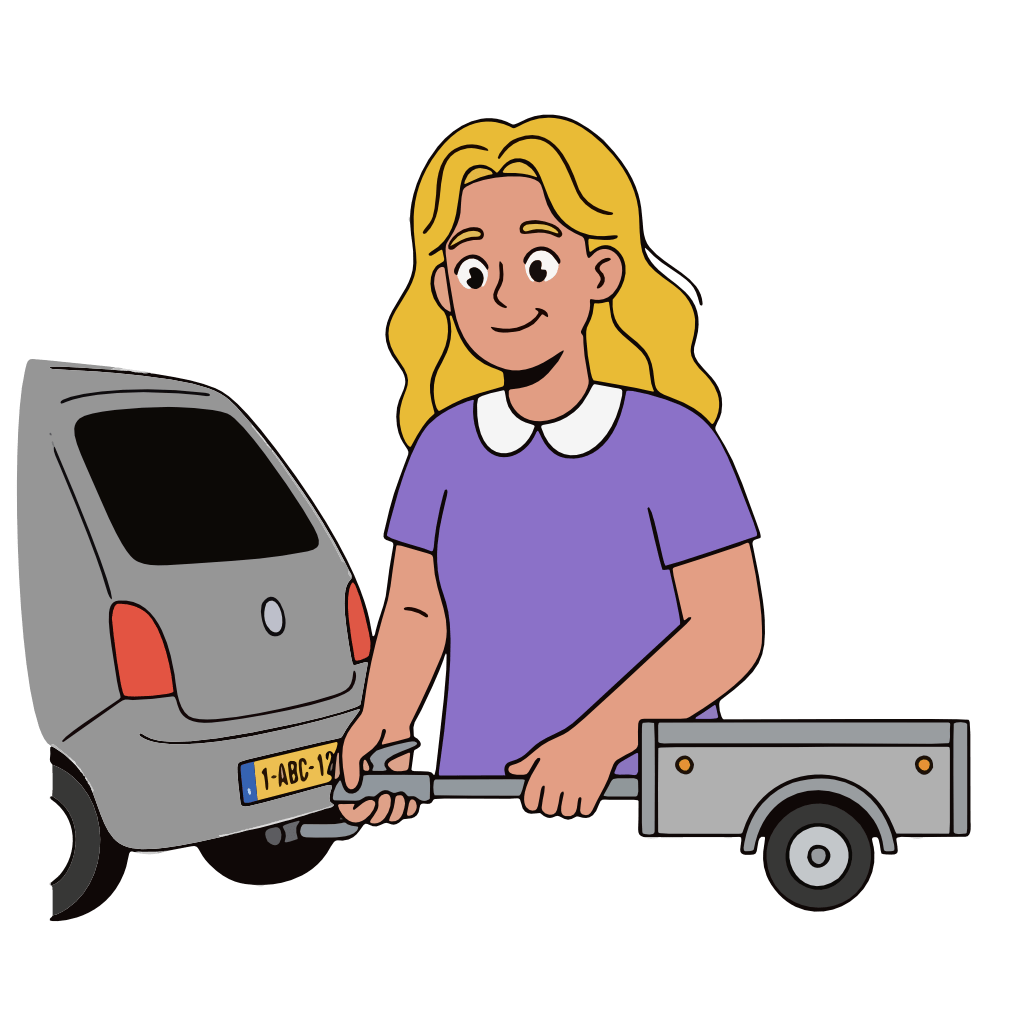
Trailers have their own rules, which are covered in topic 11: with driving licence B you may tow a trailer up to 3500 kg total weight together with the car; trailers up to 750 kg have a white number plate and heavier trailers have a yellow number plate.

A well-maintained car helps you respond in time to what happens on the road; therefore check it regularly. This section is about requirements for the car itself: how heavy and how high it may be, and what must be in order with windows, number plate and doors before you drive off.

Towing also belongs here: a tow rope of at most 5 metres and a driving licence for both drivers.

Core rule: car plus everything you transport with driving licence B weighs at most 3500 kg and is at most 4 metres high. Windows clear, number plate visible, doors closed, and when towing at most 5 metres between the cars.

Weight and height

With driving licence B, the car with everything in and on it may never weigh more than 3500 kg. This applies to every combination: passenger car, commercial vehicle, camper or van, with or without a trailer.

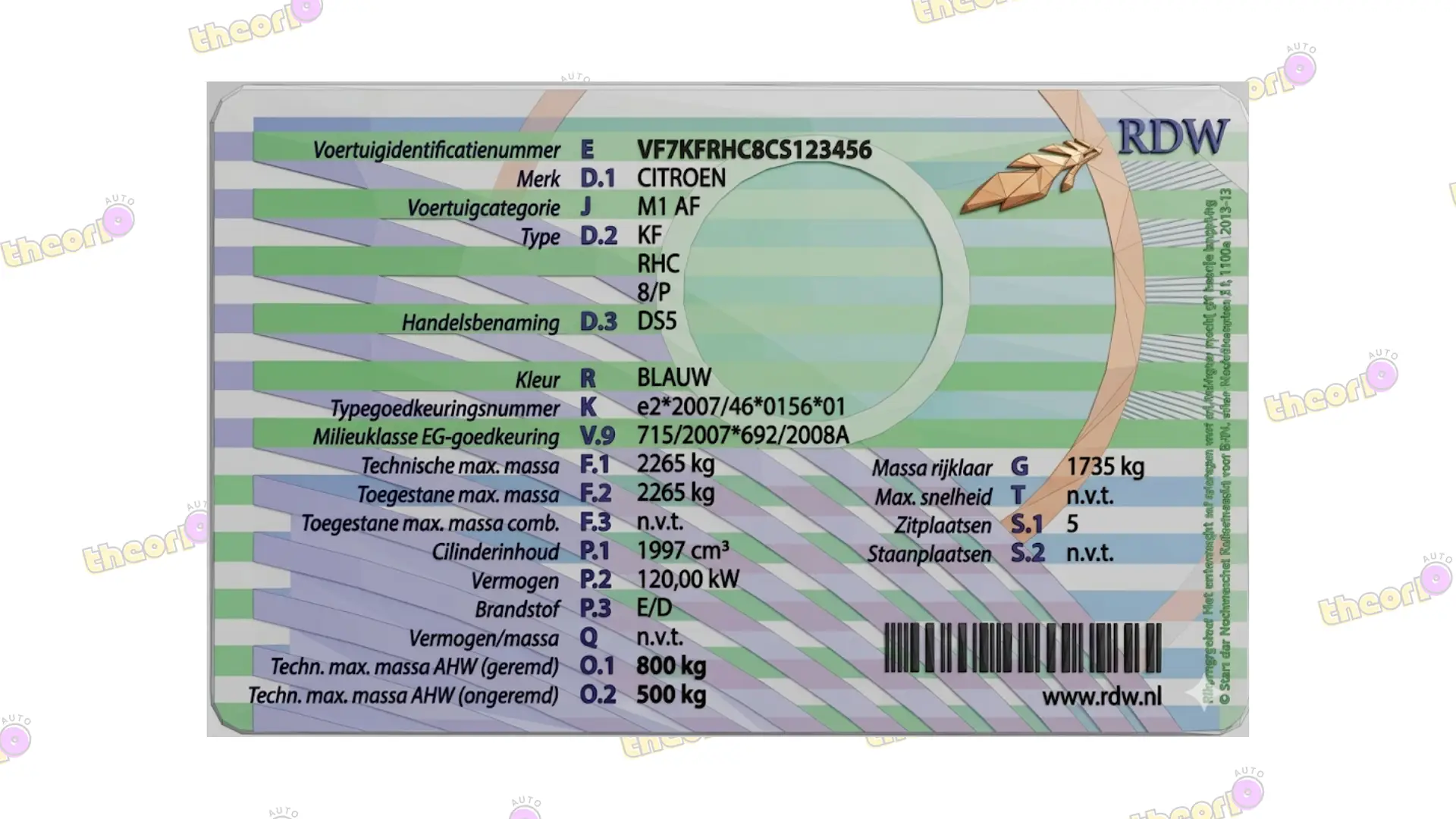
On the vehicle registration card of the car you can see how much weight you may add before you reach 3500 kg, and how much you may tow with a trailer.

Car plus cargo is also never higher than 4 metres. How far cargo may protrude to the side, and at the front and rear, is in section 2.

RequirementLimitWhere you find it
Mass of car plus cargoMaximum 3500 kg with driving licence BVehicle registration card
Height of car plus cargoMaximum 4 metresMeasuring including roof cargo
Weight you may towDifferent for each carVehicle registration card
Illustration of someone measuring a fully loaded yellow car with a ruler
Car plus cargo: maximum 3500 kg and maximum 4 metres high.
Driving school car with a trailer, with the car’s vehicle registration card
The vehicle registration card shows how much you may add and how much you may tow.

Windows

You may not make the windows around the driver opaque. You must be able to look out properly, and other road users must be able to see you.

Clean windows are a legal requirement. Therefore check regularly that the windscreen wipers and washers work properly.

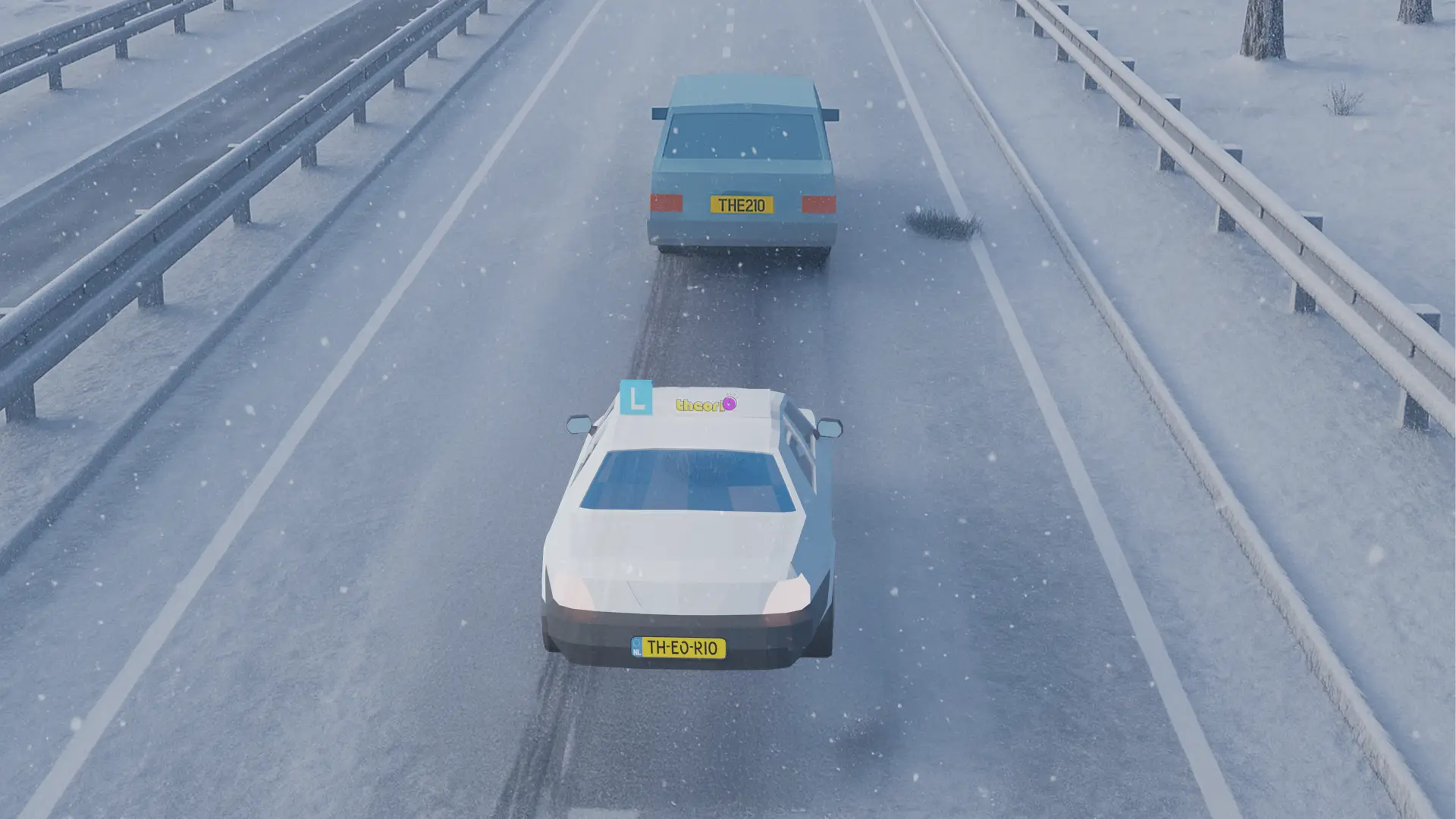
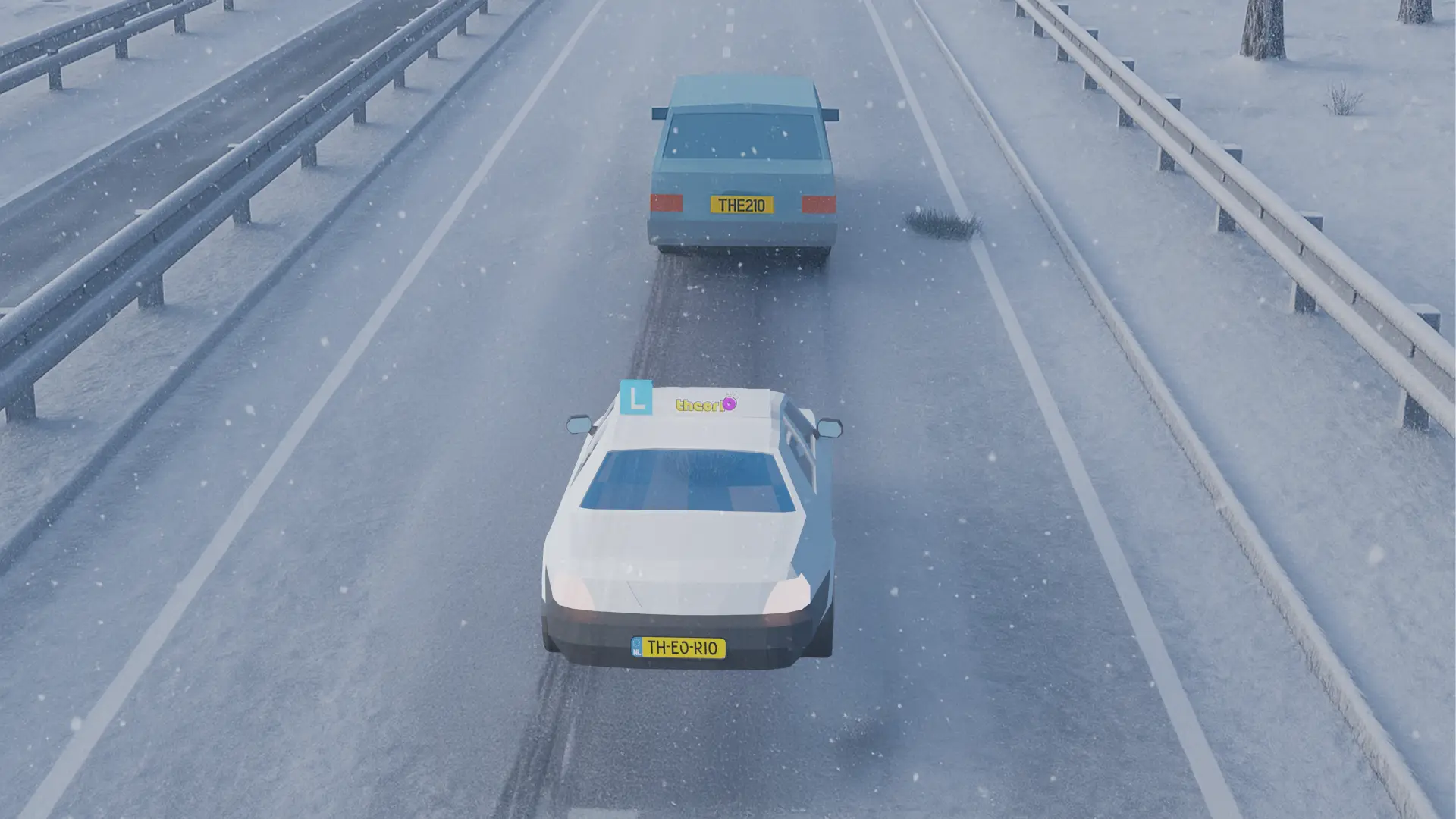
In winter, frost, snow and ice hinder the wipers and visibility. First clear the windows, and always keep a ice scraper in the car.

Driver sweeping snow from the windscreen of the car
First remove snow and ice from the windows; otherwise the wipers won’t work and you can’t see anything.

Number plate

The number plate must always be fully visible and readable, even in snow or fog. Therefore also keep the number plate illumination in order.

A tow bar or carrier may not cover the number plate, not even partially. If the number plate is not recognisable, you may receive a ticket.

Rear of a car where the tow bar covers part of the number plate
A tow bar for the number plate: this is not allowed.

Doors

A door that is not closed properly can open while driving. Modern cars warn you about this with a warning light, for example in the ceiling between the driver and the passenger.

If that warning light is on, you close the door properly before you continue driving.

Towing

If you tow a car with breakdown, or if you are towed yourself, two rules apply:

  • The distance between the two cars is at most 5 metres. Less is allowed. A long rope may seem safer when the front car brakes, but the opposite is true: a longer rope can hang over the kerb in a bend, where pedestrians then have to make way.
  • Both drivers have a valid driving licence. The towed car also has to be driven, and that may not be done without a driving licence.

You've covered Legislation: Vehicle dimensions. Does it stick?

With cargo, the CBR looks at three things: secure it safely, how far cargo may protrude, and clear visibility of the number plate.

Remember the difference between a car and a trailer: with a car, cargo may protrude at the front and rear; with a trailer, not at the front.

Core rule: cargo must be transported in such a way that it cannot slide, fall, or cause danger. With a car, non-divisible cargo may protrude by a maximum of 20 cm per side and 1 metre at the front and rear. With a trailer, cargo may not protrude at the front.

Cargo in the car

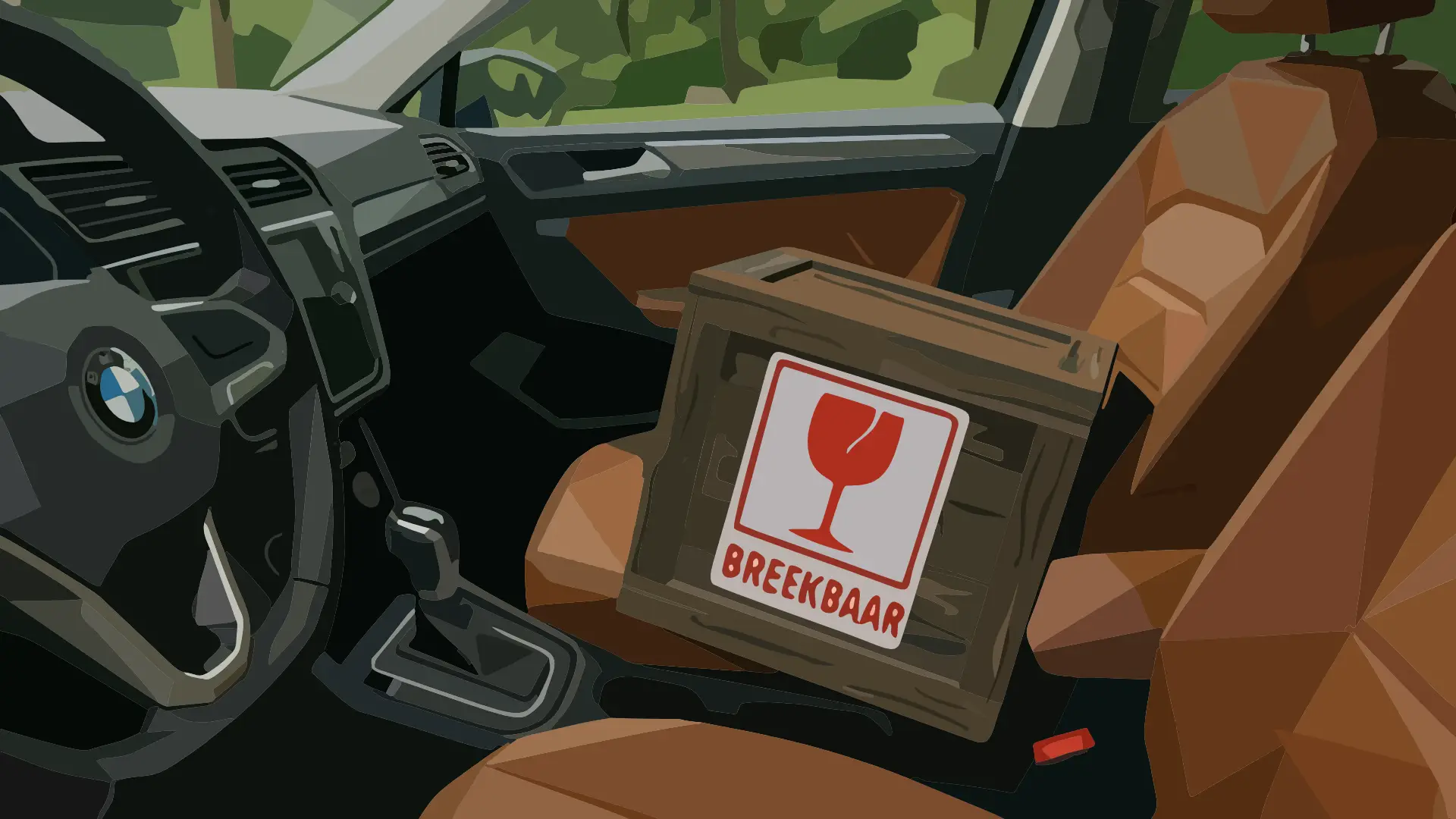
Loose cargo in the car is wrong. When you brake hard, it shoots forward: long boards lying between the front seats then end up on the road together with the windscreen.

What fits in the boot (trunk) you transport there. If it doesn’t fit in the car, it can go on the roof or in a trailer.

Long boards lying loose between the front seats of a car
Loose in the car: when you brake hard, this shoots forward.

Cargo on and behind the car

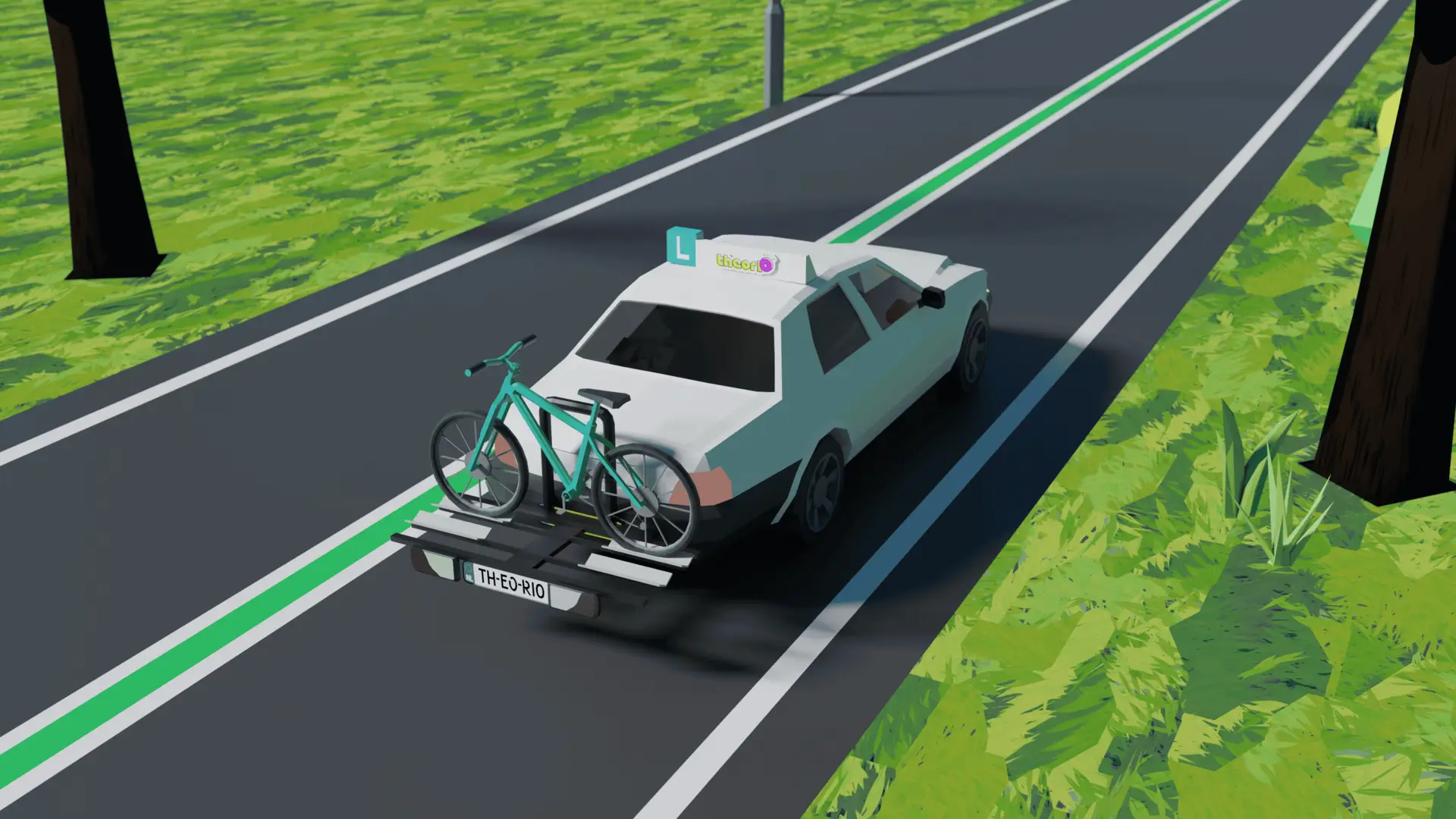
Cargo on the roof is transported always using load carriers. These distribute the weight evenly over the roof. Behind the car you use a bicycle carrier on the tow bar.

Bicycles on a carrier and cargo on the roof simply count as cargo. The same dimensions apply for that:

WhereMaximum protrusion with a car
Sides20 cm per side, also for bicycles at the back
Front1 metre
Rear1 metre
Height and massCar plus cargo maximum 4 metres high and 3500 kg (see section 1)

With a tow bar or carrier, the number plate must remain visible (see section 1).

Car with two bicycles on a roof rack
Bicycles on the roof: watch the sides and the total height.

Cargo on a trailer

With a trailer, different rules apply than with a car. Topic 11 goes into trailers in more detail; these are the cargo rules:

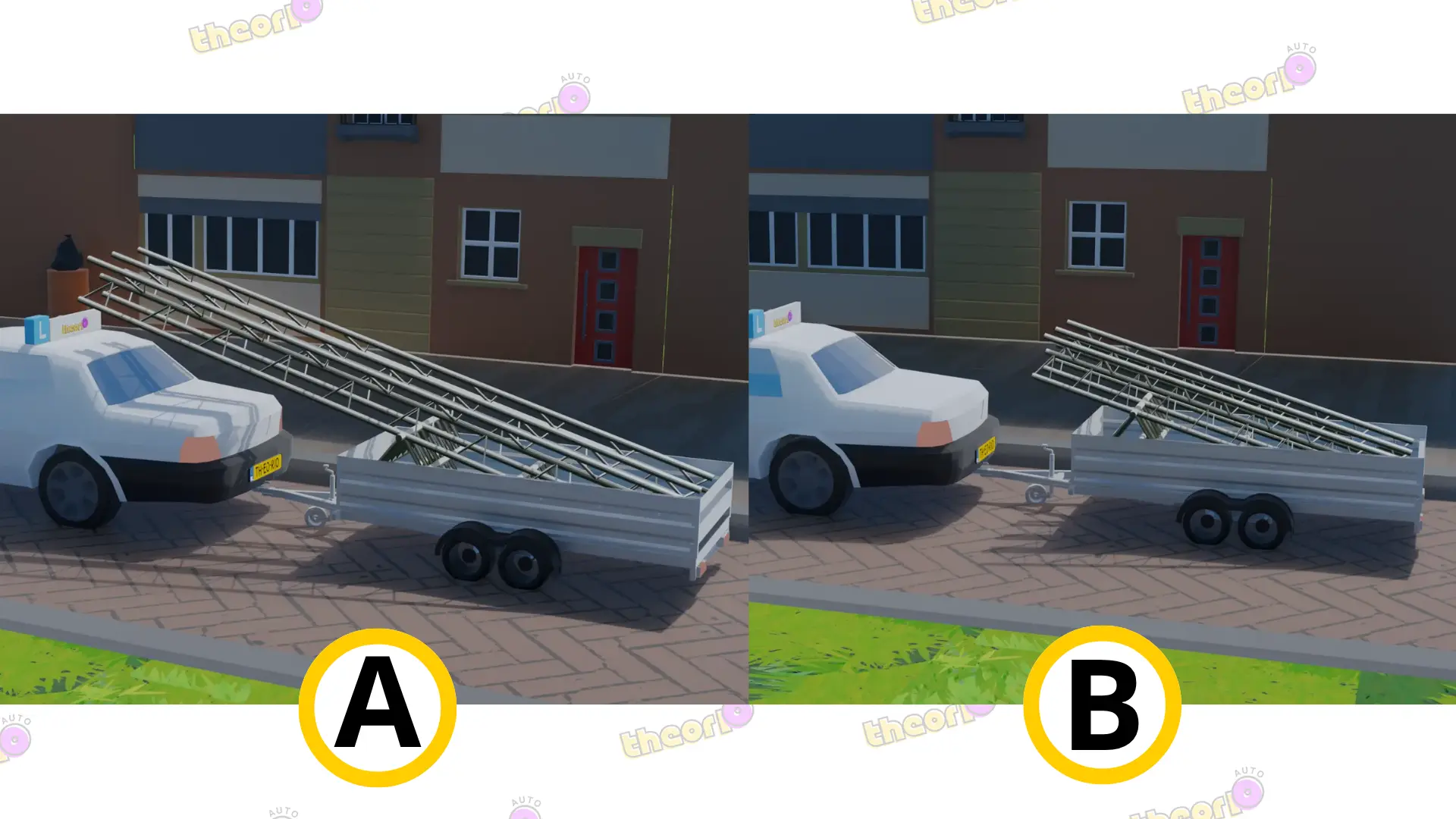
  • Cargo may not protrude at the front. When you do this, look at the actual front of the trailer, not only at the loading bed: cargo may stick out a bit beyond the loading bed, as long as it does not go past the front of the trailer.
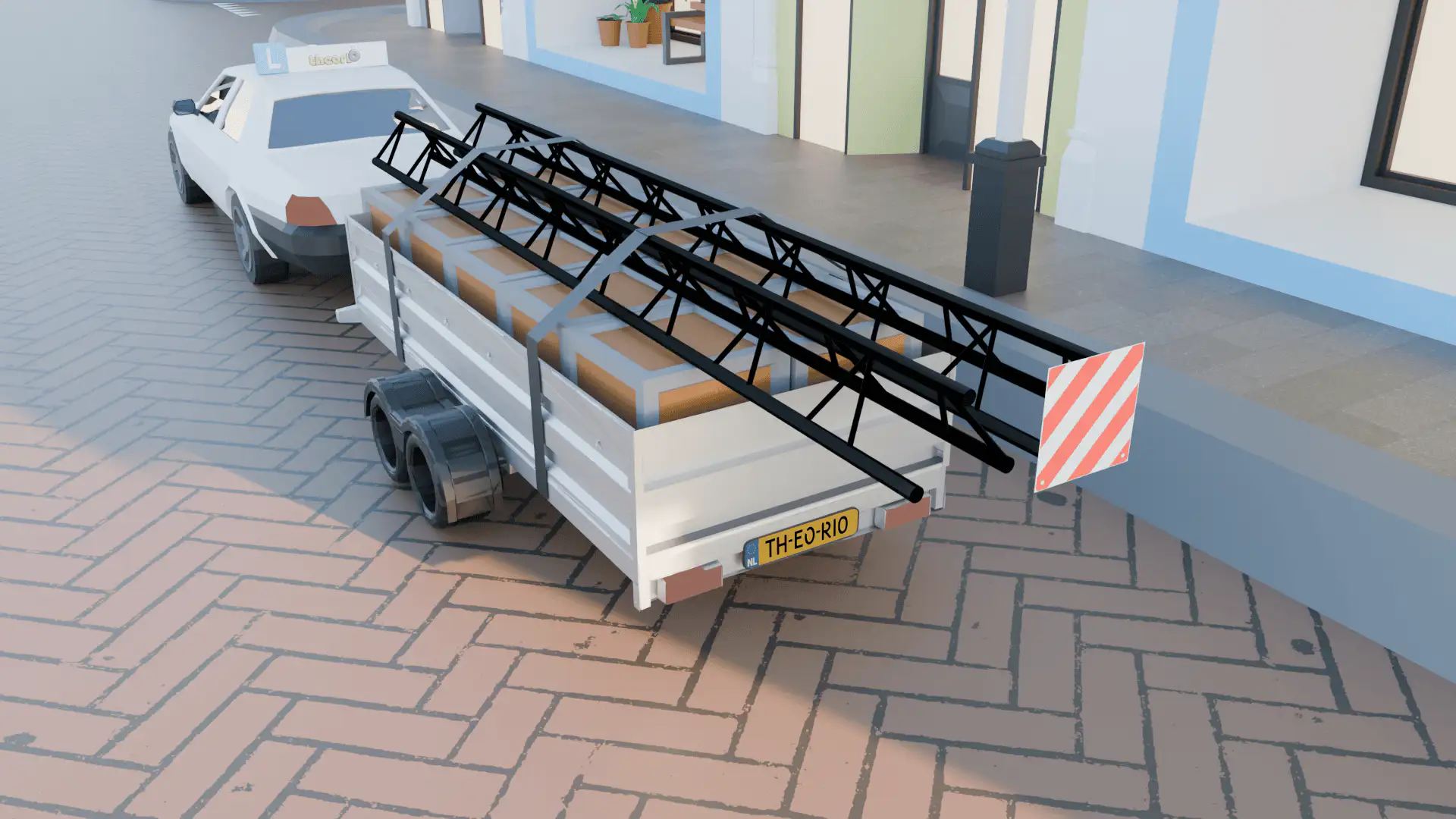
  • At the rear cargo may protrude, including more than 1 metre. If the cargo protrudes more than 1 metre, a red-and-white striped marking board is mandatory. If it protrudes less than 1 metre, that board may also be used, but it is not required.
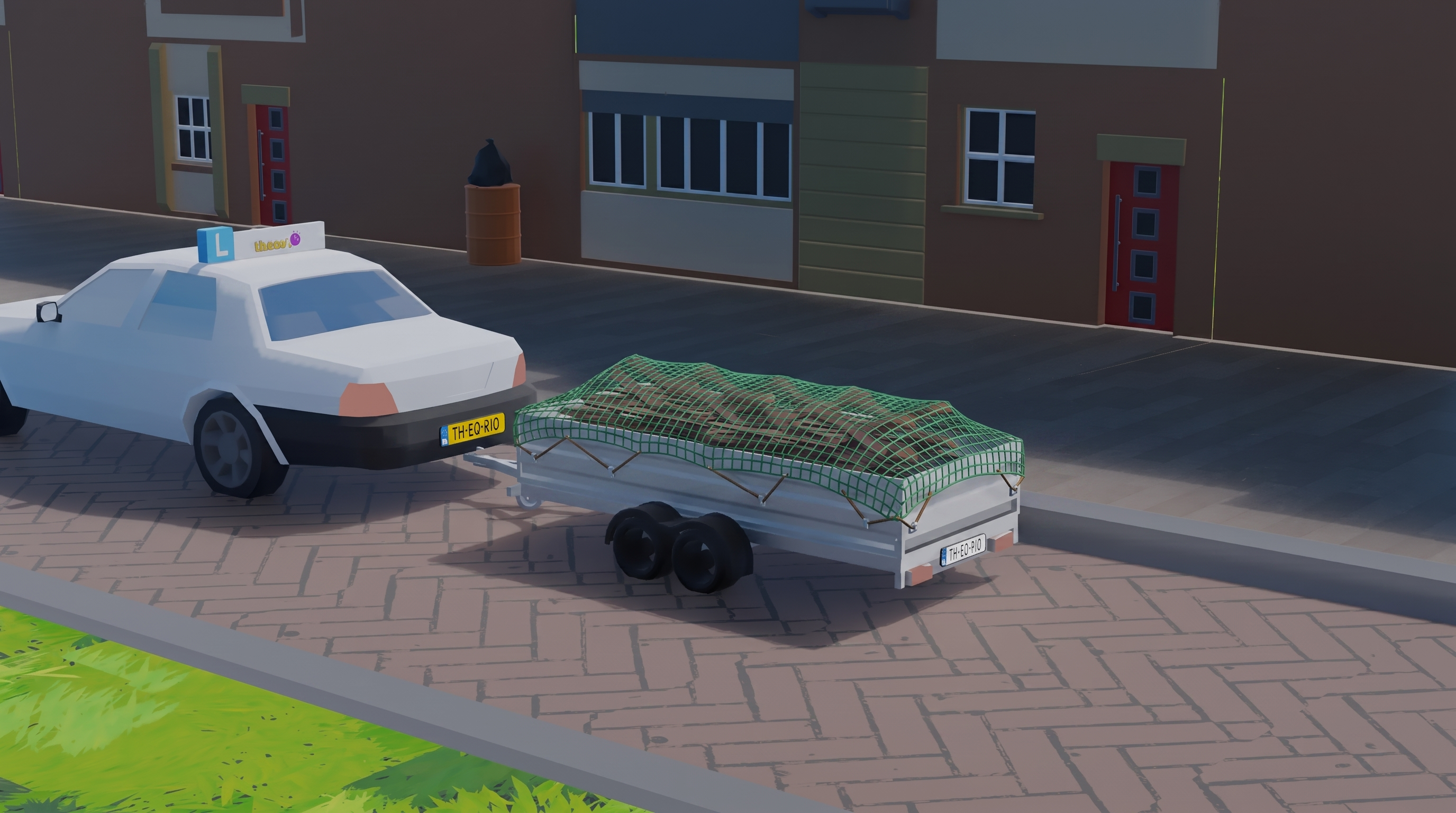
  • With loose cargo you put a net over the trailer so nothing can fall out.
  • Heavy cargo is placed in the middle. Too much weight at the back increases the chance of swaying.
SituationCarTrailer
Protruding at the frontMaximum 1 metreNot allowed
Protruding at the rearMaximum 1 metreAllowed, also more than 1 metre
Marking boardMandatory if protruding more than 1 metre at the rear
Protruding at the sidesMaximum 20 cm per side
Loose cargoDo not transport loosePut a net over it so nothing can fall out
Trailer with a long beam protruding more than 1 metre to the rear, with a red-and-white striped marking board at the end
Cargo protruding more than 1 metre at the rear behind a trailer: marking board required.
Two situations side by side: in A, the cargo goes past the front of the trailer up to above the car (wrong), in B the cargo stays within the trailer (correct)
A is wrong: the cargo goes past the front of the trailer. B is correct.
Trailer with a net stretched over loose cargo
Loose cargo in a trailer: put a net over it.

Example situations

Situation 1

You transport long boards loose between the front seats. They do not protrude outside the car.

Wrong. Even without protruding, this is unsafe: when you brake hard, the cargo shoots forward.

Situation 2

On a trailer, a ladder protrudes 1.5 metres at the rear, without a red-and-white marking board.

Wrong. If cargo protrudes more than 1 metre at the rear behind a trailer, that board is mandatory.

Situation 3

A ladder protrudes a bit at the front beyond the loading bed of the trailer, but not beyond the front of the trailer itself.

Allowed. The limit is the front of the trailer, not the loading bed.

CBR trap

  • The rules for a car do not apply to a trailer: with a car, cargo may protrude at the front; with a trailer, it may not. So first choose the type of vehicle, and only then assess the cargo.
  • Don’t look only at the loading bed. Cargo that protrudes beyond the loading bed but not beyond the front of the trailer is not automatically wrong.
  • A marking board is not always mandatory: only if cargo protrudes more than 1 metre at the rear behind a trailer.

You've covered Legislation: Cargo. Does it stick?

FAQ

Frequently asked questions

Short answers to common questions about Vehicle requirements, Tyres & Load.

What are the rules for towing another car?

The distance between the cars is at most 5 metres, and both drivers must hold a driving licence.

Are winter tyres mandatory in the Netherlands?

No, winter tyres are not mandatory in the Netherlands. A tyre matched to the season does give you the shortest braking distance.

How far may a load overhang on a car?

On a car an indivisible load may overhang by at most 20 cm on each side and 1 metre at the front and rear. Bikes on a carrier count as load too.

How much tread do your tyres need?

Every tyre needs at least 1.6 mm of tread, including the trailer tyres and the spare. Winter tyres, used below 7 °C, need at least 4 mm.

How much may the car plus its load weigh on a category B licence?

On a category B licence the car including everything in and on it may weigh at most 3,500 kg, and car plus load is never higher than 4 metres. The registration card states how much weight you may add.

Keep practicing with up-to-date material

You now know the basics of vehicle requirements, tyres, cargo, and trailers. The rules may differ per vehicle, weight, dimensions, and marking; practice in our app with the most up-to-date CBR information so you know exactly when your vehicle is safe and permitted.

Ready to practise?

Test your knowledge of Vehicle requirements, Tyres & Load with 50 practice questions in the app.

Your first quiz is free, no account needed. After that from €19.99 for 90 days of access.