Learn how car lighting works and what dashboard lights mean for safe driving and communication. Practice this CBR theory topic for free with exam questions.
Good lighting is crucial for visibility and communication. This module explains which lights you use and what dashboard lights indicate.
Car lighting & Dashboard at a glance
Car lighting: safe and visible
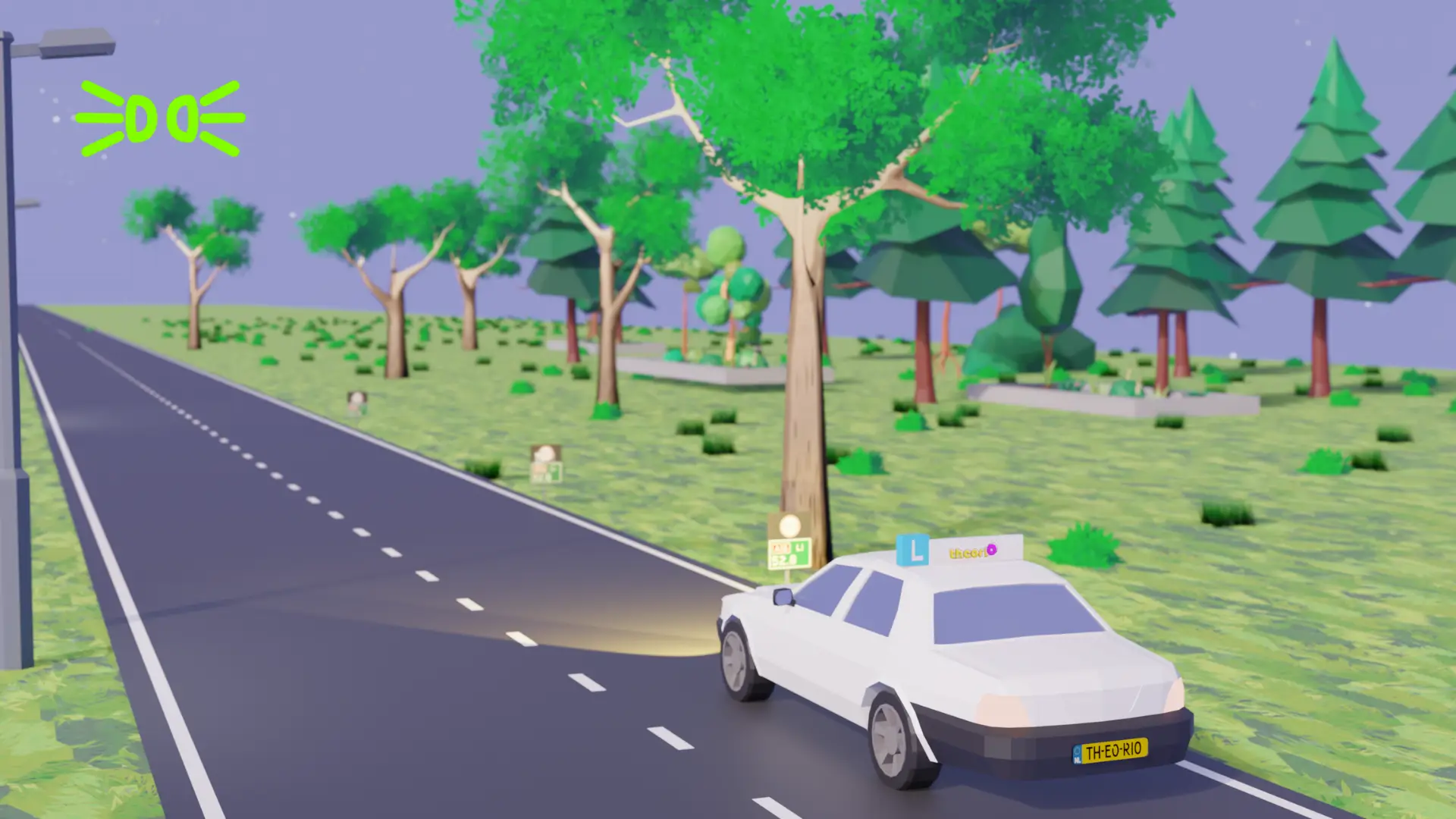
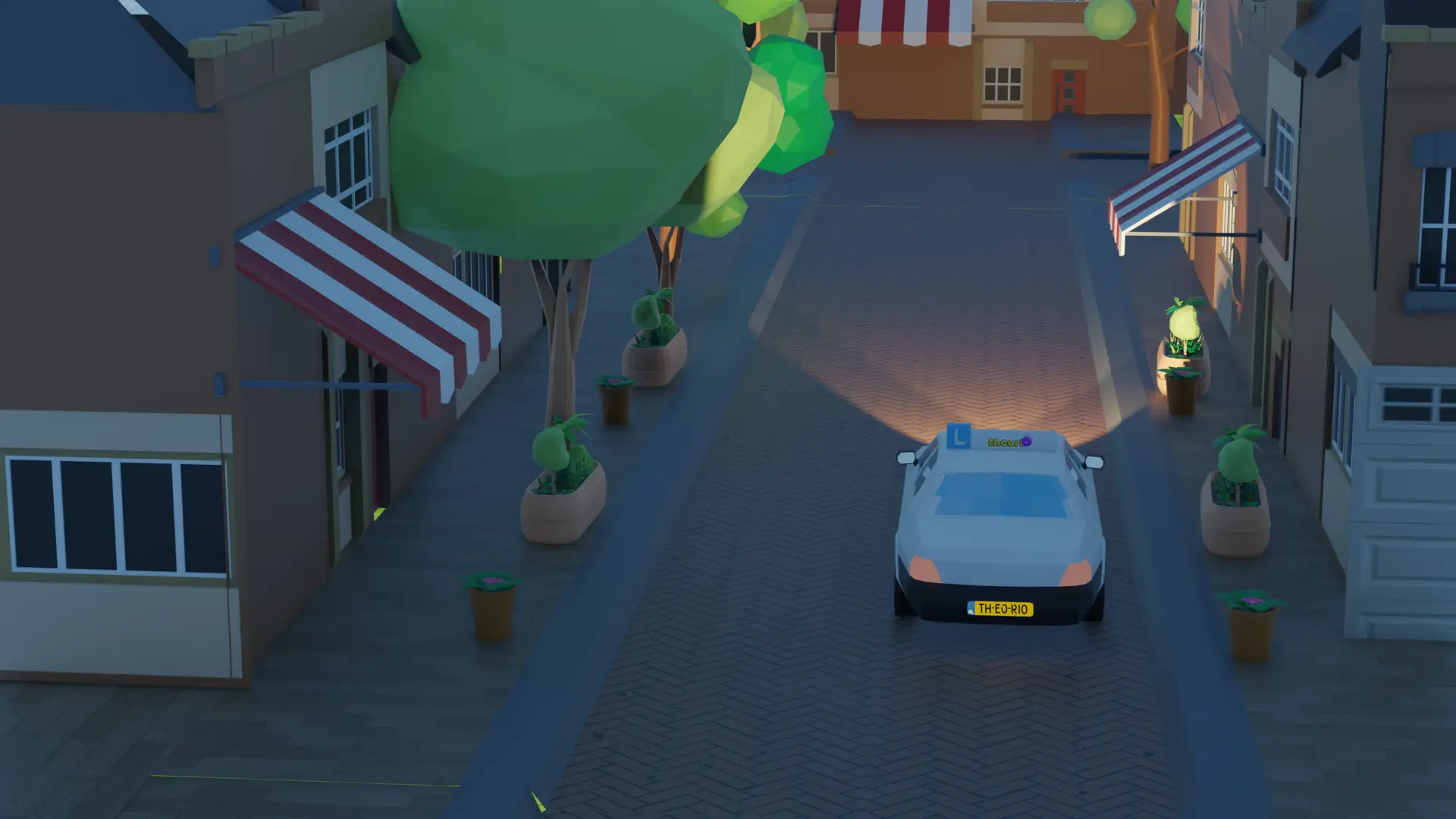
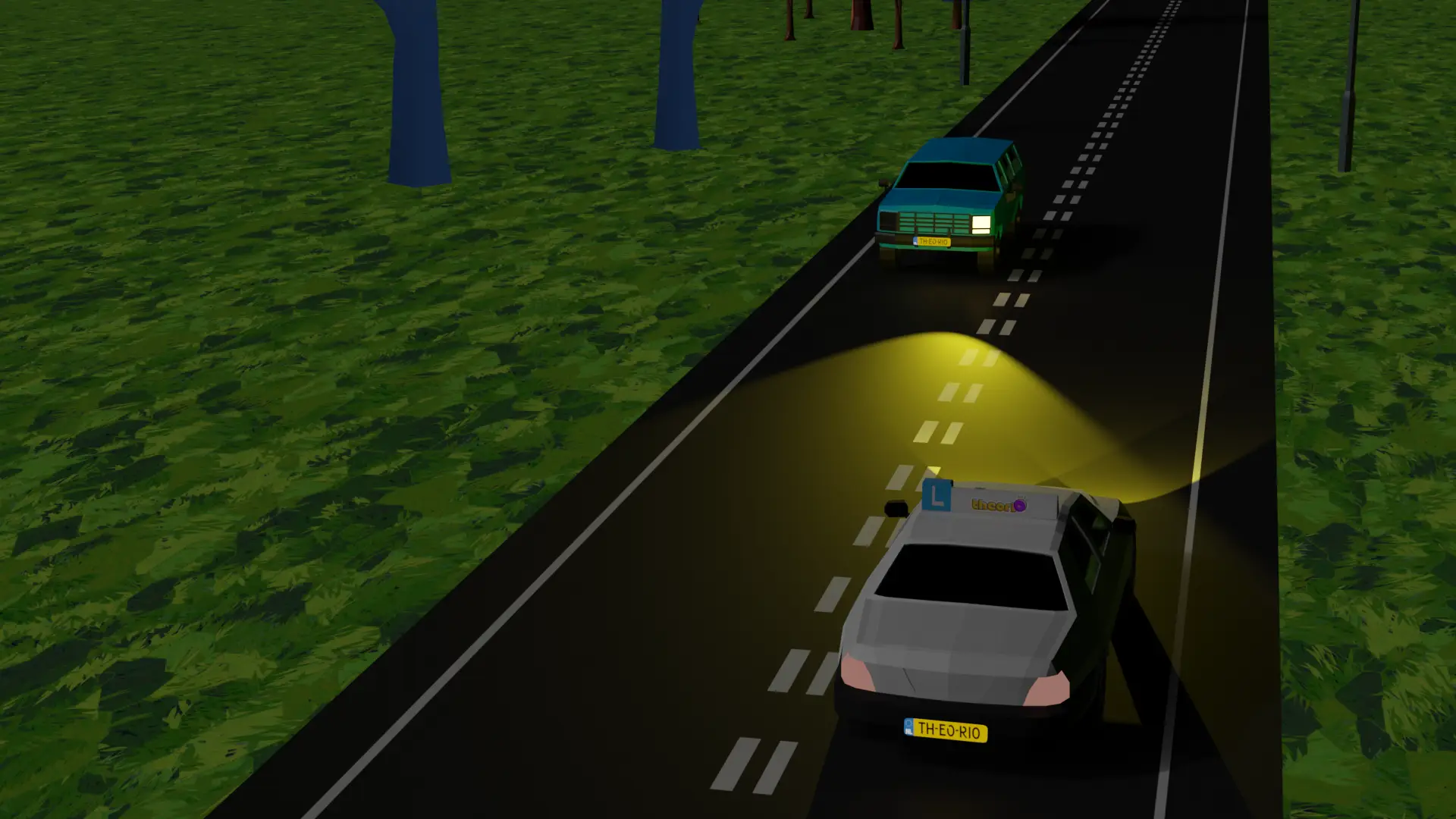
Always use the correct lighting so you are clearly visible and you can see well yourself. Dipped headlights are the most commonly used lighting and may always be on, even during the day. They illuminate the road without dazzling other people.
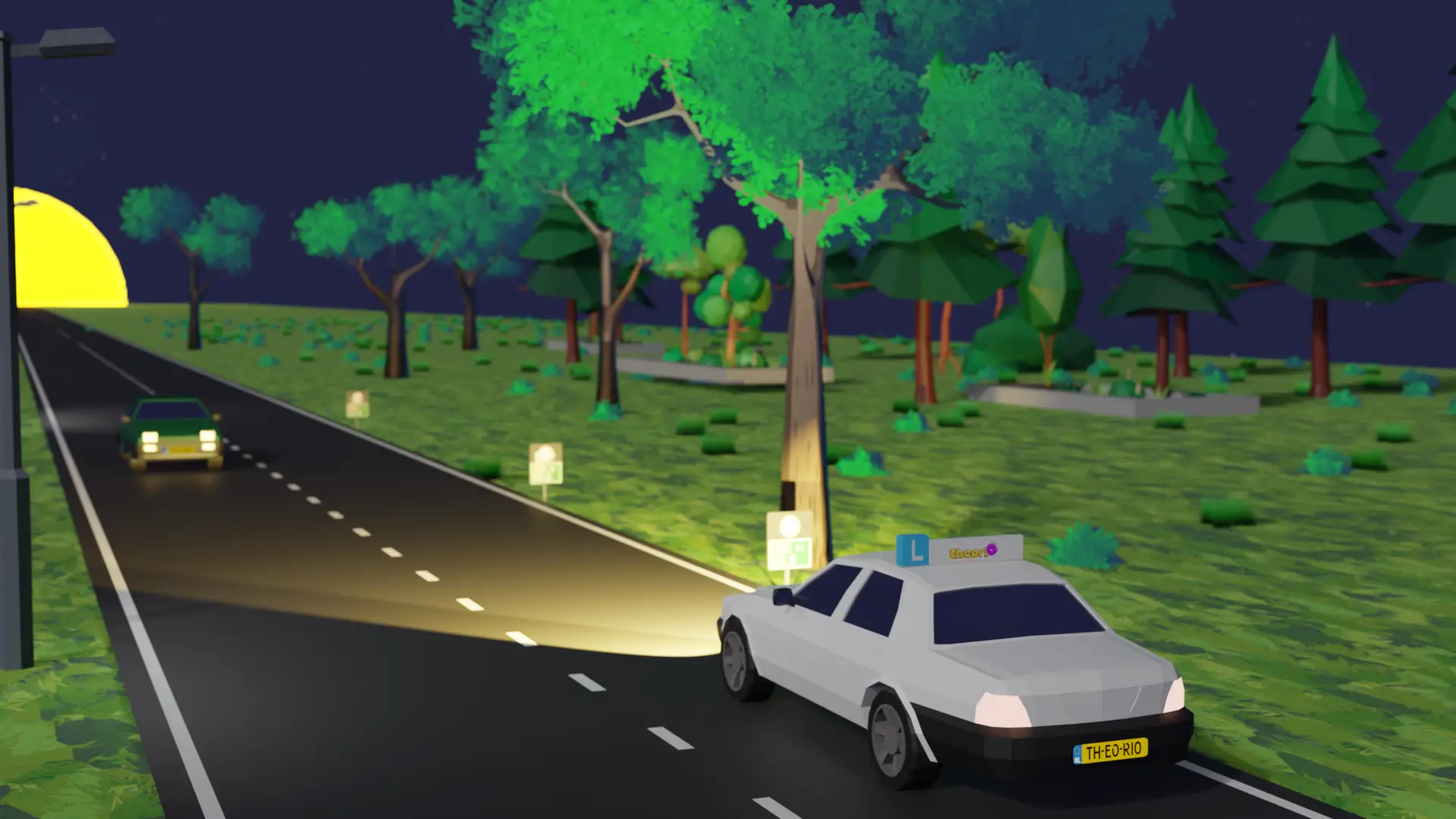
You use full beam headlights only at night on unlit roads without oncoming traffic. They are bright and can dazzle others, so switch them off quickly when you have oncoming traffic or vehicles in front of you.
City lights are only for making parked cars visible, not while driving in the dark. Daytime running lights automatically switch on in modern cars and are intended for daytime when visibility is good.
Fog lights
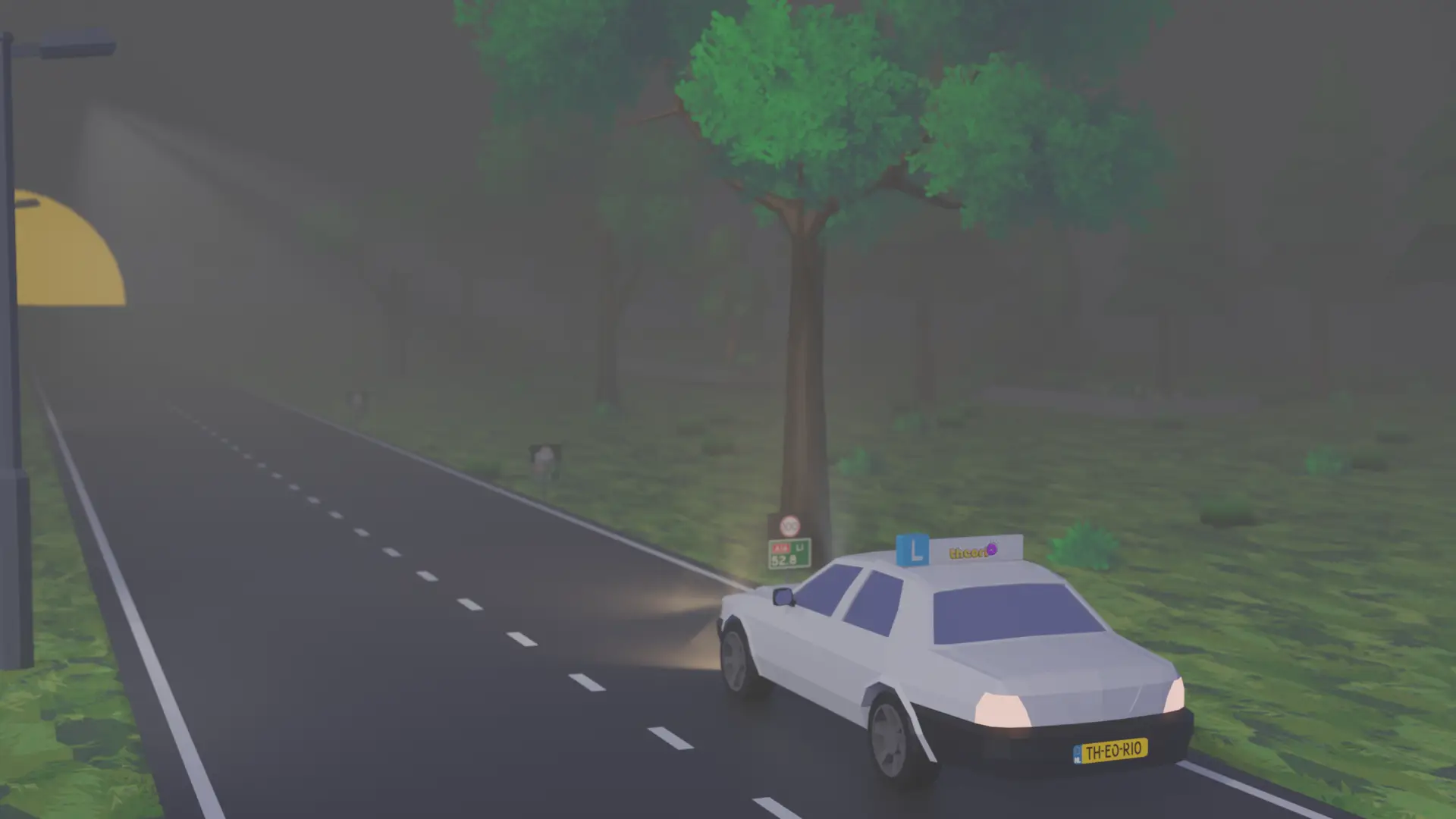
Use fog lights at the front only when visibility is seriously poor due to fog, snow or rain. The rear fog light may only be on when visibility is less than 50 metres due to fog or snow, not in rain.
Dashboard lights and vehicle checks
Dashboard lights provide important information about the condition of your car. They warn you about problems such as broken lighting, engine faults or low tyre pressure. Do not ignore these signals and check your car in time.
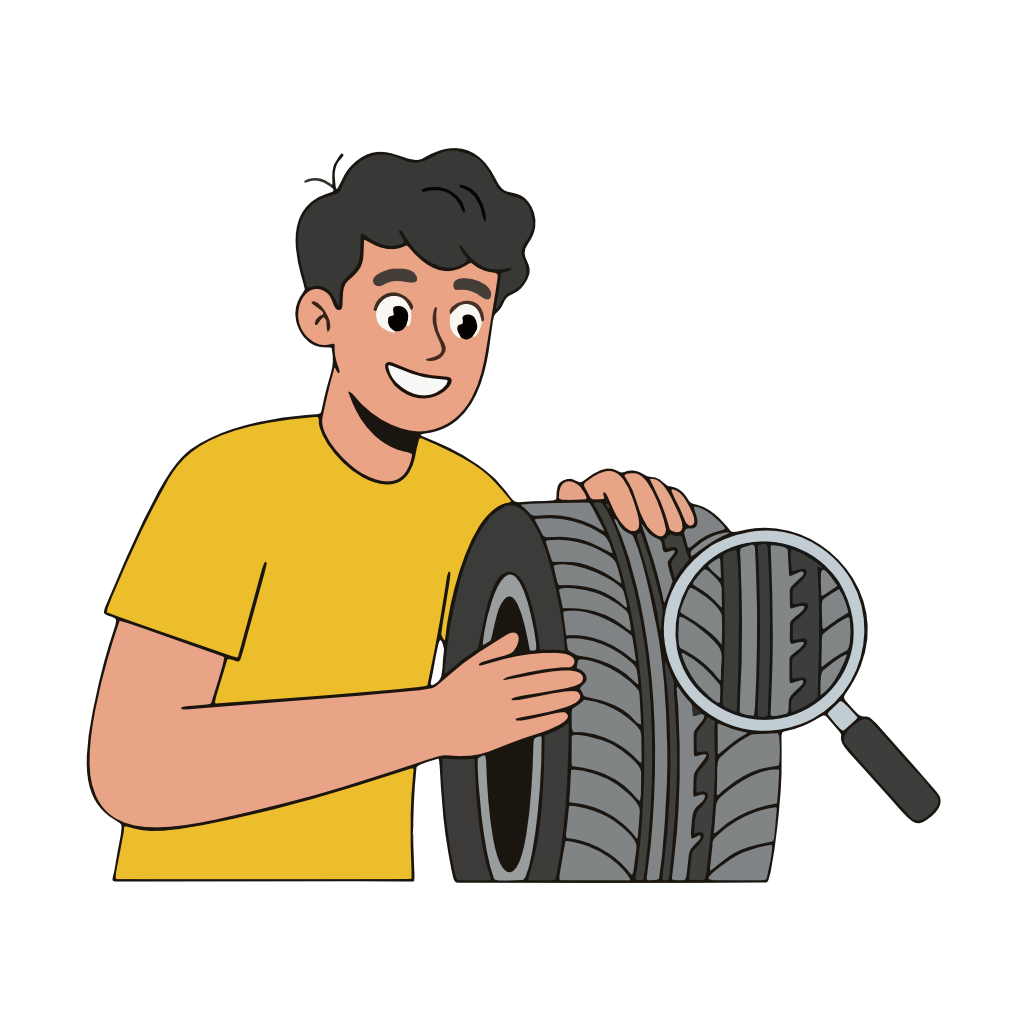
Not everything has a light. You check the oil level and tyre pressure yourself before you start driving.
Giving signs and signals
Use your lights and sound signals to warn other road users about danger, for example by briefly flashing your full beam headlights or using the horn. This is allowed only to prevent danger, not to warn about, for example, checks.
Always indicate in time with your indicators when turning, merging, or leaving a roundabout. This helps other road users understand your intentions and respond safely.
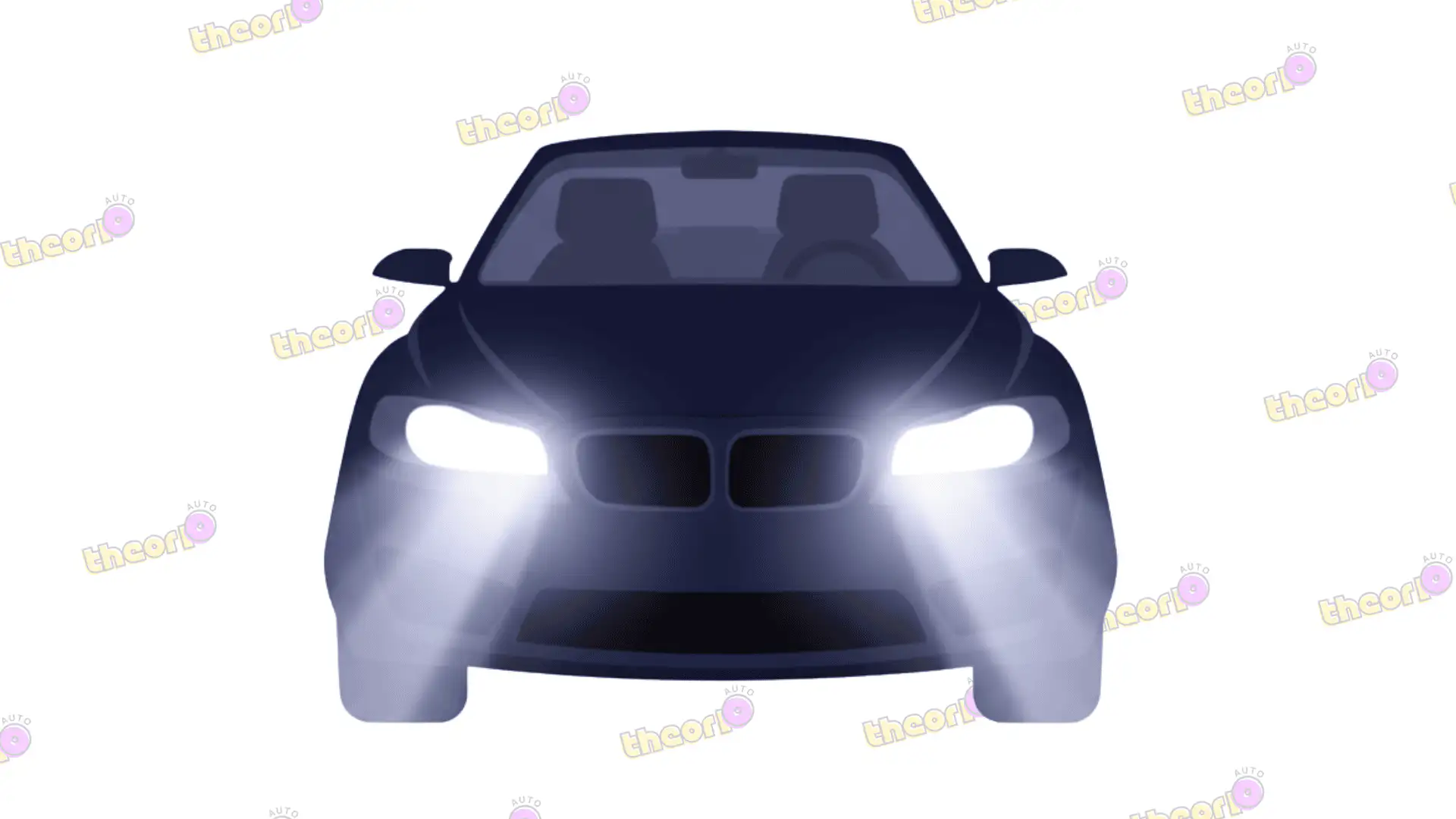
Full beam headlights help you look further ahead on a dark, unlit road. For the CBR, it mainly comes down to one question: are you dazzling someone?
If you see oncoming traffic, a vehicle in front of you, or a cyclist who may be affected by your bright light, then you do not use full beam headlights.
Core rule for the exam: use full beam headlights only at night when there is no oncoming traffic and you are not dazzling anyone in front of you. In fog, full beam headlights are unfavourable, because the light reflects back and your visibility becomes worse.
When you can and when you cannot
Full beam headlights are powerful lights at the front of the car. You use them to see further ahead, but only if it is safe. In exam questions, it is not enough to look only at oncoming traffic: traffic in front of you counts just as much.
Situation
Full beam headlights
Why
At night on an unlit road and you are alone
Yes
You may use full beam headlights to look further ahead.
Oncoming traffic is approaching
No
Full beam headlights are too bright and can dazzle.
A car is driving in front of you
No
The light can shine into the driver’s eyes via the interior mirror.
A cyclist is driving in front of you or coming towards you
No
Cyclists can also be dazzled, for example if they look back.
It is foggy
Not a good idea
The fog reflects the light back, seriously reducing your visibility.
Imminent danger
Yes, as a flashing signal
Flashing on and off is a warning, not driving lights.
On a dark, empty road, you may use full beam headlights.
The flashing signal itself belongs to giving signs and signals; that is in section 5.
You've covered Lights: full beam headlights. Does it stick?
You use front fog lights only when visibility is seriously hindered by fog, snow or heavy rain.
For the CBR, the core point is: it may be used, but it never has to. Dipped headlights may always be used. The rear fog light has its own, stricter rules.
Core rule for the exam: front fog lights may only be used when visibility is seriously reduced due to fog, snow or heavy rain. The rear fog light may only be used when visibility is less than 50 metres due to fog or snow — and never in rain.
What “serious conditions” means
The term sounds serious, but what is meant is: weather that seriously hinders your visibility. So it is not only fog, but also snow and heavy rain. Only in those cases do fog lights come into play.
Pay attention to the word serious. Not every rain shower or light mist is enough. In exam questions, fog lights are about truly poor visibility.
Front fog lights
You may use fog lights at the front when visibility is seriously hindered by:
fog;
snow;
heavy rain.
It is never mandatory. This is because not every car has fog lights, and because dipped headlights are allowed in every situation. If you use dipped headlights, you do not need to switch on fog lights; see section 3 for the rules about dipped headlights.
You can use front fog lights together with dipped headlights, but this is not recommended. Choose between those two instead.
Front fog lights are allowed in fog, snow and heavy rain.
Rear fog light
Stricter rules apply to the rear fog light. You may switch it on only if you have less than 50 metres visibility due to fog or snow.
The reason is that the rear fog light is a very bright red light. With better visibility, you would dazzle the drivers behind you.
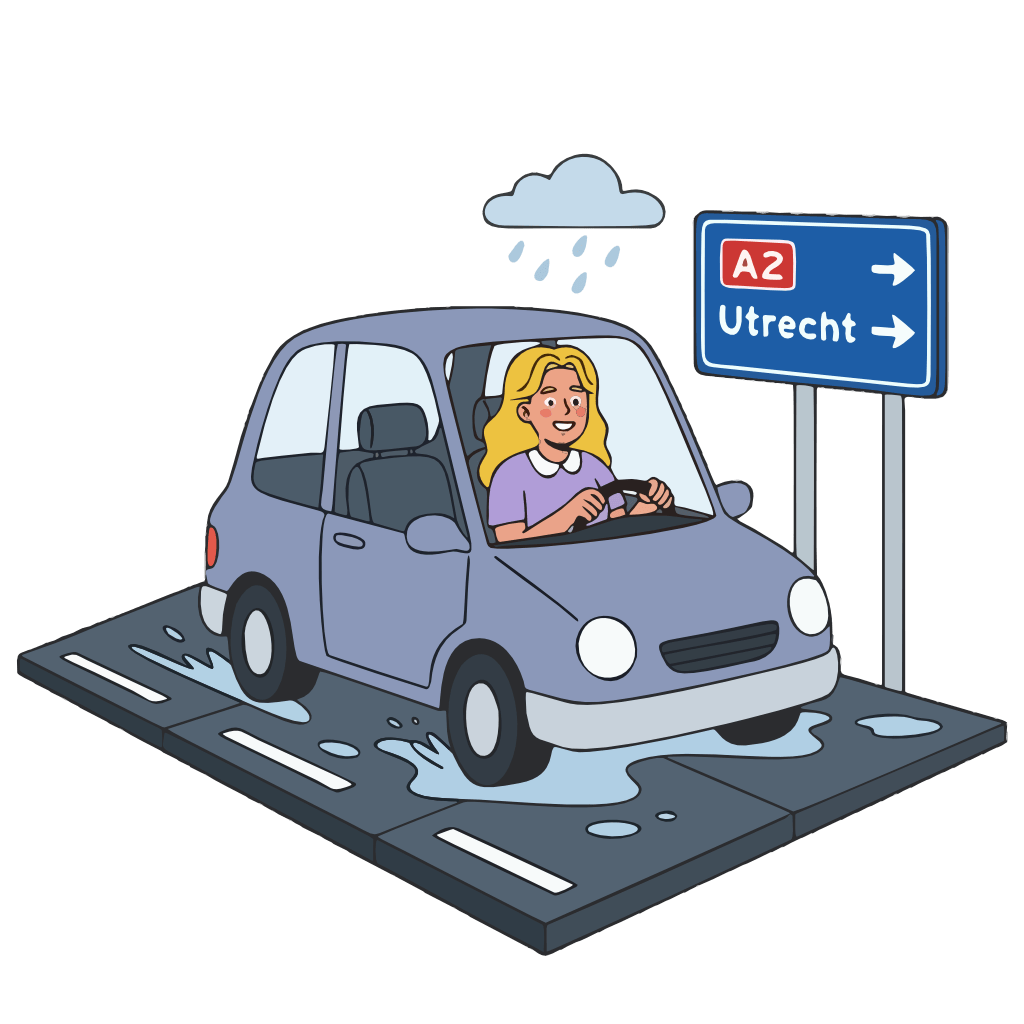
In rain, the rear fog light may not be on: the rain reflects the bright light back and thus hinders the traffic behind you. Fog lights in front may be used in rain.
❌ Heavy rain, visibility seriously reduced → rear fog light on.
✅ Heavy rain, visibility seriously reduced → only front fog lights, or dipped headlights.
Weather condition
Front fog lights
Rear fog light
Fog, visibility seriously reduced
Allowed
Only when visibility is less than 50 metres
Snow, visibility seriously reduced
Allowed
Only when visibility is less than 50 metres
Heavy rain, visibility seriously reduced
Allowed
Do not use
Normal visibility
Do not use
Do not use
Mandatory?
No, always optional
No, only allowed under 50 metres
How you measure those 50 metres
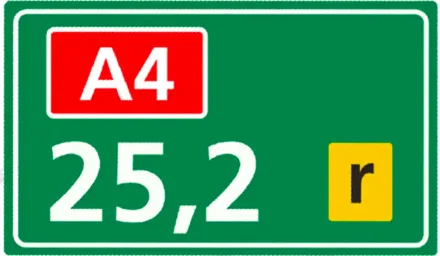
You do not have to guess. Along the road there are hectometre posts, and they are placed every 100 metres — one hectometre.
If you are at the height of a post and you can already see the next post standing there, then you have more than 50 metres visibility. The rear fog light may then not be on.
Hectometre posts are placed every 100 metres. If you can already see the next one, then your visibility is more than 50 metres.
CBR trap
Learners confuse front fog lights and the rear fog light. The difference is in two things: the rain and the 50 metres.
Front fog lights: may be used in fog, snow and heavy rain as soon as visibility is seriously reduced.
Rear fog light: only when visibility is less than 50 metres due to fog or snow, and never in rain.
A second trap is thinking that front fog lights are made mandatory as soon as the weather is bad. That is not the case: it is and remains an allowed choice.
You've covered Lights: fog lights. Does it stick?
In CBR questions, dipped headlights are usually the safe and correct answer as soon as you need extra lighting. City lights are mainly intended to make a parked vehicle visible and are often not enough while driving.
Daytime running lights are the third type: they switch on automatically, but they do not count as lighting once you really need it.
Core rule for the exam: dipped headlights may always be used and are mandatory in the dark, in a tunnel and in poor visibility. City lights are for a parked car. Daytime running lights are for daytime with good visibility, and they do not count once you need real lighting.
Why the correct lighting matters
It is about two things at the same time: being clearly visible to others, and being able to see well yourself. If you are poorly visible, another road user may drive into you. If you can see too little yourself, you may drive into something.
Dipped headlights
Dipped headlights are the most used lighting of the car. You may use them at all times, including during the day.
Mandatory when it is dark.
Mandatory in a tunnel.
Mandatory in poor visibility.
Dipped headlights are not bright and they shine downwards. That is why they do not dazzle anyone — and that is the reason they may be used in every situation.
When you switch on dipped headlights, not only the headlights come on, but also the rear lights. So you can see better, and others can see you better.
Dipped headlights must always work. If you drive onto the road with a broken front or rear light, you may receive a fine for that.
With dipped headlights, the front and rear lights are on.
City lights
City lights are also called parking lights. They consist of small lights at the front and rear of the car, including the number plate lighting.
City lights do not illuminate the road and your surroundings well enough. On a clear summer day you can drive with them, but as soon as it gets dark or you need extra lighting, you switch to dipped headlights. It is even forbidden to use only city lights while driving when extra light is needed; then use dipped headlights, or city lights together with dipped headlights.
If you park at night outside the built-up area, or if you are standing on the carriageway, then you are required to use city lights. This way other road users can see your car standing in the dark.
City lights are intended for visible parking, not for illuminating the road.
Daytime running lights
All cars from after 2010 have daytime running lights, usually LED lighting. They switch on automatically when you start the car and make the car more visible.
Daytime running lights are intended for daytime when visibility is good. As soon as you need real lighting — in a tunnel, at night or in rain with reduced visibility — you may not rely on them, because daytime running lights do not make the road more visible. Then you use dipped headlights.
Daytime running lights may also not be combined with other lighting. That is why they switch off automatically as soon as you switch on other lights.
Daytime running lights switch on automatically and are only intended for daytime with good visibility.
Which light for which situation
Situation
Dipped headlights
City lights
Daytime running lights
During the day with good visibility
Allowed
Allowed
Allowed
Driving in the dark
Mandatory
Not enough
Not enough
In a tunnel
Mandatory
Not enough
Not allowed
Driving in poor visibility, for example rain
Mandatory
Not enough
Not allowed
Visibility seriously reduced due to fog, snow or heavy rain
Always allowed
Not enough
Not allowed
Parking outside the built-up area at night or standing on the carriageway
—
Mandatory
—
In visibility that is seriously reduced, fog lighting is added; those rules are in section 2.
You've covered Lights: dipped headlights and city lights. Does it stick?
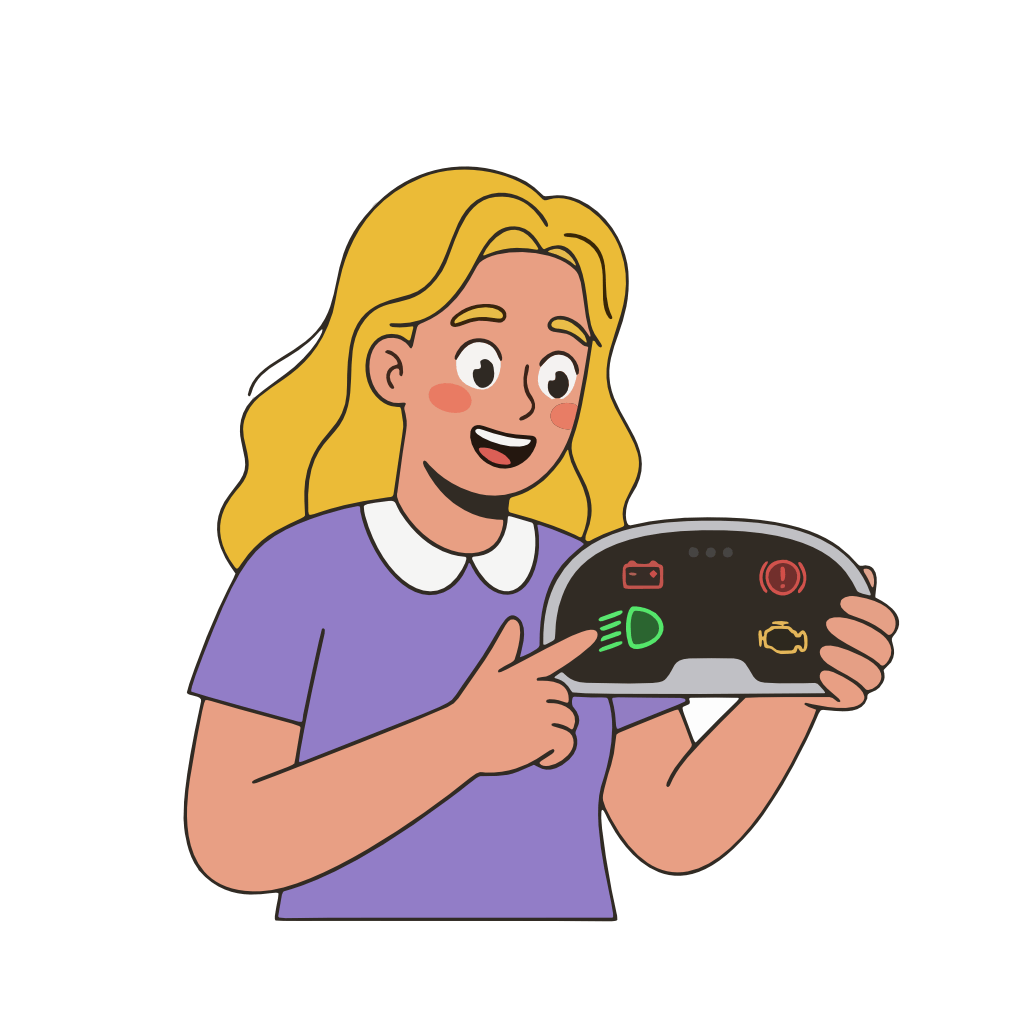
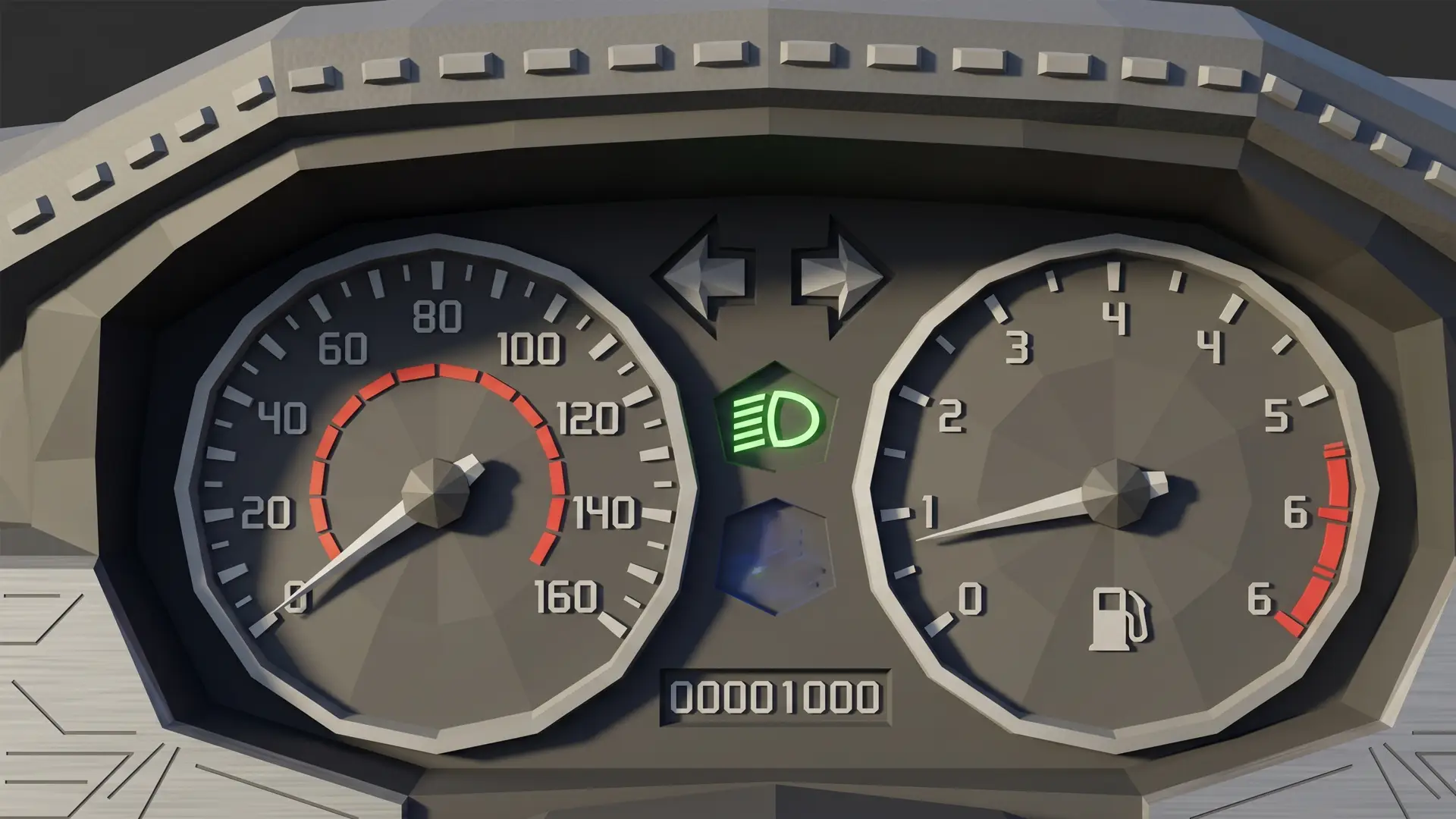
With dashboard lights, the CBR mainly looks at colour and immediate action. Red is serious, orange asks for a check and green usually only indicates that a system is switched on.
In this part you learn the colour rule and the red lights: which symbol belongs where, and what you do right away.
Core rule for the exam: red = stop immediately and switch off the engine. Orange or yellow = drive on to a parking place or garage. Green = a system is switched on. If the engine management light is flashing, treat it as red.
Colour first, meaning afterwards
In an exam question, you do not need to know every technical detail. You mainly need to know how serious the light is and what you do immediately.
Colour of the light
Meaning
What do you do?
Red
Serious problem
Stop the car immediately and switch off the engine
Orange/yellow
Problem that needs to be checked
You can still drive; go to a garage as quickly as possible
Green
System works or is switched on
No fault; this is only a notification
Flashing engine management
Major problem
Treat as red: stop as quickly as possible
Ignoring a red light can lead to serious damage to the car or even accidents.
The exact meaning can differ by make and model. If you are not sure what a light means, consult your car’s instruction manual or a mechanic.
Pay attention to colour and symbol: that determines your first decision.
The red lights
These are the lights where you stop. Each light has a recognition point in the symbol itself.
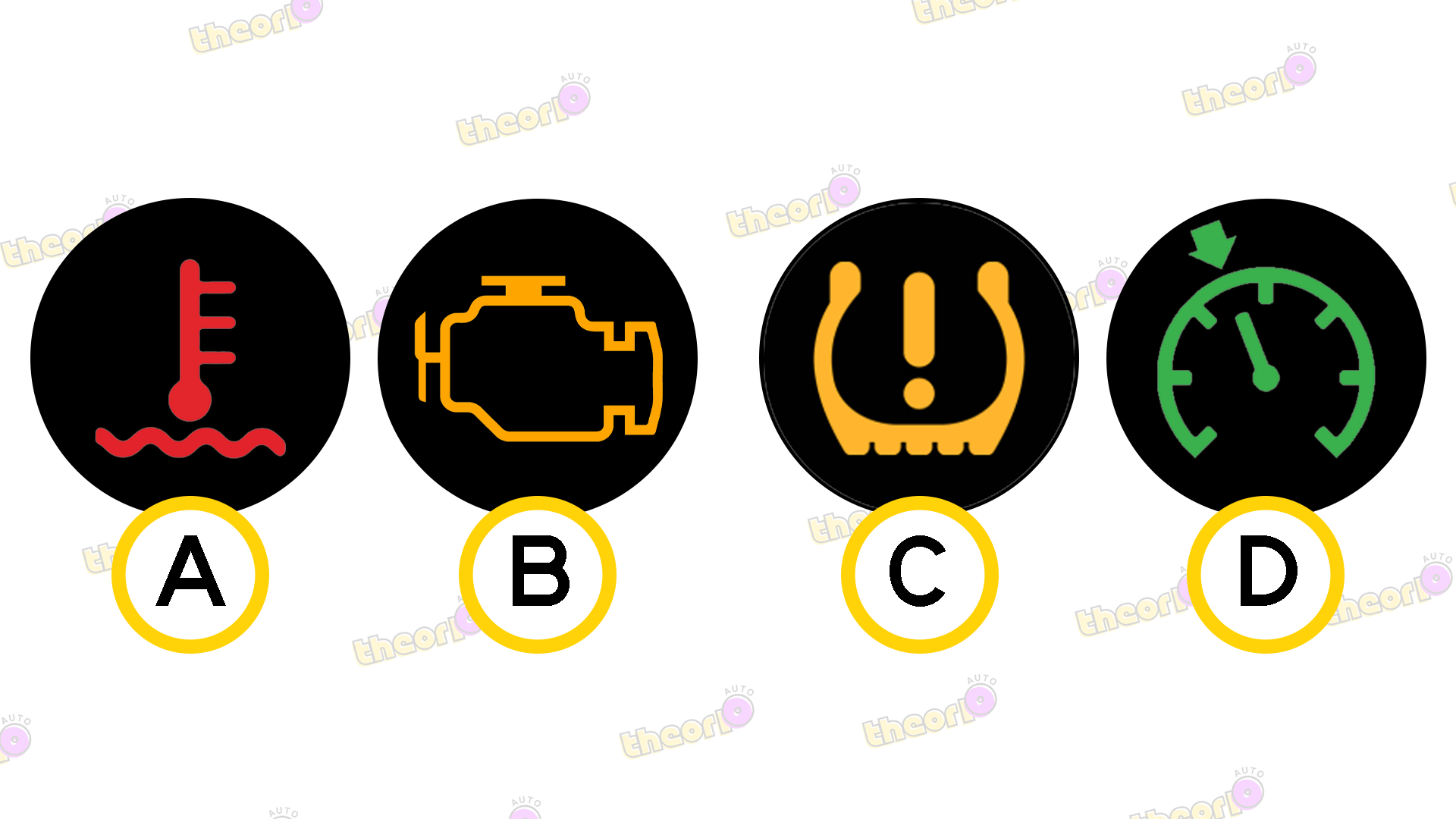
Engine management / engine fault
You see an image of an engine block. Something is wrong with the engine or the electronics.
Is the light on: there is a fault that needs to be checked.
Is the light flashing: major problem, so stop as quickly as possible.
Engine overheating / coolant
You recognize the thermometer: this light is about the engine temperature. The engine is too hot, which can be caused by a lack of coolant. Stop and switch off the engine.
Oil level too low or too high
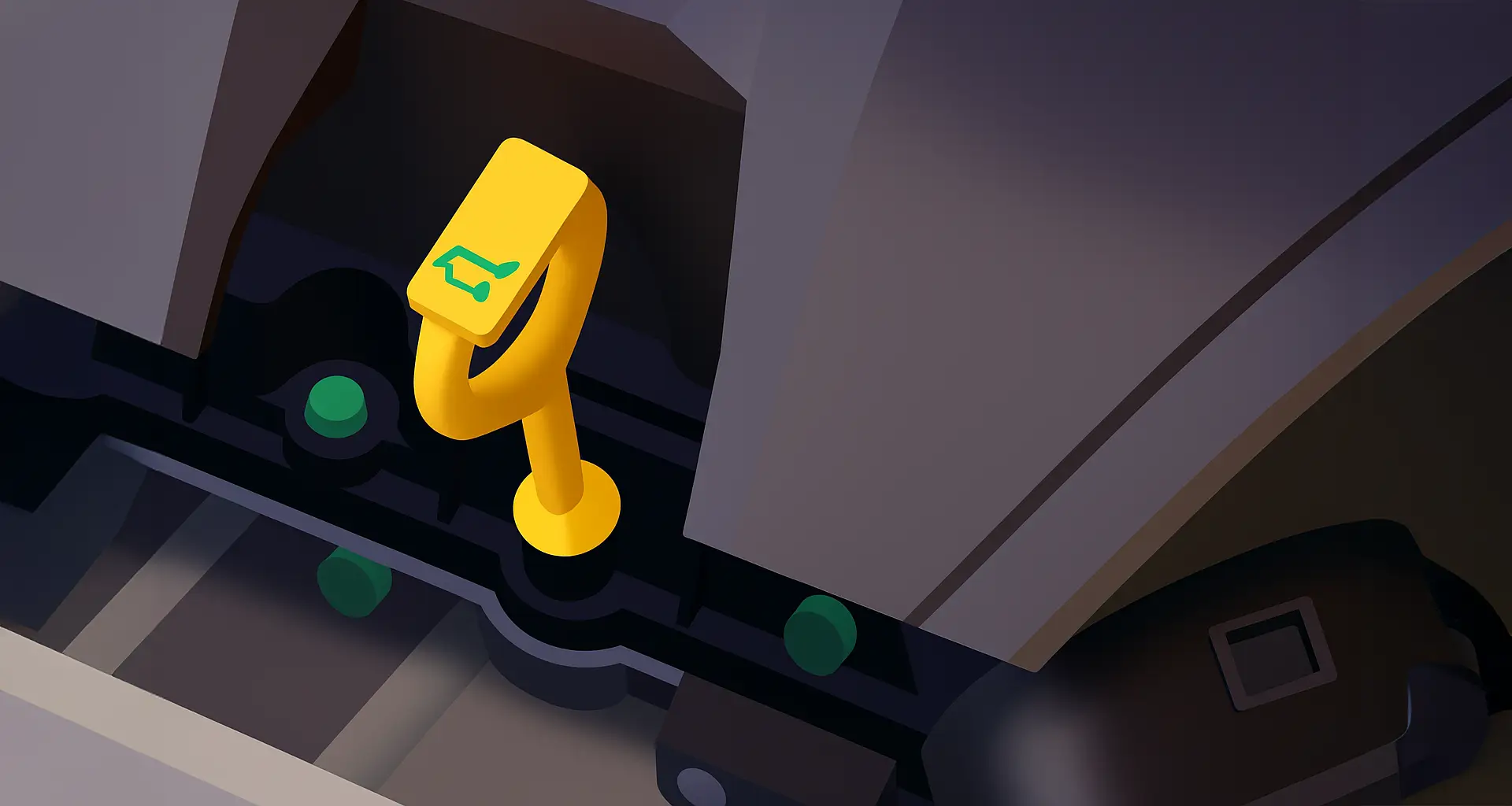
The symbol looks like an old-fashioned oil lamp. The oil level is too low or too high.
Stop and check the oil level, then you know whether you need to top up the oil or drain it. Let the engine cool down first for at least 20 minutes.
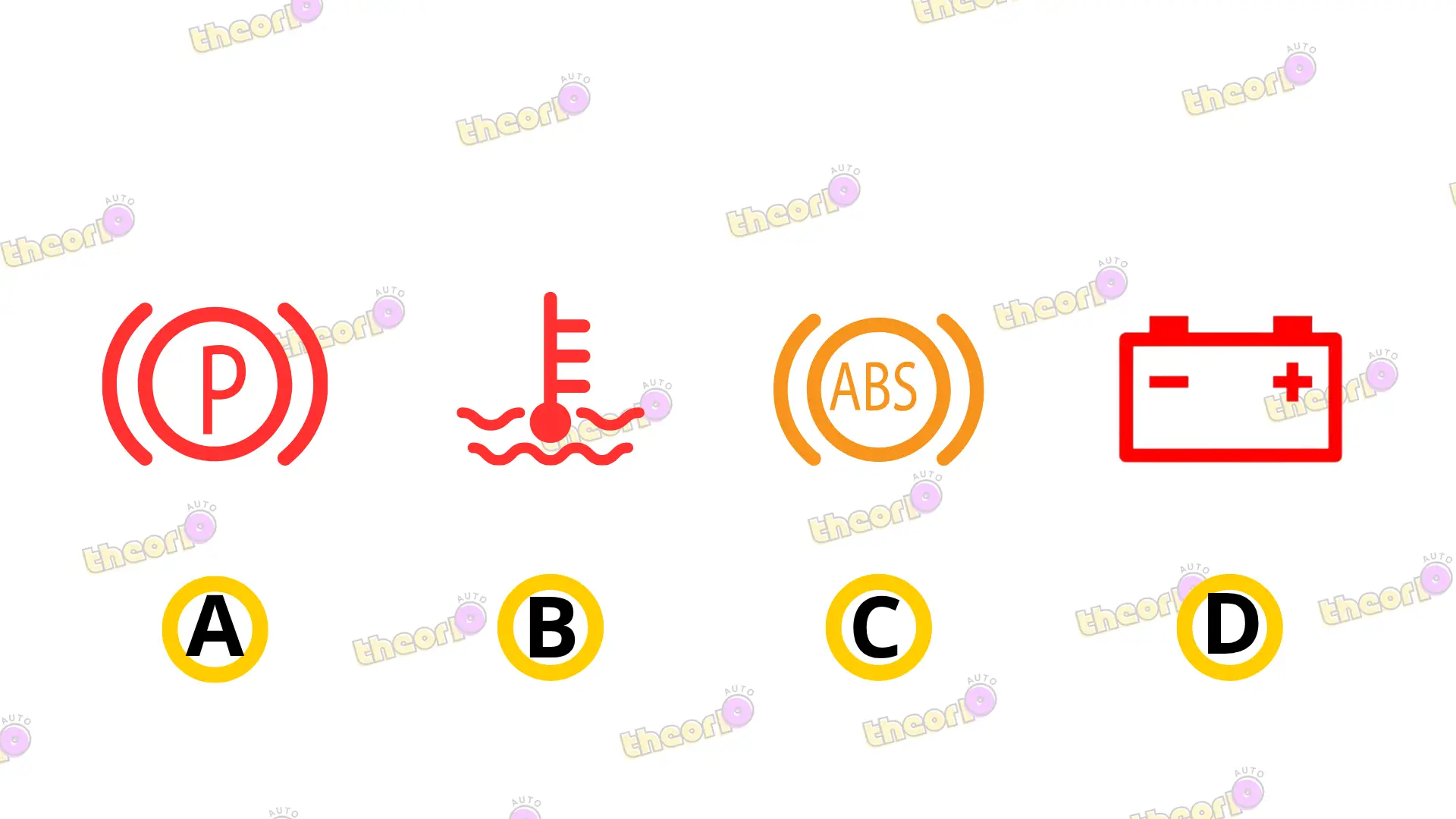
Braking system / handbrake
The line in the middle looks like the handbrake lever, the circle around it is the tyre and the little hooks are the brakes.
This light can mean three things:
the handbrake is engaged while the engine is running;
there is a problem with the braking system;
brake fluid needs to be topped up.
Low battery voltage
You recognize a battery with a plus and a minus. There may be a fault in the alternator, the drive belt or the power cables.
A flat battery can also be caused by normal use: if you leave your lights on, they keep drawing power. And on short trips, the alternator does not have enough time to recharge the battery.
Hazard warning lights
This light looks like a warning triangle and flashes red, but it is not a fault. It only indicates that your hazard warning lights — also called waarschuwingslichten — are switched on.
The red dashboard lights and their recognition points.
The orange and green lights are in section 5.
CBR trap
The most common mistake is: red light, driving on a little longer to get home or to the next exit. That is wrong. With red, the rule is: stop immediately and switch off the engine.
A second trap is treating the flashing engine management light as normal orange. Flashing engine management means the same as red: stop as quickly as possible.
You've covered Dashboard lights part 1. Does it stick?
In this part you find the lights that you do not immediately pull over for: orange warnings and green notifications.
Then two things that the CBR also counts as vehicle knowledge: the checks you do yourself because there is no light for it, and giving signs and signals — with your lights, your horn and your indicator.
Core rule for the exam: orange or yellow means that you usually may still drive on, but you must have it checked quickly. Green means a system is switched on. And signals — light, horn, indicator — you give to prevent danger or to show what you intend to do.
Orange and green
Colour of the light
Meaning
May you drive on?
Action
Orange/yellow
There is a problem that needs to be checked
Yes, usually
Drive on to a parking place or garage and have it fixed quickly
Green
A system is switched on or works normally, for example your lighting
Yes
No direct action needed
The exception is the flashing engine management light: that counts as red. The colour rule and the red lights are in section 4.
Engine management / engine fault
A light in the shape of an engine block means that something is wrong with the engine or the electronics. If the light is on orange, then you can usually still drive, but have it checked as quickly as possible.
ABS fault
ABS stands for anti-lock braking system. This system ensures that the wheels keep rolling when you brake hard. As a result, the tyres do not skid over the road surface, the car remains steerable and you can brake hard. If the light with the letters ABS is on, then there is a fault in that system.
Screen wash fluid
A light with a “little fountain” by a window: screen wash fluid needs to be topped up. You may drive on, but fix it quickly.
Cruise control
An arrow pointing to a speed. A speed has been set that the car maintains itself; you do not need to press the accelerator anymore.
Rear window heating
A square window with heating lines inside, like arrows pointing upwards — warm air rises, and the rear window is always drawn as a square. The rear window heating is on.
Automatic start-stop system
An A with a round arrow: the A stands for automatic, and the arrow looks like the restart icon on your phone.
This system automatically switches off the engine when you are stopped and starts it again when you start driving.
Orange warns, green informs.
What you check yourself
Not everything has a light. You do these checks before you start driving.
Oil level
Check the oil level regularly. This keeps the engine properly lubricated and reduces the chance of engine damage. The light that belongs to this is in section 4, including the 20 minutes cooling down.
Tyre pressure
You also check the tyre pressure before you start driving. Tyre pressure is often overlooked, but it has a big influence on roadholding: tyres are the only parts of the car that touch the road surface, so they must not be too hard and not too soft. Do this check yourself: not every car has a warning light for it.
Wrong fuel filled
If you notice at the pump that you are filling the wrong fuel, stop immediately. Do not start the engine — that can seriously damage the fuel system. Call for help from a breakdown service, which can empty the tank before any damage occurs.
You check the oil level and tyre pressure yourself, before you leave.
Warning with light and sound signals
If you see danger approaching on the road, you may warn other drivers. You do this by using the horn or by briefly switching your full beam or dipped headlights on and off.
Examples of such situations:
an oncoming vehicle with a broken headlamp;
someone who is driving in the dark with absolutely no lights;
a car with a loose exhaust;
children playing on the road.
If you are dazzled by oncoming traffic with full beam headlights, you may also briefly flash your lights.
Important: you may use these signals only to prevent danger. Warning others about, for example, a speed check is not allowed. In the exam, this topic largely falls under vehicle knowledge.
Briefly flashing is allowed to prevent danger — not to warn about a check.
Indicating direction
With your indicator you let others know in time what you intend to do, so they can respond to it.
Indicating is mandatory when you change lanes, turn, or leave a roundabout.
If you want to drive away or merge, you indicate at the moment there is enough space and you also genuinely intend to go. You may not claim priority by indicating too early.
Merging and leaving the motorway
Before you merge from the slip road, you first build up speed on the acceleration lane. Only indicate when you can safely merge into the main carriageway.
If you leave the motorway, you may indicate that in advance: 300 metres before the exit you indicate to the right, and you keep the indicator on until the end of the lane markings.
Leaving the roundabout
When leaving a roundabout, you always indicate to the right. You do this as soon as the exit you want to take is the next one you encounter.
If you take three-quarters of the roundabout, meaning the third exit, then you may switch on your left indicator in advance. This is not mandatory, but it is safer.
If you want to turn right at the first exit, you indicate before you enter the roundabout.
When leaving the roundabout, you always indicate to the right.
You've covered Dashboard lights part 2. Does it stick?
FAQ
Frequently asked questions
Short answers to common questions about Car lighting & Dashboard.
When do you use dipped, main and fog lights?
In normal darkness or poor visibility you use dipped headlights. You use main beam outside built-up areas when there is no traffic close ahead of or coming towards you — you dip in time so you don’t dazzle others. You may only switch on the rear fog light when visibility due to fog, snow or rain is less than 50 metres.
What do the colours of the warning lights in your car mean?
The colour indicates the urgency. A red light means: stop safely as soon as possible — there is a serious problem (for example oil pressure, engine temperature or the brakes). An orange or yellow light is a less urgent warning — have it checked soon. A flashing light is more urgent than one that stays on continuously.
Keep practicing with up-to-date material
You now have the basics of car lighting, dashboard lights and giving signs and signals. The exact rules often depend on visibility, weather, time of day and danger; practice in our app with the most up-to-date CBR information so you know which light or signal applies when.
Ready to practise?
Test your knowledge of Car lighting & Dashboard with 55 practice questions in the app.
Your first quiz is free, no account needed. ·After that from €19.99 for 90 days of access.