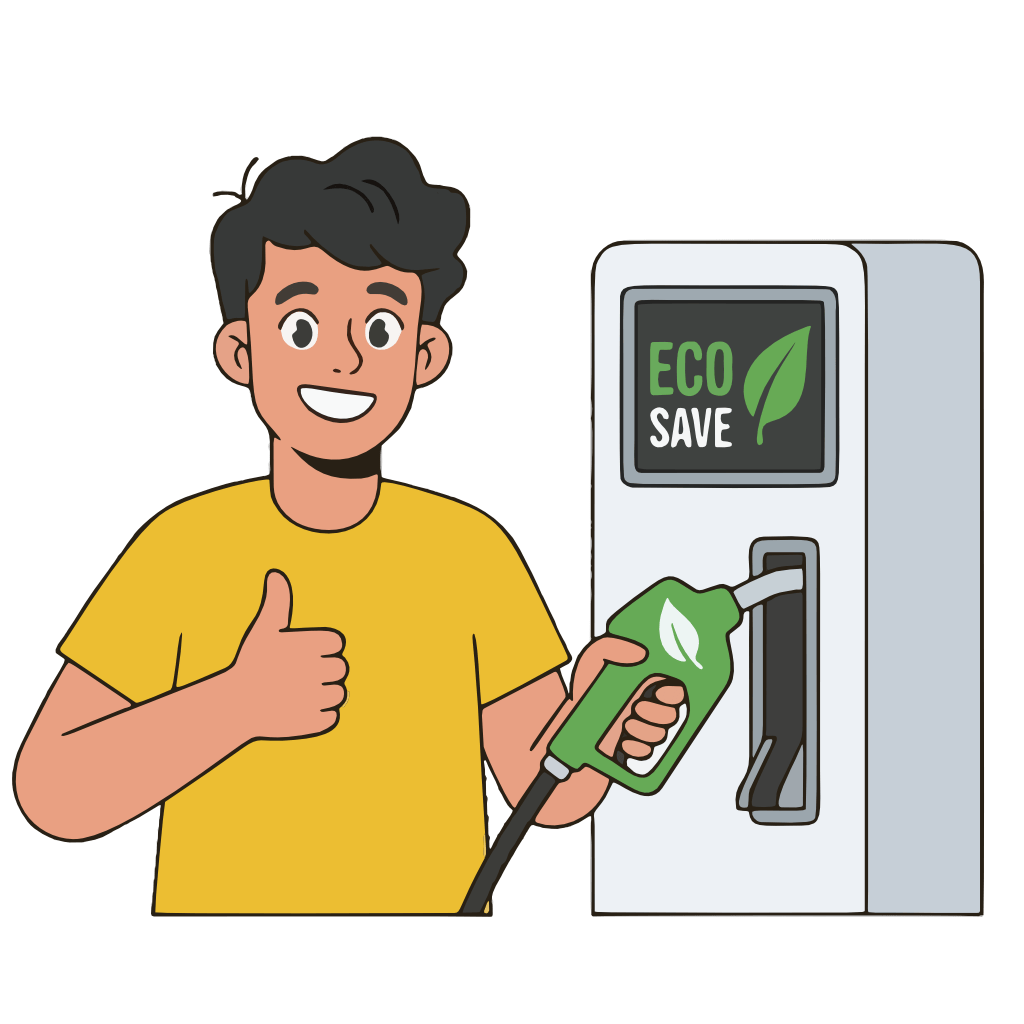

Illustration of a driver giving a thumbs-up next to a green eco fuel pump

Environment, Economical Driving & Breakdown

60 Questions
Easy
6 Parts

Learn to be environmentally aware and drive economically: save fuel and act safely when you have a breakdown on the road. Practice this CBR exam topic for free with real theory questions.

Chris Prosman Chris Prosman

Study material

What will you learn?

Economical driving saves fuel and protects the environment. You also learn what to do in case of a breakdown along the road.

Environment, Economical Driving & Breakdown at a glance

Environmentally aware and economical driving

Most cars still run on petrol or diesel. By driving smartly, you can save fuel and put less strain on the environment. Plan your route in advance to avoid traffic jams and detours. Use a navigation system to prevent unnecessary waiting.

Anticipate traffic by keeping enough distance and looking ahead. Release the accelerator in time when you see a red traffic light, so you brake less and use less fuel. Drive at a constant speed, for example with cruise control, but stay alert.

Saving fuel in the car

  • Use air conditioning and heating sparingly, because they use extra fuel.
  • Driving with the windows open increases air resistance and therefore fuel consumption.
  • Only take the items you really need, to keep the car’s weight low.
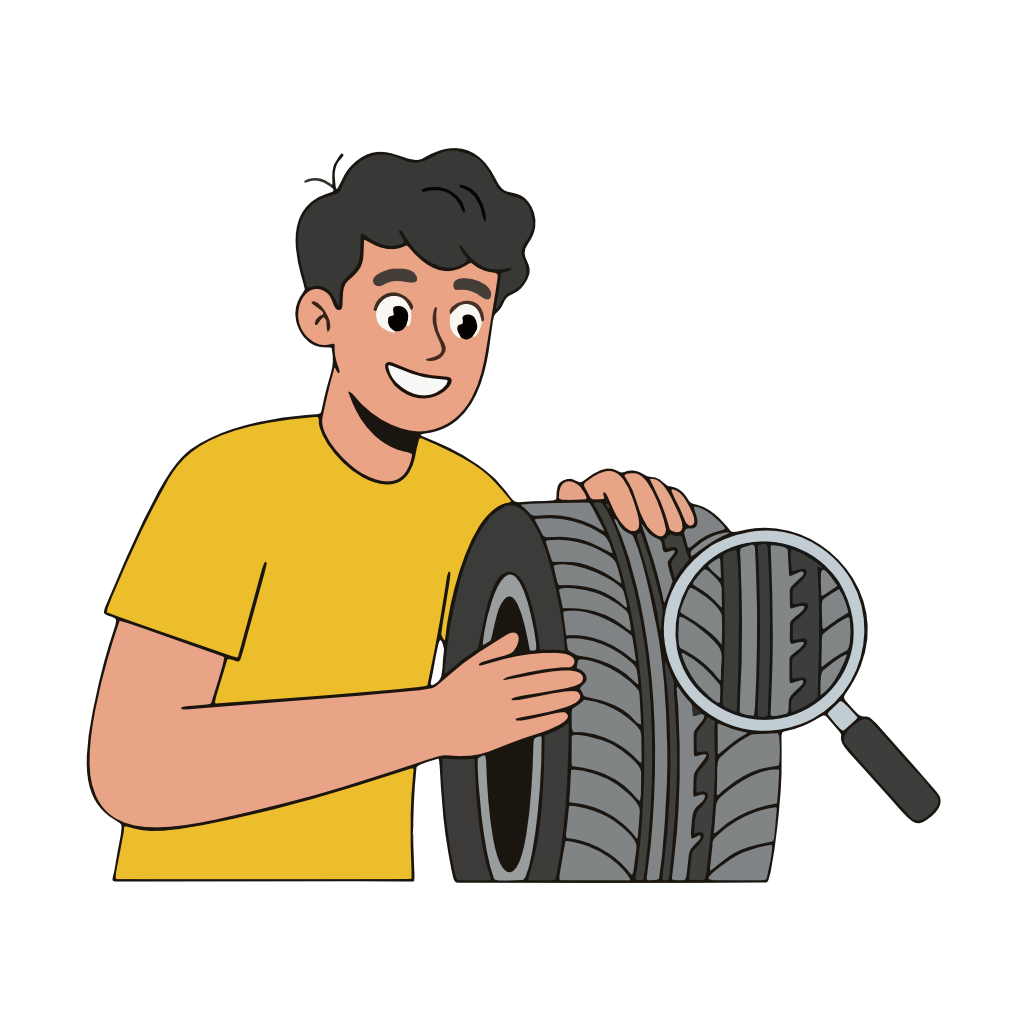
  • Make sure the tyre pressure is correct; tyres that are too soft increase consumption.
  • Shift up quickly to a higher gear so you use the engine power efficiently.

Engine use and emissions

Switch off the engine during longer stops, especially in tunnels or garages, to avoid harmful exhaust gases. Do not let the engine run unnecessarily at idle, because that increases wear and emissions.

What to do in case of a breakdown or an accident

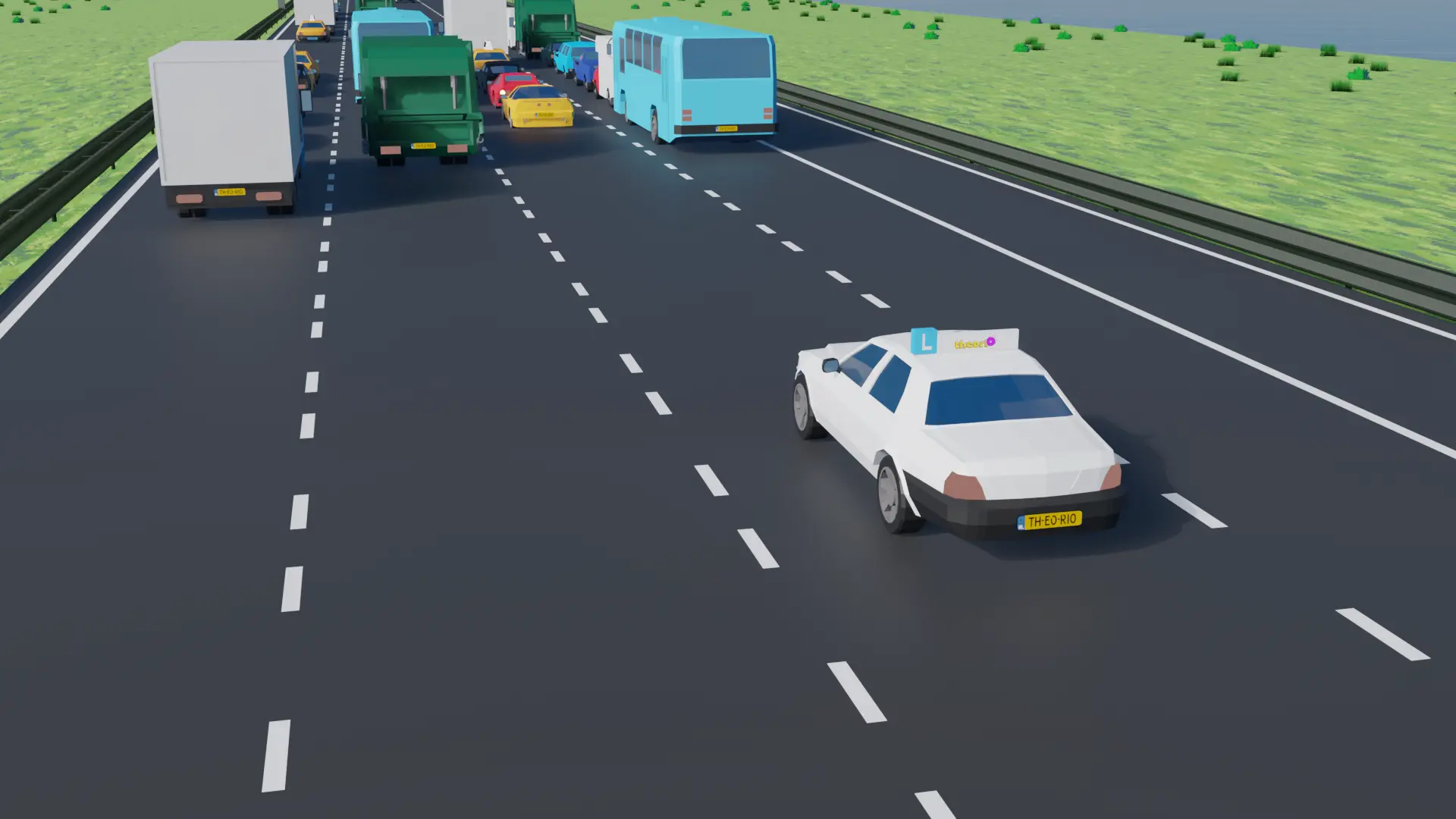
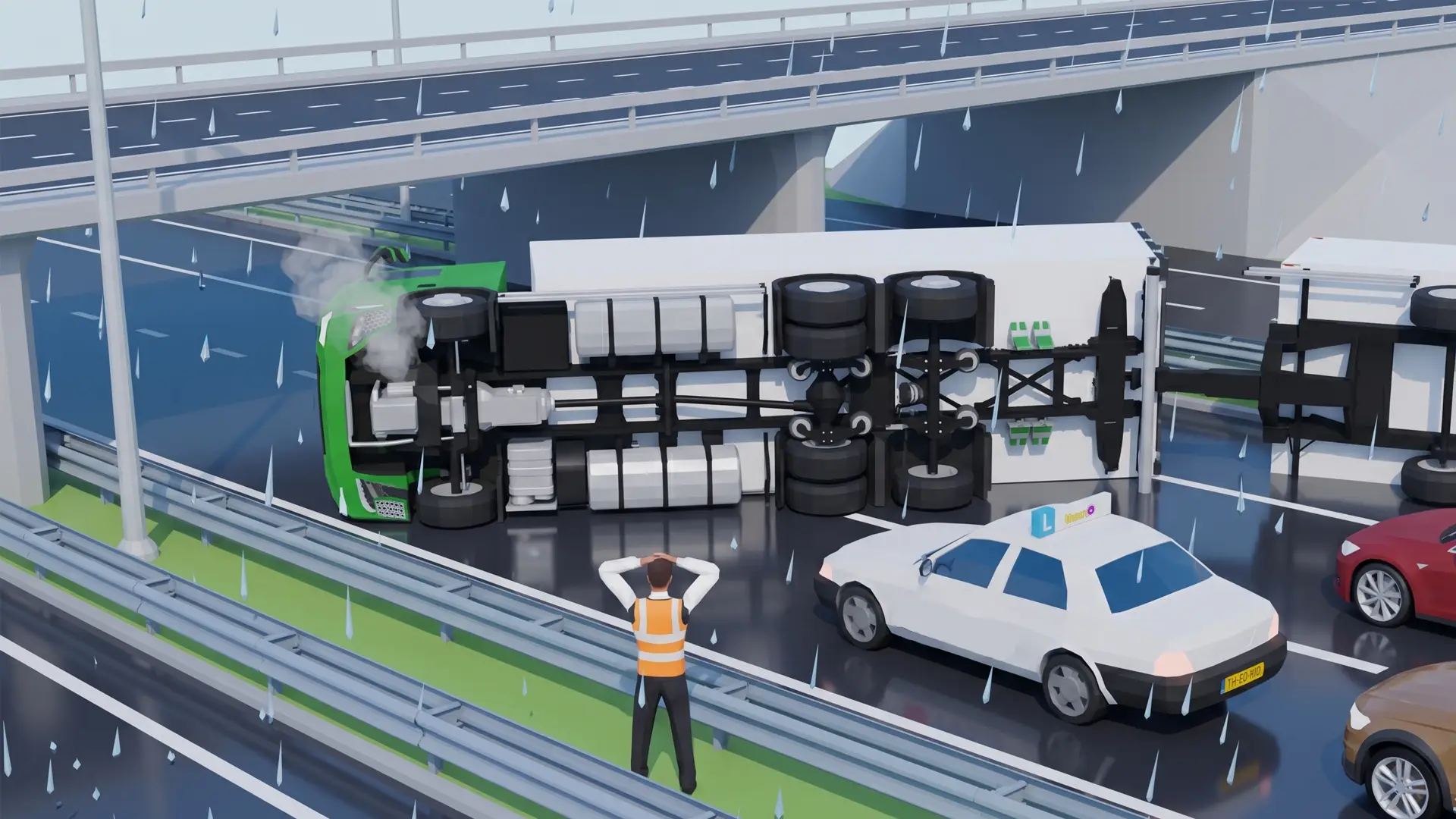
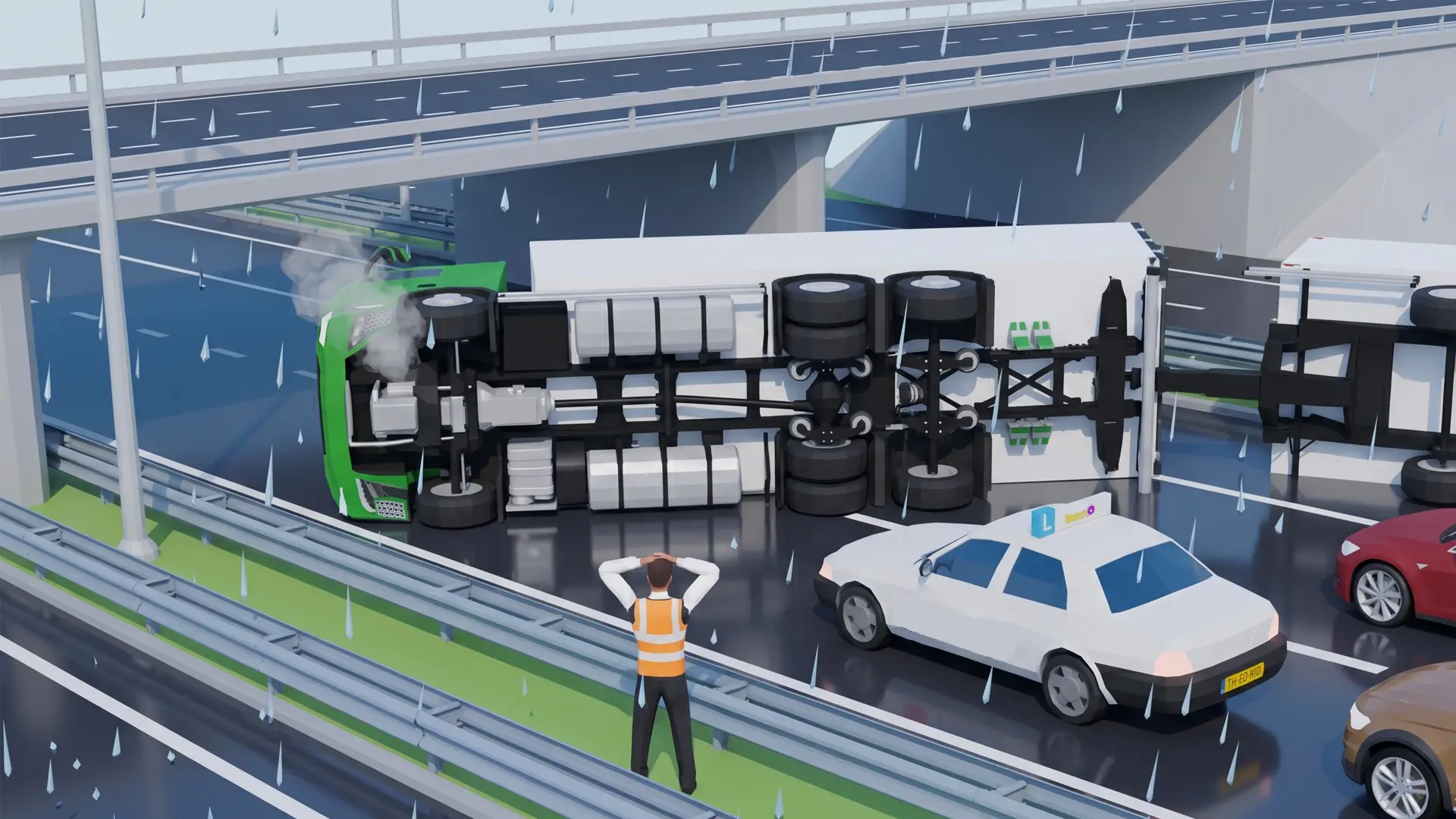
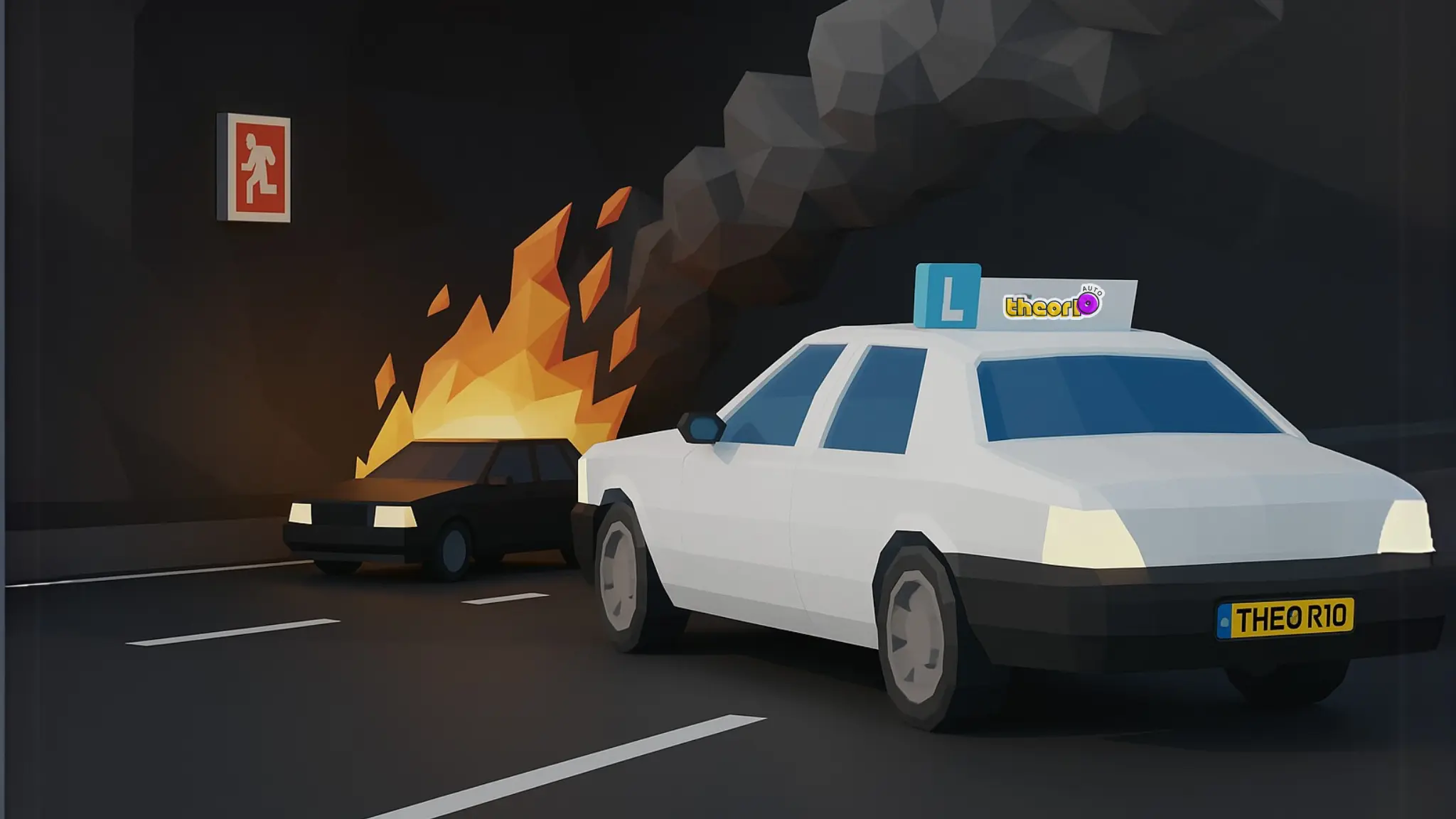
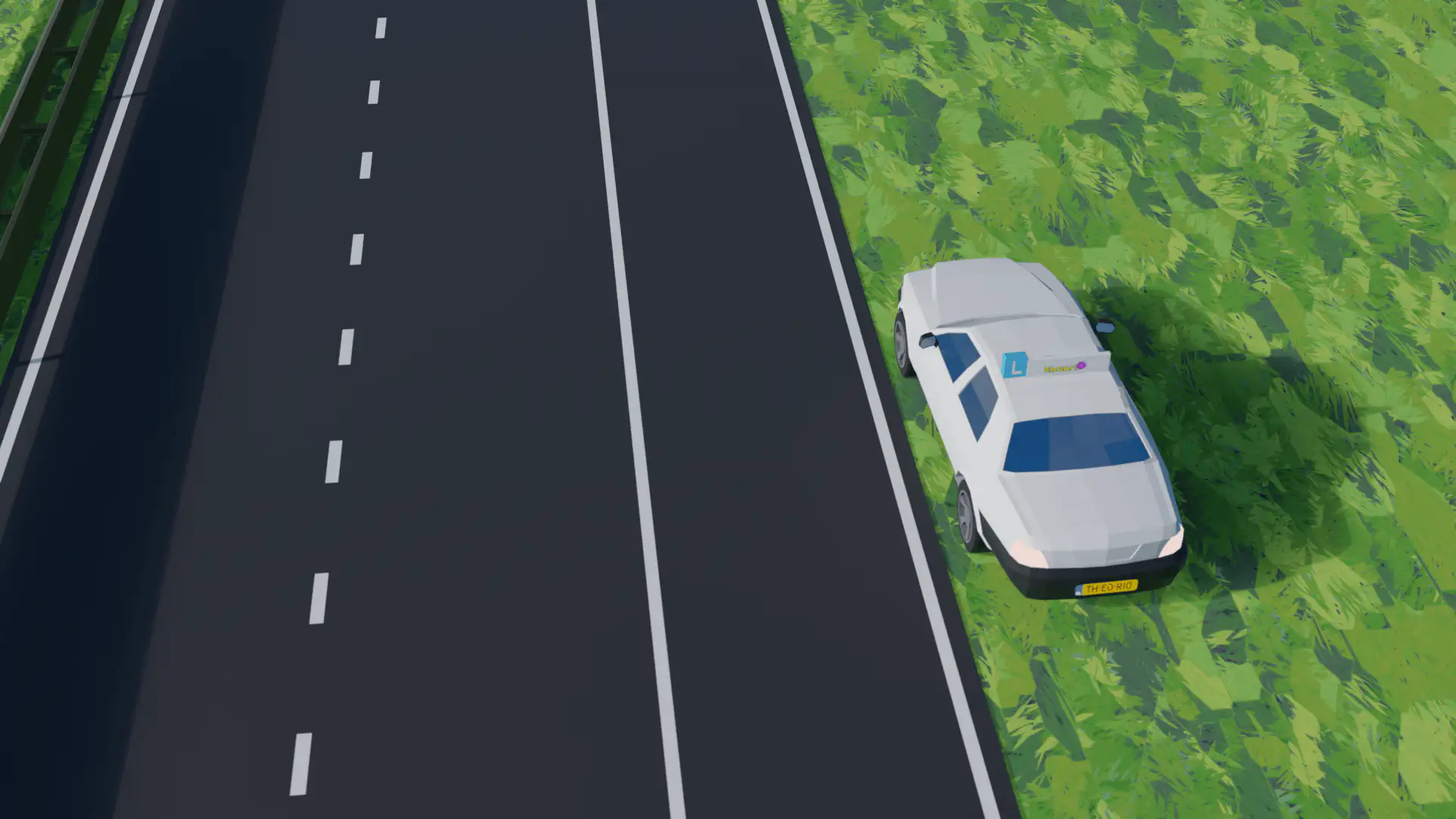
In case of a breakdown, first release the accelerator and keep the car under control. Then stop at the safest place, turn on the hazard warning lights, and stand behind the crash barrier or in the verge. Only call for help once you are safe yourself. In a tunnel, try to stop outside the tunnel; if that is not possible, walk to the nearest emergency exit.

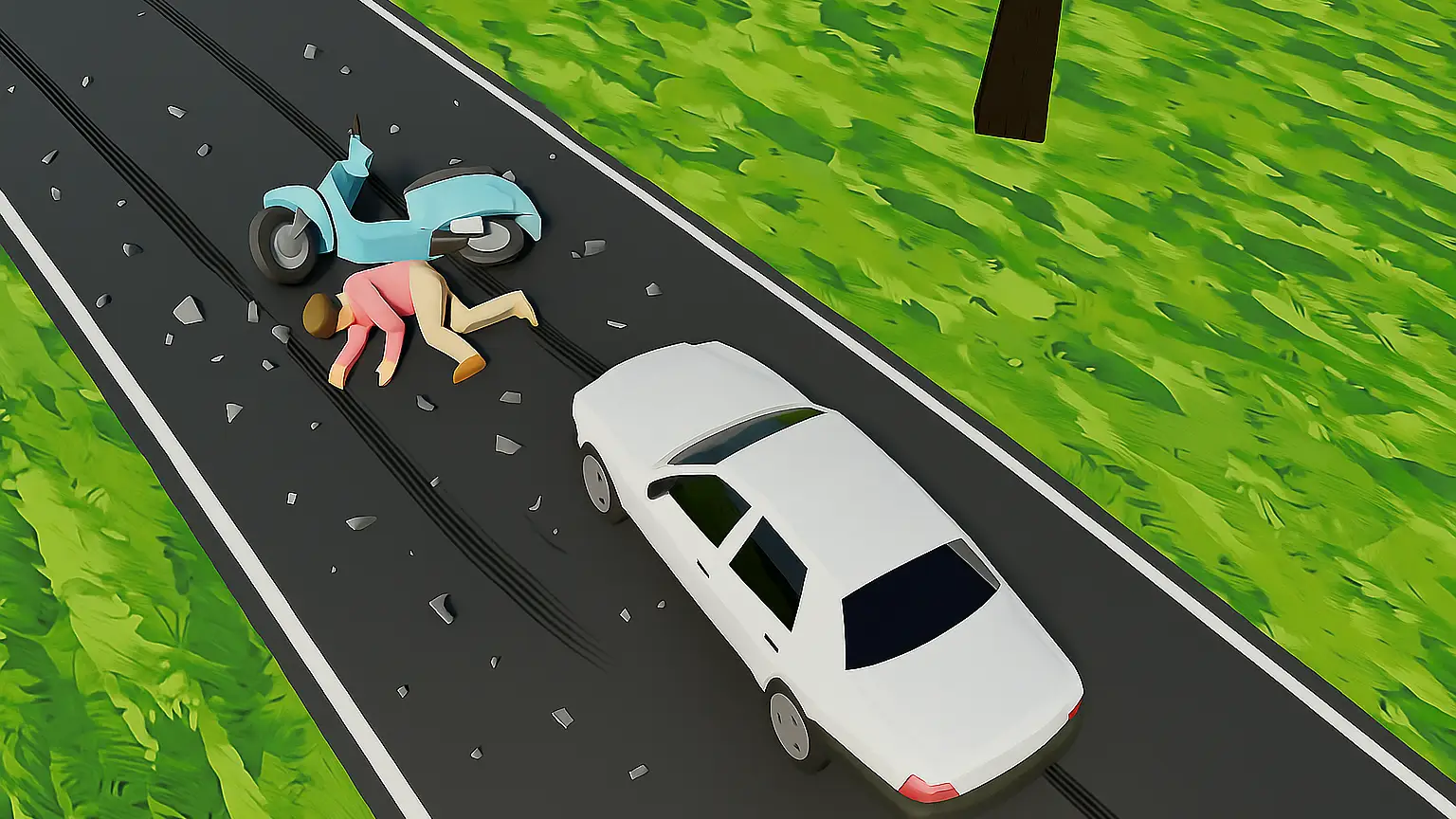
In case of an accident, first make sure you are safe. Then help the victim in a way that fits the situation and call 112. Driving on after an accident is never allowed.

Driver assistance systems

Driver assistance systems such as ABS, ESP and an emergency braking system inform, warn or intervene. They do not take over responsibility from the driver.
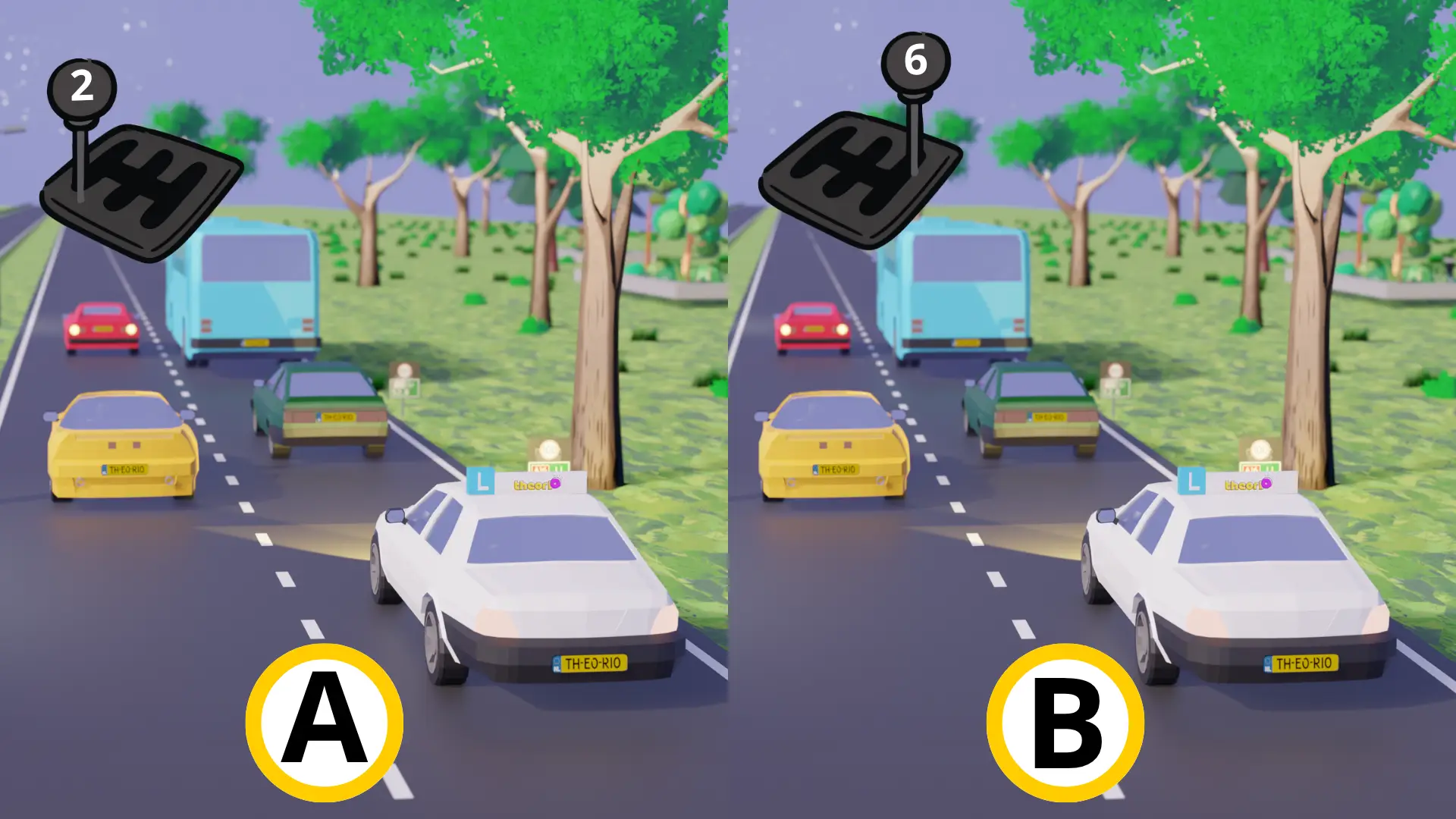
Economical driving starts with low revs and shifting up in time. For the exam, you must recognize that a high engine speed uses more fuel and that a higher gear is more economical.

So you do not stay unnecessarily long in a low gear. From a standstill you start in 1st gear, but after that you shift up quickly so the engine speed stays as low as possible.

CBR core rule: the higher the RPM, the more fuel consumption and CO2 emissions. That is why, after driving away, shift quickly to a higher gear and keep the car running as much as possible at low RPM.

The rev counter

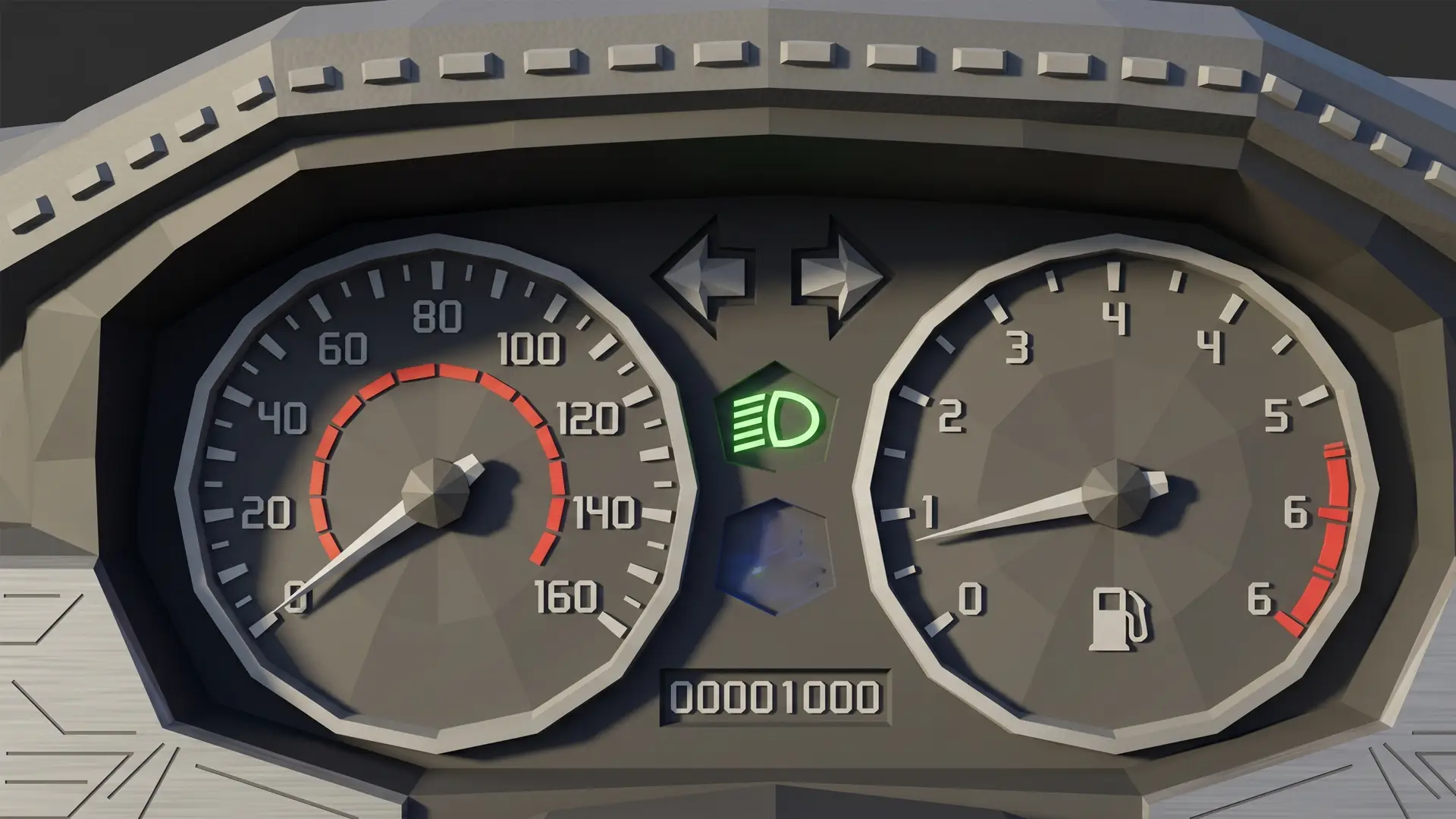
Most cars have, next to the speedometer, a rev counter. It shows how fast the engine is running, in revolutions per minute.

The gauge is at 0 when the car is switched off. The higher the RPM, the louder the engine sounds and the more fuel the car uses.

  • High RPM = more fuel consumption and more CO2 emissions.
  • Higher gear = lower RPM, so less consumption and less emissions.

The rev counter helps you choose the right moment to shift. It is not necessary for safe driving: in most cases you can also hear when you need to shift.

Rev counter next to the speedometer, with an arrow pointing to the needle that indicates the RPM
The rev counter counts in thousands of revolutions per minute. High RPM means more fuel consumption.
Gear lever with positions 1 through 5 and R
From a standstill you start in 1st gear and shift up quickly.

Shifting: shift quickly to a higher gear

From a standstill you set off in 1st gear. If you keep driving in that gear while you go faster, the engine will rev too high. That is why you should shift up quickly to keep the RPM as low as possible. If you can drive in 4th gear, choose that: in 4th gear the engine makes the fewest revs.

SituationEconomicalNot economical
You drive away from a standstillStart in 1st gear and then shift up quicklyStay in 1st gear for too long
The engine makes many revsShift up to a higher gearKeep the same low gear
You can drive in a higher gearChoose the higher gear for lower RPMMake unnecessary high revs

Letting off the accelerator and coasting in gear

Are you driving in 4th gear and do you see a traffic light ahead that is red? Then release the accelerator in time and let the car coast in that gear.

This is economical for three reasons:

  • You do not use fuel by continuing to give unnecessary accelerator input.
  • You need to brake less hard further ahead, so you do not waste the speed you have built up.
  • If the light turns green again, it costs less energy—and therefore less fuel—to get going again.

This is the best-known example of anticipating. You can read more about this, and about keeping distance, in section 3.

CBR trap

Many students choose to keep driving for a long time in a low gear, because the car then feels powerful. For the CBR, that is the wrong environmentally aware answer: low gear + high RPM = not economical.

A second trap is thinking that you have to brake as soon as you see a red traffic light. If it is safe, letting off the accelerator first and coasting in a higher gear is smarter than continuing and braking hard later.

You've covered Environment: RPM and shifting. Does it stick?

Switch off the engine when you are stopped and the waiting time is longer than 1 minute. In a tunnel or garage you switch off the engine because of the unhealthy exhaust gases.

For the CBR, you mainly need to recognize this: enclosed space = engine off, and when waiting for example for a barrier, the limit of 1 minute applies.

Core rule for the exam: if you are stopped in a tunnel or garage, you switch off the engine. If you are stopped somewhere else and you expect to wait longer than 1 minute, you also switch off the engine.

In an enclosed space: engine off

If you are stopped in a tunnel or garage, you switch off the engine. This is not only about saving fuel.

Exhaust gases contain CO2 and are unhealthy to breathe in. In an enclosed space, that is extra harmful and even dangerous. If everyone there lets the engine run, it can have serious consequences for people’s health.

Driver turning the ignition key to switch off the engine, with a green leaf next to it
Enclosed space or waiting longer than a minute: key on, engine off.

Outside an enclosed space: the 1-minute rule

Exhaust gases are also bad for the environment outside. If you are stopped somewhere and you expect to wait longer than 1 minute, you switch off the engine. If you expect to start driving again within 1 minute, the engine may stay on.

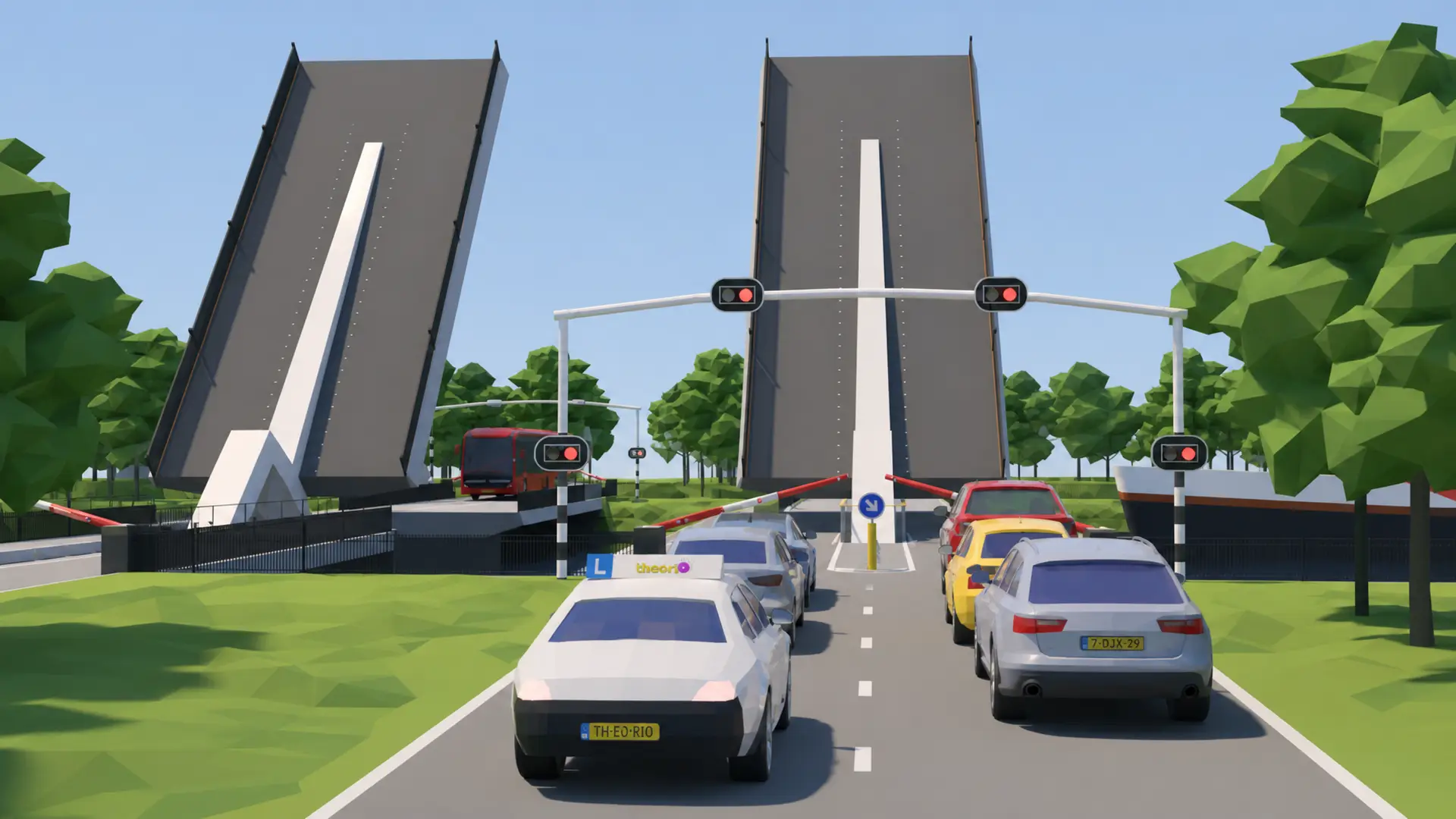
If you are at a railway crossing or in front of an open bridge with a closed barrier, and the barriers are just going down, then you know it will take longer than 1 minute and you switch off the engine immediately.

SituationLeave engine onSwitch engine off
Stopped in a tunnelNoYes
Stopped in a garageNoYes
Waiting less than 1 minuteYes, that is allowedNot necessary
Waiting longer than 1 minuteNoYes
For a closed barrier, it takes a momentBetter notYes
The barriers are just going downNoYes, immediately
Cars waiting for a closed barrier at an open bridge
The barriers are just closing: this takes longer than a minute, so engine off.

Letting the engine run

Start the engine only if you are going to drive right away. An engine that is running without you driving wears out faster and uses fuel for nothing. Warming up is not necessary.

Is there ice or snow on the windows? Clean the windows while the engine is still switched off. Then drive away calmly; the engine will warm up quickly enough by itself.


You've covered Environment: Switch off the engine. Does it stick?

FAQ

Frequently asked questions

Short answers to common questions about Environment, Economical Driving & Breakdown.

Do driver aids such as ABS and ESP take over responsibility?

No. Driver aids such as ABS, ESP and emergency braking systems inform, warn or intervene, but they never take over the driver’s responsibility.

What should you do if you break down in a tunnel?

Try to stop outside the tunnel. If that is not possible, walk to the nearest emergency exit.

How far behind the car do you place the warning triangle?

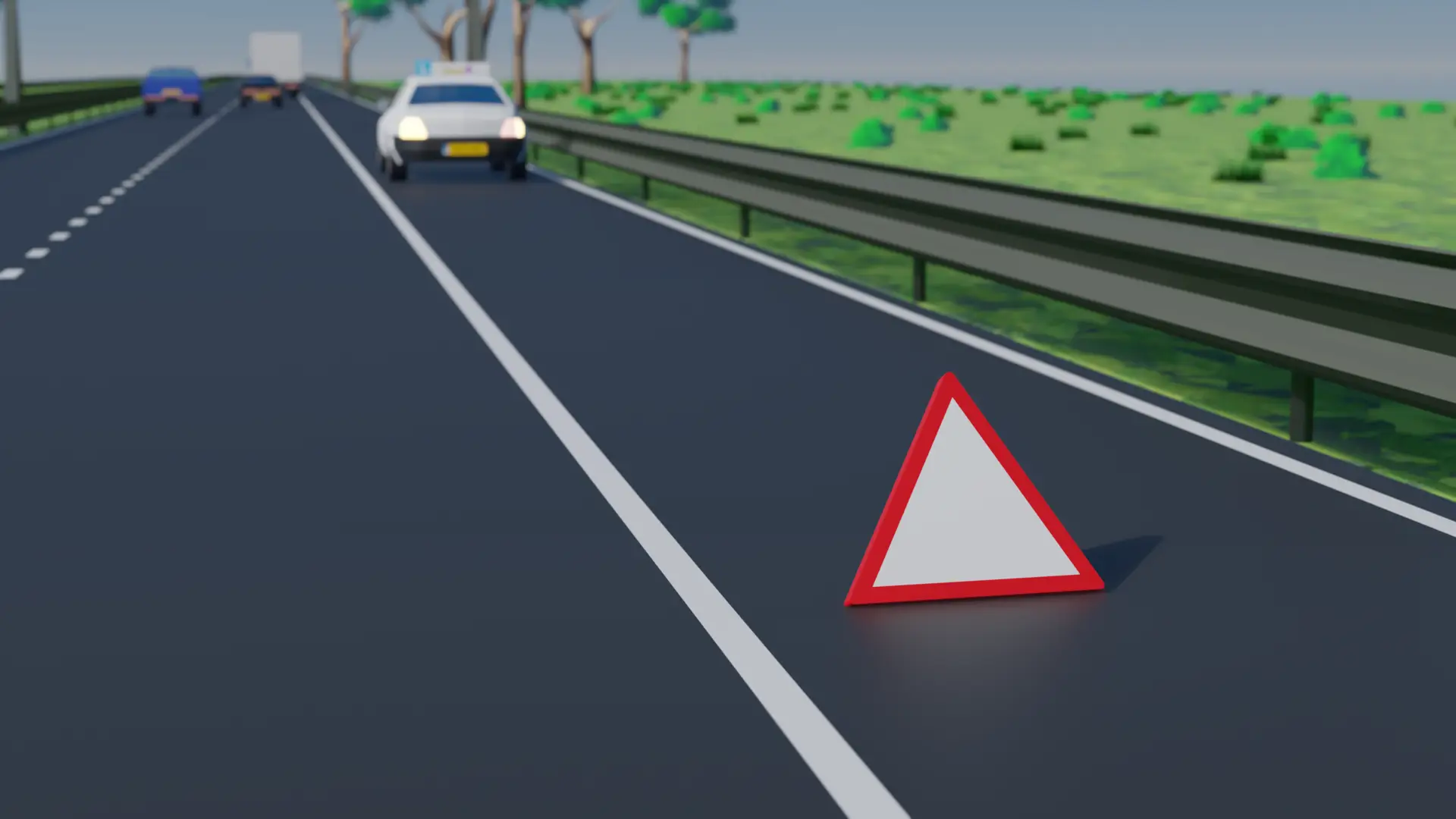
About 30 metres behind the car. At that distance approaching drivers have enough time to recognise the situation and react. Hazard lights are compulsory; the warning triangle is not.

What should you do if you break down on the motorway?

First release the accelerator and keep the car under control. Stop in the safest place, switch on the hazard lights and move behind the crash barrier or onto the verge. Only call for help once you are safe yourself.

How do you drive as economically as possible?

The higher the engine revs, the more fuel you burn and the more CO2 you emit. Shift up quickly after pulling away and keep the revs as low as you can.

Keep practicing with up-to-date material

This lesson gives you the basics for economical, environmentally aware driving and for acting safely in case of a breakdown. There are more exceptions involving tunnels, hard shoulders, emergency services and vehicle checks; learn in our app with up-to-date CBR information how to respond economically and safely.

Ready to practise?

Test your knowledge of Environment, Economical Driving & Breakdown with 60 practice questions in the app.

Your first quiz is free, no account needed. After that from €19.99 for 90 days of access.