MOT, tire pressure, airbags, and ABS: essential vehicle knowledge for your CBR theory

The 2009 MOT modernization placed extra emphasis on tire pressure, airbags, and ABS. These components are essential for safety, the environment, and successfully passing your CBR theory exam.
The MOT inspection has become stricter and more modern over the years. Since 2009, there has been more focus on tire pressure, airbags, and the anti-lock braking system (ABS) during the MOT. These technical aspects are not only important for the inspection itself but also for safe driving and passing your CBR theory exam.
Tire pressure: essential for safety and economical driving
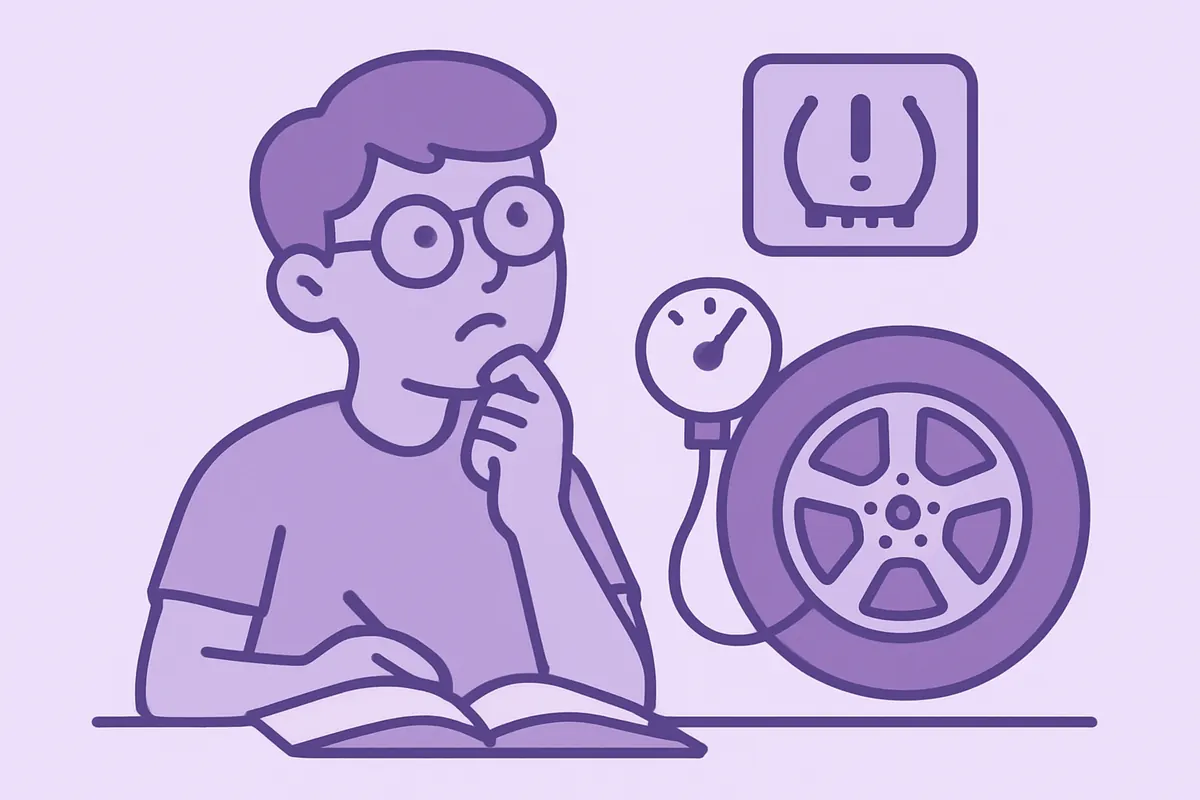
Many drivers unknowingly drive with under-inflated tires. This increases the chance of a longer stopping distance, poorer grip, and higher fuel consumption. During the MOT, it is checked whether the tire pressure meets the manufacturer's requirements. If that information is not available, the tires on one axle must be equal, with a maximum difference of 0.3 bar. Low tire pressure will lead to a failure during the MOT, but it is primarily your responsibility to check this regularly. Properly inflated tires ensure more safety and save fuel. Read more about tire pressure and tire checks.

Airbags: safety that works when it needs to
Airbags are designed to provide extra protection in the event of a collision. They work in conjunction with seat belts and belt tensioners. During the MOT, it is checked whether the airbags are present and whether the warning light on the dashboard is not illuminated. If the light is on, the system may be faulty and will not provide protection. Know what the different dashboard lights mean, as this will also be asked during the CBR exam. Want to know more? Check everything about dashboard lights.
ABS: control during hard braking
The anti-lock braking system (ABS) ensures that your wheels do not lock up when you need to brake hard, allowing you to maintain better control of the vehicle. During the MOT, it is checked whether the ABS is functioning properly and whether the warning light is off. Note: ABS does not always shorten the stopping distance but primarily helps you steer during an emergency stop. The influence of tire pressure, tread depth, and road surface remains significant. See also braking and safety for more information.
MOT inspection and your daily responsibility
The MOT is a snapshot. Your car may pass, but afterwards, you are responsible for its maintenance. Driving with under-inflated tires or a lit warning light puts you and others at risk. This aligns with what the CBR tests: not only knowledge of rules but also insight into technology and responsibility in traffic.
Environment: technology and economical driving
Under-inflated tires increase fuel consumption and CO2 emissions. By keeping your tires properly inflated, you not only drive more safely but also more environmentally friendly. You can find more tips at environment and economical driving.
What do you need to know for your theory exam?
- How to check tire pressure and tread depth
- What the warning lights for airbags, ABS, and tire pressure mean
- The influence of tires and ABS on stopping distance and grip
- The difference between MOT inspection and your own responsibility as a driver
- The role of technology in safety and environmentally conscious driving
Practice practically with Theorio
With Theorio, you learn these topics in an interactive and playful way. You practice with 150 free practice questions, realistic CBR simulations, and handy repetitions through spaced repetition. This way, you gain insight into technology, behavior, and safety, exactly as the CBR tests. Practice directly via the app or web and discover how quickly you progress.
Summary
Tire pressure, airbags, and ABS are not just details for the garage, but topics that directly impact your safety and the environment. By mastering this knowledge, you are better prepared for the CBR exam and for the road.
Exam facts: MOT, tires, and brakes at a glance
The CBR tests vehicle requirements with concrete factual questions. Here are the figures and rules you need to know:
- MOT frequency for petrol and electric cars: the first inspection is 4 years after the first registration, then twice every 2 years, and from 8 years every year.
- MOT frequency for diesel and LPG: the first inspection is already after 3 years, then every year.
- Tread depth: the legal minimum for car tires is 1.6 millimeters across the entire tread. For safety, a recommendation of 2.5 mm for summer tires and 4 mm for winter tires is often given.
- Low tire pressure leads to a longer stopping distance, more fuel consumption, faster wear on the edges of the tread, and a greater risk of aquaplaning.
- High tire pressure reduces the contact surface with the road, resulting in less grip and tread wear in the center.
Check your tire pressure about once a month and always before a long trip, with cold tires. The current MOT rules for your car can be found at the RDW.