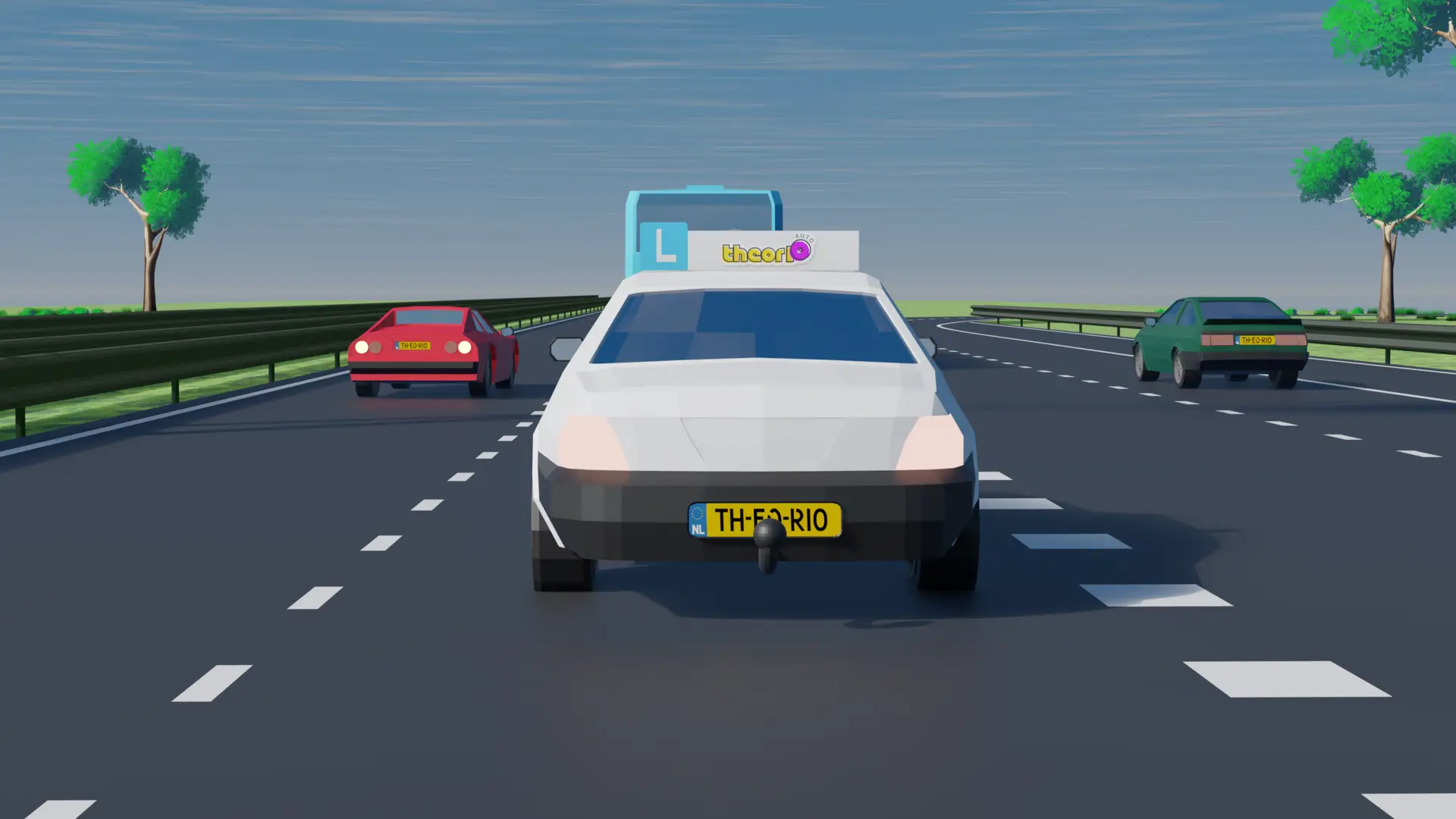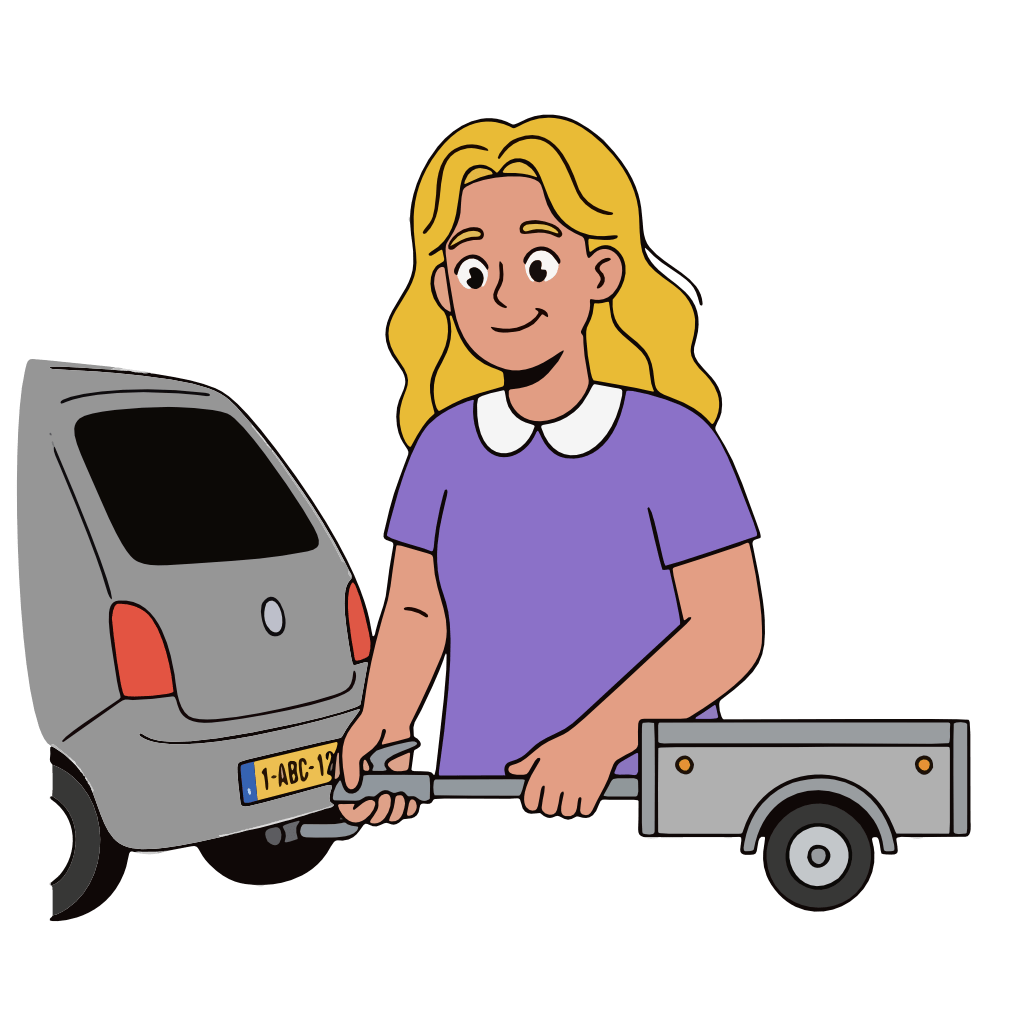

Illustration of a trailer being coupled to the tow bar of a car

Trailers & Bicycle carriers

45 Questions
Medium
4 Parts

Everything about safe driving with trailers and bicycle carriers: weight, load, tyre pressure and dimensions. Practice this CBR topic for free with exam questions.

Chris Prosman Chris Prosman

Study material

What will you learn?

A trailer or bicycle carrier changes your driving behaviour and the rules. Learn here what you need to know about weight, load and safety.

Trailers & Bicycle carriers at a glance

Towing a trailer with driving licence B

A car and trailer together may weigh a maximum of 3500 kg. Up to and including 750 kg, the trailer gets a white plate with the car’s vehicle registration number; above that, it gets its own yellow vehicle registration plate. Never both at the same time.

Coupling and loading

Next to the tow bar, an auxiliary coupling or a breakaway braking system is required, but not both. Load may only protrude at the back; if it protrudes more than 1 metre, a red-and-white striped marker board is required. For heavy load, place it in the middle; for loose load, secure it with a net.

On the road

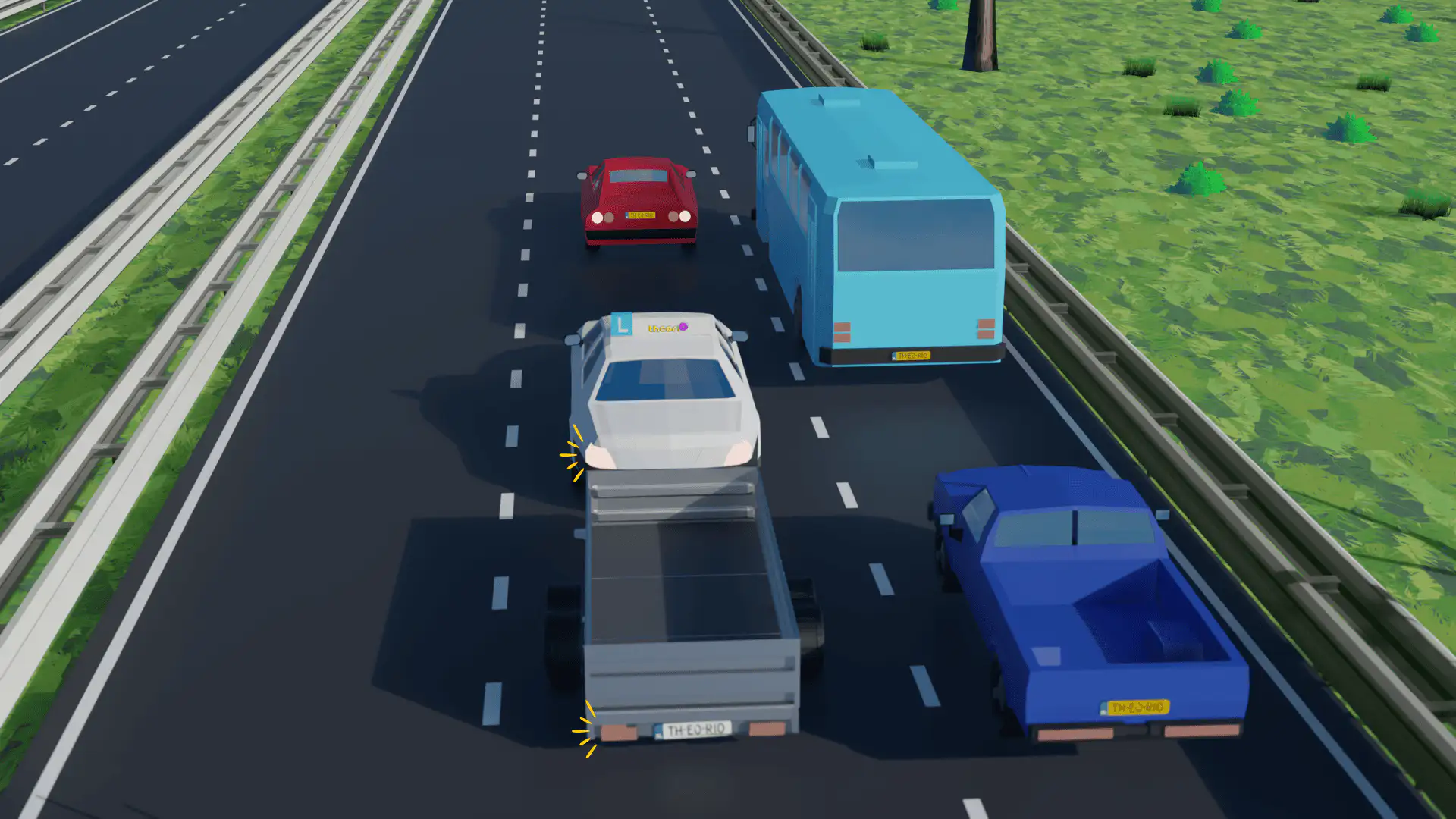
If you are with a trailer longer than 7 metres, on the motorway you use only the two right-hand lanes. You do not drive faster than 90 km/h.

Bicycle carriers

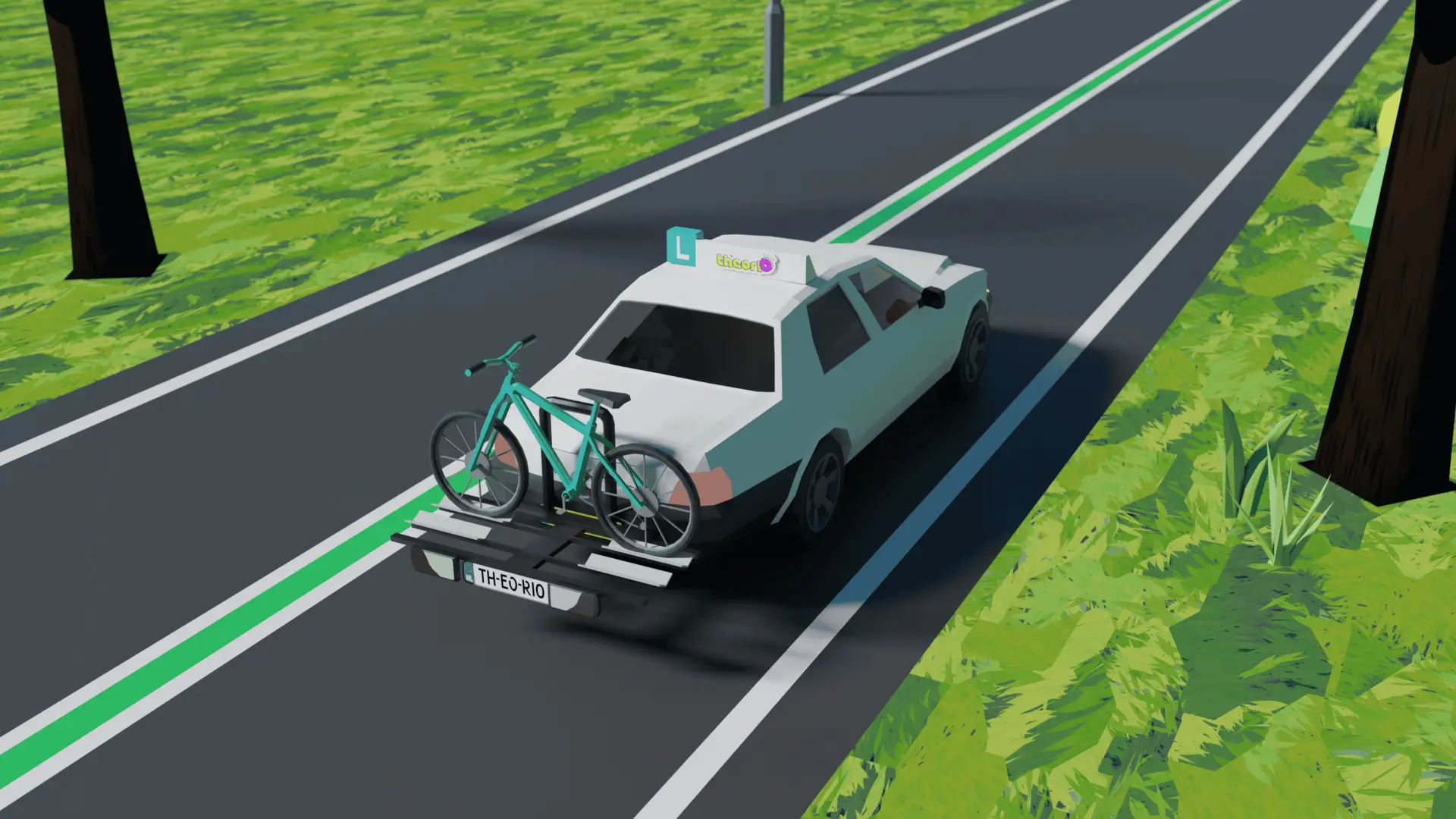
Bicycles on a carrier are load on the car: maximum 20 cm protruding per side, and on the roof no higher than 4 metres. If the carrier covers the vehicle registration number or the lights, then the carrier gets a white vehicle registration plate with the car’s number and its own lighting.
With driving licence B, you may tow a trailer. In the exam it comes down to two figures: 750 kg and 3500 kg.

The vehicle registration number depends on the weight: a white plate with the car’s vehicle registration number, or an own yellow vehicle registration plate.

Remember: car and trailer together maximum 3500 kg. Up to and including 750 kg a white plate with the car’s vehicle registration number, above that its own yellow vehicle registration plate. Never both.

How much you may tow

With driving licence B, you may tow a trailer of up to 750 kg, but also a heavier one, as long as the car and trailer together do not exceed 3500 kg.

That is why, in the exam, the main question is often not how heavy the trailer is, but whether the total of car and trailer stays below 3500 kg.

How much weight your car may tow is stated on the car’s vehicle registration card (topic 10).

Which vehicle registration number on the trailer

TrailerVehicle registration numberPlate
Maximum 750 kgThe same vehicle registration number as the carWhite with black letters and numbers (a "follow-up plate")
More than 750 kgIts own vehicle registration number: the trailer counts as a separate vehicleYellow with black letters

Which plate you need depends only on the weight. You never use both plates at the same time: a white and a yellow plate "for safety" is always wrong in the exam.

The vehicle registration plate must be official and have a approval mark. A vehicle registration number written with a black marker on white paper does not count: you buy an official plate.

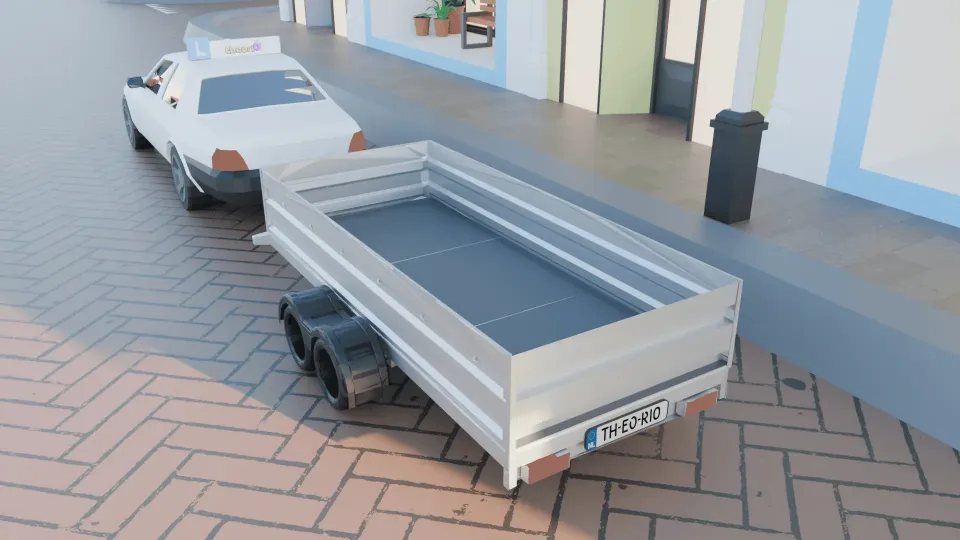
Trailer of up to 750 kg behind a driving school car, with a white vehicle registration plate showing the car’s vehicle registration number
Up to and including 750 kg: the car’s vehicle registration number on a white plate.
Trailer of more than 750 kg behind a car, with its own yellow vehicle registration plate that differs from the car’s vehicle registration number
More than 750 kg: its own yellow vehicle registration plate.

You've covered Legislation: Trailers. Does it stick?

This section is about the trailer itself: how you couple it and how you load it.

In the exam, things go wrong with load on the front, with load that protrudes more than 1 metre to the rear, and with the extra securing next to the tow bar.

Remember: next to the tow bar, a auxiliary coupling or a breakaway braking system is required. Load may only protrude at the back; with more than 1 metre, a red-and-white striped marker board is required.

The tow bar

There are two types of tow bars: a fixed one and a removable one (uncouplable). A removable tow bar can be easily removed when you are not using it.

If you leave the tow bar in place, it must not cover the vehicle registration plate. The vehicle registration number must remain clearly visible.

Rear of a car with a fixed tow bar under the vehicle registration plate; the plate remains fully visible
A tow bar that stays in place may not cover the vehicle registration plate.

Auxiliary coupling or breakaway braking system

When towing a trailer, an extra safety device is legally required. You choose between an auxiliary coupling and a breakaway braking system.

Safety deviceWhat it does if the trailer comes loose from the tow bar
Auxiliary couplingKeeps the trailer safely behind the car
Breakaway braking systemApplies the trailer’s brakes, so it brakes on its own

You use them never at the same time. Otherwise the trailer brakes while it is still attached to the car with the auxiliary coupling, and that is dangerous.

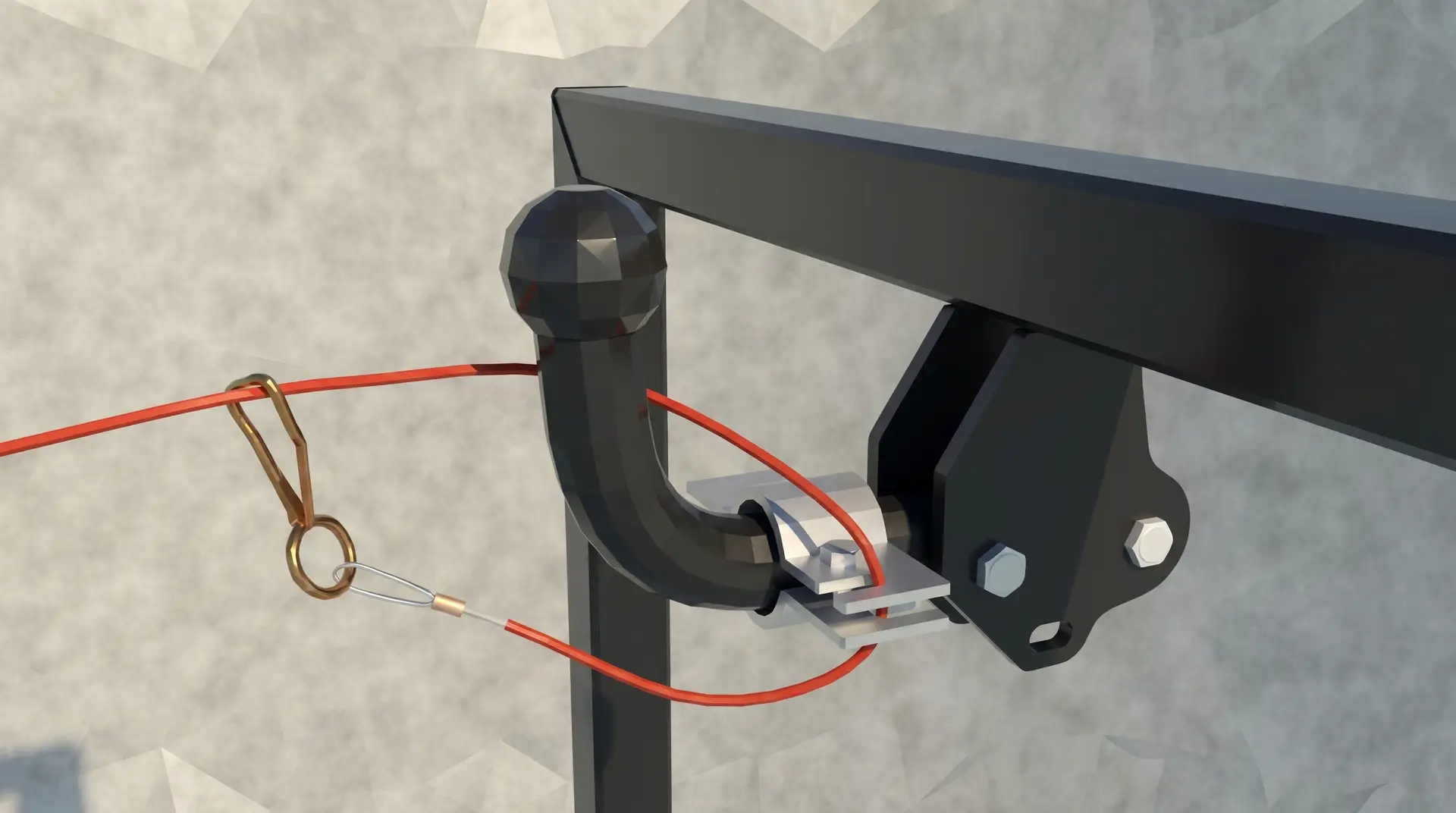
close-up of a tow bar with the cable of a breakaway braking system looped around the tow bar ball (wrong)
 This is how you attach the breakaway braking system.

Protruding load

With a car, load may protrude both in front of and behind. With a trailer, it is not allowed: load may not protrude at the front, only at the back.

  • If the load protrudes behind by less than 1 metre, that is allowed. A marker board may be used, but it is not required.
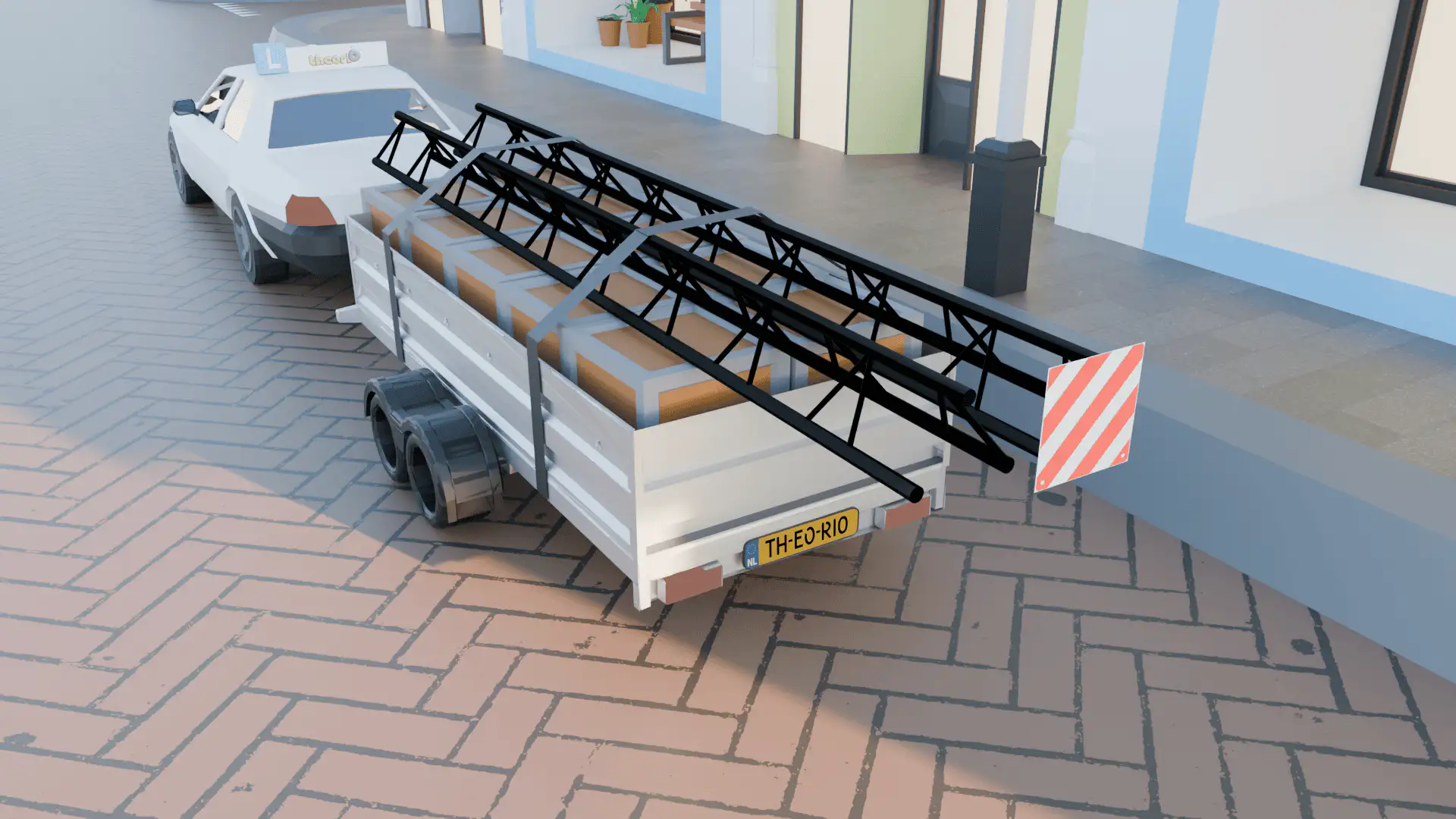
  • If the load protrudes behind by more than 1 metre, a red-and-white striped marker board is required. This is the only correct marking.
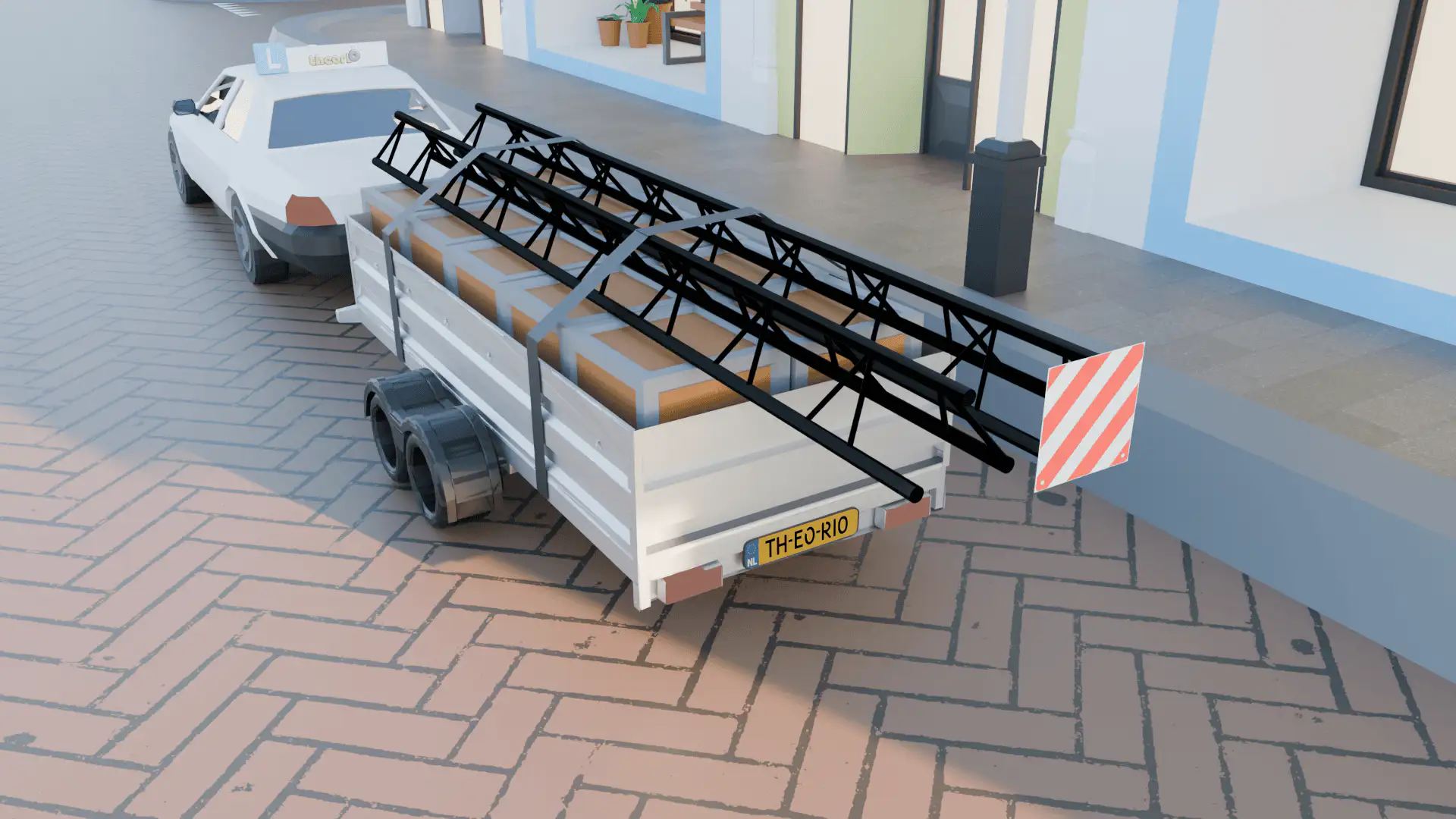
Trailer with a long beam protruding more than 1 metre to the rear, with a red-and-white striped marker board at the end
More than 1 metre behind the trailer: marker board required.

Look carefully at where the front of the trailer is. That is not the front of the loading bed: the trailer extends further forward at the drawbar. So load may protrude a little from the loading bed, but never beyond the front of the trailer.

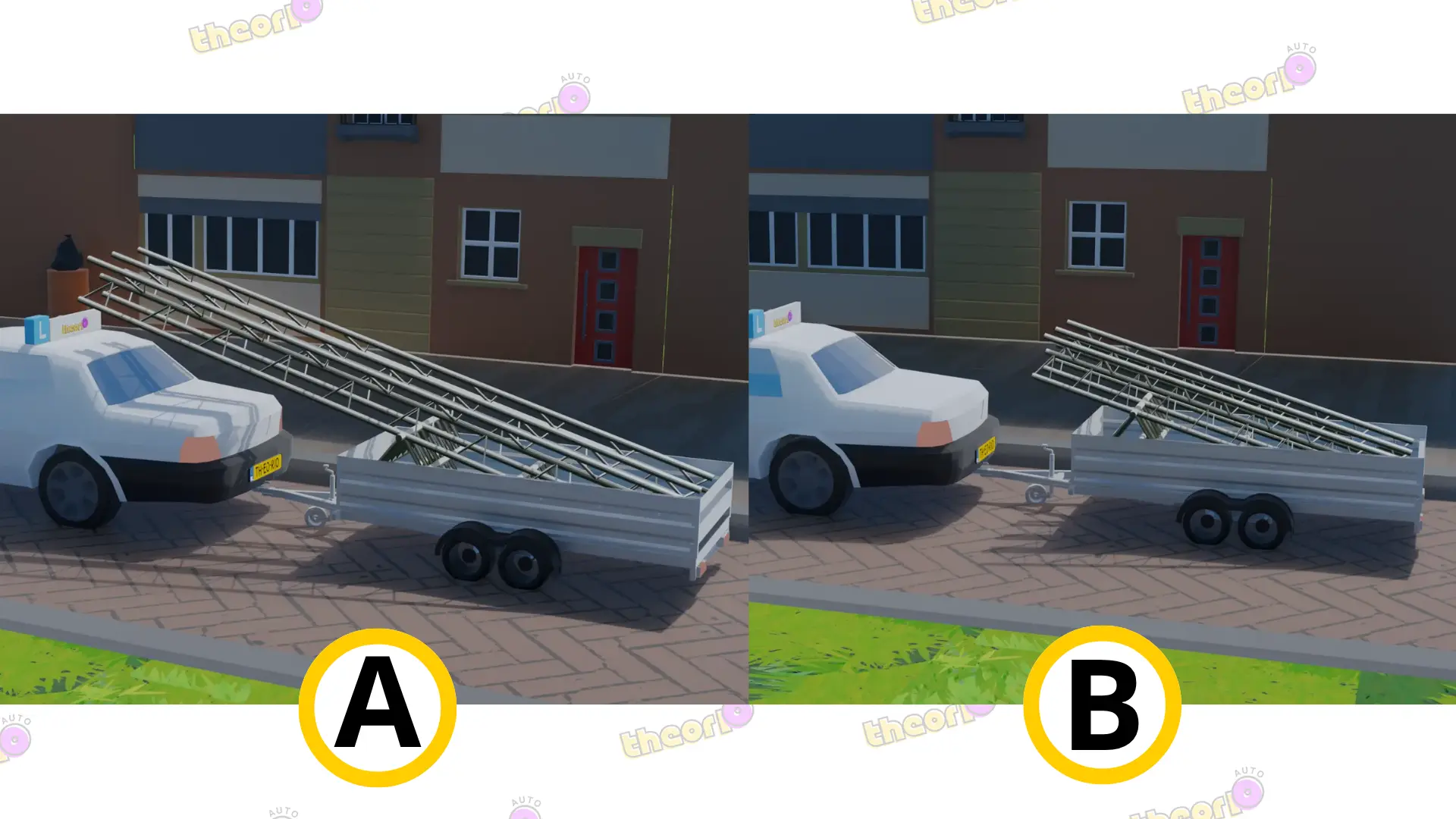
Two drawings next to each other: in A, the load goes beyond the front of the trailer up to above the car (wrong), in B the load stays within the front of the trailer (correct)
A is wrong: the load goes beyond the front of the trailer. B is correct.

Load in the trailer

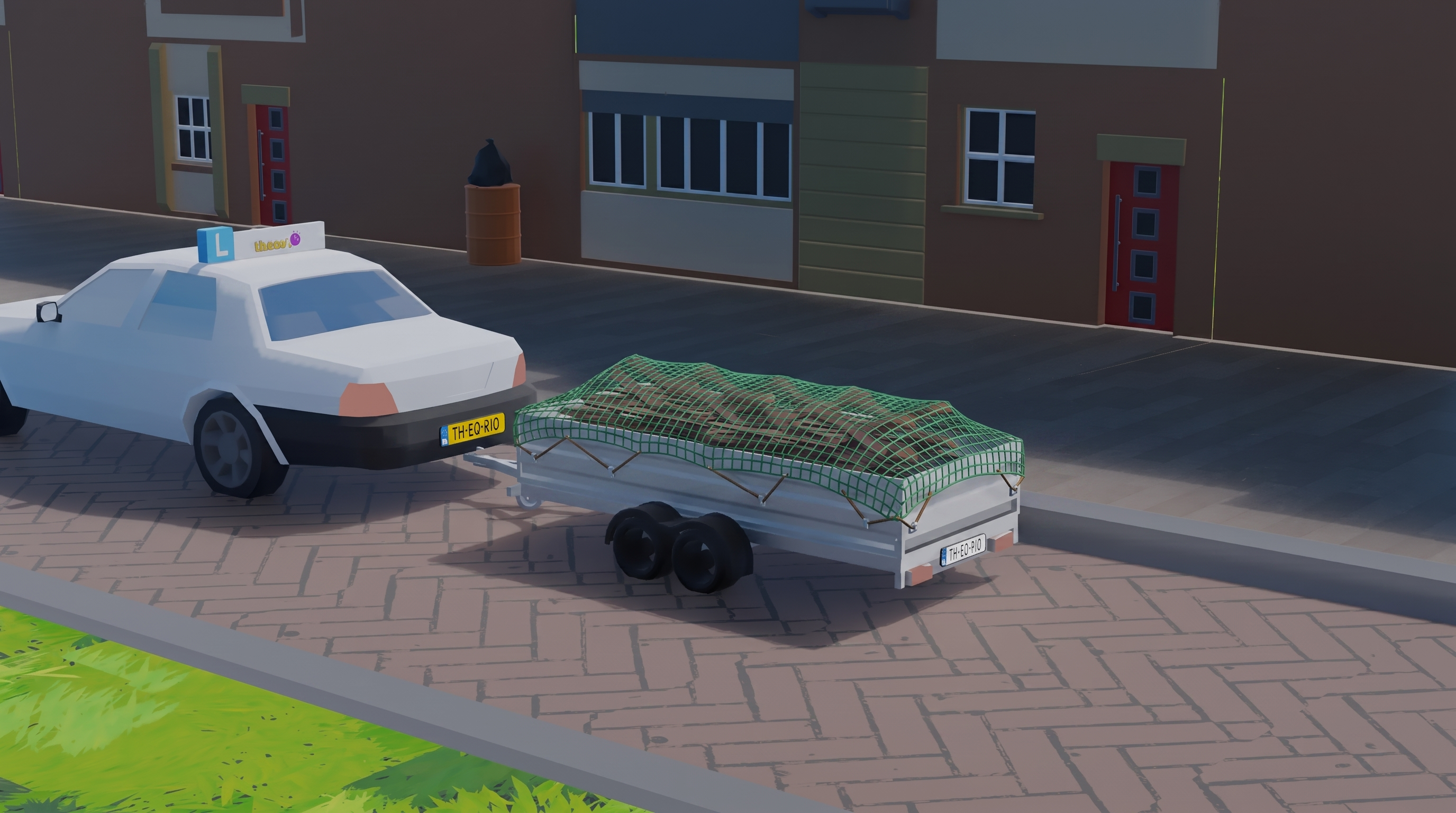
Load must not be able to fall out of the trailer. Over loose load, you secure a net.

Heavy load is placed in the middle of the trailer. If you put it at the back, the rear becomes too heavy and the trailer starts to sway faster.

Trailer behind a driving school car with a net stretched over loose load
Loose load: a net over it.

Example situations

Situation 1

On a trailer there are beams that protrude a bit from the loading bed at the front, but not beyond the drawbar. Is that allowed?

Yes. The limit is the front of the trailer, not the loading bed.

Situation 2

Planks protrude 1.2 metres behind the trailer. There is no board on it. Is that allowed?

No. Above 1 metre, a red-and-white striped marker board is required.

Situation 3

You transport sand in an open trailer without a net. With bumps, sand can fall off. Is that allowed?

No. Loose load must be covered or secured in such a way that nothing can fall out.

CBR trap

  • Apply the rules for the car to a bicycle carrier. With a bicycle carrier, it is load on the car, so you use the car’s load rules.
  • Only look at the loading bed. The front of the trailer is further forward, so load that protrudes from the loading bed can still be okay.
  • Think that the marker board is always required. Under 1 metre it may be used; above 1 metre it must be used.
  • Connect both the auxiliary coupling and the breakaway braking system "for safety". That is exactly what is dangerous.

You've covered Trailers: The rules. Does it stick?

FAQ

Frequently asked questions

Short answers to common questions about Trailers & Bicycle carriers.

What are the rules for a bicycle carrier?

Bikes on a carrier count as load on the car: they may overhang by at most 20 cm on each side and, on the roof, may not exceed 4 metres in height. If the carrier covers the number plate or the lights, it needs its own white plate with the car’s number plus its own lights.

How fast may you drive with a trailer?

With a trailer you may not exceed 90 km/h. If car and trailer together are longer than 7 metres, you may only use the two rightmost lanes on the motorway.

Is a breakaway cable or breakaway brake required?

Besides the towbar one of the two is legally required: a breakaway cable or a breakaway braking device. You never use both at the same time.

Which number plate does a trailer need?

Up to and including 750 kg the trailer carries a white plate with the car’s registration number. Above 750 kg it gets its own yellow plate. You never carry both plates at once.

How much may you tow on a category B licence?

Car and trailer together may weigh at most 3,500 kg. In the exam the question is usually not how heavy the trailer is, but whether the combined total stays under 3,500 kg. Your car’s registration card states how much it may tow.

Keep practicing with up-to-date material

With this basic knowledge, you understand how trailers and bicycle carriers affect weight, load and dimensions. There are extra exceptions for vehicle registration numbers, protruding load and marking; practice in our app with up-to-date CBR information before you apply these rules in the exam.

Ready to practise?

Test your knowledge of Trailers & Bicycle carriers with 45 practice questions in the app.

Your first quiz is free, no account needed. After that from €19.99 for 90 days of access.