Part 3 of 4 in Vehicle requirements, Tyres & Load
When to use winter or summer tyres, and how much tread depth?
When to fit winter tyres? They aren't compulsory in the Netherlands, but the right tyre per season brakes best. Plus the minimum tread: 1.6 mm.


Written by Chris Prosman Reviewed by Dirk van Zuijlen
Updated Reviewed on 5 min read
Free mock exam · no account needed
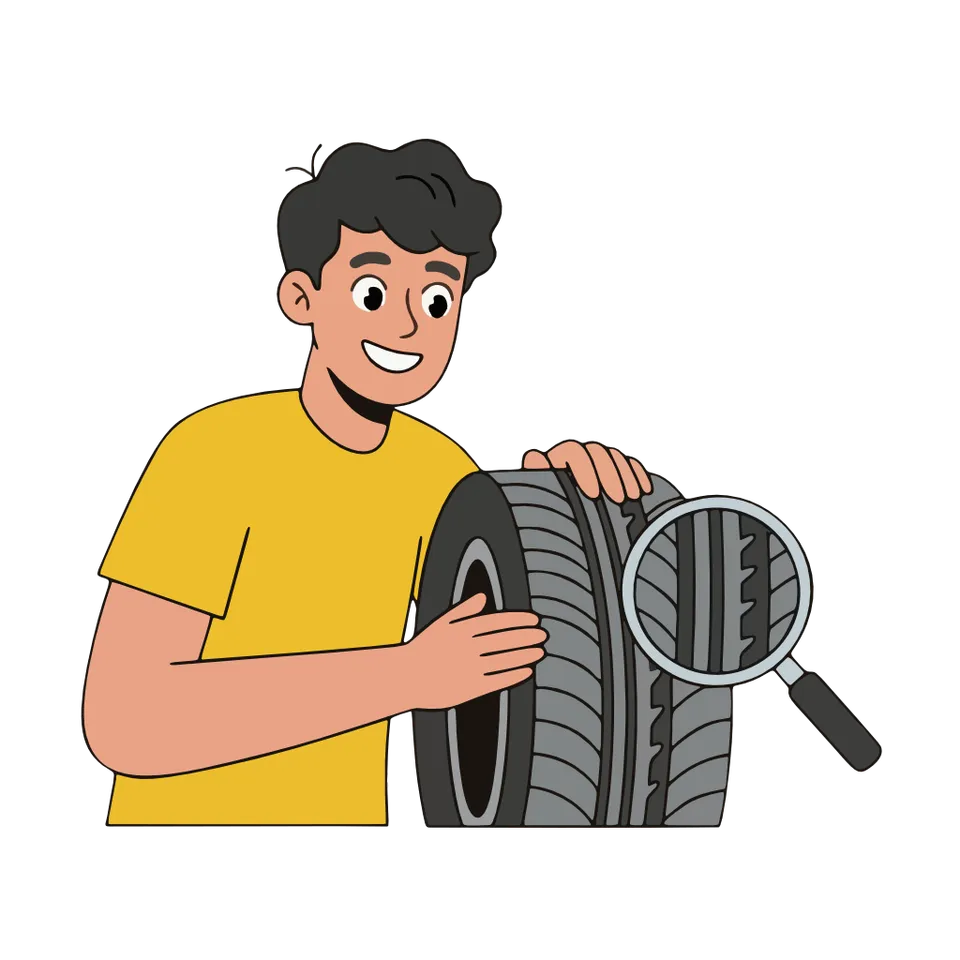
Your tyres need at least 1.6 mm of tread, winter tyres too. For winter tyres the advice is at least 4 mm. Winter tyres are not mandatory in the Netherlands. Switch to winter tyres when it is often colder than about 7 degrees.
What is the minimum tread depth for tyres?
The minimum tread depth is 1.6 mm. It applies to the main grooves, all the way round the tyre. It applies to every tyre you drive on: summer tyres, winter tyres, all-season tyres and the tyres of your trailer.
| Tyre | Legal minimum | Good to know |
|---|---|---|
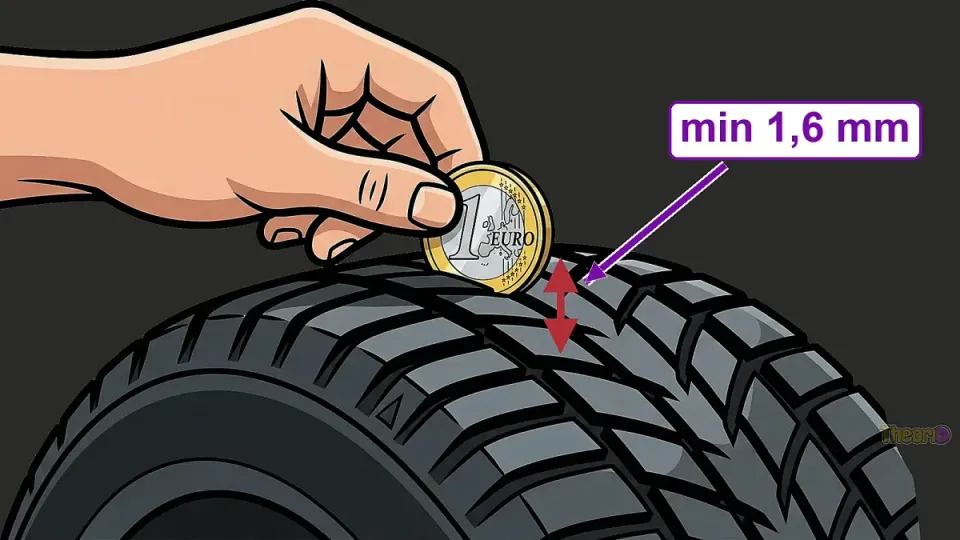 Summer tyre | 1.6 mm | All the way round in the wide grooves. |
 Winter tyre | 1.6 mm | Advice: at least 4 mm. |
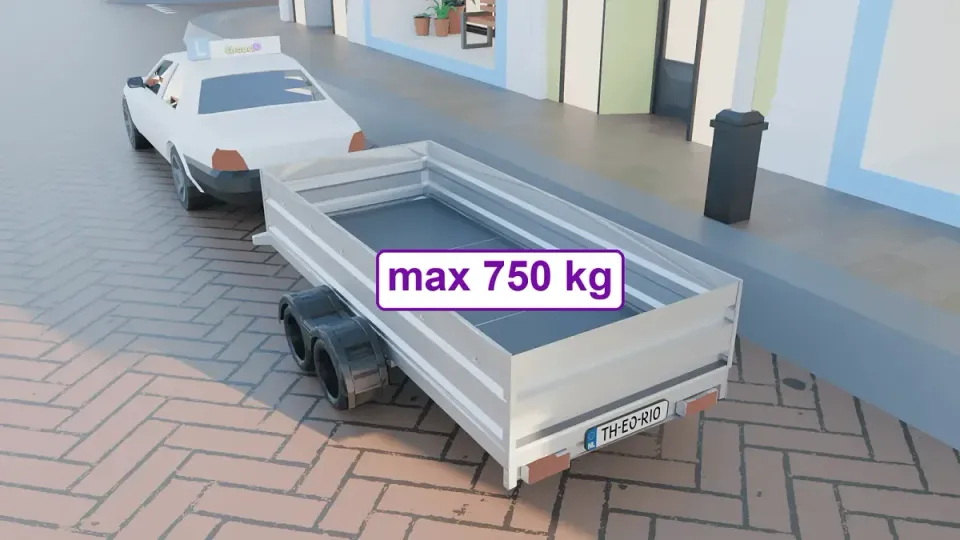 Trailer tyre | 1.6 mm | Check the trailer too. |
The tread depth is also measured at the APK (the Dutch MOT). There, too, 1.6 mm is the limit. With 1.5 mm you may no longer drive. Three good tyres do not make a fourth worn tyre acceptable. RDW: tyre requirements.
Why does tread matter? The grooves carry water away. With little tread you have less grip on a wet road. Your braking distance gets longer and the risk of aquaplaning goes up. What to do then is explained under aquaplaning.
Fitting the spare wheel to drive on? Then that tyre must meet the rules too. With a space-saver spare, keep to the maximum speed shown on it.
How do you measure tyre tread depth?
You measure tread depth with a tread depth gauge. Put the pin into a wide groove and read the depth. Measure at a few places round the tyre, and on all tyres. One good spot does not tell you enough.
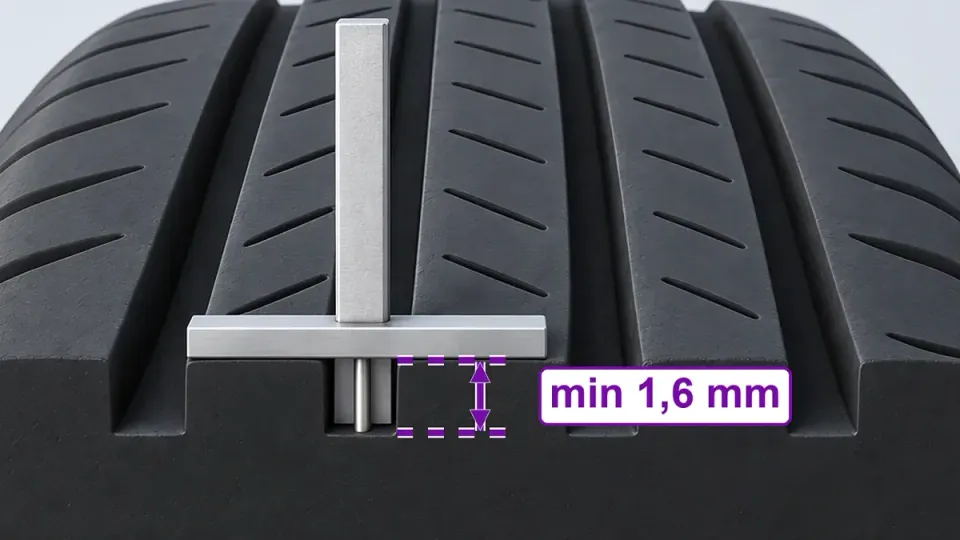
In the grooves there are small raised bars: the wear indicators. Is the tread almost level with them? Then you are at the limit and it is time for new tyres. If a tyre wears unevenly, have it checked. Also check the tyre pressure.
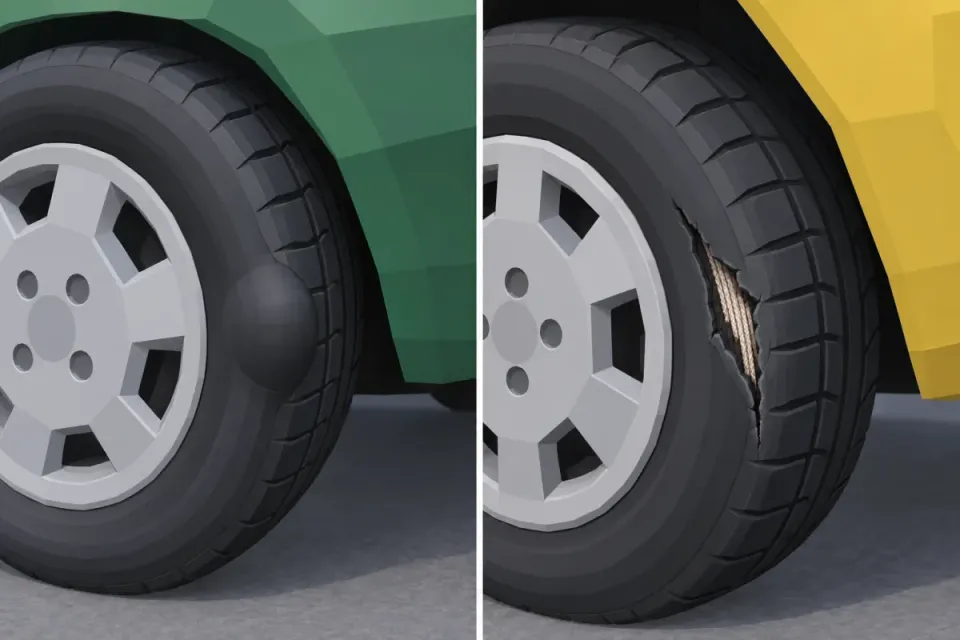
Also look for damage. A bulge in the sidewall or damage where you can see the cords is dangerous. You do not drive on with it, even if the tread is fine. Have the tyre replaced.
How much tread do winter tyres need?
By law the minimum tread depth of winter tyres is also 1.6 mm. For winter tyres the advice is at least 4 mm, though. With less tread they work less well in snow and cold.
So a winter tyre with 3 mm of tread is not illegal in the Netherlands. But it grips less well than a winter tyre with more tread. Driving abroad? Other rules may apply there.
For your CBR exam: remember 4 mm as the advice for winter tyres. Does the exam ask for the legal minimum? Then the answer is 1.6 mm.
When should you switch to winter tyres, and back to summer tyres?
Switch to winter tyres when it is often colder than about 7 degrees outside. The rubber of a winter tyre then stays soft and grips better. When it gets warmer than 7 degrees again, you switch back to summer tyres.
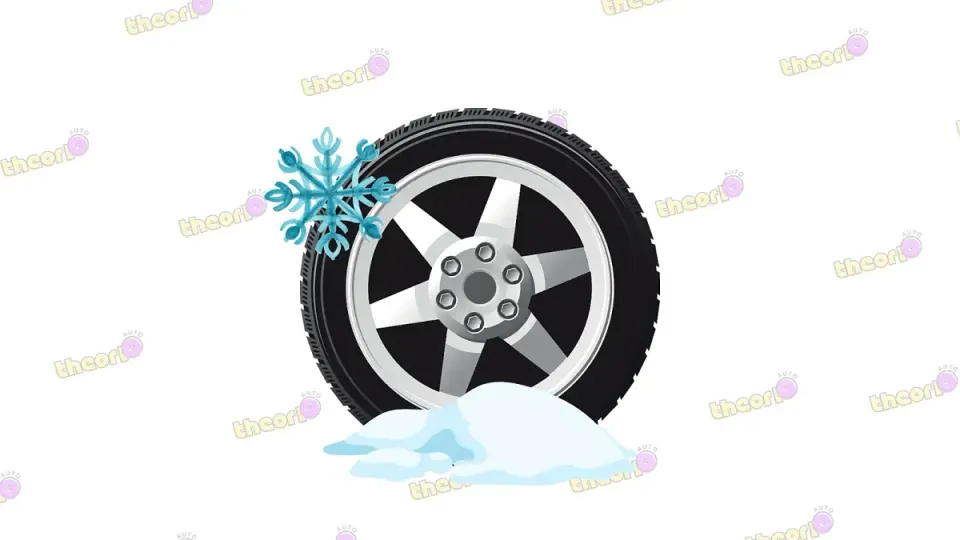
Those 7 degrees are a guideline, not a legal rule. In the Netherlands people usually switch to winter tyres in autumn and back again in spring. Look at the weather and the temperature, not only at the date.
Also take care around freezing point. At about 2 degrees above zero the road can already be slippery, especially on bridges and flyovers.

Are winter tyres mandatory in the Netherlands?
No, winter tyres are not mandatory in the Netherlands. You may drive on summer or all-season tyres all year. Do adjust your driving to the weather: drive more calmly and keep more distance on snow and ice.
Can you drive on summer tyres in winter?
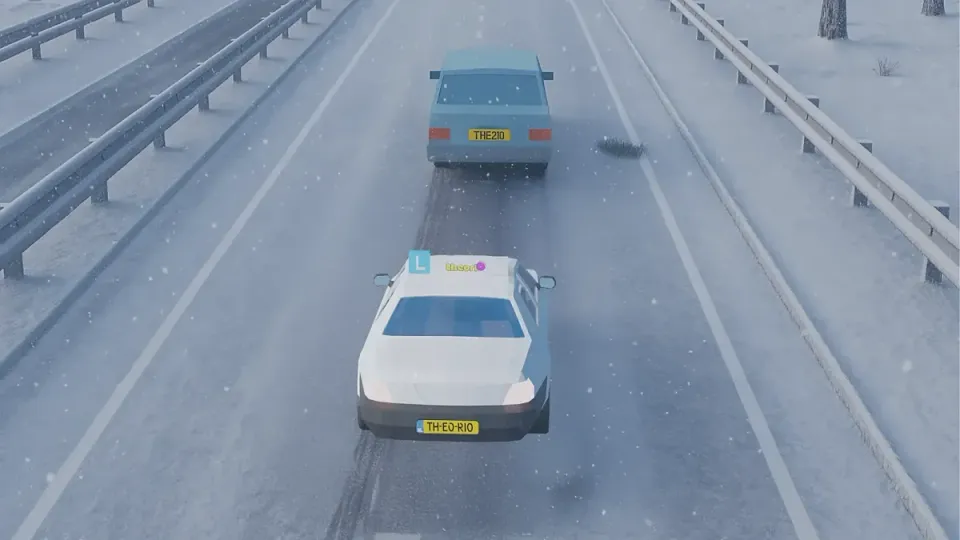
Yes, in the Netherlands you may. But below about 7 degrees summer tyres get harder. They grip less well and your braking distance gets longer, especially on snow and ice. The other way round is allowed too: driving on winter tyres in summer is not illegal. In warm weather they do wear faster and brake less well than summer tyres.
How do you recognise winter tyres?
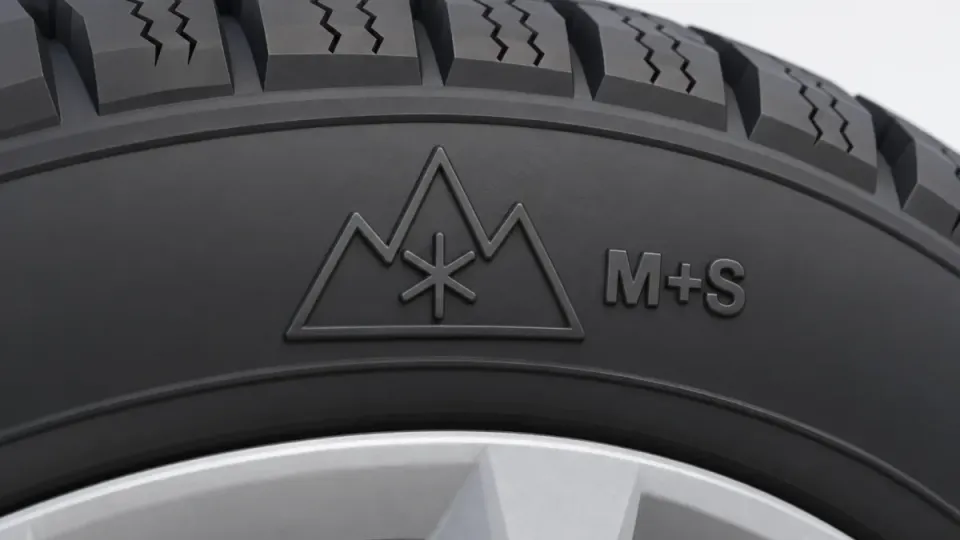
You recognise a real winter tyre by the 3PMSF symbol on the sidewall: a mountain with three peaks and a snowflake. It is also called the alpine symbol. The letters M+S (mud and snow) alone say less: that tyre has not necessarily been tested on snow.
When are winter tyres mandatory in Germany?
In Germany winter tyres are mandatory in wintry conditions: with black ice, snow, slush or frost on the road. There is no fixed date. The tyres must then have the alpine symbol. Going to another country? Check the rules there before you leave. German Ministry of Transport: winter tyres.
Practise like the exam
Example questions like in the CBR exam
Real questions from the Theorio app. You can expect similar questions in your CBR exam.
Question 1 of 6
What is the minimum tread depth of your tires?
Tap the answer you think is right.
With two tires, the tread is 1.5 millimeters. Is it allowed to drive like this?
Tap the answer you think is right.
What is the minimum tread depth of a trailer tire?
Tap the answer you think is right.
Are winter tires mandatory in the Netherlands?
Tap the answer you think is right.
At what temperatures is it advised to drive with winter tires?
Tap the answer you think is right.
You are driving in summer temperatures on winter tires. What is the consequence for the braking distance?
Tap the answer you think is right.
Answers and explanations for the example questions
Question 1: What is the minimum tread depth of your tires?
Correct answer: 1.6 mm
According to the regulations, a minimum tread depth of 1.6 mm is mandatory; tires must be at least 1.6 mm deep. ⚠️
Question 2: With two tires, the tread is 1.5 millimeters. Is it allowed to drive like this?
Correct answer: No
The legal minimum tread depth for passenger cars is 1.6 millimeters. With 1.5 millimeters, the tires do not meet the requirements and you are not allowed to drive. 📏
Question 3: What is the minimum tread depth of a trailer tire?
Correct answer: 1.6 mm
Just like with car tires, a minimum tread depth of 1.6 mm 🛞✔️ applies to trailer tires.
Question 4: Are winter tires mandatory in the Netherlands?
Correct answer: No
Although it is not mandatory, winter tires are recommended in the Netherlands during cold weather. This gives you more grip and safety on the road ❄️
Question 5: At what temperatures is it advised to drive with winter tires?
Correct answer: Below 7 degrees
It is recommended to drive with winter tires at temperatures below 7 degrees. The rubber of summer tires becomes too hard at these temperatures, resulting in less grip. 🌡️
Question 6: You are driving in summer temperatures on winter tires. What is the consequence for the braking distance?
Correct answer: Braking distance becomes longer
Winter tires have a softer rubber compound intended for cold weather. However, at summer temperatures, this rubber becomes much too soft, causing the contact with the road to deteriorate and the braking distance to become significantly longer than with summer tires ☀️
FAQ
Frequently asked questions
Short answers to questions that often come up on this subject.
May you drive with a bulge in your tyre?
No. If there is a bulge in your tyre, or damage that lets you see the carcass (the cords inside), you may no longer drive on it.
Why are winter tyres better below 7 degrees?
Winter tyres are designed for wintry conditions: their compound and tread help with cold and snow. About 7°C is a practical switching guideline, not a legal threshold or a guarantee that every winter tyre performs better below it. Tyre model, road surface and weather all matter. In warm summer conditions winter tyres may increase stopping distance and wear.
Ready to practise?
Test your knowledge of Vehicle requirements, Tyres & Load with 50 practice questions in the app.
Free mock exam · no account needed
Your first quiz is free, no account needed. After that from €34.99 for 90 days of access.