Part 3 of 5 in Eco-friendly Driving & Breakdowns
Reducing fuel consumption
Reducing fuel consumption: plan your route, anticipate, use cruise control and keep the car light and closed. Pick the most economical answer.


Written by Chris Prosman Reviewed by Dirk van Zuijlen
Updated Reviewed on 5 min read
Free mock exam · no account needed
Your fuel consumption mostly depends on how you drive. Driving calmly, looking far ahead and avoiding extra weight or air resistance help the most. Economical driving must always stay safe driving.
How do you calculate your car’s fuel consumption?
Fill up your tank and set the trip counter to zero. After a while, fill up again. You then know how many litres went in and how many kilometres you drove. With that you work out your consumption:
- Litres per 100 km = litres ÷ kilometres × 100
- Kilometres per litre (Dutch: “1 op …”) = kilometres ÷ litres
An example: you drove 650 km and then filled up 50 litres. Your consumption is 50 ÷ 650 × 100 = 7.7 litres per 100 km. That is the same as 13 km per litre (“1 op 13”), because 650 ÷ 50 = 13.
What you switch on or carry also costs extra fuel:
| Picture | What costs extra? |
|---|---|
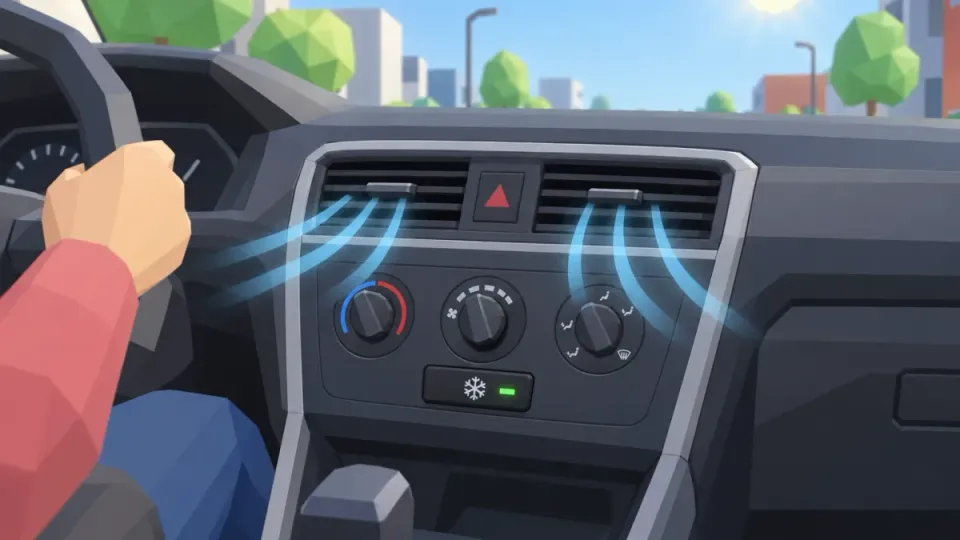 | Air conditioning: uses the most energy of everything you switch on. |
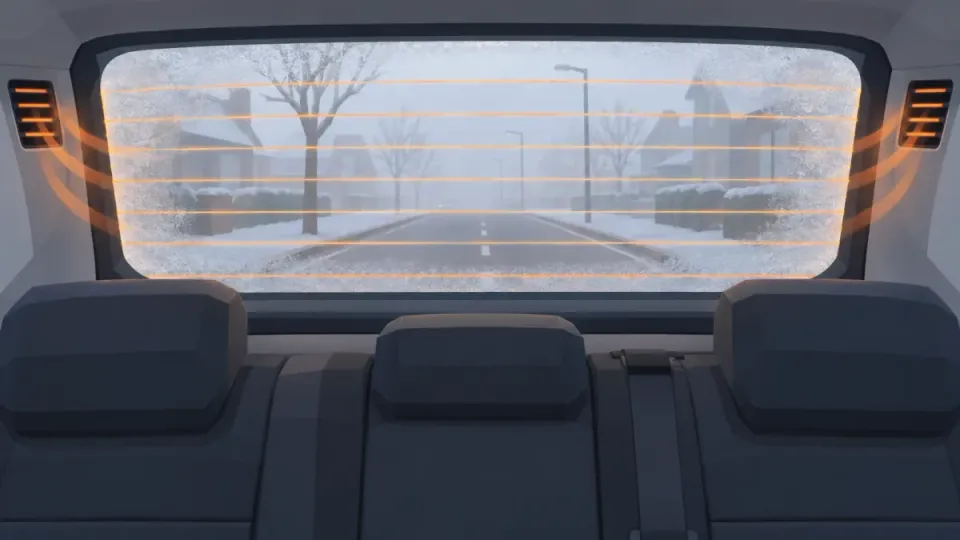 | Heated rear window: uses electricity, so fuel. Switch it off when the window is clear. |
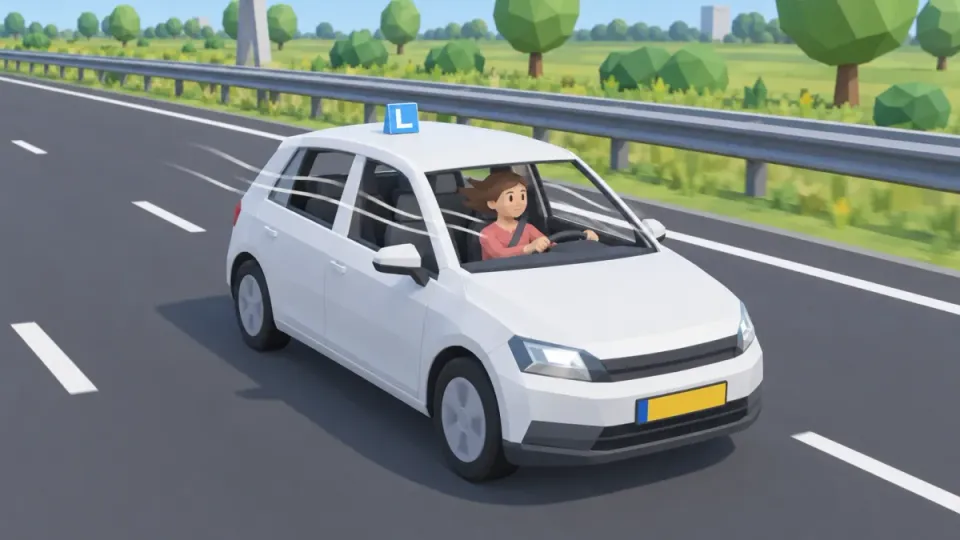 | Windows or sunroof open: extra air resistance, especially at high speed. |
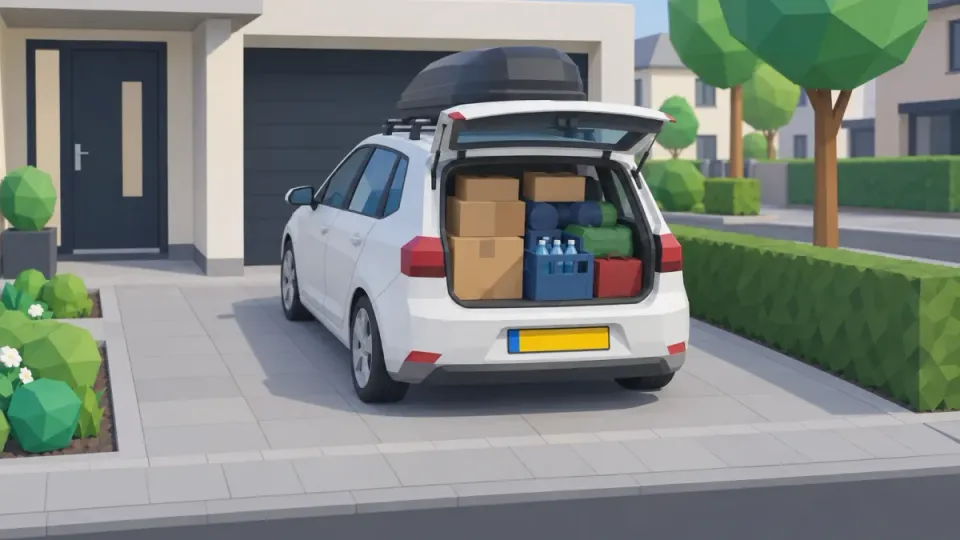 | Extra load and a roof box: more weight and more air resistance. |
Converting litres per 100 km to km per litre
Divide 100 by the number of litres per 100 km. So 5 litres per 100 km is 20 km per litre (“1 op 20”). It also works the other way: divide 100 by the km per litre. 16 km per litre is 6.25 litres per 100 km.
How many litres per 100 km is economical?
That depends on your car. The fewer litres per 100 km, the more economical. 13 km per litre is 7.7 litres per 100 km, and 20 km per litre is 5 litres per 100 km. Compare your consumption with the figure the manufacturer gives for your car. That figure comes from a test. Real consumption on the road is often higher.
How do you drive economically?
Economical driving is mainly: look far ahead and drive calmly. Braking and then speeding up again uses the most fuel. The less you do that, the less fuel you use.
- Keep a big gap and look beyond the vehicle in front.
- Release the accelerator in good time and roll. How that works with your gears is under RPM and changing gear.
- Change up early and drive at low revs.
- Keep your speed as steady as you can.
- Plan your route beforehand, so you do not drive extra kilometres.
- Standing still for more than 1 minute? Switch off the engine.
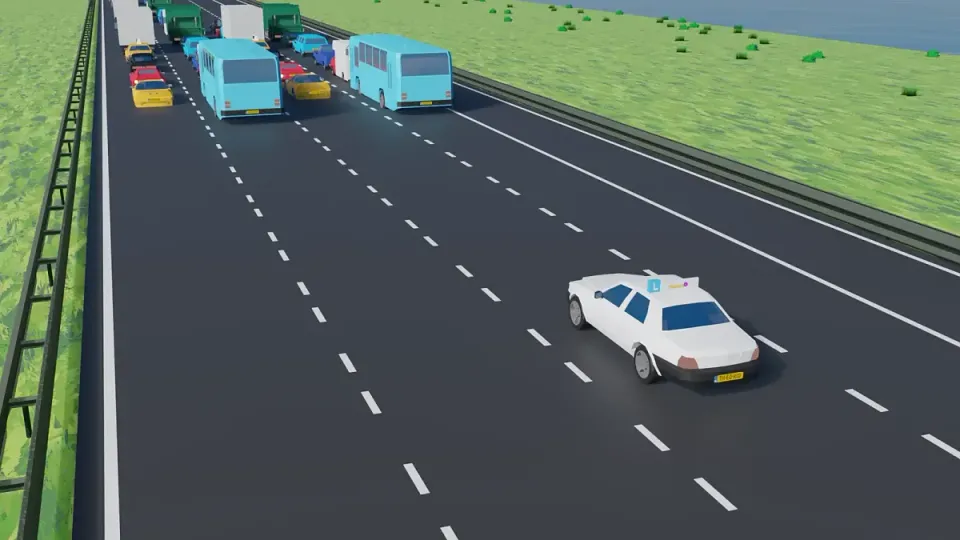
Do not drive so slowly that you hold up others. Economical driving is never more important than safe driving.
Motorway or local roads: which saves more fuel?
In the CBR exam, the motorway is usually the most economical choice. There are no roundabouts or junctions, so you drive more steadily. Braking and speeding up all the time uses a lot of fuel.
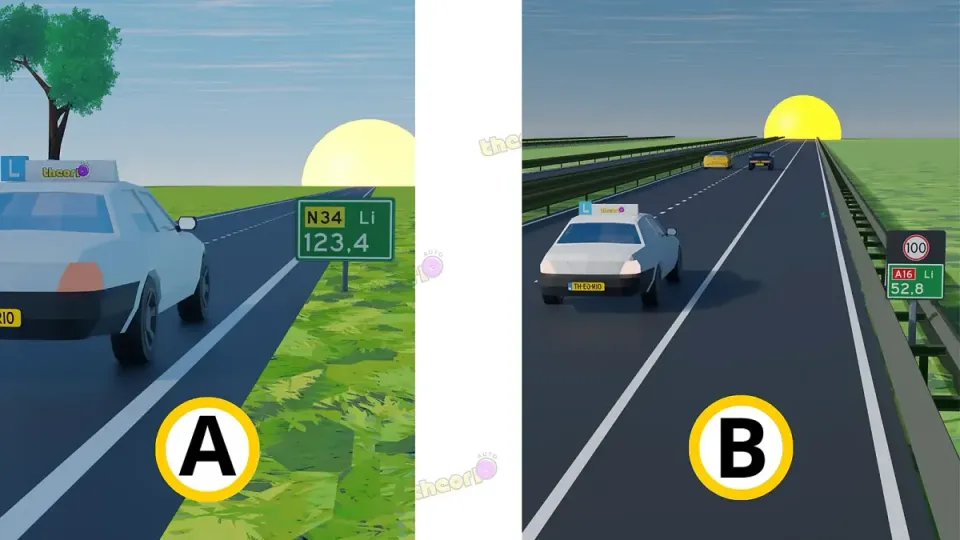
In real life the rest of the trip counts too. High speed gives more air resistance, and a detour adds kilometres. So compare the whole trip. Set your navigation before you drive off.
Does cruise control save fuel?
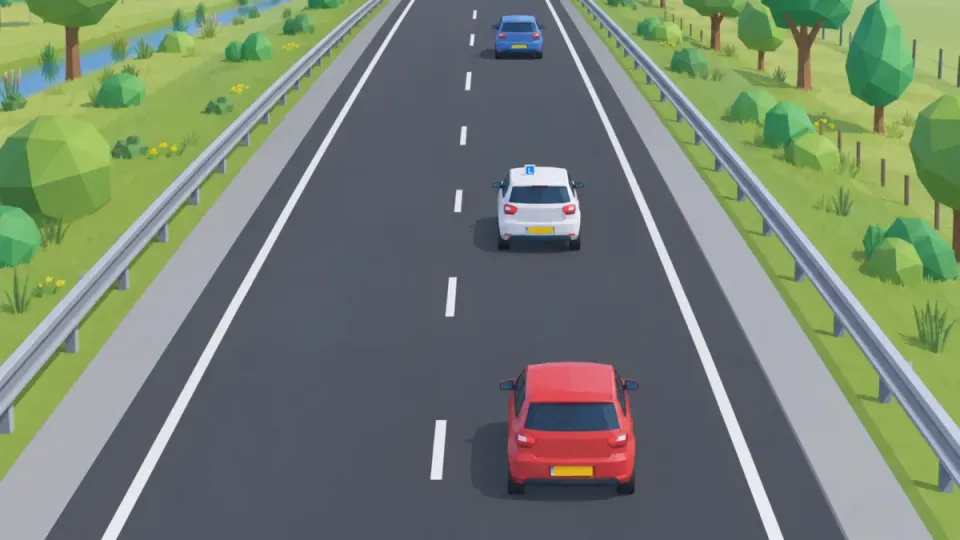
Often it does. Cruise control keeps your speed steady, and a steady speed saves fuel. In the exam, cruise control counts as something that saves fuel. One downside: driving becomes easier, so you may pay less attention. Keep watching yourself and be ready to brake. How normal and adaptive cruise control work is under adaptive cruise control.
Air conditioning and fuel use: AC on or windows open?
Air conditioning uses extra fuel. In the exam, the air conditioning is the answer to the question what uses the most energy. So only use it when you need it.
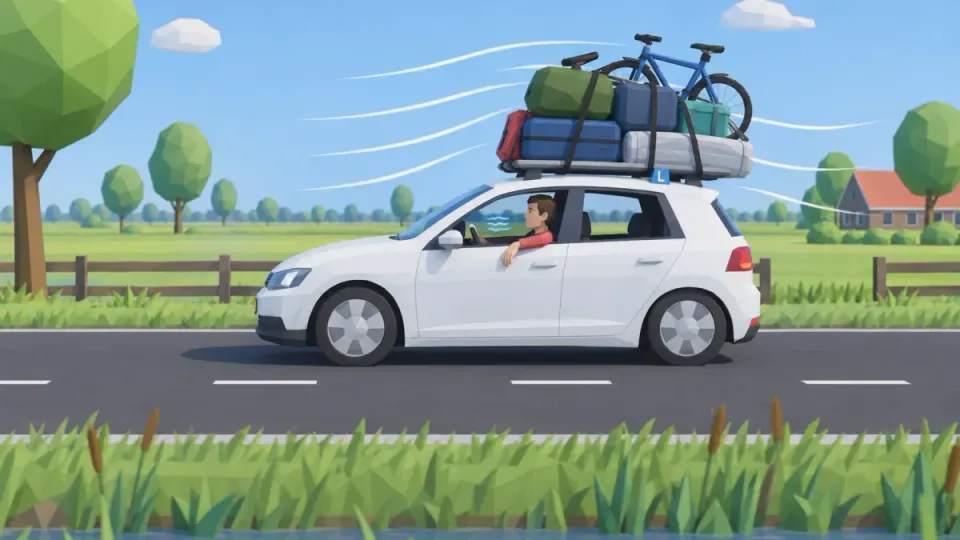
The rear window heater and other electrical things also use energy. Switch them off when you no longer need them. An open window or sunroof gives extra air resistance, especially at high speed. There is no fixed rule on whether AC or an open window uses less fuel. Good visibility always comes first: demist your windows when needed.
Extra fuel use from a roof box or bike carrier
A roof box, roof bars or a bike carrier catch the wind. That air resistance costs fuel. Extra weight costs fuel too, especially when speeding up and on hills. Take them off when you no longer need them. Also take heavy things you do not need out of the boot.
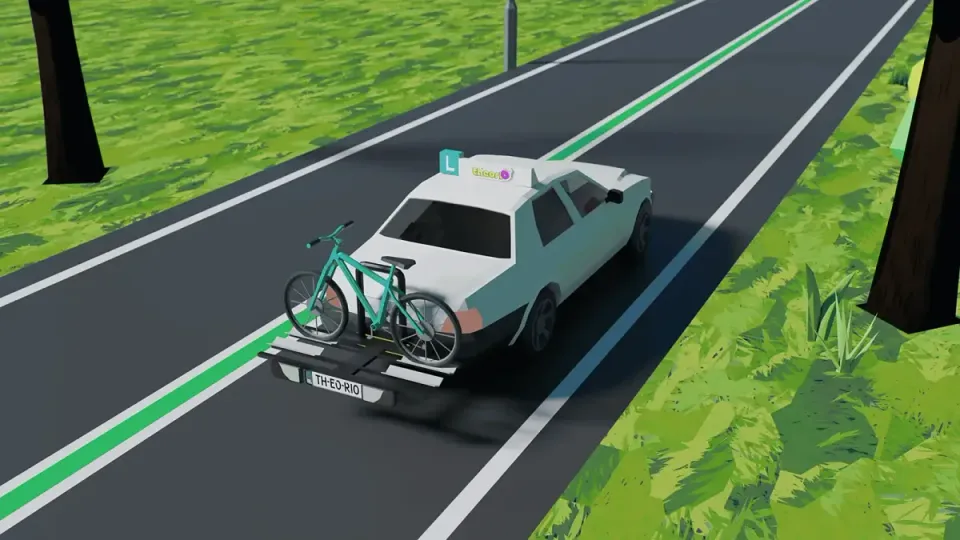
A heavily loaded car can also have a longer stopping distance. Keep that in mind. The rules for the carrier itself are under bike carrier.
Tyre pressure and fuel consumption
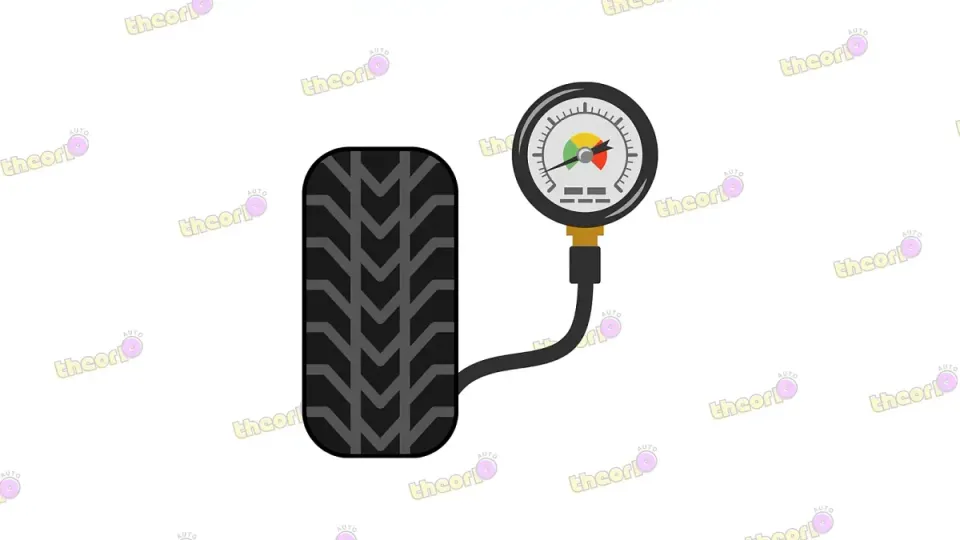
With tyre pressure that is too low, fuel consumption is higher. Soft tyres roll less easily and wear faster. So check the pressure regularly. How to do that and which value you need is under tyre pressure.
Good maintenance also keeps your car economical. What the lights on your dashboard mean is under dashboard warning lights.
RPM and changing gear · Switching the engine off · Reducing fuel consumption · Breakdowns · First aid at an accident
Practise like the exam
Example questions like in the CBR exam
Real questions from the Theorio app. You can expect similar questions in your CBR exam.
Question 1 of 6
When do you consume more fuel?
Tap the answer you think is right.
Does maintaining the correct following distance contribute to lower fuel consumption?
Tap the answer you think is right.
Where do you consume less fuel?
Tap the answer you think is right.
Is driving with cruise control more environmentally friendly?
Tap the answer you think is right.
Which of these options consumes the most energy?
Tap the answer you think is right.
What can significantly increase fuel consumption?
All options
- Low tire pressure
- Cruise control
- Air conditioning
- Navigation system
Answers and explanations for the example questions
Question 1: When do you consume more fuel?
Correct answer: If you drive at varying speeds
By frequently braking and accelerating again, you consume more energy and thus more fuel. 🔄 Reduce unnecessary braking and accelerating.
Question 2: Does maintaining the correct following distance contribute to lower fuel consumption?
Correct answer: Yes
By keeping a safe following distance, you need to brake and accelerate less often, which saves fuel. 🚗 Keep your distance, save fuel.
Question 3: Where do you consume less fuel?
Correct answer: Situation B
In Situation B (on the motorway) you drive more consistently. This is more economical than Situation A (on an expressway), where you constantly have to brake and accelerate again due to roundabouts and intersections. That acceleration consumes the most fuel. 🛣️
Question 4: Is driving with cruise control more environmentally friendly?
Correct answer: Yes
With cruise control, you maintain a constant speed, which leads to lower fuel consumption and thus less emissions. 🌱 More efficient driving.
Question 5: Which of these options consumes the most energy?
Correct answer: Air conditioning
Everything that your car needs to heat or cool, such as the air conditioning, costs a lot of energy. 💡 Extra energy consumption. Cruise control actually works favorably for your fuel consumption. Additionally, always try to drive at low RPM so that the engine doesn't have to work as hard.
Question 6: What can significantly increase fuel consumption?
Correct answer: Low tire pressure; Air conditioning
Low tire pressure causes more resistance and the air conditioning demands a lot of energy from the engine. Both cause higher consumption. Cruise control actually helps save fuel and a navigation system makes sure you drive fewer unnecessary kilometers⛽.
FAQ
Frequently asked questions
Short answers to questions that often come up on this subject.
What uses the most fuel in the car?
In the lesson picture, air conditioning particularly needs additional energy compared with dipped lights, low RPM and cruise control. This does not mean it is always the largest energy consumer in the entire car. Electric heating, open windows at speed, extra weight and carriers can also increase consumption. Necessary visibility and a safe temperature take priority over saving energy.
Is the motorway more economical than an N road?
Not automatically. A motorway often allows steadier driving because it has no at-grade junctions or roundabouts. But higher speed increases air resistance, and a detour adds kilometres. Compare the distance, speed and traffic flow of the whole journey.
Ready to practise?
Test your knowledge of Eco-friendly Driving & Breakdowns with 60 practice questions in the app.
Free mock exam · no account needed
Your first quiz is free, no account needed. After that from €34.99 for 90 days of access.