Part 4 of 4 in Car lighting & Dashboard
Dashboard warning lights and their meaning
Dashboard warning lights explained: what to do with a red or orange light. Oil, coolant, engine light, airbag and handbrake warnings in plain English.


Written by Chris Prosman Reviewed by Dirk van Zuijlen
Updated Reviewed on 9 min read
Free mock exam · no account needed
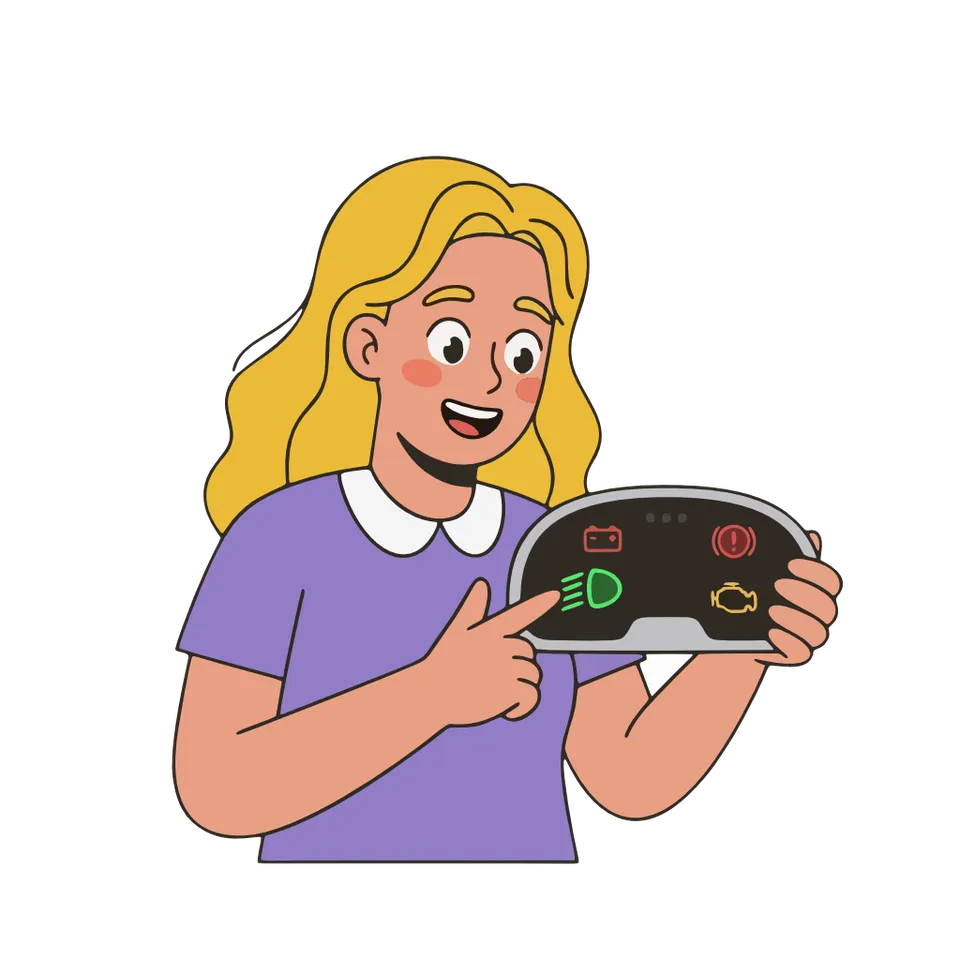
The colour of a dashboard warning light tells you how serious it is: red means stop, orange means have it checked soon, green or blue means a function is on. Then look at the symbol and the message, because not every red or flashing light means the same.
Video explanation
Car dashboard symbols: all warning lights at a glance
This table shows the lights you will see most often. At the top are the light symbols and the four lights from the Theorio study guide. Below them are the other symbols. The shape can differ a little per brand, the colour does not.
| Symbol | Name | Meaning |
|---|---|---|
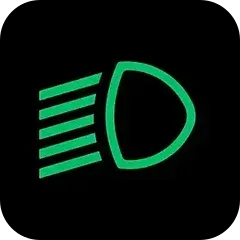 | Dipped beam | Green, slanting lines. Your normal driving lights are on. |
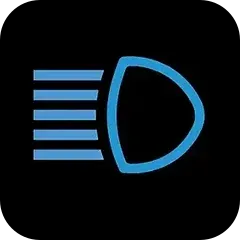 | Full beam | Blue, straight lines. Your full beam is on. Dip it when you meet someone. |
 | Front fog lights | Green, lamp facing left with a wavy line. Only when visibility is seriously reduced. |
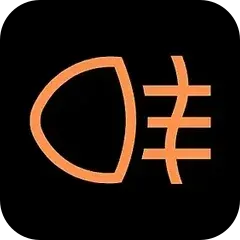 | Rear fog light | Orange, lamp facing right. Only in fog or snow with less than 50 metres of visibility. |
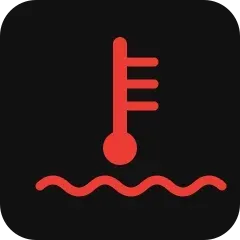 | Engine too hot (coolant) | Red. Stop safely, switch off the engine and let it cool down. |
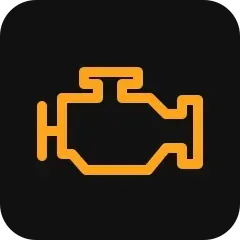 | Engine warning light | Orange. Fault in the engine or exhaust system. Have it checked soon. Flashing? Then stop. |
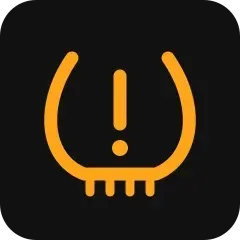 | Tyre pressure | Orange. A tyre has too little pressure. Stop safely and check your tyres. |
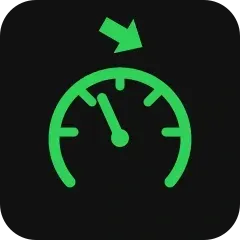 | Cruise control | Green. Cruise control is on. Not a fault. |
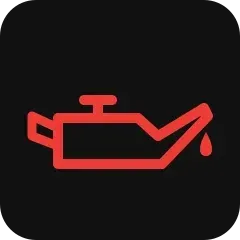 | Oil pressure | Red. Oil pressure is too low. Stop as soon as it is safe and switch off the engine. |
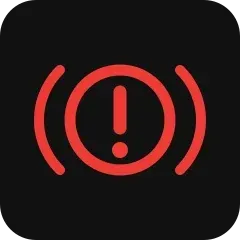 | Brake system | Red. Too little brake fluid or a brake fault. Stop safely. |
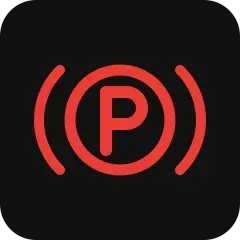 | Handbrake (parking brake) | Red. The handbrake is on. Release it before you drive off. |
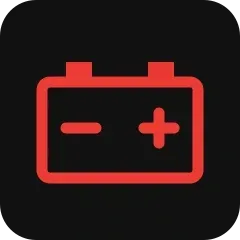 | Battery not charging | Red. The battery is not charging properly, for example because of the alternator. Stop safely and get help. |
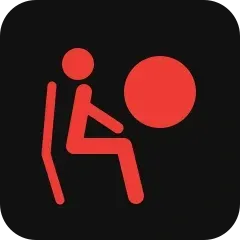 | Airbag | Red. If it stays on, the airbags may have a fault. Have it checked. |
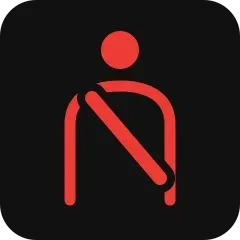 | Seat belt | Red. Someone is not wearing a seat belt. Put it on. |
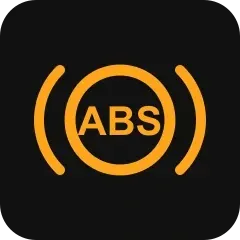 | ABS | Orange. Fault in the anti-lock braking system. Keep extra distance and have it checked. |
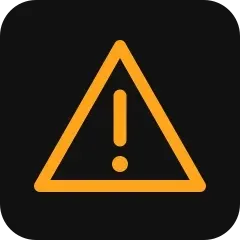 | General warning | Orange. Read the message that appears with it. |
 | Service | Orange. A service is due. In some brands it is a fault: read the manual. |
 | Fuel low | Orange. Fill up as soon as you can. |
 | Washer fluid | Orange. Top up the fluid. Not a fault. |
 | Side lights | Green, two small lamps. Only the side lights are on. You do not drive with these. |
 | Indicators | Green, flashing arrows. Both arrows flashing? Then your hazard lights are on. |
 | Start-stop system | Green. The engine switches off by itself when you stop and starts again. |
Dashboard warning lights meaning: look at the colour first
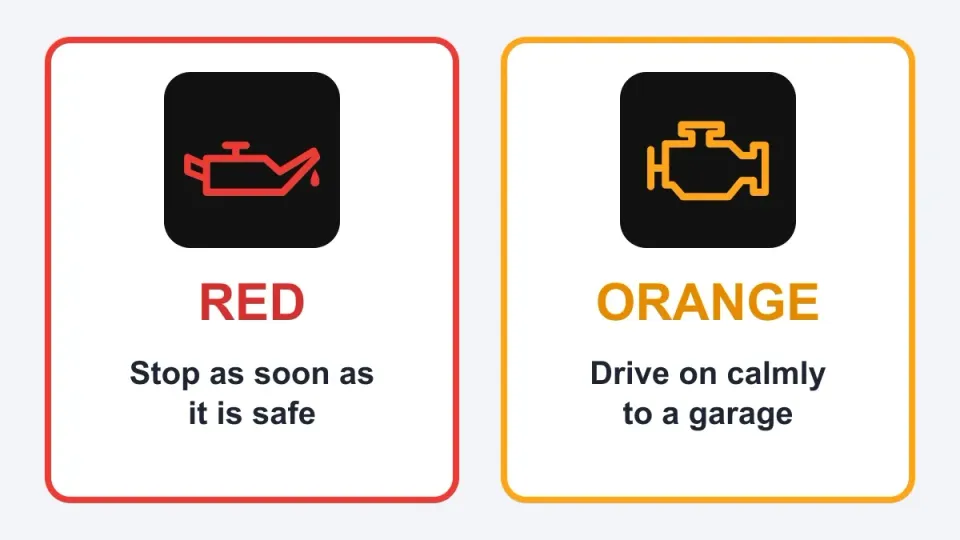
The colour tells you how serious it is. The symbol and the message tell you what is going on.
| Colour | Meaning | What do you do? |
|---|---|---|
| Red | Serious problem or danger. | Stop as soon as it is safe. |
| Orange or yellow | Fault or warning. | Have it checked soon. Is the light flashing? Then stop anyway. |
| Green | A function is on. | Nothing, it is not a fault. |
| Blue | Full beam is on. | Dip your lights when you meet someone. |
When you switch on the ignition, many lights come on briefly. That is a self-test. Does a light stay on after starting, or come on while driving? Then look at it straight away.
Red warning lights on the dashboard: what should you do?
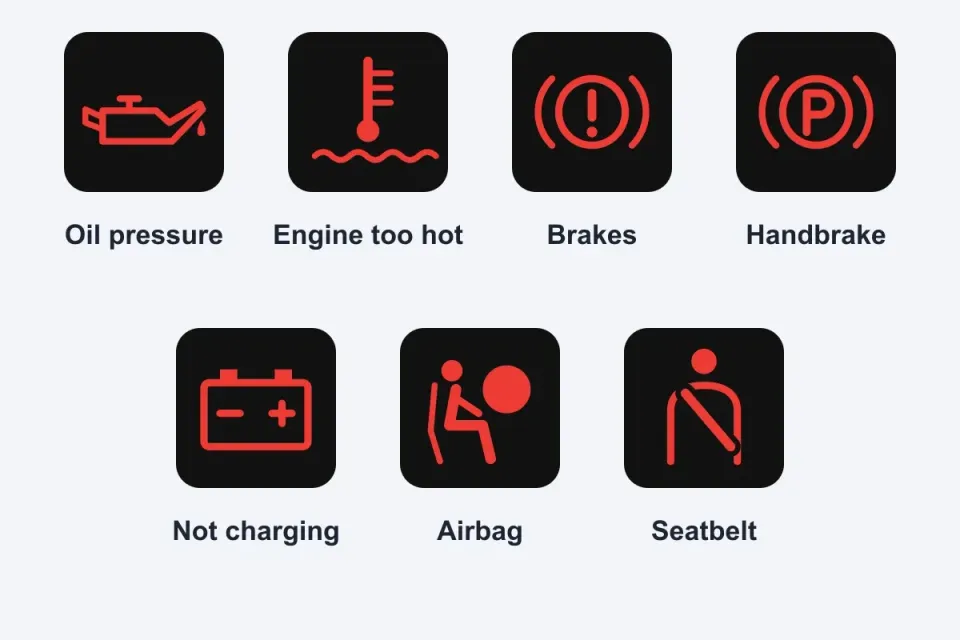
A red light means: stop as soon as it is safe. Do not drive on home or to the garage. The main red lights are the oil light, the red thermometer and the brake light. You will find them below.
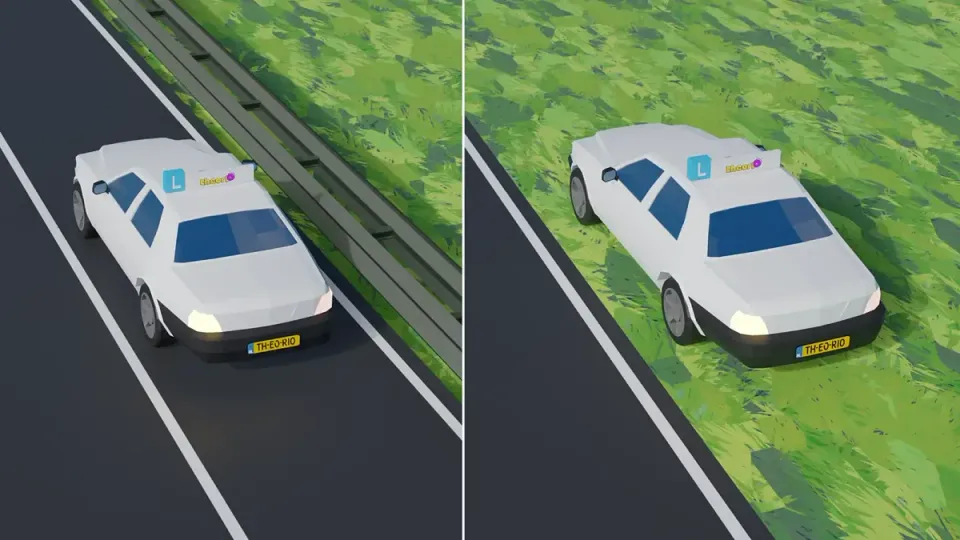
Park the car as far out of the lane as possible, switch on the hazard lights and get yourself to safety. What to do step by step on the motorway and in a tunnel is explained under breaking down.
Oil warning light in the car: the red oil can
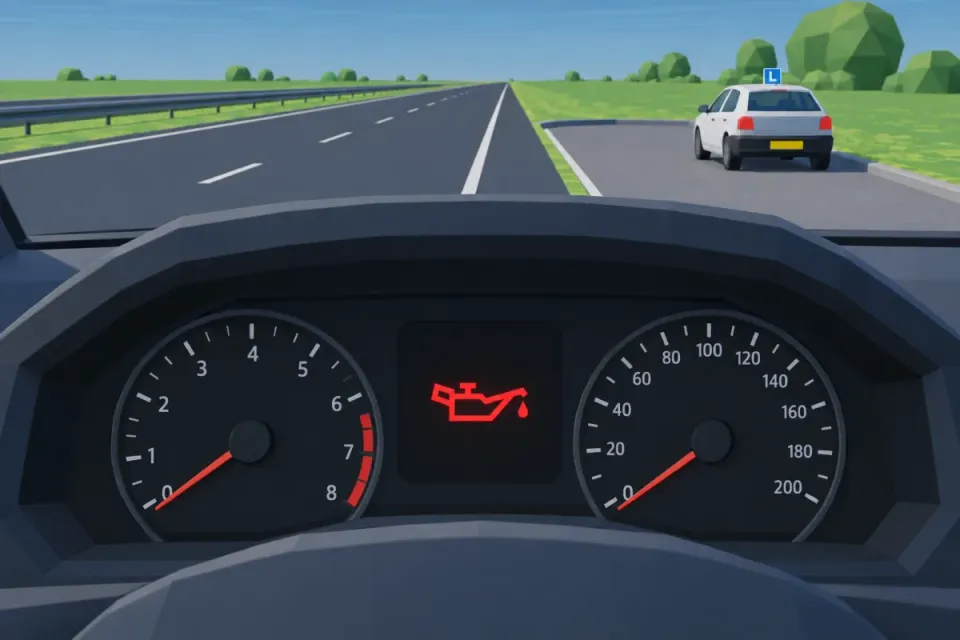
The red oil can warns of low oil pressure. Does it come on while driving? Stop as soon as it is safe and switch off the engine. Without oil pressure the engine gets too little lubrication and is quickly damaged.
A good oil level does not mean the oil pressure is fine. Topping up does not fix a broken oil pump either. So do not restart just because the level looks fine. Get help.
Some cars also have a yellow oil level light. That is a different message: there is too little oil. Read the message and never top up when the level is already above the maximum.
Checking the oil level yourself
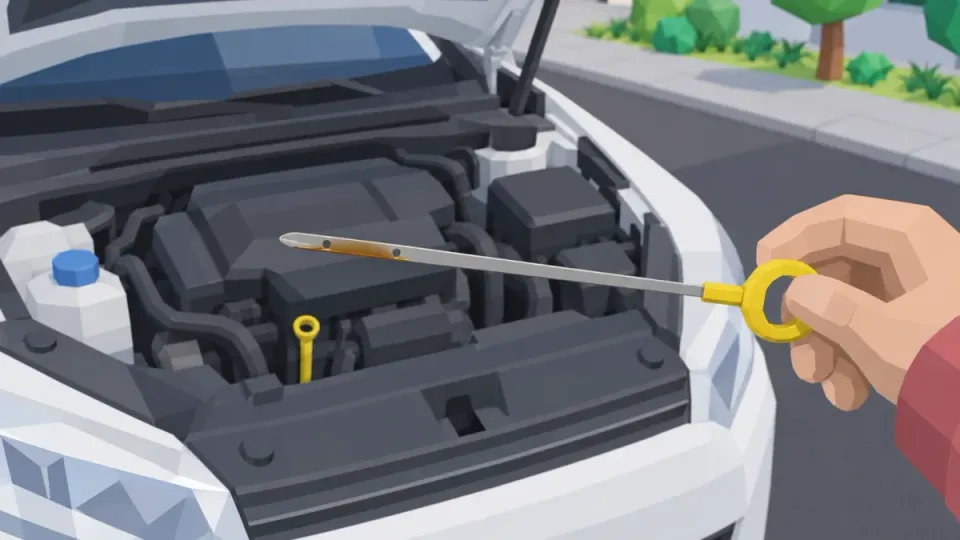
Park on a flat spot and switch off the engine. Wait as long as the manual says. The level must be between the minimum and the maximum. Too little and too much oil are both bad for the engine.
Coolant warning light: the red thermometer
The red thermometer means: the engine is too hot. Often there is too little coolant, a leak or a problem with the cooling. Stop safely, switch off the engine and let it cool down. Do not drive on home.
Never open the cap of a hot cooling system. Hot liquid and steam can spray out. Only check the level when the engine is cold. Use the coolant stated in the manual.
Some cars also have a separate light for low coolant. Read the message then. Does the light keep coming back? Have the cause checked.
Handbrake warning light and battery light
Handbrake warning light and brake system
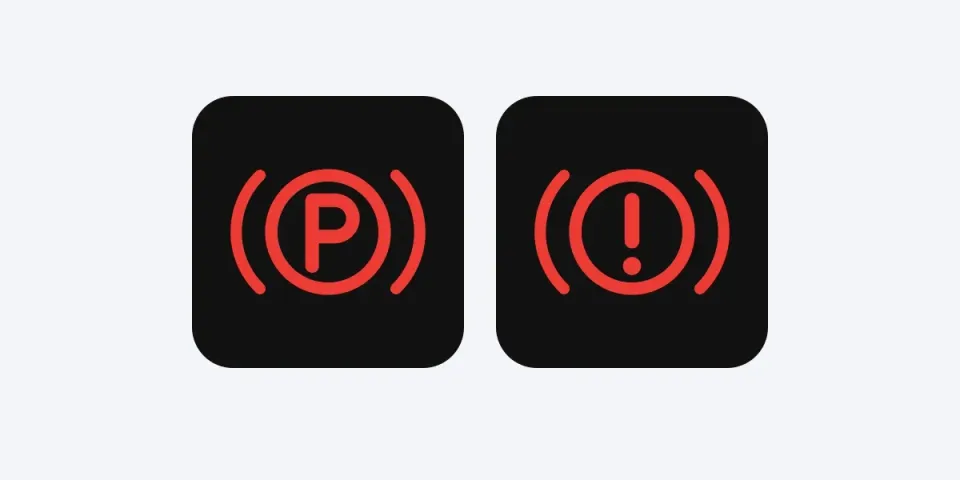
A red brake light can mean three things: the handbrake is on, there is too little brake fluid, or the brakes have a fault. The handbrake light is a P in a circle. In many cars the exclamation mark in a circle also tells you the handbrake is still on.
Check that the handbrake is off before you drive away. Does the light stay on, does the brake pedal feel different or does the car brake badly? Stop safely and have it checked.
Battery light
Is the battery light on while the engine is running? Then the battery is not charging properly. For example, something is wrong with the alternator, the belt or the wiring. So it does not just mean the battery is almost flat. Stop in a safe place and get help.
Orange warning light in the car: what does it mean?
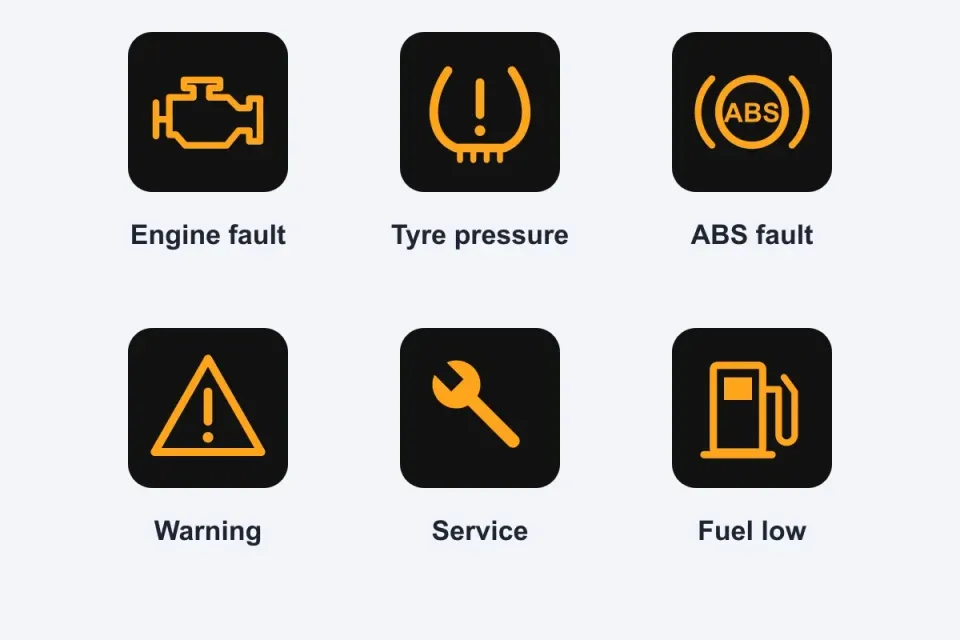
An orange or yellow light is a fault or warning. Usually you may drive on calmly to a car park or garage. Have it checked soon. Is the light flashing, or does the car drive differently than normal? Then stop safely anyway.
An orange spanner means in many cars that a service is due. In some brands it signals a fault. Read the message or the manual.
Orange warning light with an exclamation mark
Is the exclamation mark inside a half tyre with a jagged edge? Then the tyre pressure is too low. Stop safely and check your tyres. How to find the right pressure is explained under tyre pressure.
Is the exclamation mark inside a triangle? That is a general warning. A text message usually appears with it. Read that message.
ABS warning light
An orange ABS light means a fault in the anti-lock braking system. Your normal brakes usually still work. Keep extra distance and have it checked soon. Is a red brake light on as well? Then stop. Read more about ABS under ABS and ESP.
Orange engine warning light: steady or flashing?
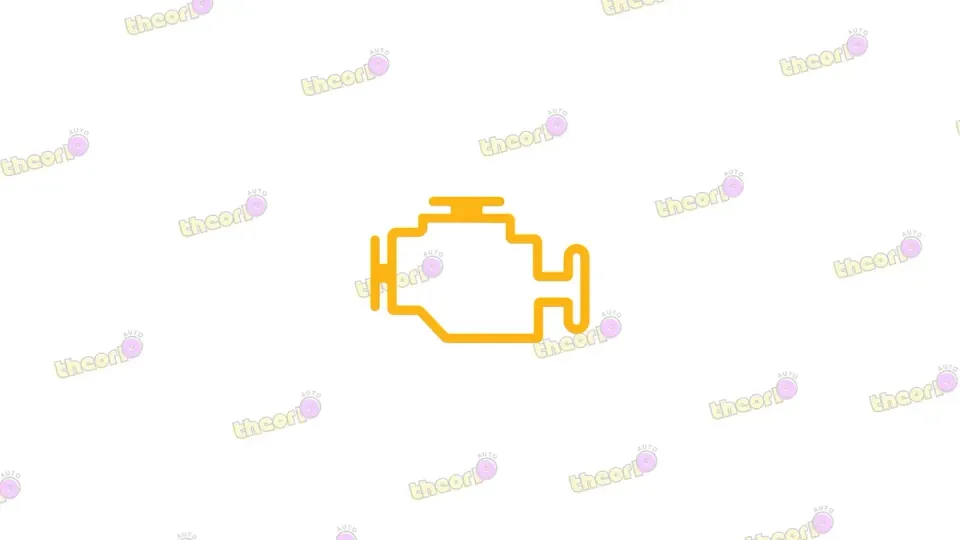
The orange engine light signals a fault in the engine or the exhaust system. What you do depends on the light:
- It is steady and the car drives normally: drive on calmly to a car park or garage and have it checked soon.
- It flashes, or the engine judders or loses power: stop as soon as it is safe and get help.
So read an exam question carefully: does it say the light is flashing? Then you stop.
Airbag warning light: what does it mean?
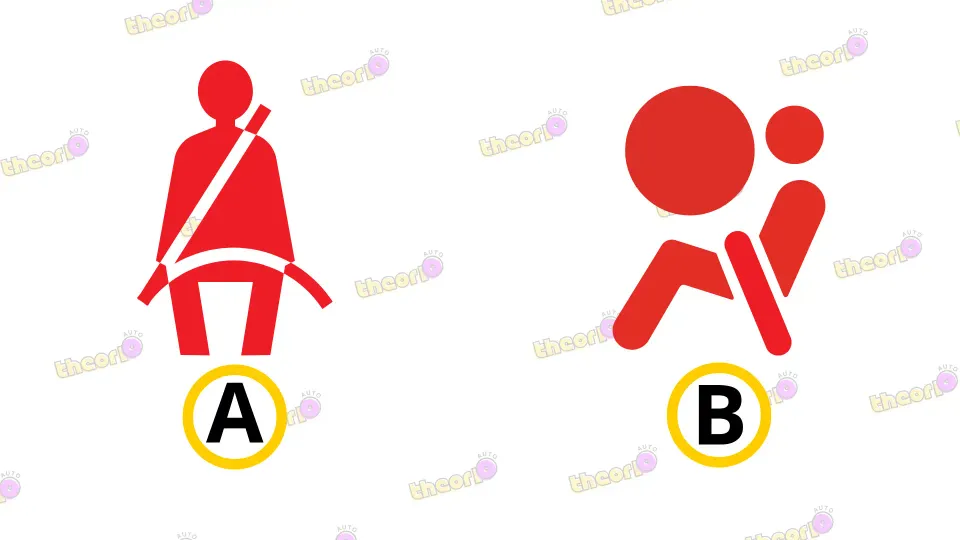
The airbag light comes on briefly when you start, as a self-test. Does it stay on or come on while driving? Then there may be a fault in the airbags or seat belt tensioners. Have it checked.
The light does not mean that the passenger airbag is safely switched off. Fitting a rear-facing child seat in the front? Then the airbag really must be off, and you see that from a separate message, such as PASSENGER AIRBAG OFF. Read more under child seats and airbags.
Green and blue lights: a function is on
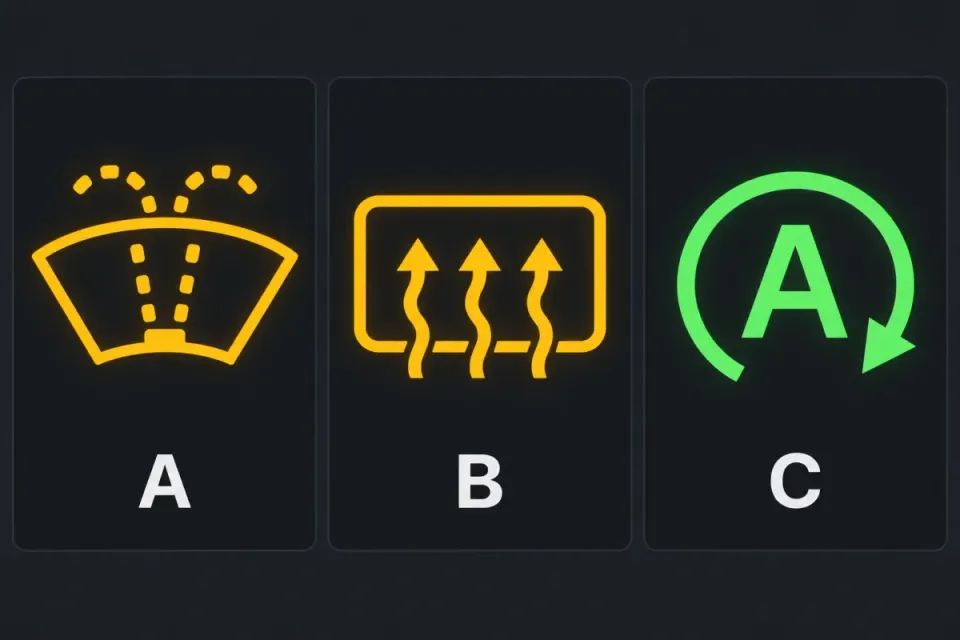
A green or blue light is not a fault. It shows that something is on:
| Lights: green for dipped beam, side lights and front fog lights. See dipped beam symbol and fog lights. |
| Full beam: the only blue light. Dip it when you meet someone. See full beam. |
| Cruise control: a speedometer with an arrow. Keep steering and keeping your distance yourself. |
| Start-stop: an A with a circular arrow. The engine switches off and on by itself when you stop. |
| Indicators: green flashing arrows. If both arrows flash, your hazard lights are on. |
Some lights are orange but not a fault. Like the washer fluid light: top it up. Switch off the rear window heating as soon as the window is clear.
Practise like the exam
Example questions like in the CBR exam
Real questions from the Theorio app. You can expect similar questions in your CBR exam.
Question 1 of 6
Which dashboard light means you must stop immediately?
Tap the answer you think is right.
The ‘low oil level’ symbol is a red warning, which means you must stop immediately.
Which symbol indicates 'low oil level'?
Tap the answer you think is right.
What does this symbol indicate?
Tap the answer you think is right.
What does this symbol indicate?
Tap the answer you think is right.
What does this symbol indicate?
Tap the answer you think is right.
What does this symbol indicate?
Tap the answer you think is right.
Answers and explanations for the example questions
Question 1: Which dashboard light means you must stop immediately?
Correct answer: Light A
Light A (red) indicates a serious warning, such as overheating. With a red light, you must stop immediately. Red light = take immediate action 🛑
Question 2: Which symbol indicates 'low oil level'?
Correct answer: Symbol A
Symbol A indicates low oil level. It is a red warning, so stop immediately and take action. Red oil level symbol requires immediate attention ⚠️
Question 3: What does this symbol indicate?
Correct answer: Overheating of the engine
This light indicates an overheated engine. The cause may be a low coolant level, but that is not necessarily the case. Overheated engine requires immediate attention 🔥
Question 4: What does this symbol indicate?
Correct answer: Engine malfunction
An orange engine management light signals a engine malfunction. You can continue driving to a garage (orange light), but with a red light, you must stop immediately. Orange light: have it checked quickly, red: stop immediately 🛠️
Question 5: What does this symbol indicate?
Correct answer: Handbrake engaged
This light indicates that the handbrake is still active. 🅿️
Question 6: What does this symbol indicate?
Correct answer: Battery & alternator problems
This light indicates both battery problems and a possibly failing alternator. Battery and alternator problems 🔋
FAQ
Frequently asked questions
Short answers to questions that often come up on this subject.
What does a blue light on your dashboard mean?
The blue headlamp symbol with straight horizontal rays means full beam. It is a function indication, not a fault. Check the shape too: some cars have another blue symbol indicating a cold engine.
When do you check the coolant?
When the engine is cold, so not straight after a drive.
Ready to practise?
Test your knowledge of Car lighting & Dashboard with 55 practice questions in the app.
Free mock exam · no account needed
Your first quiz is free, no account needed. After that from €34.99 for 90 days of access.