Part 5 of 5 in Eco-friendly Driving & Breakdowns
Helping a casualty
With a casualty: first make yourself safe, call 112, do not move them unnecessarily and do not give water. Act according to their condition.


Written by Chris Prosman Reviewed by Dirk van Zuijlen
Updated Reviewed on 6 min read
Free mock exam · no account needed
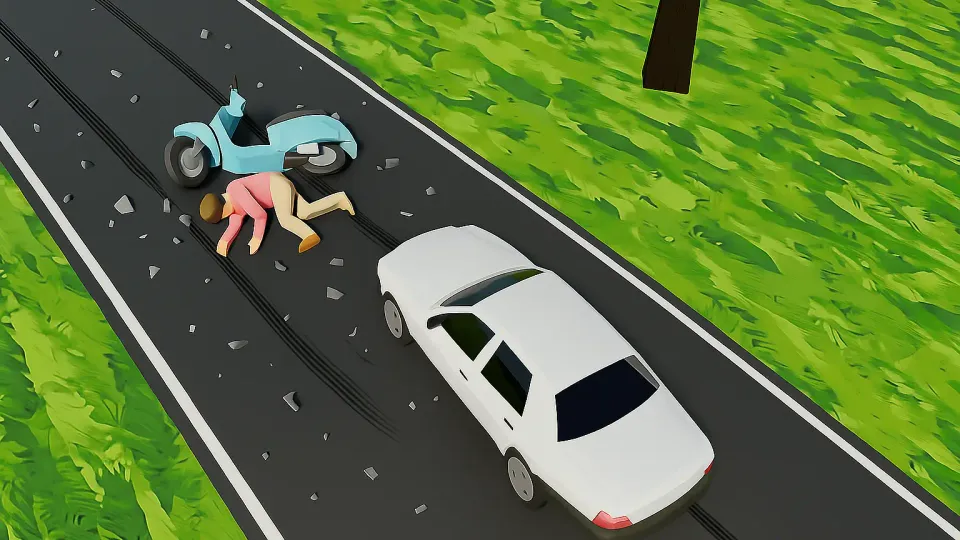
Do you see a road accident? First make sure you are safe yourself. Then call 112 and help without creating new danger. Leave a casualty where they are, unless there is immediate danger.
First aid at a road accident: what do you do first?
Your own safety comes first. Park your car safely, switch on your hazard lights and stand behind the crash barrier. Watch out for moving traffic, smoke and fire. Only help others once you are safe.
- Call 112 or have someone call. Put the phone on speaker and follow the instructions. Say where you are, what happened and how many people are injured.
- Leave the casualty where they are. Tell them not to move: there may be injuries you cannot see.
- Do not move the cars after a serious accident. Where they stand shows what happened.
- Reassure the casualty and keep them warm.
- Do not give food or drink. It can cause choking and make treatment harder.
When do you pull someone out of a car? The Rautek manoeuvre
Only when there is immediate danger, such as fire or smoke. Or when you cannot help them otherwise, for example to do CPR. Also do not help a casualty to stand up. If someone really must be moved, first aiders use the Rautek manoeuvre: you hold the casualty from behind under the armpits and carefully pull them backwards. You learn this grip on a first aid course.
Severe bleeding
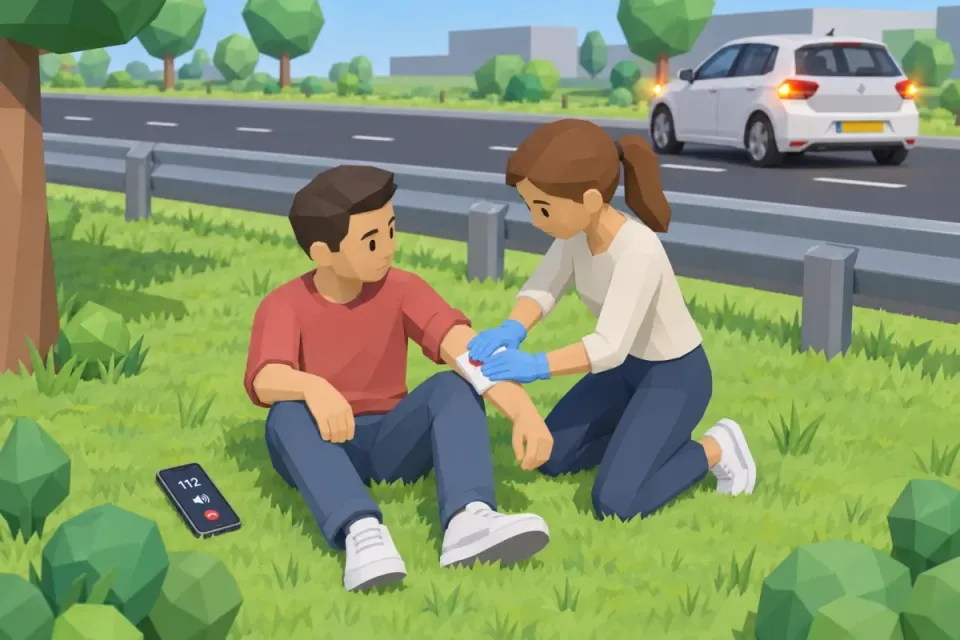
Press directly and firmly on the wound, for example with a clean cloth or a piece of clothing. Keep pressing until the ambulance takes over. Do not pull out an object that is stuck in the wound. Do not let a badly injured casualty walk. See also Red Cross: bleeding.
Back or neck pain after a crash
Keep the casualty as still as possible, lying or sitting, and call 112. Being able to talk does not mean there are no internal injuries. Do not let them test whether they can walk.
When do you put someone in the recovery position?
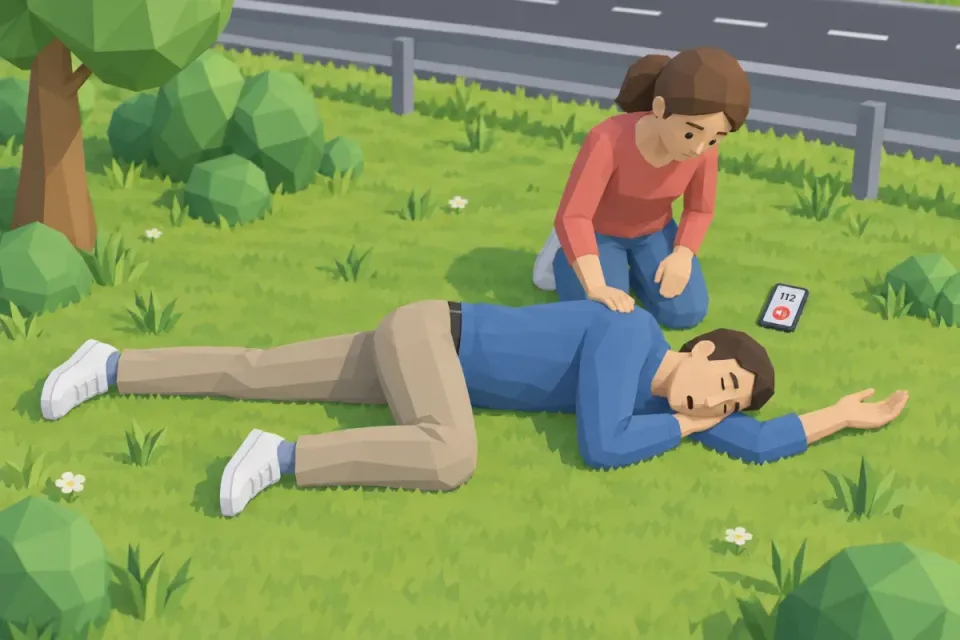
When an unconscious casualty is vomiting or has blood in their mouth. Then you turn them onto their side, so they do not choke. Do this even if you suspect a neck injury: breathing comes first. Support the head and neck as well as you can.
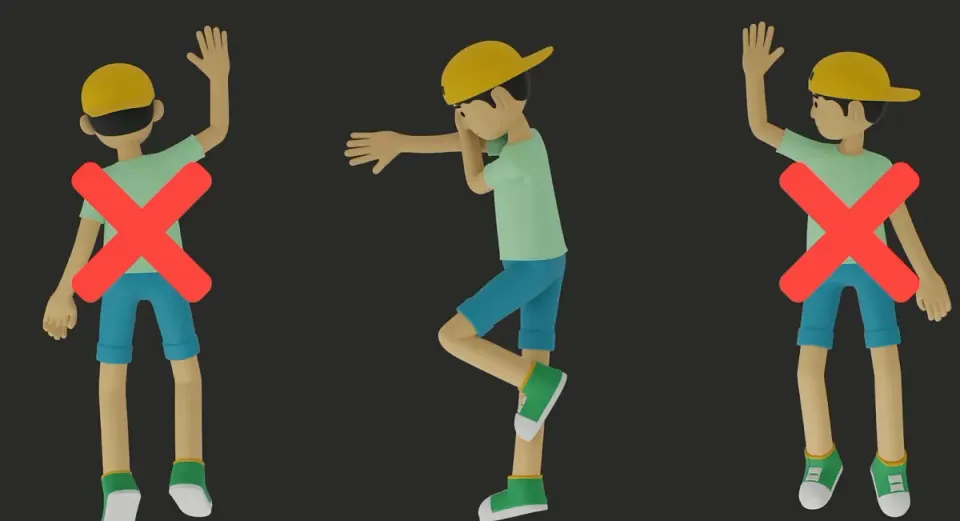
Is an unconscious casualty breathing normally and not vomiting? Then after an accident you leave them on their back. Keep the airway open as the 112 operator explains, and keep checking that they still breathe normally. The Red Cross gives two more moments for the recovery position: when you have to leave the casualty alone, and for a pregnant woman. See Red Cross: unconscious but breathing.
Should you remove a motorcycle helmet after a crash?
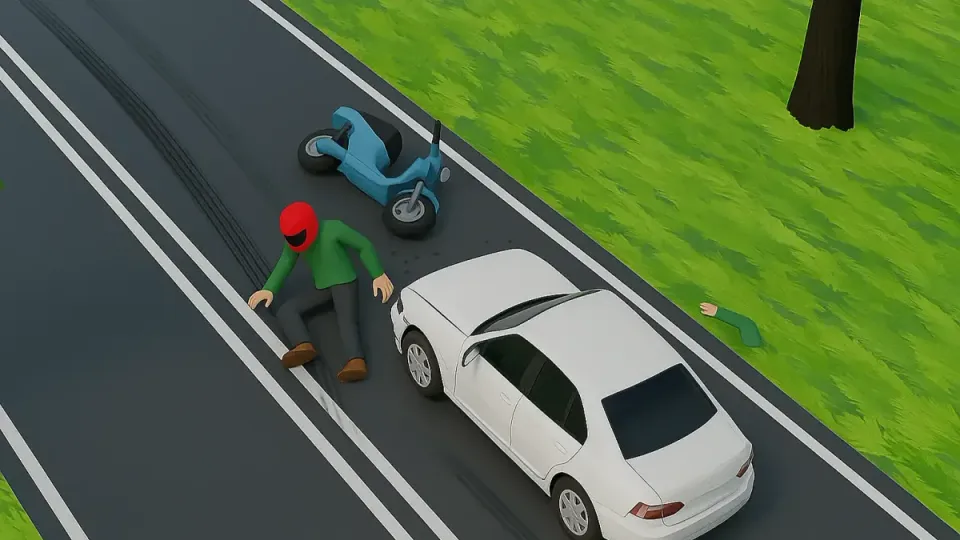
No, leave the helmet on. There may be a neck injury. Do open the visor. Is the casualty vomiting, or do you need to do CPR? Then the helmet may come off, preferably with help from a second person. Follow the instructions from 112. See also Red Cross: head injuries.
CPR: the steps for an adult
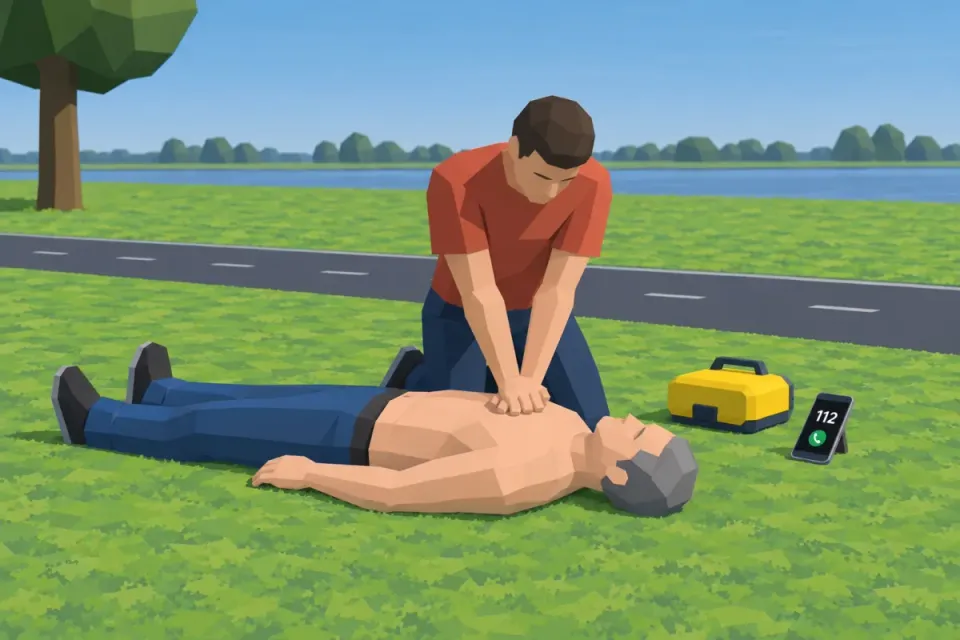
Does someone not respond and not breathe normally? Start CPR straight away. Not sure about the breathing? Then start too.
- Talk to the casualty and gently shake their shoulders.
- Call 112 with the phone on speaker. Have someone fetch an AED.
- Look, listen and feel for at most 10 seconds whether they breathe normally. Gasping now and then is not normal breathing.
- Give 30 chest compressions: push the breastbone down 5 to 6 centimetres, 100 to 120 times per minute.
- Then give 2 rescue breaths, if you can. If you cannot, the operator will help you with chest compressions only.
- Keep going: 30 compressions, 2 breaths. Only stop when the ambulance crew says you may.
CPR with an AED
An AED is a device that can give the heart a shock. Switch it on and do what it says. Stick the pads on the bare chest. Do not touch the casualty during the analysis and the shock. Then go straight on with 30 chest compressions. Does the casualty come round and breathe normally? Then leave the pads on. Source: Red Cross: CPR.
Minor damage: what to do after a small collision?
Only minor damage and nobody hurt? Then do not sort it out on the carriageway or the hard shoulder. Can the cars still be driven safely? Then go together to a safe place, such as a car park or petrol station. Exchange your details there and fill in the accident report form together. How that works is under the accident report form.
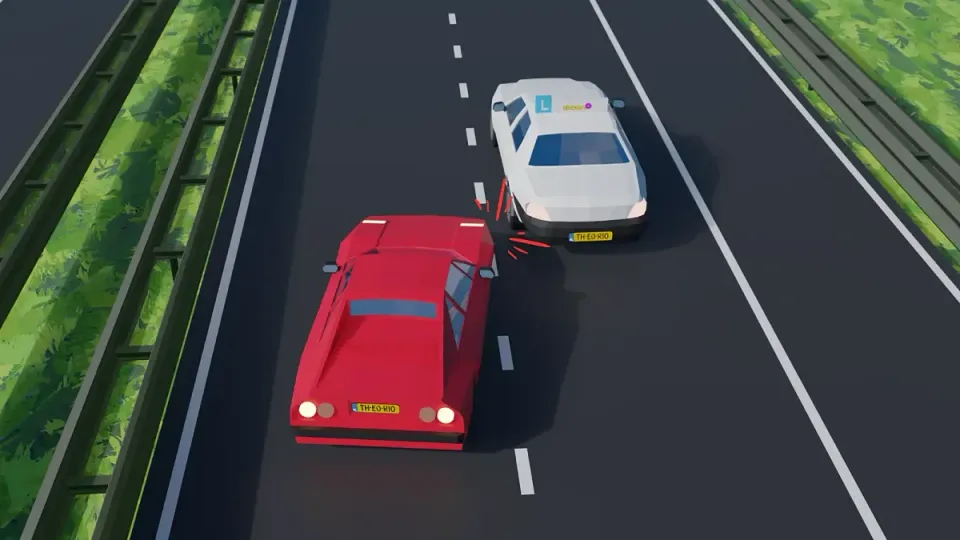
Never just drive on after an accident. Do not leave others without help. With serious injuries you leave the cars where they are.
Car in water: what should you do?
Get out straight away, while the car is still floating. Do not wait until it sinks.
- Undo your seat belt.
- Open a side window straight away. An electric window may still work at first.
- Climb out and help children and other passengers.
- Call 112 as soon as you are safely out.
Do not try the door first. The water pressure makes it hard to open, and that costs precious time. See also ANWB: car in water.
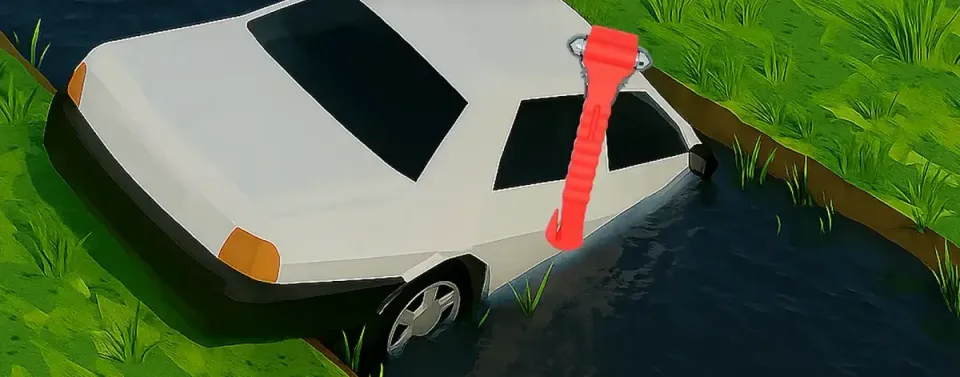
Where do you break the window with a safety hammer?
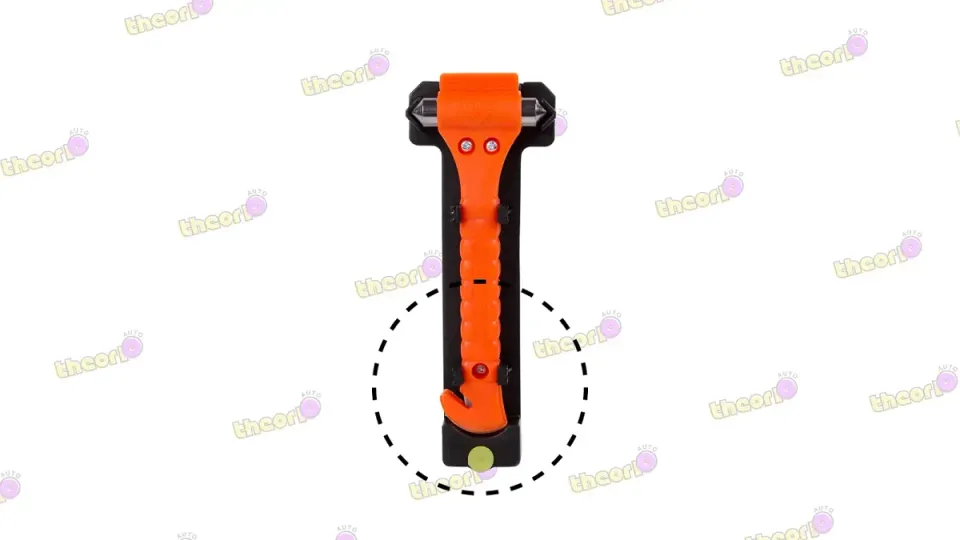
In the corner of a side window. That is where it breaks most easily. You cannot break the windscreen: it is laminated. Some new side windows are laminated too. So check beforehand how this works in your car. At the bottom of the hammer there is a small blade to cut through a stuck seat belt. Fix the hammer where you can reach it with your seat belt on.
RPM and changing gear · Switching the engine off · Reducing fuel consumption · Breakdowns · First aid at an accident
Practise like the exam
Example questions like in the CBR exam
Real questions from the Theorio app. You can expect similar questions in your CBR exam.
Question 1 of 6
Vomiting is another word for throwing up.
What is the most suitable position for a victim who is vomiting?
Tap the answer you think is right.
Can you remove the helmet from a victim?
Tap the answer you think is right.
Only help victims with urgency, these are victims who are vomiting or bleeding.
A victim with severe back pain: what do you do?
Tap the answer you think is right.
In the event of a serious accident, may you move the car immediately?
Tap the answer you think is right.
Is it wise to offer a victim water?
Tap the answer you think is right.
If your car goes into the water, what should you do?
Tap the answer you think is right.
Answers and explanations for the example questions
Question 1: What is the most suitable position for a victim who is vomiting?
Correct answer: Position B
Choose the recovery position (position B), so the victim cannot choke on vomit. 🤒 Prevent choking when vomiting.
Question 2: Can you remove the helmet from a victim?
Correct answer: No
Remove the helmet only if the victim is vomiting or bleeding heavily. Otherwise, unnecessary actions can lead to more injury. ⛑️ Limit unnecessary interventions.
Question 3: A victim with severe back pain: what do you do?
Correct answer: Leave the victim lying down
Only move the victim if he is vomiting or is bleeding heavily; otherwise, moving can cause more injury. ⚠️ Minimize unnecessary movement.
Question 4: In the event of a serious accident, may you move the car immediately?
Correct answer: No
Leave the car until the emergency services arrive. Moving it prematurely can erase evidence and cause confusion. 🚨 Wait for professional help.
Question 5: Is it wise to offer a victim water?
Correct answer: No
Do not give water, as you do not know what is going on. In case of any operations, the stomach must be empty. 🚫 Avoid unnecessary risks.
Question 6: If your car goes into the water, what should you do?
Correct answer: Exit the car immediately
Break the side window in the corner with a safety hammer and exit the car as quickly as possible. 🌊 Exit the vehicle immediately.
Ready to practise?
Test your knowledge of Eco-friendly Driving & Breakdowns with 60 practice questions in the app.
Free mock exam · no account needed
Your first quiz is free, no account needed. After that from €34.99 for 90 days of access.