Part 4 of 4 in Vehicle requirements, Tyres & Load
Tyre pressure
Tyre pressure: at the right pressure you get the most grip, the best road holding and the lowest fuel use. When do you increase it?


Written by Chris Prosman Reviewed by Dirk van Zuijlen
Updated Reviewed on 6 min read
Free mock exam · no account needed
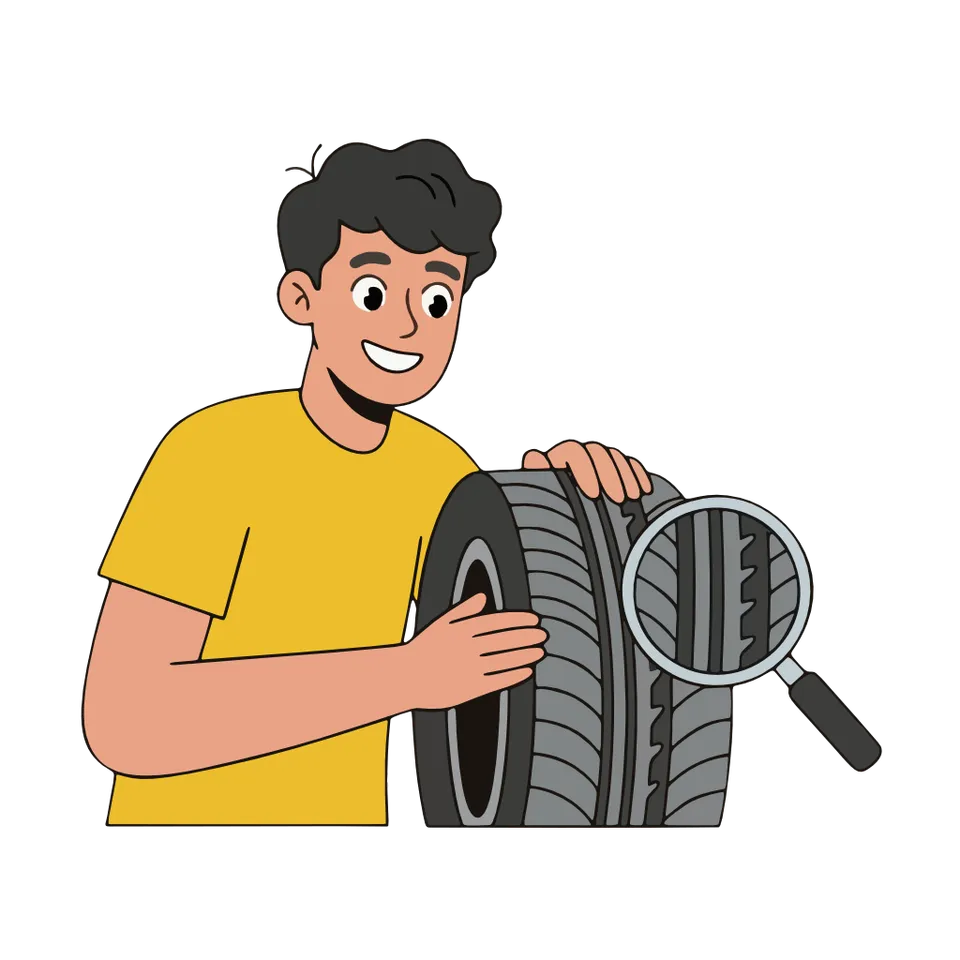
The correct tyre pressure for your car is on a sticker in the door frame or the fuel flap, and in the owner’s manual. For most passenger cars it is somewhere between 2.0 and 2.8 bar, and the front and rear values can differ. Measure when the tyres are cold. Is the orange tyre pressure light on? Then check all tyres as soon as possible.
Calculator
Checking tyre pressure: how much do you need to add?
The right tyre pressure is on your car's sticker (door pillar or fuel flap) or in the owner's manual. Enter that value and your own reading: for each tyre you see how much to add or let out.

Measure when the tyres are cold, so before driving or after a short distance.
On the rear axle the tyres differ by 0.4 bar. At the APK (MOT) that may be at most 0.3 bar. Inflate both tyres to the sticker value.
Pump in psi? 2.3 bar is about 33 psi. Choose psi above to see everything in psi.
What is the correct tyre pressure for your car?
The correct tyre pressure is the value your car’s manufacturer prescribes. There is no single value for all cars. It depends on your car, your tyre size and how heavily the car is loaded. Tyre pressure is usually measured in bar.
How many bar is normal? For most passenger cars the tyre pressure is somewhere between 2.0 and 2.8 bar. That is only a guide, not a value to pump your tyres to. Front and rear tyres can have different values, for example because the engine is at the front. Some manufacturers also give a higher ‘eco’ value: it means less rolling resistance, but a slightly firmer ride. ANWB: pumping up car tyres (Dutch).
Where do you find the tyre pressure?
- On a sticker in the door frame, usually on the driver’s side.
- On the inside of the fuel flap.
- In the car’s owner’s manual.
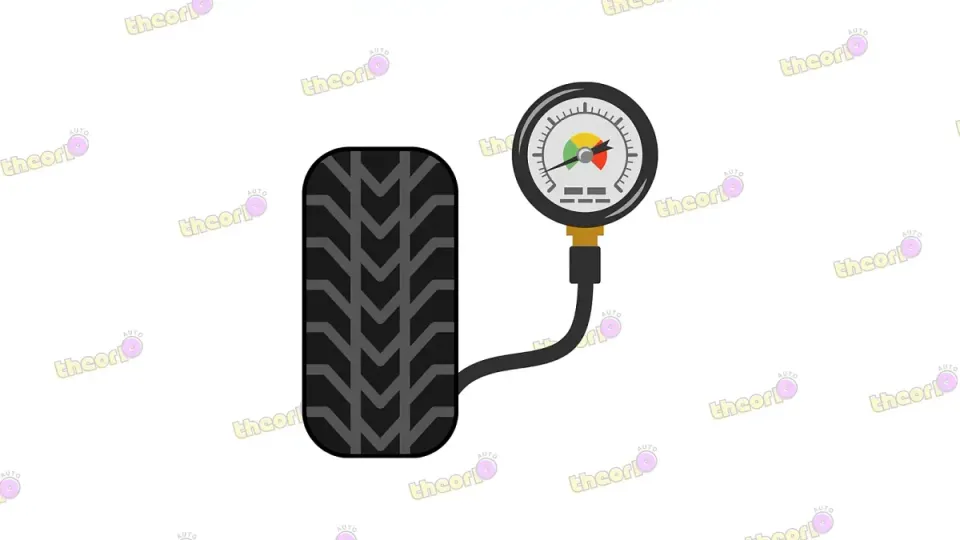
So always check the value for your own car. The sticker often lists front and rear separately, and usually also a higher value for a fully loaded car. At the APK (the Dutch MOT) the tyre pressure must match what the manufacturer prescribes. Tyres on the same axle may then differ by at most 0.3 bar. RDW: tyres at the APK.
Can you look up tyre pressure by number plate?
Your registration document does not show the tyre pressure. There are websites where you enter your number plate, though. They look up your car model and then show the manufacturer’s value.
Always compare that value with the sticker in your door frame or fuel flap. Your car may have different tyres from the standard ones. The sticker or the owner’s manual is what counts.
Tyre pressure warning light: what does it mean?
The orange tyre pressure warning light means the pressure in one or more tyres is too low. The light looks like the cross-section of a tyre with an exclamation mark inside.
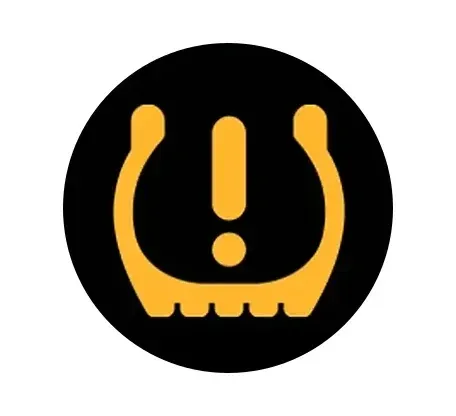
Does the light flash first and then stay on? In many cars that means a fault in the system itself. Check the owner’s manual to see what it means for your car. More warning lights are explained under dashboard warning lights.
Can you keep driving with the tyre pressure light on?
Drive calmly to a safe place, such as a petrol station, and check all tyres. Do you see a flat or very soft tyre? Then do not drive on. Fit the spare wheel or call roadside assistance. With too little pressure a tyre can fail.
Tyre pressure light stays on: what now?
Have you pumped up the tyres and is the light still on? Many cars then need a reset of the system, with a button or in the menu. The owner’s manual tells you how. In other cars the light goes out by itself after a short drive. Does it stay on after that? Check the tyres again or have the system checked.
Why does the light come on when it is cold?
When it gets colder, the pressure in your tyres drops. On the first cold morning the light can come on because of that. Measure the pressure and pump the tyres up to the correct value.
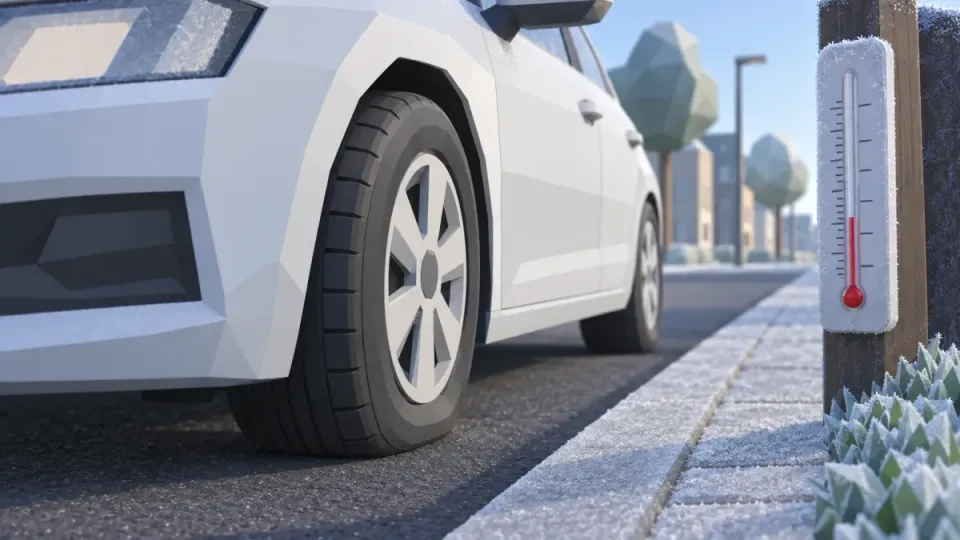
The light also counts at the APK. Was your car first used after 31 December 2017? Then the system may not show a fault after starting.
How to check your tyre pressure
Check the tyre pressure when the tyres are cold, so before you drive. Do it regularly, for example once a month, and always before a long trip.
- Find the correct value on the sticker or in the owner’s manual.
- Unscrew the valve cap.
- Press the pressure gauge or the pump nozzle onto the valve and read the pressure.
- Pump up to the correct value, or let some air out if there is too much.
- Screw the cap back on and do the same for the other tyres.
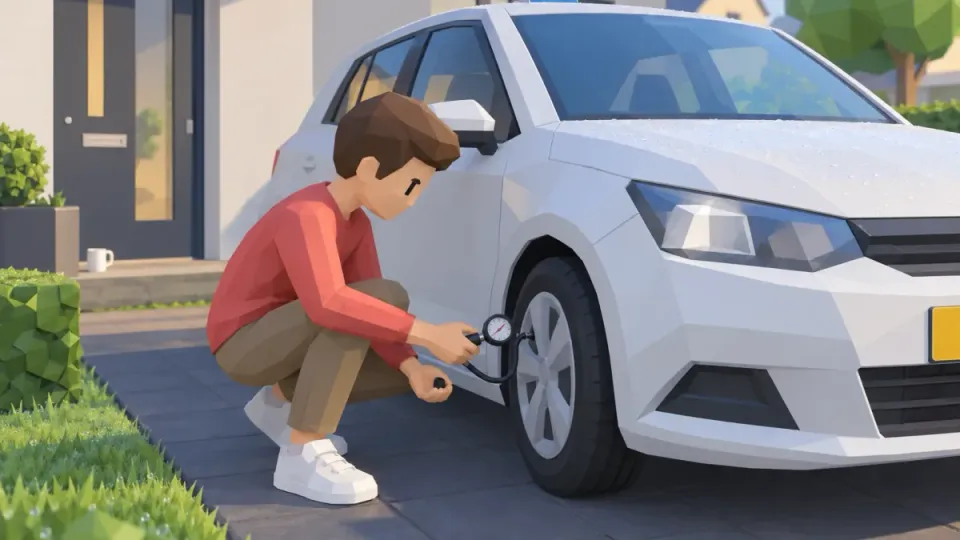
Measure warm or cold? Cold. After a drive the tyres are warm and the pressure is higher. Do not simply let air out to reach the cold value. Your tyres will then be too soft later. Measure again once they have cooled down.
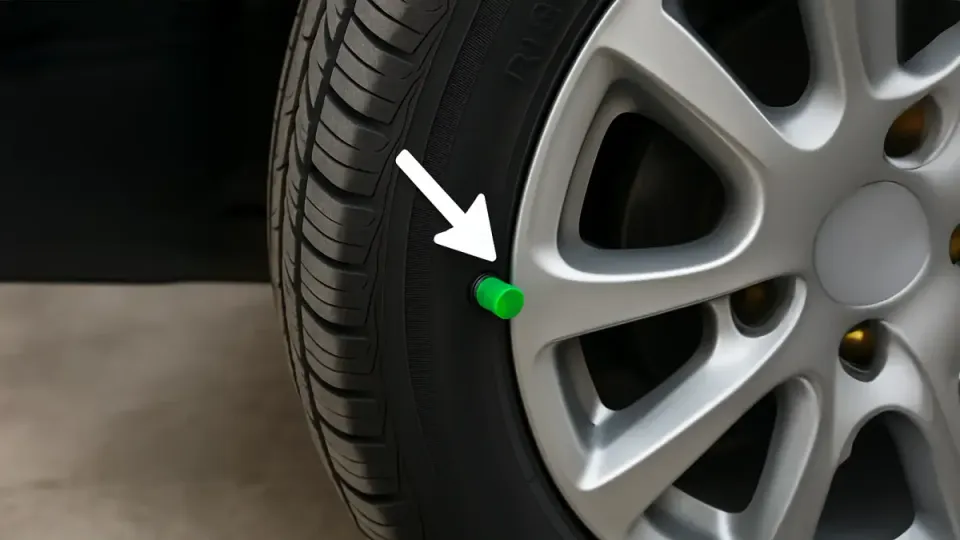
Do your tyres have nitrogen in them? You often see that from a green cap. You may simply top those tyres up with air. Then too, you check the pressure regularly. Michelin: pumping up tyres and nitrogen.
Tyre pressure too low or too high: what happens?
With tyre pressure that is too low the tyre bends more. It gets hot, wears at the edges and you use more fuel. The risk of a blowout goes up. With tyre pressure that is too high the tyre wears mainly in the middle and the car holds the road less well.
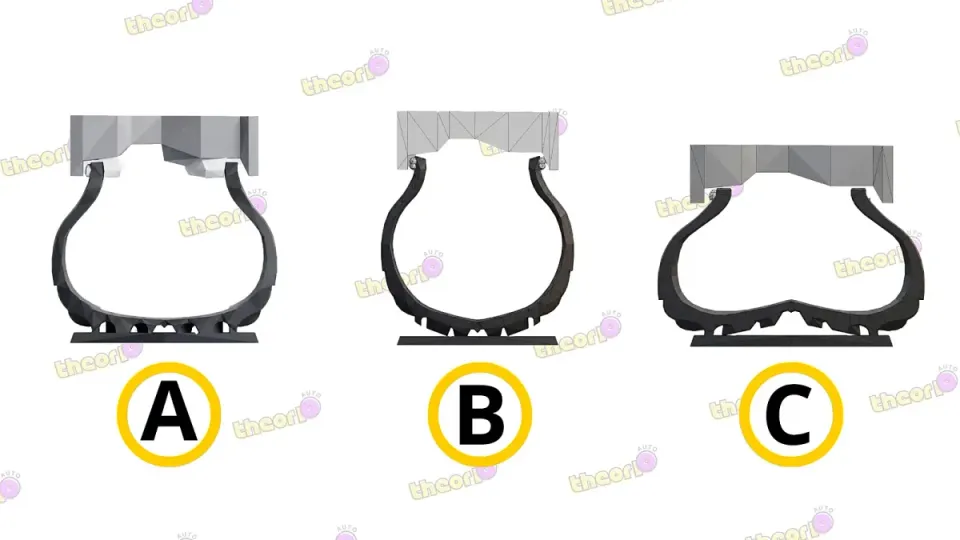
| Situation | Wear | Effects |
|---|---|---|
| A: correct pressure | Even across the whole tread. | Good road holding and no needless extra fuel use. |
| B: pressure too high | Mainly in the middle. | Less grip and poorer road holding. |
| C: pressure too low | Mainly at the edges. | More fuel use, heat and risk of damage or a blowout. |
Even a tyre with enough tread can be unsafe because of the wrong pressure. Want to drive economically? Also read saving fuel.
Which tyre pressure for winter tyres, a full car or a trailer?
For winter tyres you also use the manufacturer’s value for that tyre size. Is your winter tyre not on the sticker? Then check the owner’s manual or ask a tyre shop. Check more often in winter, because pressure drops in the cold.
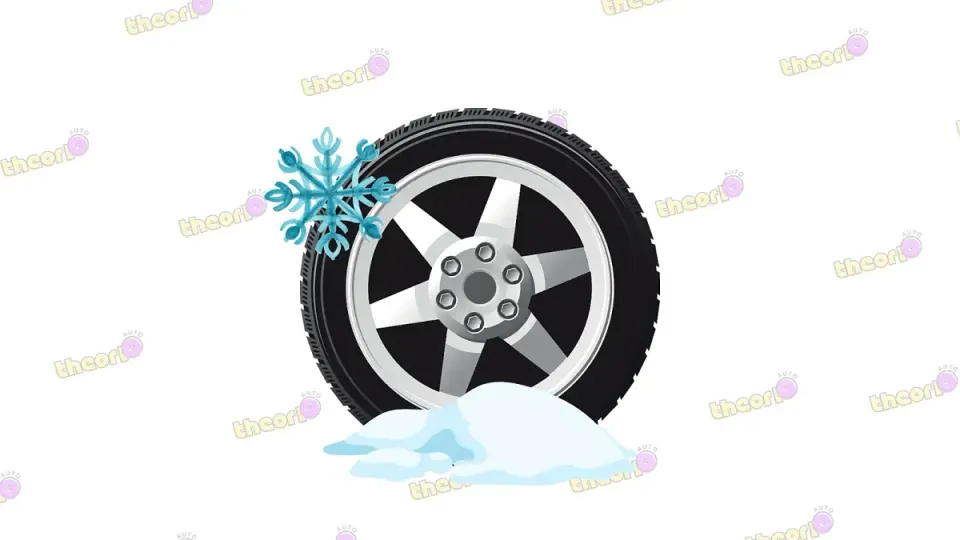
Is your car fully loaded, or are you towing a trailer or caravan? Then use the full-load value from the sticker. Do not raise the pressure by guesswork. For the tyres of the trailer or caravan itself, follow the value from the maker of that trailer.
Practise like the exam
Example questions like in the CBR exam
Real questions from the Theorio app. You can expect similar questions in your CBR exam.
Question 1 of 5
Which tire has the best handling?
Tap the answer you think is right.
When do you check the tire pressure?
Tap the answer you think is right.
What does this symbol indicate?
Tap the answer you think is right.
What is a valve cap for?
Tap the answer you think is right.
What can significantly increase fuel consumption?
Tap the answer you think is right.
Answers and explanations for the example questions
Question 1: Which tire has the best handling?
Correct answer: Tire 2
A well-inflated tire (Tire 2) provides the best handling. Too soft or hard tires reduce grip and stability. Tire 2 has the optimal contact with the road 🏆🛞.
Question 2: When do you check the tire pressure?
Correct answer: When the tires are cold
You measure the tire pressure most accurately when the tires are cold. Then the pressure measurement gives a reliable result 🏁🚗.
Question 3: What does this symbol indicate?
Correct answer: Low tire pressure
This symbol indicates low tire pressure. Check and correct the pressure in time.
Question 4: What is a valve cap for?
Correct answer: To prevent dust and dirt from entering the valve
A valve cap ensures that unwanted particles such as dust and dirt do not enter the valve 💨. This prevents leakage, as the valve remains well sealed 🛠.
Question 5: What can significantly increase fuel consumption?
Correct answer: Both
Both low tire pressure and the use of air conditioning increase consumption. Soft tires create more rolling resistance, causing the engine to work harder. The air conditioning requires extra energy, especially on warm days. ⛽
FAQ
Frequently asked questions
Short answers to questions that often come up on this subject.
Do you check tyre pressure with warm or cold tyres?
Preferably when cold, before the journey or after sufficient cooling. Use the specified pressure for your tyre size and load. Driving warms the tyre and raises pressure; a warm reading is not inherently wrong, but cannot be directly compared with the specified cold value. Do not simply release air to reach that cold value; recheck when cold.
What does a green valve cap mean?
A green valve cap often indicates nitrogen filling, but does not prove the contents or correct pressure. Nitrogen-filled tyres can be topped up with ordinary compressed air; air and nitrogen may be mixed. A special nitrogen pump is therefore not essential. Use the specified pressure and keep checking regularly.
Ready to practise?
Test your knowledge of Vehicle requirements, Tyres & Load with 50 practice questions in the app.
Free mock exam · no account needed
Your first quiz is free, no account needed. After that from €34.99 for 90 days of access.