Traffic lights, level crossings and traffic controllers
What do you do at amber, red or a flashing light? Traffic lights, level crossing lights and the signals of a traffic controller, as the CBR asks them.
At tricky junctions, answer in a fixed order: first signs and road markings, then traffic from the right, and only then same-road rules.
Especially with short turn, long turn and bending priority roads, the CBR often checks whether you are misled by a sign that is the same for both drivers.
More than just signs
Besides the signs along the road, there are other things that tell you what you have to do: the lights, the small posts along the road, and the lines and markings on the road surface. They show you where you may drive, when you may pass, whether you may change lanes, and whether there is danger.
So don’t just pay attention to the signs. Everything that tells you something in traffic is there to keep you and others safe.
Traffic lights with an arrow and round traffic lights
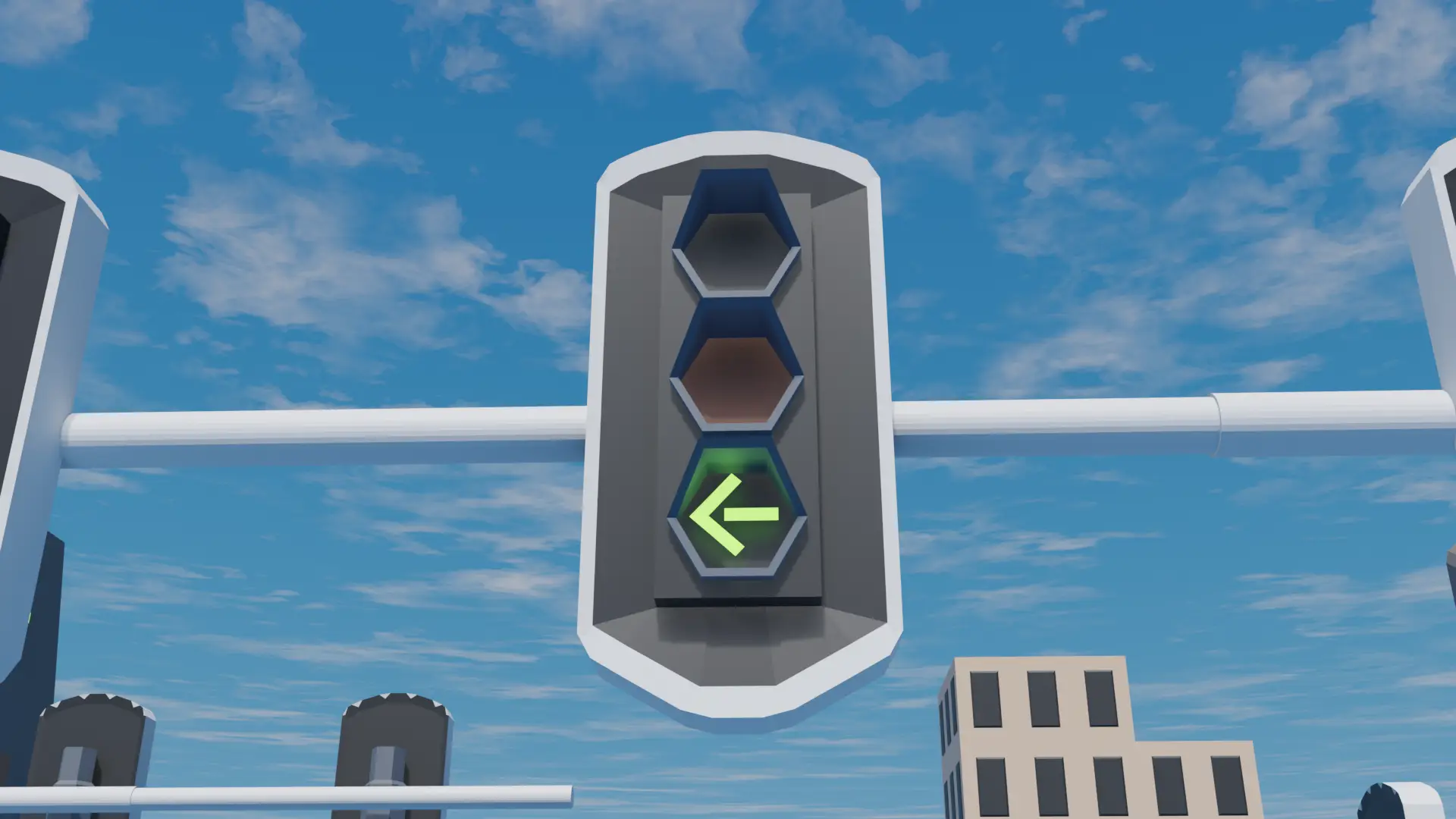
A green traffic light with an arrow means that your direction of travel is clear of oncoming traffic.
A round green traffic light means that you may drive, but oncoming traffic can also have green.
With a round light, you must give way to oncoming traffic and crossing pedestrians.
With a yellow light, you must stop if it is still possible to do so safely.
Memory aid for the round light: the round lamp looks like the letter “O” — Overall traffic can come from anywhere. With an arrow, you may only go in the direction the arrow points, but then you do know for sure that there are no oncoming vehicles. With a round light, you always have to keep looking yourself.
Whether you can still stop at yellow depends on your speed. If you approach the intersection at 15 km/h, you will stop in plenty of time. If you approach at 40 km/h, you would have to brake hard and the traffic behind you will not expect that — then continuing is often safer.
Hazard warning lights and yellow arrows
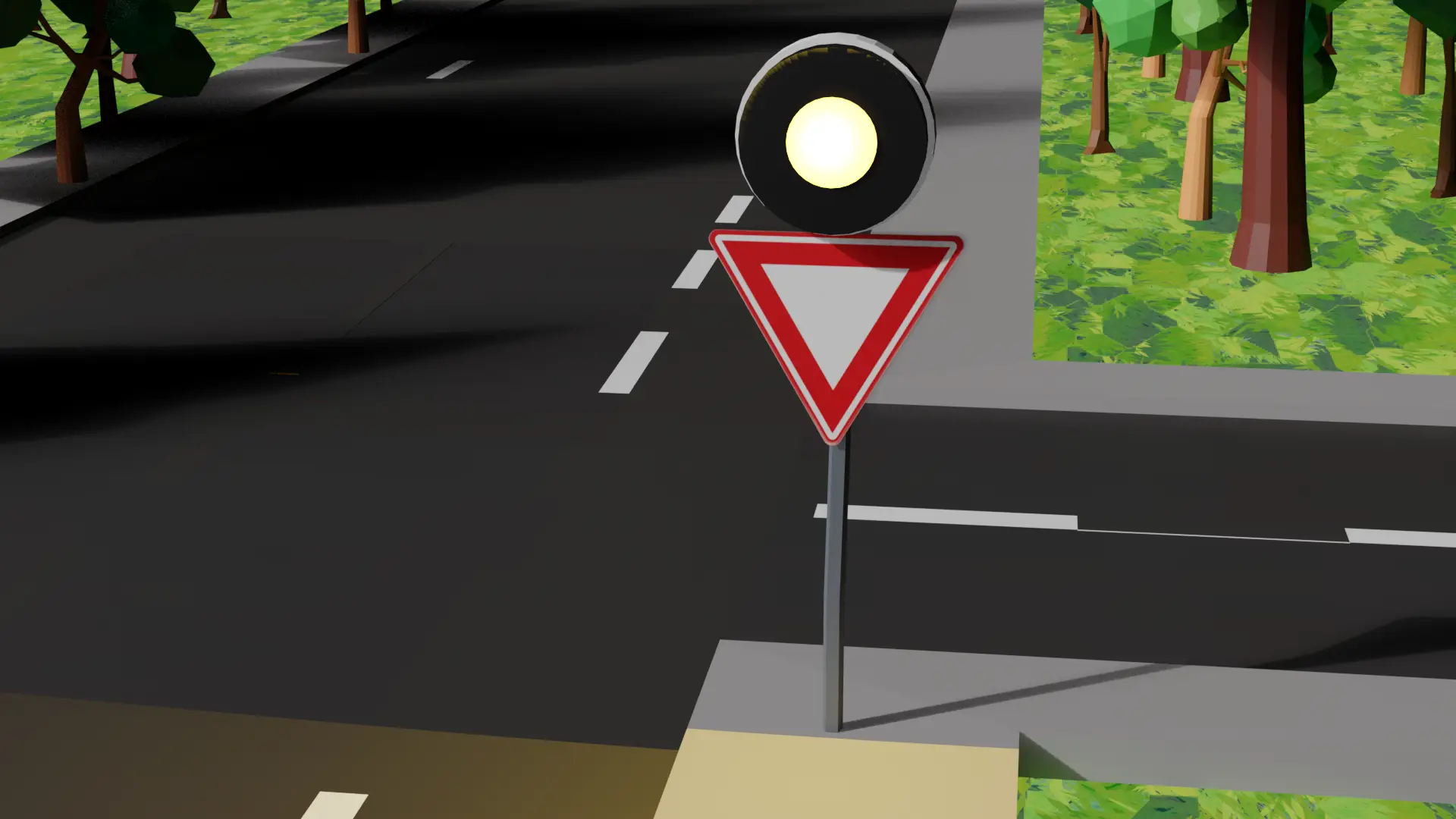
At a yellow traffic light you stop if it is safe to do so. That does not apply to a warning light. If only one lamp is on and it is flashing, then it is only a warning. You do not have to stop, but you must pay extra attention.
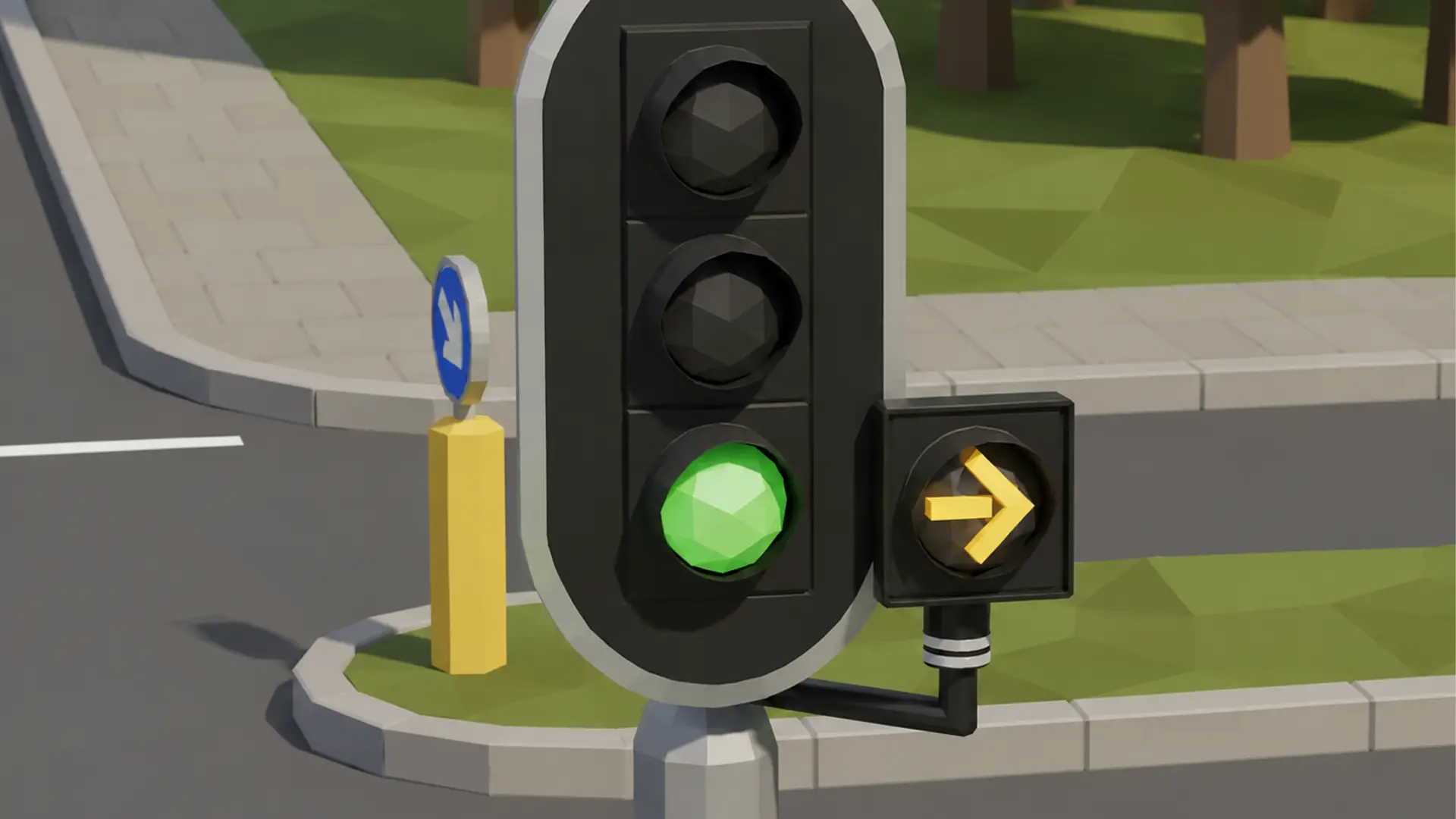
The same applies to a small yellow arrow next to a three-colour traffic light. That arrow does not require you to stop, but warns you that you must be extra alert when you take the turn.
Also think about the round green light. That means that, besides going straight on, you may also simply turn right. But if you turn right, you often cross a cycle path — and at that moment those cyclists usually also have green. So they may have priority.
Railway level crossings, lights and signals
A tram track light with two flashing red lights requires you to stop for a tram.
Such a light with two lamps is not there for decoration: if they are flashing, a tram is coming and you may not drive through. Only when the light is off may you continue.
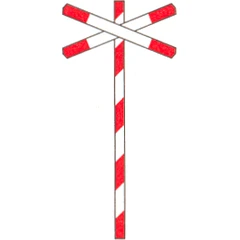 Sign J12 (Single track): 1 railway crossing means a single track.
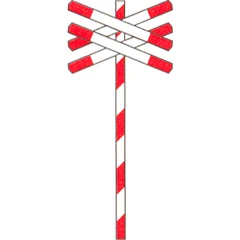 Sign J13 (Multiple tracks): 2 railway crossings mean two or more tracks.
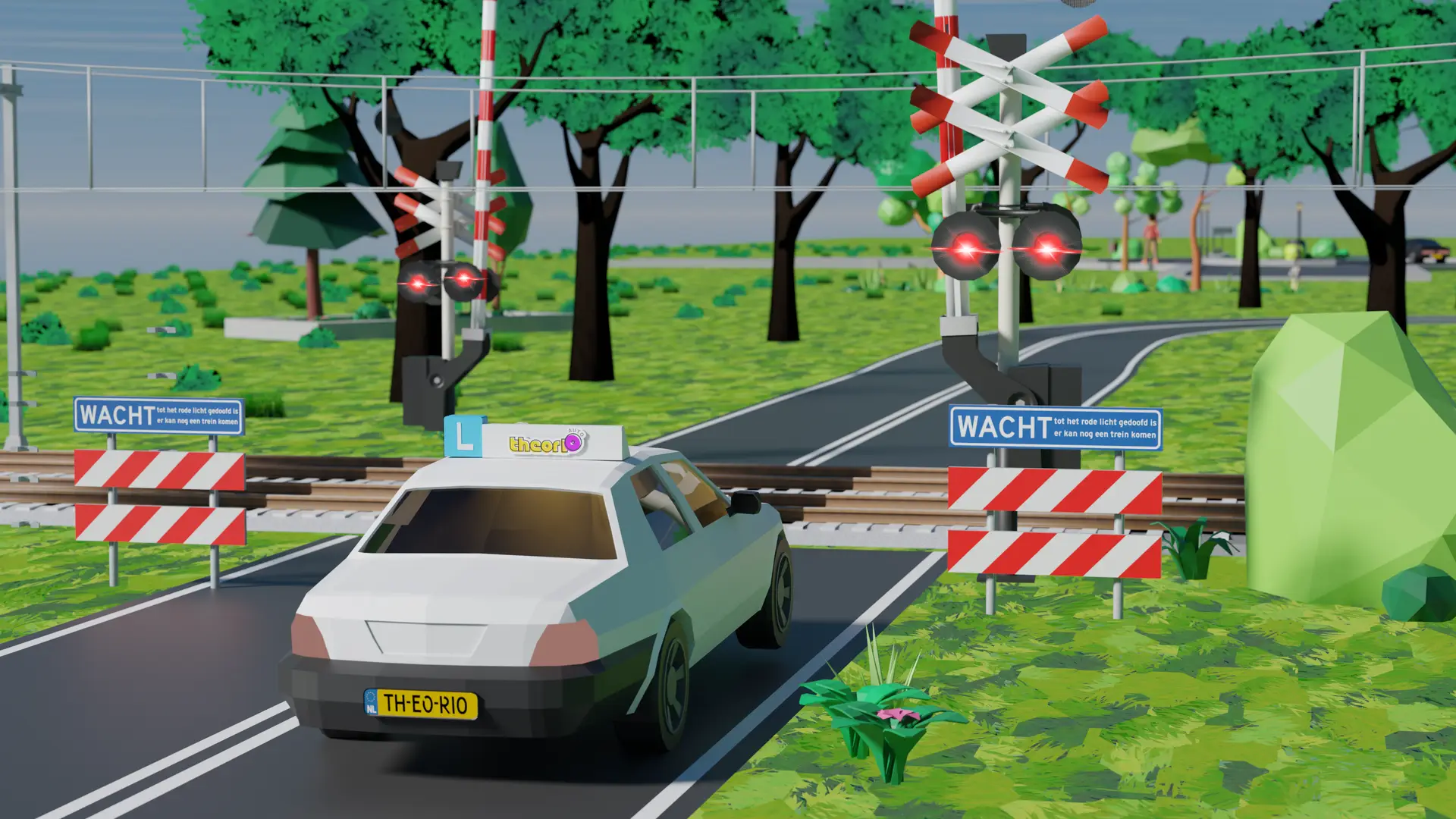
At a railway level crossing with flashing red lights, a train is coming and you must stop. This also applies if there are no barriers: you can never win a fight with a train.
Sign J10 (Crossing with barriers): you are approaching a crossing that is closed with barriers.
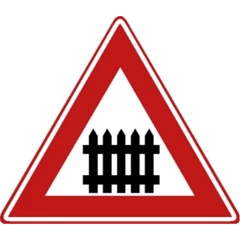
Sign J11 (Crossing without barriers): no barriers, but if the red lights are flashing, you stop just the same.
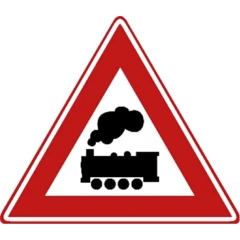
Each slanted stripe on a railway signal post indicates a distance of 80 metres to the crossing.
Three stripes is 240 metres, two stripes is 160 metres, and 1 stripe is 80 metres.
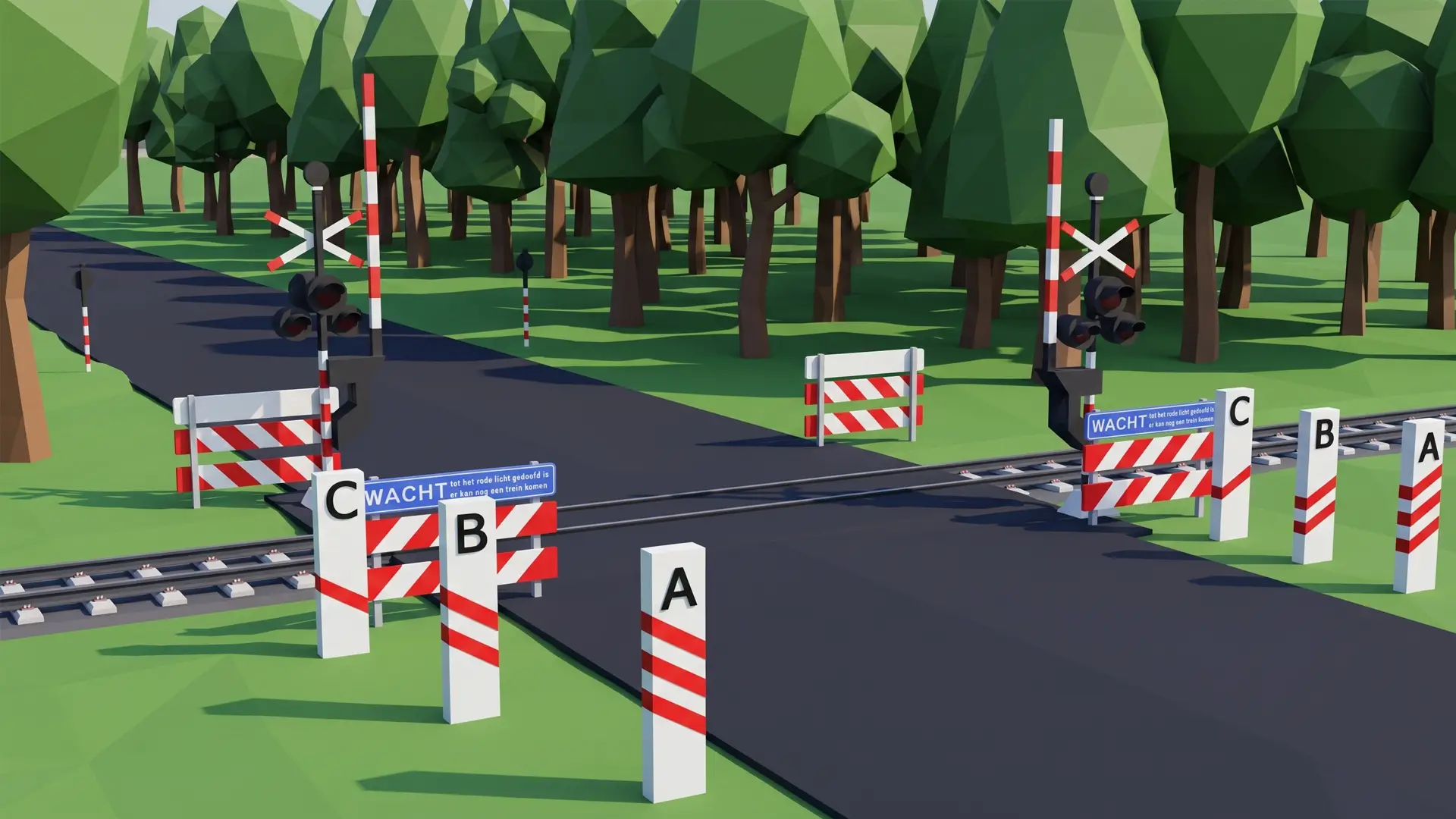
Work it out simply: number of stripes × 80 metres = the distance to the crossing. Also pay attention to the direction of the slanted stripes: the bottom always points towards the road, so you can see on which side of the signal post you must drive.
Posts with reflectors
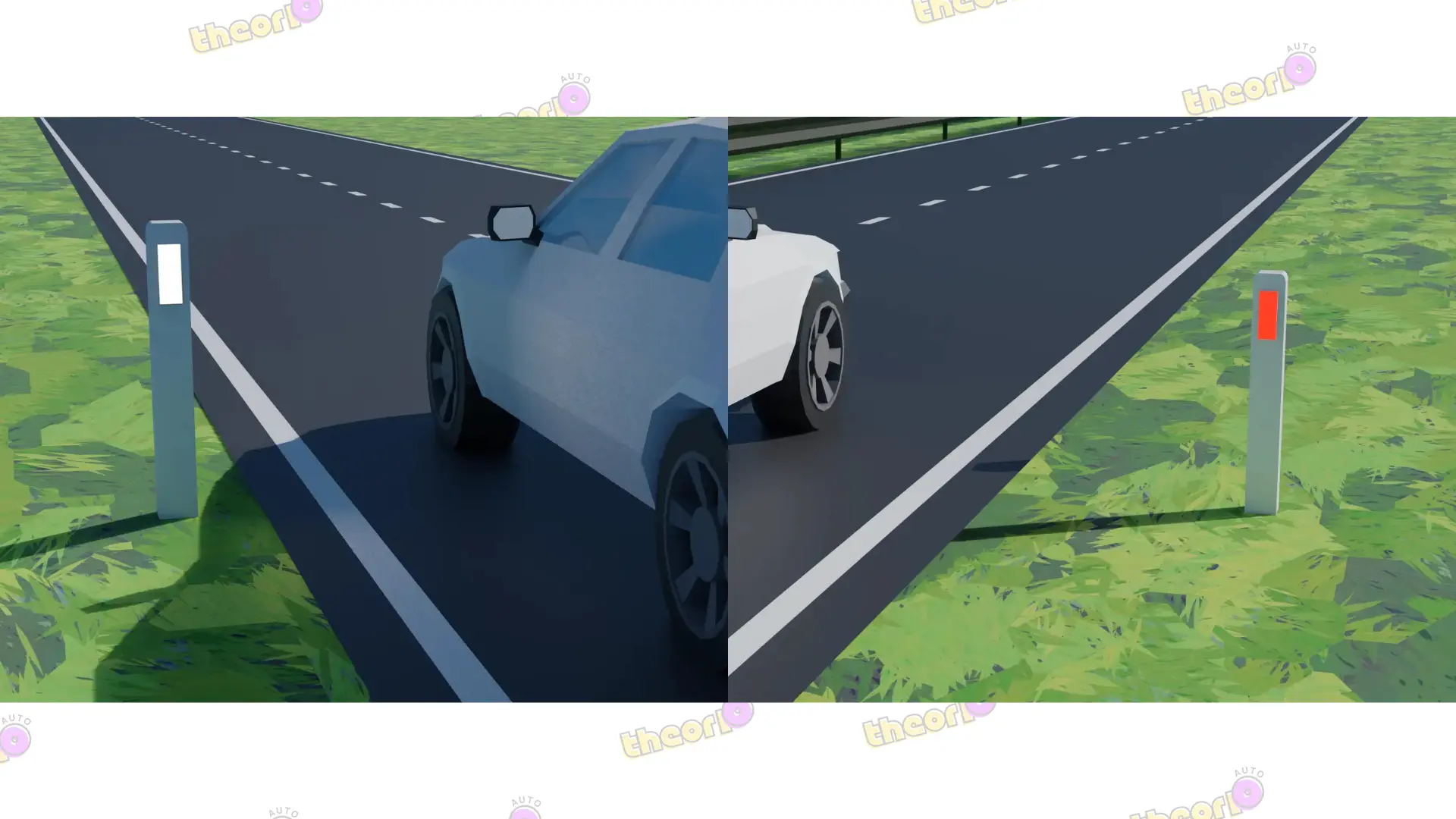
Along roads without street lighting there are posts with reflectors. They help you not to end up in the verge or on the wrong carriageway in the dark.
The white reflectors are on the left-hand side of the road, the red ones on the right-hand side. Compare it with the lights of other cars: on the left you see the white headlights of oncoming vehicles, on the right the red rear lights of the car in front of you.
Memory aid: red starts with an R, just like right.
Instructions and gestures of the traffic controller
Instructions from authorised persons take priority over all traffic lights, signs and rules.
If you see the traffic controller’s chest or back, that counts as a closed barrier.
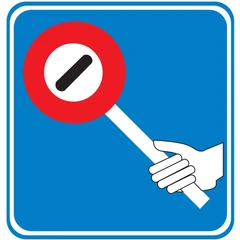
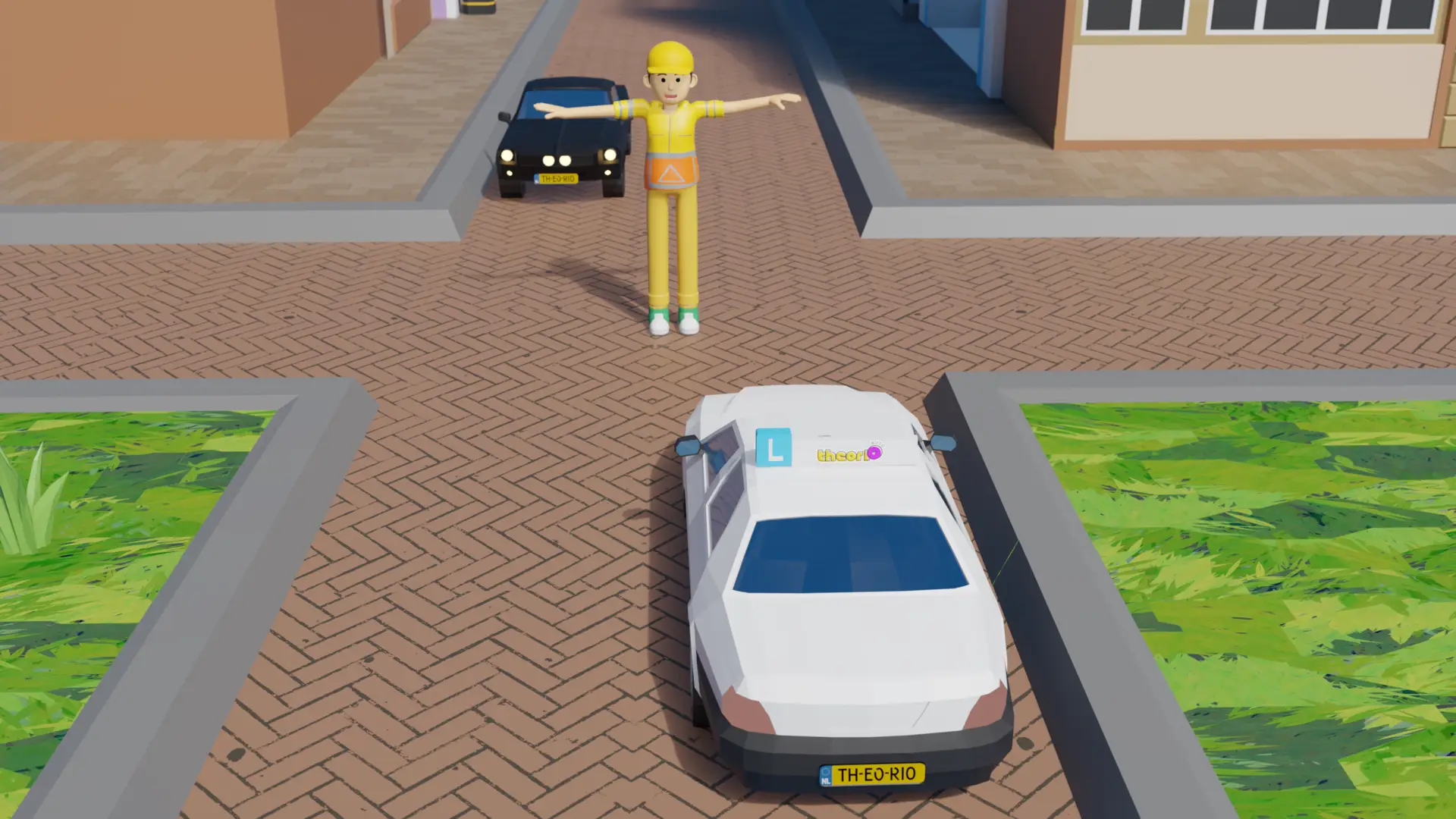
You can recognize a traffic controller by the bright yellow vest with an orange panel and a reflective triangle. You must always follow their instructions — even if it is not a police officer, and even if the signs along the road say something else.
An arm raised means that traffic from all directions must stop.
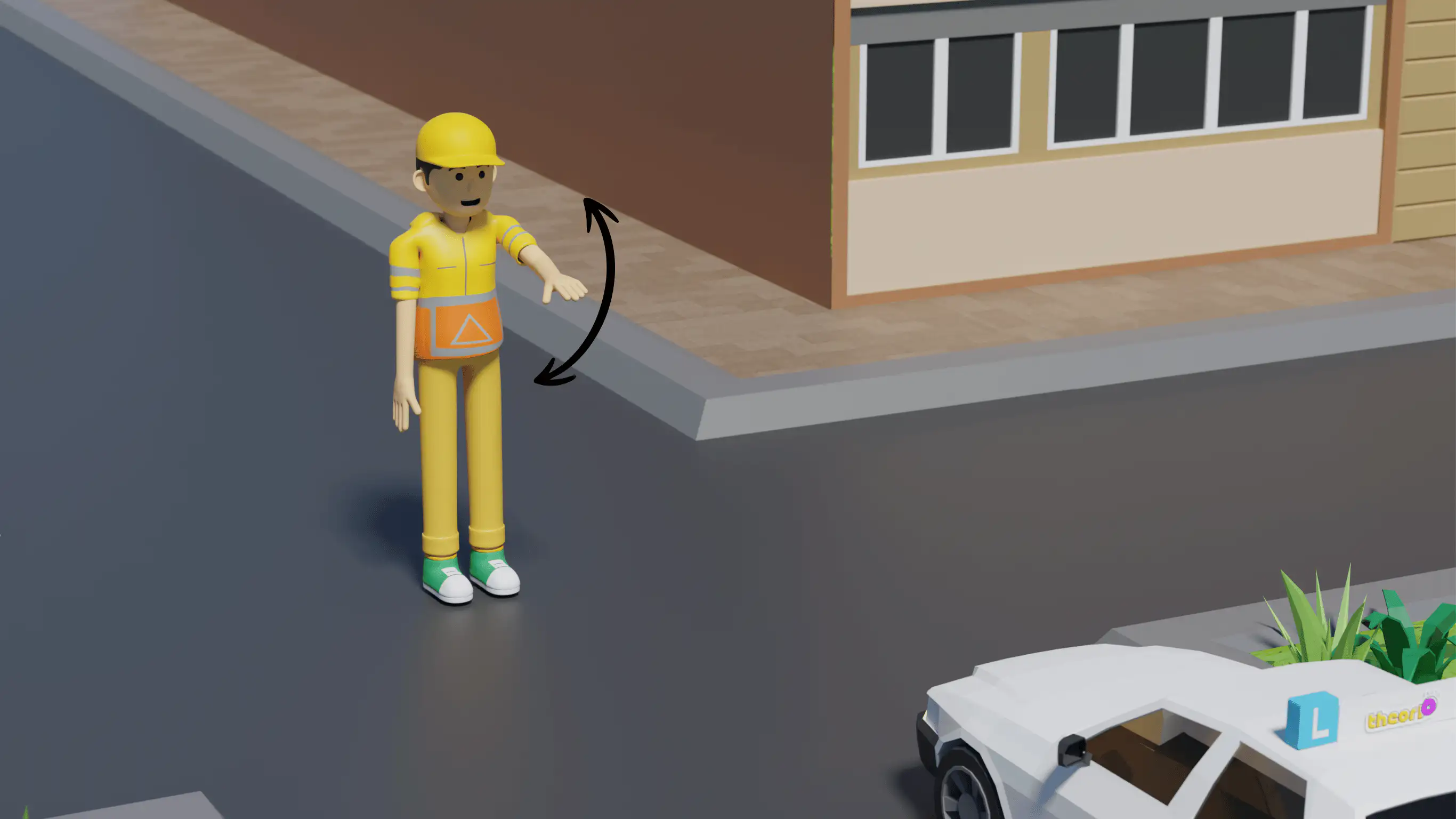
If the traffic controller moves their arm up and down, you must drive more slowly.
The barrier system
The traffic controller stands in the middle of the intersection. If you are driving in the right-hand lane, you pass them on their right side. When doing so, look at the arm on your side and treat that arm as a barrier: if the barrier goes down, you stop.
- Do they extend the arm on your side? Stopping — otherwise you drive into the barrier.
- Do they extend both arms? Then the traffic approaching them from the front stops and the traffic approaching them from behind also stops.
- Are you approaching them from the side? Then they keep their arm stretched forward, so you can still see the barrier.
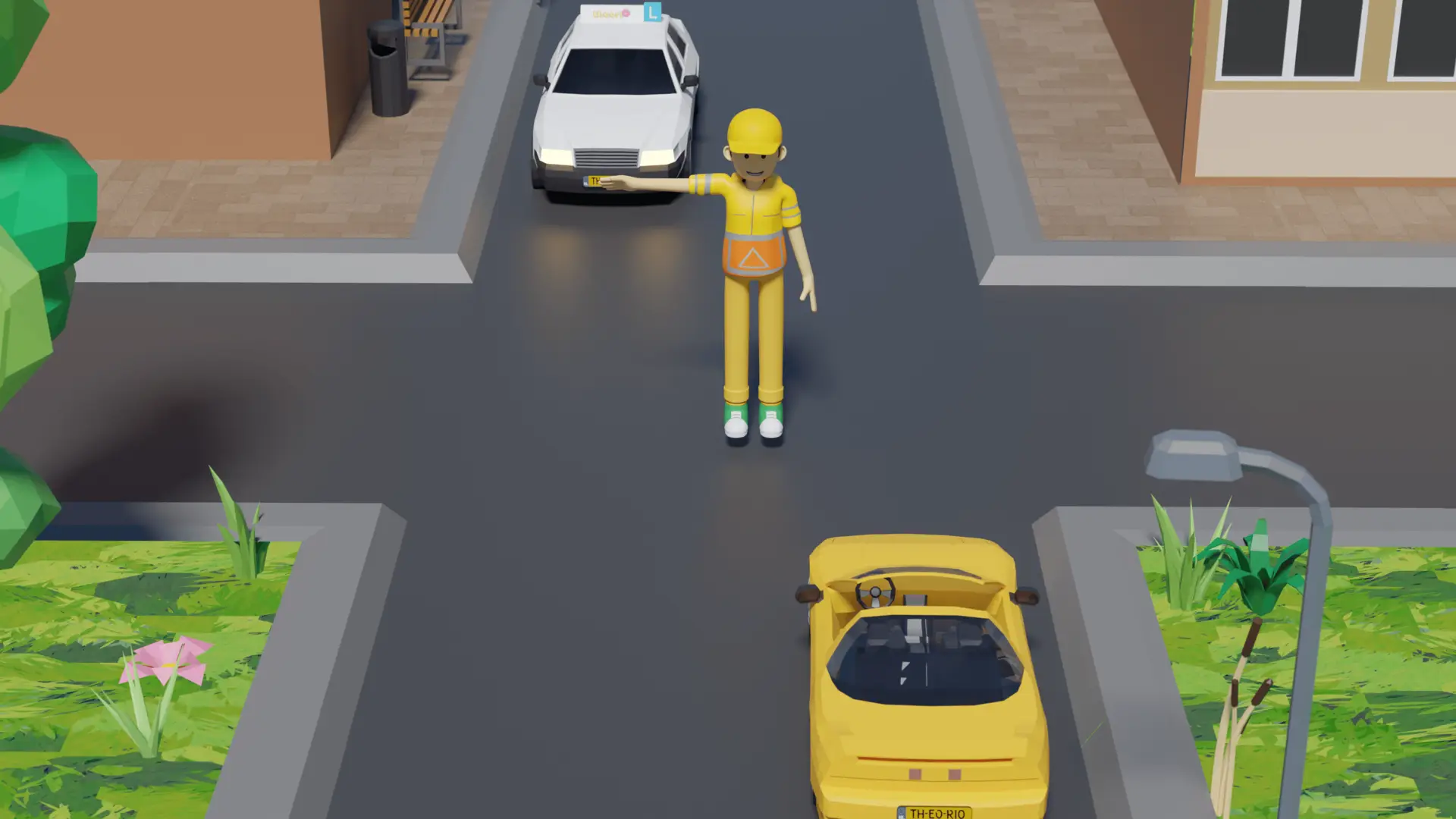
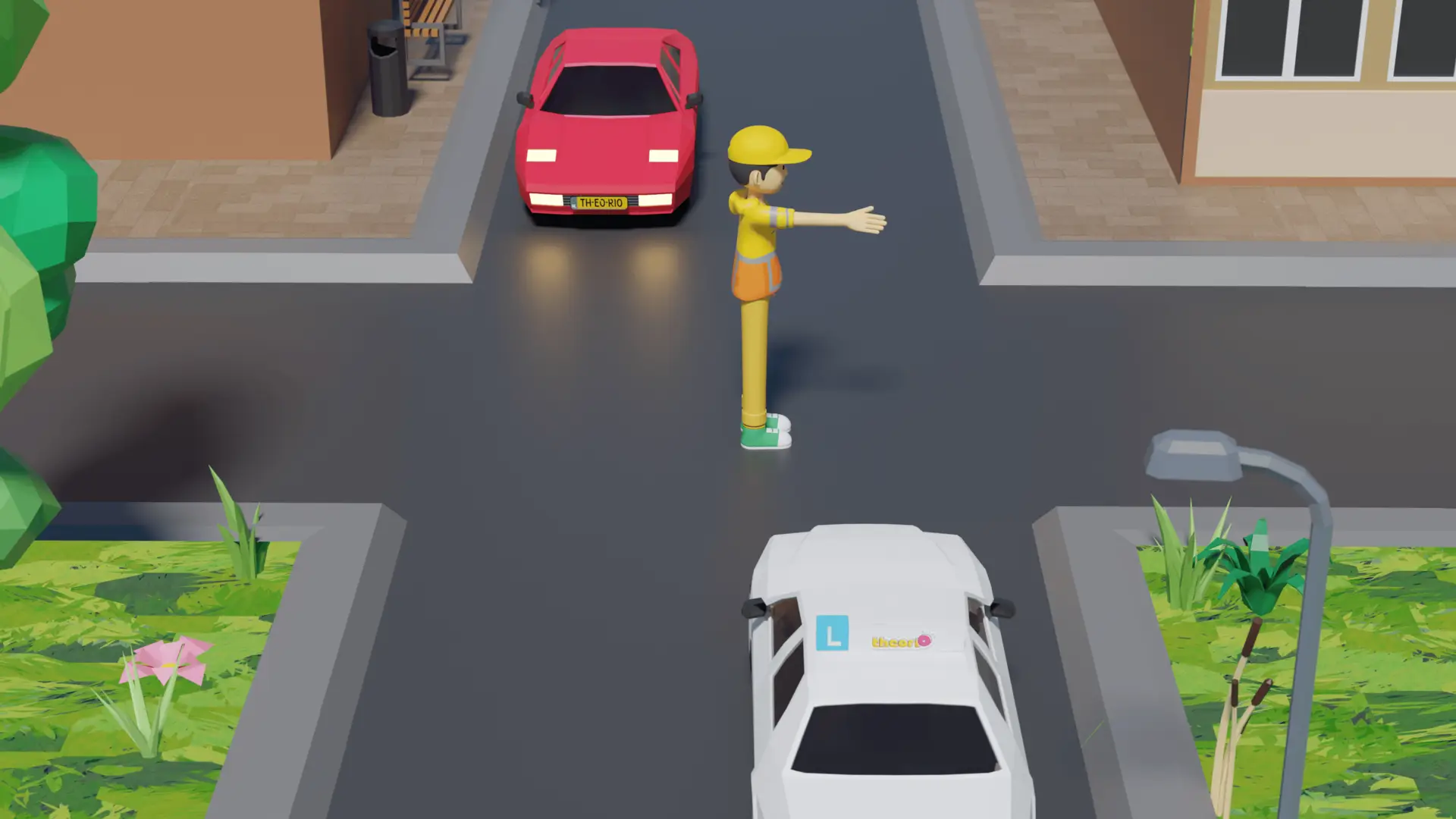
The stop sign — the hand raised in your direction — works differently. This applies to all vehicles, from whichever direction they come. With the barrier system, you look only at the arm on your side.
| Gesture traffic controller | Meaning for the driver |
|---|---|
| Chest or back facing you | Stop for traffic coming from the front or from behind |
| Arms stretched out to the side | Stop for crossing traffic approaching with arms |
| One arm straight up | Stop sign for all traffic from all directions |
| Arm moving up and down | Reduce speed and drive more slowly |
| Arm stretched forward (you are approaching from the side) | Stop — the arm is also then your barrier |