Equal junctions and driveway exits
At an equal junction, traffic from the right goes first. Also learn to recognise when a driveway exit cancels that rule.
In the CBR theory exam, you must first recognize what controls priority at an intersection: traffic lights, signs/road markings, or nothing at all.
Only then can you decide who may go first.
Three types of intersections
An intersection is a place where multiple roads come together and cross each other. It can be a clear intersection in a quiet residential area, or a complex intersection in the middle of a large city. For the exam, what is especially important is how priority is arranged, and that can be done in three ways.
- With traffic lights. Green means you may drive, red means you must stop, orange/yellow means you must stop if you can still do so. This makes it clear for everyone who may go through when.
- With signs and symbols on the road. We call this a priority junction. You follow the signs and the yield lines / shark's teeth.
- With nothing. Are there no lights, no signs and no symbols? Then it is a priority junction (gelijkwaardig kruispunt) and the standard priority rules apply.
What is a priority junction (gelijkwaardig kruispunt)?
A priority junction has no priority signs, yield lines / shark's teeth or working traffic lights.
At this type of intersection, the same basic rule applies to all roads and all road users.
The right-hand rule at a priority junction
Give priority to all drivers coming from the right.
This applies to cars, motorcycles, cyclists, moped riders and riders coming from the right.
Pedestrians are not drivers and have no priority at a priority junction.
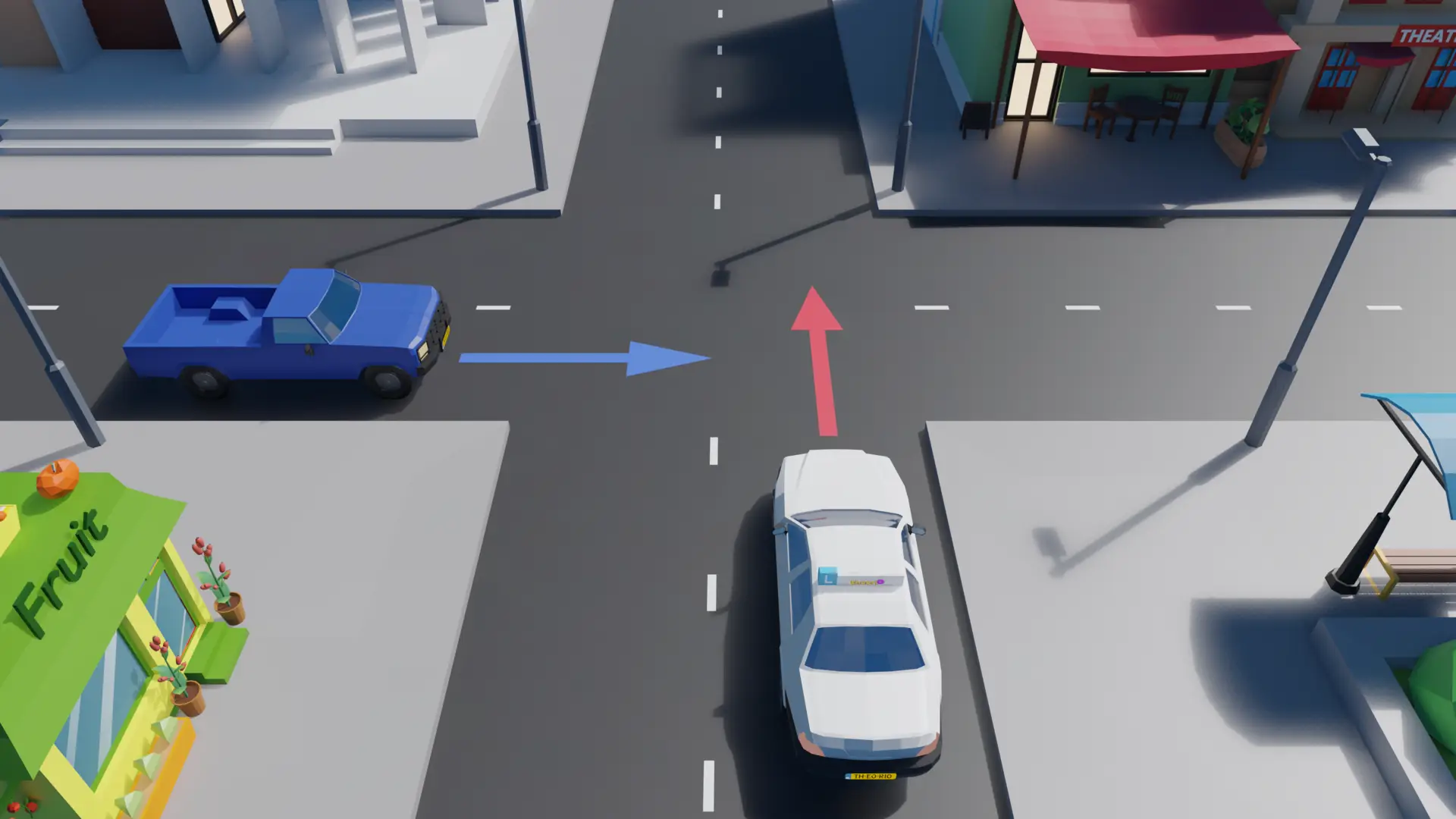
 Sign J8 (Dangerous intersection): Warns of an approaching priority junction where the right has priority.
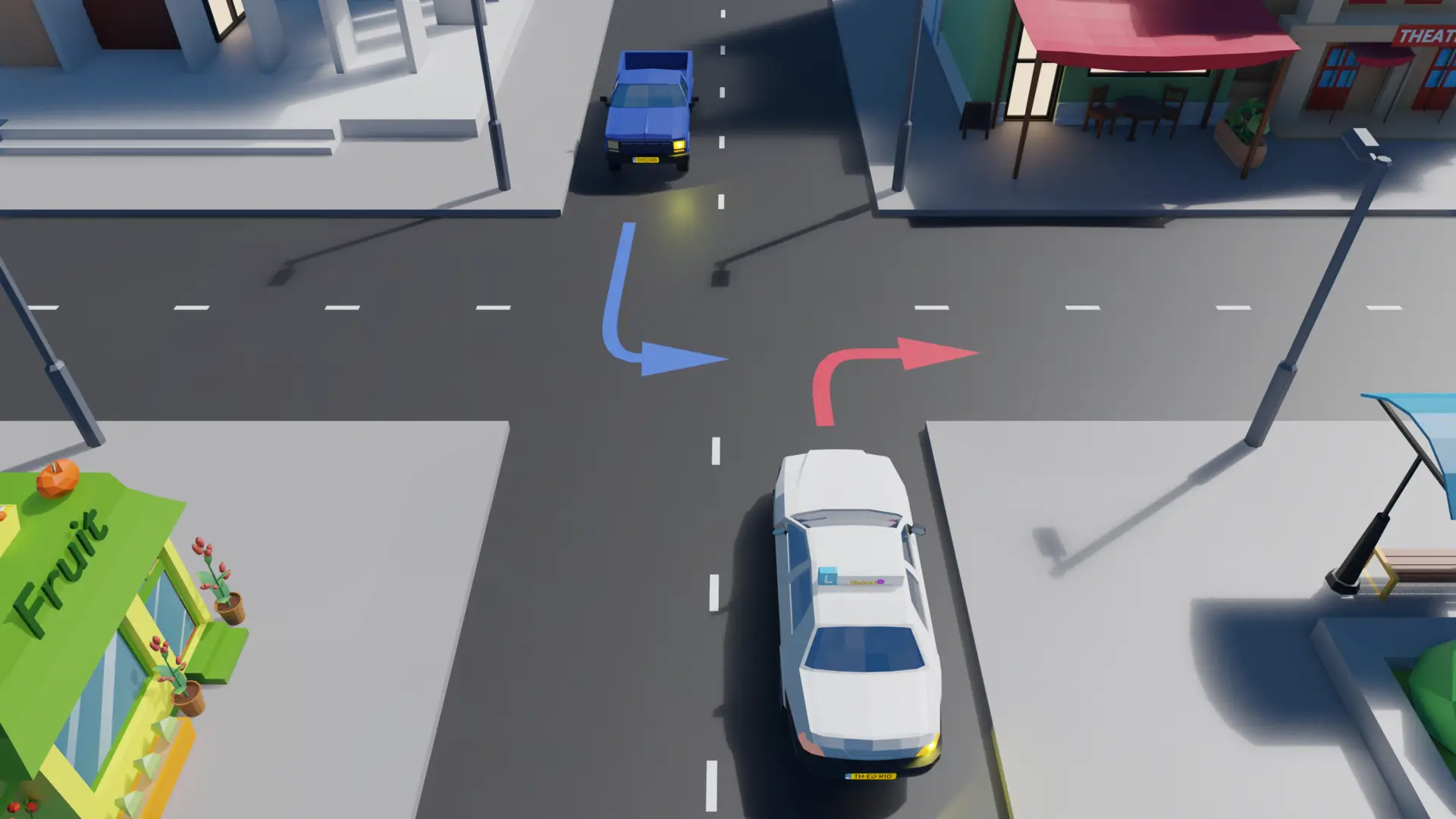
There are three rules, not one
“The right has priority” is the best-known rule, but at a priority junction there are three. You go through them in this order.
- Give priority to drivers coming from the right.
- Straight-ahead traffic on the same road has priority over turning traffic coming from the same road. If you are coming from the same road and you want to turn while the other goes straight ahead, then the other has priority.
- The short turn has priority over the long turn. If two oncoming vehicles both turn off, then the one with the short turn (turning right) has priority over the one with the long turn (turning left).
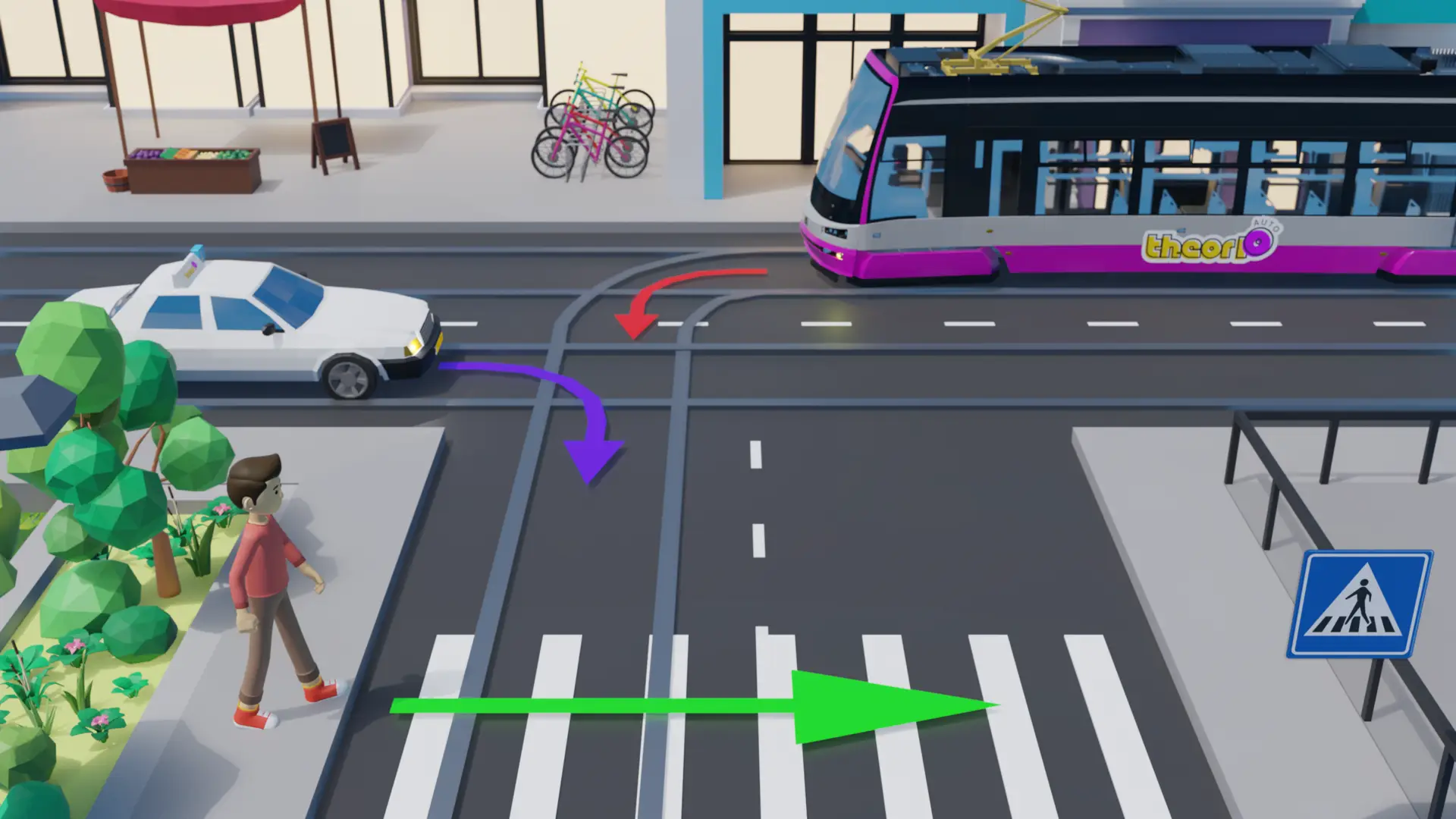
Exception for trams
A tram always has priority at a priority junction.
The tram goes first, regardless of whether it is coming from the left or from the right.
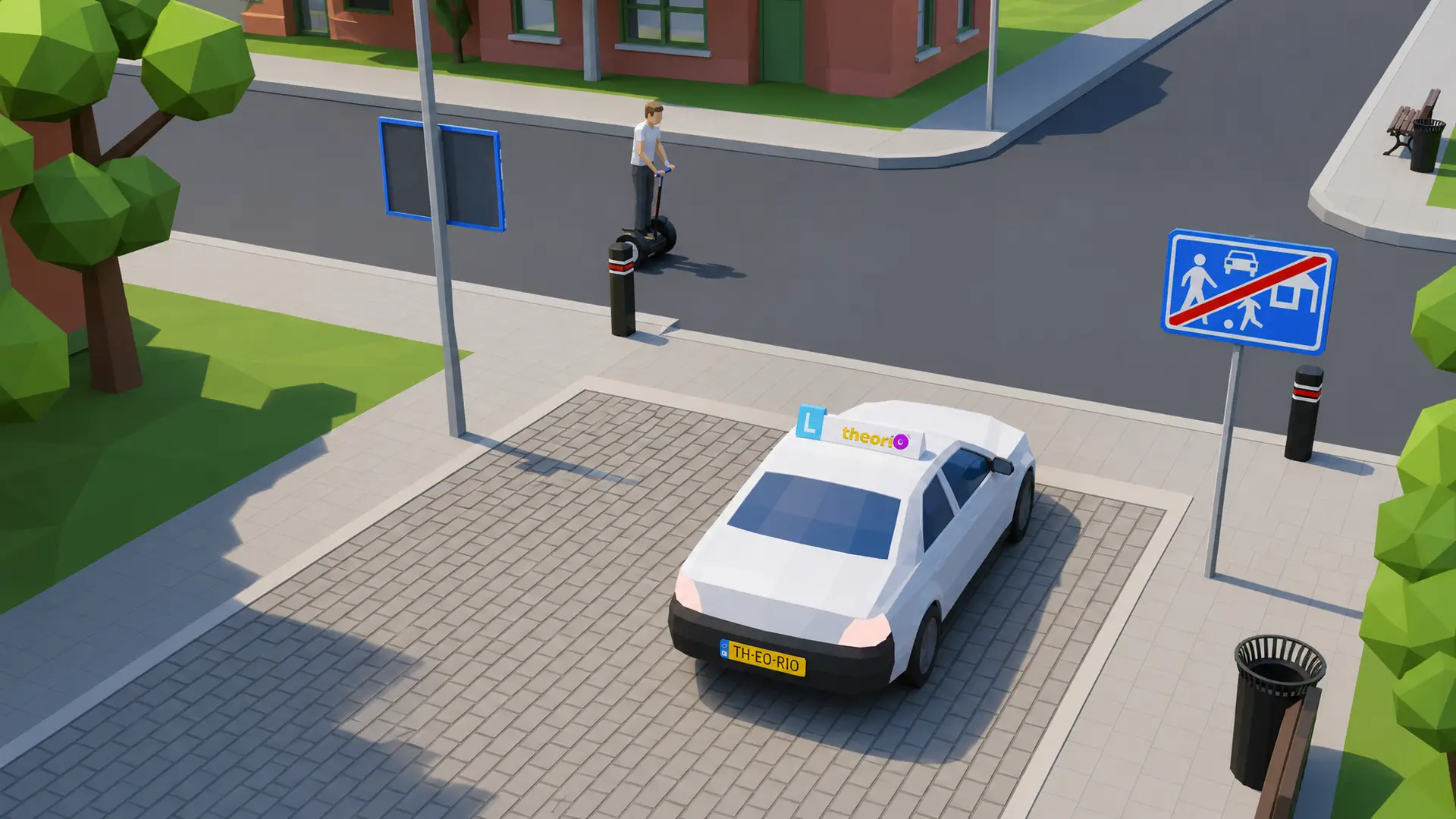
The difference between a driveway and a priority junction
You can recognise a driveway by a lowered kerb edge or continuous paving.
When you leave a driveway, you perform a special manoeuvre.
You must then give way to all traffic, including pedestrians on the pavement.
| Feature | Priority junction | Driveway construction (uitritconstructie) |
|---|---|---|
| Paving | Road surface continues without interruption | Continuous pavement or lowered kerb edge |
| Right-hand priority | Yes, drivers coming from the right have priority | No, the right-hand rule does not apply here |
| Pedestrians | No right-hand priority | Always have priority from the driveway |
| Trams | Always have priority | Always have priority |