Road markings: solid, broken and yellow lines
Solid, broken and yellow lines: what they mean and when you may cross them, as the CBR asks it.
What is a solid line?
A solid line separates lanes or carriageways and may not be crossed.
You may not drive over it and you may not overtake if you would have to cross the line.
What is a broken line?
A broken line consists of short white dashes with large gaps.
You may cross this line to overtake or to change lanes.
Warning line on the road surface
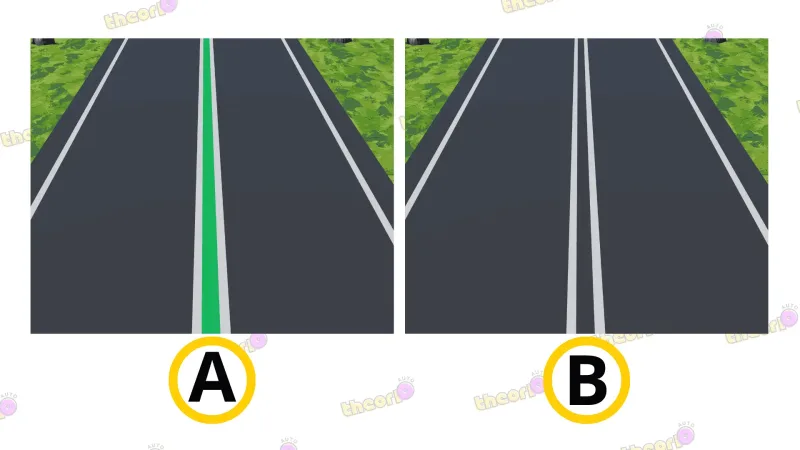
A warning line has very short gaps between the white dashes and is often longer than the standard white line. This warns of an approaching dangerous situation, a changing road situation or a solid line. In this picture, A shows the normal broken line and B shows the warning line.
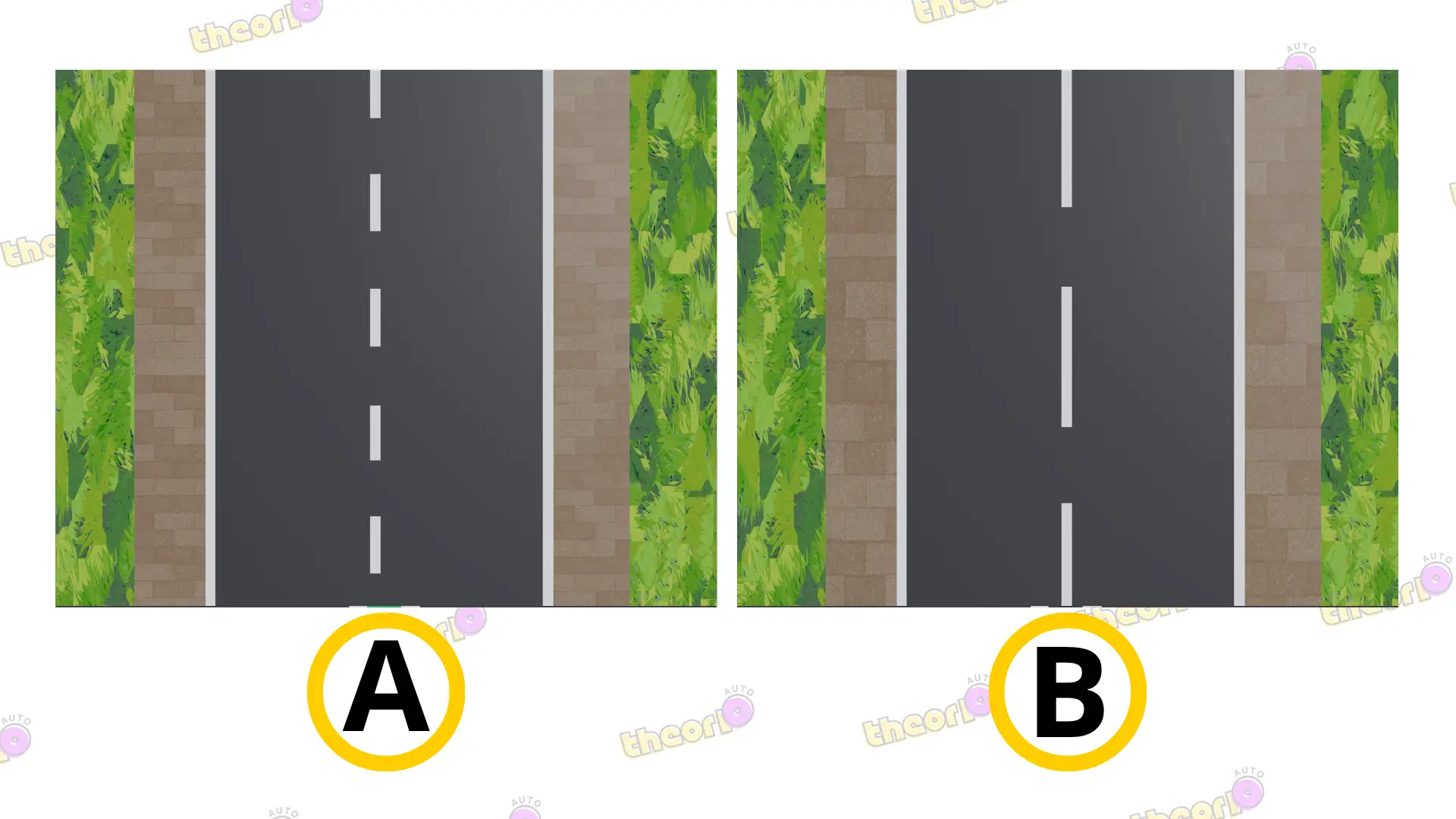
With a warning line, overtaking is not forbidden — it is and remains a broken line. Still, it is sensible to wait until you are past the change on the road. The line is there for a reason: something changes further ahead.
The difference between white and yellow lines
Yellow lines and yellow road markings are used for temporary roadworks.
Temporary yellow lines always have priority over the normal white lines.
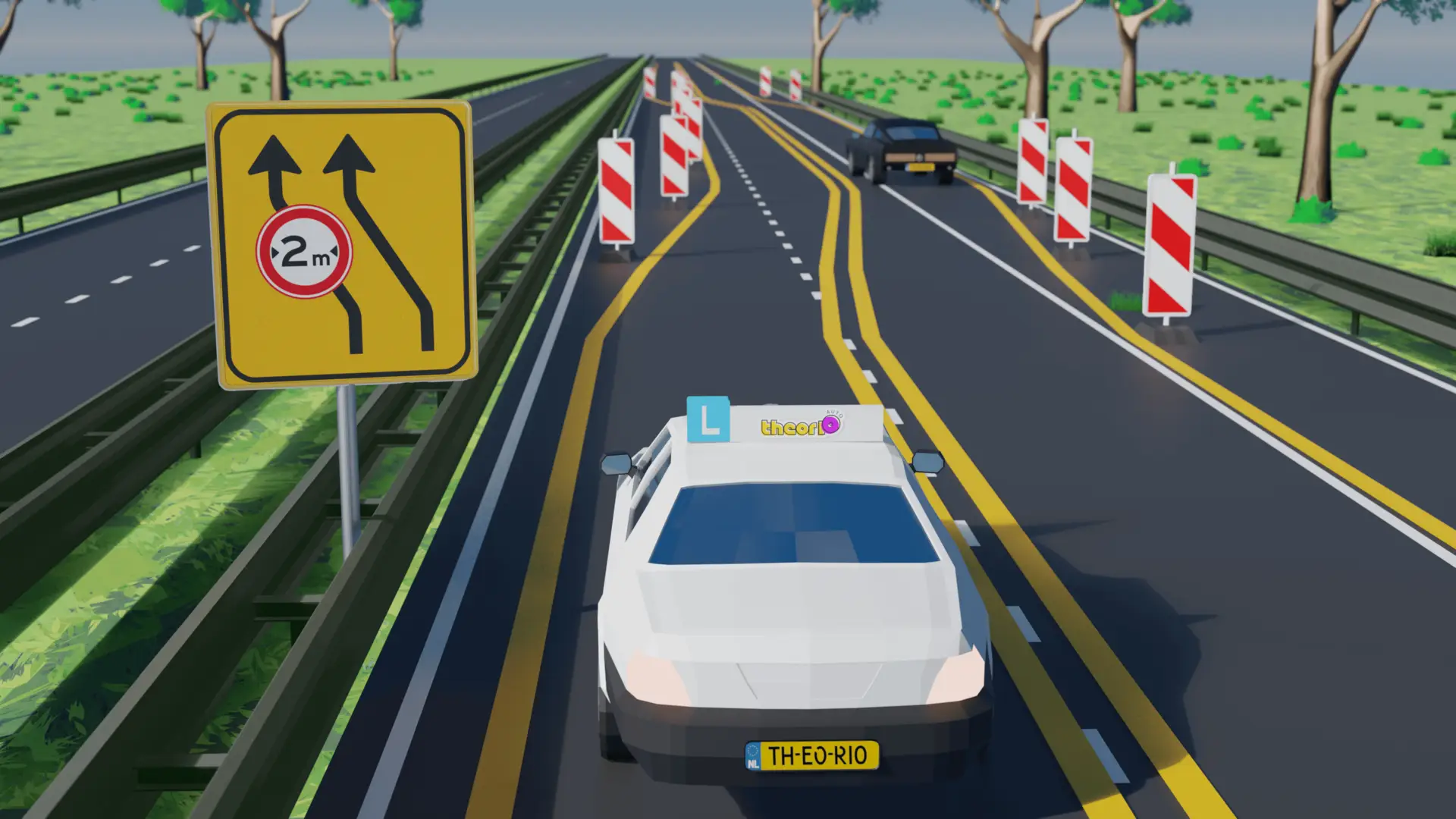
During roadworks, the white lines are usually not removed: they simply remain visible under or next to the yellow ones. You are then required to follow the yellow markings. It works the other way too: if there is a white solid line, but the yellow marking indicates that you may change lanes, then you may do so.
| Type of line | Rule about crossing | Is overtaking allowed? |
|---|---|---|
| Solid line | Strictly forbidden | No, never over the line |
| Broken line | Allowed if safe | Yes, if there is a clear way |
| Combined line | Follow the line on your side | Only from the broken-line side |
| Temporary yellow line | Always follow yellow above white | Depends on the type of yellow |
| Warning line | Allowed; it remains a broken line | May, but better to wait until after the change |
Combined solid and broken line
With a double line, the rule applies to the line on your side of the road.
If the broken line is on your side, then you may change lanes.
If the solid line is on your side, then you may not drive over it.
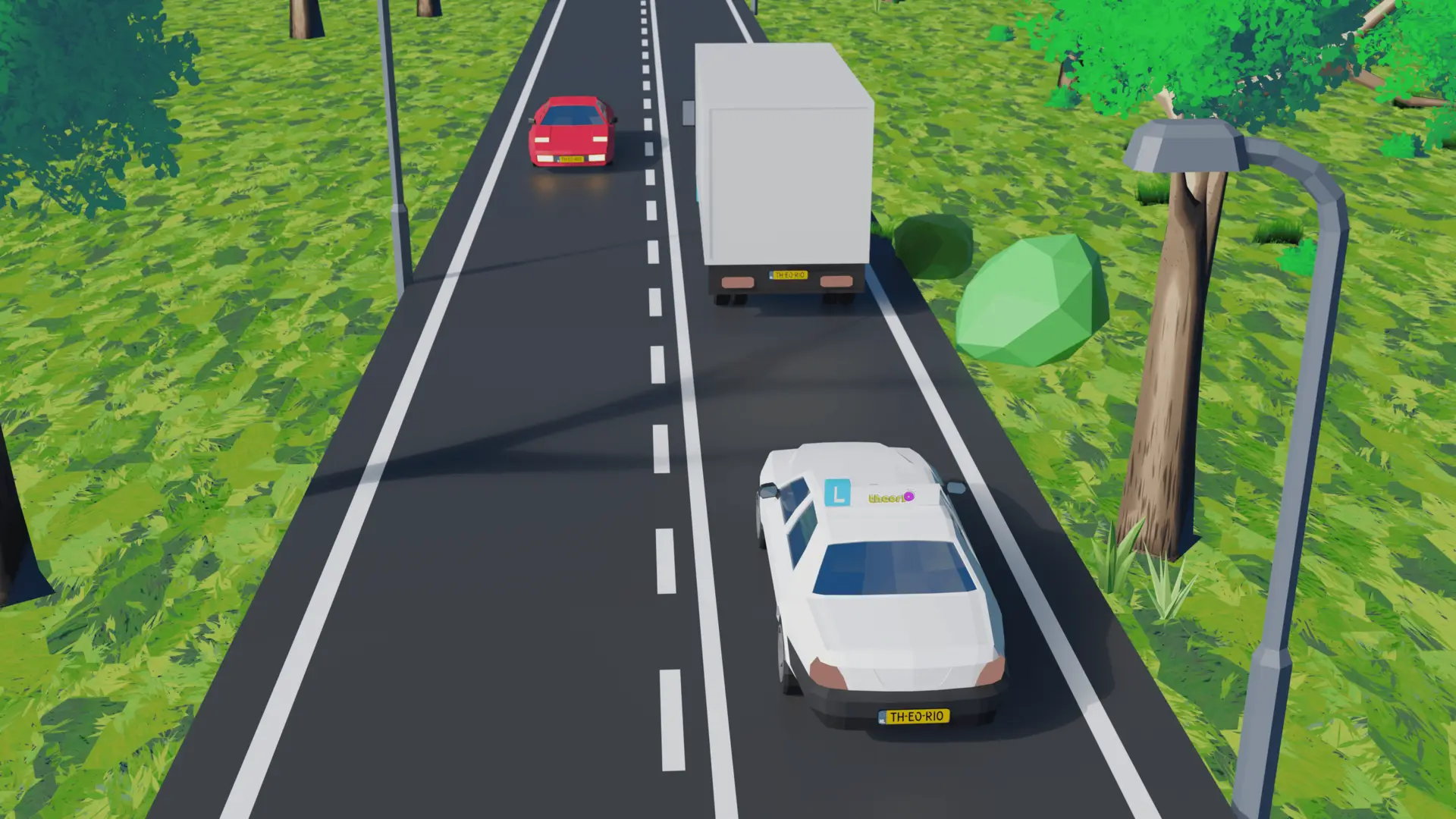
Note that this works both ways: if you are driving alongside the solid-line side, you may not cross it, but the traffic on the other side may come onto your lane. So expect traffic that merges next to you, even if you yourself are not allowed to cross.
Hatched road markings and zigzag lines
A hatched road marking area consists of slanted white dashes on the road and is forbidden territory.
An exception applies when a rush hour lane is open across the hatched road marking area.
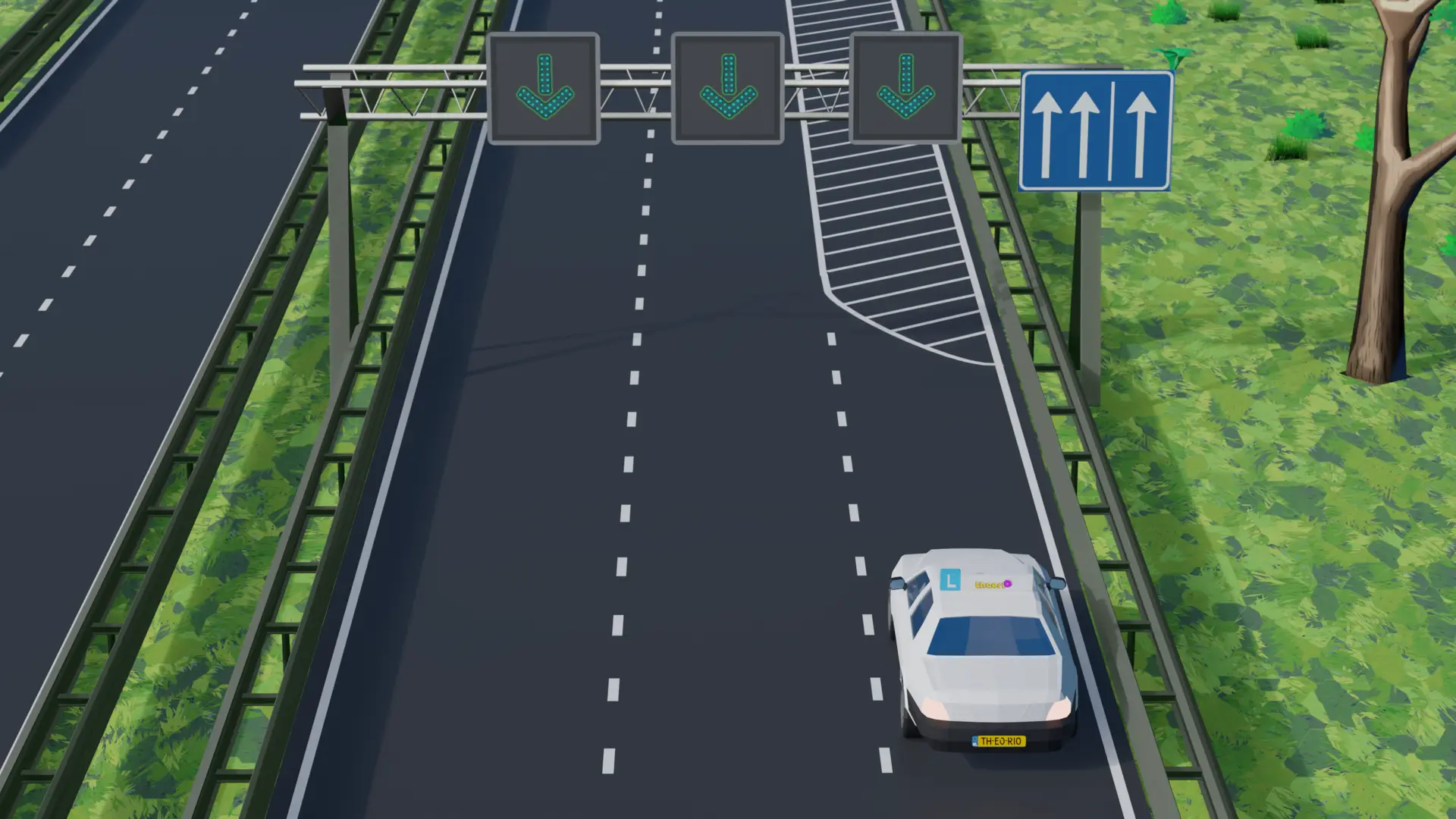
The name says exactly what the area does: it effectively pushes you away from the road. Practically that means: you cannot change lanes at the last moment in such a place. For a hatched road marking area, the same applies as for a solid line — you may not drive over it.
A zigzag line warns of a dangerous intersection or an approaching obstacle.
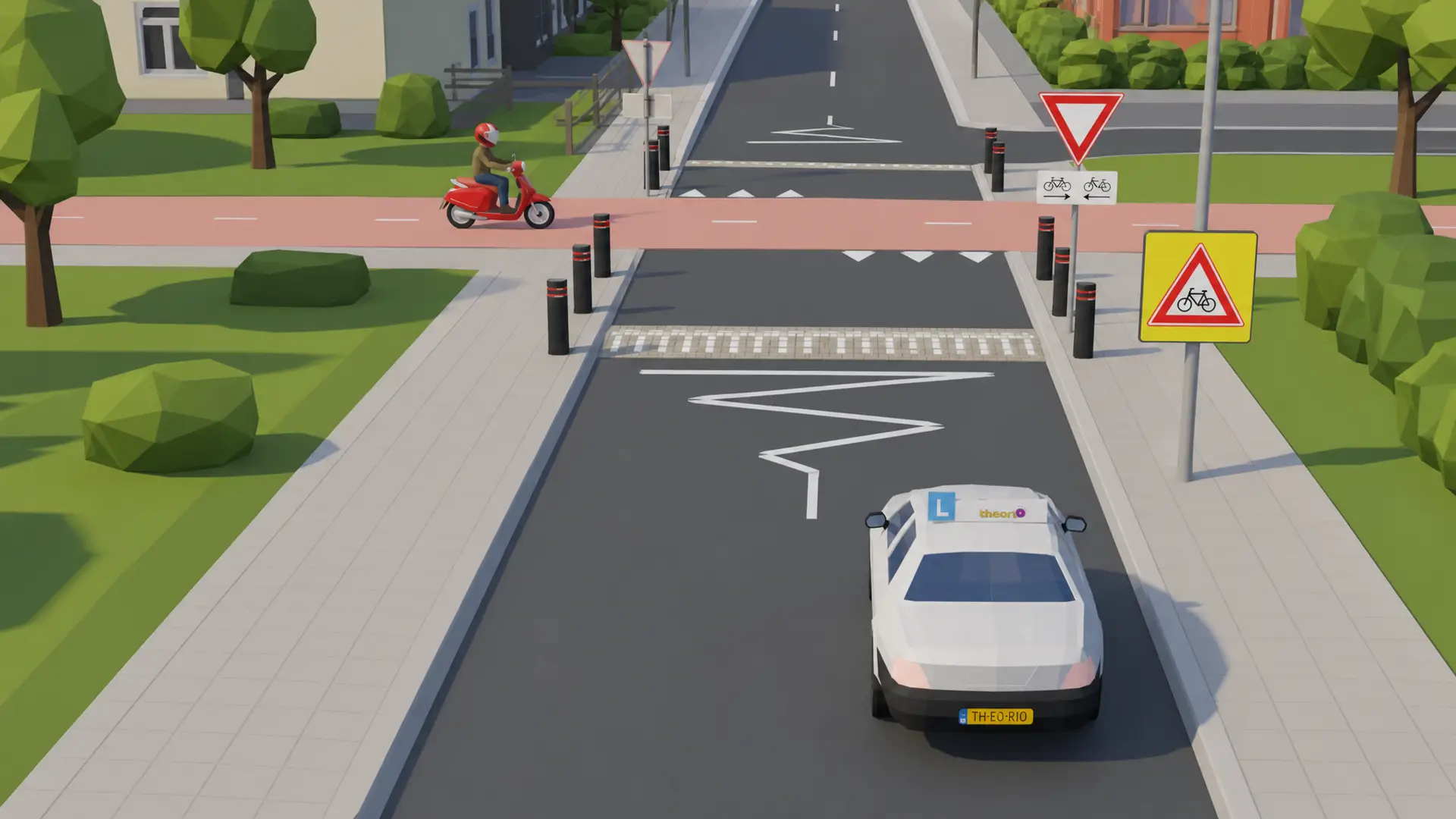
Often it is a busy intersection with a cycle path in front of it. The zigzag line does not forbid anything, but says: reduce your speed and pay extra attention.
What the lines tell you about who you can expect
Lines not only tell you whether you may overtake or change lanes. They also reveal what kind of road you are driving on, and therefore which road users you may encounter. On many roads, this is not indicated anywhere with a sign.
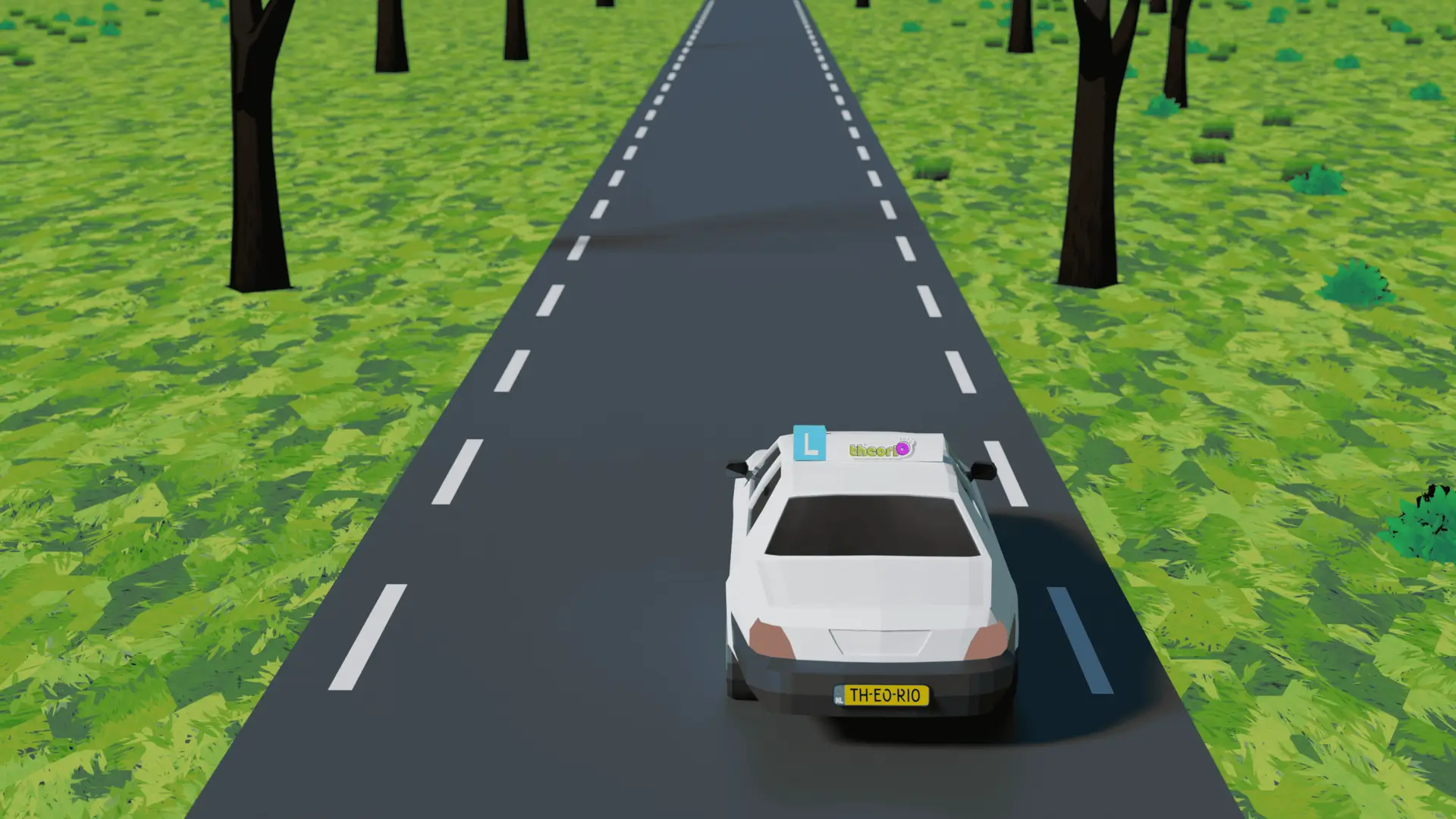
Only lines on the sides
If you only see (broken) lines on the sides of the road and the middle is empty, then this is an ordinary road where everyone may come: cars, but also cyclists, riders and pedestrians. You often see this in the countryside and in nature areas. Riders and pedestrians may walk in the verge (berm), but they are not required to — they may also just use the road.
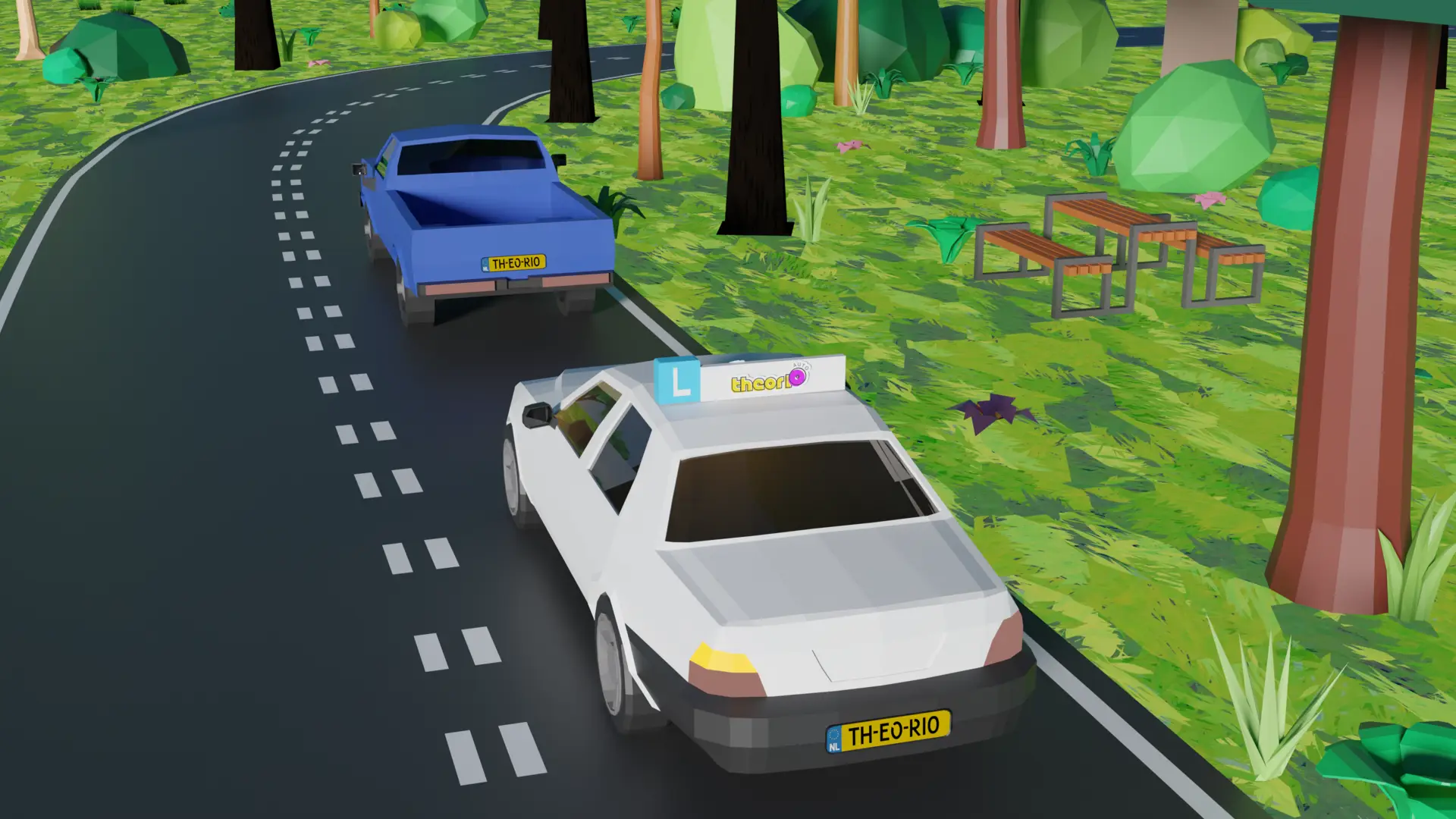
A double line in the middle
If there is a double line in the middle of the road, then only motor vehicles may drive there. Cyclists are not motor vehicles and therefore do not belong there. Whether that double line is solid or broken does not matter for this question: double is double.
A green strip between the lines
If there is a green strip between the two lines, then you are driving on an autoweg. An autoweg has a minimum speed of 50 km/h, which means, for example, that agricultural vehicles and brommobielen may not enter.
Memory aid: the note of one hundred euros is also green — green = 100 km/h. 💶
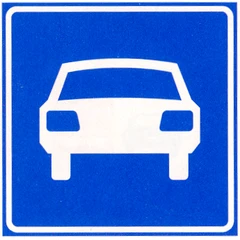 Sign G3 (Autoweg): the same road, but then with a sign instead of with a line.
CBR trap
- ❌ Wrong: reading a warning line as a solid line and thinking that overtaking is forbidden.✅ Correct: it is a broken line, so overtaking is allowed. It is only unwise, because something changes further ahead.
- ❌ Wrong: during roadworks, following the white lines because they are still there.✅ Correct: yellow always comes above white, even if yellow allows more than white.
- ❌ Wrong: driving over a hatched road marking area in order to change lanes quickly at the last moment.✅ Correct: a hatched road marking area is just as forbidden as a solid line. Only an opened rush hour lane is an exception.
- ❌ Wrong: thinking that on a road with a double middle line you can also encounter cyclists.✅ Correct: a double middle line means: only motor vehicles. Without a middle line, with only side lines, you can expect everyone.